







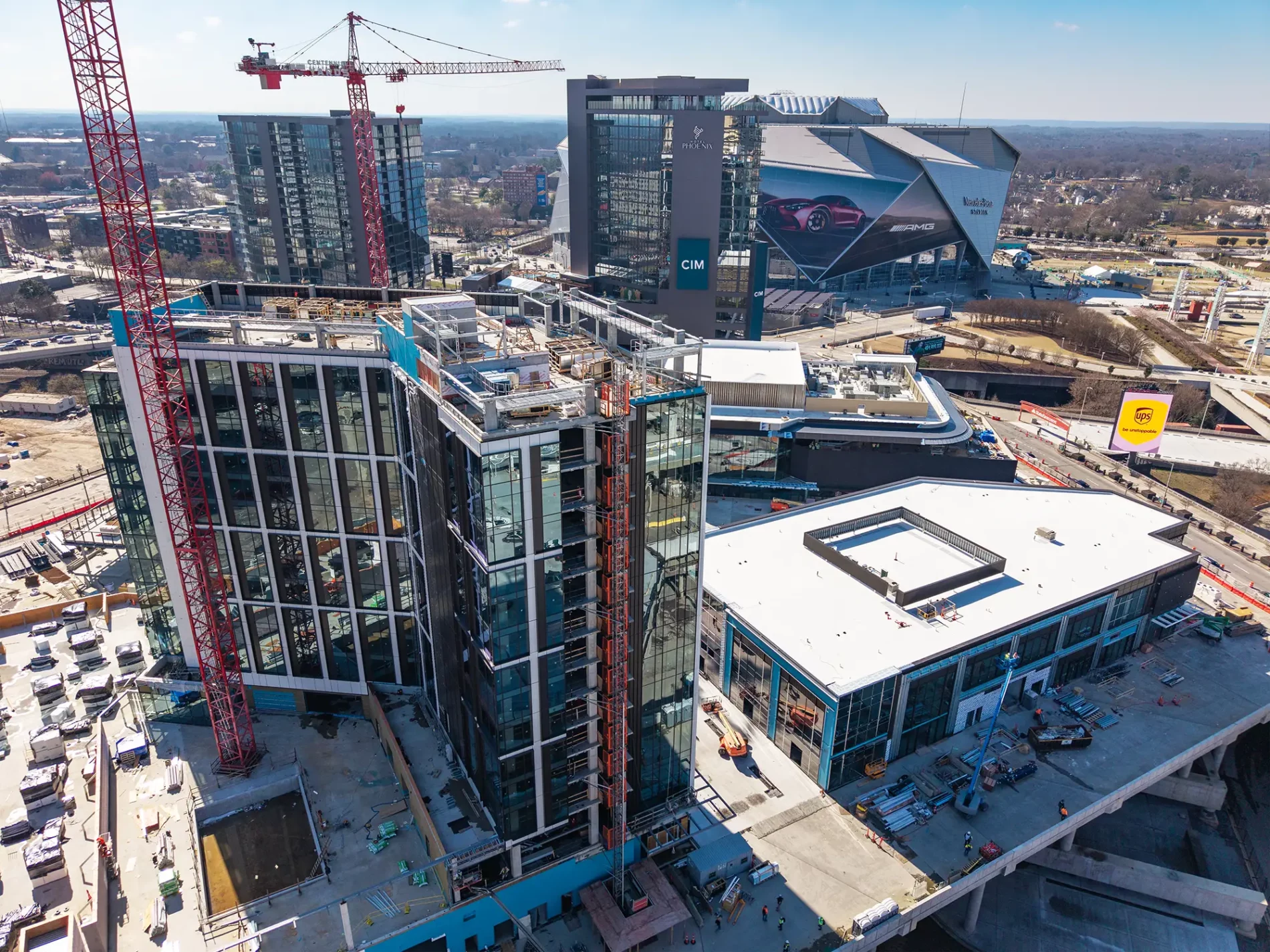

Low voltage is no longer a secondary consideration in building design. Once treated as an optional enhancement, it has become a foundational element of how modern spaces function, communicate, and feel. For Jordan & Skala, this shift has not only reshaped the industry but has become central to the firm’s evolution as a national engineering consultancy.
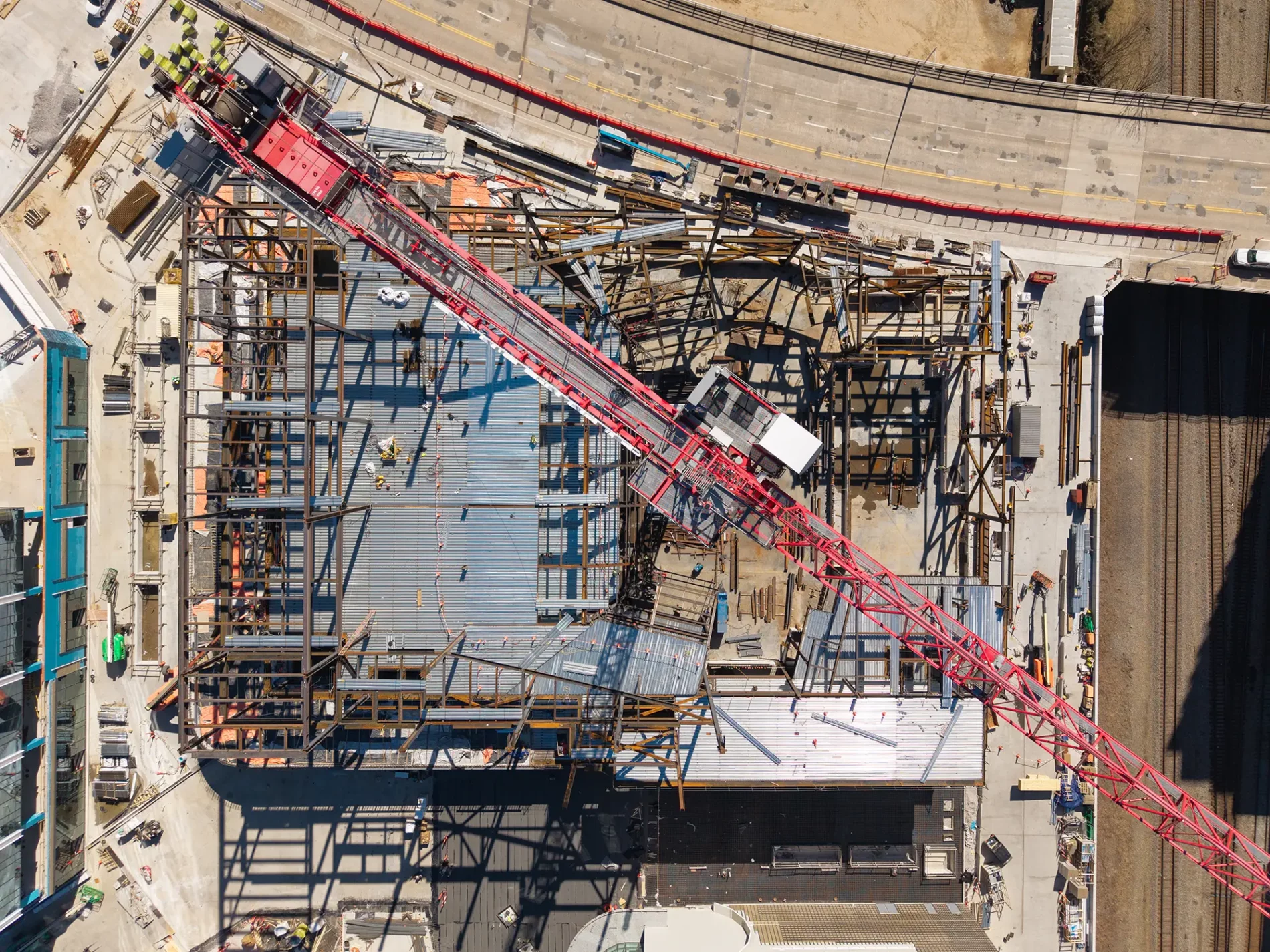
Founded in 1953 by Brewer Senior, the firm originally operated as Brewer and Mundy Engineers, with its headquarters in downtown Atlanta. More than seven decades later, Jordan & Skala has grown into a multi-disciplinary mechanical, electrical, plumbing, sustainability, and low-voltage engineering firm with seven offices nationwide, while maintaining its headquarters in Atlanta. Licensed in all 50 states, the company’s work is largely unseen, but deeply felt. “We’re what makes the building comfortable to be in,” said Brittany Schultz, Director of Marketing at Jordan & Skala. “You don’t really see a lot of our work most of the time, because it’s behind the drywall. You may see lighting fixtures and certain electrical components, but really a lot of our work isn’t what’s seen – but it’s what makes you want to be in that building.”
That philosophy extends directly into the firm’s low-voltage practice, which has grown from a supporting role into a critical discipline. As buildings have become more connected, more secure, and more dependent on integrated systems, low voltage has moved to the forefront of design conversations. “We added low voltage later in our history, but now it is absolutely critical,” Schultz explained. “People want items like Wi-Fi, enhanced security, and need these services.”
Jordan & Skala’s low-voltage services encompass communications, security, and audiovisual design. Communications systems complete the building network, including internet, television, wireless services, and life safety systems such as emergency and nurse call systems, as well as emergency responder radio coverage. Security design includes cameras and access control systems, while audiovisual design ranges from background music and video systems to complex auditorium and stage-related installations.
The firm’s engagement with low voltage dates back to 1993, when a dedicated department was first formed, staffed primarily by electrical engineers. However, it was in 2001 that Jordan & Skala made a decisive move to formally expand and specialize in low-voltage engineering, responding to rapid technological growth and changing client expectations. “The public is really recognizing the importance of [low voltage],” Schultz said, “and now building developers, architects, and owners are understanding that if we don’t put these in and we don’t stay up to date with the latest technology, we’re going to miss out on money that our competitors are getting.”
Brian Taylor, Principal at Jordan & Skala and Director of Low Voltage, has seen that transformation unfold from within. “Historically in the low voltage scope, there wasn’t really a network in most buildings,” he said. “Decades ago, you had a phone system, there were maybe some early iterations of access control systems and the same thing for audiovisual.”
“Decades ago, you had a phone system, there were maybe some early iterations of access control systems and the same thing for audiovisual.”
In those early years, low voltage was often treated as an extension of electrical engineering or handled by specialty consultants focused on single systems. “It was very common back through the 70s, 80s, and 90s for people to have that specialty,” Taylor said. “Once you hit the 2000s, we know as a society, high-speed Internet and wireless network systems became much more common.”
As demand increased, so did the need for engineers who could design integrated systems and ensure nothing was overlooked. The industry shifted from having electrical engineers partially covering low voltage to creating dedicated telecom and low-voltage engineering roles. For Jordan & Skala, this shift became one of the firm’s most significant growth milestones. “In 1993, it wasn’t everything that Brian mentioned today,” Schultz noted. “There was maybe a focus on security as opposed to all of the other communication elements that we do now.”
That evolution is evident in some of the firm’s most high-profile work, including Centennial Yards, a mixed-use redevelopment in downtown Atlanta estimated to be a $5 billion project. Long considered a “dead zone” since the 1996 Olympics, the site is being transformed into a destination encompassing hospitality, residential, entertainment, retail, and office space. “What Centennial Yards is trying to do is build a destination where people want to come to downtown Atlanta, whether there’s a sporting event or not,” Taylor said. “They just want to spend time there, and a lot of that is going to come from the low-voltage systems we design.”
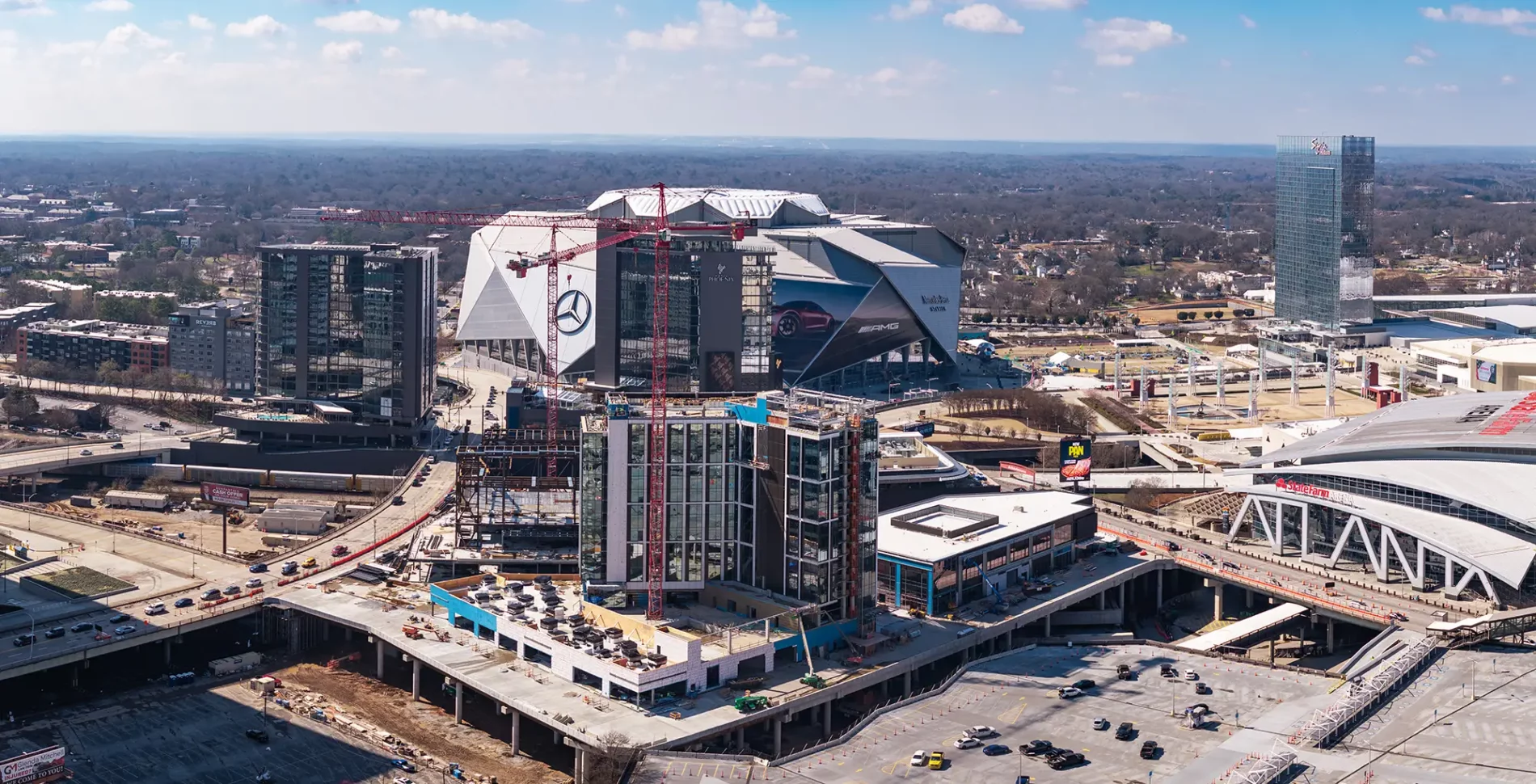
Jordan & Skala is responsible for MEP, communications, and security design within the entertainment district, which includes a hotel, retail spaces, a music arena, and an experience venue known as Cosm. While the firm is not directly designing the audiovisual systems, coordination remains critical. “These systems have to work concurrently,” Taylor said, referring to the low-voltage work needed. “It’s become very important, especially on a site this size.”
The low-voltage team is also designing the network backbone infrastructure across the broader entertainment district, including advanced Wi-Fi systems, hard-line networks, and extensive security camera coverage. “We’ve been designing pretty advanced Wi-Fi systems across the whole site, advanced hard-line network systems, and on the security side, pretty heavy security camera systems,” Taylor explained.
Security design on a mixed-use development of this scale requires careful balance. Individual components such as hotels, retail spaces, and entertainment venues must operate semi-independently while still functioning as part of a cohesive site-wide system. “The hotel is going to have its own security camera system,” Taylor said. “They’re probably going to have their own in-house security team, same thing with the retail, the music venue, and Cosm. But then at the same time, all of these pieces are part of a greater overall site.”
Access control systems, he added, require an especially careful approach. “The interesting thing about access control is walking that line between security and convenience. You want people to feel safe and secure, but at the same time, you want visitors to feel that sense of convenience where they can move about a space in a way that flows the way the architect envisioned it.”
Jordan & Skala’s involvement also extends to supporting audiovisual systems through infrastructure design. This includes planning cabling pathways, ensuring network connectivity, and providing AV consultants with what they need to complete their systems, whether those involve small digital displays or screens spanning more than 100 feet. “We’ve had a hand in all of that,” Taylor said, “making sure that we have pathways for cabling to be pulled, making sure that network connectivity is there.”
For Schultz, projects like Centennial Yards illustrate how far the firm has come. “Coming from low voltage being seen as part of electrical to now having its own department, and us working on these high-profile projects like Cosm would be a milestone for us,” she said.
Jordan & Skala’s strength lies in the integration of its core disciplines: MEP, sustainability, and low voltage. Housing these teams in-house allows for constant communication and coordination, particularly on large, complex projects. “The ability to do that helps us in those cases like Centennial Yards as well,” Schultz explained. “If someone else is doing this AV scope, we still have that coordination skill set because we’re used to developing that on every project.” That coordination has been central to the firm’s growth from its founding in 1953 to its current national footprint. “I think that’s one of the keys to success for JSE,” Schultz said, “and why we’ve grown so much from 1953 to now, is being that great project partner and having that coordination skill set.”
As technology continues to evolve at pace, low voltage remains one of the most dynamic areas of building design. “The thing that makes low voltage and technology interesting and can make it complex,” Taylor said, “is the speed at which it evolves.”
Unlike plumbing or mechanical systems, which change incrementally, technology can shift dramatically in a matter of months. Jordan & Skala’s ability to stay current has shaped both its design approach and its infrastructure planning, particularly in security and communications systems.
Looking ahead, the firm anticipates continued growth, including expansion into data centers and an increased presence in key U.S. markets. “We’re looking ahead at growth,” Taylor concluded. “We anticipate 2026 to be a strong year and we’re putting a lot of focus on the low voltage department as part of that growth.” Guided by its ethos, “We listen. We communicate. We adapt,” Jordan & Skala continues to demonstrate how low voltage has become not just a technical necessity, but a defining element of modern buildings.