


















Associations

city ahead on a road at night

Civil Engineering & Infrastructure

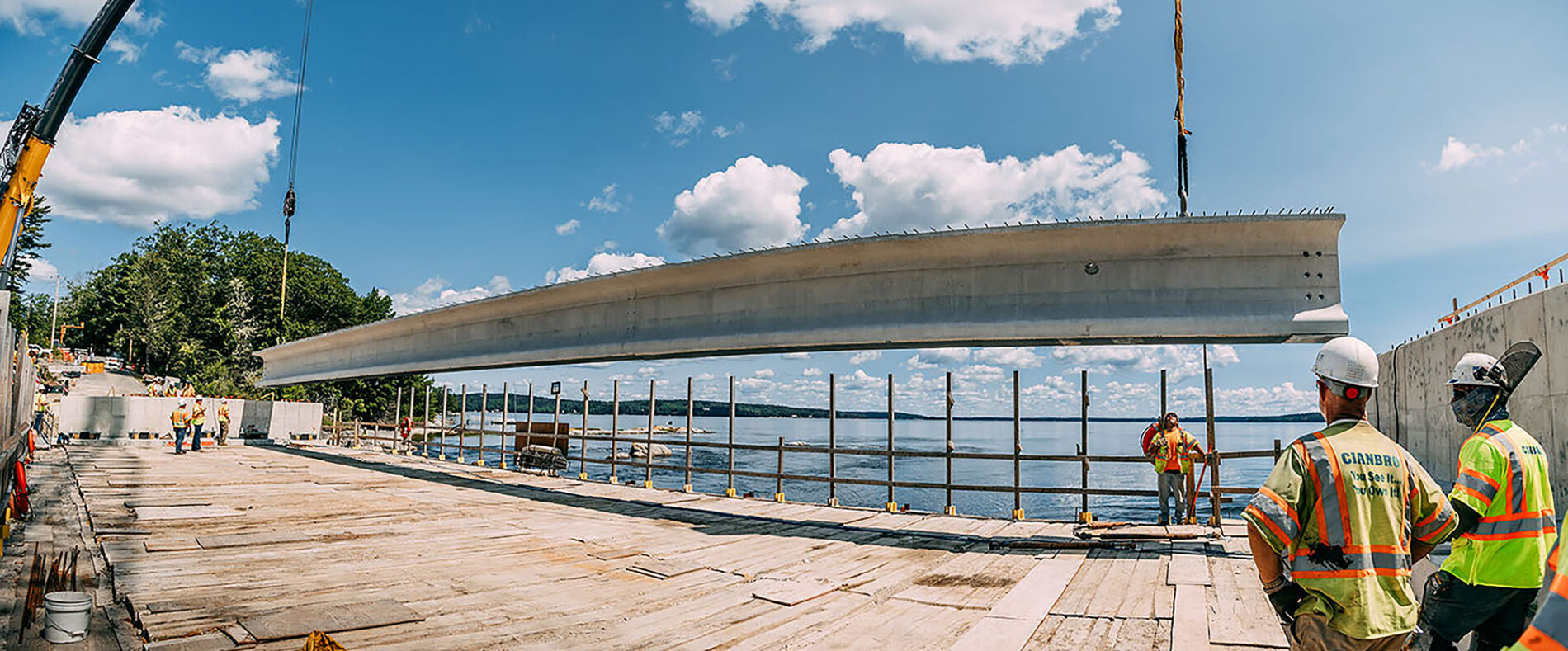
modern concrete structure

Concrete

design build drawing with construction tools

Design Build | CM | GC

multiple excavators parked in a row

Equipment

green tree outside office building

Green Building

thumbs up

Positive News

toolbelt construction tools

Specialty Contracting

Steel

A Decade of Growth, Groundwork, and Community-Building

View in E-mag

As Florida continues to expand at a pace few other states can match, the companies shaping that growth are often those closest to the ground. Grovin Construction is one of them. What began as a family-owned sod farm and land-clearing operation quietly evolved into a full-scale civil contractor capable of delivering the complex site and infrastructure packages needed for modern communities. Now celebrating its tenth anniversary, the company stands at a moment that reflects both how far it has come and how much terrain still lies ahead.
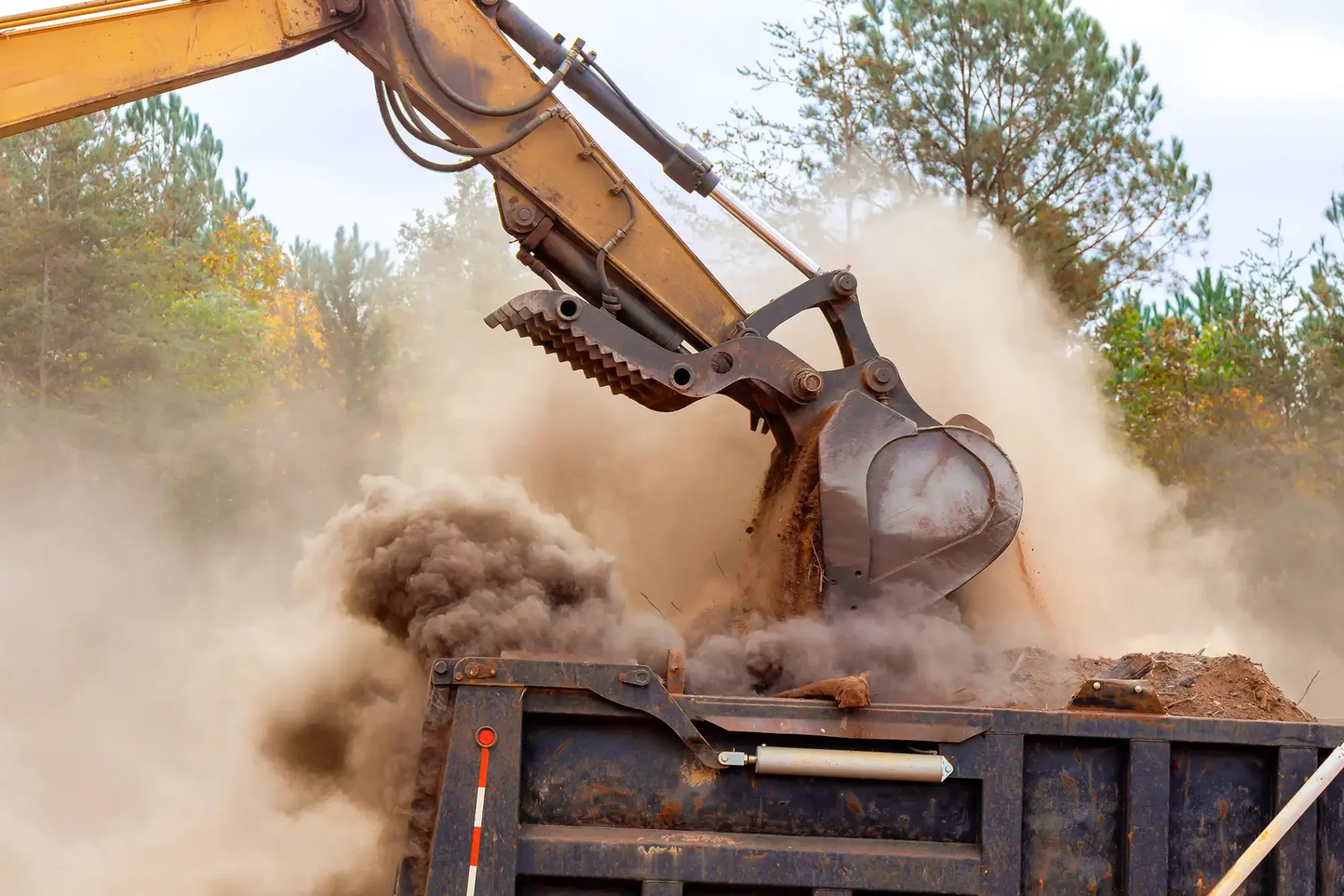
Grovin’s story is rooted in the soil—literally. Its early years were spent preparing land for development, clearing, grading, and performing the foundational earthwork that allows projects to take shape. Over time, the company’s leaders recognized that the demands of fast-growing counties in North Florida required a more comprehensive skillset. What followed was a steady expansion into the broader world of heavy civil construction. Earthmoving naturally led to excavation; clearing and grubbing evolved into complete site-development; and utility tie-ins grew into fully engineered water, sewer, storm-drainage, and reclaimed-water systems. Roadway preparation and construction soon followed, rounding out a service offering that now bridges the gap between raw land and build-ready sites.

“Roadway preparation and construction soon followed, rounding out a service offering that now bridges the gap between raw land and build-ready sites.”

This growth was not a sudden shift but a decade-long progression shaped by the needs of municipalities, developers, and general contractors. Grovin’s team learned to balance mass grading with underground utilities, to manage the logistics of high-volume fill delivery, and to coordinate infrastructure sequencing in environments where demand rarely slows. In the span of ten years, the company transformed from an agricultural offshoot into a competitive civil-construction partner serving both public and private clients across Florida.

Two recent projects illustrate the firm’s evolution and its increasing role in shaping the region. One of these is the K-8 school in the Rivertown community of St. Johns County, part of one of the fastest-growing corridors in the state. As a major site-work subcontractor on the project, Grovin was responsible for significant fill supply and earthwork operations, work essential to bringing the school to grade in an area defined by sensitive soils and strict public-sector requirements. The project highlights the company’s ability to operate in a large, structured environment, balancing bulk-material supply, trucking logistics, and schedule coordination at a scale that reflects the complexity of Florida’s institutional projects.

The Rivertown school is particularly significant because it shows how Grovin’s steady expansion in capabilities has aligned with the needs of modern educational infrastructure. With thousands of families moving into St. Johns County every year, new K-8 schools are not occasional additions, they are necessities. Grovin’s participation in such projects signals its credibility as a partner capable of contributing to the long-term civic framework of these growing communities.

Further south in Elkton, another project demonstrates the company’s command of high-volume residential development. The Coquina Crossing community has rapidly expanded, requiring large quantities of imported clean fill and extensive site preparation. Grovin’s work there underscores the firm’s ability to deliver precise quantities of material quickly and cost-effectively, a capability that often determines whether a subdivision stays on schedule. With residential development surging across the state, the expertise required to support such communities, from drainage systems to roadway construction, is no less demanding than that required for public institutions. Coquina Crossing reinforces Grovin’s position as a contractor able to meet that demand with reliability and scale.

This range of projects reflects the breadth of services the company now offers. Grovin manages everything from land clearing and mass grading to excavation and stormwater infrastructure. Its teams install water mains, sanitary sewer systems, reclaimed-water lines, and fire-main systems while also delivering lift stations and roadway improvements. The civil-construction package is complemented by pre-construction services such as feasibility reviews, early budgeting, site evaluation, and value engineering. The seamlessness with which Grovin moves between planning and execution has become one of its defining strengths, giving clients a partner capable of guiding a project long before equipment arrives onsite.
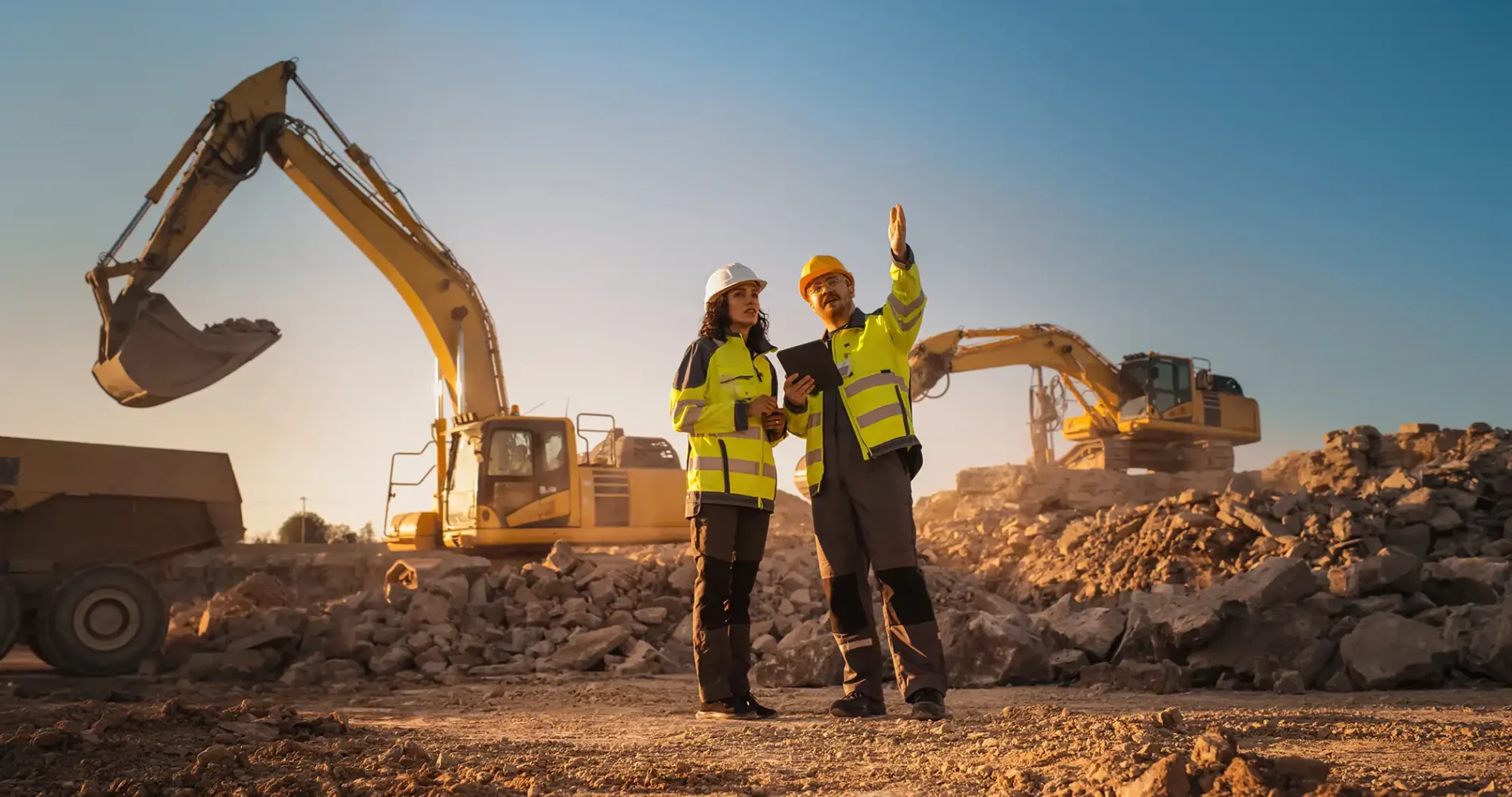
Looking back over its first decade, certain milestones stand out. Grovin’s transition from a farming-based operation into a certified general contractor marked a turning point, as did its first large municipal awards and high-volume residential contracts. The company built internal systems for materials sourcing and trucking logistics, giving it cost control in a state where fill dirt can determine a project’s viability. With each passing year, Grovin expanded not by abandoning its origins, but by embracing them and applying the precision of land management to the demands of civil construction.

The tenth-anniversary marker is a reminder of how quickly the company has adapted. Florida’s building environment has become more complex, not less. Populations are rising, subdivisions are expanding, and infrastructure is being pushed to keep pace. Grovin has moved with that flow, aligning its services with the needs of communities and the expectations of modern developers. Today, the company stands ready to take on school campuses, multi-phase residential communities, commercial sites, and civic infrastructure with an approach defined by flexibility and field-tested reliability.

Looking ahead, Grovin plans to continue broadening its reach while holding onto the principles that shaped its first decade. Its expanding portfolio shows a company that understands both the land and the people working it. Each project, from Rivertown’s new K-8 school to the growing footprint of Coquina Crossing, reinforces the firm’s commitment to constructing not just sites, but communities. With a decade behind them and Florida’s ongoing growth ahead, Grovin’s foundation has never been stronger.
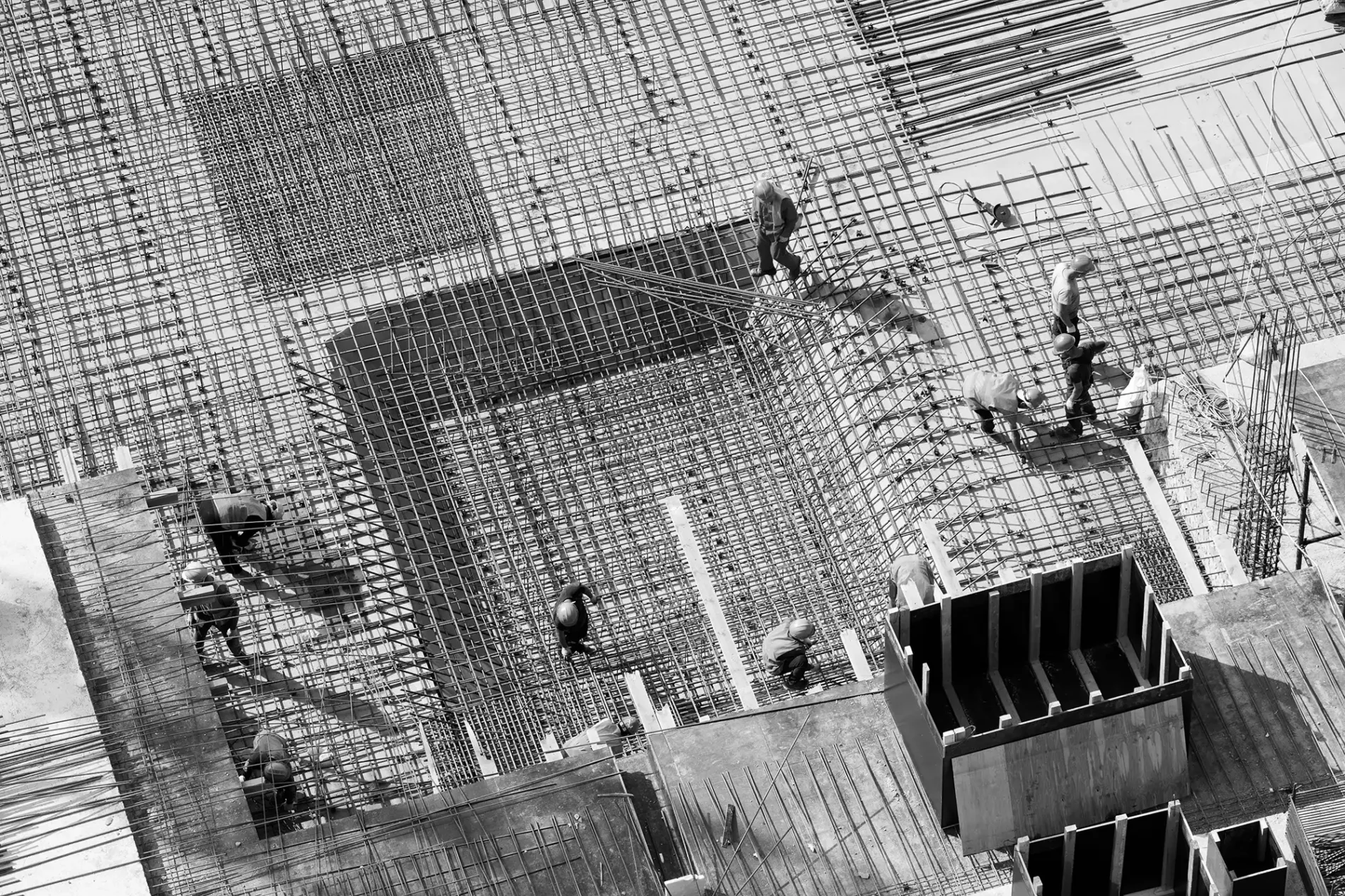
Next-Gen Builders: How Labor, Technology, and Material Shifts Are Reshaping Construction Careers in North America

View in E-mag

The new face of construction is not a single look but a moving target. One week it is a superintendent onboarding apprentices inside a modular plant filled with robots and laser layout systems. The next it is a project executive renegotiating steel packages after a tariff announcement. Across North America, firms are recalibrating how they recruit, build, and deliver. The question underneath it all: who builds, with what materials, and using which tools, now defines careers as much as it defines projects.

Ask any contractor where the schedule cracks, and you will hear the same refrain: people. In August 2025, the Associated General Contractors of America released survey results that landed like a hammer on the jobsite trailer. “As the survey results show, construction workforce shortages aren’t just a problem for the construction industry,” said Ken Simonson, the AGC’s chief economist. “Construction projects of all types are being delayed because there aren’t enough qualified workers available for firms to hire.”

The numbers behind that line were just as stark. A national survey by AGC and NCCER found that 92 percent of U.S. construction firms struggled to hire qualified workers, with many linking delays to policy and permitting friction that compounded the talent gap. For recruiters and educators, the conclusion was obvious: widen the on-ramp through apprenticeships, career-tech education, and mid-career reskilling, or watch the backlog continue to grow.

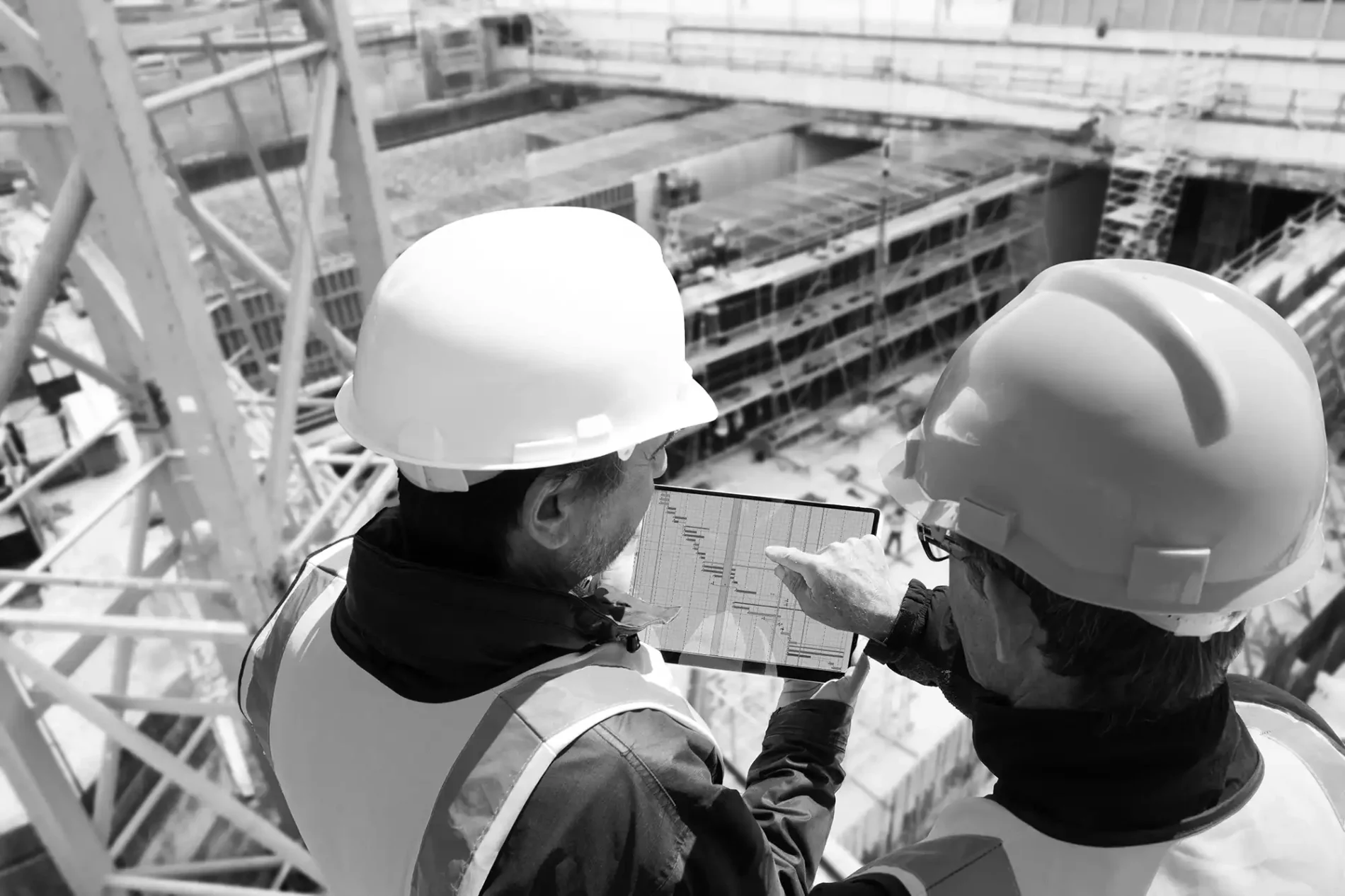
Inside companies, the labor shortage is changing career paths. Layout technicians now step onto sites using robotic total stations. Carpenters are cross-trained to manage prefab assemblies, and craft professionals climb into supervisory roles because the pipeline beneath them is thin. The pressure has a silver lining. When firms invest in training and technology to do more with fewer hands, early-career builders gain responsibility faster than any class in memory.

Adding to the labor shortage is a new volatility in materials. In early 2025, the White House increased steel and aluminum tariffs, arguing that higher duties were needed to protect domestic capacity utilization. The policy, announced under Section 232, sought to counter low-priced imports. For construction, the implication was immediate: bid risk.

Market watchers did not need to guess at the ripple effects. In late May, coverage by major outlets detailed the administration’s plan to double steel and aluminum tariffs to 50 percent, while industry groups and trading partners warned of likely cost increases for projects already underway. For estimators, it meant running multiple scenarios for every package that involved metal, from rebar and joists to ductwork and façade systems.

Homebuilding faced a similar challenge. When the administration announced additional tariffs on Canadian softwood lumber, the National Association of Home Builders warned that effective rates could rise to around 40 percent, a move that would strain affordability. NAHB Chair Buddy Hughes argued that broad tariff actions on several nations would hit key inputs and urged policymakers to avoid raising housing costs.

For career builders, these developments translate into new skill requirements. It is no longer enough to manage a CPM schedule. Teams now need cost-risk awareness, procurement strategy, and the calm to re-sequence scopes when a tariff notice or supplier failure disrupts the critical path.

Offsite and modular construction is also redefining the work itself. A 2025 McKinsey analysis found that companies using modular construction for permanent buildings were delivering stronger-than-expected performance, even as the sector experienced both rapid growth and high-profile bankruptcies. The lesson was clear: the winners operate like manufacturers and manage risk like contractors.

Rick Holliday, CEO of Factory_OS, describes modular construction not as a shortcut but as a systems shift. “Factory_OS was started with scalability in mind,” he said. “Changing the way housing is built requires an evolution in everything from how workers are trained to the methods used in order to ensure increased productivity and therefore lower costs and time-to-market.”

Industry forecasts point in the same direction. Prefabrication continues to gain traction as owners pursue predictable schedules and cost certainty. Demand and risk now drive adoption, pushing firms to bring manufacturing discipline to the jobsite.

If modular construction is reshaping where projects are built, robotics is changing how they are captured and verified. Spot, Boston Dynamics’ agile mobile robot, has moved from research curiosity to jobsite regular, documenting progress, creating as-built datasets, and freeing supervisors from repetitive site walks. “Spot provides a data capture solution to document progress and as-built states, freeing up site supervisors and enabling data-driven decisions,” the company wrote in its construction brief, a technical description that understates its real benefit to field teams.

Major contractors are beginning to measure that benefit. Turner Construction, for example, reported more than 95 percent reductions in inspection time for repetitive progress checks after deploying robots on autonomous routes synced to mapping platforms. The robot does not replace a project manager’s judgment; it extends it, turning a week of manual documentation into a morning dashboard.

Layout automation is also moving labor into higher-value work. Industry leaders consistently report that eliminating rework at the source allows entire schedules to breathe easier. Human-robot teams are reducing layout errors, compressing durations, and improving precision without compromising codes or safety.

Beyond technology, the project mix itself is changing what it means to work in construction. Federal infrastructure and clean-energy investments funded through the Infrastructure Investment and Jobs Act and the Inflation Reduction Act continue to create a pipeline of battery plants, port upgrades, transmission lines, and grid-scale renewables. These projects provide multi-trade, multi-year work that builds résumés and stabilizes payrolls.

U.S. Energy Secretary Jennifer M. Granholm summarized the impact clearly: “We are now starting to see the job impacts of investments made through the infrastructure and inflation reduction laws, first in construction and as America builds more of these factories, we’ll see hundreds of thousands more. The data clearly show that clean energy means jobs; good jobs, union jobs.”

For contractors, clean-energy work is a magnet for skilled talent. It offers scale, purpose, and a curriculum of its own: high-voltage safety, commissioning, process systems, and long-term operations and maintenance contracts that keep people learning well after ribbon-cutting.

On the ground, firms are adapting in several ways. Many are expanding the pool of available talent by increasing apprenticeships and trade partnerships. Owners are now awarding points for workforce plans rather than focusing solely on low bids. The AGC leadership has called for expanded visa pathways and greater investment in career and technical education, describing it as a matter of national competitiveness. Others are beginning to build more like manufacturers, standardizing subassemblies, investing in design-for-manufacture, and linking quality assurance directly to data. Prefabrication, once experimental, is rapidly becoming second nature. And across the industry, companies are learning to treat information as a tool rather than a by-product.

“Companies are learning to treat information as a tool rather than a by-product.”

The use of robots, laser scans, and automated layout systems is no longer a novelty. It has become a form of insurance against rework in a market where every hour and every ton counts. Examples such as Turner’s 95 percent reduction in inspection time and Skanska’s automation trials are notable not for their novelty but for freeing people to focus on what only people can do.

Taken together, these shifts reveal a new picture of a construction career. The traditional ladder of laborer, journeyman, foreman, and superintendent still stands, but new branches have grown alongside it. Data analysts, prefab line leads, robotics supervisors, commissioning engineers, and tariff-risk specialists now share the same industry once defined purely through craft.

And through all this change, some truths remain. Good companies still win on trust. Owners still remember who finished when the weather turned or when prices shifted. And the industry still advances one decision at a time, made by people who show up, learn quickly, and build well.

In a modular factory, a new apprentice watches a robot complete a scan while a mentor checks tolerances against the digital model. Across town, a preconstruction team runs steel and lumber cost scenarios after the latest tariff update. In the trailer, a project executive refreshes a dashboard while a superintendent pencils in tomorrow’s lift. Different scenes, one story: the next generation of builders is not waiting for the future to arrive. They are building it into the work today.

Advocacy, Workforce, and Unity Paving the Way Forward

View in E-mag

As infrastructure needs grow and skilled labor remains in short supply, the Associated General Contractors of New Hampshire (AGC NH) is doubling down on its mission to support, unify, and advocate for the construction industry statewide. Representing hundreds of firms and professionals, the association has built a reputation as a force for policy reform, workforce development, and member engagement. With construction activity holding strong in 2025 and major challenges on the horizon, AGC NH’s leadership is focused on helping its members stay prepared and connected. Executive Vice President Alex Koutroubas recently shared how the organization is tackling advocacy, labor, and strategic growth head-on, while keeping its members at the center of it all.

Founded in 1949, AGC NH is a full-service trade association with a mission to improve the state’s construction sector. That mission is most visible at the state capitol, where Koutroubas and his team are engaged year-round. “We try to have a seat at the table to make sure the construction industry’s voice is heard with policymakers and with the executive branch,” said Koutroubas. “We’re a lot closer to the members than national organizations are, so we make sure their concerns are brought directly to decision-makers.”

In the most recent legislative session, AGC NH tracked close to 100 bills, actively lobbying on about a quarter of them. A top priority was securing increased funding for roads, bridges, and transportation infrastructure via the state budget. “For the first time in 18 years, we were able to get the House and Senate to agree to raise user fees for vehicle registrations,” he explained. “That helps shore up the highway fund and supports long-overdue investment.” The organization also collaborated with other groups to support permitting reform. The goal is to allow certain smaller, low-impact projects to proceed through a permit-by-notification system, reducing red tape while maintaining regulatory oversight.

One of the association’s biggest priorities is helping the next generation discover what a career in construction can offer. In partnership with state education initiatives, AGC NH helped support a dual and concurrent enrollment program that allows high school students to earn college credits in technical fields, including the trades. “We feel it’s crucial to expose young people to the variety of options available after high school,” said Koutroubas. “Programs like these give students a head start in the trades, and help them build confidence and direction.”

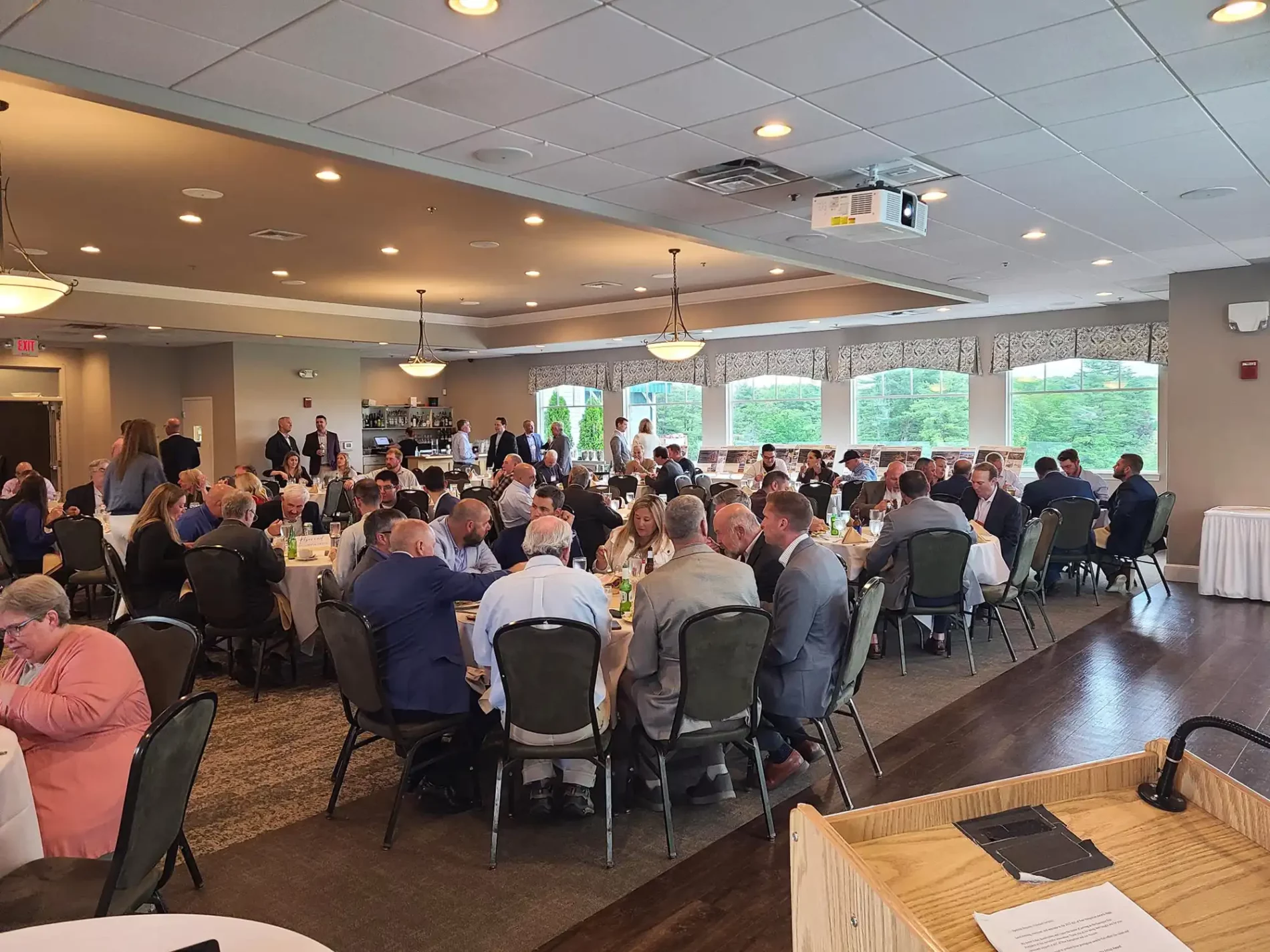
To amplify this message, AGC NH also took part in the Bring Back the Trades event, a large-scale outreach effort connecting industry professionals with students, parents, teachers, and guidance counselors. The event covered a range of skilled trades, from plumbing and automotive to electrical and construction. AGC NH sponsored the event, hosted a booth, and engaged directly with attendees. “There were thousands of students from across the state, and we had the chance to talk to a lot of them,” said Koutroubas. “There’s real interest in the trades. It’s just about showing young people that this is a legitimate, fulfilling, and rewarding career path.”

While AGC NH focuses on advocacy and public engagement at the state level, it strategically leverages its affiliation with AGC of America for training, certifications, and continuing education. “We don’t offer a wide range of technical training ourselves, but we lean into our national organization for that,” Koutroubas said. “That lets us stay focused on the business, regulatory, and political landscape in New Hampshire.” Although there are no current mentorship or scholarship programs in place locally, Koutroubas acknowledged this is an area the association may explore in the future.

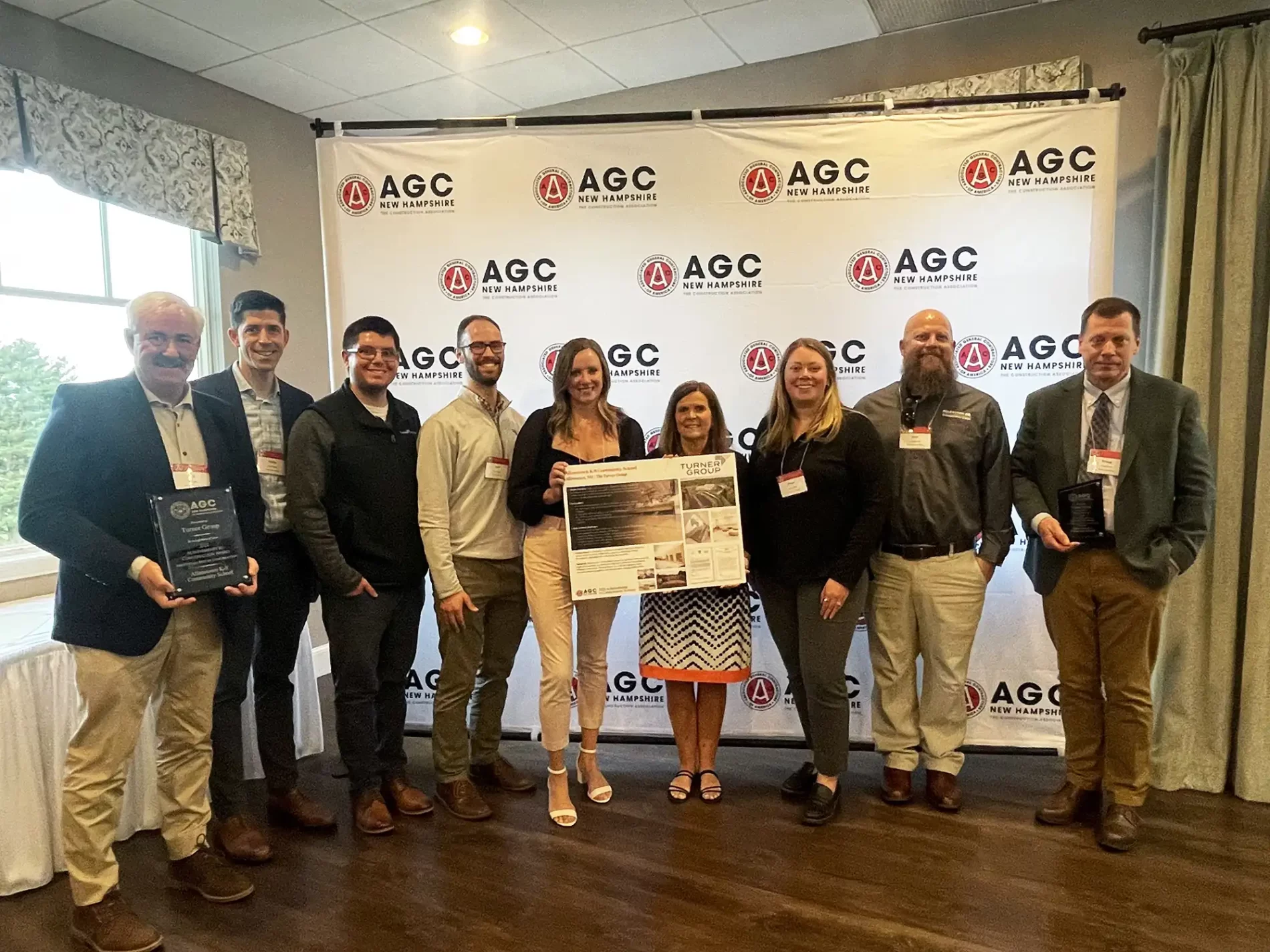
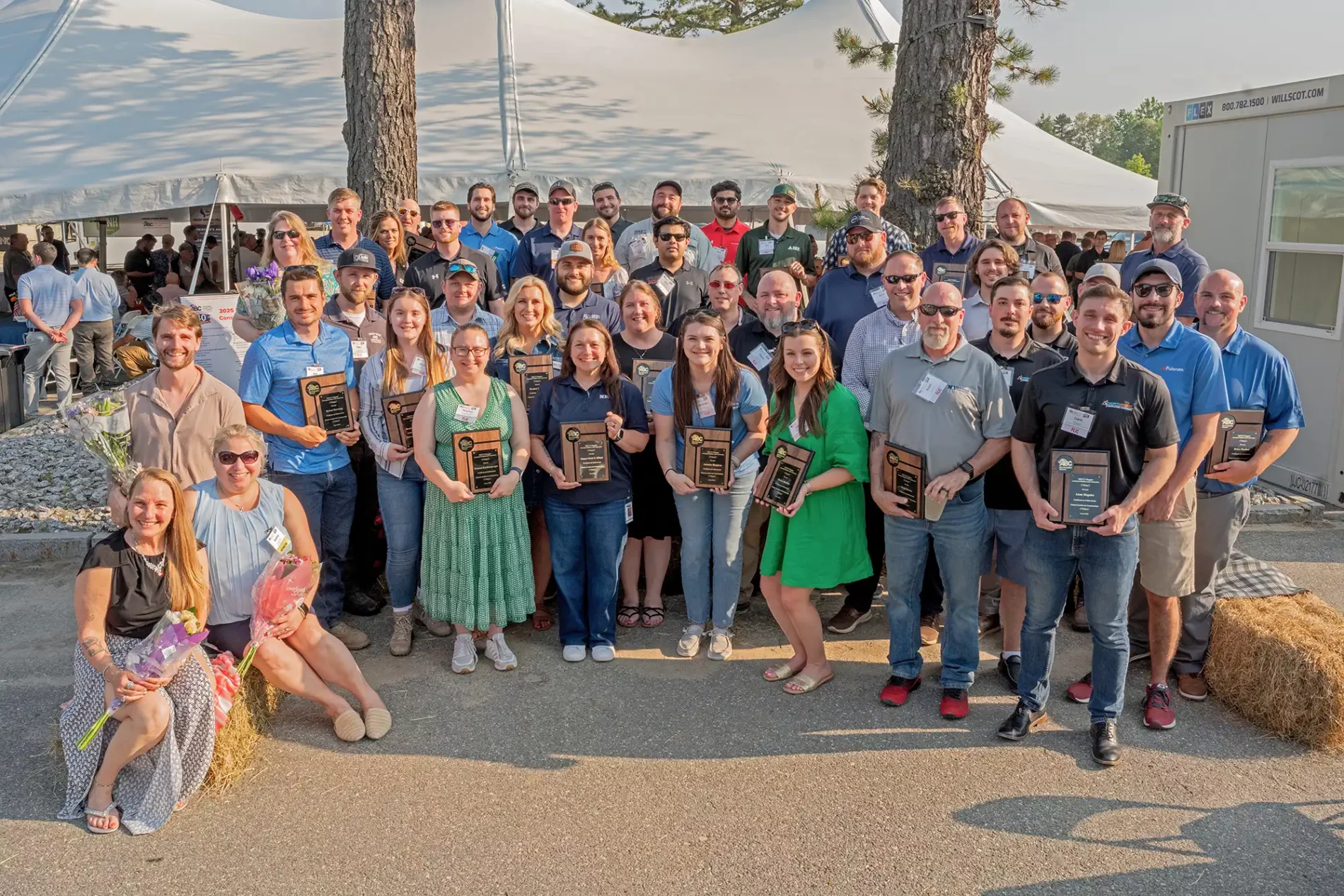
One of the most visible successes of the past year was the revival of AGC NH’s awards program. Now called the Achievements in Construction Awards, the event recognizes standout projects, celebrates safety leadership, and honors long-term ethical contributions to the industry. “The program had been dormant for several years,” said Koutroubas. “We brought it back with over 20 project submissions, judged by independent reviewers outside the association.”

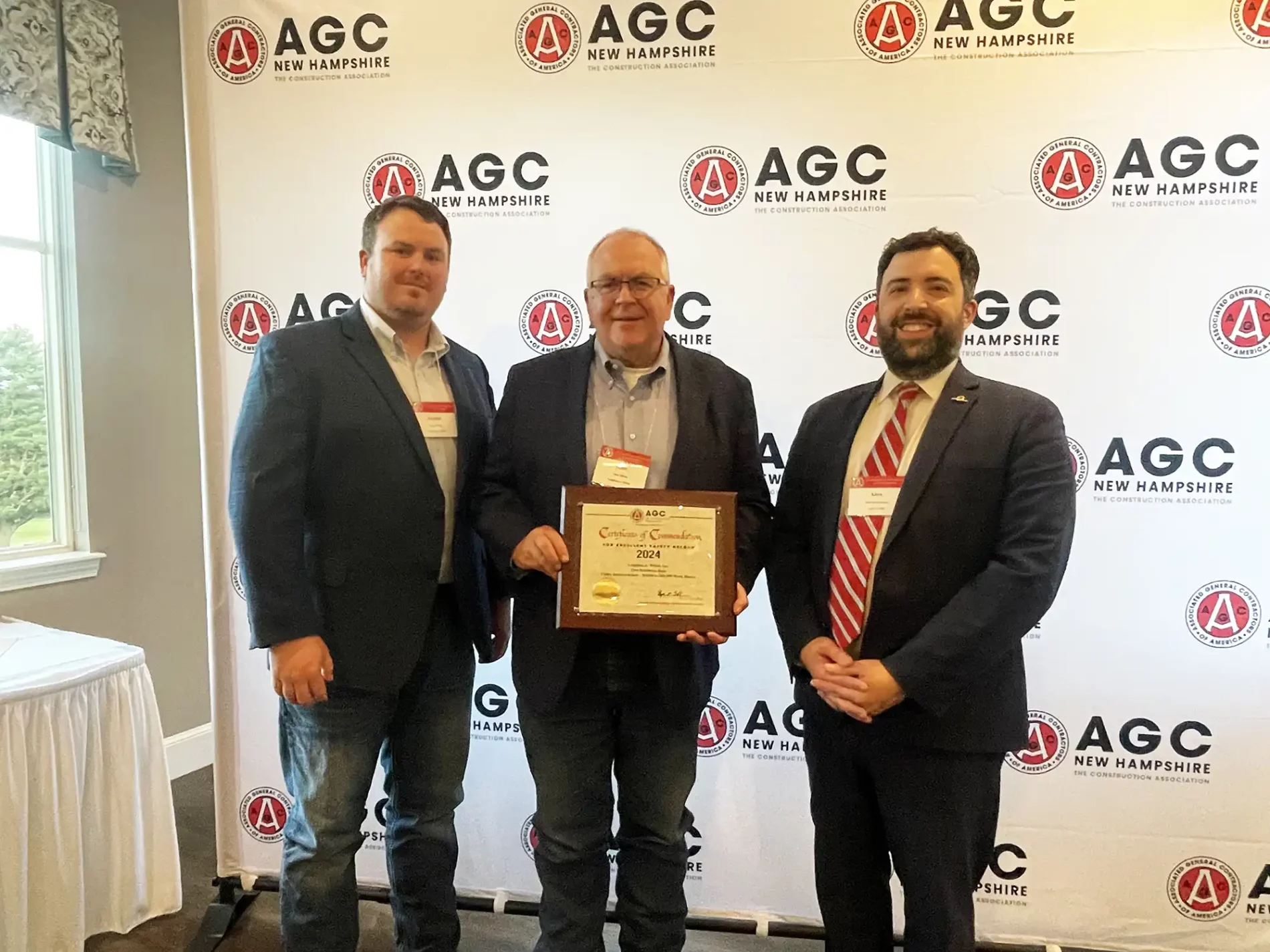
The event attracted around 90 attendees and generated positive buzz across media and social platforms. Awards included seven safety recognitions based on OSHA incident data and an ethics award, which went to Koutroubas’s predecessor in recognition of their service to the association and industry. “It was one of the biggest things we did this year,” Koutroubas said. “It was a great way to reconnect with members and showcase the amazing work being done in our state.”

As 2025 progresses, New Hampshire’s construction outlook is strong. Most contractors have steady backlogs, and many are booked into the latter half of the year. But Koutroubas said 2026 carries more question marks than the industry is used to. “There’s some uncertainty,” he said. “It’s not that the market is heading for a downturn, but projects aren’t lining up quite as quickly as they have in recent years.”

That said, Koutroubas views the situation as a warning, not a crisis. The focus remains on continued lobbying for infrastructure investment at both state and federal levels, ensuring that planned projects are funded and released in a timely manner. “We’re actively working to make sure infrastructure spending remains a top priority,” he emphasized. “It’s one of our core public policy goals.”

For Koutroubas, AGC NH’s greatest asset isn’t its lobbying power or its public presence. It’s the engagement of its members; competitors who come together under one banner to advocate for shared priorities. “One of the biggest things with an association is participation,” he said. “We want every member to feel connected and have a say in what we do.”

“One of the biggest things with an association is participation. We want every member  to feel connected and have a say in what we do.”

The organization offers multiple ways to get involved, from joining committees and boards to attending events and weighing in on legislative priorities. While contractors may compete in the marketplace, they unite within AGC NH to protect the long-term health of their industry. “It’s important for people to know that we are a space where the industry works together,” Koutroubas said. “We have incredible members, and their involvement at every level is what makes us effective.”

In a state where infrastructure needs are expanding and workforce pipelines are still being built, AGC of New Hampshire is standing at the intersection of leadership, policy, and people. Under Alex Koutroubas’s direction, the organization is securing funding wins, amplifying industry voices, and reconnecting members through events and recognition. It is also paving the way for new generations to discover the value and vitality of a career in construction. As 2025 unfolds and 2026 takes shape, AGC NH is focused on helping its members not just respond to market shifts but shape them.

Building a Workforce, Defending a Philosophy: ABC NH/VT at 40

View in E-mag

As Associated Builders and Contractors New Hampshire/Vermont (ABC NH/VT) celebrates its 40th anniversary, the organization is doubling down on its core mission. With a legacy rooted in the merit shop philosophy, ABC NH/VT continues to lead the charge for open competition, workforce development, and construction excellence across the region.

Under the leadership of President and CEO Joshua Reap, the chapter is navigating the twin pressures of a historic labor shortage and shifting federal mandates. From launching a new construction academy to expanding registered apprenticeships and leadership programs, ABC NH/VT is proactively shaping the future of construction in New England, one worker, one contractor, and one project at a time.

Founded four decades ago, ABC NH/VT was created to uphold the principles of free enterprise in the construction industry. That core identity remains central to everything the chapter does today. “ABC is founded on the idea of the merit shop philosophy, the belief that people should be hired and promoted based on merit, not labor affiliation,” said Reap. “We help contractors win work and develop people, for the betterment of the communities in which they live and work.”

The chapter now stands as a leading advocate for merit shop contractors across New Hampshire and Vermont, with a full portfolio of training, networking, safety, and leadership development services. Their events routinely sell out, attracting contractors eager to grow their businesses and connect with peers.

As construction becomes increasingly regulated, ABC NH/VT continues to fight for policies that support open competition and ease the path to building. Reap emphasized that regulatory streamlining remains a top priority at the state level. “We’re always working on how New Hampshire state regulations affect permitting and construction,” he explained. “There’s a huge backlog in housing and infrastructure. Streamlining environmental and alteration-of-terrain permits would make a significant impact.”

Another flashpoint is the federal mandate on Project Labor Agreements (PLAs). As of 2025, federally funded projects over $35 million are subject to PLA requirements, which ABC NH/VT argues unfairly disadvantage the majority of local contractors. “Ninety-six percent of the workforce in New Hampshire and Vermont chooses not to belong to a union,” said Reap. “They have great relationships with their employers, many of whom they’ve known since entering the trades. These mandates ignore the reality of how our workforce actually functions.” ABC NH/VT is actively pushing for “fair and open competition” legislation at the state level to counterbalance federal PLA requirements and preserve local contractors’ ability to compete.

If policy is one pillar of ABC NH/VT’s work, workforce development is the other, and it’s where Reap’s passion is most visible. “Ten years ago, we didn’t have enough people coming into the trades. Now it’s a full-blown crisis,” he said. “We pushed college so hard for two generations that there’s a divide between people who work in construction and those considering it as a career.”

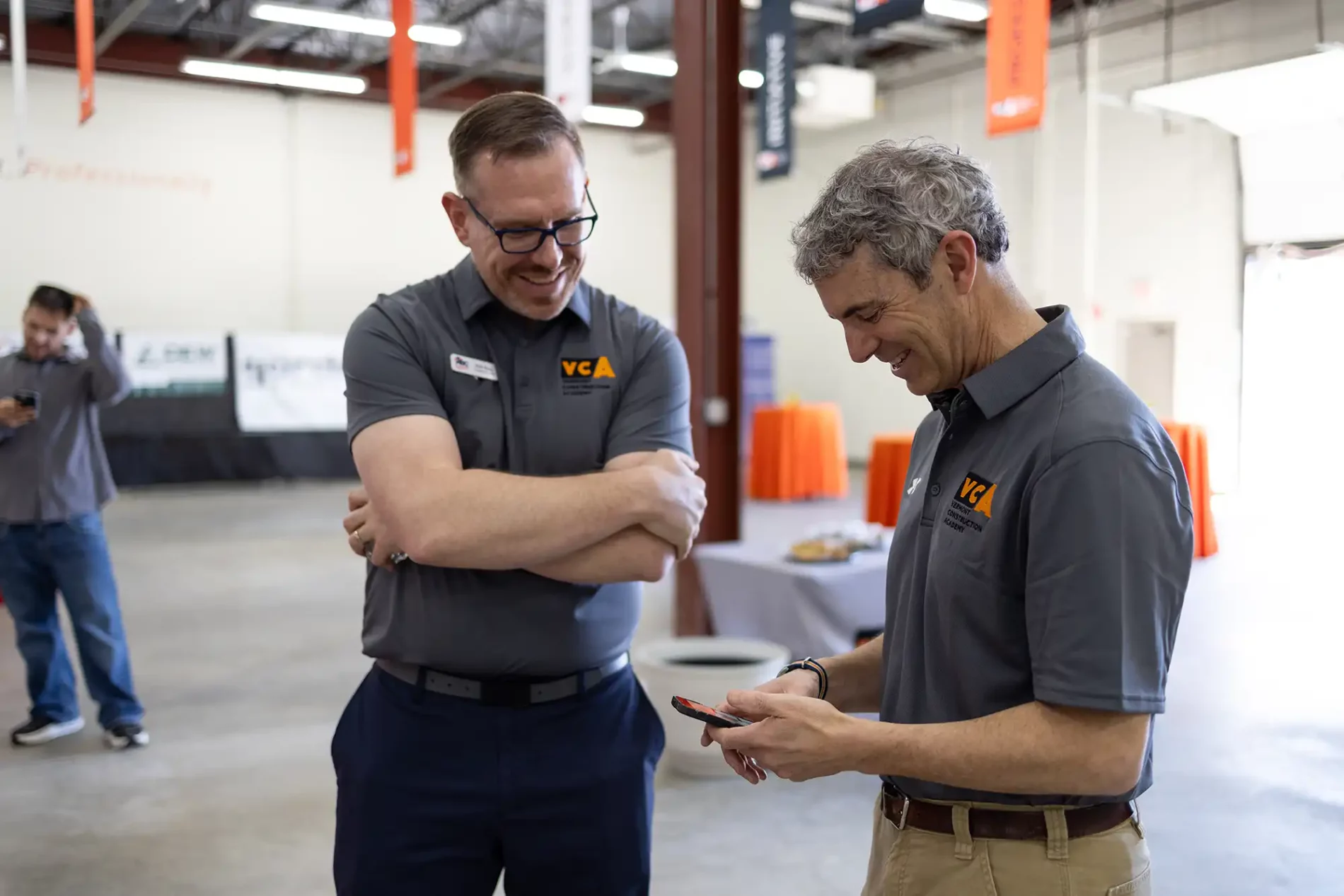
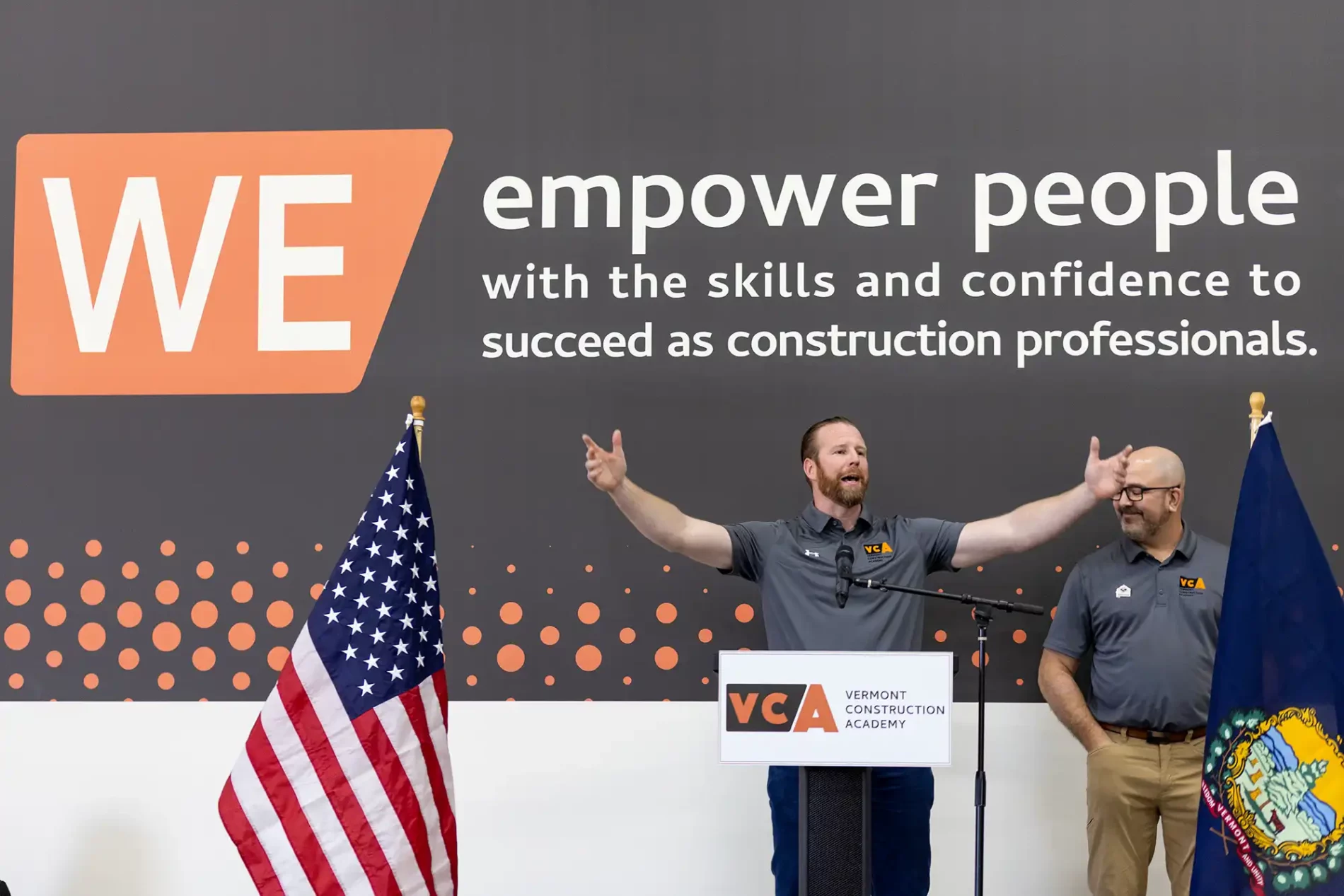
To rebuild the pipeline, ABC NH/VT isn’t waiting for government intervention. In early 2025, they launched the Vermont Construction Academy, a privately funded initiative aimed at giving young people hands-on experience in commercial construction. “The first boot camp starts this summer,” said Reap. “Fifteen students from career and technical education centers will come out with the confidence and skills to step onto a $6 million job site. They’ll still be green, of course, but they’ll have a foundation and a clear path forward.” The academy was born from a group of active and retired ABC members who wanted to “bring dignity back to the trades.” As Reap puts it, “We’re here for the long haul, and we want to be dynamic in how we respond to the industry’s needs.”

“Fifteen students from career and technical education centers will come out with the confidence and skills to step onto a $6 million job site. They’ll still be green, of course, but they’ll have a foundation and a clear path forward.”

One of ABC NH/VT’s most urgent challenges is correcting long-standing misperceptions about construction careers, among students, parents, and policymakers alike. “Construction still has this image of being a dirty, low-wage job. That’s just not true,” Reap said. “We’re talking about high-tech, high-wage careers with benefits, HR departments, 401(k)s, and professional development.”

He recalls how vocational programs were once unfairly seen as a fallback option. “When I was in high school, it was like, ‘Don’t go to the tech center, that’s where the troubled kids go.’ That’s a lie. Those are the programs creating lasting careers today.” Changing this perception is key to solving the labor shortage, and ABC NH/VT is taking that message directly to students and parents.

While much of the organization’s focus is on craft training and apprenticeships, ABC NH/VT is equally committed to developing leadership in the industry. Its flagship program, Future Leaders in Construction, is now the top leadership development initiative of its kind in New England. “We had 80 graduates this year,” said Reap. “The program teaches conflict resolution, communication across generations, and leadership fundamentals. At the end, participants complete a capstone project focused on bringing ROI back to their company or improving their personal life.”

The program’s popularity has grown beyond the construction industry, even non-construction fortune 500 companies have expressed interest. “We’re already sold out for one of the three cohorts starting in October, and we haven’t even advertised yet,” Reap noted.

For contractors looking to upskill their teams, ABC NH/VT also provides flexible training solutions, from hands-on masonry and labor training to formal registered apprenticeship programs. “We’re the only ones in both states offering multi-employer sponsored apprenticeship programs for carpentry,” said Reap. “If a contractor doesn’t have the capacity to run their own, they can join ours and get full support.”

True to its mission of excellence, ABC NH/VT maintains a deep commitment to jobsite safety. “We want everyone to go home in the same or better condition than when they arrived,” Reap emphasized. The chapter offers a wide array of safety training, including OSHA courses, first aid, and specialized certifications like EM 385 fall protection and Construction Quality Management. “These programs are prerequisites for work on Department of Defense projects,” Reap explained. “We’re not exclusive providers, but we’re the only ones in the region committed to running them regularly.”

Despite economic uncertainties, ABC NH/VT members remain busy. Reap noted that most contractors report strong backlogs going into late 2025. “There was some concern earlier in the year, but that’s eased,” he said. “Mega projects have been slower to launch, mostly due to interest rates and tariffs. But owners understand that those issues are impacting every aspect of life, not just construction.” Clear communication across the supply chain, from general contractors to owners, remains the key to moving projects forward.

At 40 years strong, ABC NH/VT has become more than an association. It’s a dynamic force driving policy, developing talent, and defending the values of open competition and industry excellence. “We’re not waiting on anyone else,” said Reap. “This is a solutions-based industry, and we’re stepping up.”

Whether it’s through apprenticeships, leadership training, or advocacy for fair competition, ABC NH/VT continues to shape the future of construction in northern New England, one project, one person, and one principle at a time.

ORBA’s Roadmap: Building Smarter, Stronger, and More Sustainable Infrastructure in Ontario

View in E-mag

Ontario is entering a transformative decade for infrastructure, and the Ontario Road Builders’ Association (ORBA) is making sure the industry is ready. Representing over 300 members and a workforce of more than 56,000 people, ORBA sits at the heart of the province’s road-building sector, driving conversations around efficiency, policy reform, workforce development, and sustainability. For Steven Crombie, ORBA’s Director of Policy and Stakeholder Relations, and Faduma Farah a member of the Public Affairs and Communications team, the future is very bright, indeed. The job at ORBA is a clear one, help Ontario’s infrastructure sector evolve for a busier, smarter future.

Since 1927, ORBA has served as the voice of the companies and professionals that build and maintain Ontario’s roads, highways, and critical infrastructure. With nearly a century of advocacy behind it, the organization has become a trusted bridge between contractors and government decision-makers. “ORBA is the leading voice of Ontario’s transportation infrastructure sector,” said Crombie. “We advocate for policy changes on behalf of our membership and streamline standards. We’re collaborative across the industry and with government.”

“We advocate for policy changes on behalf of our membership and streamline standards. We’re collaborative across the industry and with government.”

The sector plays a critical role in the province’s economy, contributing over $5.5 billion annually to Ontario’s GDP. With the province’s population recently surpassing 16 million, pressure is mounting to expand and repair the infrastructure people rely on every day. Crombie put it plainly: “There is a lot of work to do.”

A major piece of ORBA’s advocacy work is focused on harmonizing road construction standards across Ontario. Right now, each municipality can set its own design rules, a system Crombie calls a “Frankenstein set of standards.” The result? Contractors are forced to build different products depending on jurisdiction, even for the same type of road. “It creates a tremendous amount of burden, redundancy, and ultimately cost,” he said. “We’d like to see one consistent set of design standards across Ontario.”

That consistent standard, ORBA argues, should be the Ontario Provincial Standards Specification (OPSS). Currently voluntary, ORBA is pushing for it to become mandatory across municipalities. Crombie pointed to one example: an asphalt plant owner told ORBA their team was juggling up to 90 different mix designs at a time just to meet local specs. “If we can bring that number down to a handful, we’ll improve quality, lower costs, and streamline delivery for everyone, including taxpayers.”

The Ontario government has pledged $200 billion for infrastructure over the next decade, spanning roads, transit, health care, and education. While the number is impressive on paper, Crombie warns that it’s already outdated. “That figure is almost five years old, and construction inflation moves faster than the regular consumer price index,” he explained. “Each year the number stays flat, it actually builds less.”

To get the full value of that investment, ORBA is calling for infrastructure spending to be indexed to construction inflation. With labor and material costs rising faster than ever, the concern is that the province won’t get as much infrastructure for its dollar unless budgets stay in step with real-world costs.

One of the biggest challenges facing Ontario’s construction sector is familiar across North America: a shortage of skilled workers. ORBA is meeting the moment with a major upgrade to its workforce development efforts.

The former Ontario Road Building Academy has been rebranded as the Ontario Infrastructure Academy. More than a name change, this signals a shift in focus, from training management professionals to bringing new field-level workers into the industry. “We’ve launched a program to attract and train 150 new workers this year,” Crombie said. “They’ll receive fully subsidized training, including required safety certifications and practical skills like how to back up a tri-axle or spot-check heavy machinery.”

To help employers with onboarding, the program also includes wage subsidies that reduce the financial risk of hiring new workers. It’s a bold move to bridge the gap between opportunity and access, and Crombie believes it couldn’t come at a better time.

BuildForce Canada estimates that Ontario will need over 100,000 new construction workers over the next decade—just to meet current infrastructure and housing goals. That number could climb even higher as new mega-projects, like the proposed high-speed rail line or the 401 tunnel, come online.

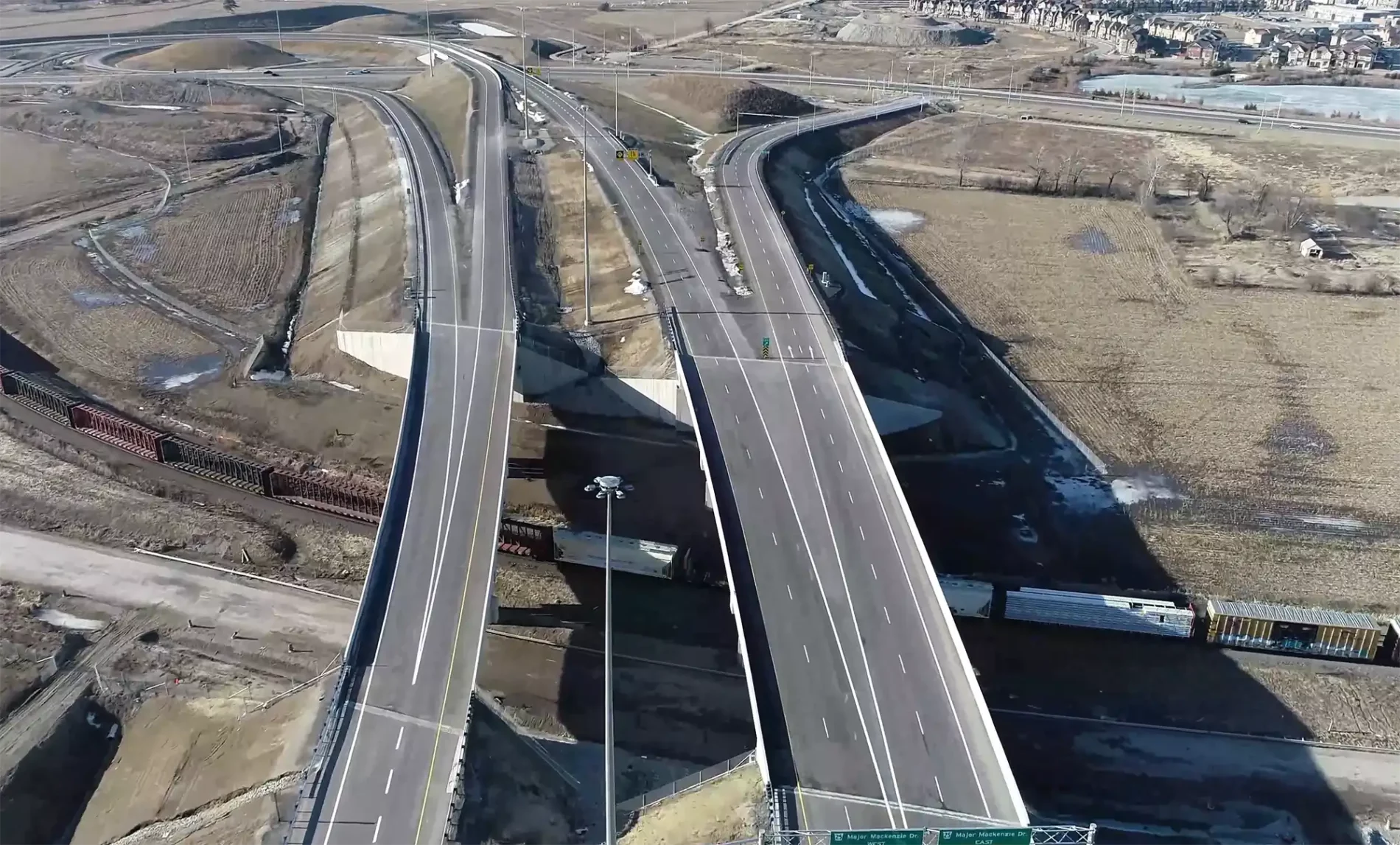
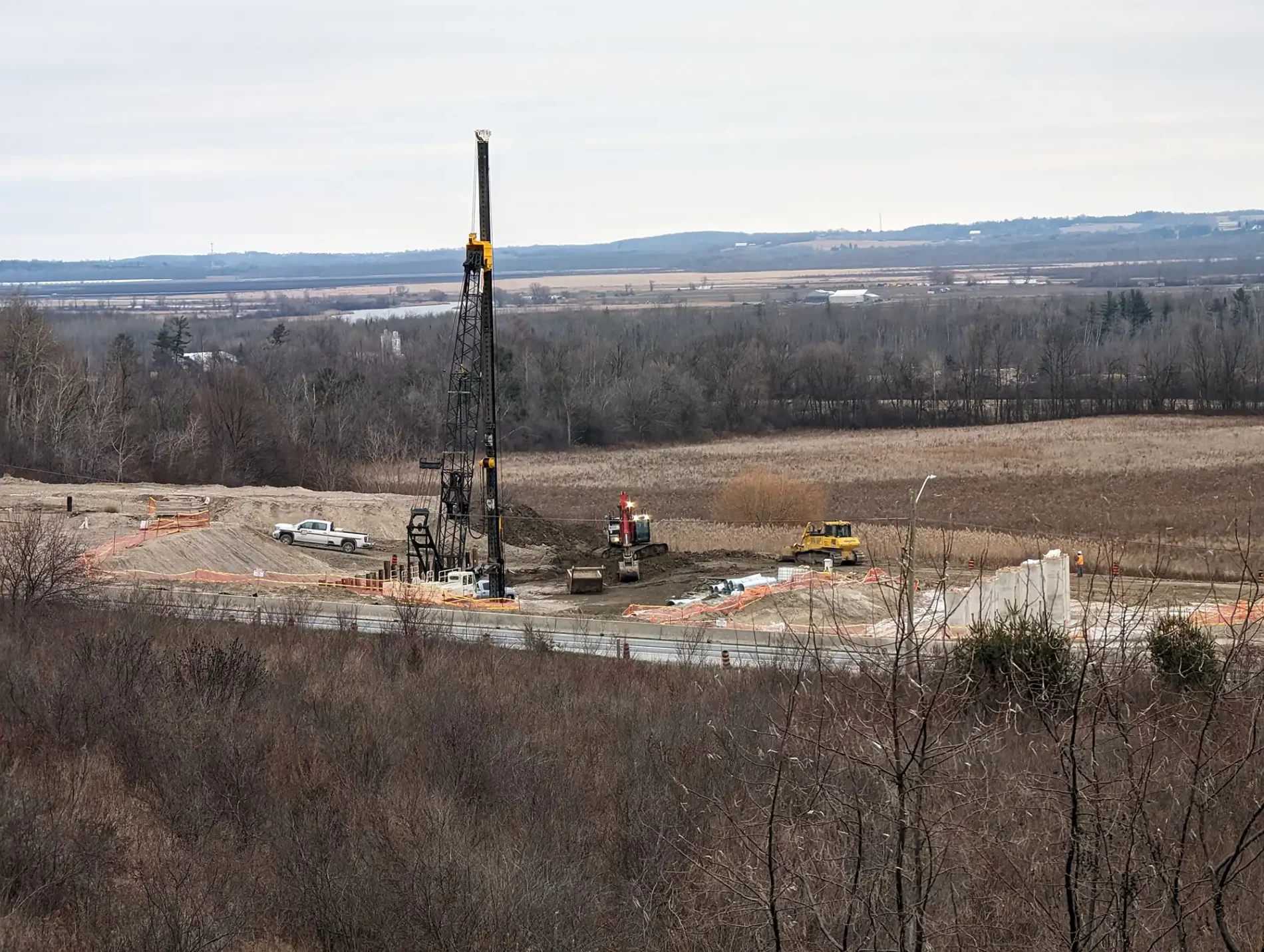
While ORBA’s members are engaged in thousands of projects across the province, several major initiatives are set to reshape Ontario’s infrastructure map in the next few years. One of the most anticipated is the Bradford Bypass, a multi-billion-dollar highway connecting Highways 404 and 400 just north of Toronto. The central portion of that project is expected to go to tender in late 2025, with construction starting in 2026. Other notable projects include the Garden City Skyway in southwestern Ontario, the widening of Highways 11 and 17 in the north, and the final stages of the Gordie Howe International Bridge between Windsor and Detroit. The latter is on track for completion in early 2026. “These are regionally significant projects that reflect where the province is going,” Crombie said. “But to deliver them efficiently, we need municipalities to release tender call sheets early. Late tenders, especially in the north, can hurt project delivery.”

Sustainability is not a buzzword for ORBA. It’s a priority woven into the association’s core mission. Crombie pointed to one area with enormous potential: reclaimed asphalt pavement, or RAP. “When you mill a road, that surface is a reusable asset,” he said. “Reusing it means less need for new aggregate or crude oil, and it dramatically reduces the carbon footprint of a project.”

ORBA is advocating for more asphalt specifications to include higher percentages of RAP, describing it as “low-hanging fruit” for reducing emissions in the road-building sector. Farah added that the association’s sustainability focus extends to tracking carbon impacts and finding new ways to support sequestration and reduction efforts across the industry. “It’s like recycling cardboard,” Crombie said. “It’s just smart business and smart stewardship.”

As Ontario enters an ambitious new era of infrastructure development, the Ontario Road Builders’ Association is making sure the road ahead is clear, consistent, and forward-thinking. Through policy reform, workforce development, and sustainability initiatives, ORBA is helping the province build not just more infrastructure, but better infrastructure. For Crombie and the team, that means one thing above all: making sure the sector is ready to deliver when opportunity arrives. “There’s a lot of work to do,” he said. “But the outlook is very positive.”

The Digital Jobsite: How AI and Robotics Are Rewriting the Blueprint

View in E-mag

The construction site has always been one of the last frontiers of industrial automation. For decades, the rhythm of work was measured in hammer strikes, shouts across scaffolds, and the turning of earth by human hands. But across North America, that rhythm is changing. On jobs from solar farms in Texas to hospitals in Boston, a new generation of tools is joining the crew, artificial intelligence, robotics, drones, autonomous vehicles, quietly transforming what it means to build. Contrary to fear, however, the shift isn’t about replacing workers; it’s about helping an industry close its productivity gap, address safety concerns, and deliver projects that are larger, faster, and more complex than anything that came before.

For years, construction lagged behind other sectors in productivity growth. Manufacturing had doubled its efficiency since the 1970s, while construction’s productivity had actually fallen by around 50 percent. The reasons are well-known: a fragmented industry, volatile demand, and the constant churn of skilled labour. “With nearly one in four construction workers older than 55, retirements will continue to whittle away at the construction workforce,” said Anirban Basu, chief economist with Associated Builders and Contractors. Meanwhile, the projects keep coming; housing shortages, infrastructure renewal, clean-energy developments, each demanding more output from fewer hands. For many companies, the question has become one of survival: how do you build smarter without burning out the workforce?

One answer has come from Boston-based Shawmut Design and Construction, a firm that manages more than 150 active sites and around 30,000 workers nationwide. Since 2017, Shawmut has been using an artificial-intelligence system called Vinnie, developed by the safety-tech company Newmetrix, to analyse photos and videos taken on site. The software can detect unsafe conditions, missing protective equipment, cluttered walkways, or fall risks, and assign a “risk score” to each project. It allows Shawmut’s safety officers to spot trouble early and send support where it’s needed most. “Without Vinnie, we never would have known to give the project some added support,” said Shaun Carvalho, the company’s Chief Safety Officer. He told Business Insider, “You’re talking about a business that, quite literally, 20 or 30 years ago was driven by paper and clipboards.” Now, Shawmut’s safety data feeds into dashboards that update daily, identifying patterns invisible to the human eye.

The implications are profound. Safety monitoring has always relied on hindsight such as incident reports and after-the-fact investigations, but artificial intelligence allows companies to intervene before problems escalate. “Anything we can do to leverage technology, we’ll do it,” Carvalho said. In a field where every avoided accident is potentially a life saved, that’s a compelling argument for change.

If Shawmut’s work represents the digital brain of construction, San Francisco-based Built Robotics is building its muscle. The company retrofits standard excavators, dozers, and skid steers with its “Exosystem,” a kit that allows them to dig trenches, grade roads, or prepare foundations autonomously. “We transform heavy equipment into robots, putting AI-powered tools in the hands of America’s craft workers,” reads the company’s mission statement. Founder and CEO Noah Ready-Campbell, a former Google engineer, started the company after summers spent renovating farmhouses with his father. “When I started Built, I wanted to make new tools to help people build more efficiently,” he said. To date, the firm’s equipment has logged over 30,000 hours of safe operation on energy and infrastructure projects across the United States.

Built’s machines aren’t about removing the operator entirely, they create a new kind of role. The company trains experienced equipment operators to become “Robotic Equipment Operators,” who oversee fleets of autonomous machines from a distance. They monitor the work, adjust parameters, and ensure the robots are operating safely and within spec. “Our construction partners, by embracing autonomy, have improved equipment utilisation and safety, giving them the competitive edge they need to win more work,” said Paul Kelly, Built’s Vice President of Business Development. It’s an example of how automation can redefine, rather than eliminate, human skill. As Ready-Campbell put it in a recent interview, “I definitely think construction benefits from autonomous innovations, but you have to solve a big enough pain point to spur adoption.”

That’s the challenge, and the promise, of the digital jobsite. Artificial intelligence and robotics aren’t plug-and-play solutions. They demand new expertise, new workflows, and a cultural shift that prizes data as much as craft. Drones are now a common sight above major projects, capturing high-resolution imagery that AI systems can use to track progress or identify hazards. Robots handle repetitive or hazardous tasks, layout marking, rebar tying, or even bricklaying, reducing the strain on human crews. AI scheduling platforms predict delays and reorder supply chains before they become costly. And digital twins, real-time 3D models linked to on-site sensors, allow teams to test design changes virtually before implementing them in the field.

“The caution right now,” said Greg Sizemore, Vice President of Workforce Development for Associated Builders and Contractors, “is don’t take it at face value. Be careful what you draw down.” He’s referring to the need for judgment and oversight as AI becomes embedded in decision-making. A machine can flag a risk or suggest an optimisation, but only humans can weigh the context, weather, experience, local regulations, or instinct. In many ways, the new frontier isn’t just technology, it is the integration of human intelligence with machine intelligence.

The results, when it works, are striking. McKinsey research suggests that AI-enabled construction firms can reduce costs by up to 20 percent and deliver projects up to 30 percent faster. Autodesk’s research team has shown how computer-vision systems can monitor safety compliance in real time, automatically flagging missing hardhats or unsafe scaffolding. Across the sector, early adopters report not just fewer incidents but measurable gains in morale and retention. Workers see fewer stop-work orders, fewer injuries, and more predictable schedules.

Still, not all the hype holds. “The dream of fully autonomous construction vehicles remains elusive,” Wired magazine observed last year, pointing out that construction sites are too unstructured and variable for total automation. Mud, uneven terrain, and unpredictable human activity confound even the best sensors. Data quality remains a bottleneck too. Poor data costs the global construction industry an estimated $1.8 trillion annually, and artificial intelligence is only as good as the data it’s trained on. There’s also the question of cost: equipping a fleet of machines or outfitting a site with sensors requires capital that smaller contractors might struggle to justify.

Yet there’s a growing sense that the transformation is inevitable. As the generation that entered construction in the 1970s and 1980s begins to retire, their replacements are digital natives. Tablets have replaced clipboards; cloud platforms have replaced filing cabinets. Even the cultural resistance that once defined the industry—the pride in manual skill, the skepticism toward “gimmicks”—is giving way to pragmatism. “Anything that keeps my guys safer and gets us home earlier, I’ll try it,” one superintendent told Construction Dive in a feature on jobsite robotics. For him, technology isn’t a threat to craftsmanship; it’s another tool in the belt.

This human element is perhaps the most overlooked aspect of the story. Technology is only as transformative as the people who use it. Shawmut’s safety analysts still walk the site every day; they just do it armed with better information. Built Robotics’ operators still know the feel of the soil and the sound of a machine under strain; they just supervise from a safer distance. The promise of the digital jobsite lies not in erasing the human presence, but in amplifying it, giving workers more control, better foresight, and fewer reasons to fear the day ahead.

In the coming years, expect to see more convergence: AI platforms linked to project-management software, autonomous machines feeding live data into digital twins, and crews collaborating with algorithms as routinely as they once consulted blueprints. The next frontier could be predictive maintenance, equipment that diagnoses itself, or AI-driven sustainability audits that monitor carbon footprints in real time. But for now, the transformation is already visible, humming quietly beneath the noise of compressors and saws. The smartest tool on site may not swing a hammer, but it’s helping the people who do build safer, faster, and better than before.

Building Smarter, Stronger, and More Sustainable: How PCI Northeast is Shaping the Future of Construction

View in E-mag
View Brochure

When Sarah Patrie, PE talks about precast concrete, it’s not just about the material. It’s about building smarter, faster, and stronger. As the Executive Director of PCI Northeast (PCINE), Patrie is helping lead a regional effort that reaches far beyond technical specs and into the future of resilient, sustainable infrastructure. “First and foremost, we are a regional trade association,” she explains. “We’re a chapter of PCI, the Precast/Prestressed Concrete Institute. We represent the body of knowledge from the Institute, which develops standards, specifications, certifications and safety. As a chapter, we focus geographically within our region on what our producers need, what our membership needs.”
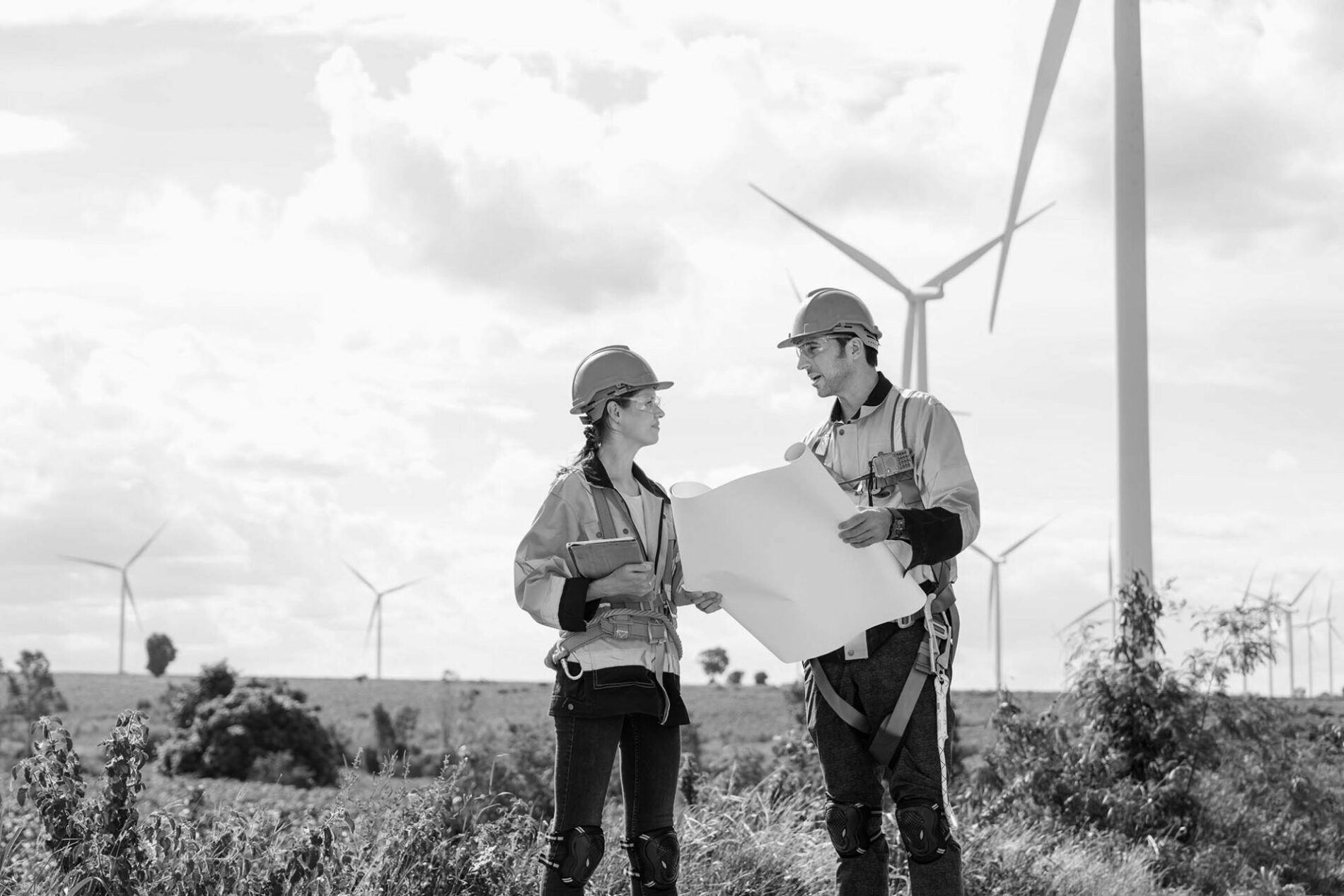
That region is vast, encompassing all of New England and New York, with PCINE operating as a connector between producers, specifiers, state agencies, and the wider construction community. Founded in 1978 as PCI New England and later rebranded, the organization has grown with a mission rooted in quality, collaboration, and innovation.

Central to PCINE’s work is PCI certification. “PCI certification is the gold standard for prestressed and architectural precast certifications,” Patrie says. Plants that earn certification are subject to rigorous quality control and random audits. This level of oversight, she notes, instills confidence among specifiers and ensures a consistently high level of product across the industry.

“Specifications often require you to be PCI certified because the specifiers believe in that standard of quality,” she says. “That’s the benefit—specifiers can rely on the quality of the product because we are ensuring that the production facility is doing what it’s supposed to.”

“Specifications often require you to be PCI certified because the specifiers believe in that standard of quality. That’s the benefit—specifiers can rely on the quality of the product because we are ensuring that the production facility is doing what it’s supposed to.”

As construction timelines shrink and demands increase, precast concrete has emerged as a practical solution. Patrie calls it the answer to today’s mantra of “build it faster, build it better, build it stronger, build it more resilient.”

From vertical construction to infrastructure projects, precast delivers speed and strength. “If we’re talking bridge construction, it means being able to do a weekend shutdown and replace an entire bridge because you have these pieces precast ahead of time,” she explains. “Or in building construction, taking massive buildings and parking garages and being able to accelerate the erection of it.”

Resilience, too, is critical. Concrete’s durability lends itself to emergency shelters, military installations, and buildings in disaster-prone areas. “Second to water, it’s the most consumed resource on the planet,” Patrie says. “What does that mean in terms of resiliency? It’s longevity. It’s how long this product is going to stay around.”

PCI NE has also embraced sustainability—not just as a buzzword, but as a measurable outcome. Recently, PCI launched updated Environmental Product Declarations (EPDs), with regional breakdowns to better reflect local environmental impacts.

“These are just tools on the journey of sustainability to be able to take a look at the carbon footprint of your building or of your structure,” Patrie says. “We like to provide the information where you can take the whole lifecycle analysis of that building into consideration.”

More producers are now developing their own EPDs, a shift PCINE actively supports. The goal is to empower plants to compare themselves to industry averages and meet rising demand for greener construction practices.

While innovation drives much of PCINE’s work, so does advocacy for people. Workforce development is a top priority, especially given the ongoing skilled labor shortage in the construction sector.

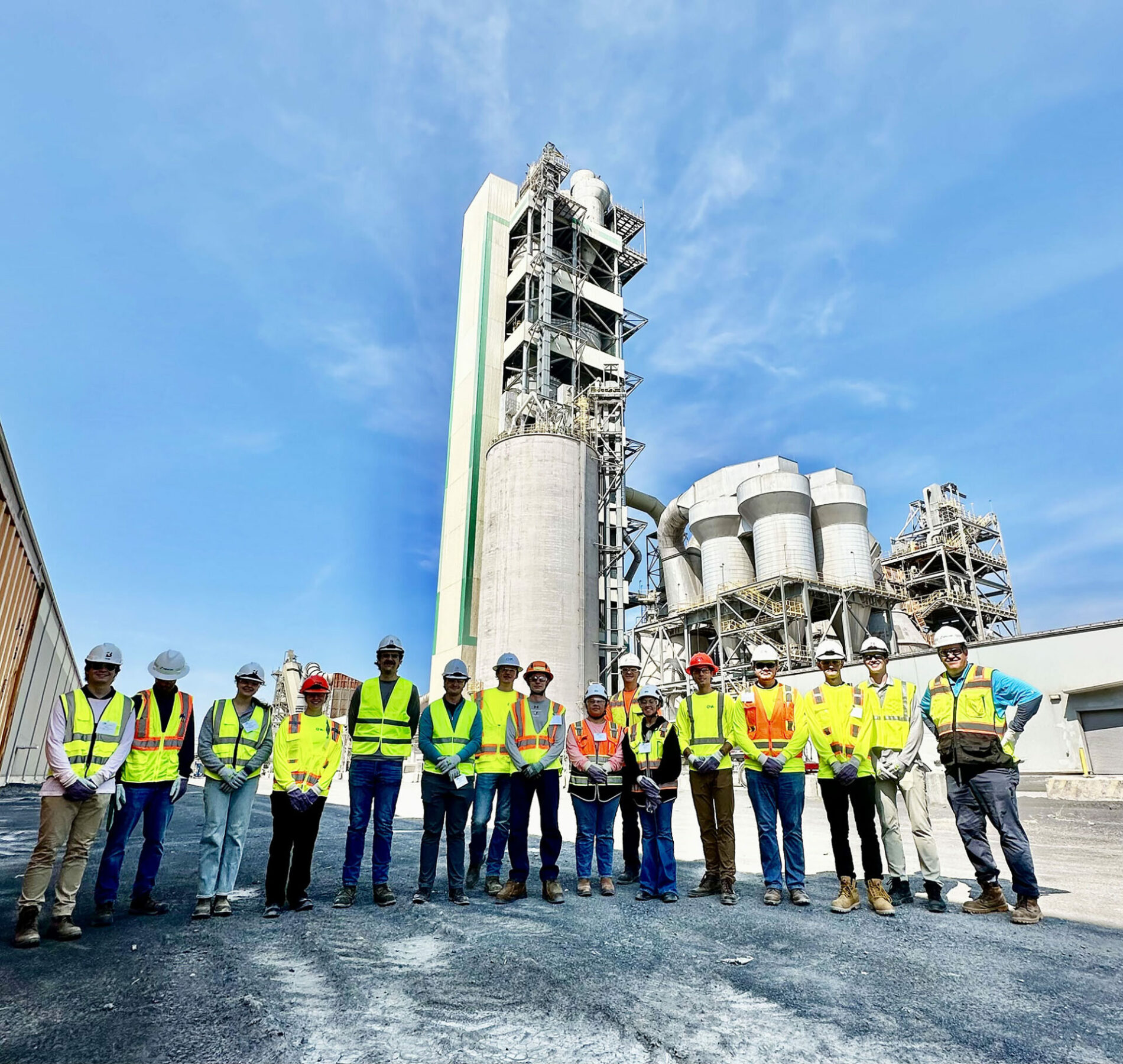
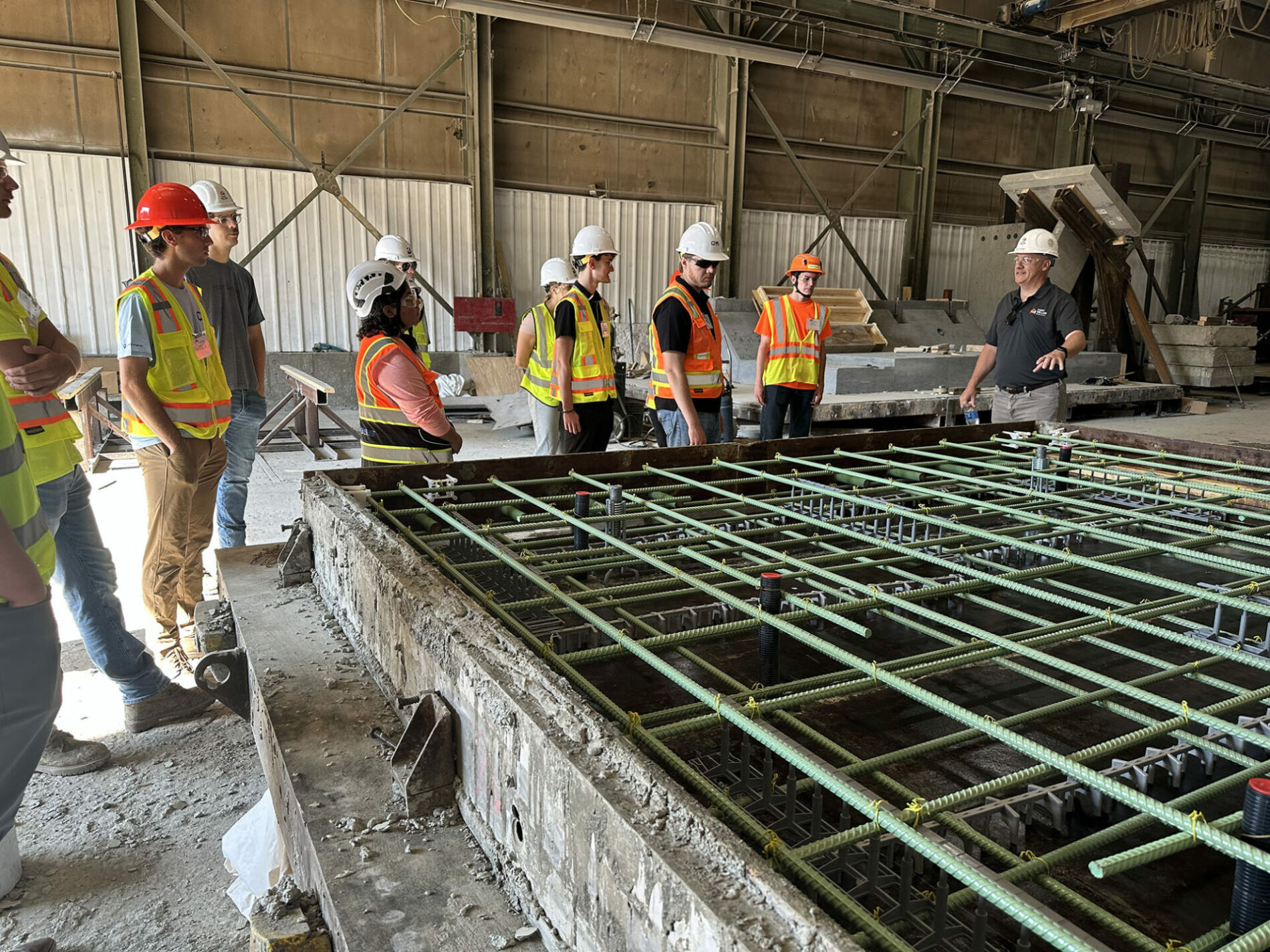
Patrie is especially proud of PCINE’s Intern Day, now entering its second year. “Last year, we started our first annual PCINE Intern Day for precast interns. This year, we expanded it to include consultant engineer interns as well,” she says. The day includes jobsite tours, plant visits, and networking opportunities—a tangible way to connect students with the world of precast.

“The goal of the program is to get interns thinking about precast and about concrete broadly when they go back to school. We want to inspire curiosity, so they take the initiative to learn more about our material.”

Beyond Intern Day, PCINE’s education efforts extend across classrooms, lunchrooms, and boardrooms. “We do lunch and learns both virtual and in-person for engineers, architects, contractors. And for students, we’re able to provide guest lectures for a variety of universities,” Patrie says.

Professors teaching architecture, construction management, and reinforced concrete courses often lean on PCINE for resources that supplement their curriculum with real-world insight into prestressed concrete.

“Marketing is a big part of what we do too,” she adds. “It’s not just about promoting precast, it’s about spreading awareness and educating people on how precast, prestressed concrete works, why it matters, and when it’s the right solution.”

One of PCINE’s proudest achievements is its Technical Bridge Committee, a collaboration that includes all seven state DOTs in the region, along with engineers and precast producers. Established in 1990, the group initially set out to harmonize design standards. But over time, it became something more.

“It’s such a collaborative and innovative group,” Patrie says. About 15 years ago, that collaboration led to the creation of the NEXT Beam—the Northeast Extreme Tee. “We had a problem here in the Northeast. The group worked collaboratively, and they created a new beam.”

The NEXT Beam has since spread across the country, now used in everything from transportation infrastructure to heavy-load buildings like parking garages. “It’s just really cool to see a group that’s been around for so long here in the Northeast making such a difference across the country.”

The future looks bright for PCINE. The organization continues to target new markets, champion early collaboration in the design-assist process, and push for greater understanding of when and how precast concrete is the best solution.

“When something works well, it works well for the entire industry,” Patrie says. “So we like to promote things like design-assist—get your producers involved early. They can help make little changes that will help the specifier down the road and make the project that much better. This year we began a regional awards program – the PCINE Showcase Awards – with the goal of celebrating the incredible projects, people, and teamwork here in the northeast. We include everyone from the design and construction team to the precast producers, erectors, and associate vendors in the showcase.”

From standards and certification to sustainability and education, PCI Northeast is showing how a regional chapter can have national impact. It’s a story of practical innovation, collaborative progress, and the enduring power of concrete.

“We want people to fully understand why certain prestressed products or precast products will work so well for what they’re doing,” Patrie says. And thanks to her leadership, more people do every day.

Fast-Track Canada: Building a New Era of Nation-Shaping Projects

View in E-mag

For decades, Canada’s infrastructure ambitions have often struggled against the weight of bureaucracy, regulatory overlap, and long timelines. Projects deemed vital to the nation’s economic and social fabric sometimes languished for years in approval processes, their momentum lost to paperwork and procedural delays. On September 11, 2025, Prime Minister Mark Carney sought to change that narrative. Announcing the creation of a Major Projects Office (MPO), Carney promised a new era in which major infrastructure, energy, and resource projects would no longer wait a decade to break ground. Instead, they would move from application to construction within two years, reshaping how Canada builds, and how quickly.

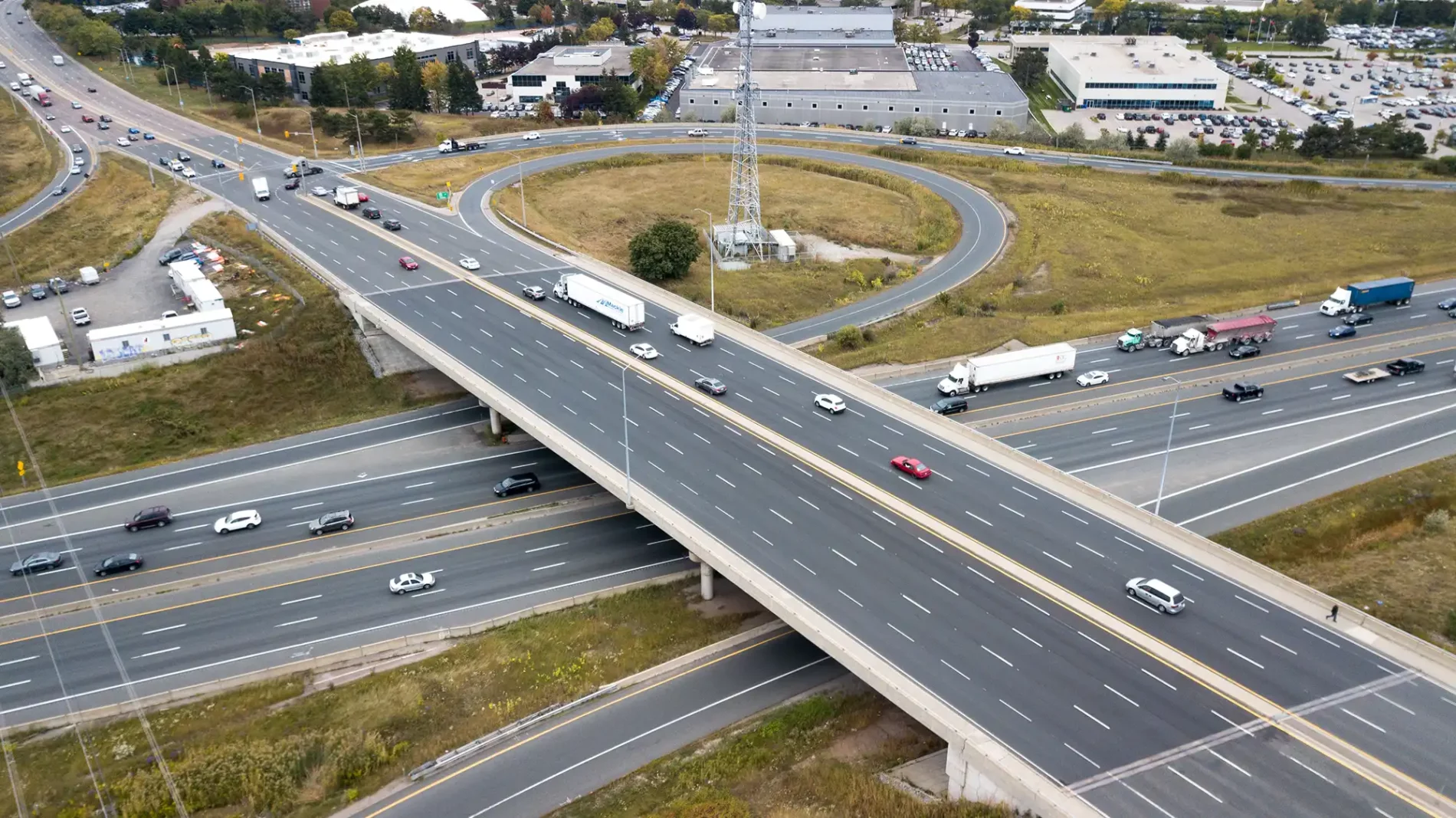
Multi-level transport interchange, busy highways interlace, seamless flow of urban traffic in motion. Sunlit highways bustle with rush hour traffic, aerial view captures city commute energy.

The MPO is not just another federal agency. It is conceived as a central hub, designed to cut through jurisdictional overlap and coordinate between federal, provincial, and territorial bodies. Its mandate is clear: to identify projects of national interest, shepherd them through regulatory review, and deliver faster approvals without sacrificing environmental standards or meaningful engagement with Indigenous communities. Dawn Farrell, appointed as CEO, has emphasized that speed will not come at the expense of consultation, but through coordination and clarity. In practice, that means fewer duplicative reviews, clearer timelines, and a single window through which proponents and governments can work.

The scale of this ambition is evident in the first five projects selected under the MPO’s fast-track regime. Each represents a sector that is critical to Canada’s future, from energy to minerals to transportation, and together they paint a picture of a country ready to build across its full geography. In Kitimat, British Columbia, LNG Canada Phase 2 will double the country’s liquefied natural gas capacity, opening export channels to global markets and reinforcing Canada’s position as an energy supplier. In the same province, the Red Chris Mine Expansion will increase production of gold and copper, two metals essential to both global trade and the clean-energy economy. Moving eastward, Saskatchewan’s McIlvenna Bay Copper Mine adds to Canada’s growing critical minerals sector, a cornerstone of international supply chains in an age of geopolitical uncertainty. In Ontario, the Darlington Small Modular Reactor reflects a pivot toward reliable, low-carbon nuclear energy, and in Quebec, the Contrecœur Terminal Expansion will increase container port capacity, strengthening Canada’s logistics and trade networks.

“LNG Canada Phase 2 will double the country’s liquefied natural gas capacity, opening export channels to global markets.”

Each of these projects tells its own story, but together they symbolize a national strategy. The geographic spread, from the resource-rich Northwest to the industrial heartland of Ontario and the ports of Quebec, underscores the government’s “build everywhere” mindset. The diversity of sectors reflects Canada’s attempt to simultaneously pursue economic growth, energy transition, and trade diversification. And the scale of ambition speaks to a larger promise: that Canada will no longer be defined by delays, but by delivery.

For industry, the announcement has been received with cautious optimism. Construction, engineering, and energy firms have long argued that Canada’s regulatory processes have undermined competitiveness, with major projects often stuck for years in environmental assessments and consultation requirements. The government’s new benchmark —two years from application to construction—is a sharp departure from timelines that frequently stretched into a decade or more. It is, as the Prime Minister put it, about “turbocharging growth” and restoring Canada’s reputation as a country that can get things built.

The economic stakes are significant. Federal estimates suggest that these projects, and those that follow, could generate over CAD$60 billion in growth, alongside tens of thousands of jobs in construction, trades, and supply chains. The LNG expansion alone is expected to attract billions in investment, while the Darlington nuclear project could shape the future of clean baseload energy in Ontario for generations. For port operators in Quebec and miners in Saskatchewan and British Columbia, the potential is just as transformative, unlocking trade routes and critical mineral supplies in a world increasingly defined by supply-chain fragility.

Yet the challenges are real. Environmental organizations have already warned that speed must not become a synonym for carelessness. Indigenous leaders have urged the government to ensure that fast-tracking does not mean bypassing the duty to consult, or reducing engagement to a box-ticking exercise. Carney and Farrell have both stressed that consultation and environmental standards will remain intact, but that integration, one process instead of several, a clear timeline instead of uncertainty, will make them more effective rather than less. The balancing act will be delicate.

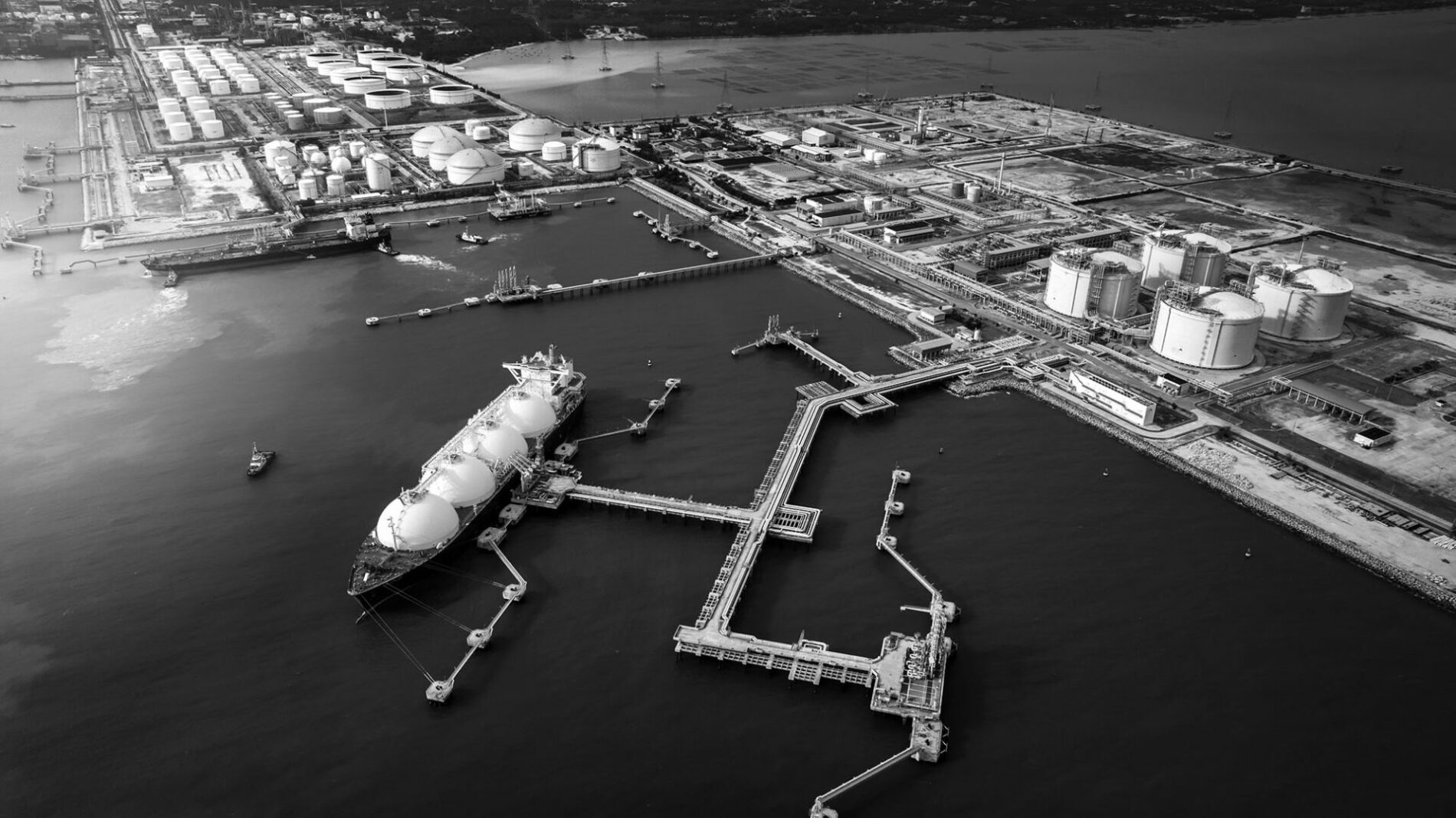
LNG (Liquified Natural Gas) tanker anchored in Gas terminal gas tanks for storage. Oil Crude Gas Tanker Ship. LPG at Tanker Bay Petroleum Chemical or Methane freighter export import transportation

The creation of the MPO also reflects broader global pressures. Canada’s peers in the G7 and beyond are moving aggressively to secure supply chains, particularly for critical minerals and low-carbon energy. The United States, through the Inflation Reduction Act and related measures, has thrown unprecedented subsidies at clean energy and manufacturing. The European Union has its own Green Deal industrial strategy. In this landscape, Canada risks falling behind if it cannot deliver the infrastructure and resource projects that underpin competitiveness. Fast-tracking is, in this sense, not just about bureaucracy but about geopolitics: the ability to secure investment, diversify trade, and project reliability on the world stage.

Industry groups have described the announcement as an “exciting moment” for Canada’s construction sector. For builders, engineers, and contractors, the prospect of a steady pipeline of projects, backed by federal coordination and funding, means visibility, stability, and opportunity. For workers, it promises jobs not just in urban centers but across rural and resource-dependent regions. And for communities, it offers the prospect of improved infrastructure, from ports to power plants, with all the secondary economic benefits they bring.

Still, execution will matter more than announcement. Fast-tracking a nuclear reactor or a major LNG expansion requires not only political will but also regulatory capacity. The MPO will need to be staffed with experts capable of navigating environmental, financial, and Indigenous engagement challenges. Provincial and territorial governments will need to align their processes with federal objectives. And communities will need to see tangible benefits, not just promises. The government’s credibility will rest not on press releases, but on whether shovels are in the ground on schedule.

Looking ahead, the MPO’s success will likely be judged on several fronts. Can it deliver approvals within the promised two-year window? Can it maintain the trust of Indigenous communities and environmental stakeholders while moving at unprecedented speed? Can it attract and coordinate the private investment needed to scale projects of this magnitude? And, perhaps most importantly, can it sustain this model beyond the first wave of projects, institutionalizing a culture of speed and coordination across the federal system?

For now, the optimism is palpable. Canada has set out a vision of itself as a country that can build big again, not by sacrificing its values, but by aligning them with urgency. The five inaugural projects, spanning energy, minerals, nuclear power, and port expansion, are more than individual developments. They are a statement of intent: that Canada is ready to build the infrastructure of the future quickly, strategically, and inclusively.

From bridges and railways in the 19th century to pipelines and highways in the 20th, Canada’s nation-building has always been measured in steel, concrete, and time. In the 21st century, time itself may be the most precious resource. By promising to cut approval timelines from a decade to two years, the federal government is betting that speed and strategy can coexist. If it succeeds, Canada’s next generation of infrastructure may arrive not years too late, but just in time.

Forging Futures: EN2 Development Corp’s Impact on Canada’s Built Environment

View in E-mag
View Brochure

In an industry where timelines tighten and expectations soar, EN2 Development Corp stands out by turning complex visions into tangible realities across Canada’s varied landscapes. From revitalizing urban retail spaces to supporting community infrastructure in partnership with First Nations, the company has built a reputation for reliability and innovation. This approach isn’t just about erecting structures, it’s about creating lasting value that resonates with clients and communities alike, as EN2 navigates the evolving demands of modern construction.

Founded in 2005 by partners Nuno Paul and Nuno Nascimento, EN2 began with a clear mission to blend expertise and empathy in the construction world. Paul, drawing from his roots in business management and corporate sales, emphasized client relationships, while Nascimento brought over 25 years of practical experience in contracting, woodworking, and artisan craftsmanship. Their synergy laid the foundation for a firm committed to “the highest standards of corporate social responsibility with an uncompromising commitment to diversity, inclusion, sustainability and innovation,” as they collaborate with clients, partners, and communities to shape a brighter future. Starting in custom homebuilding, EN2 quickly adapted to the shifting tides of Canada’s construction sector, where urban expansion and niche markets demanded agile players.

The company’s growth mirrors broader industry trends, including the push for sustainable practices and diversified portfolios amid economic fluctuations. By expanding from residential work into commercial, retail, hospitality, and even the post-legalization cannabis sector, EN2 capitalized on emerging opportunities. “My partner and I saw an opportunity in the GC world, and we still do, as older companies are not moving with the times as quickly as we are,” Paul noted in a 2022 profile. This forward-thinking mindset has enabled EN2 to partner with multinational corporations, offering seamless support without the need for internal construction teams.

EN2’s core services revolve around general contracting and construction management, with a focus on commercial and hospitality projects. They manage full-spectrum builds, from fit-outs and renovations to new constructions and property restorations, particularly excelling in retail and industrial spaces. Their differentiator lies in embedding themselves within client operations. “We focus on helping Corporations execute their construction projects and look to become an integral part of their organization when they need anything to do with construction,” Paul elaborated. This includes joining internal strategy sessions to advise on growth from a builder’s perspective. Reliability is paramount: “If we say we’re going to do something or be ready on a specific date (barring changes from clients), we meet that date at all costs!” In a field notorious for overruns, this pledge fosters trust and repeat business.

Further setting EN2 apart is their niche expertise, such as in cannabis retail, where they’ve navigated regulatory hurdles to deliver compliant, efficient stores. Insights from their experience highlight key factors like site selection and layout optimization. Property management and turn-key solutions round out their offerings, ensuring alignment with client goals. Testimonials reflect this strength; for instance, Cadillac Fairview commended: “Cadillac Fairviews (CF) experience working with EN2 Development has been outstanding… In short, their execution of landlord work has been second to none.” Such endorsements highlight EN2’s knack for balancing budgets, schedules, and quality.

Milestones punctuate EN2’s trajectory, underscoring their resilience and expansion. From humble beginnings in high-end homes, the firm grew to employ 51-200 staff, establishing a stronghold in Ontario and venturing further. By 2021, they were engaging in industry forums like the Business of Cannabis, sharing retail design strategies. Launching The Construction Podcast allowed founders to discuss trends candidly, enhancing their thought leadership. Paul has spoken openly about scaling challenges: “We cherish our team in the office and on-site… Our corporate culture is one that was built by myself and my business partner. We protect that culture with everything we have.” This focus on people has sustained growth amid labor shortages and supply chain pressures.

“We cherish our team in the office and on-site… Our corporate culture is one that was built by myself and my business partner. We protect that culture with everything we have.”

EN2’s portfolio showcases their versatility through standout projects and collaborations. The Goodwin Project, a residential renovation, demonstrates their foundational skills in transforming interiors and exteriors with modern flair and functionality. In retail, their work on cannabis outlets emphasizes compliance and client-centric design. A notable collaboration involved renovating a Tim Hortons at 2208 Jane Street in North York, Ontario, where EN2 handled the fit-out to create an efficient, welcoming space for the iconic brand. Client feedback from similar ventures affirms their role: “We are using EN2 Development Corp. to handle the construction of our cannabis retail locations in Ontario. Since day one, they have had our back.” Extending their reach, EN2 contributed to the Nipissing First Nation Development, a community project involving infrastructure like storm lines, hydro poles, foundations, steel structures, and gas pump pads, progressing steadily under their management. This initiative aligns with broader efforts in Nipissing’s Bineshii Business Park, a 76-acre hub expanding to support commercial and light industrial growth. Partnerships with groups like The Donnelly Group further illustrate EN2’s collaborative ethos, delivering spaces that boost local economies.

As EN2 looks forward, they’re aligned with Canada’s construction outlook, which anticipates growth through infrastructure spending and tech adoption. Paul envisions expansion: “We want to continue this accelerated growth in the different sectors of construction. We want more of these Multi-Nationals to know EN2 as the ‘go-to’ for ALL their construction needs.” Prioritizing sustainability, talent development, and digital tools, EN2 aims to address ongoing challenges like workforce gaps and environmental mandates.

Ultimately, EN2 Development Corp’s narrative is one of partnership and perseverance. In a field that builds more than just buildings, their commitment to integrity and innovation offers a blueprint for meaningful progress, inspiring a more connected and resilient Canada.

Training Our Way Out of the Shortage: How North American Contractors Are Rebuilding the Workforce Pipeline

View in E-mag

North American construction firms are facing a sustained labor shortage that continues to challenge project delivery schedules and budgets. While the sector has seen robust demand, particularly in public infrastructure and industrial development, securing the skilled workforce to meet that demand remains a critical priority.

In the United States, construction recorded 246,000 open positions in June 2025, up from 232,000 in May, according to the Bureau of Labor Statistics’ Job Openings and Labor Turnover Survey (JOLTS). The level is below the record highs of 2024 but remains historically elevated, reflecting an ongoing imbalance between supply and demand for labor. Associated Builders and Contractors (ABC) projects the industry will need to attract approximately 439,000 net new workers in 2025 to meet anticipated demand. “While the construction workforce has become younger and more plentiful in recent years, the industry still must attract 439,000 new workers in 2025 to balance supply and demand,” ABC Chief Economist Anirban Basu stated in January 2025. In Canada, the demographic picture is even more pressing. BuildForce Canada’s 2025–2034 outlook forecasts that nearly 270,000 experienced construction workers, around one-fifth of the 2024 labor force, will retire over the next decade. When combined with projected growth, total hiring requirements could reach 380,500 by 2034. The report stresses the importance of structured mentorship and the recruitment of under-represented groups to sustain productivity.

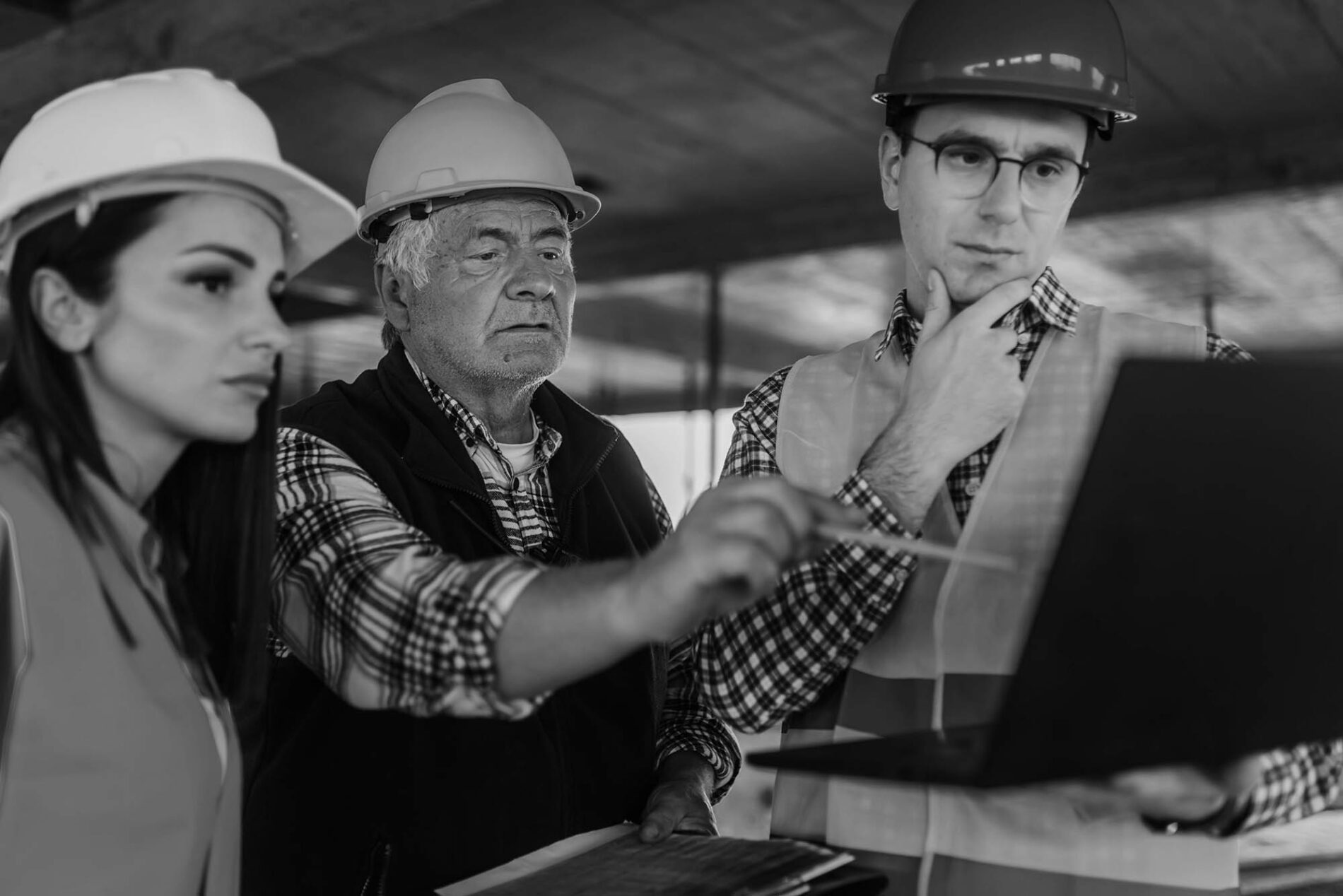
Construction workers wearing safety vests and helmets are analyzing blueprints on a laptop, discussing a project at the building site

Across the continent, public-sector investment is underpinning much of the current demand. The Associated General Contractors of America (AGC) reports that more than two-thirds of U.S. firms plan to add workers in 2025, with the most optimism in water, transportation, and power sectors. These segments are benefiting from multi-year federal programs and utility-led capital expenditure. Despite this steady demand, the labor market remains tight. JOLTS data show that while hiring levels are strong, with 351,000 hires in June 2025, the number of job openings and the rate of separations keep the market competitive for talent.

One of the most significant responses to the shortage has been the expansion of registered apprenticeships. In 2024, the U.S. Department of Labor announced its largest ever combined investment in the system, over 244 million dollars, with the aim of modernizing, diversifying, and expanding apprenticeship opportunities. Additional state-level grants in 2025 are designed to increase employer participation and reduce administrative barriers. For contractors, this provides a clearer pathway to bring in new entrants while ensuring they develop job-ready skills. Earn-while-you-learn models, which combine classroom instruction with on-the-job training, remain one of the most effective tools for both recruitment and retention. They also allow firms to meet immediate project needs while building longer-term capacity. In Canada, BuildForce has identified apprenticeships and mentorship programs as key to bridging the skills gap. With the retirement wave underway, knowledge transfer between experienced tradespeople and newer workers is becoming a strategic imperative.

The firms making the greatest progress in workforce development are those that recruit for specific, well-defined roles rather than broad, generic positions. They are linking their hiring efforts to concrete competencies and career paths, ensuring that new entrants see a clear route to advancement. Many are also working closely with education providers, including community colleges, trade schools, and workforce boards, to design condensed, stackable training modules that shorten the time from initial recruitment to site readiness. This level of partnership aligns training directly with the skills required on active projects and helps ensure consistency in workforce quality.

Equally important is how these firms communicate the value of a construction career. Competitive pay, strong benefits, and the long-term earning potential of skilled trades are being explained with clarity, countering outdated perceptions of the industry. This is particularly effective in reaching high school graduates who are not pursuing four-year degrees and in attracting career switchers who value stability and upward mobility. Retention practices are also becoming more structured. Formal mentoring, practical supports such as tool stipends, and efforts to provide predictable scheduling are helping to reduce attrition, especially during the crucial first year of employment when drop-out rates can be high.

Recent policy developments are helping to reinforce these employer-led efforts. In the United States, apprenticeship funding has become more flexible, allowing states to adapt programs to local industry needs while streamlining the registration process for employers. Public agencies and trade organizations are also releasing more detailed and timely workforce data, enabling better forecasting and planning. In Canada, the acknowledgment of the scale of the upcoming retirement wave is influencing procurement expectations, with more owners looking for evidence of workforce sustainability strategies in contractor bids. These shifts are creating an environment where proactive workforce planning is not only a competitive advantage but, in many cases, a bid requirement.

Contractors preparing for autumn bid cycles and project launches are increasingly adopting integrated workforce strategies. Some are creating targeted onboarding cohorts that tie training milestones to active projects and assign each new recruit to a dedicated mentor. Others are offering multiple entry routes, from pre-apprenticeship programs for those completely new to the sector to direct-entry options for experienced workers from other industries. Outreach efforts are being timed to align with school and college calendars, ensuring a steady flow of candidates at key points in the year. Many firms are now embedding detailed recruitment, training, and retention plans into their bids, giving owners greater confidence in their ability to deliver projects without disruption.

The labor shortage in North American construction is unlikely to be resolved in the short term. However, the growing alignment between public investment, industry-led training, and policy support is providing the foundation for long-term solutions. Firms that treat workforce development as a strategic priority, integrating it into project planning and execution, will be better positioned to meet demand, control labor costs, and maintain schedule integrity.

“The challenge is not a lack of work, but ensuring that the people delivering it have the skills, support, and career prospects to stay in the industry.”

The challenge is not a lack of work, but ensuring that the people delivering it have the skills, support, and career prospects to stay in the industry. Meeting that challenge will require coordinated effort, sustained investment, and the recognition that a strong workforce is as essential to construction as any material or piece of equipment on site.

America’s Infrastructure Boom: Roads Are Rising, but Can the Industry Keep Up?

View in E-mag

“With over 60,000 projects funded through our Bipartisan Infrastructure Law, we continue to deliver on the decades-long promise to invest in American infrastructure.”

That’s how U.S. Transportation Secretary Pete Buttigieg framed the current moment. And he’s not wrong. Across the country, roads and bridges are being rebuilt at a scale not seen in generations. From dense metro corridors to rural bypasses, construction zones are now part of daily life for millions of Americans. And this is only the beginning.

road currently under construction at several levels to increase traffic

The scale is staggering. In 2025 alone, non-building construction activity is projected to grow nearly 9 percent, reaching $368 billion in value. Highways are expected to rise by more than 14 percent, and bridges by 11 percent. These gains outpace nearly every other sector in the built environment.

What’s driving the growth? Federal investment, primarily through the Infrastructure Investment and Jobs Act, has pumped new life into long-stalled projects and given state transportation departments more predictable funding than they’ve seen in decades. This year, $62 billion in highway formula funding is flowing to states, a full $19 billion increase over 2021 levels. It’s the largest single-year allocation since the Interstate Highway System was launched.

So far, states have committed over $200 billion of this money to more than 96,000 individual projects. New bids and contract awards continue to surge. In March alone, states awarded $33.5 billion in highway and bridge contracts. Compared to last year, that’s a 12 percent increase, with some regions seeing even steeper growth.

“This is still a fairly robust market,” says Richard Branch, Chief Economist at Dodge Construction Network.

Texas, California, and Florida continue to receive the largest funding allocations, but some of the most aggressive growth is happening elsewhere. In Ohio and North Carolina, for example, contract awards jumped 38 and 31 percent respectively in the first quarter of 2025. That signals a strong late-year construction pipeline as projects move from design to jobsite.

In Texas, the multi-billion-dollar rebuild of Interstate 35 through Austin stands as a symbol of the IIJA era. Known as the Capital Express project, it involves everything from new express lanes to multimodal transit integration. Meanwhile, in smaller states like Vermont, IIJA funds are helping modernize bridges and build out EV charging corridors. The federal funding model is designed to support both megaprojects and small-town upgrades, creating a truly national impact.

But federal dollars aren’t doing it alone. Many states have stepped up with their own funding streams, using tools like general fund transfers, bonds, and targeted taxes to match or even exceed federal contributions. In some cases, voters approved gas tax hikes or transportation-specific ballot measures to make it happen.

“Several states increased their own revenues to match federal funds and make additional transportation investments,” says Alison Black, Senior Vice President and Chief Economist at the American Road & Transportation Builders Association.

“Several states increased their own revenues to match federal funds and make additional transportation investments.”

This blend of federal stability and state ambition has put the industry into high gear. Contractors are busy, state DOTs are staffing up, and local governments are finally clearing long-standing maintenance backlogs. It feels like a rare alignment of money, momentum, and mission.

But beneath the surface, challenges are growing just as fast.

Construction site is laying new asphalt pavement, road construction workers and road construction machinery scene. Highway construction site scene.

The construction labor shortage, long a looming threat, has become a day-to-day constraint. More than 400,000 skilled positions remain unfilled nationwide. In major markets, some firms are offering 15 to 20 percent wage premiums just to keep crews intact. Projects are getting done, but schedules are stretched, and quality control is harder to maintain when teams are short-staffed.

Material costs add another layer of risk. Steel prices jumped after recent trade policy announcements. Asphalt costs are up too, squeezing budgets and forcing some contractors to renegotiate terms or absorb losses. For fixed-price contracts signed months ago, these fluctuations can wipe out profit margins entirely.

Then there’s the political question. While much of the IIJA money is already allocated, not all of it is obligated or spent. A shift in leadership in Washington could impact how remaining funds are distributed. Policy decisions around tariffs, immigration, and labor training could tilt the playing field in significant ways.

Richard Branch has warned that external factors like trade policy and workforce immigration rules could shape the construction outlook as much as market demand.

Despite these uncertainties, the outlook remains positive. Federal and state investment in infrastructure is not just creating short-term jobs. It is laying the foundation for long-term economic growth, safety, and climate resilience.

“These investments keep Americans safer, promote efficiency, advance our climate goals, and spur technological innovation,” says Kristin White, Acting Administrator of the Federal Highway Administration.

Even after the current funding cycle ends in 2026, the impact will continue. Historically, infrastructure dollars take years to fully spend. Many of the funds allocated in 2022, 2023, and 2024 will still be driving projects into the latter part of the decade.

That said, this window of opportunity is not permanent. If Congress doesn’t renew or replace the IIJA with a long-term funding model, states could face a hard landing when the current money runs out. The industry knows this, and the quiet conversations about “what comes next” are already underway.

For now, though, the machines are running, the ribbon cuttings are happening, and the work is getting done. Across the country, Americans are seeing visible results: smoother roads, safer bridges, smarter corridors. The infrastructure boom is real. The question is how long we can sustain it, and whether the workforce, the supply chain, and the politics can keep pace with the promise.

Building a Solution: How California’s Construction Industry is Tackling the Housing Shortage

View in E-mag

California’s housing crisis is a behemoth, casting a shadow over the state’s economy, communities, and dreams of homeownership. With a shortfall of 2.5 to 3.5 million homes needed by 2030, the state faces skyrocketing costs, rising homelessness, and grueling commutes that stretch lives thin. Yet, amid this daunting challenge, California’s construction industry is fighting back with innovation, policy reforms, and grit. From modular homes to streamlined approvals, the state is reimagining how to build faster, smarter, and more affordably. As 2025 unfolds, a combination of creative solutions, legislative muscle, and real-world successes offers hope for closing the gap.

California’s housing shortage is a decades-long problem, rooted in a supply-demand imbalance that has driven median home prices to nearly 400% above the national average, with rents following suit. The Public Policy Institute of California notes that over 1.5 million renter households pay more than 50% of their income on rent, contributing to the state’s highest-in-the-nation poverty rate when cost of living is factored in. The consequences are stark: homelessness has surged, with 72% of California’s unhoused population living unsheltered, compared to just 5% in New York. “Super-commutes” of over 90 minutes one-way are increasingly common as workers are priced out of urban centers, forcing families to live hours from their jobs.

The bottlenecks are manifold. Slow permitting processes, driven by complex regulations and local opposition—often dubbed “NIMBYism” (Not In My Backyard)—stifle development. The California Environmental Quality Act (CEQA) is frequently misused to delay or block projects, with a 2015 study finding that 80% of CEQA lawsuits targeted infill developments rather than greenfield projects. Rising material costs, exacerbated by supply chain disruptions, and high labor costs, driven by prevailing wage laws, further inflate expenses. “The cost of building multifamily housing in California spiked by about 25% between 2010 and 2020,” according to the Terner Center for Housing Innovation at UC Berkeley. Without bold action, the state’s goal of 180,000 to 300,000 new homes annually remains out of reach, with only 109,000 units permitted in 2023.

To combat these challenges, California’s construction industry is embracing innovative approaches to build faster and cheaper. Modular and prefabricated housing is leading the charge. Companies like Factory_OS and Veev are revolutionizing construction by assembling homes in factories, reducing on-site labor and cutting build times by up to 50%. “Modular construction allows us to deliver high-quality homes at a lower cost and in less time,” said Rick Holliday, co-founder of Factory_OS, in a 2024 interview with CalMatters. These methods also minimize waste, aligning with California’s sustainability goals.

Accessory Dwelling Units (ADUs), or “granny flats,” are another game-changer. Recent laws like SB 9 and SB 10 have relaxed permitting rules, making it easier for homeowners to add secondary units to their properties. “ADUs are a quick way to increase housing supply without disrupting neighborhoods,” said Connie Pak, a real estate attorney with Loeb & Loeb, highlighting their role in urban infill. In 2023, California saw a 230% spike in permitted ADUs compared to 2009, a testament to their growing popularity.
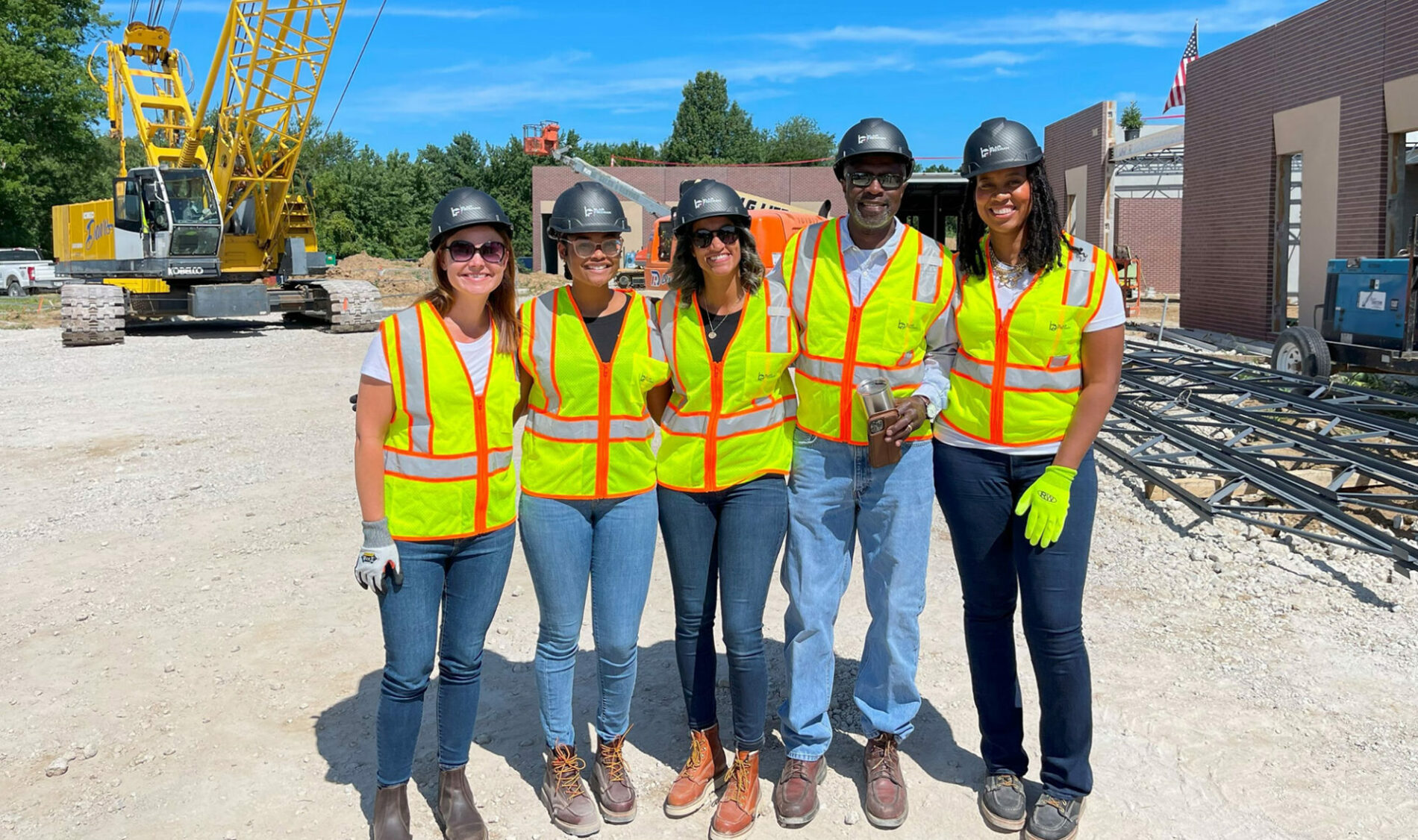
Micro-units and co-living spaces are also gaining traction in urban areas. These high-density, low-cost designs cater to young professionals and single individuals, maximizing land use in cities like San Francisco, where land costs are astronomical. Developers are also exploring vertical integration, controlling design, manufacturing, and construction to streamline processes and reduce costs. “By bringing everything in-house, we can cut inefficiencies and deliver affordable units faster,” said a Bay Area developer in a 2024 SPUR report. These innovations are critical to meeting the state’s housing needs while navigating its high-cost environment.

The construction process of a new and modern modular house made of composite sip panels on a sunny winter day.

Public policy is a linchpin in addressing the crisis. Recent legislation, such as SB 35 and AB 2011, has streamlined approvals for affordable and infill housing, reducing opportunities for NIMBY-driven delays. SB 423, passed in 2023, extended these reforms to the coastal zone, a significant step given the California Coastal Commission’s historical resistance to development. Density bonuses and tax credits incentivize developers to include low-income units, with SB 290 expanding these benefits to include affordable housing for low-income college students.

Local governments are also stepping up. Cities like San Diego and San Jose are experimenting with fast-track approvals and zoning reforms to encourage higher-density development near transit corridors. “Streamlining local approval processes is critical to accelerating housing production,” said Robert Kleinhenz, director of the Office of Economic Research at California State University, Long Beach. AB 602, another recent law, ensures that impact fees are transparent and proportional to project size, reducing financial barriers for developers. These reforms aim to create a more predictable, efficient path for housing projects, though challenges in implementation persist.

A critical hurdle is the construction industry’s labor shortage. With over 20% of workers over 55 and nearing retirement, and less than 3% of young people considering construction careers, the industry faces a shortfall of over 500,000 workers nationwide. In California, prevailing wage laws and union labor requirements can increase costs by 9% to 37%, according to studies cited by the California Legislative Analyst’s Office. “The question is not about wages. It’s about which workers are eligible to work on jobs,” said Amie Fishman, executive director of the Non-Profit Housing Association of Northern California, highlighting the tension between union and non-union labor.

To address this, training programs like LA’s HireLAX and Northern California’s pre-apprenticeship initiatives are upskilling workers. HireLAX, for example, offers hands-on training and job placement, with a focus on underrepresented communities. “We’re building a pipeline of skilled workers to meet the demand for housing construction,” said a HireLAX spokesperson in a 2024 press release. The state is also promoting technology, such as AI and robotics, to handle repetitive tasks, freeing human workers for specialized roles. These efforts aim to bolster the workforce while maintaining safety and quality standards.

Real-world projects illustrate what’s possible. In Downtown Los Angeles, adaptive reuse projects are transforming vacant office buildings into apartments, leveraging existing structures to bypass some regulatory hurdles. “Adaptive reuse is a win-win; it revitalizes urban areas and adds housing without sprawling into open spaces,” said Connie Pak. Since 2021, Loeb & Loeb has facilitated over $800 million in financing for such projects in LA County, proving their scalability.

In the Bay Area, nonprofit developers like Bridge Housing and Eden Housing are leading the charge on low-income housing. Bridge Housing’s recent project in Oakland delivered 200 affordable units in just 18 months, thanks to streamlined permitting and density bonuses. “We’re proving that affordable housing can be built quickly and well,” said a Bridge Housing representative in a 2024 report by the Terner Center.

Governor Newsom’s Project Homekey, which converts hotels and motels into permanent housing, has been a standout success. Since 2020, it has created over 12,000 housing units, with a focus on serving the homeless population. “Project Homekey shows that with the right funding and political will, we can move fast,” Newsom said in a 2024 press conference. However, challenges remain, including high costs and the need for sustained funding. Lessons from these projects highlight the importance of public-private partnerships, streamlined regulations, and community buy-in for scaling success.

“Lessons from these projects highlight the importance of public-private partnerships, streamlined regulations, and community buy-in for scaling success.”

California’s housing crisis demands a multifaceted approach, and the construction industry is rising to the challenge. Modular construction, ADUs, and micro-units are cutting costs and time, while policy reforms like SB 35 and local zoning changes are clearing regulatory hurdles. Training programs and technology are addressing labor shortages, and projects like Project Homekey and adaptive reuse initiatives show what’s possible when innovation meets action. “We’re at a turning point,” said Ben Metcalf, former state Housing and Community Development Director. “If we keep pushing on all fronts, policy, innovation, and workforce development, we can start to close the gap.” As California builds toward 2030, the industry’s resolve and creativity offer a blueprint for restoring the California Dream.

The Weight of Policy: Tariffs and Administrative Changes Reshaping U.S. Construction

View in E-mag

The U.S. construction industry, a vital engine of economic growth, is facing unprecedented challenges in 2025. New administrative policies and sweeping tariffs on imported materials are driving up costs, disrupting supply chains, and threatening the affordability of housing and infrastructure projects. From bustling job sites in Nashville to disaster-stricken regions in Los Angeles, industry leaders are grappling with how to adapt while maintaining profitability and meeting demand.

In April 2025, the Trump administration announced reciprocal tariffs on critical construction materials, including a 25% duty on steel and aluminum from major trading partners like China, Canada, and Mexico, as well as tariffs on lumber, electrical components, and construction machinery. While these tariffs were paused for 90 days for most countries (except China) to allow for trade negotiations, the mere threat has sent shockwaves through the industry. The National Association of Home Builders (NAHB) reported in April 2025 that 60% of U.S. builders noted suppliers had already increased or planned to increase material prices due to tariff uncertainty. This has compounded existing cost pressures, with NAHB data showing a 12% drop in new single-family home construction starts in April 2025 compared to the previous year, driven by tariffs, high mortgage rates, and rising material costs.

Buddy Hughes, NAHB chairman and a home builder from Lexington, North Carolina, encapsulates the industry’s frustration: “The decline in single-family housing starts in April mirrors builder sentiment, as elevated interest rates, uncertainty on the tariff front, and rising construction costs are exacerbating housing affordability challenges.” Hughes’ concerns reflect a broader reality: tariffs are not just increasing costs but undermining the industry’s ability to address the nation’s housing shortage, with an estimated 1.5 million-unit deficit reported by NAHB in 2025.

In Nashville, a construction hotspot, Steve Martinez, president of Tradewinds, warns of the ripple effects: “Imposing additional tariffs would increase costs for the construction industry, slow down business, and ultimately worsen the housing burden for American residents.” Martinez’s firm has shifted to strategic planning, including bulk purchasing and early contract negotiations, to mitigate tariff impacts. However, he notes that these measures are only partially effective given the scale of cost increases. For instance, steel prices, a critical input for commercial and residential projects, have risen by 15% since the tariff announcement, according to the Associated General Contractors of America (AGC).

“Imposing additional tariffs would increase costs for the construction industry, slow down business, and ultimately worsen the housing burden for American residents.”

The impact is particularly acute in regions like Florida, where hurricane recovery efforts are straining resources. John Burns, CEO of John Burns Research and Consulting, highlights the compounding effect of tariffs on disaster recovery: “Post-hurricane rebuilding in Florida is already stretched thin. Tariffs on lumber and steel are driving up costs for temporary housing and permanent reconstruction, delaying recovery for thousands of families.” Burns’ firm estimates that tariffs could add $10,000–$15,000 to the cost of rebuilding a single-family home in affected areas.

Tariffs are exacerbating supply chain vulnerabilities that have plagued the industry since the pandemic. The U.S. relies heavily on imported materials, with 30% of softwood lumber coming from Canada, 80% of which now faces tariff-related cost increases. NAHB estimates that these tariffs could add over $9,000 to the cost of a new home, further straining affordability in a market where median home prices hover around $400,000. In Los Angeles, the Palisades Fire, which destroyed over 5,400 homes in late 2024, has intensified demand for materials like lumber, concrete, and steel, but tariff-driven price hikes and global supply chain disruptions are causing shortages and delays.

Adam Ashman, president of the Greater Houston Builders Association, notes that the impact is most pronounced for Chinese-manufactured products: “We’re seeing the pricing impacts… primarily Chinese manufactured products such as lighting hardware and electrical components.” While Houston has not yet seen widespread project cancellations, Ashman warns that prolonged tariff enforcement could change that, particularly for mid-sized firms with tighter margins. In contrast, larger firms are better positioned to absorb costs, but even they are feeling the pinch. Carl Oliveri, a construction industry advisor, explains: “Steel and aluminum tariffs continue squeezing construction margins. Successful firms are using battle-tested strategies like bulk purchasing, diversifying suppliers, and locking in contracts early to maintain profitability.” However, Oliveri cautions that these strategies are less viable for smaller contractors, who make up 70% of the industry according to AGC data.

In the Midwest, where infrastructure projects like bridge and highway repairs are critical, tariffs are delaying timelines. Mike Bellaman, CEO of the AGC, stated in a May 2025 interview: “Tariffs on steel and machinery are pushing project costs up by 10–20% in some cases. This isn’t just about budgets—it’s about delaying critical infrastructure that communities rely on.” Bellaman’s comments highlight how tariffs are not only a private-sector issue but a public one, affecting everything from road safety to economic competitiveness.

The Trump administration’s broader policy agenda is a double-edged sword for construction. The passage of a major domestic policy bill in 2025, dubbed the “big, beautiful bill,” includes tax cuts and increased deductions for state and local taxes, which could stimulate demand for commercial and residential projects. The bill’s provision to raise the state and local tax deduction cap to $20,000 for individuals and $40,000 for married couples could free up capital for real estate investment, particularly in high-tax states like California and New York. However, the rollback of Biden-era clean energy tax credits (except for nuclear plants, viable until 2028) threatens to stall sustainable construction, a sector that has seen 15% annual growth since 2022, according to the U.S. Green Building Council.

Jennifer Wauhob, a partner at Holland & Knight’s construction law practice, underscores the need for contractual agility: “The policy shifts, combined with tariffs, are forcing a rethink of how we structure contracts. Owners and contractors must account for cost volatility and potential delays with flexible pricing and risk-sharing clauses.” Wauhob’s firm has seen a 30% increase in requests for tariff-related contract revisions since April 2025, reflecting the industry’s scramble to adapt.

The administration’s tariff goals: rebuilding U.S. manufacturing, establishing trade reciprocity, and addressing non-tariff barriers, are ambitious but divisive. Critics argue that the short-term pain outweighs the long-term gain. Representative Mark Takano tweeted in April 2025: “New home construction dropped again last month; yet another ripple effect of Trump’s tariff policies. With affordable housing already out of reach for too many families, we can’t afford policies that stall progress and drive up costs.” Takano’s perspective resonates with urban developers, who face added pressure from rising costs in already expensive markets.

The economic fallout from tariffs extends beyond construction sites. St. Louis Fed President Alberto Musalem warned in April 2025 that tariffs, even at their current 10% level for most countries, could have a “significant” short-term impact on inflation, unemployment, and economic growth. Fed Chair Jerome Powell echoed this on May 7, 2025, noting that the central bank is monitoring tariff impacts closely before adjusting monetary policy. Goldman Sachs estimates that a full implementation of the proposed 25% tariffs could increase construction costs by 8–12% across the board, potentially reducing GDP growth by 0.5% in 2026.

The data center construction sector, driven by the AI boom, is particularly vulnerable. Beatriz Valle, a senior analyst at GlobalData, warns: “The tariffs will have the unintended consequence of making the U.S. lose competitiveness in the global race for AI leadership.” With 80% of data center components (like copper wiring and steel frames) imported, costs are rising, and project timelines are extending. For example, a planned $2 billion data center in Virginia has seen its budget increase by 15% due to tariff-related material costs, according to a report from Engineering News-Record.

Smaller markets are also feeling the strain. In Boise, Idaho, a growing hub for commercial development, local contractor Sarah Johnson of Johnson Construction Group notes: “We’re seeing delays in our mid-rise projects because suppliers can’t guarantee delivery times for steel and electrical components. Tariffs are forcing us to pass costs onto clients, which risks stalling projects altogether.” Johnson’s experience reflects a broader trend: 40% of contractors surveyed by AGC in April 2025 reported project delays due to supply chain issues tied to tariffs.

Despite the challenges, the industry is adapting. Some firms are exploring domestic sourcing to reduce tariff exposure, though U.S. manufacturing capacity for materials like steel remains limited, with only 70% of domestic demand met by local producers, per the American Iron and Steel Institute. Others are leveraging technology, such as AI-driven project management tools, to optimize resource allocation and minimize delays. For example, Turner Construction reported a 20% improvement in project efficiency in 2025 by using AI to predict supply chain bottlenecks.

Trade groups like NAHB and AGC are also advocating for policy relief. NAHB’s chief economist, Robert Dietz, called for targeted exemptions in a May 2025 statement: “The administration must consider carve-outs for construction materials to prevent further damage to housing affordability and infrastructure progress.” Meanwhile, firms are diversifying suppliers, with some turning to South American and European sources to bypass Chinese tariffs, though this often comes with higher logistics costs.

The tariff pause until July 9, 2025, offers a brief reprieve, but the industry remains on edge. Martinez in Nashville sums it up: “We’re not just building houses; we’re building strategies to survive this uncertainty.” As the industry navigates this complex landscape, its resilience will be tested, but its ability to innovate and adapt may yet pave the way for recovery.

The U.S. construction industry currently stands at a critical juncture. Tariffs and administrative policy shifts are driving up costs, delaying projects, and challenging the sector’s ability to meet America’s housing and infrastructure needs. Industry leaders like Hughes, Martinez, and Bellaman are sounding the alarm while implementing creative solutions, from contractual revisions to technological innovations. As the nation grapples with economic uncertainty and a housing crisis, the construction industry’s response to these challenges will shape its future. The coming months will determine whether policy adjustments can balance long-term goals with immediate needs or if the weight of tariffs will delay the building of America’s tomorrow.

Power Shift: Clean Energy Jobs Are Redrawing America’s Economic Map

View in E-mag

America’s next industrial revolution isn’t happening in coastal tech hubs or Wall Street boardrooms. It’s unfolding on the plains of Iowa, in Texas wind farms, on Georgia assembly lines — and it’s running on clean energy. Driven by volatile energy prices, the pressure of climate change, and intensifying global competition, the clean economy is no longer a side story. It’s the main event. 

Engineer Holds Laptop Walks through Autonomous Automotive Assembly Line. Robotic Arms and Car Frames. Industrial Manufacturing Facility Working on EV Vehicle Production. Automated Assembly Plant.

According to the March 2025 update from Environmental Entrepreneurs (E2), clean energy jobs grew nearly 5% last year, adding around 300,000 new workers. That brings the total workforce to over 9 million strong — a number that signals not just growth, but a major redirection of the country’s economic engine. But behind the headlines lies a more complex truth: the rise of clean energy brings opportunity, tension, and a fierce battle over who controls the future. 

For a long time, clean energy jobs clustered in blue states and urban centers. No more. 

Texas, a giant in oil and gas, now leads the country in wind energy production. Georgia is becoming a solar manufacturing powerhouse. In Iowa, North Dakota, and Oklahoma, renewables are supplying major chunks of the electricity grid. “Every part of the country — red states, blue states, rural, urban, and everything in between — is seeing growth in clean energy jobs,” said Bob Keefe, E2’s Executive Director. “Clean energy is a Main Street phenomenon now.” 

This widespread growth matters. It makes the sector harder to politically isolate — and cements clean energy as a serious national industry, not a boutique project for coastal elites. The transformation didn’t happen by luck. Two key federal laws — the Inflation Reduction Act (IRA) and the Infrastructure Investment and Jobs Act (IIJA) — built the foundation. 

The IRA’s $370 billion in clean energy incentives unlocked a flood of private investment, with more than $360 billion pouring into clean tech in just two years, according to the Department of Energy. Upfront costs dropped for renewable developers, EV manufacturers, and everyday consumers. 

Meanwhile, the IIJA funneled billions into rebuilding the nation’s crumbling power grid, expanding EV charging infrastructure, and boosting advanced manufacturing. Without these policies, clean energy’s momentum would have been slower, shakier, and far more uneven. “We are not just playing defense against climate change — we are playing offense,” said Secretary of Energy Jennifer Granholm. “America is leading the global clean energy race.” 

The surge in clean energy jobs isn’t just big — it’s varied. 

Energy efficiency remains the largest sector, employing over 2.2 million people who retrofit buildings, install better insulation, and manufacture smart appliances. Solar, wind, hydro, and geothermal power support another 700,000 jobs. The fastest mover? Clean vehicles, including electric vehicle manufacturing and battery production, growing nearly 15% year-over-year. Still, this shift isn’t as simple as trading a coal hardhat for a solar helmet. The clean economy demands different skills — from installation technicians and data analysts to materials scientists and cybersecurity experts. Many workers from fossil fuel industries are facing a skills gap. Programs like Solar Ready Vets and Wind Energy Technicians of Tomorrow are starting to close that gap. But there’s a long road ahead. “We need a historic investment in workforce training,” said Jigar Shah, head of the Department of Energy’s Loan Programs Office. “Otherwise, we risk bottlenecking this transition at precisely the wrong moment.” 

Architectural engineering worker builders looking for wind turbine blueprint drawings for wind turbine construction at windmill field farm. Alternative renewable energy for clean energy concept.

There is another major challenge, however; ensuring everyone has a seat at the table. Right now, women hold only about 20% of clean energy jobs. Black, Latino, and Indigenous workers are underrepresented too, according to a 2024 workforce report from the National Renewable Energy Laboratory (NREL). Groups like the Greenlining Institute and the NAACP Environmental and Climate Justice Program are pushing for stronger hiring, training, and contracting standards to make the clean economy more inclusive. “The clean energy future must be inclusive, or it will replicate the inequalities of the fossil fuel economy,” warned Adrienne Hollis, senior climate justice advocate. 

As clean energy matures, Wall Street and Silicon Valley are lining up. Global investment in clean energy smashed records in 2024, reaching $1.8 trillion according to BloombergNEF. Private equity firms, sovereign wealth funds, and pension funds are placing huge bets on renewables, batteries, green hydrogen, and grid technologies. 

Larry Fink, CEO of BlackRock, put it plainly in his 2025 shareholder letter: “Climate investment will be the single largest investment opportunity of the next two decades.” But all that money brings its own risks. A stampede of investment could inflate bubbles, fund shaky projects, and trigger industry setbacks. Smarter, phased deployment of capital will be essential. Meanwhile, traditional oil and gas giants aren’t retreating — they’re rebranding. 

Many now call themselves “energy companies” and are aggressively backing carbon capture, blue hydrogen, and “low-carbon” fossil fuels. The American Petroleum Institute is pushing an “all-of-the-above” energy strategy to keep fossil fuels in the mix. 

Behind the scenes, lawsuits and disinformation campaigns targeting renewables are also increasing. “It’s not just an economic battle,” said Justin Worland of TIME Magazine. “It’s a battle for the narrative — who owns the future?” The coming years will be pivotal. Whichever story wins — fossil fuel preservation or clean energy expansion — will steer policy, markets, and public opinion for decades. 

Even as clean energy surges, serious challenges loom: 

Supply Chain Risks: America still relies heavily on China for solar panels and rare earth minerals. Building domestic supply chains will be costly and slow. 

Permitting Delays: Renewable projects are being stalled by outdated permitting processes and local pushback. Modernization is urgent. 

Labor Shortages: Without scaling up training programs, critical shortages could hit the sector by 2026. 

Political Instability: Shifts in Congress or the White House could trigger regulatory rollbacks and stall progress. 

“Momentum can be lost much faster than it’s built,” warned Heather Zichal, former CEO of the American Clean Power Association. “The next five years are make-or-break.” Today, the clean energy economy isn’t a future concept — it’s being built right now. The question isn’t whether the transition is happening. It is. The real question is whether America can make it fast enough, fair enough, and durable enough to survive the shocks ahead. Business leaders, policymakers, and investors have a narrow window to lock in gains and fix systemic flaws. If they succeed, the U.S. will not just cut carbon — it will reindustrialize for the 21st century, creating a cleaner, stronger, more resilient economy. If they fail, the economic, environmental, and human costs will be staggering. 

The construction of America’s future is already underway. What matters now is how well we build it. 

A Revolution in Building Techniques

View in E-mag

The construction landscape in North America is evolving, driven by groundbreaking innovations that are reshaping the way we build, inhabit, and sustain the spaces we call home. As cities expand, populations increase, and environmental concerns grow, new technologies such as modular construction, 3D printing, and sustainable materials like hempcrete are stepping in to address the urgent demands for more housing, faster construction timelines, and a greener future. These advancements are not only responding to the rising demand but are also setting the stage for a more efficient, sustainable, and cost-effective construction industry.

Among the most promising of these innovations is modular construction, a method that is quickly gaining traction due to its ability to streamline building processes and reduce on-site labor. Unlike traditional construction, which relies on sequential assembly on-site, modular construction fabricates building sections in a controlled environment and then transports them to the final location. This approach offers several benefits, including better quality control, reduced waste, and a significantly faster construction timeline. One standout example of modular construction in action is the Athens Medical Campus in Ohio, developed by Memorial Health System in collaboration with MODLOGIC Inc.

The 100,000-square-foot Athens Medical Campus features an emergency department, outpatient services, and specialty care facilities, all constructed using modular techniques. By leveraging this approach, the project was completed in just one calendar year—a timeline that would have been unimaginable with traditional construction methods. The speed of modular construction is not limited to healthcare projects alone. Residential, commercial, and educational projects are also reaping the benefits of this technology, with many projects seeing reduced delays due to weather or material shortages.

Matthew Zawadzki, project manager at Construction Ahead, USA, emphasized the importance of coordination in modular projects: “With this particular project, we started out with a mockup wall. The mockup wall is important; not just for showing the architect and the owner what their project may look like, but it also allows for problem solving in areas that may have been overlooked during the design process.” This attention to detail and thorough planning highlights the potential for modular construction to deliver projects quickly without sacrificing quality, making it a compelling option for developers striving to meet the growing demand for housing and infrastructure.

The residential construction sector is also being transformed by the integration of 3D printing technology. This emerging method allows for rapid construction by layering materials such as concrete into pre-designed molds, cutting down on manual labor and reducing material waste. The adoption of 3D printing is gaining momentum due to its ability to reduce costs, minimize waste, and address ongoing labor shortages. One of the most significant breakthroughs in this space came from nidus3D, a Canadian company that completed North America’s first three-story 3D-printed house near Toronto.

This groundbreaking project, a 4,500-square-foot home complete with a 3D-printed basement, marks a major milestone for construction technology. Hugh Roberts, co-founder of nidus3D, proudly stated: “This project demonstrates what can be accomplished by combining nidus3D’s industry-leading expertise and engineering with world-class 3D printing technology.” The project exemplifies the potential of 3D printing to revolutionize the construction industry by producing complex, customized structures in record time, all while reducing waste and lowering costs.

While the potential for 3D printing to provide affordable housing is immense, the technology is also beginning to make waves in the luxury housing market. In Marfa, Texas, hotelier Liz Lambert is redeveloping her El Cosmico glamping site into a 3D-printed hotel and private residences. The “Sunday Homes,” designed by the renowned BIG-Bjarke Ingalls Group and constructed by Austin-based 3D printing company ICON, are among the first high-end residential projects to utilize 3D printing technology. These homes, which range from 2,000 to 2,500 square feet, are priced starting at $2.29 million. This ambitious project demonstrates that 3D printing is not just a tool for affordable housing but a legitimate option for high-end architectural design as well.

The design possibilities offered by 3D printing are vast, with the ability to produce organic shapes and intricate forms that would be costly or impossible to achieve using traditional construction methods. This technology is poised to open up new avenues for creative and efficient building solutions that can meet the demands of both the luxury and affordable housing markets.

As sustainability continues to take center stage in the construction industry, hempcrete is emerging as a promising material that offers a range of environmental benefits. Hempcrete is a bio-composite material made from hemp fibers, lime, and water, known for its excellent insulation properties, moisture regulation, and fire resistance. What makes hempcrete especially appealing is its ability to sequester carbon dioxide throughout its lifecycle, making it one of the most sustainable building materials available.

Architect Michael Leung, who turned to hempcrete after losing a family member to asbestos exposure, has been a vocal advocate for the material’s benefits. His firm, Balanced Earth Architects, now specializes in hempcrete projects, and Leung is pushing for broader adoption of this sustainable building material. He explained: “Hempcrete is praised for its insulation, moisture regulation, and elimination of landfill waste, as it can be reused if demolished.” These attributes make hempcrete an appealing alternative to conventional building materials like concrete and brick.

A notable example of hempcrete’s potential is the Powerhouse Place project, developed by Public Realm Lab. This award-winning project repurposed existing structures using hemp masonry, highlighting the material’s adaptability, aesthetic appeal, and long-term sustainability. While hempcrete is still relatively underutilized in comparison to other building materials, its growing popularity and the increasing focus on carbon-neutral construction are expected to drive wider adoption in both residential and commercial projects.

However, hempcrete faces some challenges to mainstream adoption, primarily related to regulatory approval and standardization. Many regions still lack the necessary codes and processes to approve its widespread use, but as more successful case studies emerge, hempcrete is likely to become a more viable and mainstream building material in the near future.

Governments worldwide are starting to recognize the importance of innovative construction methods to address housing shortages. For instance, the Australian government has committed $54 million to support prefabricated and modular home construction initiatives as part of the National Housing Accord, with the goal of constructing 1.2 million homes by 2029. While this investment is a step in the right direction, some experts believe that it is not enough to tackle the scope of the housing crisis.

Jocelyn Martin of the Housing Industry Association voiced concerns about the government’s efforts, saying: “The budget measures are insufficient to address the deep-rooted housing crisis.” Furthermore, some policies that aim to regulate the housing market may unintentionally exacerbate the problem. Nerida Conisbee of Ray White pointed out: “While prefabrication is a step forward, the ban on foreign buyers could potentially exacerbate housing shortages by reducing development funding.” These insights highlight the complexity of addressing housing shortages and emphasize the need for a balanced approach that incorporates innovative construction methods alongside supportive policies that foster growth.

Despite the numerous advantages of these modern construction methods, challenges remain in scaling them to meet widespread demand. For example, while 3D printing offers immense potential, the high cost of equipment, regulatory hurdles, and logistical challenges present significant obstacles. In urban environments, the space limitations for large-scale 3D printing equipment can further complicate the adoption of this technology.

Professor Hank Haeusler of the University of New South Wales noted the stagnation in construction productivity: “The construction industry has stagnated in productivity since the 1990s, and compared it to the rapid advancements in the automotive industry.” This comparison underscores the need for continued investment in research and development to refine these technologies and enable their smoother integration into the mainstream construction sector.

The future of construction in North America is being shaped by innovations in modular construction, 3D printing, and sustainable materials like hempcrete. These advancements provide real solutions to the pressing challenges of housing shortages, environmental sustainability, and construction efficiency. Case studies such as the Athens Medical Campus, nidus3D’s three-story house, and the El Cosmico redevelopment demonstrate that these technologies are not just theoretical concepts—they are already making a tangible impact on the industry.

However, to fully realize the potential of these innovations, continued investment in research, development, and supportive policies is essential. Governments, industry leaders, and developers must collaborate to overcome regulatory hurdles, address financing challenges, and create an environment that fosters the widespread adoption of these groundbreaking building techniques. By embracing these advances, the construction industry is paving the way for a future where high-quality, sustainable, and cost-effective buildings can be delivered faster than ever before.

Transforming Communities and Building Legacies

View in E-mag
View Brochure

Thirty-six years of collective experience and a fierce knowledge of real estate, finance, and business created what is known as Blair Freeman. Co-owners Ashley Kuhn and Maranda Adams started Blair Freeman in 2018 after Adams’ unpleasant encounter with a contractor. These two women are proof that experiences transform lives forever. In just six years, Kuhn and Adams have swiftly carved out a distinctive niche as Nebraska’s sole 100% Black woman-owned and woman-led Class A contractor. Their mission? To not only build spaces but to foster lasting change and meaningful connections within their community. And what began as a professional collaboration soon evolved into a shared vision to revolutionize the construction landscape.

With their combined experience, Kuhn and Adams realized the impact they could have, and their daily work is a testament to their heritage. The name Blair Freeman is derived from their maiden names. It symbolizes the foundation upon which the company is built: family, history, and a commitment to excellence. “We achieve the impossible for our clients and set new standards along the way,” says Ashley Kuhn.

“Not only is Blair Freeman reliable and trustworthy, but we also deliver what other builders aren’t equipped to do. We act as a catalyst and game changer in our community. Quite simply, we bring more to the table.” Kuhn’s expertise in real estate, land use economics, and investment finance complements Adams’ extensive career in business and finance. They have used their backgrounds to redefine what it means to lead in construction for other women and people of color.

In the United States, the construction industry remains male-dominated, with men comprising approximately 90% of the workforce. Women hold only 14% of staff executive positions, and people of color are similarly underrepresented. Blair Freeman connects the right talent with opportunities that drive innovation within the industry. At their firm, 100% of the executive team are women, and 70% are people of color. This commitment to empowering others is not just a statistic—it’s a part of their mission.

“The construction industry has been a male-dominated industry forever; still over 90% of the industry are men,” notes Maranda Adams. “We aim to change that both as women owners and with our team of diverse backgrounds. It brings a different lens to the process and makes us not only highly reputable but also relatable with our clients.”

Blair Freeman’s leadership embodies what it means to redefine expectations while showcasing undeniable talent. Their firm not only hires the most qualified candidates, but they also create opportunities for underrepresented groups in construction and owner’s representation to thrive.

Blair Freeman operates in two primary divisions: construction and owner’s representation. Their construction projects range from small residential renovations to large-scale commercial developments. Meanwhile, their owner’s representation services help clients navigate the complexities of the construction and real estate development process, ensuring transparency and efficiency every step of the way.

“Too much of the construction process happens behind a curtain,” says Kuhn. “We add a human face to the process so that our clients feel comfortable both asking questions and making decisions.”

“We add a human face to the process so that our clients feel comfortable both asking questions and making decisions.” 

“We know how it feels to be taken advantage of during a renovation or construction project,” says Adams. “Our goal is to ensure our clients walk away from projects knowing we were fully transparent and completely knew everything that went into their project.”

Blair Freeman’s approach to business goes beyond traditional competition. The firm embraces a “co-opetition” model, fostering partnerships with other companies to achieve shared goals. Through teaming arrangements, they provide training support and capacity building for partners, ensuring that everyone benefits from the collaboration.

“Capacity building is often talked about in the construction industry,” Kuhn explains. “At Blair Freeman, we believe in not only ‘giving the opportunity’ but also supporting an inclusive environment where a rich blend of perspectives and talents are celebrated and cultivated.”

These partnerships also help clients have a well-rounded staff with different backgrounds who can give unique perspectives to projects. By offering tailored scopes of work—from individual subcontractors to full-scope services—Blair Freeman ensures that everyone recognizes and benefits from exceptional talent already within their reach—leaving a meaningful part of every project.

At the heart of Blair Freeman’s operations are values that resonate deeply within their team and clients. They pride themselves on transparency, innovation, and a daring approach to challenges. “Our efforts to focus on people and culture set us apart from other firms, and there isn’t really any way to compete with the services we offer,” says Adams. “Our reputation and completed work speaks for itself, and the actions we take on a daily basis leave a positive mark in the world.”

This commitment to transparency is reflected in their tagline: “Transforming Communities and the People That Build Them.” For Blair Freeman, every project is an opportunity to leave a legacy of trust, collaboration, and excellence.

While Omaha remains the headquarters of their operations, Kuhn and Adams are expanding into new markets. They are pushing to a national scale with owner’s representation, allowing them to bring their signature approach to clients across the globe. Blair Freeman’s story is one of resilience, vision, and impact. By breaking barriers, fostering diversity, and delivering transformative projects, they have not only redefined what it means to lead in construction but have also set a new standard for community-focused innovation. Their work—felt and heard long after the last brick is laid and the final inch of cement has dried—truly embodies the spirit of transformation.

Breaking Barriers: The Evolving Role of Women in Construction

View in E-mag

The construction industry has long been a cornerstone of North America’s economic development, yet it remains predominantly male-dominated. Historically, women have been underrepresented in this field, but recent years have seen a gradual shift as more women break barriers and establish themselves in various construction roles. Their increasing presence is not only reshaping workforce dynamics but also fostering innovation and productivity.

Asian Female Architect Working as a Civil Engineer. Young Japanese Woman Using Computer Software for Planning, Designing and Constructing a Commercial Real Estate Building in the Heart of the City

As of 2023, women comprise approximately 10.8% of the construction workforce in the United States, equating to about 1.3 million workers. While this marks an increase from 9.3% in 2002, a significant portion of these positions are in administrative and managerial roles, with women representing only about 4.2% of on-site tradespeople and frontline supervisors. This disparity highlights the ongoing need for initiatives that encourage women’s participation in all facets of construction.

Geographically, the representation of women in construction varies. Washington, D.C., leads with 17.6% of its construction workforce being female, followed by Arizona at 15.6% and Florida at 14.5%. Conversely, states like Delaware lag behind, with women comprising only 6.8% of the construction workforce. These discrepancies underscore the importance of localized efforts to promote inclusivity and support for women in the industry.

Despite the progress, women in construction continue to face several challenges. Gender bias remains a persistent issue, with many women reporting skepticism about their capabilities on job sites. Instances of harassment and discrimination act as deterrents, making the industry less welcoming for aspiring female workers. The deeply ingrained male-dominated culture can also lead to limited mentorship opportunities, fewer leadership pathways, and a general lack of support systems.

Another significant obstacle is the physical demands of construction work. While modern technology and safety measures have made the field more accessible, many personal protective equipment (PPE) items are still designed primarily for male workers, leading to safety and comfort issues for women. Addressing these challenges requires industry-wide initiatives to promote gender inclusivity, improve worksite conditions, and provide adequate resources for women entering the field.

Organizations such as the National Association of Women in Construction (NAWIC), founded in 1953, have been instrumental in advocating for women in the industry. NAWIC offers networking opportunities, professional development programs, and policy advocacy to support female construction professionals. Programs like mentorship initiatives, leadership training, and career fairs specifically geared toward women have helped create a more inclusive environment. Reflecting on the unique strengths women bring to the industry, Nora Spencer of Hope Renovations notes, “Women are good at details, they are tenacious, they don’t give up. They are curious learners and love to learn. Women show up.” 

“Women are good at details, they are tenacious, they don’t give up. They are curious learners and love to learn. Women show up.” 

The underrepresentation of women in construction is not just a social issue but also an economic one. Research indicates that diverse workforces lead to increased innovation, improved problem-solving, and a broader range of skills, all of which are beneficial to the industry’s growth. Moreover, with the current labor shortage in construction, attracting more women to the field presents a viable solution to meeting workforce demands. Encouraging more women to join the industry would help bridge the skills gap while fostering a more dynamic and forward-thinking workforce.

Happy Female Operator inspecting Wind turbine with drone at sunset. Drone inspection concept image. renewable energy wind park in europe

A key initiative in raising awareness and encouraging female participation in construction is Women in Construction (WIC) Week, organized annually by NAWIC. This event celebrates the achievements of women in the industry and promotes further involvement through various activities, including workshops, panel discussions, job site tours, and networking events. WIC Week 2025, scheduled for March 2-8, carries the theme “Together We Rise,” emphasizing collaboration and support among women in the industry. Events like this are crucial in driving change, fostering mentorship opportunities, and inspiring the next generation of women to consider construction careers.

To ensure the continued growth of female participation in construction, it is vital to implement policies that promote gender diversity. Many construction firms are taking proactive steps by establishing diversity and inclusion programs, offering apprenticeship opportunities tailored for women, and revising workplace policies to create safer, more welcoming environments. Some companies have even begun redesigning PPE to better fit female workers, addressing one of the longstanding challenges in the field. Highlighting the importance of mentorship, a recent panel discussion titled “Constructing Confidence: The Role of Mentorship for Women” emphasized that such support is essential in empowering women within the industry. 

Education and training also play a pivotal role in increasing women’s representation in construction. Many vocational schools and trade programs are actively working to recruit more female students into construction-related disciplines. Organizations like Tradeswomen Inc. and Women Build Nations provide training programs and resources to help women gain the skills and certifications needed to thrive in the industry. By expanding access to these educational opportunities, the industry can create a stronger pipeline of qualified female workers.

Beyond education and policy reform, changing the perception of construction as a career path for women is essential. There remains a lingering stigma that construction is a physically demanding, male-only profession, despite advancements in machinery, safety, and technology that have made the industry more accessible. Outreach programs targeting young women and girls, such as STEM initiatives and career exploration events, can help reshape these perceptions and encourage more women to consider careers in construction. As Michele Myers, a professional in the field, advises, “As a woman, I am still mistaken for one of the homeowners on the site, but that quickly gets resolved once I start giving directions.”

Additionally, showcasing successful female construction leaders is a powerful tool in inspiring others to enter the field. Women who have risen to leadership positions, such as project managers, engineers, and company executives, serve as role models and proof that gender does not determine success in construction. Sharing their stories and achievements through media, conferences, and industry events can help motivate and encourage women to break into the sector.

The future of women in construction appears promising, with increasing awareness and efforts to create a more inclusive environment

What the New Administration Could Mean for Construction

View in E-mag

The construction industry, which touches everything from the homes we live in to the roads we drive on, is bracing for big changes under the new administration. Promises of significant investment in infrastructure and efforts to streamline regulations have sparked cautious optimism among contractors, developers, and labor leaders. However, beneath the excitement lies a mix of challenges and uncertainties that could shape the future of the industry in unexpected ways. 

Many different multiclored colorful heavy industrial machinery equipment at construction site parking area against warehouse building city infrastructure development. Commercial vehicles rental sale

For decades, America’s infrastructure has been crumbling. Bridges that groan under the weight of modern traffic, water systems that haven’t been upgraded since the Eisenhower era, and public transit systems that feel like relics of the past have become all too common. The new administration is promising to change that. The proposed $1.2 trillion infrastructure package is being hailed as a once-in-a-generation opportunity. For contractors, the impact could be enormous. “We’ve been waiting for a serious federal commitment like this for years,” said Anirban Basu, Chief Economist for the Associated Builders and Contractors. According to Basu, the plan could create a domino effect, boosting regional economies and putting tens of thousands of people to work across the country. This is especially welcome news for smaller firms, which often struggle to stay afloat when government spending dries up. With new contracts for roads, bridges, and airports potentially on the horizon, the industry could see a wave of growth—if everything goes according to plan. 

Regulations can be the bane of a construction manager’s life. They’re essential for safety and environmental protection. Red tape, however, can often mean years of waiting and administrative headaches before a shovel even hits the ground. The new administration has indicated that it will speed up that process, promising to revisit changes made to the National Environmental Policy Act (NEPA). The revisions, if implemented, could cap environmental reviews at two years, which is lightning-fast compared to the current timeline. Stephen Sandherr, CEO of the Associated General Contractors of America, put it bluntly: “Time is money. Every delay eats into budgets, frustrates communities, and erodes public trust in these projects.” However, environmental groups are less enthusiastic. Shortening review times may lead to more projects, but it also raises concerns about whether critical safeguards will be overlooked in the rush to break ground. Contractors may find themselves caught between wanting to push projects forward quickly and facing backlash over the environmental costs. 

One of the more controversial aspects of the administration’s construction-related policies is its stance on energy. Gas-fired power plants and oil pipelines are getting a lot of attention. Companies like GE Vernova and Siemens Energy are already seeing an uptick in orders for gas turbines, with some forecasts suggesting up to 80 new plants could be built by 2030. Mike Sommers, CEO of the American Petroleum Institute, sees this as a golden opportunity. “Streamlining energy projects isn’t just good for construction—it’s good for the economy,” he said. For regions that rely on fossil fuel extraction, this could mean more jobs and more contracts. But not everyone is on board. Emily Reichert, CEO of Greentown Labs, sees the administration’s focus on fossil fuels as shortsighted. “The industry needs to think long-term. Renewables aren’t just a niche anymore; they’re the future,” she explained. While fossil fuel projects are surging, renewable energy initiatives, like offshore wind farms, are facing slower growth due to changes in federal leasing rules. 

If you’re in the business of building homes, you’ve probably been riding a rollercoaster lately. Single-family home construction hit a 10-month high at the end of 2024, with builders racing to meet demand in suburban and rural areas. But rising mortgage rates are threatening to slam the brakes on this momentum. The administration’s plan to inject $50 billion into affordable housing could provide a much-needed boost for developers focusing on multifamily projects. Yet there’s a catch. Tariffs on imported materials and tighter immigration policies could make it harder—and more expensive—to get the work done. Robert Dietz, Chief Economist for the National Association of Home Builders, pointed out the irony: “We’re finally seeing demand pick up, but rising costs and labor shortages could stall progress.” 

It’s not just bricks and mortar anymore. Construction is becoming a high-tech industry, and the new administration is leaning into that transformation. Federal funding for digital innovation is likely to accelerate the adoption of tools like artificial intelligence, drones, and Building Information Modeling (BIM). Take data centers, for example. Stargate, a joint venture between Oracle, OpenAI, and SoftBank, is investing $1.1 billion in a new facility in Abilene, Texas. This isn’t just about construction; it’s about creating the infrastructure for the next wave of technological innovation. Emily Smith, a construction technology analyst, described it as a “wake-up call for the industry. Those who don’t embrace these advancements will find themselves left behind.” 

Despite the administration’s focus on traditional energy infrastructure, the push for sustainability is growing louder. Green building certifications, energy-efficient designs, and net-zero goals are becoming the norm in many sectors. Lisa Conway, Vice President of Sustainability at Interface, put it best: “Sustainability isn’t optional anymore. It’s what clients expect, and it’s what the planet needs.” While federal policies might not be prioritizing green construction, private clients and local governments are stepping up to fill the gap. This shift is creating both opportunities and challenges for contractors. Meeting stricter environmental standards can increase costs upfront, but it also opens the door to lucrative contracts in emerging markets like green retrofits and smart cities. 

No conversation about construction is complete without talking about the people who make it happen. The industry is still grappling with a massive labor shortage, with an estimated 400,000 workers needed to meet current demand. The administration’s focus on vocational training and apprenticeships is a step in the right direction, but it might not be enough. Jorge Perez, President of the Hispanic Construction Association, highlighted a key issue: “Immigration reform is just as important as training programs. Our industry relies heavily on skilled immigrants, and policies need to reflect that reality.” With tighter immigration rules on the horizon, the labor shortage could worsen, putting even more pressure on firms to do more with less. 

“Immigration reform is just as important as training programs. Our industry relies heavily on skilled immigrants, and policies need to reflect that reality.”

For the construction industry, the next few years are likely to be as transformative as they are turbulent. There’s real potential for growth, especially in infrastructure, housing, and technology. But the path forward isn’t without its bumps. From labor shortages to environmental concerns, the challenges are significant—but so are the opportunities. Ultimately, the firms that can adapt to this shifting landscape will be the ones that thrive. As Emily Reichert so aptly put it, “Construction has always been about building for the future. The question is: whose future are we building for?” 

Manufacturing Renaissance in the U.S.: The CHIPS Act’s Transformative Impact on Construction

View in E-mag

The United States is undergoing a profound shift in its industrial landscape, fueled by the $39 billion CHIPS and Science Act. Designed to invigorate domestic semiconductor production, the Act has triggered a surge in manufacturing facility construction, with activity growing 156% since 2019. This unprecedented boom marks a pivotal moment in American manufacturing, prioritizing technological independence and sustainable development while reshaping the national economy. 

Electronics Factory: Caucasian Male Electrical Engineer Designs PCB Prototype, Works on Desktop Computer, uses CAD Software to Develop Microchips and Semiconductors. Modern Manufacturing Facility.

At the heart of this growth lies a recognition of the strategic importance of semiconductors. As the backbone of modern technology, these microchips power everything from smartphones and cars to advanced defense systems. The global semiconductor shortage that surfaced during the COVID-19 pandemic exposed vulnerabilities in the supply chain, highlighting the need for localized production. The CHIPS Act addresses this challenge head-on by providing funding and incentives to attract investments in semiconductor manufacturing and research. 

Intel’s $20 billion chip plant in New Albany, Ohio, stands as a beacon of this resurgence. Dubbed “Ohio One,” this facility is set to become one of the world’s largest semiconductor manufacturing sites. Intel CEO Pat Gelsinger has been vocal about the project’s significance, stating, “This isn’t just about factories; it’s about reimagining the role of manufacturing in America. By investing in local production, we’re securing critical technologies and creating thousands of high-paying jobs.” The facility is expected to employ over 3,000 workers once operational, with tens of thousands more jobs generated indirectly through construction and supply chains. 

“This isn’t just about factories; it’s about reimagining the role of manufacturing in America. By investing in local production, we’re securing critical technologies and creating thousands of high-paying jobs.”

The CHIPS Act’s impact extends beyond individual projects like Intel’s. Companies such as Taiwan Semiconductor Manufacturing Company (TSMC), GlobalFoundries, and Micron Technology are also ramping up investments in the U.S. Micron, for example, recently announced plans for a $100 billion semiconductor campus in New York, a project that represents one of the largest investments in the history of American manufacturing. 

The construction boom accompanying the manufacturing revival is reshaping communities nationwide. Data from Dodge Construction Network reveals that semiconductor facility construction starts rose 29% year-over-year in 2023, reflecting the rapid mobilization of resources. This surge is not just about physical structures; it’s creating ripple effects in associated sectors such as steel, concrete, and specialized construction services. 

David Turk, Deputy Secretary of the Department of Energy, remarked on the broader implications: “Manufacturing construction is an engine for economic growth. The CHIPS Act is not just funding factories—it’s driving innovation and revitalizing communities, particularly in regions previously overlooked by major industrial projects.” Ohio, Arizona, and Texas have become hubs for this activity. Phoenix, for instance, has seen significant developments around TSMC’s new fabrication plant, which includes state-of-the-art facilities designed to produce 3nm chips—the cutting edge in semiconductor technology. These projects are drawing skilled labor and technical expertise to regions that are becoming centers for advanced manufacturing innovation. 

A notable aspect of the CHIPS Act-driven construction boom is its alignment with environmental goals. Many of the new facilities are being designed with sustainability in mind, integrating renewable energy sources, efficient water use, and eco-friendly construction methods. Intel’s Ohio One plant will operate largely on solar power, and its design incorporates energy-saving measures that reduce the overall carbon footprint. Commerce Secretary Gina Raimondo highlighted the significance of these initiatives, stating, “The CHIPS Act is catalyzing investments that will position the U.S. as a global leader in advanced manufacturing while addressing climate goals. It’s a win-win for economic and environmental sustainability.” 

Solar-powered warehouse facility with freight trucks at loading docks. Eco-friendly logistics and efficient cargo transportation. Solar panels and sustainable energy concept in distribution center.

The push for sustainable practices extends to other projects as well. TSMC’s Arizona facility is implementing water recycling systems capable of processing millions of gallons daily, essential in a water-scarce state. Meanwhile, Micron’s New York plant is partnering with local authorities to ensure the use of clean energy sources, underscoring a commitment to reducing environmental impacts across the industry. 

While the CHIPS Act has sparked enthusiasm, the rapid pace of development comes with challenges. Skilled labor shortages, material supply chain bottlenecks, and the complexity of semiconductor manufacturing remain hurdles that the industry must overcome. However, these challenges are also opportunities to innovate and strengthen the ecosystem. The Biden administration has emphasized workforce development as a key focus, with initiatives to train the next generation of workers for advanced manufacturing roles. Partnerships between educational institutions and industry players are being forged to address the skills gap. For example, Intel has partnered with Ohio universities to create specialized programs that align with the needs of its semiconductor facilities.

Additionally, the construction boom has driven demand for advanced construction technologies. Modular construction techniques, drone-enabled site monitoring, and AI-driven project management are increasingly being deployed to streamline operations and mitigate delays. This technological infusion is transforming how facilities are built and setting new standards for efficiency and precision. 

As the CHIPS Act continues to catalyze investments, its impact is likely to extend well beyond manufacturing. By prioritizing domestic production, the U.S. is fostering resilience in critical supply chains, reducing reliance on foreign suppliers, and positioning itself as a leader in cutting-edge technologies. 

For regions like Ohio, Arizona, and New York, the influx of manufacturing and construction activity is creating economic momentum that could reshape local economies for decades. “We’re seeing not just factories, but entire ecosystems emerge around these projects,” said Gelsinger. “It’s about building a sustainable foundation for America’s future in technology.” This resurgence in manufacturing is also serving as a blueprint for how policy and private investment can converge to address national priorities. The CHIPS Act demonstrates that targeted initiatives, supported by robust partnerships and forward-thinking strategies, can drive transformational change. 
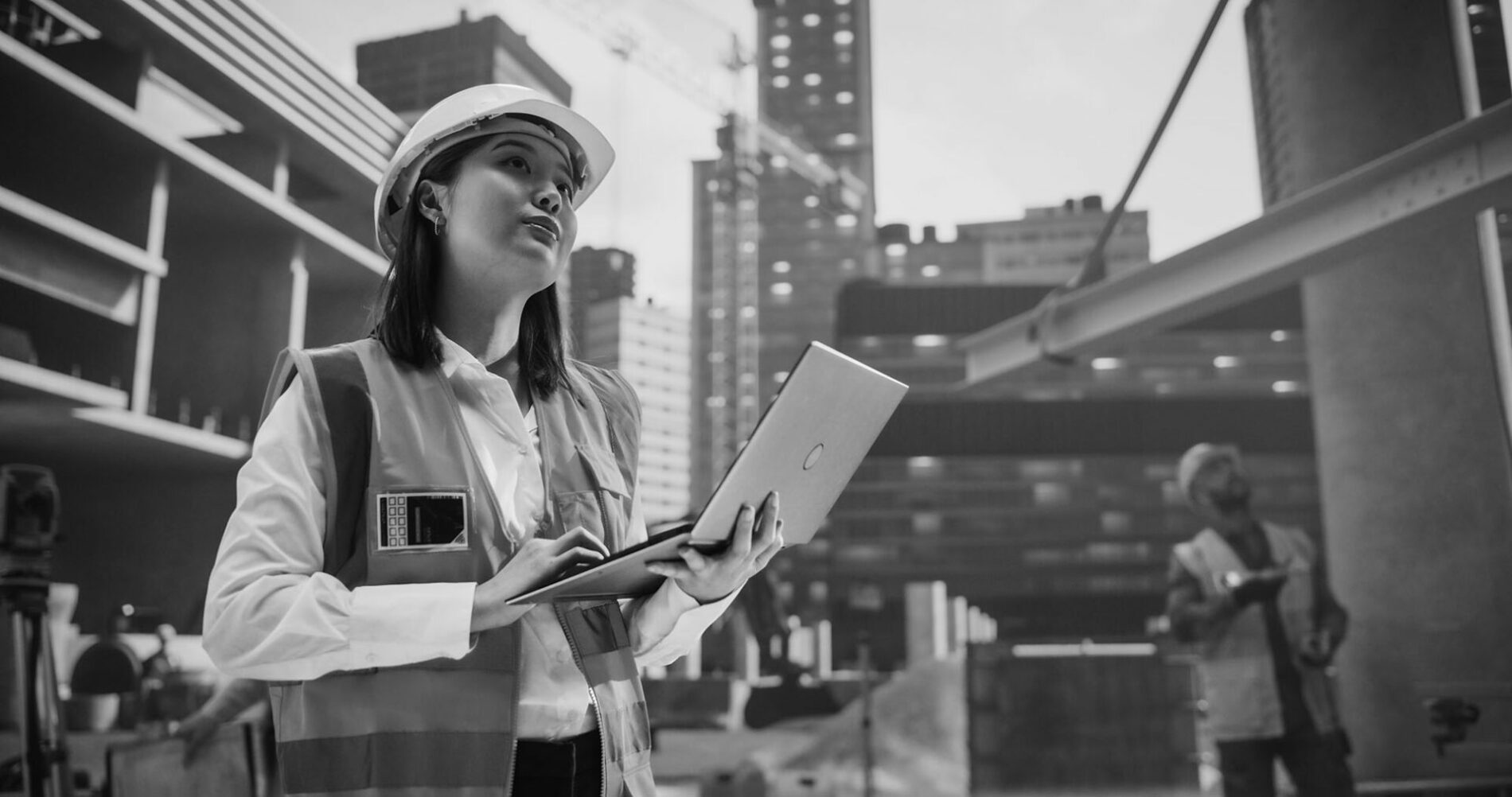
The U.S. manufacturing renaissance, spurred by the CHIPS Act, represents a historic shift toward domestic innovation, sustainability, and resilience. From creating thousands of high-paying jobs to advancing climate goals and bolstering national security, this movement is redefining what manufacturing means in the 21st century. As groundbreaking projects like Intel’s Ohio One and TSMC’s Arizona plant come to fruition, the ripple effects are set to transform industries and communities alike. As Raimondo aptly put it, “This is a moment of opportunity. By investing in manufacturing today, we’re shaping the economic, technological, and environmental future of America.”

Modernizing Airports for a New Era of Travel

View in E-mag

The aviation industry is undergoing a pivotal transformation, driven by federal investment, sustainability imperatives, and the increasing demands of modern air travel. With global passenger numbers expected to surpass pre-pandemic levels in 2024, U.S. airports—many of which are over four decades old—are finally receiving the upgrades they desperately need. Thanks to $25 billion allocated through the Bipartisan Infrastructure Law (BIL), these modernization efforts are redefining the role of airports as hubs of connectivity, sustainability, and economic growth.

Grader and aircraft at reconstruction airfield.

At the forefront of this transformation is Denver International Airport (DEN), where the $2.3 billion Great Hall Project is underway. This ambitious initiative aims to enhance passenger capacity, improve security, and embed sustainable practices. DEN CEO Phil Washington highlighted the broader impact of these efforts: “Modern airports aren’t just transportation hubs; they’re gateways to economic growth.” The improvements are expected to position DEN as a global leader in aviation while addressing the challenges posed by rising passenger volumes.

The Great Hall Project includes a comprehensive redesign of terminal spaces, upgraded security checkpoints, and enhanced passenger amenities. Sustainability is integral to these upgrades, with DEN incorporating energy-efficient technologies and eco-friendly materials to minimize the airport’s carbon footprint.

Denver is not alone in this push for modernization. Airports across the United States are embarking on significant projects to update aging infrastructure. For example:

Boston Logan International Airport: A $33 million expansion of Terminal E has added new gates and integrated energy-efficient systems to support growing international travel demands.

Minneapolis-St. Paul International Airport: A $263 million expansion features a cutting-edge geothermal heating system and rainwater harvesting facilities, significantly reducing the airport’s environmental impact.

Griffiss International Airport in Rome, New York: With $1.75 million in BIL funding, the airport is modernizing its air traffic control tower, incorporating state-of-the-art HVAC, plumbing, and electrical systems.

These projects exemplify how the BIL is enabling airports to tackle both immediate infrastructure needs and long-term sustainability goals. The BIL represents a landmark moment for U.S. airport funding, providing $25 billion over five years to improve aviation infrastructure. Of this, $5 billion is specifically earmarked for terminal modernization and air traffic control tower upgrades. These funds aim to enhance energy efficiency, accessibility, and overall passenger experience, marking a significant shift from previous piecemeal approaches to infrastructure investment. Shailen Bhatt, Administrator of the Federal Highway Administration, emphasized the law’s transformative potential: “These investments will create jobs and position airports as leaders in environmental stewardship. They’re essential for meeting the future demands of transportation and commerce.” The funding also prioritizes projects that address equity and accessibility, ensuring that historically disadvantaged populations benefit from these improvements.

“These investments will create jobs and position airports as leaders in environmental stewardship. They’re essential for meeting the future demands of transportation and commerce.”

Modern Airport Terminal and Roadway at Sunrise

As climate change continues to shape global priorities, sustainability has become a cornerstone of airport modernization efforts. Airports are increasingly adopting renewable energy systems, electric ground support vehicles, and eco-friendly building practices. The Federal Aviation Administration (FAA) is actively encouraging airports to pursue Leadership in Energy and Environmental Design (LEED) certification and integrate low-emission technologies. For instance, Minneapolis-St. Paul International Airport’s geothermal system drastically reduces reliance on traditional heating methods, aligning with federal sustainability goals. Similarly, Boston Logan’s Terminal E expansion incorporates solar panels and advanced energy management systems to minimize energy consumption.

Modernizing U.S. airports also involves making them more accessible and inclusive. Beyond compliance with the Americans with Disabilities Act (ADA), many projects are incorporating universal design principles to cater to diverse passenger needs. For example, newly designed terminals include features such as wider walkways, enhanced signage, and assistive technologies for individuals with disabilities. The BIL’s emphasis on equity ensures that these improvements extend to historically underserved communities. This focus not only enhances passenger experience but also positions airports as inclusive spaces that reflect the diversity of the populations they serve.

The economic benefits of airport modernization are immense. Construction projects create thousands of jobs, stimulate local economies, and attract businesses. According to the FAA, the aviation industry generates $1.4 trillion in annual economic activity, and these upgrades are expected to amplify that impact. Phil Washington at DEN noted that these projects serve as economic engines for their regions, creating opportunities not just within the aviation sector but across industries. The combination of job creation, increased tourism, and enhanced business connectivity underscores the transformative potential of modernized airports.

Despite the clear benefits, airport modernization is not without challenges. The scale and complexity of these projects require careful planning, coordination, and execution. Disruptions during construction, funding allocation, and meeting sustainability targets are ongoing concerns.

However, the opportunities far outweigh the challenges. By leveraging federal funding, adopting cutting-edge technologies, and prioritizing sustainability, U.S. airports are well-positioned to meet the demands of 21st-century travel. The collaboration between federal agencies, local governments, and private sector stakeholders has been instrumental in driving these initiatives forward.

As global air travel continues to recover and evolve, U.S. airports are poised to lead the way in innovation and sustainability. Projects like DEN’s Great Hall Project, Boston Logan’s Terminal E expansion, and Minneapolis-St. Paul’s geothermal system showcases the potential of strategic investments in infrastructure. These efforts not only enhance the passenger experience but also reflect broader societal priorities, from climate action to economic inclusivity. As Phil Washington aptly put it, “Modern airports aren’t just transportation hubs; they’re gateways to economic growth.” This vision underscores the critical role that airports play in connecting people, powering economies, and shaping the future of global travel. The modernization of U.S. airports is a testament to what can be achieved through visionary leadership, federal support, and a commitment to innovation. With continued investment and collaboration, the aviation industry is set to soar into a new era of efficiency, sustainability, and inclusivity.

Renewable Energy Construction: Leading the Charge

View in E-mag

The renewable energy sector is reshaping the construction landscape across North America and beyond. As one of the key players in this transformative era, PCL Construction continues to demonstrate its leadership by delivering large-scale renewable energy projects and embracing sustainable innovation. With an impressive track record and a forward-thinking approach, the company’s work underscores its commitment to building a cleaner, more sustainable future. 

PCL Construction has emerged as a leader in renewable energy, completing nearly 60 solar projects that generate over 4 gigawatts of clean energy—enough to power approximately 500,000 homes annually. This includes notable projects such as the Travers Solar facility in Alberta, Canada. As the largest solar farm in the country, Travers Solar spans over 3,300 acres and offsets more than 472,000 tons of greenhouse gas emissions each year. The project exemplifies PCL’s ability to deliver on massive undertakings with measurable environmental benefits. 

In addition to solar, PCL is advancing battery energy storage systems (BESS) to support renewable energy integration into the grid. These systems are critical for addressing energy reliability and ensuring that renewable sources can meet fluctuating demand. 

In 2023, PCL secured over $1 billion in contracts for additional solar projects, further cementing its role as a driving force in renewable energy. These projects include large-scale facilities like the Clearview Solar farm in Ohio and the Stubbo Solar installation in New South Wales, Australia. The company’s international reach reflects its capacity to adapt and thrive in diverse energy markets. 

To meet the growing demand for renewable energy infrastructure, PCL plans to expand its workforce by 25%. This growth will bolster its ability to take on increasingly complex projects while fostering job creation and supporting local economies. 

“This growth will bolster its ability to take on increasingly complex projects while fostering job creation and supporting local economies.”

PCL’s commitment to sustainability extends well beyond its renewable energy portfolio. The company has completed 248 LEED-certified projects, representing a combined value of over $18 billion. These projects range from energy-efficient buildings to advanced water treatment facilities capable of processing more than 20 billion gallons of water daily. 

By integrating green building practices across its operations, PCL consistently aims to minimize its environmental footprint. This holistic approach to sustainability reflects its understanding that renewable energy is just one part of a broader solution to environmental challenges. 

The rapid expansion of renewable energy infrastructure is fueled by a combination of public policy and private investment. In the United States, the Inflation Reduction Act has provided significant tax incentives for clean energy development, encouraging projects that reduce carbon emissions. Meanwhile, Canada’s Clean Energy Investment Tax Credit supports the deployment of renewable energy systems across the country. 

These policies have spurred a wave of investments in solar farms, wind energy, and advanced storage solutions. According to the International Energy Agency, renewables are expected to surpass coal as the world’s largest energy source by 2025. PCL’s work positions the company as a critical player in this global energy transition, ensuring that its projects align with the highest standards of quality and sustainability. 

Innovation is a cornerstone of PCL’s success in renewable energy construction. By leveraging advanced technologies, the company has improved the efficiency and accuracy of its projects. For example, PCL uses Building Information Modeling (BIM) to optimize project design and execution, ensuring that materials are used efficiently and construction timelines are met. 

PCL also embraces prefabrication and modular construction techniques, which reduce waste and streamline on-site assembly. These methods not only enhance sustainability but also improve safety and reduce costs for clients. 

PCL’s renewable energy projects provide tangible examples of its expertise and dedication to sustainability. 

Travers Solar Project: Located in Alberta, this 465-megawatt solar farm is one of the largest in North America. The project represents a major step forward for Canada’s renewable energy sector and sets a benchmark for similar initiatives worldwide. 

Stubbo Solar Project: In New South Wales, Australia, PCL is building a 400-megawatt solar farm that highlights its ability to deliver complex projects on an international scale. This installation will contribute significantly to Australia’s renewable energy capacity, supporting its transition to a low-carbon economy. 

Clearview Solar Project: Situated in Ohio, this 145-megawatt facility demonstrates PCL’s expertise in delivering utility-scale solar installations that benefit both local communities and the environment. 

These projects showcase PCL’s ability to meet the demands of renewable energy construction while maintaining a strong focus on sustainability and innovation. 

PCL understands that achieving sustainability goals requires more than just advanced technology; it also depends on a skilled and motivated workforce. The company invests heavily in employee training and development, ensuring that its teams are equipped to handle the challenges of modern construction. In addition, PCL prioritizes diversity and inclusion, recognizing that a varied workforce brings new perspectives and ideas to the table. By fostering a culture of collaboration, PCL ensures that its employees are aligned with the company’s mission to build a better future. 

Looking to the future, PCL Construction is poised to play an even greater role in renewable energy development. The company’s pipeline of projects for 2024 and beyond reflects its ambitious vision for growth and innovation. 

One of the key areas of focus will be expanding its work in battery energy storage systems, which are essential for maximizing the potential of renewable energy sources. Additionally, PCL aims to continue exploring new markets and technologies, ensuring that it remains at the cutting edge of the industry. 

As the world transitions to a more sustainable energy landscape, companies like PCL Construction are proving that renewable energy can be a powerful driver of economic growth and environmental stewardship. By combining technical expertise with a steadfast commitment to sustainability, PCL is not just meeting the demands of today—it’s building the foundation for a brighter tomorrow. Through its innovative projects, growing workforce, and dedication to green practices, PCL Construction exemplifies what it means to lead in renewable energy construction. Its work stands as a testament to the transformative potential of sustainable infrastructure in creating a cleaner, healthier planet for future generations. 

Setting the Standard in Environmental Responsibility

View in E-mag
View Brochure

Since its founding in 1965, Corbec has led Canada’s galvanizing industry through an unwavering dedication to quality, innovation, and environmental responsibility. From pioneering advanced technologies to implementing rigorous sustainability practices, Corbec stands as a leader in galvanizing and a model for other firms aspiring to meet Canada’s ambitious environmental goals. This forward-thinking approach is particularly significant as the construction sector faces mounting pressure to align with the Canadian government’s commitment to net-zero emissions by 2050.

With over five decades of expertise, Corbec’s work reflects its dual dedication: protecting steel and protecting the planet. Through initiatives like advanced emission management systems, plant-specific Environmental Product Declarations (EPDs), and industry-first educational outreach, Corbec has redefined the standards of sustainable manufacturing in steel protection.

Corbec’s commitment to technological advancement is reflected in its state-of-the-art galvanizing plants, which are among the most technologically advanced in North America. The company was the first in Canada to implement a “capture and treat” system that effectively manages process air emissions, setting a new industry benchmark in environmental stewardship. This system captures emissions at the source, minimizing environmental impact and going beyond traditional regulatory compliance.

In addition to this, Corbec has adopted comprehensive waste recycling systems that not only reduce ecological impact but also enhance efficiency. By recycling waste, Corbec minimizes resource use and positions itself as an industry leader in sustainable manufacturing practices.

The company’s forward-thinking attitude is exemplified in its investments in technologies that emphasize both environmental and economic responsibility. According to Corbec’s Executive VP of Engineering, Sustainability, and Market Development, Dr. Hellen Christodoulou, “Our commitment to innovation and sustainable practices ensures that Corbec will continue to be an innovator in steel protection, leading the way toward a greener, more sustainable future for all.”

As climate concerns intensify, the construction industry is under increasing pressure to adopt sustainable practices, given its considerable impact on the environment. Canada has set ambitious targets to achieve net-zero greenhouse gas (GHG) emissions by 2050, a goal that demands proactive industry engagement.

Corbec’s initiatives to control emissions and recycle waste place it at the forefront of this movement. By voluntarily adopting sustainable practices that align with future regulatory standards, Corbec is showing the construction industry that change is not only feasible but beneficial. This proactive stance showcases Corbec’s commitment to Canada’s sustainability objectives, underscoring the company’s role as a leader in environmentally responsible construction.

Corbec’s dedication to environmental responsibility extends beyond its manufacturing processes. The company actively supports the design community by providing resources and education to architects and designers, who play a crucial role in determining a project’s environmental impact. Through these initiatives, Corbec ensures that design professionals are well-informed about the sustainability benefits of galvanized steel and the environmental advantages of using materials that align with high sustainability standards.

Corbec’s educational outreach programs reflect a broader vision: to create a construction ecosystem where sustainable choices become standard practice. By supporting architects and designers with knowledge and resources, Corbec empowers them to make environmentally sound choices. As Dr. Christodoulou stated, “By fostering a culture of sustainability and supporting the design community, Corbec is not only protecting steel by ‘Galvanizing Better’—our brand promise—but also protecting the environment, setting a benchmark for sustainability that others in the industry can aspire to.”

“By fostering a culture of sustainability and supporting the design community, Corbec is protecting steel by ‘Galvanizing Better’—our brand promise.”

In a groundbreaking move, Corbec became the first coating supplier in North America to introduce plant-specific Environmental Product Declarations (EPDs) for its products, verified by third-party auditors and certified by the Canadian Standards Association (CSA). EPDs provide critical insights into a product’s environmental footprint across its lifecycle—from raw material extraction to end-of-life disposal. This transparency allows clients to make informed decisions based on the true environmental cost of the materials they choose.

Corbec’s plant-specific EPDs for galvanized steel products represent a significant advancement in promoting sustainability in construction. These EPDs differ from industry-wide or generic EPDs, as they offer precise, facility-specific data. This level of detail empowers clients to assess the sustainability of their materials accurately and make more environmentally conscious choices. “Plant-specific EPDs offer a new level of transparency,” explained Dr. Christodoulou. “They allow us to continually evaluate and improve our processes, and they provide our clients with confidence in the sustainability of our products.”

Corbec’s EPDs represent a series of firsts in North America. It is the first Canadian company to release EPDs specifically for galvanized steel products and galvanized rebar—a key material in infrastructure projects such as reinforced concrete structures, bridge decks, and roads. These EPDs allow for direct comparisons between the environmental impact of galvanized steel and other materials, highlighting the sustainability benefits of using galvanized steel in construction.

For example, Corbec’s EPDs demonstrate that its galvanized rebar has a lower global warming potential (GWP) than stainless steel rebar, which requires more alloying elements, increasing GHG emissions during production. Corbec’s hollow structural steel (HSS) sections and steel plates, according to its EPDs, have a 15% lower GWP on average compared to industry averages published by the American Galvanizers Association (AGA). This positions Corbec as a sustainability leader, demonstrating that optimized manufacturing can lead to tangible environmental benefits.

As Canada moves toward a greener future, galvanized steel products play a crucial role in sustainable construction, particularly in meeting standards set by certification bodies like LEED and BREEAM. Corbec’s galvanized products, with their long lifespan and low maintenance needs, contribute to the creation of resilient infrastructure that minimizes environmental impact. This is especially relevant for major infrastructure projects, where using durable, corrosion-resistant materials can reduce long-term repair needs and lower emissions over a structure’s lifecycle.

By championing the use of galvanized steel, Corbec is actively supporting Canada’s efforts to promote sustainable construction methods that align with national green building standards. Corbec’s dedication to plant-specific EPDs signals a significant shift in the industry’s approach to transparency and accountability. Unlike generic EPDs, which provide broad industry data, plant-specific EPDs deliver precise insights into the environmental impact of a particular facility’s output. This approach enables companies to pinpoint areas for improvement and provides clients with detailed information about the sustainability of their materials.

In Corbec’s case, these EPDs serve as a tool for continual environmental evaluation, enabling the company to refine its processes and reduce its ecological footprint. The detailed environmental data these EPDs provide also allow Corbec’s clients to make greener choices, reinforcing the role of transparency in sustainable manufacturing.

Corbec’s commitment to sustainability is more than a corporate responsibility—it is a core value that informs every aspect of its operations. By investing in cutting-edge technologies, developing plant-specific EPDs, and supporting the design community, Corbec is actively shaping the future of sustainable construction. The company’s dedication to transparency and environmental stewardship serves as a model for others in the galvanizing industry, demonstrating that profitability and sustainability can indeed coexist.

As climate change and environmental degradation pose increasing challenges for the construction sector, Corbec’s example is a powerful reminder that industry leaders can drive positive change. Dr. Christodoulou summarized the company’s philosophy: “Our commitment to sustainable practices ensures that Corbec will continue to lead in steel protection, demonstrating that environmental responsibility and innovative excellence can go hand in hand.”

As the construction sector navigates its role in addressing climate change, Corbec stands as a beacon of progress. Its leadership proves that a commitment to quality and environmental responsibility can create a more sustainable industry for future generations. Through its dedication to “Galvanizing Better,” Corbec continues to protect not only steel but also the future of the planet, inspiring others in the industry to pursue similar paths toward sustainability.

Megaprojects

View in E-mag

The North American construction industry is in the midst of a transformative period, with megaprojects valued at over $1 billion driving the sector’s growth. These large-scale endeavors, including airport expansions and advanced manufacturing facilities, are tackling urgent infrastructure challenges while serving as economic catalysts. Fueled by federal investments and a rebound in global travel, these projects highlight the industry’s adaptability and innovation.

Federal funding has been a cornerstone of this surge, with the Bipartisan Infrastructure Law (BIL) serving as a key driver. Signed in 2021, this law allocated $550 billion in federal funding over five years, including $25 billion specifically for aviation projects. “Our airports have long been overdue for modernization, and these investments are a game-changer,” noted Steve Dixon, a former FAA administrator, during a 2023 panel discussion on infrastructure investment. The Federal Aviation Administration’s (FAA) Airport Improvement Program (AIP) has further amplified this impact, disbursing more than $1 billion in 2023 to enhance airport safety and capacity.
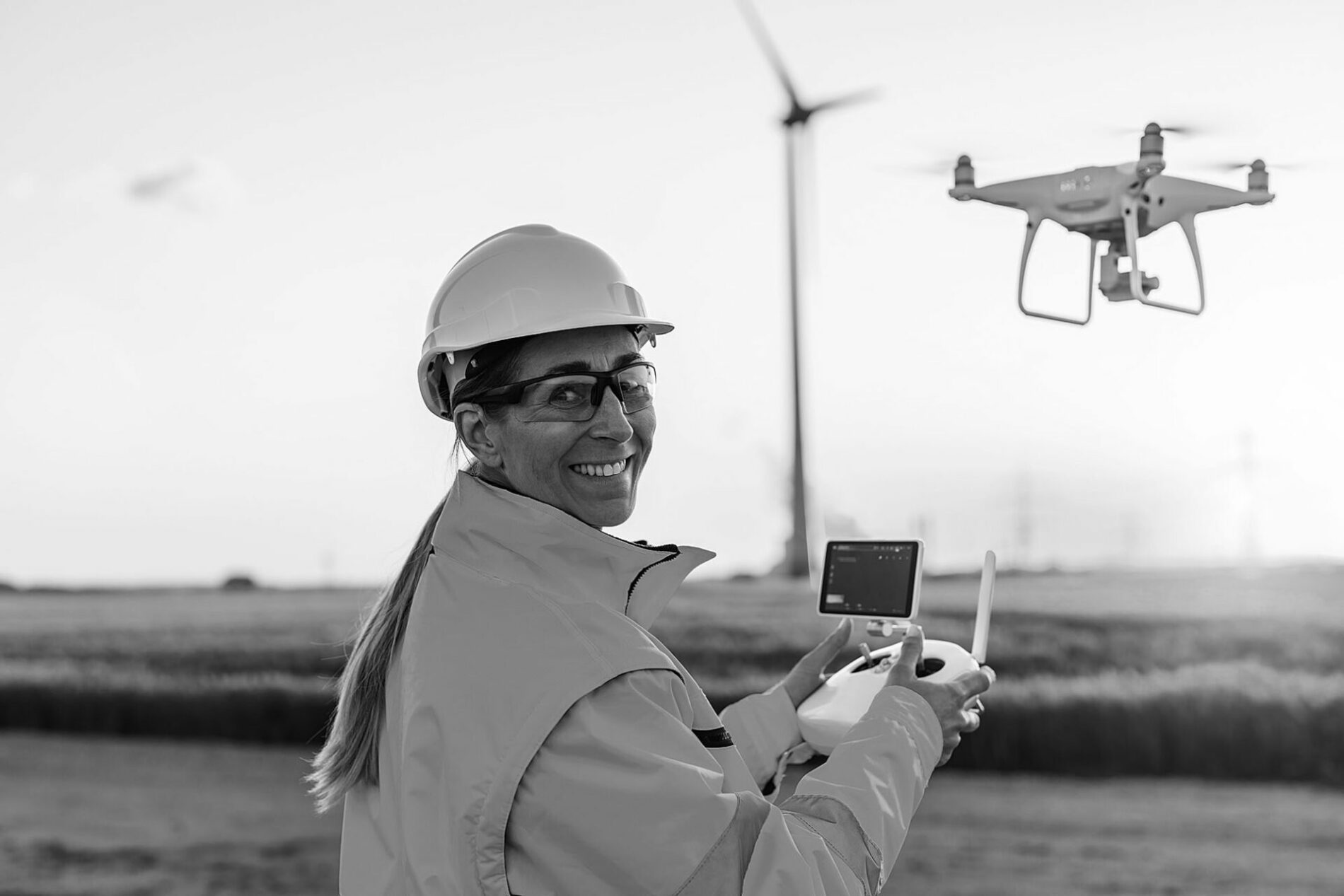
These investments come at a critical time for the aviation industry. Global passenger travel is expected to exceed 9.4 billion annually by 2024, surpassing pre-pandemic levels. This surge has exposed the limitations of aging airport infrastructure, with many U.S. facilities over 40 years old. Denver International Airport is currently undergoing a $1.3 billion expansion to add 39 gates, enhancing capacity for domestic and international flights. Meanwhile, Los Angeles International Airport (LAX) is in the midst of a $15 billion modernization initiative that includes an automated people mover and extensive terminal upgrades. “These projects aren’t just about keeping up with demand—they’re about creating an experience that matches modern passenger expectations,” explained Karen Bass, mayor of Los Angeles, at a recent industry event.

“These projects aren’t just about keeping up with demand—they’re about creating an experience that matches modern passenger expectations.”

Advanced manufacturing facilities are another area where megaprojects are reshaping the industry. The COVID-19 pandemic revealed critical weaknesses in global supply chains, prompting a wave of onshoring initiatives. The CHIPS and Science Act of 2022 has been instrumental in this shift, allocating $52 billion to bolster domestic semiconductor production. This funding has led to a 156% increase in manufacturing construction starts compared to 2019. Notable among these efforts is Intel’s $20 billion semiconductor facility in Ohio, expected to create 7,000 construction jobs. “This is more than just a factory; it’s a blueprint for how we can rebuild America’s industrial base,” remarked Pat Gelsinger, CEO of Intel, during the facility’s groundbreaking ceremony.

Clean energy manufacturing is also experiencing unprecedented growth, driven by the push for sustainability. Companies like PCL Construction have played a pivotal role in this sector, having completed 60 solar projects and secured $1 billion in new contracts in 2023. These facilities not only advance renewable energy goals but also contribute to economic resilience. “Every solar field we build is a step toward energy independence,” said Deron Brown, COO of PCL Construction’s Solar Division, in a recent interview.

Despite these successes, challenges remain. Rising material costs and labor shortages have created hurdles for many projects. The Associated General Contractors of America (AGC) reported that 82% of firms experienced higher material costs in 2023 compared to pre-pandemic levels. Inflation has driven up prices for essential materials such as steel and concrete, forcing developers to adopt innovative strategies. Building Information Modeling (BIM) is becoming a vital tool, improving efficiency and reducing waste. Labor shortages add another layer of complexity, with 66% of firms planning to hire in 2024 to meet demand. Partnerships with educational institutions and robust apprenticeship programs are helping bridge this gap, but the competition for skilled workers remains intense.

Sustainability is increasingly integral to megaproject planning. Airports like Denver and LAX are incorporating energy-efficient systems and renewable energy sources, while manufacturing plants emphasize green practices such as reduced emissions and waste recycling. “Sustainability isn’t an option—it’s a responsibility,” said Pete Buttigieg, U.S. Secretary of Transportation, during a recent infrastructure summit. These efforts align with broader environmental goals, enhancing the long-term viability of these projects.

The community impact of these projects extends beyond their immediate economic benefits. Manufacturing plants generate high-paying jobs and boost local economies, while airport expansions improve regional connectivity. These developments are particularly significant in underserved areas, where they create opportunities for economic revitalization. “When you invest in infrastructure, you invest in people and their future,” said Gina Raimondo, U.S. Secretary of Commerce, in a statement highlighting the economic ripple effects of the CHIPS Act.

The outlook for megaprojects is overwhelmingly positive, with federal investments, technological advancements, and sustainability driving momentum. These projects are not only addressing critical infrastructure needs but also positioning North America as a leader in construction innovation. From airports to advanced manufacturing facilities, megaprojects represent a transformative vision for the industry, showcasing its resilience and adaptability in an era of rapid change.

The rise of megaprojects is reshaping North American construction, delivering solutions to pressing challenges while fostering innovation. Backed by federal funding and a commitment to sustainability, these initiatives are creating a legacy of progress that will resonate for generations. As the industry navigates the complexities of cost pressures and labor shortages, it remains poised to deliver infrastructure that meets the demands of a connected, sustainable future.

Bringing Sustainability to New Heights

View in E-mag

Across North America, sustainable construction practices are gaining traction, and nowhere is this more evident than in Milwaukee, Wisconsin, with the debut of Ascent—a 25-story marvel that holds the title of the world’s tallest mass timber building. Developed by New Land Enterprises in partnership with Korb + Associates Architects, Ascent is more than just an impressive structure; it’s a powerful statement about the future of eco-friendly building practices. Built primarily from cross-laminated timber (CLT), this high-rise showcases the environmental and aesthetic potential of timber construction.

Looking up at the vertical supports, balconies and interior ceiling of a engineered timber multi story green, sustainable residential high rise apartment building construction project

Ascent, completed in 2022, is already making waves in the construction industry and the environmental community. Standing at 284 feet, the building houses 259 luxury apartments with stunning views of Milwaukee’s lakefront and urban landscape. But beyond its striking appearance, Ascent is a model for sustainable architecture. Tim Gokhman, Managing Director of New Land Enterprises, explained, “Timber has an incredibly low carbon footprint, and it stores carbon as well. This building has more wood than an entire forest, but because we sourced responsibly, it’s a sustainable and renewable approach to construction.” By using timber as a primary building material, Ascent reduces its carbon emissions significantly compared to traditional building materials like concrete and steel. This shift is not just a trend; it’s part of a broader movement within the construction industry to embrace materials and methods that reduce environmental impact.

The construction industry is a significant contributor to global carbon emissions, with traditional materials such as concrete and steel being particularly energy-intensive. Concrete production alone accounts for 8% of global carbon emissions. In contrast, cross-laminated timber (CLT), a key material used in Ascent’s construction, offers a sustainable alternative. CLT is made by gluing layers of wood at right angles to each other, creating a strong, resilient material suitable for large structures.

Using CLT instead of concrete and steel provides multiple environmental benefits. Trees absorb carbon dioxide as they grow, storing it in their wood. When harvested and used as timber, this carbon remains locked within the material, even after construction. This “carbon sink” effect means that mass timber buildings like Ascent actively reduce atmospheric CO2 levels, making them an essential tool in combating climate change. According to Gokhman, “Ascent’s timber frame alone sequesters hundreds of tons of carbon, which would otherwise be released into the atmosphere.” Mass timber construction can reduce a building’s carbon emissions by 50-80% compared to traditional materials. Timber construction requires less energy during the manufacturing and building processes, cutting down on fossil fuel consumption. The Carbon Leadership Forum found that for every ton of wood used in place of concrete, approximately 1.1 tons of carbon dioxide emissions are avoided.

Timber is a renewable resource when sourced responsibly, unlike finite resources like steel and concrete. Ascent’s timber was sourced from certified sustainable forests, ensuring that new trees are planted to replace those used in construction. Building a 25-story tower out of timber is no small feat. It requires innovative design and advanced engineering to ensure the structure’s strength, resilience, and safety. Architect Jason Korb of Korb + Associates Architects explained the vision behind the project: “We wanted to demonstrate that you could build something this tall with timber, with all the benefits of lower emissions and reduced energy needs.”

To achieve this, Ascent’s designers and engineers had to overcome several technical challenges. One of the biggest misconceptions about timber construction is that wood is inherently more flammable than other materials. However, mass timber performs exceptionally well under fire conditions. CLT panels char on the outside when exposed to flame, creating an insulating layer that protects the wood within. This charring effect slows down combustion, making mass timber buildings like Ascent comparable to or even safer than those made of concrete or steel in a fire. As part of the design process, Ascent’s fire safety features were rigorously tested and approved by the Milwaukee Department of Neighborhood Services. The building also includes sprinkler systems and other fire-safety measures to meet modern building codes.

Timber buildings of this height are still a relatively new phenomenon, requiring unique structural considerations. Ascent’s engineering team used advanced computer modeling to ensure the building’s stability under various conditions, such as wind and seismic activity. Studies conducted by the American Wood Council have shown that mass timber is capable of supporting the weight and stress demands of high-rise structures, proving that wood can compete with steel in structural integrity.

www.ascentmke.com

Living in a high-rise made of wood presents another challenge—sound transmission. Ascent’s design includes a mix of sound-absorbing materials between floors and walls, ensuring that residents enjoy a peaceful, quiet living environment. Timber naturally has acoustic insulation properties, which further reduce noise compared to traditional materials.

Ascent is part of a larger trend in sustainable construction, with cities across North America and Europe increasingly turning to mass timber. Canada, for instance, has been a leader in mass timber construction, with notable buildings like the Brock Commons Tallwood House in Vancouver, which stands at 18 stories. Other U.S. cities, including Portland and Seattle, are also exploring timber construction for future developments. The U.S. Forest Service and the Environmental Protection Agency (EPA) have both recognized the potential of mass timber as a sustainable construction material. The U.S. Forest Service has supported the expansion of mass timber in urban development, emphasizing its benefits for carbon reduction and sustainable forest management. Forest Service Chief Vicki Christiansen has remarked, “Mass timber construction is not only environmentally sustainable but also supports forest health by creating demand for responsibly harvested wood.”
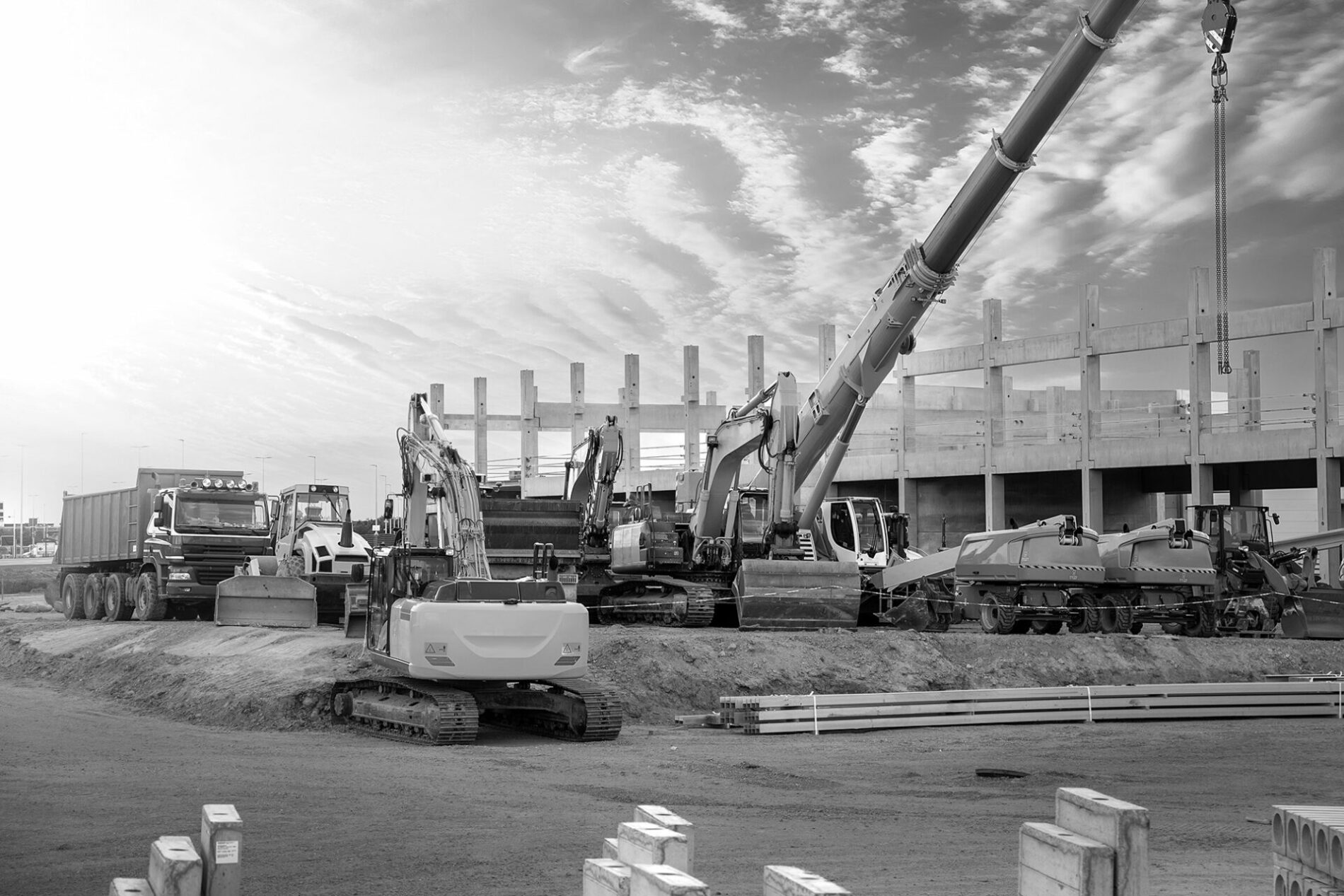

Ascent is not only a sustainable feat but also an economic asset for Milwaukee. It has created jobs in design, engineering, and construction, boosting the local economy and placing Milwaukee on the map as a center for sustainable innovation. Gokhman believes that Ascent has the potential to transform Milwaukee’s real estate market, stating, “This project showcases what’s possible with sustainable construction, and we hope it inspires other developers to look at mass timber as a viable option.” The building also provides significant energy savings for residents, as timber construction requires less energy for heating and cooling. Ascent’s environmental benefits extend to reduced operational costs, helping residents save on utility bills and promoting a sustainable lifestyle.

“This project showcases what’s possible with sustainable construction, and we hope it inspires other developers to look at mass timber as a viable option.”

Ascent has established itself as a model for future developments across North America, demonstrating that timber can be both practical and eco-friendly for high-rise buildings. The project aligns with the goals set out by the Paris Agreement, which seeks to limit global warming by reducing emissions across all sectors. According to the United Nations Environment Programme (UNEP), buildings account for 39% of global energy-related carbon emissions, meaning innovations in construction materials and methods are essential for achieving these goals.

Architect Jason Korb hopes that Ascent will be a catalyst for change, showing the industry that sustainable building materials are not only viable but necessary. Korb stated, “If we want to make a real impact on carbon emissions, we need to rethink how we build our cities. Mass timber is one way to do that.” The completion of Ascent marks a pivotal moment in the evolution of sustainable construction. As the tallest mass timber building in the world, it’s more than a towering structure in Milwaukee—it’s a beacon of sustainable development and a glimpse into the future of eco-friendly urban architecture. With its low carbon footprint, carbon-storing capability, and renewable sourcing, Ascent proves that skyscrapers can be built in harmony with the environment.

Ascent’s success underscores the potential for timber to redefine urban skylines, making cities more sustainable one building at a time. The structure serves as an inspiration, encouraging architects, developers, and cities to pursue innovative, greener building methods that balance growth with environmental responsibility.

New York’s First Net-Zero School Sets the Bar for Green Education

View in E-mag

New York City has set a new standard for sustainable educational spaces with the development of PS62, also known as the Sandy Ground School. Located in Staten Island, this revolutionary building is the first net-zero energy school in New York City and among the most energy-efficient in the nation. Designed by renowned architecture firm Skidmore, Owings & Merrill (SOM), the school is an example of how cutting-edge technology and environmental education can be seamlessly integrated into the infrastructure of a public building. By producing as much energy as it consumes, PS62 not only reduces its environmental footprint but also fosters a culture of sustainability among students and staff.

Elementary School Classroom: Enthusiastic Teacher Holding Tablet Computer Explains to a Brilliant Young Children How Wind Turbines Work. Kids Learning about Eco-Friendly Forms of Renewable Energy

The school’s design features multiple sustainable technologies, including rooftop solar panels, geothermal heating, and high-performance insulation. Together, these features allow the building to achieve a net-zero energy balance, meaning it generates all the power it needs through renewable sources. Roger Duffy, the design director at SOM, emphasized the educational value of this approach: “We designed PS62 to be not only a sustainable building but a teaching tool for environmental stewardship.” Duffy explained that the inclusion of green technology within the school’s structure provides students with hands-on learning experiences in renewable energy, energy conservation, and climate awareness, ensuring that these values are ingrained in students from the start of their education.

The project began as part of a broader initiative within New York City to create sustainable public buildings that contribute to the city’s ambitious environmental goals. New York has committed to reducing greenhouse gas emissions by 80% by the year 2050, a target that requires extensive changes across multiple sectors, including education and public infrastructure. In light of this goal, PS62 was developed as a prototype for net-zero energy design within the city’s urban landscape, setting an example that other public buildings are expected to follow. Lorraine Grillo, President of the New York City School Construction Authority, emphasized this broader mission, saying, “This school sets a new benchmark for net-zero energy design in urban settings.” By meeting and exceeding energy efficiency standards, PS62 not only benefits its students but also serves as a model for future schools across the city.

“This school sets a new benchmark for net-zero energy design in urban settings.”

One of the primary energy-saving features of PS62 is its expansive array of solar panels, which cover the roof of the building and capture sunlight throughout the day. These solar panels are capable of generating enough electricity to meet the entire energy needs of the school. In addition to powering classrooms, lighting, and other electrical systems, the solar panels sometimes generate a surplus of energy, which can be fed back into the local power grid. This feature effectively allows the school to act as a small power plant, benefiting the surrounding community by contributing clean energy to the neighborhood. The surplus energy is especially useful during peak usage times, when demand for electricity is high, and traditional energy sources are often taxed. By returning excess energy to the grid, PS62 helps reduce the load on local power plants, which in turn helps cut down on emissions.

Geothermal heating is another innovative component of PS62’s design. The school uses geothermal wells that extend deep into the earth, where the temperature remains relatively constant throughout the year. This stable underground temperature allows the system to efficiently heat and cool the building as needed. During the winter, the geothermal system pulls warmth from the ground and transfers it into the building, while in the summer, the process is reversed, and heat is removed from the building and dissipated into the earth. This method of temperature regulation is both energy-efficient and environmentally friendly, reducing reliance on traditional heating and cooling systems that typically consume large amounts of electricity and contribute to greenhouse gas emissions.

PS62’s design also includes advanced insulation and natural ventilation systems that help regulate temperature and reduce the need for artificial climate control. The building envelope—the outer shell of the school—is constructed with high-performance materials that minimize the transfer of heat in or out of the building. This insulation keeps classrooms warm in the winter and cool in the summer, requiring less energy for heating and cooling. Additionally, the design includes large windows that maximize natural light, reducing the need for artificial lighting during daylight hours. Natural ventilation is achieved through strategically placed vents that allow fresh air to circulate, improving indoor air quality and further reducing energy use.

In terms of financial impact, the school is expected to deliver significant cost savings. By generating its own energy and minimizing reliance on external utilities, PS62 will save an estimated $70,000 per year in energy costs, according to the New York City School Construction Authority. These savings can be redirected toward educational resources and programs, benefiting students directly. The reduced energy costs also relieve financial pressure on the city’s budget, demonstrating the long-term value of investing in green infrastructure.

The educational benefits of PS62 go beyond cost savings and environmental impact. By incorporating green technology into the physical structure of the school, educators have the opportunity to use the building as a teaching tool. For example, teachers can lead students on tours of the school’s solar panels, geothermal systems, and ventilation mechanisms to illustrate concepts related to renewable energy and climate science. This hands-on approach allows students to witness firsthand how sustainable technology works in practice, providing a tangible context for abstract scientific concepts. “By integrating green technology into the school’s structure, we’re educating students on renewable energy, conservation, and climate awareness from day one,” explained Duffy. This practical exposure helps students understand the importance of environmental responsibility and prepares them to be conscious, informed citizens.

Solar power plant on the school roof. Aerial view of the photovoltaic panels against the school buildings and the city skyline, the setting sun, orange and blue.

PS62’s influence extends beyond its students to the surrounding community. As New York City’s first net-zero energy school, it serves as a symbol of the city’s commitment to sustainability and climate action. Local residents have taken pride in the school’s achievement, viewing it as a forward-thinking investment in the future of their community. The school’s ability to return excess energy to the local grid also fosters a sense of shared responsibility, as residents benefit from the additional clean energy being produced in their area. This communal approach to sustainability underscores the idea that green initiatives can have a positive ripple effect, benefiting not only those directly involved but also the broader community.

The construction of PS62 reflects a growing trend in urban planning and architecture to incorporate sustainable practices in public buildings. New York City’s School Construction Authority has already begun applying lessons learned from PS62 to other projects, with plans to introduce net-zero energy elements into more schools and public buildings across the city. By leading the way in sustainable architecture, New York City is positioning itself as a model for other urban areas seeking to reduce their carbon footprint.

Architects and environmental advocates are watching PS62 closely, as its success could pave the way for further innovations in sustainable school design. In addition to the environmental and economic benefits, the project has set a new standard for how schools can serve as spaces of both learning and community development. By demonstrating that net-zero energy design is possible even in densely populated areas like New York City, PS62 challenges other cities to pursue similar projects and embrace the possibilities of sustainable construction.

PS62’s completion represents a significant milestone in New York’s journey toward a greener future. As the city continues to strive toward its climate goals, the success of PS62 provides a roadmap for how public institutions can contribute to these efforts. The school’s design is a testament to the potential of sustainable architecture and the role it can play in shaping the next generation’s attitudes toward the environment. With PS62, New York City has shown that it is possible to create public buildings that are not only functional and cost-effective but also environmentally responsible and educationally enriching.

Zero-Energy Residential Community in Florida is Now Complete

View in E-mag

In the heart of southwest Florida, a revolutionary community has taken shape, redefining the concept of sustainable living. Babcock Ranch, developed by Kitson & Partners, is the first fully solar-powered town in the United States. This groundbreaking development combines cutting-edge renewable energy technology with thoughtful urban planning to create a community where sustainability and quality of life go hand in hand. Powered entirely by a 75-megawatt solar array operated by Florida Power & Light (FPL), Babcock Ranch represents a bold step toward environmentally conscious urban development.

Man shows his family the solar panels on the plot near the house during a warm day. Young woman with a kid and a man in the sun rays look at the solar panels.

The town’s energy infrastructure is the cornerstone of its zero-energy achievement. The expansive solar array that powers Babcock Ranch consists of over 650,000 solar panels spread across 440 acres. Capable of generating enough electricity to meet the needs of all its residents, the system ensures that Babcock Ranch maintains its commitment to sustainability. “We wanted to create a place where people could live sustainably without sacrificing comfort or convenience. Solar energy makes it possible,” said Syd Kitson, CEO of Kitson & Partners, the visionary force behind the community.

“We wanted to create a place where people could live sustainably without sacrificing comfort or convenience. Solar energy makes it possible”

The integration of solar energy into the town’s identity is comprehensive. Beyond supplying clean electricity, Babcock Ranch’s infrastructure supports resilience and energy independence. During Hurricane Ian in 2022, the town’s solar-powered design proved its worth. While surrounding areas faced prolonged power outages, Babcock Ranch continued to function with minimal disruption. This resilience stems from a combination of renewable energy generation and state-of-the-art technology, including a microgrid system that enhances energy reliability.

Babcock Ranch was not only designed to be energy-efficient but also environmentally harmonious. Every aspect of the town’s development was planned with sustainability in mind, from its landscaping to its water conservation efforts. The community employs sustainable landscaping practices that feature native plants requiring minimal water and maintenance. Additionally, a network of water-saving irrigation systems uses reclaimed water to reduce overall consumption. These measures align with Florida’s unique ecological challenges, including water scarcity and the need to protect wetlands.

Transportation within the community reflects the same commitment to sustainability. Babcock Ranch features a network of electric vehicle (EV) charging stations that encourage the use of EVs, reducing residents’ reliance on gasoline-powered vehicles. The town is also designed to be walkable and bike-friendly, with over 50 miles of trails connecting neighborhoods, parks, and other amenities. These features not only promote healthier lifestyles but also contribute to reducing the town’s overall carbon footprint.

Education and community engagement play a pivotal role in Babcock Ranch’s mission. The town’s school, Babcock Neighborhood School, incorporates sustainability into its curriculum, teaching students about renewable energy, conservation, and environmental stewardship. Hands-on learning experiences, such as tours of the solar array and lessons in water management, ensure that students understand the importance of sustainability from a young age. By instilling these values, Babcock Ranch is cultivating a generation of environmentally conscious citizens prepared to face the challenges of the future.

The community’s commercial and recreational facilities further reflect its commitment to green living. Restaurants, shops, and offices are all powered by solar energy, maintaining the town’s zero-energy status. Public spaces, including Founder’s Square, serve as hubs for community events and activities while showcasing energy-efficient design principles. Founder’s Square features shaded seating areas, energy-efficient lighting, and spaces designed to encourage social interaction and outdoor activities.

The design of Babcock Ranch extends beyond its energy systems to encompass a philosophy of resilience and adaptability. The town is located inland, away from Florida’s vulnerable coastline, reducing risks associated with rising sea levels and storm surges. Additionally, its construction incorporated measures to mitigate flooding, such as retention ponds and natural drainage systems. These features not only protect the town from environmental challenges but also enhance its appeal as a sustainable and resilient community.

Aerial view of residential houses with rooftops covered with solar photovoltaic panels in suburban rural area

Babcock Ranch’s success has been closely tied to its collaboration with Florida Power & Light, which operates the solar array that powers the town. FPL’s commitment to renewable energy aligns with Babcock Ranch’s mission, creating a partnership that showcases the potential of public-private collaboration in advancing sustainability. FPL has described the project as a “living laboratory,” offering insights into how renewable energy can be integrated into communities on a large scale.

The town’s economic impact is another testament to its innovative model. By attracting environmentally conscious residents and businesses, Babcock Ranch has established itself as a hub for green innovation and entrepreneurship. Local businesses benefit from the town’s zero-energy infrastructure, which reduces operational costs and aligns with the values of sustainability-minded consumers. This economic model not only supports the local economy but also demonstrates the financial viability of sustainable development.

The residential aspect of Babcock Ranch is perhaps its most striking achievement. With over 1,000 homes already completed and more under construction, the community offers a diverse range of housing options designed to accommodate families, retirees, and professionals. Each home is built to meet stringent energy efficiency standards, incorporating features such as energy-efficient appliances, high-performance insulation, and smart home technology. These elements ensure that residents can enjoy modern, comfortable living while minimizing their environmental impact.

Babcock Ranch has also become a model for community engagement in sustainability efforts. Regular events, workshops, and educational programs encourage residents to adopt environmentally friendly practices in their daily lives. From composting and recycling initiatives to classes on sustainable gardening, these programs foster a culture of shared responsibility for the community’s environmental goals.

The success of Babcock Ranch has drawn attention from developers, urban planners, and policymakers across the United States. Kitson hopes that the town will inspire similar projects nationwide, demonstrating that sustainable development is not only feasible but also desirable. “This is a model for future growth that aligns with environmental needs and community aspirations,” Kitson explained. By proving that sustainability and quality of life can coexist, Babcock Ranch challenges traditional notions of urban development and paves the way for a greener future.

The significance of Babcock Ranch extends beyond its immediate achievements. As cities worldwide grapple with the effects of climate change, the town offers a blueprint for how communities can reduce their carbon footprints while enhancing resilience and quality of life. Its emphasis on renewable energy, sustainable design, and community engagement provides a holistic approach to tackling environmental challenges.

While Babcock Ranch is the first fully solar-powered town in the U.S., it is unlikely to remain the only one for long. The town’s success has sparked conversations about how similar models can be implemented in other regions, particularly as renewable energy technologies continue to advance and become more cost-effective. Developers and policymakers are looking to Babcock Ranch as proof that sustainable communities are not only possible but also practical and desirable.

Babcock Ranch represents a shift in how we think about urban development. By prioritizing renewable energy, sustainability, and resilience, it demonstrates that communities can thrive while respecting the planet’s ecological limits. As Kitson aptly put it, “Solar energy makes it possible.” This sentiment encapsulates the transformative potential of renewable energy in shaping the future of urban living.

Delivering Quality with Passion: The KD Construction Story

View in E-mag
View Brochure

KD Construction has built a reputation as one of the leading shell contractors in South Florida and beyond, operating not only within the Sunshine State but expanding its expertise across Tennessee, North Carolina, South Carolina, and Michigan. Since its inception, the company has steadily climbed the ranks of the construction industry, now occupying a prestigious position among the top five shell contractors in the South Florida region. The firm’s success, however, is not simply a product of business acumen or expansion but is driven by an unwavering commitment to excellence, quality, and a passion for delivering outstanding work in every project it undertakes.

At the helm of this remarkable company is Oliver VonTroll, Company President, who has been instrumental in guiding the company toward success and growth. His leadership, vision, and dedication to creating a family-like work environment have transformed the culture of KD Construction, making it a top choice for developers and contractors across the Southeast.

KD Construction’s areas of expertise lie in cast-in-place concrete, masonry structures, framing, and drywall packages. Its diverse portfolio boasts a wide range of successful projects, including multi-family residential complexes, hotels, condominiums, retirement communities, workforce housing, and student housing. This breadth of experience positions KD Construction as a versatile and reliable partner for developers looking to complete projects on time and within budget.

The company’s ability to deliver large-scale construction projects with precision and efficiency has earned it national recognition. In the competitive world of construction, KD has distinguished itself not just by its technical prowess, but by a strong commitment to client satisfaction. The company has built over 250,000 residential units throughout the Southeastern United States, making it a trusted name for housing developments. This remarkable achievement speaks to the company’s capacity to handle projects of any size and scope.

Much of KD Construction’s success can be attributed to Oliver VonTroll, who brings over 30 years of experience in the construction industry. Oliver’s journey is a testament to his deep understanding of the construction business, having worked his way up from field supervision to operational management. A licensed State Certified General Contractor, Oliver has overseen everything from multi-family apartment projects and condominium developments to multi-million-dollar estate homes. His dedication to quality and attention to detail have earned him numerous accolades, and his work has been recognized in various trade publications.

Before taking on his current role as President of KD Construction, Oliver owned and operated his own development and contracting companies. This wealth of experience equipped him with the skills and knowledge necessary to lead KD Construction to new heights. His transition into KD Construction brought with it a loyal following of customers who appreciate his commitment to delivering high-quality work and outstanding customer service.

Karl Davis, the founder and CEO of KD Construction, played a pivotal role in Oliver’s career, mentoring him over the course of more than 30 years. Karl taught Oliver not only the technical aspects of construction but also the importance of integrity, hard work, and understanding the true value of a dollar. “For me, success now is different,” says Oliver. “I gained monetary success at a young age and became increasingly more successful, but true success to me is having reached professional achievement and then reaching out to help someone else achieve it themselves. God does not waste a lesson in life. It is all part of His plan.”

One of the core values that define KD Construction is its commitment to fostering a strong sense of teamwork and respect within the company. Under Oliver’s leadership, the company has cultivated a familial atmosphere where every individual is valued for their contributions. “It is a team effort, and no one person can do it alone,” Oliver emphasizes. “This, along with hiring the best talent in the business and having a strong corporate structure, helps KD continue to improve and become the best in the business.”

The company prides itself on a culture where employees are more than just numbers—they are part of the KD family. This emphasis on personal connection is integral to the company’s identity and reflects its focus on promoting a sense of belonging and support within its team. KD Construction’s strong corporate structure ensures that every project is completed with the highest standards of quality and safety, all while maintaining a positive and collaborative work environment.

In an industry where efficiency is paramount, KD Construction has made significant strides by integrating cutting-edge technology into its operations. Oliver VonTroll has been a driving force behind the adoption of innovative tools such as Procore, Acumatica, Open Space, and Mobiclocks. These technologies have transformed the way KD operates, enhancing productivity across all departments, from field operations to corporate management.

By embracing these tools, KD Construction has improved communication, streamlined workflows, and increased project visibility. These advancements allow the company to better manage projects, ensure timely completion, and keep clients informed throughout the construction process. As the construction industry continues to evolve, KD Construction remains at the forefront of innovation, leveraging technology to deliver superior results.

As KD Construction looks toward the future, it remains grounded in its mission to positively impact the communities it serves. The year 2025 is shaping up to be a milestone for the company, with numerous projects underway that will benefit local communities and enhance people’s lives. KD Construction recognizes the many opportunities it has received and is committed to giving back to those in need.

“The year 2025 is shaping up to be a milestone for the company, with numerous projects underway that will benefit local communities and enhance people’s lives.”

One of the core pillars of the company’s values is its dedication to positively affecting people’s lives. Whether through building affordable housing or contributing to community development projects, KD Construction is focused on making a lasting difference. The company’s involvement in charitable initiatives and community service further demonstrates its commitment to being a responsible and compassionate corporate citizen.

With a proven track record and a reputation for excellence, KD Construction is poised for continued growth and expansion in the coming years. The company is fully bondable, with an average project contract value exceeding $20 million. With the capacity to deliver over 25 projects annually, KD Construction is well-positioned to meet the needs of clients across the Southeastern United States and beyond.

Much of the company’s success can be attributed to its focus on repeat business, as the majority of projects completed are executed on behalf of loyal, long-term clients. This return business is a testament to KD Construction’s unwavering commitment to quality, integrity, and customer satisfaction.

As KD Construction continues to expand its footprint, it remains dedicated to its mission of delivering quality with passion. With a strong leadership team, a focus on innovation, and a culture of collaboration, KD Construction is well-equipped to tackle the challenges of tomorrow while staying true to its core values. As the company continues to grow, it will no doubt leave a lasting legacy of excellence in the construction industry, one project at a time.

Doubling Down on Inclusion: A Sustainable and Equitable Workforce Future

View in E-mag

As Construction Inclusion Week (CIW) prepares for its fourth year from October 14-18, 2024, it is set to be the most impactful yet. Originally a bold initiative to push diversity, equity, and inclusion (DEI) in the construction industry, CIW has grown into a vital event, inspiring conversations and change at both national and global levels. This year, thousands of firms, from large general contractors to specialty businesses, are expected to participate, with an expanded international presence including countries like Nigeria, Canada, Mexico, and Tanzania. This is a marked achievement, showing the global reach of CIW and its importance in fostering inclusivity across borders.

Diverse Team of Specialists Use Laptop Computer on Construction Site. Real Estate Building Project with Machinery: Civil Engineer, Investor, Businesswoman and Builder Discussing Blueprint Plan

In the construction industry, where labor shortages are a growing concern, expanding the workforce is crucial. The industry’s commitment to inclusion is not just a moral obligation—it’s a business necessity. As CIW Co-Chair Ray Sedey, CEO of McCarthy Building Companies, explained, “The construction industry’s most valuable asset is its workforce. Our ability to continue to build and sustain the talent pipeline hinges on our ability to provide people with a great place to work. Construction Inclusion Week resources and activities give us the tools we need to create an inclusive culture that current and future generations of the construction workforce deserve.”

The initiative has now become a staple in the industry’s efforts to foster long-term, sustainable change in how companies approach recruitment, retention, and overall workforce development. Notably, 80% of the ENR Top 50 Contractors are set to participate, demonstrating the commitment of some of the largest firms in the U.S. to advancing these goals. Additionally, a broad range of participants—federal departments, educational institutions, and organizations serving the built environment, including architects and engineers—will be involved, showing the comprehensive nature of the event. This diversity in participation reflects the construction industry’s increasing recognition that inclusion is not just about meeting quotas, but about fostering a culture that leads to innovation and resilience.

This comes at a time when many industries are experiencing pushback against DEI efforts. As political and social climates shift, CIW’s organizers—including founding companies like Turner Construction, Clark Construction, and Mortenson—are standing firm in their belief that inclusion is a long-term strategy for success. The construction sector is uniquely positioned to lead this charge because of its direct influence on the physical and social infrastructure of society. “We have a responsibility to ensure that the communities we build are reflective of the diverse world we live in,” said Peter Davoren, CEO of Turner Construction. “Our industry builds the foundations of society, and it is our duty to make sure that these foundations are inclusive and equitable for all.”

“Our industry builds the foundations of society, and it is our duty to make sure that these foundations are inclusive and equitable for all.”

CIW’s primary goal is to create opportunities for underrepresented groups to enter and thrive in construction careers. This year’s activities will emphasize workforce development, focusing on recruitment, retention, and career growth, especially for minority and underrepresented communities. The construction industry has historically struggled with representation, with the U.S. Bureau of Labor Statistics reporting that women make up only 11% of the construction workforce, while racial minorities are also underrepresented in leadership roles. Addressing this imbalance is one of CIW’s central missions. By promoting inclusive practices, companies can open doors to a more diverse talent pool and ensure that the industry reflects the communities it serves.

One of the standout elements of CIW 2024 is its emphasis on supplier diversity, which highlights the importance of including diverse suppliers in the construction process. Supplier diversity goes beyond simply hiring more workers—it involves creating opportunities for minority-owned and disadvantaged businesses to thrive within the construction supply chain. This is critical for fostering economic inclusion and creating a more equitable industry. “When we include diverse suppliers, we not only diversify our business practices, but we also drive innovation and build stronger communities,” explained Kimberly McNally, VP of Supplier Diversity at Gilbane Building Company. CIW aims to educate companies on best practices in procurement, financial literacy, and access to opportunities to ensure that diverse suppliers can effectively contribute to the industry.

During CIW 2024, each day will focus on specific themes that guide participants through practical discussions on building inclusion and belonging within their organizations. On Monday, the theme of Commitment & Accountability will emphasize the role personal responsibility plays in creating inclusive environments. This day’s focus highlights the need for leadership at all levels to take ownership of DEI efforts and ensure accountability in achieving these goals. On Tuesday, Belonging will underscore the importance of fostering a sense of inclusion within teams. A workforce that feels valued is more productive and innovative, and companies must focus on creating an environment where everyone feels they belong.

Professional Caucasian manager engineer wearing safety hardhat is training industry worker, workshop factory operator, mechanical engineering team production in heavy industrial manufacture factory.

Wednesday’s theme of Supplier Diversity will dive into the significance of including diverse suppliers in construction projects and supply chains. Expanding supplier diversity is not only good for business but also strengthens community ties by supporting local and minority-owned businesses. On Thursday, Respectful Workplaces will address the creation of safe and respectful environments for all workers, regardless of their background. This theme is vital for ensuring that everyone in the industry feels empowered to contribute their best work in a space where they are respected. Finally, Friday’s theme of Community Engagement will reinforce the industry’s responsibility to uplift the communities it serves. By engaging with local communities, construction firms can contribute to broader workforce development and create lasting social impact.

Beyond the daily themes, CIW 2024 will provide an array of free educational tools, including toolbox talks, webinars, and video resources, all designed to help companies implement long-term strategies for inclusion. These resources are accessible to firms of all sizes, from small businesses to industry giants, ensuring that everyone has the opportunity to engage in these critical conversations. CIW is not just about one week of activities—it’s about building a culture of inclusion that lasts all year.

The event is also an opportunity for companies to engage with their employees on a deeper level. By participating in CIW, firms can create spaces where workers feel heard and valued, leading to greater job satisfaction and retention. Studies show that inclusive workplaces lead to higher levels of employee engagement, and with the construction industry facing a significant talent gap, fostering this sense of belonging is more important than ever. As more diverse voices join the workforce, the industry will become stronger and better equipped to handle the challenges of tomorrow.

Looking ahead, the progress made by CIW in the past four years is just the beginning. The construction industry has a unique opportunity to lead the way in creating a more inclusive and equitable workforce. By doubling down on DEI efforts, firms can ensure that the future of construction is one that reflects the diverse world we live in. As McCarthy CEO Ray Sedey puts it, “Inclusion is not a box to check—it’s the foundation of a strong, sustainable workforce that benefits us all.”

Construction Inclusion Week 2024 offers companies a chance to be part of this important movement. By participating, firms not only improve their internal culture but also contribute to the long-term sustainability of the industry as a whole. For more information on how to register and access resources, companies can visit constructioninclusionweek.com.

The future of construction is inclusive, and the time to act is now.

Detroit’s Affordable Housing Crisis Gets a Major Boost

View in E-mag

Detroit, a city known for its rich history and recent revival, continues to grapple with an affordable housing crisis that affects thousands of residents. To address this, the Ralph C. Wilson Centennial Park development is emerging as a genuine game-changer on the city’s skyline. Slated for completion by 2025, the project is a significant part of Detroit’s broader strategy to combat its housing shortage, while revitalizing underdeveloped areas along the scenic Detroit Riverfront. This ambitious initiative is set to provide 800 new housing units, with 20% dedicated to affordable housing, thus offering a lifeline for lower-income families.

Detroit, Michigan, USA - March 25, 2024: Downtown Detroit, with the iconic Ren Cen building
Editorial credit: Matthew G Eddy / Shutterstock.com

The development is a collaborative effort between the Detroit Riverfront Conservancy, local government bodies, and private developers, marking a pivotal moment in Detroit’s ongoing efforts to rejuvenate its urban landscape. More than just a housing initiative, the Ralph C. Wilson Centennial Park project aims to foster a thriving, sustainable community, integrating housing with public spaces designed for recreation, connection, and environmental sustainability.

Detroit has faced a critical affordable housing shortage for years, worsened by economic instability and rising property values in gentrified neighborhoods. The city has seen a resurgence of investment, but this revival has not always extended to all its residents, particularly lower-income families. According to Data Driven Detroit, as of 2022, nearly 40% of Detroit households were cost-burdened, meaning they spent more than 30% of their income on housing costs. This crisis has forced many families to seek housing outside the city, increasing the strain on local resources and perpetuating cycles of poverty.

The Ralph C. Wilson Centennial Park development is a key part of Detroit’s larger strategy to address this gap. The project is located along a four-mile stretch of the Detroit Riverfront, an area historically underdeveloped but now seen as central to the city’s revitalization efforts. The park, which will span an impressive 22 acres, is named after Ralph C. Wilson, the late owner of the Buffalo Bills, whose foundation contributed $100 million to transform the Detroit Riverfront into a world-class public space. In addition to this philanthropic investment, the park is receiving financial backing from public and private entities, aiming to make it a hub for families, businesses, and tourists alike.

The most crucial aspect of this project is its focus on creating 800 housing units, of which 20%—or roughly 160 units—will be designated as affordable housing. The goal is to ensure that working-class Detroiters, many of whom have been priced out of the city’s downtown and midtown areas, can live in high-quality homes without fear of displacement. These affordable housing units are meant for families earning between 30% and 60% of the area’s median income, a range that aligns with the income levels of many Detroit residents.

This model of mixed-income housing is part of a larger urban planning trend aimed at creating inclusive communities where individuals from different economic backgrounds live side by side. According to Mark Wallace, the president and CEO of the Detroit Riverfront Conservancy, this development is about more than just housing. “Our goal is to create a community that everyone can enjoy, where people from all walks of life come together. The affordable housing aspect is key to ensuring that the revitalization of the riverfront benefits everyone, not just a select few,” said Wallace.

“Our goal is to create a community that everyone can enjoy, where people from all walks of life come together. The affordable housing aspect is key to ensuring that the revitalization of the riverfront benefits everyone, not just a select few.”

In addition to its social benefits, the Ralph C. Wilson Centennial Park development emphasizes environmental sustainability, which is crucial given the increasing focus on green building practices in urban areas. The project will use modular construction methods, which reduce waste and shorten construction timelines. By assembling sections of buildings offsite and then transporting them for final assembly, modular construction minimizes disruptions to the local environment and cuts down on the carbon footprint associated with traditional building processes.

Furthermore, the development will incorporate energy-efficient designs, including high-performance insulation, low-energy windows, and renewable energy systems such as solar panels. These features are expected to not only reduce energy consumption but also lower utility costs for residents, making the homes even more affordable in the long term. As Maurice Cox, Detroit’s Director of Planning and Development, explained, “This project is a model for sustainable urban development. By combining green building practices with affordable housing, we’re creating a neighborhood that is both equitable and environmentally responsible.”

Another significant component of the development is the integration of public spaces designed to foster a sense of community. The project will include parks, playgrounds, and community centers, all aimed at encouraging residents to interact and build connections. These spaces are essential for creating a vibrant, cohesive neighborhood where families can thrive.

According to the Detroit Riverfront Conservancy, the park will feature a large lawn for concerts and events, a playground designed by The Ralph C. Wilson Jr. Foundation, and a sports house offering recreational opportunities for people of all ages. The park is also expected to host cultural events and outdoor activities year-round, further embedding it into the social fabric of the city.

Community involvement has been central to the planning and design of the park. The Detroit Riverfront Conservancy has held multiple public forums, gathering input from residents on what they want to see in the park. “We’ve heard from the community that they want spaces where families can gather, where kids can play, and where people can relax and enjoy the beauty of the riverfront. We’re excited to deliver on that vision,” said Mark Wallace.

The Ralph C. Wilson Centennial Park development is just one part of Detroit’s broader housing strategy, which includes other projects aimed at increasing the availability of affordable housing. In 2021, the city launched its Detroit Housing for the Future Fund, a $75 million initiative designed to preserve and create affordable housing units across the city. This fund works in conjunction with private developers to ensure that more housing units remain affordable for Detroit’s working-class residents.

Close up of tiny toy house model and key on office table. Married couple of clients and real estate agent giving handshakes in office. Customers meeting with broker, seller for signing agreement

In addition, Detroit has been making strides in terms of housing policy, with a focus on inclusionary zoning and tenant protections. These measures are designed to prevent displacement as the city continues to attract new investments and developments.

As Detroit continues its revitalization, projects like the Centennial Park serve as models for how cities can address housing crises while fostering community and sustainability. The development’s combination of affordable housing, green building practices, and public spaces is expected to have a lasting impact on the city, providing much-needed housing for Detroiters while creating a thriving urban neighborhood.

By 2025, when the project is completed, Detroit’s riverfront will not only be a destination for tourists but also a home for hundreds of families who can live affordably in one of the city’s most vibrant areas. As Maurice Cox put it, “This development shows what’s possible when we come together with a shared vision for an equitable, sustainable future for Detroit.” The Ralph C. Wilson Centennial Park project stands as a beacon of hope for Detroit’s future, showcasing the city’s commitment to creating spaces where all residents can live, work, and play.

Continuing Progress

View in E-mag

The 2023 Women Build Nations (WBN) conference, held in Las Vegas, marked a significant milestone in the construction industry by celebrating the growing role of women in the trades. As the largest gathering of tradeswomen globally, this annual event, organized by North America’s Building Trades Unions (NABTU), attracted more than 3,000 women from across the U.S., Canada, and other countries, demonstrating that women are reshaping the construction landscape.

Civil engineer checking work with walkie-talkie for communication to management team in the construction site.Female project manager team communicate team using walkie talkie.Project management.

One of the most notable aspects of the conference was its emphasis on empowering women in a traditionally male-dominated industry. Tradeswomen from various disciplines—including welding, electrical work, carpentry, and more—shared their experiences of breaking into the industry, overcoming obstacles, and advancing in their careers. Over the past decade, the number of women in the U.S. construction workforce has risen from 9% to 14%, reflecting a significant cultural shift within the sector.

According to Sean McGarvey, president of NABTU, the surge in women entering the trades is not just a trend but a transformative movement. He emphasized that the Biden administration’s focus on supporting union jobs and equitable hiring practices has been instrumental in this change. “We are committed to creating an inclusive environment where women are not only welcomed but empowered to succeed,” McGarvey said during the conference.

Another key highlight of the event was the panel discussion on the New York State Thruway project, where women held 30% of the key roles. This was hailed as an example of what the future of the industry could look like, with more women occupying leadership and decision-making positions. The conference also offered a range of workshops and training sessions to help attendees enhance their skills and move into leadership roles.

Liz Shuler, the first female president of the AFL-CIO, also spoke at the event, urging women to continue pushing for more representation in the trades. “This is our moment to double and triple our numbers in the industry,” she said. Shuler noted that while the growth in women’s participation is encouraging, much work remains to be done to ensure sustained progress.

Childcare was a recurring theme throughout the conference. Many women in the trades face significant challenges balancing work and family life, especially in demanding fields like construction. Maria Ford, president of Stanley Black & Decker’s Commercial and Industrial Division, addressed the difficulties she encountered as a single mother working in the industry. “Childcare is a major issue for women in the trades,” Ford said. The event organizers have made addressing such challenges a priority by introducing initiatives to provide more support for working mothers.

woman engineer in uniform helmet inspection check control heavy machine robot arm construction installation in industrial factory. technician worker check for repair maintenance electronic operation

For many attendees, the networking opportunities at the conference were just as valuable as the workshops and panel discussions. Vicki O’Leary, NABTU’s Tradeswomen Committee Chair and a longtime Ironworker, highlighted the importance of building a strong community among tradeswomen. “We maxed out the venue, and the energy here is incredible,” O’Leary said. She noted that five hotels were completely booked for the event, underlining its growing significance.

“We maxed out the venue, and the energy here is incredible.”

O’Leary’s own journey into the trades began on a dare from her brother, an Ironworker. She took the apprenticeship test and quickly found herself immersed in the world of construction. Over time, she earned multiple degrees and rose to become a key leader in the industry. Her story serves as an inspiration to the thousands of women who are just beginning their careers in the trades.

Another prominent figure at the conference was Erica Stewart, a Boilermaker and military veteran. Stewart spoke about her transition from the military to working in a shipyard in Pascagoula, Mississippi. She later became the first female president of her Boilermakers Local and now sits on the TWBN committee. “I want to show women that no matter where you come from, you can make a difference in this industry,” Stewart said. She highlighted the importance of mentorship and leadership in helping women navigate their careers.

The 2023 WBN conference was not just about celebrating the achievements of women in the trades; it also focused on the challenges that remain. Breakout sessions addressed issues like harassment, wage gaps, and the need for better retention strategies. One session, titled “Moving Beyond Recruitment to Retention: Building Ally Networks in the Workplace,” emphasized the importance of creating a supportive environment that encourages women to stay in the industry long-term.

According to NABTU, one of the key goals moving forward is to ensure that women feel supported not just as employees, but as future leaders of the industry. The organization has partnered with the U.S. Department of Labor to recruit and train women for all trades, addressing barriers such as childcare that have historically limited women’s participation. This partnership aims to create a pipeline for women to enter and thrive in the construction sector.

As the construction industry continues to grow, the role of women in the field is becoming increasingly prominent. The 2023 WBN conference was a testament to the progress that has been made, but it also highlighted the need for continued efforts to ensure that women are not only entering the trades, but also advancing into leadership positions. As NABTU and other organizations continue to push for greater gender equality, the future of women in construction looks brighter than ever.

Chicago’s First Zero-Carbon Skyscraper

View in E-mag

Chicago, the city known for its soaring architectural feats, from the Willis Tower to the John Hancock Center, is about to welcome its most ambitious building yet—Salesforce Tower Chicago, a 60-story skyscraper will soon become the city’s first-ever zero-carbon building. Nestled in the heart of the vibrant River North district, this ground-breaking project is pushing the boundaries of sustainable architecture and urban development. Developed by Hines, a global leader in real estate and sustainability, Salesforce Tower will be a symbol of the future, aligning with the city’s climate goals and redefining what is possible in eco-friendly skyscraper design.

Building crane and building under construction against blue sky

Salesforce Tower is not just another skyscraper—it represents a transformative shift in urban construction. The project aims to be the city’s first carbon-neutral building, which aligns directly with Chicago’s Climate Action Plan to reduce greenhouse gas emissions by 80% by 2050. Mayor Lori Lightfoot emphasized the importance of such projects, stating, “Chicago is leading the way in addressing climate change through policies and innovations that are reducing our city’s carbon footprint.”

Hines, the developer of Salesforce Tower, has a long-standing reputation for its sustainability efforts. The company’s CEO, Jeffrey Hines, said in a statement, “As the world moves toward a more sustainable future, we are proud to lead the way in zero-carbon construction with Salesforce Tower Chicago. Our goal is not just to create a building that is energy-efficient but one that demonstrates how cities can grow sustainably while reducing environmental impact.”

The tower’s commitment to zero-carbon operation aligns with Salesforce’s own corporate sustainability goals. As a company that has long championed environmental initiatives, Salesforce has committed to using 100% renewable energy across its global operations. Salesforce CEO Marc Benioff stated, “Sustainability is one of the core values of Salesforce. We believe that business is a powerful platform for change, and our new tower in Chicago is an example of how we can shape a better future for our planet through innovation and leadership.”

The Salesforce Tower will be equipped with several advanced technologies designed to minimize its carbon footprint, reduce energy consumption, and conserve resources. Among these features, geothermal cooling, rooftop solar panels, and energy-efficient glass stand out as critical components in the building’s environmental strategy.

One of the tower’s most innovative elements is its geothermal cooling system, which utilizes the Earth’s natural underground temperature to regulate the building’s internal climate. This technology not only reduces the reliance on traditional HVAC systems, but it also significantly cuts down on energy usage and emissions. According to Andrew Feinberg, managing director at Hines, “Geothermal systems allow us to tap into the Earth’s stable temperatures to cool the building more efficiently. It’s a key feature in reducing the tower’s energy demands.”

In addition to geothermal cooling, the building will feature solar panels on its roof to harness Chicago’s sunlight. This renewable energy will help power essential systems in the tower, further decreasing its carbon footprint. Benioff mentioned, “With rooftop solar panels, Salesforce Tower will generate clean energy on-site, ensuring that we reduce the building’s overall energy dependency.”

The tower’s exterior will be wrapped in energy-efficient glass designed to minimize solar heat gain while maximizing natural light. Feinberg explained, “Our use of high-performance glass means that we can reduce the need for artificial lighting and air conditioning while creating a comfortable, energy-efficient environment for the building’s occupants.” This helps lower overall energy consumption and contributes to the tower’s zero-carbon goals.

building under construction with workers

Water conservation is another critical focus for the Salesforce Tower. According to Feinberg, the building will capture and recycle stormwater, reducing its water consumption by up to 40%. “Our stormwater capture system allows us to recycle rainwater and use it for non-potable purposes like irrigation and cooling, significantly reducing the building’s water footprint.”

The Salesforce Tower project fits into Chicago’s larger strategy to tackle climate change. In 2019, Mayor Lightfoot released the Chicago Climate Action Plan, which commits to reducing the city’s greenhouse gas emissions by 80% by 2050, a goal that is in line with the Paris Agreement. Lightfoot has stated, “We are working tirelessly to make Chicago a national leader in sustainability, and projects like Salesforce Tower demonstrate how we can integrate cutting-edge technology into our infrastructure to make a meaningful impact on the environment.”

Chicago has already made significant strides toward this goal. The city is home to 11 LEED Platinum-certified buildings, more than any other city in the United States. Chicago’s Chief Sustainability Officer, Angela Tovar, commented on the Salesforce Tower’s significance: “This tower represents the future of urban development in Chicago. It’s not just about reducing emissions; it’s about creating resilient, livable cities that can withstand the environmental challenges of the future.”

Beyond its environmental achievements, Salesforce Tower will have a lasting economic impact on Chicago. The construction of the tower is expected to create thousands of jobs and generate millions of dollars in economic activity for the city. Alderman Brendan Reilly, who represents the River North district where the tower is being built, said, “This project will provide an economic boost for the neighborhood and the city at large. It’s encouraging to see such a high level of investment in sustainable infrastructure.”

“This project will provide an economic boost for the neighborhood and the city at large. It’s encouraging to see such a high level of investment in sustainable infrastructure.”

Once completed, Salesforce Tower will also house offices for Salesforce, creating new jobs in the city and attracting other tech companies and green-focused businesses to the River North area. Reilly added, “With Salesforce Tower leading the way, we’re confident that more companies will follow suit, making Chicago a hub for green tech innovation.”

While Salesforce Tower is a pioneering project for Chicago, it is part of a broader trend in global urban development. Cities worldwide are grappling with the challenges posed by climate change and rising urban populations. The UN estimates that by 2050, 68% of the global population will live in cities, making sustainable building practices crucial for reducing the environmental impact of urbanization.

Chicago’s skyscrapers have long been recognized as icons of architectural innovation, and the Salesforce Tower will be no exception. It is not just a symbol of the city’s past achievements, but a blueprint for the future of urban development. The zero-carbon design serves as a model for other cities aiming to balance growth with environmental responsibility.

Canada’s Sector: Poised for Growth Through 2033

View in E-mag

The construction industry in Canada is on the verge of a decade-long expansion, projected to create a wealth of opportunities for skilled workers and businesses across the country. According to the latest report from BuildForce Canada, the sector is positioned for significant growth through 2033, driven by major investments in infrastructure, green energy projects, and residential development. However, the industry is also grappling with critical challenges, particularly the looming retirement of tens of thousands of skilled workers, which will heighten the demand for recruitment, training, and innovation.

Canada’s construction sector is forecast to undergo steady expansion over the next 10 years, largely due to federal and provincial government commitments to infrastructure renewal, housing affordability, and climate resilience. BuildForce Canada’s 2023 Construction and Maintenance Looking Forward report offers an in-depth analysis of the factors contributing to this growth, including the ongoing development of public transit systems, energy-efficient buildings, and renewable energy installations like solar and wind farms.

“A defining feature of the forecast period is the significant investment in infrastructure,” said Bill Ferreira, Executive Director of BuildForce Canada. “From transportation networks and renewable energy projects to affordable housing, these investments will be a key driver of activity across the construction industry.”

This focus on infrastructure renewal is part of a broader strategy by the federal government to not only modernize the country’s physical assets but also contribute to long-term economic growth and sustainability. With projects like high-speed rail networks, large-scale hydroelectric developments, and the expansion of green energy systems, the sector is set to experience a surge in demand for construction professionals at all levels.

The report also highlights the increased emphasis on environmentally sustainable construction, a trend that aligns with Canada’s commitment to reducing its carbon footprint. The federal government’s goal to achieve net-zero emissions by 2050 has led to stricter environmental regulations, pushing the industry towards greener practices. This transition is expected to drive demand for expertise in energy-efficient design, green technologies, and retrofitting existing buildings to meet new environmental standards.

Despite the optimistic outlook, the Canadian construction sector faces a significant challenge: an aging workforce. By 2033, the industry is expected to lose 245,000 workers to retirement, representing 20% of the current workforce. This shift is compounded by the fact that only 211,000 new workers are projected to enter the workforce during the same period, creating a potential shortfall of 34,000 workers.

“The expected retirement of one-fifth of the current construction workforce over the next decade presents a significant challenge for the industry,” Ferreira noted. “There will be a substantial need to replace these experienced workers, and we will need to recruit from underrepresented groups, increase training opportunities, and accelerate the adoption of new technologies.”

The retirement wave poses a unique challenge, as many of the workers set to leave the industry have decades of experience and specialized skills. Replacing this expertise will not be an easy task, particularly in high-demand trades such as electricians, plumbers, and carpenters. Addressing this looming labor shortage will require a multi-faceted approach, including enhanced training programs, immigration initiatives, and a focus on recruiting from traditionally underrepresented demographics, such as women, Indigenous peoples, and newcomers to Canada.

To mitigate the effects of the labor shortage, the construction industry is increasingly turning to technology and innovation. Automation, prefabrication, and digital construction tools are playing a crucial role in improving productivity, reducing labor requirements, and streamlining complex projects.

“Technology will be a key enabler of productivity growth, helping the industry to address labor shortages while maintaining high standards of quality and safety,” said Ferreira. “We expect to see greater adoption of digital construction platforms, robotics, and building information modeling (BIM) systems over the next decade, which will help to offset some of the workforce challenges.”

BIM technology, in particular, has the potential to revolutionize the construction industry by allowing all stakeholders—architects, engineers, contractors, and clients—to collaborate in real-time on digital models of projects. This reduces the likelihood of costly errors, speeds up decision-making, and ensures that projects are delivered on time and within budget.

Additionally, automation in construction processes, such as bricklaying robots and 3D printing of building components, is likely to gain more traction. These technologies can reduce the need for manual labor and increase efficiency in key areas of construction. Prefabrication and modular construction methods are also gaining popularity, offering faster and more cost-effective solutions, particularly for residential and commercial building projects.

One of the most pressing priorities for the construction industry in the coming years will be attracting new talent. The industry’s ability to continue growing will depend largely on its success in recruiting young workers and retaining them through competitive wages, career development opportunities, and a focus on work-life balance.

“Building a sustainable construction workforce for the future will require more than just filling the gaps left by retirees,” explained Ferreira. “It will also require creating a more inclusive industry, one that encourages young people, women, Indigenous workers, and newcomers to view construction as a viable, rewarding career choice.”

“Building a sustainable construction workforce for the future will require more than just filling the gaps left by retirees.”

The report from BuildForce Canada emphasizes the importance of collaboration between government, educational institutions, and industry to promote the construction trades as a pathway to stable, well-paying jobs. This includes expanding apprenticeship programs, offering financial incentives for training, and increasing outreach to high schools and post-secondary institutions.

Notably, women currently represent only 14% of the construction workforce, and their participation in trades remains disproportionately low. Efforts are underway to break down barriers to entry for women, including mentorship programs, networking opportunities, and flexible work policies that accommodate family responsibilities.

The construction industry is also making strides in diversifying its workforce by encouraging more Indigenous peoples to join the sector. Indigenous workers represent just 5% of the total construction workforce, despite Indigenous communities being some of the fastest-growing populations in the country. As part of reconciliation efforts and economic development initiatives, construction companies are increasingly partnering with Indigenous groups to provide training, employment, and contracting opportunities.

The growth in Canada’s construction sector will not be evenly distributed across the country, with some regions expected to experience more robust activity than others. According to BuildForce Canada’s report, Ontario and British Columbia will lead the charge, driven by major infrastructure projects and housing developments.

Ontario’s construction workforce is expected to grow by 9% over the next decade, largely due to the province’s ambitious transit expansion plans and the continued development of residential areas in response to population growth. The Greater Toronto Area, in particular, will be a hotbed of activity, with multiple large-scale projects, including new subway lines and the construction of high-density housing.

British Columbia, meanwhile, will see growth of 6% in its construction workforce, thanks to ongoing infrastructure upgrades and significant investment in renewable energy projects. The province’s focus on sustainability and green building practices positions it as a leader in environmentally responsible construction.

In contrast, some regions, such as the Atlantic provinces and parts of the Prairies, may experience slower growth due to smaller populations and a lower volume of major infrastructure projects. However, even in these regions, the retirement wave will necessitate a strong focus on recruitment and training to replace retiring workers and maintain productivity.

The next decade will be one of both opportunity and challenge for Canada’s construction sector. The demand for new infrastructure, housing, and sustainable building practices will create abundant job opportunities and drive economic growth. At the same time, the industry must grapple with the retirement of a significant portion of its workforce and the need to recruit and train the next generation of skilled workers.

By embracing innovation, fostering diversity, and investing in training and technology, Canada’s construction industry is well-positioned to meet these challenges and continue its essential role in building the nation’s future.

As Ferreira concluded, “The construction industry is at a pivotal moment. With the right strategies in place, we can not only overcome the challenges ahead but thrive, ensuring that Canada’s built environment is ready for the needs of future generations.”

Permeable Pavements

View in E-mag

The road towards equilibrium is one that takes many turns. As generations adapt to their own individual landscape, decisions are made which create yet another bend in the road. There has been no greater change to how we live on this earth than the Industrial Revolution. In a matter of years, the planet went from a geological web to interconnected cities, towns, and countries held together through a vast network of roads and sea crossings. While this change has undoubtedly been a hugely significant one for the way we live and the running of the planet, it moved the goalposts in terms of sustainable living that society is yet to fully grasp. As we saw during Covid lockdowns, nature doesn’t need long to reclaim the land around us. While innovative techniques and new processes come on-stream every day to assist with the negative effects of our consumption needs, it can feel like a never-ending battle.

roadworkers in hi-viz and boots laying hot tarmac new road surface on residential housing development site

Take New York for example. It is one of the most populated and bustling places on the planet. However, long before it was a vibrant city, the area looked considerably different. According to Mannahatta: A Natural History of New York City, the 2009 book by senior conservation ecologist Eric W. Sanderson, the areas was a densely forested wetland, capable of absorbing the impact of weather events in a natural and efficient manner. While that time is long gone and the city is now an enormous jungle of concrete and steel, that doesn’t mean that the weather systems have changed also. As seen with Superstorm Sandy and Hurricane Ida, NYC is ill-equipped to handle serious weather events.

According to a recently published report from Central Park Conservancy and Yale School of the Environment, cities are at an ever-increasing risk of negative impact due to the way they are designed and built. “With more frequent extreme weather events and higher average temperatures, there is a clear need to address the impacts of climate change. These impacts are especially high risks for urban areas as these landscapes already experience higher temperatures and risk of flooding due to large amounts of impervious surface. Further, with the majority of people living within urban landscapes and a growing influx of urban residents, the climate related problems faced by urban residents represent a challenge to a significant portion of the global population.”

The report continues, exploring the mitigating effects that green infrastructure projects such as natural parks and increased tree planting has. While these projects brought much positive change, an uneven distribution means that not all residents are feeling the benefit of cooler streets. “While there is growing focus on the importance of urban greenspaces, there is limited focus on the importance of natural areas within cities. This lack of focus excludes large portions of greenscapes within cities which may have some of the largest impacts on climate change. For example, in New York City, over approximately 12% of the total land is natural area and this landcover serves to cool the city, absorb stormwater, provide habitat for local species, and provide biocultural services for residents. However, the natural areas within cities are not uniformly distributed and, therefore, the services that natural areas provide are not equally beneficial to all residents.”

With this in mind, it is no surprise to learn that New York is leading the way when it comes to positive change in this regard. The city has a history of incorporating positive action in the green and environmental sectors. In fact, as part of new stormwater requirements that govern green infrastructure, NYC is now seeing an uptick in the use of permeable pavements. These pavements are designed to return water to the soil as efficiently as possible and they mimic the behavior and actions of greenery. According to the Green Infrastructure department in the city, the benefits of this material are enormous. “Green infrastructure is a cost-effective way to help create a sustainable New York City. It reduces temperature during hot weather, improves street drainage, reduces puddles and ponds and reduces pollution to New York City waterways.” 

“Green infrastructure is a cost-effective way to help create a sustainable New York City. It reduces temperature during hot weather, improves street drainage, reduces puddles and ponds and reduces pollution to New York City waterways.”

The need for the use of this material is clear. In recent years, the city has been hit by extraordinary weather events which have caused enormous damage to infrastructure, homes and people. “Climate change is bringing with it rainstorms that can overwhelm our sewers and cause flooding across the five boroughs, which is why we are investing in tools that will divert rainwater away from the sewer system, such as porous pavement,” said NYC Department of Environmental Protection Commissioner Rohit T. Aggarwala. “Brooklyn got hit particularly hard by Tropical Storm Ophelia last September and this new porous pavement will help to ease pressure on the sewer system and protect residents during future storms.”

Recently, a project was announced to lay seven miles of porous pavement in Brooklyn. The $32.6 million contract has already started and is expected to be completed next year. According to Brooklyn Borough President, Antonio Reynoso, the project is coming just in the nick of time for an area which has been impacted greatly. “Brooklyn will now see seven miles of porous roadways designed to alleviate flooding and protect our borough against extreme weather. Heavy rainfall and severe flooding events are increasingly common as the consequences of climate change unfold. Resilient infrastructure like porous roadways is essential to a future-ready borough, and I am so grateful to DEP and DDC for bringing this innovation to Brooklyn.”

This project is part of New York City’s Green Infrastructure Program. The program, which has been ongoing for almost a decade, includes the building of porous pavement, curbside rain gardens, permeable pavers, green or blue roofs, and underground storage. While challenges may remain and this material is not a catch-all for environmental concerns in the five boroughs, it adds another string to the bow for New York as it manages the effects of climate change.

https://www.nyc.gov/assets/dep/downloads/pdf/water/stormwater/green-infrastructure/porous-pavement-in-nyc-brochure.pdf

Funding Boost for Green Transport

View in E-mag

The global community that we live in today is one that relies heavily on the communication and transportation sectors. As we are no longer confined to living and working in one location, our need to move things around has grown exponentially. While energy is the single biggest contributor of carbon emissions on the planet, it is not a total outlier. Transport makes up a not inconsiderable 15% of the total emissions around the world. The Environmental Protection Agency defines these emissions as such: “Greenhouse gas emissions from this sector primarily involve fossil fuels burned for road, rail, air, and marine transportation. Almost all (95%) of the world’s transportation energy comes from petroleum-based fuels, largely gasoline and diesel.” If we drill down into the data further, we also see that light-duty vehicles such as cars and busses make up an enormous 57% of the damage being done by transport.

Construction site is laying new asphalt pavement, road construction workers and road construction machinery scene. Highway construction site scene.

With this in mind, questions need to be raised about the ongoing negative effects of our vehicles. The move to EV is not happening at the rate that had been hoped and, in addition to that, concerns are still circulating about the carbon emissions generated through the production of these vehicles. According to the EPA, however, new standards that have been introduced will see a significant impact on the amount of carbon emissions generated through the transportation sector. “The final rule builds upon EPA’s final standards for federal greenhouse gas emissions standards for passenger cars and light trucks for model years 2023 through 2026 and leverages advances in clean car technology to unlock benefits to Americans ranging from improving public health through reducing smog- and soot-forming pollution from vehicles, to reducing climate pollution, to saving drivers money through reduced fuel and maintenance costs.”

While much is said about the environmental effects of vehicles around the world, there is another aspect of our transport systems which can go unnoticed. It would be disingenuous to point the finger solely at the cars and truck on our roads without looking into the effects of these roads, highways and bridges themselves are having on the environment. Though undoubtedly, transportation infrastructure is a vital element in a modern society, can we simply ignore the cost of maintaining these networks? According to Federal Highway Administrator Shailen Bhatt, transportation projects such as road and bridge building can often carry a massive carbon impact and while much is being done to offset this, success can be challenging. “We often talk about the amount of GHG that is produced by our transportation system, but our construction system produces a lot of GHG as well. In fact, almost 10% of GHG worldwide is produced by the construction sector. And so for us to be able to introduce low-carbon materials that perform at the same level as regular materials is a huge opportunity,”

When it comes to these sorts of discussions, blame can be passed from sector to sector with nobody willing to drive a project forward. For instance, is this a transport issue or a construction one? Thankfully, common sense is prevailing. The Federal Highway Administration announced $2 billion available to fund low carbon materials that create less pollution. Within this funding, $1.2 billion is available through the Low Carbon Transportation Materials (LCTM) According to FHWA, this funding will ensure an efficient and high-quality response to ensure projects can commence quickly. “This approach will allow FHWA to quickly provide reimbursement or incentive funds to states to begin eligible activities and incorporate low carbon materials on construction projects now.”

“This approach will allow FHWA to quickly provide reimbursement or incentive funds to states to begin eligible activities and incorporate low carbon materials on construction projects now.”

Horizontal shot of a convoy of eighteen wheeler turcks on an interstate highway.

It is expected that this program will see huge interest. FHWA anticipates at least $22 million will be made available to each State DOT that addresses the eligible application factors and subfactors outlined. Remaining funds available from the pool of $1.2 billion will be distributed equally among State DOTs that submit acceptable applications, not to exceed the amount requested in the State DOT’s application. Encouragingly, FHWA does not have a limit on maximum award size.

It must be noted that this initial funding is for State applicants. Further funding is to be made in the near future for non-state applicants such as metropolitan planning organizations, local governments and agencies. As part of the drive to lower the emissions across the transport network, the US DOT recently announced $800 million in funding to support the transition to Low Carbon Transport Materials in this regard. “As the Biden-Harris Administration works to modernize our nation’s transportation systems, we’re also making sure to use cleaner construction materials that reduce carbon pollution,” said U.S. Transportation Secretary Pete Buttigieg. “With today’s announcement, we’re broadening these efforts so more key stakeholders in the transportation sector have the funding they need to build a cleaner future.”

This funding is a significant step to reducing carbon emissions. However, it must be clear that this funding is for research into the development of materials only. FHWA emphasizes that this program aims to source new materials for use in the transport infrastructure sector. “In addition to funding the use of cleaner construction materials that reduce pollution and carbon emissions for transportation projects, the program will provide resources for agencies to implement processes and coordinate with industry to quantify the emissions of construction materials. That information will allow substantially lower carbon materials to be identified by comparing emissions to established thresholds.”

The true benefit of this program will be seen if and when these new materials are implemented in real world situations. It is vital that the USDOT and FHWA use the resulting innovations as a steppingstone to change legislation around permitted construction materials for transportation projects. By identifying low-carbon alternatives to traditional construction materials, a solution may be on the horizon. However, like our road networks, this is only step one in a journey which may well have a number of twists and turns ahead of it.

https://highways.dot.gov/newsroom/press-releases

Self-Healing Solar

View in E-mag

When it comes to the energy field, many factors come into play that can alter the trajectory of a new power source. Potential successes that offer a glimpse of a net-zero reality often get derailed by any number of pitfalls. From cost and technological concerns to knowledge and efficacy, some of the latest innovations are doomed to fail. For some energy sources however, the potential remains despite the challenges that it endures.

Two people are standing on a roof, one of them is pointing at a tablet. They are wearing safety vests and hard hats. Electrical engineer installs solar panels in power station

Solar power has been an emerging market for many years now. So long that, you could be forgiven for wondering if it will ever utilize its massive potential. It has been hit by a series of challenges along the way which make its widespread adoption difficult to achieve. Solar panels carry a high up-front cost, making them a difficult fix for large cohorts of society. In addition to that, their specialist installation, space constraints and dependency on sunlight mean that there is a very real barrier to their usage. Despite these challenges, however, solar energy is the third highest renewable electricity technology globally, behind hydropower and wind. According to the International Energy Agency, the use of solar power is increasing every year. “Solar PV generation increased by a record 270 TWh (up 26%) in 2022, reaching almost 1 300 TWh. It demonstrated the largest absolute generation growth of all renewable technologies in 2022, surpassing wind for the first time in history. This generation growth rate matches the level envisaged from 2023 to 2030 in the Net Zero Emissions by 2050 Scenario.”

While this is good news, the IEA warn that considerable increased are required if we are to reach net-zero. “Maintaining a generation growth rate aligned with the Net Zero Scenario will require reaching annual capacity additions that are close to three times higher than those of 2022 until 2030. Achieving this will require continuous policy ambition and effort from both public and private stakeholders, especially in the areas of grid integration and in addressing policy, regulation and financing challenges.”

There is, however, one critical element of the technology that may prove too much of a stumbling block. Not only can silicon-based solar cells, which are ubiquitous across the market, be expensive to produce, there is the small matter of maintenance. Over time, these cells erode, decompose and need to be replaced, which adds to both the cost and skill needed to work with them. Recently, though, a number of breakthroughs have been occurring that could revolutionize this sector completed. Perovskites, a recently discovered photovoltaic material is more efficient, cheaper and easier to make. However, this material suffers badly from heat and humidity degradation, making its usage problematic.

Researchers from Monash University have recently discovered a way to make Perovskite solar cells that are self-healing, ensuring their long-term use and efficiency. As heat and water can create small defects in the materials, the researchers discovered a process called defect passivation. This basically involves the use of certain chemicals that reach with and attaches itself to the flaws and minimizing them. Professor Udo Bach, study co-author and Director of Research Department of Chemical and Biological Engineering at Monash describes the benefits of this process. “Our slow-release strategy represents a significant advancement in the field of perovskite photovoltaics. By slowly releasing the passivating agents into our perovskite material, we have been able to produce solar cells not only with enhanced performance but also extended long-term stability under real-world conditions.”

“We have been able to produce solar cells not only with enhanced performance but also extended long-term stability under real-world conditions.”

The resulting solar cells had over 25% power conversion efficiency and stayed stable through 1,000 hours of accelerated ageing tests at 85°C and simulated solar illumination. According to Professor Bach, it is a game changing moment for solar energy. “This breakthrough could pave way for more reliable and efficient perovskite solar cells contributing to the global transition towards sustainable energy solutions.”

In an ideal world, the material itself wouldn’t degrade or need further input and maintenance. Interestingly, a separate team of researchers, this time at University of Sydney, Australia, have taken things even further again. Tests found that the perovskite does not actively decrease in stability or efficacy while in space —or away from gasses of any kind, for that matter. Not only that, but the material was shown to heal itself while in these conditions. “When put into space, proton radiation can cause wear and tear on hardware like solar panels. In order to test how well a material can withstand this radiation, researchers constructed a lab simulation of this damage. Ultra-thin solar cell layers were used as test materials. Within the cell, the hole transport material (HTM) affected how much damage the materials could take and how well they ‘healed’.” According to the team of researchers, this is a hugely promising breakthrough. “With HUBLA and its evolving products, we have achieved enhanced device performance and realized improved operational stability at elevated temperatures and under humid conditions.”

As technology continues to evolve and develop, it seems that even the most insurmountable problems can be overcome. While solar energy may not yet be the driving force in renewable power, developments such as these are paving the way towards a bright, solar future. For example, researchers at GlobalData believe that space-based solar power (SBSP) could be the key to a total transition to green energy. SBSP involves using mirror-like reflectors, which are positioned on satellites moving around Earth’s orbit. These reflectors would concentrate the sun’s energy onto solar panels, allowing for power to be harnessed outside of daylight hours. While solar panels current collect power for around one third of each day, SBSP would mean a near constant collection of sunlight.

https://www.monash.edu/engineering/about/news/articles/2024/self-healing-solar-cells-could-become-reality

Cultural Architecture

View in E-mag

It has been said that the role of an architect in a construction project is similar to that of a chef. In order to bring together every ingredient on a job, an architect must think creatively, building design factors alongside aesthetic and functional components. The similarities may exist, but the role of architect also goes considerably further than food. While it is a key element of the design phase, the architect is also a necessary stakeholder at every other stage, overseeing the longevity, sustainability and safety of a building long into the future.

Engineering, meeting and blueprint with people in office for construction, designer or building. Collaboration, review and teamwork with group in architecture firm for project management and goal

It is in these formative moments that the use and long-term viability of a project are cemented. As our understanding of the environmental effects a building has continues to grow, so too does the importance of the architect. By assisting the civil and structural engineers to translate design into reality, architects are a vital cog in the building process. In the context of an ever-changing construction landscape, do design elements take on a greater significance? To answer this question, we could look to Passive House design. Passive House is a building standard which includes intensive sustainable practices to ensure that the building is truly energy efficient, comfortable, affordable and ecological. Many architects use Passive House design elements to maximize energy efficiency and minimize waste. “Passive Houses are built to exacting standards and go through a rigorous design process to ensure your home is healthy, thermally comfortable, & energy efficient, resulting in a more pleasant living environment as well as reducing your living costs. A Passive House will also lower your operational carbon emissions, so better for the environment.”

It is not only environmental factors that has led to the rise of the architect. One of the key features of a building is its design and aesthetic. While functionality can often be the sole consideration when building housing units at scale, occasionally, design features that have cultural significance can be utilized to great effect. From hurricane proof structures to rising architecture that navigates the local tides, many innovative tools have been used in design. Few more so than the Friendship Hospital in Satkhira, Southwest Bangladesh. The community hospital is an eighty-bed structure that was built in a remote rural part of Bangladesh. What is fascinating about this design is its use of local knowledge to build a structure that goes beyond architecture to hold value to a community. According to RIBA International, the building has many ground-breaking aspects. “The low-cost building was designed to work with and withstand the tangible climate change effects of rising sea water in the surrounding area. A series of courtyards bring in natural light and ventilation, while a canal traversing the site collects valuable rainwater, since the groundwater remains unusable for most purposes. This channel of water adds visual relief, helps the micro-climatic cooling and provides a welcome distraction from the anxiety and unhappiness related to illness, for both patients and their relatives.”

“The low-cost building was designed to work with and withstand the tangible climate change effects of rising sea water in the surrounding area.”

This led to the hospital being awarded the RIBA International Prize in 2021. The prize celebrates transformative buildings that demonstrate visionary, innovative thinking, excellence of execution, and make a distinct contribution to its users and physical context. According to acclaimed architect, Odile Decq, Friendship Hospital comments on the social landscape of its environs, as well as offering a much-needed service. “Friendship Hospital embodies an architecture of humanity and protection that reflects the Friendship NGO’s philanthropic mission to provide dignity and hope to communities through social innovation. Kashef Chowdhury/URBANA has achieved a building designed with a human touch which is deftly integrated with its surroundings and celebrates local, and traditional crafted materials. The hospital is very relevant to critical global challenges, such as unequal access to healthcare and the crushing impact of climate breakdown on vulnerable communities. It is a demonstration of how beautiful architecture can be achieved through good design when working with a relatively modest budget and with difficult contextual constraints. This hospital is a celebration of a building dedicated to humans.”

In Architectural Bureau: Team of Architects and Engineers Working on a Building Complex Prototype Project, Using City Model and Computers Running 3D CAD Software. Residential or Business District

While it may initially seem low on the list of priorities for a structure, cultural significance can play an enormous part in the design, and success of a building. The Indigenous Design Collaborative (IDC) is a prime example of how this can be achieved. IDC is a community-driven design and construction program, which brings together tribal community members, industry and a multidisciplinary team of ASU students and faculty to co-design and co-develop solutions for tribal communities in Arizona. According to the IDC, the projects it is involved in have enormous cultural importance. “Projects range from tribal sustainable housing to urban Indigenous place-keeping studies. The initiative prioritizes historical understanding, community-driven metrics, Indigenous design thinking, technological innovation, local vernacular intelligence, holistic systems solutions thinking, and collaboration with local practitioners.”

The founder of IDC, Wanda Dalla Costa, has developed an impressive portfolio of community minded architectural projects that transcend the typical when it comes to design elements. Her company, Tawaw Architecture Collective recently completed work on the hugely impressive Indigenous Outdoor Gathering Space at Lambton College in Sarnia, Ontario. It is a wigwam-like structure with an open fireplace in its center. The space also contains a glass ceiling while buffalo, birds and other native animals are drawn onto the ceiling and glass walls. The pavilion hosts sweat lodges, cultural teachings, pow pows and ceremonies for people in the present. By reflecting indigenous culture in its design and execution, the building reflects the culture on a visible, public level. “The cultural content is layered in this building,” architect Wanda Dalla Costa explains. “It’s over the top, because we need to overcome the invisibility of our culture and push so far through.”

This work, Dalla Costa explains, comes from a period of travel in which she marveled at the level of local culture that was incorporated in building works. “Visiting the Angkor Wat temples in Cambodia or seeing wall reliefs in India, which describe the entire history of the people, I noticed how visible people’s traditions still were in buildings. I thought to myself, the little boxes we have here in North America have nothing to do with our culture. There is such a disconnect. Why couldn’t we uplift visibility using the tool of architecture?”

With Passive House and environmentally engaged buildings coming to the forefront, it is important that we don’t lose sight of the other valuable aspects of architecture. Projects such as the Friendship Hospital and Lambton College show that design and cultural significance can coexist to create structures that are visually, environmentally, and emotionally valuable.

Big Tech’s Sustainable Hub

View in E-mag

In the recent past, technological advances have vastly improved the quality of life for communities around the world. From the widespread adoption of electrical power, right through to the internet and AI, technology is changing the way we life on a daily basis. These advances come at a cost, however. The energy required to power these features are having an enormous impact on the ecology of the planet. This means that the more advanced we are, the less sustainable the overall picture becomes.

Eco-friendly building in the city. Sustainable glass office building with big tree for reducing heat and carbon dioxide. Office building with green environment. Corporate building reduce CO2.

The crux of the issue lies with the nature of the sector itself. Given that tech companies succeed on their ability to remain fast, intuitive and available 24/7, the negative effects of the industry have grown exponentially. A 2022 report from Greenpeace and Stand.earth found that the rise in the use of technology was having an unquestionable impact on the amount of energy being used worldwide. In fact, the report found that between 2020 and 2030, global levels of electricity consumption are expected to rise by an incredible 60%. In addition to that, statistically, Big Tech produces the same amount of carbon emissions as the aviation industry and, with Facebook announcing its plan to invest in undersea cables in both Latin America and sub-Saharan Africa, it is not due to slow down any time soon.

The tech industry is a double-edged sword when it comes to sustainable practices. Data centers, electrical waste, and a never-ending need to power source access mean that any positive change that it drives can ultimately be set aside. Each success is balanced against an increasing number of difficult questions. Data centers in particular are a huge consumer of resources and are something deeply problematic. In the US alone, there are around 2700 of them. Without requiring many humans to operate them, they consume vast amounts of electricity and water. According to figures, anywhere from 3-5 million gallons of water are needed per day to run them. This is equivalent to the water usage of 30,000-50,000 people. So, where does all this leave a global economy that is now conditioned to rely on technology for its daily needs? In addition to the many innovative tools coming from the scientific and engineering communities, collaborative efforts between the construction industry and Big Tech itself could prove to be a game changer.

For a number of years, Big Tech companies have been gradually working towards a cleaner model. Seven of the ten ranked consumer electronics brands have committed to achieve 100% renewable energy for their operations. However, many of these companies are yet to meet these targets. One outlier in this regard is Microsoft. The company has been working ceaselessly to become carbon negative which, in the tech field, takes some doing. In January 2020, it announced a strategy to become carbon negative by 2030. Not only that, it is seeking to remove all carbon that it has emitted since its inception in 1975. Additionally, it was awarded the EPA’s Green Power Leadership Award in 2021 due to its all-renewable energy usage since 2014. “Our carbon negative commitment includes three primary areas: reducing carbon emissions, increasing use of carbon-free electricity, and carbon removal. We made meaningful progress on carbon-free electricity and carbon removal in FY23. Microsoft has taken a first-mover approach to supporting carbon-free electricity infrastructure, making long-term investments to bring more carbon-free electricity onto the grids where we operate.”

“Our carbon negative commitment includes three primary areas: reducing carbon emissions, increasing use of carbon-free electricity, and carbon removal. We made meaningful progress on carbon-free electricity and carbon removal in FY23.”

However, its campus in Redmond, Washington, is a prime example of the positive change that can be achieved through innovation and dedication. The campus has been Zero Waste certified for seven consecutive years and has recently implemented a highly successful reuse pilot program. “In FY23, we initiated a reuse pilot on our Redmond campus where employee devices and peripherals used on campus turned in for recycling were refurbished and reused, reducing operational waste, extending the internal life cycle of devices and peripherals previously destined for recycle. The pilot was a success, with over 18,000 items redeployed internally, diverting 33,000 pounds of e-waste. We’re evaluating the results for pilot expansion in future years.”

Recent redevelopments of the space have taken things even further, however. At the outset, the campus’ redevelopment has aimed to reach new levels of sustainable and environmentally positive practices. “We will remove fossil fuels from these new buildings and run this new addition, as well as the rest of our campus, on 100 percent carbon-free electricity. We are also reducing the amount of carbon associated with the construction materials of our new buildings by at least 15 percent, with a goal of reaching 30 percent, through a new online Embodied Carbon Tracking tool.”

The work being doing has also allowed the company to reimagine its heating system. This year, the company has been given numerous awards for its Thermal Energy Network project, a ground-breaking piece of work that heats and cools the 72-acre campus. In addition to this, the system is almost completely carbon free. “We knew we wanted our new campus to be zero-carbon in its daily operations,” says Katie Ross, global sustainability lead for Microsoft real estate. “So, we had to think outside the box on how to provide heating and cooling needs for these buildings. That’s really what drove us to geoexchange technology.” According to the International District Energy Association, the work being completed at the campus is truly revolutionary and will also, hopefully, bring long-term gains for the rest of the planet. “The massive 72-acre rebuild includes dozens of hopefully planet-saving designs and features, but none are more impressive than the Geothermal Energy Center (TEC). To heat and cool the massive campus, a 6.5-acre geothermal well field, consisting of around 900 boreholes drilled up to 550 feet deep was completed last year with the aim of delivering 50% of the heating and cooling needs without carbon emissions. The subsurface environment was unmapped and known to be riddled with past construction debris and natural obstacles. Nevertheless, GLY Construction who managed the drilling efforts completed all work under budget and on time thanks to an innovative approach of virtual design and virtual construction that included a 3D model of the components and the job site true to within 256ths of an inch.”

https://news.microsoft.com/source/features/sustainability/unusual-machine-in-the-woods-taps-clean-energy-deep-underground-new-microsoft-campus/

Greener Soccer

View in E-mag

More than almost any other, construction is an industry that works in partnership. Every stage of a project is in tandem with the other moving parts. What this allows construction to excel at, is the ability to work within any sector. Housing, business, infrastructure, even leisure. No other operational model can partner with companies and businesses across each of these communities. It is in one sector, however, where new and interesting strides are taking place. With over four billion fans globally, Soccer is the most popular sport on earth by a clear distance. It is played in every country and vast amounts of money filter through the sports economy. Notwithstanding the commercial enterprises of teams and leagues, auxiliary areas of the sport are large revenue streams. Stadia, training facilities and entertainment are elements of soccer that are intrinsically linked to the construction industry. While the United States is still considered to be somewhat developing in terms of interest and fanbase, the MLS is making huge strides to become a global leader in certain areas of the sport. One element of soccer, and many other sports also, that lets it down is that along with its enormous stadiums comes enormous waste.
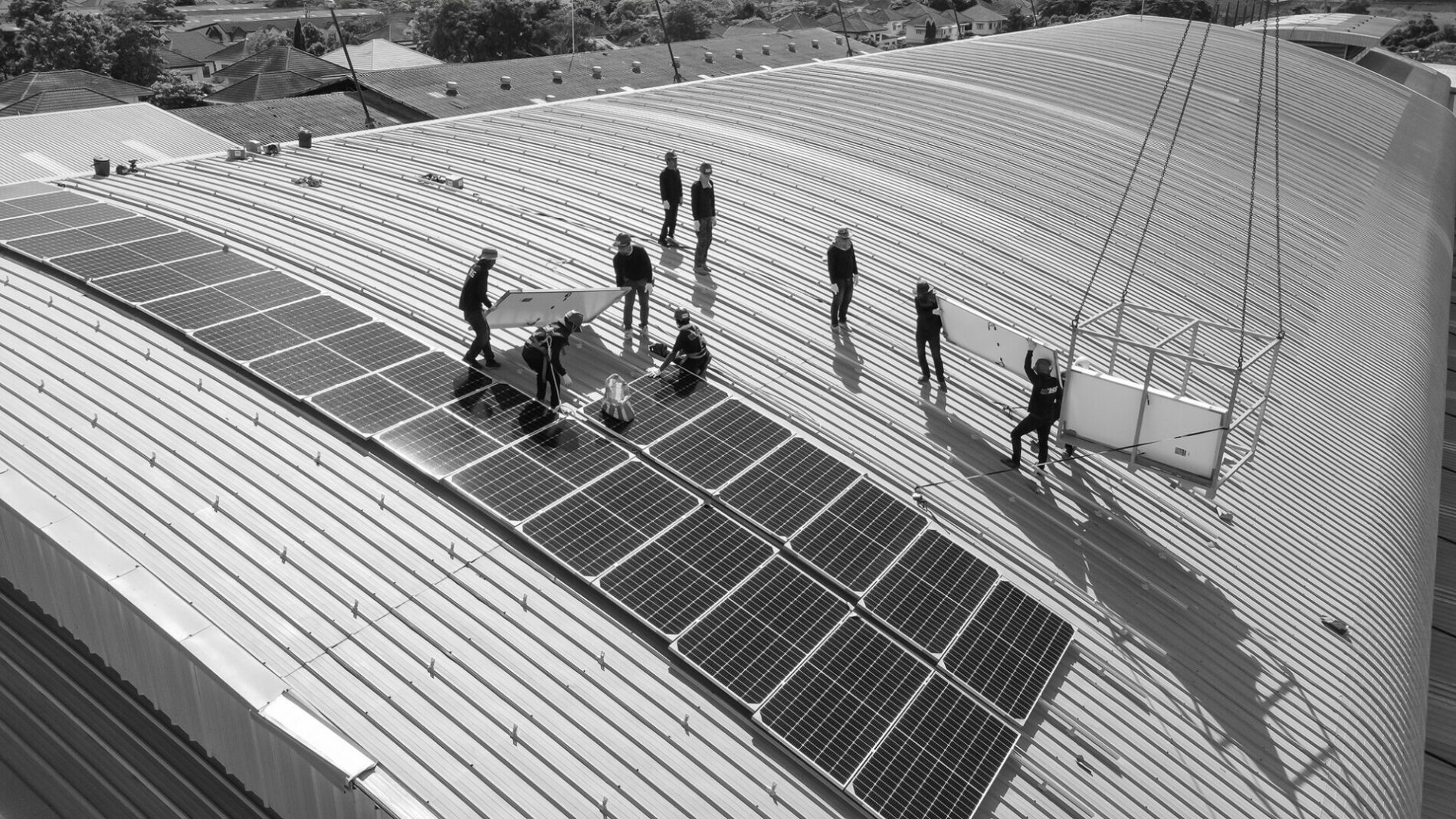
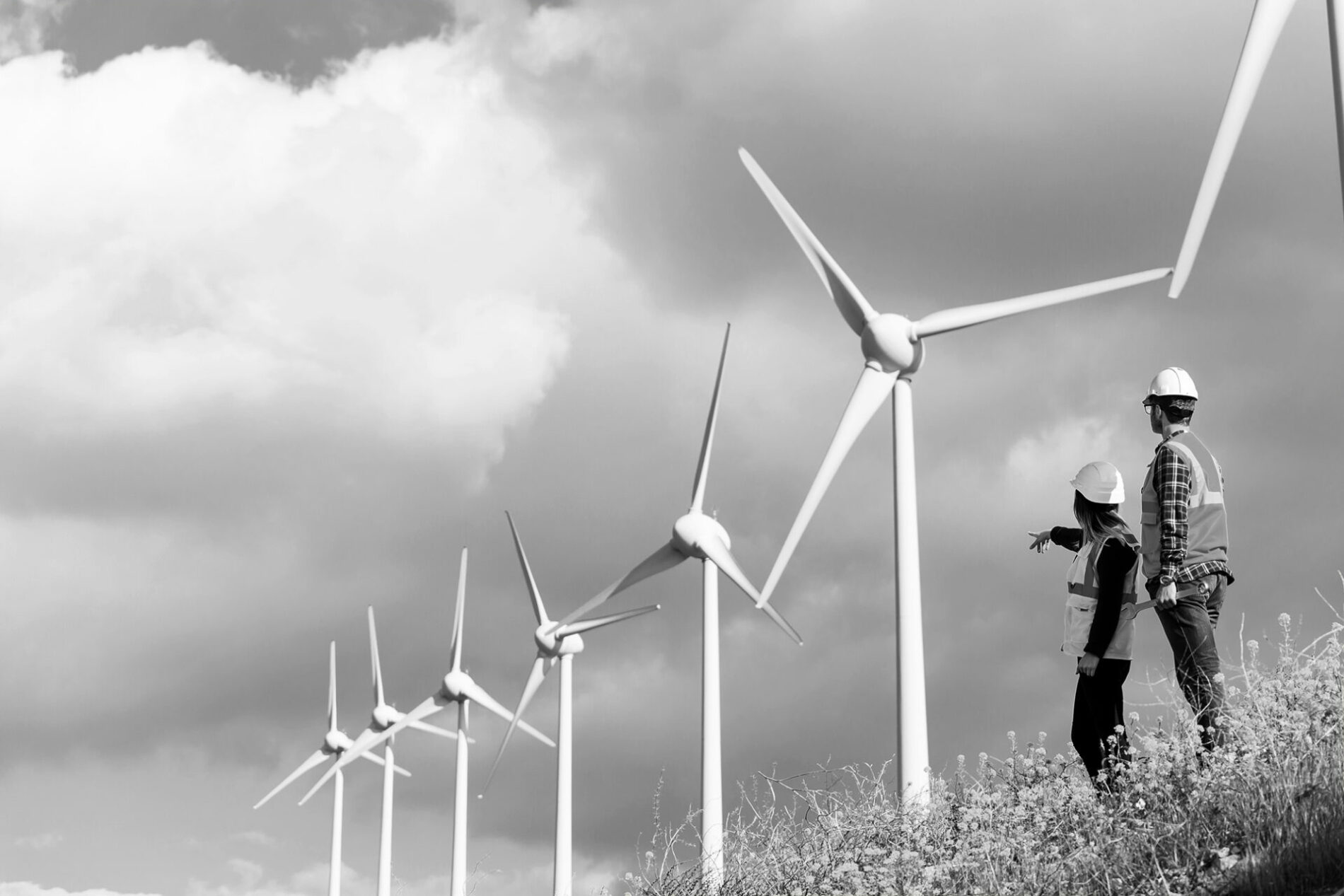
building site aerial view. new football stadium under construction.

It may sound like a peculiar gripe to have with a large-scale sports facility, but given its popularity, the amount of power related to travel, running stadiums and the waste that is generated from their usage, is incredible. It is estimated that the global soccer industry generates more than 30 million tons of carbon dioxide annually. This is the equivalent to the total emissions of a country such as Denmark. Additionally, studies have been conducted to analyze the emissions generated by specific tournaments that have taken place. In 2022, the men’s World Cup was hosted by Qatar. This four-week tournament alone generated 3.63 million tons of CO2. According to Earth.org, the breakdown of this figure is similarly shocking. “Transportation accounted for 52% of the total (1.89 million tCO2e), while accommodation generated 20% of the total emissions (728,404 tCO2e). Temporary (162,556 tCO2e) and permanent (654,658 tCO2e) facility/venue construction combined accounted for 23% of the total. Other contributing factors included logistics, media, materials and merchandise, venue operations as well as electricity, heating, and cooling.”

So, what can be done to minimize the environmental impact of the most popular sport on the planet? Seemingly, the best course of action is a communal approach. In 2016, the United Nations launched the Sports for Climate Action Framework which called on participating signatories to achieve net-zero by 2040. The English Premier League signed up in 2021 with many clubs making individual pledges also. The governing bodies are going one step further, however. The United European Football Association (UEFA) recently launched its Carbon Footprint Calculator where clubs can calculate their emissions based on travel, stadia and facilities. “The UEFA Carbon Footprint Calculator embodies our ambition to showcase that football can be part of the solution in the global effort to reduce carbon emissions,” explained UEFA Vice-President Laura McAllister. “By providing stakeholders with the tools and guidance, we are facilitating collective action towards a more sustainable future for our sport and the planet. Together, we can demonstrate to governments, investors, fans, and commercial partners that football is committed to addressing climate change in a unified and strategic manner.”

“By providing stakeholders with the tools and guidance, we are facilitating collective action towards a more sustainable future for our sport and the planet. Together, we can demonstrate to governments, investors, fans, and commercial partners that football is committed to addressing climate change in a unified and strategic manner.”

Not to be outdone by its European counterparts, U.S. soccer organizations are not pushing towards a greener, more sustainable model of soccer infrastructure. Solar panels have now become ubiquitous on the roof of soccer stadia around the country while wind and geothermal energy is also being explored. Additionally, the environmental impact of the stadium’s construction is now being offset through eco-friendly design and construction practices. For example, sustainable materials are frequently being used in construction while many stadia have achieved LEED certification through the use of green roofs and natural lighting and cooling systems.

Magnificent football stadium full of spectators expecting an evening match on the grass field. Top tribune spectacular view. Sport category 3D illustration background.

New York City FC is planning on taking things ever further, however. The club recently unveiled its plans for a sustainable stadium which, if completed, will signal a new era in sports stadia. The 25000-seat stadium will be fully electric, partly run on green energy, and built with recycled materials. By using locally sourced materials with embodied carbon practices as standard, the stadium will utilize solar panels, a water harvesting system below the pitch, and it will restore biodiversity to the surrounding community as part of the project. While it will boast sustainable practices throughout its construction phase, the question remains on how will it fare once the matches themselves kick off?

Thankfully, NYCFC is making significant efforts to reduce its environmental impact post-construction too. Using locally sourced materials throughout the complex, the club is also working closely with the local transport systems to ensure affordable and sustainable travel options are available for travelling supporters. “I’m proud that New York City will be home to the first fully electric sports stadium in Major League Soccer,” said Mayor Adams. “It’s imperative that we continue our shift to a more sustainable and resilient future, helping New York to better prepare for a changing climate. As a city, we’re reshaping our relationship with energy: how we generate, store and use it. New York City Football Club’s stadium will serve as a model for that goal. New York City has taken significant steps to become more sustainable, resilient and equitable, and this proposed stadium encompasses those commitments.” This sentiment is one shared by the Club’s president Bret Sims, who added that “we’re focused on ensuring that the Club is leading the way when it comes to reducing environmental impact.”

The project, while environmentally minded, it also one that takes the local community into consideration. The project will include a total of 2,500 units of 100% affordable housing at the site, a 650-seat public school, 40,000 square feet of new public open space, retail space and a 250-key hotel. According to local Council Member Francisco Moya, the long-term benefits to the local community cannot be overstated. “This soccer stadium, and the larger Willets Point project, will transform a part of Queens that has a long and difficult history of environmental degradation. It’s imperative that protecting vulnerable communities against the effects of climate change is at the heart of all infrastructure projects in our borough. As this stadium plan demonstrates, New York City Football Club takes sustainability incredibly seriously. I’m excited and proud that Queens would be home to a stadium that would serve as a model to others moving forward.”

Clean Construction Windfall

Established under the Biden/Harris Administration, the Federal Buy Clean Initiative has been promoting the use of low-carbon, American made construction materials since 2021. The reasoning for this initiative is simple; the Federal Government is the single biggest purchaser on the planet with annual purchasing power of around $630 billion. The Buy Clean initiative works by boosting, not only the sustainable practices of the construction industry, but also the jobs and production facilities across the country. “Through Buy Clean, the Federal Government is for the first time prioritizing the use of American-made, lower-carbon construction materials in Federal procurement and Federally-funded projects. This is advancing America’s industrial capacity to supply the goods and materials of the future while growing good jobs for American workers.”

Smart civil architect engineer inspecting and working outdoors structure building site with blueprints. engineering and architecture concept.

The need for Buy Clean is simple. According to the Environmental Protection Agency, the U.S. infrastructure and building network requires billions on tons of concrete, asphalt, steel, glass and other construction materials each year. As a result, the construction industry and its associated materials account for around 15% of annual global greenhouse gas emissions. These figures represent the current best efforts of those within the industry to get a handle on a climate crisis that is spiralling out of control. While there are many innovative tools and processes being developed, much of this good work fails due to a lack of financial investment. The EPA however, believes that within the U.S., communities and businesses have the skill and knowhow to turn this around and is set to recharge the sustainable construction sector through a series of strategic grants and awards.

Recent funding was announced as part of the Inflation Reduction Act that will support these efforts. 38 grant recipients across the United States have been chosen to receive funding totalling $160 million in an effort to support the reduction of climate pollution from construction materials. According to those at the EPA, this investment will see large scale development in sustainable practices, research and outcomes. “These transformative awards from President Biden’s Inflation Reduction Act—the largest climate investment in history—will reduce climate pollution by helping businesses measure the carbon emissions associated with extracting, transporting and manufacturing their products.”

“These transformative awards from President Biden’s Inflation Reduction Act—the largest climate investment in history—will reduce climate pollution by helping businesses measure the carbon emissions associated with extracting, transporting and manufacturing their products.”

This is a view that was echoed across Federal Government. According to EPA Deputy Administrator Janet McCabe, America is set to benefit from this investment on a number of fronts. “As America continues to build more and upgrade our nation’s infrastructure under President Biden’s leadership, cleaner construction materials like concrete and steel are increasingly essential for the nation’s prosperity. These historic investments will expand market access for a new generation of more climate-friendly construction materials, and further grow American jobs that are paving the way to the clean energy economy.”

For the grant program, Reducing Embodied Greenhouse Gas Emissions for Construction Materials and Products, the EPA has made awards ranging between $250,000 to $10 million to businesses, universities and non-profit organisations. Selected projects fall under five broad categories such as creating robust data for EPDs and developing uniform standards for PCR. Many of these projects offer new and innovative ways of expanding the knowledge base around sustainability and how the industry can progress with sustainable goals. One such organisation is the Evanston Rebuilding Warehouse. The Warehouse, doing business as the Rebuilding Exchange, is a Chicago-based non-profit with a mission to reuse building materials, reduce construction waste, and train, support, and connect people seeking careers in the building trades. “Rebuilding Exchange is a retail experience on a mission. Our non-profit stores invite the community to discover an ever-changing inventory of incredibly reasonable, often surprising, and sometimes historical building materials and appliances. From reclaimed wood and vintage fixtures to unique architectural pieces and modern appliances, our stores offer a diverse selection of items that cater to both practical needs and creative projects.”

materials background - compressed thermal insulating hemp fiber bonded panels

Another hugely significant investment is going to the Hemp Building Institute (HBI). This non-profit organisation provides support for entities that manufacture, remanufacture and refurbish construction materials and products. Biogenic materials from agricultural crops such as hemp, soy, and straw bale provide a unique opportunity to directly address climate change and reduce greenhouse gas emissions from the built environment. The Biogenic Building Materials project will focus on developing EPDs and LCAs for biogenic materials. This project will create a standardized cradle-to-gate PCR for agricultural crop components that will be combined with gate-to-grave, industry-determined PCRs to create a practical EPD generator tool for biogenic building materials. PCRs are cradle-to-gate for agriculture and cradle-to-grave for hempcrete.

In addition to this investment, the EPA is also expanding its technical assistance to businesses and communities that wish to become involved with Buy Clean initiatives. These supports will assist organisations with developing EPDs, a vital step in managing and controlling emissions across the industry. “EPA will initially offer EPD development support and direct businesses to resources to help them measure and reduce the embodied carbon associated with their materials, such as those provided by the ENERGY STAR Industrial program. Federal agencies and their suppliers will be able to compare the climate impact of various materials to drive near-term greenhouse gas emissions reductions. Robust EPD data will be further strengthened by a new label program under development that will identify low carbon construction materials for the growing Buy Clean marketplace.”

Ultimately, this funding is a necessary element to the implementation of manufacturing and prioritising American made, clean products. By providing information to the sector, it can make cleaner choices now and in the future. “We are building a clean energy future in America down to the materials we use, and it’s thanks to the Inflation Reduction Act,” said Senator Tina Smith. “Enabling our businesses to showcase their clean construction materials will open opportunities for more jobs, lower energy costs and create a cleaner environment. The more America leads in the clean energy transition, the more our economy benefits, and the more opportunities come our way.”

https://www.epa.gov/newsreleases/biden-harris-administration-announces-nearly-160-million-grants-support-clean-us

Collaborative Power

View in E-mag

In order to effectively reverse the harmful effects of carbon on our environment, innovative thinking is required. Many new ideas and projects have been launched over the past ten years. The jury may still be out on some, but it is clear that others have the potential to make a serious impact. Carbon capture, leads the way in terms of eliminating carbon from our atmosphere but many experts believe that a combined approach will ultimately be necessary. This means that in addition to sequestering carbon, efforts will need to be made to create power sources that are cleaner, more sustainable and meet the requirements of modern societies.

Flat west German landscape near Aachen and Herzogenrath with lots of wind turbines and a village in the foreground.

Sustainable energy such as wind, solar and hydro are all being used, in some shape or form. Depending on the local infrastructure capabilities and available finances, these strategies are rolled out to great success where possible. However, efforts to promote renewables in the energy sector can struggle to overcome the significant matter of cost. These fuel types, in addition to novel processes and strategies, can often be too costly for widescale use. This is where the innovative thinking needs to come in.

Interestingly, the tipping point may have come through legislation, rather than innovation. One EU ruling which was passed in 2019 may end up being massively important in the quest for energy equity. It was at this time that the European Union officially granted citizens the right to share energy with each other with the EU declaring this shift as a changing paradigm. “In May 2019, the European Union (EU) institutions concluded the final legislative files for the Clean Energy for All Europeans Legislative Package (CEP), a legal framework that will help the EU meet its 2030 climate and energy objectives. With this legislative package, the EU has signaled a strong shift in the role of citizens from passive consumers to active participants in the energy transition. For the first time, EU legislation acknowledges the role community energy ownership can play in helping the EU meet its climate and energy objectives while driving local social innovation.” Shifting from passive consumers to active participants is surely a key driver in any increased investment in renewable power.

Energy sharing allows regional electricity consumers (households, municipalities and small and medium enterprises) to establish renewable energy communities (REC) or citizen energy communities (CEC) and jointly operate renewable energy systems. As part of energy sharing, tenant power models provide solar power directly from the roof to different tenants in the same residential building.

Energy sharing allows regional electricity consumers (households, municipalities and small and medium enterprises) to establish renewable energy communities (REC) or citizen energy communities (CEC) and jointly operate renewable energy systems. As part of energy sharing, tenant power models provide solar power directly from the roof to different tenants in the same residential building. The concept itself is not new, however. Energy co-op and community grids have been in place for a number of years. What is new is the legislative push from EU leaders. The group have demanded that member states implement energy sharing programs since 2021, with France, Austria and Italy showing potential.

Family with little girl standing in front of their house with solar panels on the roof, having electric car.

It is in the Black Forest region of Germany, however, where the power revolutionaries are quietly changing the game for power cooperatives. It was in this area that 25 community members set up the first Virtual Citizen Power Plant with each member sharing the energy it needs for homes and offices. Through the use of a forward-thinking app, the community has designed a virtual power plant. Users can access real time information about how much energy they are producing through solar panels and thermal power stations in addition to the usage amounts of themselves and neighbors. Project manager Frederik Penski describes it as neighborly sharing on a wider scale. “Think of it like you’re throwing a cable over to your neighbor and saying, hey, my solar panels produce enough energy for both of us, but virtually.”

What is remarkable about this model is that, by having the information readily to hand, community members can tailor their electricity usage depending on the surplus power, with all unused energy being sold back to the national grid. The community members, according to themselves, become “prosumers,” due to their production, storage and trading of power in addition to being regular consumers of it.

When the EU law around energy sharing changed in 2019, this co-op was able to scale up in terms of size and professionalism. EWS has bought other energy suppliers, local grids and outfits; grown from five employees to 150; and now provides certified renewable energy nationwide to 217,000 clients. However, its greatest success has been in demonstrating the success of a community-led model. Now, as a national provider, it has the infrastructure, experience and skill to support other communities who are seeking to do the same. Penski explains how a large-scale company can co-exist with cooperatives. “Many might ask, why does an energy provider invest in such an energy sharing model? Doesn’t this make you superfluous? We believe citizens taking responsibility for their own energy supply is the future. In a way, we’re shifting the model from a central energy supplier to regional and digital groups.” The EWS has made its mark “in a bureaucratic world that is not really made for such user initiatives,” he says. “The complexity of the rules and regulations is enormous. Realistically, users cannot manage this on their own.”

While the sharing and selling of power is a wonderful tool for cooperative living, it is the use of SMART systems and integrated apps that could be the most revolutionary act of all. Penski believes that these integrated systems could balance the needs of end users in real time scenarios that maintain power for all in a circular and sustainable way. “The next step is not only to monitor, but to direct the supply for maximum optimization,” he says. “For instance, EVs could feed their electricity into the grid. Users could tell the app how many miles they need to drive, and the technology would ensure they have the necessary charge. Or the system could recognize: hang on, energy will be scarce the next 15 minutes, let me power down some non-essential things.”

If this level of sophistication does indeed become a reality, the way we consume energy may change beyond recognition. From a cooperative model in the Black Forests of Germany to SMART systems that redirect power where necessary to an interlinked community of providers and users, the future of energy is an incredibly exciting one.

Removing Every Barrier

View in E-mag

For as long as many can remember, the construction industry has been navigating the challenges that come with a contracting workforce. Over the past few decades, fewer people are choosing a career in the trades. These dwindling numbers were exacerbated by the COVID pandemic which forced many into an early retirement. So, as the construction world looks to capitalize on massive injections of federal funding, coupled with an ongoing need to pivot away from fossil fuel reliance, the industry finds itself at a crossroads.

Architecture, women construction team and diversity in portrait, contractor group with smile at building site. Architect, engineering female with solidarity and trust in collaboration with builder

Much of the work being done to move away from dirty fuel centers around power grids. As evidenced by numerous shutdowns and outages, the infrastructure network is no longer equipped to handle the ongoing power needs of those in the United States. This means that, despite pushback from some quarters, the drive to re-invent the electric grid using sustainable power is well underway. However, huge challenges remain in the form of a chronic labor shortage. McKinsey reported that by 2030, the U.S. will have a shortfall of 300,000 engineers and 90,000 skilled technicians. DeLoitte, meanwhile, has found that the U.S. semiconductor sector faces a shortage of around 90,000 workers.

To add an even greater layer of complexity, Associated Builders and Contractors, one of the largest trade associations in North America, believes that the shortage of skilled workers is one of the single greatest barriers to success in the industry. “ABC’s 2022 workforce shortage analysis sends a message loud and clear. The construction industry desperately needs qualified, skilled craft professionals to build America,” said Michael Bellaman ABC president and CEO. “The Infrastructure Investment and Jobs Act passed in November and stimulus from COVID-19 relief will pump billions in new spending into our nation’s most critical infrastructure, and qualified craft professionals are essential to efficiently modernize roads, bridges, energy production and other projects across the country. More regulations and less worker freedom make it harder to fill these jobs.”

If the electricity sector is to meet its climate goals, new people are required urgently. According to Rewiring America, an electrification nonprofit, over one million more electricians are required urgently in the United States. Coupled with that, the sector has an overwhelmingly skewed gender imbalance. So, can something be done to bring together these challenges, turning them into a net positive for the industry?

Nontraditional Employment for Women (NEW) is a New York based organization that was established in 1978. The aim of NEW is to train and place as many women in skilled construction as possible. “NEW’s goal is to increase the number of women employed in trade careers, specifically those that offer strong wages, benefits, training, and potential for advancement. These career paths have been historically less accessible to women but offer the opportunity to fundamentally transform one’s income and wealth.”

“NEW’s goal is to increase the number of women employed in trade careers, specifically those that offer strong wages, benefits, training, and potential for advancement. These career paths have been historically less accessible to women but offer the opportunity to fundamentally transform one’s income and wealth.”

But why has a career in construction been out of reach for so many American women? According to Kate Krug, NEW’s Executive Director, the barriers to this line of work for women are not necessarily obvious at first glance. Furthermore, many of the challenges to accessing a construction career speak to a wider societal problem. For Krug, it is an acute problem that needs to be remedied. “Most childcare is set up to be very nine-to-five supportive,” said Kate Krug, the organization’s executive director.  “If you have to be out the door by 5 a.m., you have to pay someone to sit with your kids until it’s time to go to school.”

Skillful worker celebrate success in the factory . Industrial people and manufacturing labor concept .

So, how does NEW support women in this regard? Its mission is to prepare, train, and place women in careers in the skilled construction, utility, and maintenance trades. NEW offers both day and night-time courses over a number of weeks. Its curriculum covers a diverse range of subjects such as carpentry, blueprint reading, electrical and painting. In addition to that, the comprehensive, innovative training modules cover job readiness, trades Math and a Health and Safety component which is run through the New York Committee for Occupational Safety and Health.

One additional aspect to NEW sets it apart from other recruitment organizations. Due to the invisible barriers which prevent women from entering these types of careers, NEW supports its students and graduates in areas that can include transportation bursaries, boots and other work attire, assistance finding childcare and supportive counselling.

Recently, these initiatives were given a tremendous boost when NEW announced that it was to receive a state grant to expand its childcare access program. Since taking her post as President early this year, Leah Rambo has prioritized childcare services for apprentices, boosting the service massive in the past few months. “We do this so that women can have economic independence for their families. Workers in the building trades have a lot of barriers when it comes to getting childcare for themselves and their family,” Rambo said. “And part of this has to do with the times that we start working very early. You have to travel all across the city and even outside of the city to get to jobs and over time.”

Unsurprisingly, New York City has an incredibly high cost of childcare, meaning that low-income apprentices or one-parent families face enormous struggles to rejoin the workforce. The state legislature and Department of Labor funded program will bring around $375,000 into the scheme. According to State Sen. Jessica Ramos, it is about facilitating women into the construction industry. ““We wanted to make sure that NEW had all of the tools necessary in order to invite more women into the program because we are hoping to have lots of shovels in the ground very, very quickly.” This sentiment was echoed by president of the Building and Construction Trades Council of Greater New York, Gary LaBarbera, “Without that childcare, these situations create barriers and hurdles for women and families, and frankly men as well who may be single parents, to come into the industry. What our goal is to remove as many barriers as possible on all fronts.”

While it remains to be seen just how effective these measures will be. Removing childcare costs is a significant step in the right direction. For NEW, it is one more barrier removed on the long road to equality. “Through 40 years of commitment, NEW has increased women’s representation in trade careers from two to seven percent, with many apprenticeships approaching or exceeding 15 percent women.”

https://www.new-nyc.org

Reusing Fallen Trees

View in E-mag

Wood has been an integral part of the construction industry since time began. Its many uses have been the foundational material for structures and infrastructure in every country and civilization around the world. In fact, while steel, concrete and iron have increased in popularity over the last century, wood is still considered an integral building material. For example, the United States, Japan, and Scotland are leading exponents of wood building with as much as 85% of a new house’s construction being wooden.

Housing wooden-frame house built near woodland area. Start of novel construction of comfortable cottage on edge of the forest. Concept of contemporary ecological construction and modern architecture.

While some may presume that the use of wood in construction can lead to unsafe, weak, or cheap buildings, the opposite is true. In the past twenty years, over fifty buildings of between 7 and 24 stories have been completed. It seems as though the construction industry has come around to the possibility of using wood at scale.

This brings us to another challenge, —sustainability.

Across every sector, sustainable practices are coming into focus. More and more, businesses and industries need to readjust from traditional methods of manufacturing and production, leaving some things in the past and introducing more ecologically sound materials. Wood, being a sustainable material in itself, has benefitted from a resurgence due to this upsurge. However, the material takes time to be regrown and businesses need to do their due diligence to ensure that its wood is sourced from sustainable forests.

Alongside this, there is an ethical consideration. The benefit of trees in the natural and urban environments cannot be overstated. From rain and heat cover to habitats for numerous insects and birds, trees, and a vital element of the global ecosystem. According to data by the United Nations, the global population will increase by around 25% in the next 30 years. The number of people on our planet will rise from 7.7 billion to 9.7 billion by 2050. Given that the World Bank estimates that around 1.2 billion people currently live in substandard housing, this puts the need for additional homes into sharp focus. By 2030, the World Bank also states, this housing deficit will reach 240 million units. When we consider the amount of wood that will be required to build these homes, it seems as though we are facing an enormous challenge.

One idea has recently come about that may alleviate this burden. Every year, however, cities and towns in the U.S. lose around 36 million trees due to old age, urban development, and disease. These lost trees cost the nation around $96 million annually. Philadelphia’s Parks & Rec has recently launched the Philadelphia Reforestation Hub. According to the Parks & Rec team, the Hub will have myriad benefits. “The Hub will help the City meet its waste reduction, climate, and community impact goals. This initiative will feature a workforce development program led by PowerCorpsPHL. It will create climate career opportunities for at-risk young adults.” This first of a kind partnership will provide climate workforce training opportunities, save money on wood waste removal, and contribute to the city’s sustainability goals.

It will achieve this through a collaboration with Cambium Carbon, a Washington based company that repurposes waste wood. Cambium is a company that is fully dedicated to achieving positive change through its use of fallen wood. “With a relentless focus on sustainability, community impact, and technological advancement, Cambium is not just a company; we are a movement for change. We believe in a world where every tree matters, where wood is a force for good, and where our actions today shape a greener tomorrow.”

“With a relentless focus on sustainability, community impact, and technological advancement, Cambium is not just a company; we are a movement for change. We believe in a world where every tree matters, where wood is a force for good, and where our actions today shape a greener tomorrow.”

In the cities Reforestation Hub, Cambium will transform these fallen trees into Carbon Smart Wood, a material which stores 5.23 pounds of carbon in every plank. Not only does this initiative mean that these trees will avoid landfill, but it also ensures that the supply chain is a local one, rather than importing wood from rainforests overseas. This material will go on to be used in a multitude of settings such as desks, fences, and flooring. “We target wood impacted by the four Ds: disease, decay, disaster, and development. Instead of wood entering landfills, we partner with local arborists and millers to rescue and upcycle it. This process creates a carbon negative material.”

According to Ben Christensen, Co-founder of Cabrium, the company’s vision came about through a reimagining of traditional logging methods. “One day in 2019, while observing imported firewood at a local store, the idea for Cambium was born. We immediately began building a reimagined supply chain to transform local wood waste into viable resources, reduce wasteful consumption and help regenerate urban economies. Our business is more than just a venture; it’s a personal mission, deeply rooted in my history and our collective commitment to fight climate change.”

Not only does Cabrium utilize wood that would otherwise end up in a landfill, but its processes also incorporate a circular economy method, with much of the materials being reused. In addition to this, the company estimates that by 2050, it will have planet almost six million trees and produced 1.7 billion feet of Carbon Smart Wood which equates to 4.6 million metric tons of CO2 stored safely and sustainably. “A net-negative material, Carbon Smart Wood™ presents a significant opportunity to achieve substantial emissions reductions throughout our built environment.”

As construction grabbles with the challenge of replacing harmful materials without losing out on strength, versatility or cost, Carbon Smart Wood may be a viable answer. Here we have readymade materials that can act as carbon sinks. Additionally, this material is falling down around us every single day. It is not, however, a magic bullet. Other options that can mitigate against the enormous amounts of CO2 being pumped into our atmosphere yearly need to be found in addition to this. It does however offer a sliver of hope that innovative, and community led organizations are stepping up to play their part. For the team at Cambium, it is all about doing what it can, regardless of the personal outcomes. “Our climate mission is at the heart of everything we do. We deeply care about building a future where both people and the planet can thrive together. We are guided by a strong sense of doing what is right, even when it’s not easy or expedient. We prioritize long-term positive impact over short-term convenience.”

https://cambiumcarbon.com/carbon-smart-wood/

Powered by Charcoal

View in E-mag

While the use of fossil fuel driven energy began with the industrial revolution, since then, burning coal to create power has now become a ubiquitous mainstay in the energy sector. The material was first used to generate electricity in the United States around 1880. Undoubtedly, this has led to enormous developments around the world, it does also come with some baggage. In fact, this may be quite the understatement. The rate at which carbon emissions have been released into the atmosphere has grown astronomically in recent decades. In 1950, around six billion tons of CO2 had been emitted globally. By 1990, this figure had almost quadrupled to more than 20 billion tons. Unfortunately, the statistics get considerably worse from there. Each year, we generate over 35 billion tons of CO2. These are truly unimaginable increases from previous years and demonstrate a genuine need for change. 

Oil drilling derricks at desert oilfield. The change in oil prices caused by the war. Oil prices are rising.

Historically speaking, the rise of fossil fuels was a simple one. The material was far more efficient than any rivalling sources of power. Any concerns would have been far outweighed by the scale of advantages it offered. That was then, however. To assume that over a century later it is still the most viable energy source is a fallacy. This is backed up by numerous statistics. Rocky Mountain Institute is a non-profit organization which was set up in 1982 with a mission to radically improve America’s energy practices. RMI recently conducted a vast body of research, exploring the efficacy of fossil fuels, such was their prevalence. The results were hugely surprising. Almost two-thirds of all primary energy is wasted in energy production, transportation, and use. This amounts to around 400 exajoules, worth over $4.5tn, or almost 5% of global GDP. “Today, most energy is wasted along the way. Out of the 606 EJ of primary energy that entered the global energy system in 2019, some 33% (196 EJ) was lost on the supply side due to energy production and transportation losses before it ever reached a consumer. Another 30% (183 EJ) was lost on the demand side turning final energy into useful energy. That means that of the 606 EJ we put into our energy system per annum, only 227 EJ ended up providing useful energy, like heating a home or moving a truck. That is only 37% efficient overall.” So, this all begs the question, what is driving the continued use of fossil fuels? Given the environmental need, coupled with mounting evidence of much more efficient alternatives, surely it is time to make the switch.

Let’s consider, for a moment, a scenario where the global economy switched to renewable energy overnight. That wouldn’t, however, solve the challenge of carbon currently being pumped into our ecosystems. Scientists at the U.N. believe that billions of tons of carbon need to be removed annually from the atmosphere in order to achieve net zero. In order to remedy this, solutions need to be implemented without delay. Researchers at the University of Oxford have drilled down into ten differed carbon capturing, comparing their value, cost, scalability, and permanence. Looking at methods from industrial and biological, the researchers found that six methods are currently viable and profitable. These range from Biochar and CO2-EOR to forestry and soil carbon sequestration.

“One of the most innovative and exciting tools for battling climate change, however, is direct air carbon capture. This method involves hoovering up carbon directly from the atmosphere before storing it in underground facilities.”

One of the most innovative and exciting tools for battling climate change, however, is direct air carbon capture. This method involves hoovering up carbon directly from the atmosphere before storing it in underground facilities. In an example of its growing influence on the sector, the world’s largest direct air capture plant recently opened in Iceland. The plant, built by Climeworks, has a capacity to capture 36,000 metric tons of CO2 per year, dwarfing the previous record holding plant which is able to capture 4,000 tons. “Starting operations of our Mammoth plant is another proof point in Climeworks’ scale-up journey to megaton capacity by 2030 and gigaton by 2050,” Jan Wurzbacher, co-founder, and co-CEO of Climeworks said.

The process is an incredible feat of engineering and science. A number of barriers to its widescale adoption exist. While the Icelandic plant will run on the country’s abundant geothermal energy, many other locations do not have this ability. Direct carbon capture requires very high temperatures and is power intensive. While it may seem irrelevant in the face of a climate emergency, the fact is that any potential method for lowering emissions will need to fit in with the budgets of its users. With this in mind, a team at the University of Cambridge set out to develop a low-cost alternative that may assist in direct carbon capture.

Activated charcoal sponges are porous materials that are most commonly found in household water purifiers. Its purpose in that particular process is to capture chemicals and toxins from water. Most recently, scientists have been investigating the potential for utilizing it in an even more transformative way. While it cannot effectively capture carbon normally, the university team, led by chemist Alexander Forse have discovered that by inserting charged, reactive particles into the charcoal, the resulting material rapidly captures ambient carbon. According to Dr Forse, time is of the essence in terms of investigating the potential for this breakthrough. “Given the scale of the climate emergency, it’s something we need to investigate. The first and most urgent thing we’ve got to do is reduce carbon emissions worldwide. But greenhouse gas removal is also thought to be necessary to achieve net zero emissions and limit the worst effects of climate change. Realistically, we’ve got to do everything we can. This approach opens a door to making all kinds of materials for different applications, in a way that’s simple and energy-efficient.”

As Forse went on to explain, this particular method could be genuinely transformative. Its efficacy is on a par with any other material but more than that, the method is far more sustainable. While direct carbon capture can typically require heat of around 900 degrees Celsius, the team at the University was able to complete the process with temperatures of between 90 and 100 degrees Celsius. “What’s even more promising is this method could be far less energy-intensive, since we don’t require high temperatures to collect the CO2 and regenerate the charcoal sponge.”

https://www.cam.ac.uk/research/news/electrified-charcoal-sponge-can-soak-up-co2-directly-from-the-air

Energizing the Future of Construction

View in E-mag

Since building and construction began, humans have grappled with the challenge of powering these endeavors. From horse drawn vehicles to modern methods, the full gamut of energy sources have been utilized. Coal, oil, gas, electricity, every conceivable power source has had its time and place. The future of energy is a difficult one to predict, however. The construction industry is navigating an era marked by the occasionally opposing forces of technological innovation and environmental consciousness. This context means that renewable energy stands out as a both a hurdle to overcome and a transformative force. According to John Hopkins University, addressing the energy challenge is the single greatest one facing modern industry. “Building a sustainable energy future calls for leaps forward in both technology and policy leadership. State governments, major corporations and nations around the world have pledged to address the worsening climate crisis by transitioning to 100% renewable energy over the next few decades. Turning those statements of intention into a reality means undertaking unprecedented efforts and collaboration between disciplines ranging from environmental science to economics.” Embracing sustainable energy sources not only aligns with global efforts to combat climate change but also promises significant advancements in building practices, operational efficiency, and long-term cost savings. But as we move through various sources of energy, which one is leading the pack in terms of future proofing the industry. Which has the most potential to truly revolutionize the construction landscape.

solar panels being installed on building roof to create renewable energy

Solar power has been a cornerstone of the push for renewable energy sources for decades. Thankfully, we have now reached a point where photovoltaic (PV) panels have become increasingly efficient and, crucially for the construction industry, they have also become more affordable. The construction industry has seen a surge in the integration of solar panels into building designs, from rooftop installations to innovative solar facades. According to Dr. Martin Green, a pioneer in photovoltaics research at UNSW Sydney, PV is now experiencing a golden period in terms of tech and cost. “Solar energy has reached a point where it is not only environmentally beneficial but also economically viable. Advances in PV technology are making it easier for buildings to generate their own power.” This view is backed up with reported advancements in solar technology, such as perovskite solar cells which promise even greater efficiency and lower costs. What’s more is that building-integrated photovoltaics (BIPV), which seamlessly incorporate solar cells into building materials like windows and walls, are starting to be seen across urban architectural designs. With the potential for smart grids and solar energy storage solutions, solar power can provide a consistent and reliable energy supply, reducing dependency on traditional energy sources.

“Advances in PV technology are making it easier for buildings to generate their own power.”

While this may seem like a failsafe solution, challenges remain. Geographical limitations, for instance, can impact a community’s ability to harness PV. In situations where abundant sunlight is not available, alternatives need to be found. Wind energy, primarily harnessed through large-scale wind turbines, is becoming a significant player in the renewable energy sector. Benefits of offshore wind farms include a comparatively high energy output and reduced land use impact. “Wind energy continues to grow in importance due to its efficiency and the decreasing cost of wind turbines. Offshore wind, in particular, holds significant promise due to higher wind speeds and less visual impact,” notes Steve Sawyer, former CEO of the Global Wind Energy Council. On a smaller scale, urban wind turbines and innovative designs like vertical-axis turbines can be integrated into building structures, providing localized energy generation. As this technology advances, improved turbine efficiency and new materials will further reduce costs and enhance performance. Interestingly, the potential for wind energy to complement solar power in hybrid systems can offer a balanced and resilient energy solution for urban developments.

Various other methods of providing sustainable energy have emerged in recent years. Geothermal energy, the process of tapping into the Earth’s internal heat, is a growing sector in the area of heat pumps and electricity generation. Karl Gawell, Executive Director of the Geothermal Energy Association believes that this energy source is one with huge potential for growth. “Geothermal energy is a reliable and constant energy source that can provide heating and cooling for buildings year-round. It is underutilized but has great potential for wider adoption.” In addition to that, the potential for further development is one that makes this energy source a key player in future markets. The expansion of geothermal technology, including enhanced geothermal systems (EGS) that can be deployed in a wider range of locations, holds significant promise. The integration of geothermal heating and cooling in building designs can dramatically reduce energy consumption and greenhouse gas emissions. With advancements in drilling technology and increased investment, geothermal energy could become a mainstream solution for sustainable construction.

One source of energy, however, seems to be on a downward trajectory. Hydropower, the first of the major sustainable energy sources, has seen a noticeable decrease in its global usage in recent years. For most of the 20th century, hydroelectricity was the only carbon-free power source, eventually providing over 90% of the electricity for a dozen smaller countries. Even into the 21st century, hydro was helping us keep ahead of our climate budgets. In 2022, China’s dams alone generated 1300 terawatt hours of electricity—enough to power the entire world in 1950.One cause for this decline may be that, since its inception in 1878, the methods has been overused to the point of being endangered. According to a recent environmental report, the sector may be running out of steam. Hydropower requires very particular terrain to operate effectively and many countries such as Switzerland, Mexico, Norway, Sweden and France have dammed most of their available rivers; up to 88% in some cases.

The future of renewable energy is one that hangs in the balance. On one hand, geographical limitations and cost are proving to be restrictive. However, the potential for synergy between various energy sources and innovative applications is a positive one. As technology advances, the integration of multiple renewable energy systems—such as solar, wind and geothermal—into cohesive and adaptive energy networks will be crucial. According to Dr. Amory Lovins, co-founder of the Rocky Mountain Institute, smart grid technology and energy storage solutions will play pivotal roles in optimizing energy use and efficiency.“By combining different renewable energy sources and utilizing smart technologies, we can create energy systems that are not only sustainable but also resilient and adaptable to future needs.”

Recyclable Homes

View in E-mag

Industry is all about balance. Workload is managed by cost and labor. In turn, success is a causality of finding the right balance of all three. These metrics, however, only work when viewed through a purely fiscal lens. The world, its communities, and the needs of these people, are not figures and bottom lines. When we throw in the environmental component, the challenges become even greater still. What all this means is that the system of balancing cost against demand is an archaic one that is no longer fit for purpose. Other, less tangible considerations need to be taken into account too. Take housing for instance, the equation is far more complex than ‘build more houses.’ For many reasons, social, financial and environmental, this is simply not possible. However, housing is such a fundamental element of society that it simply cannot be overlooked. UN-Habitat estimates that 3 billion people (around 40 per cent of the world’s population) will need access to adequate housing by the year 2030. The organization is also clear on the vital need for a change in these numbers. “Access to housing is a precondition for access to employment, education, health, and social services. In order to address the current housing challenges, all levels of government should put housing at the center of urban policies by placing people and human rights at the forefront of urban sustainable development.” So, how do we remedy this? How do we rebalance the equation, factoring in these newer, more complex, considerations?

concept of sustainable recyclable housing

North America, and much of Europe too, finds itself in the midst of a housing crisis. Post-pandemic, communities are struggling to meet demands with an ever-growing list of factors that are vying for attention. Speed, cost, environmental considerations, not to mention the growing number of homeless people and families. It is an ever-growing challenge that seems to be getting worse, rather than better. This is where the question of balance comes in. Oftentimes, by using technology such as 3D printing to prioritize speed and cost, environmental elements are overlooked. Concrete, due to its cost and ease of use, becomes the go-to material. By addressing one issue, another rears its head.

In Maine, things are reaching a crisis point. MaineHousing has estimated that around 25,000 new housing units are currently needed to address the demand for homes. As costs climb to an all-time high and global events are displacing vast numbers of people, these figures are surely set to get worse before they improve. A recent report from MaineHousing is illuminating in this regard. “In 2022, the benchmark for measuring homelessness in Maine continued to be the annual Point-in-Time (PIT) Count, a federally required survey of sheltered and unsheltered persons experiencing homelessness on a single night in January. In 2021, (the first full year of the pandemic) there was a decline in the PIT due to no unsheltered count being done that year. In 2022, there was a dramatic increase from 1,097 in 2021 to 3,455 in 2022.”

“The truly remarkable element of this project is that the houses themselves will be 100 percent recyclable.”

One project in the state, however, is viewing the situation through a different lens. How could the individual elements of this crisis all be answered in tandem? Is there a way to combine fast, cost-effecting housing that is also environmentally sound? The answer, thankfully, is yes. The project is aiming to produce a community of 600-sq-ft, 3D-Printed, bio-based houses for those experiencing homelessness. The truly remarkable element of this project is that the houses themselves will be 100 percent recyclable.

3d housing in maine
Photo by BioHome3D

3D Housing has gathered a foothold in the construction industry due to its many benefits. It generates significantly less waste than traditional building methods while minimum space is needed to transport materials which brings down many factors such as energy, transportation and storage. In fact, such is the increase in its use, a recent report suggests that 3D printed construction will increase by an incredible 91% by the year 2028.

BioHome 3D is taking things even further. The company is producing the world’s first 3D-Printed house made entirely from bio-based, recyclable materials. As they explain, the method now allows for a simplified, cost effective and sustainable model of home design that is set to flourish. “Designed to address labor shortages and supply chain issues that are driving high costs and constricting the supply of affordable housing. Less time is required on-site building and fitting up the home due to the use of automated manufacturing and off-site production. Printing using abundant, renewable, locally sourced wood fiber feedstock reduces dependence on a constrained supply chain.”

The prototype was developed at the University of Maine Advanced Structures and Composites Centre (ASCC) through funding from the U.S. Dept. of Energy. Speaking about the innovation, Gov. Janey Mills said: “Our state is facing the perfect storm of a housing crisis and labor shortage, but the University of Maine is stepping up once again to show that we can address these serious challenges with trademark Maine ingenuity.” According to those at UMaine, the need for this development is the unquestionable damage that traditional construction methods are having on the environment. “The construction industry accounts for 39% of global carbon emissions. Sequestering 46 tons of carbon-dioxide for each 600-square-foot unit, BioHome3D stands as a pivotal solution for the construction industry. This technology addresses both operational and embodied carbon, and sets precedents for both sustainable construction material production and manufacturing.”

The houses differ from other 3D printed methods in a number of ways. Each module is 100% additively manufactured with walls, floors and roofs all being 3D printed. The houses are insulated with wood fiber insulation and are 100% recyclable. According to Gov. Mills, the project is an example of highly creative thinking that will bring positive change to the people of Maine and beyond. “With its innovative BioHome3D, UMaine’s Advanced Structures and Composites Center is thinking creatively about how we can safely tackle our housing shortage, strengthen our forest products industry, and deliver people a safe place to live so that they can contribute to our economy.”

With the rise of 3D printing, it makes sense that the next step on this path is more sustainable practices in this regard. As the demand for sustainable building practices ramps up even further, we can expect to see much more of the BioHome 3D in the near future.

composites.umaine.edu/biohome3d

More Stories

A Construction Mission with Steel

AAC Contractors — By Elizabeth Howell

When Carlos Ferreira set out to name his minority-owned construction company, he had two goals in mind: get close to the front of the alphabet and (…)

Building Opportunity Through Craftsmanship and Commit...

Shepardville Construction — By Elizabeth Howell

Across the Northeastern United States, from Massachusetts to Long Island and into the heart of New York City, Shepardville Construction has built a name synonymous with (…)

Powering Growth Through People, Process, and Ownership

DP Electric — By Elizabeth Howell

DP Electric has spent the past 35 years establishing itself as one of Arizona’s most dynamic electrical contractors; an organization built on adaptability, innovation, (…)

Redefining the Standard in Fire Protection

Ironsmith Fire — By Emma Kilcawley Hemani

When brothers Jared and Justin Smith, together with their longtime friend Todd Burriello, founded Ironsmith Fire in July 2021, they had a simple but ambitious goal: to build a (…)

Innovation in Every Foundation

HC Matcon Inc. — By Aoife Chaney

Not all soil is naturally suited for the work of construction. Sometimes, projects call for additional systems to stabilize the ground and secure excavation (…)

Five Decades of Powering Central Virginia

Tolley Electrical — By Elizabeth Howell

Tolley Electrical has been a steady presence in Central Virginia for nearly half a century, a name known for dependability, integrity, and community commitment. (…)

Building Momentum Through Smart Growth

North & South Construction — By Elizabeth Howell

In just under two decades, North & South Construction has evolved from a small family start-up into one of New Hampshire’s most dynamic construction companies. Founded (…)

Building Strength, Legacy, and Opportunity

Future Fence Company — By Elizabeth Howell

Future Fence Company began in 1979 with little more than a college student’s determination and a willingness to take a chance. Nearly fifty years (…)

Powering Smarter, Safer, More Efficient Buildings

Custom Electric & Communications — By Emma Kilcawley Hemani

For forty years, Custom Electric & Communications has been shaping the way buildings function across New England. Founded on principles of service and reliability, the New (…)