






































Associations

city ahead on a road at night

Civil Engineering & Infrastructure

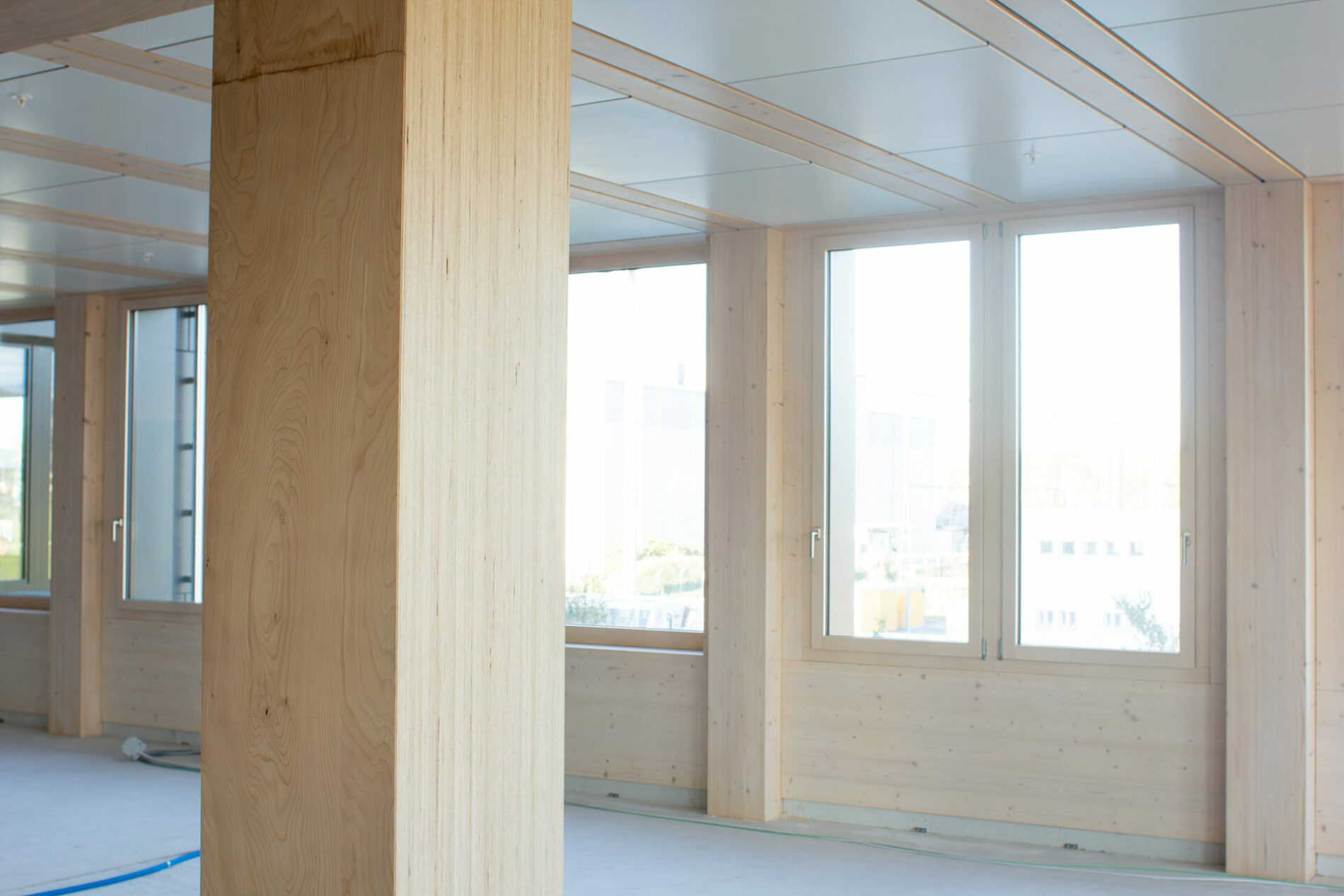
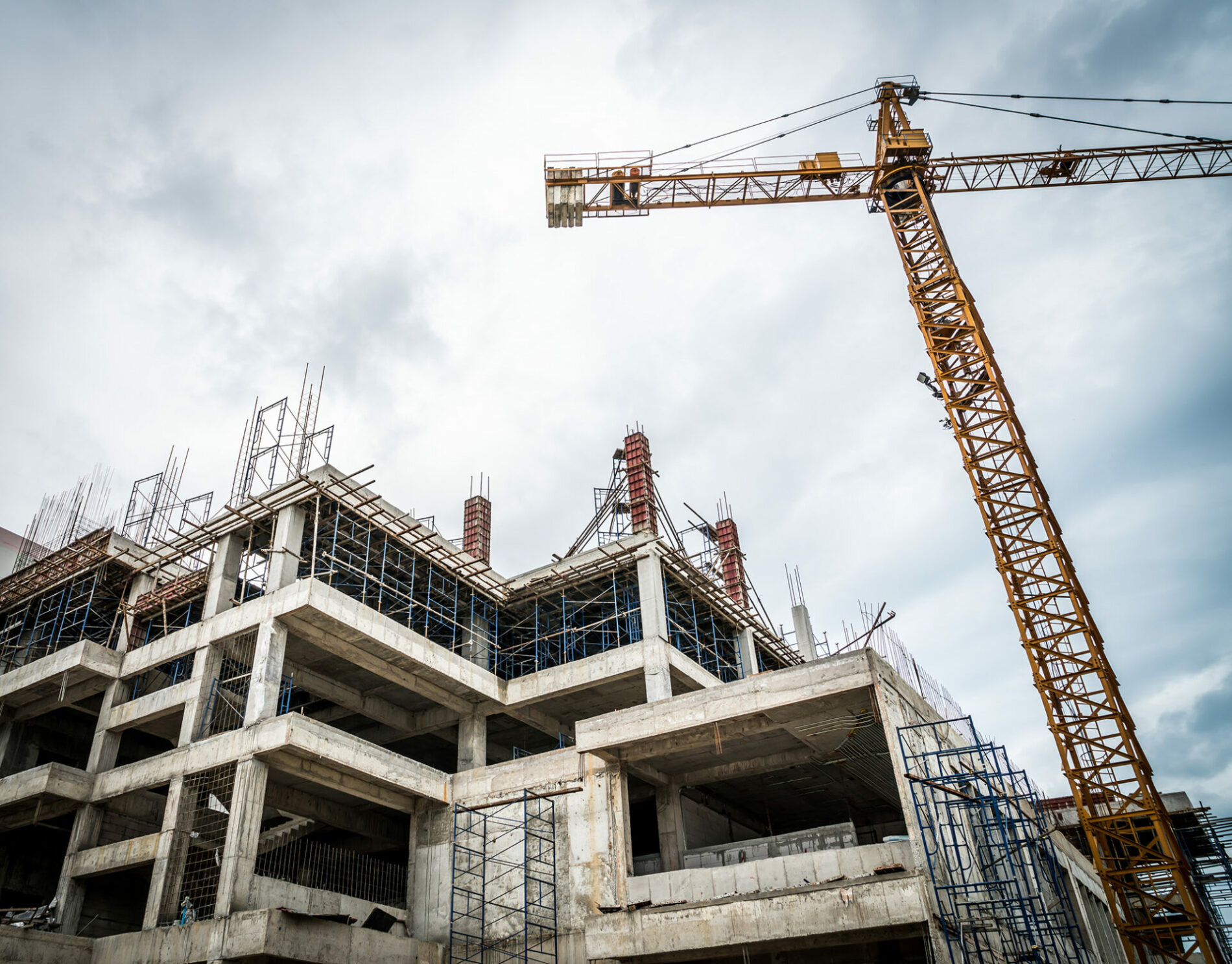
modern concrete structure

Concrete

design build drawing with construction tools

Design Build | CM | GC

multiple excavators parked in a row

Equipment

green tree outside office building

Green Building

thumbs up

Positive News

toolbelt construction tools

Specialty Contracting

Steel

Inclusive Infrastructure

Infrastructure is big business. Notwithstanding the $1.2 trillion that was approved by the U.S. last year, it has always been a sector that involves large figures. Recent statistics show that in 2023, the North American market size of infrastructure construction was in the region of $371 billion with this figure expected to rise to over $500 billion by 2025. Clearly, when it comes to building and maintaining our roads, pipes and cables, the future is looking bright. However, there are gaps in this network. While much money is spent developing infrastructure networks across North America that are fit for purpose, nothing is ever truly perfect. Rail, road and pedestrian networks are being overhauled through massive tranches of public funding giving residents services that meet the needs of modern society. However, elements of our communities can be left isolated, unable to access the services required for independent living.

Infrastructure is supposed to be the great leveller. It is the foundation upon which every community can thrive and develop. With a well-run and fully equipped infrastructure network, every citizen has an equal chance at building a successful life. Unfortunately, barriers to access remain. The full potential of infrastructure projects is often left unrealized. In the absence of minority groups and marginalized communities in the decision making process, inequalities can be exasperated by the design and management of infrastructure networks. Take travel as an example. As anyone who has visited a foreign city can attest to, navigating a space can be challenging. For those with sight loss or impaired vision, these challenges can be insurmountable.

There are, however, growing numbers of organizations, companies and individuals that are advocating for these groups by designing inclusive technology. Ambitious inclusive infrastructure is being designed with the goal of allowing all users to maximize their participation and engagement in the world around them. A global business consultant explains how infrastructure planners can unintentionally exclude people through design flaws. “Underdeveloped and gender-blind infrastructure often hinders women and girls from accessing basic services to support their upward social mobility and reduce gender inequality. Infrastructure can also discriminate based on age – in many areas, barriers to physical access prevent the very young and the elderly from benefiting from infrastructure. Race, ethnicity, caste, and other social categories may exclude certain groups from the benefits of developments, especially if their communities are based in informal settings. Moreover, disability inclusion is not consistently and effectively embedded within the infrastructure sector, and as a concept is still not comprehensively understood in many low-income countries.”

inclusive infrastructure design ramp beside a building

This need to create more inclusively-minded infrastructure networks is not merely a financial or local consideration. Many international conventions, including the Sustainable Development Goals (SDG) stipulate access to infrastructure as a key component. Additionally, the G20 has had a long-standing focus on social inclusion and how it links to the design of quality infrastructure networks.

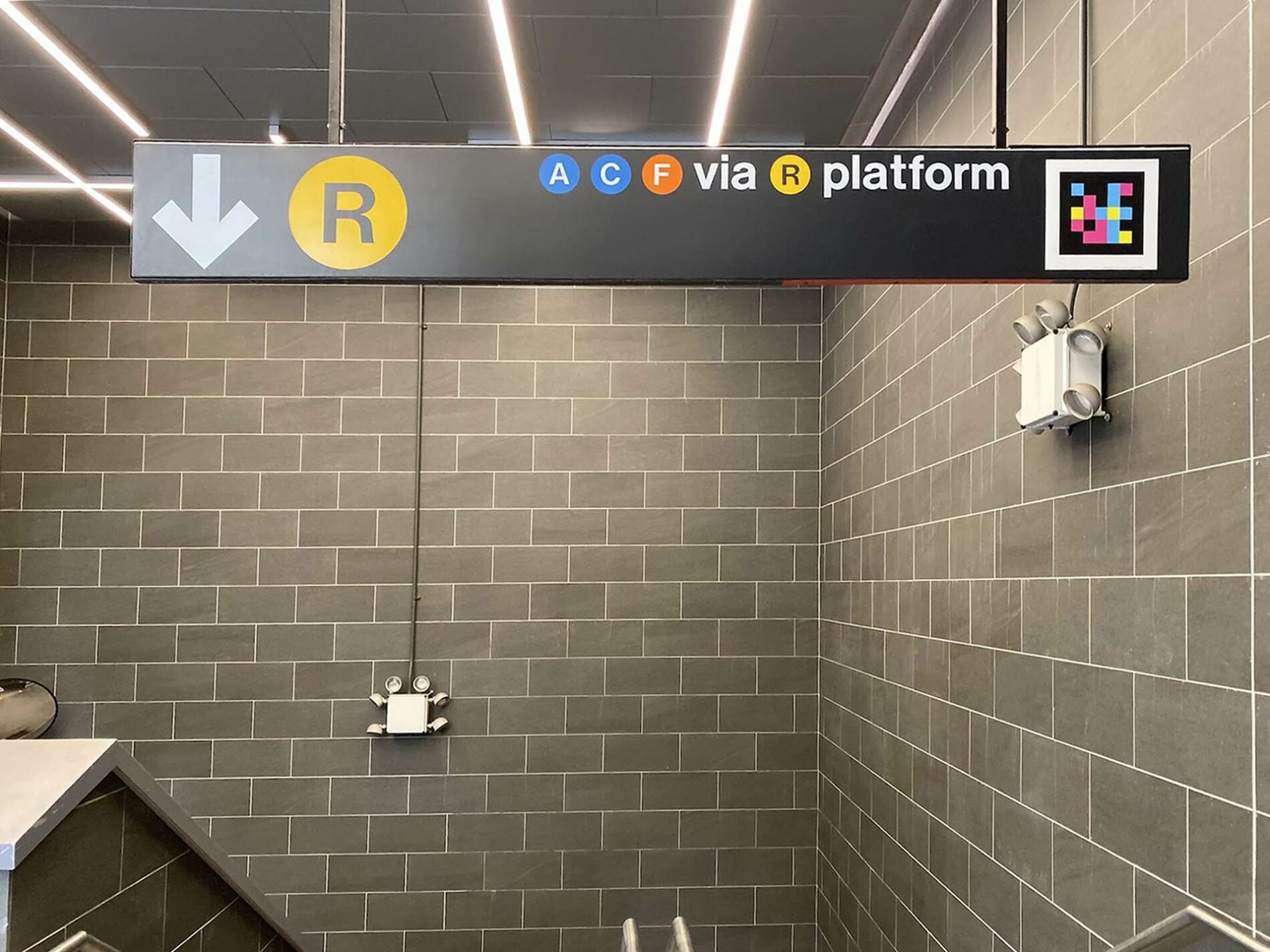
NaviLens is a tech company based in Murcia, Spain. It has developed an infrastructure collaborating app that uses haptic and audio supports to assist navigators to safely make their journeys. The app detects images —similar to QR codes— without using GPS or requiring access to wifi or bluetooth. NaviLens explains that these codes can be read almost instantaneously and at a great distance, making it ideal for navigating. This technology is highly efficient and inclusive in many ways. It is the fastest such reader available and can scan multiple tags simultaneously, making it highly communicable to the end user. TransLink, the Metro operator in Vancouver recently trialled the technology to great success. According to Thor Diakow, spokesperson for TransLink, the trial was a high priority. “Despite it being not a huge percentage of our ridership, it’s very important to make sure that we provide accessibility for people experiencing partial or full sight loss.”

NaviLens has also launched its colourful codes on the New York Metro. This bustling rail network could potentially be an impossible task for a person with a visual impairment. However, by accessing one of over one hundred codes, users can be more independent in unknown spaces, can be guided indoors through an innovative Augmented Reality experience without the need for GPS or bluetooth and receive real-time train arrival information.

The company has not stopped at transport, either. Over thirty household shopping brands including Gillette, Pantene, Olay and Kellogg’s are now using NaviLens codes to assist shoppers in finding the necessary products. Most recently, Coca-Cola rolled out NaviLens codes across its Christmas can multipacks, which can be scanned from distances of up to four metres to help blind and partially sighted consumers.

AT2030 is an organization that seeks to improve access to Assistive Technology (AT). Led by Global Disability Innovation Hub and funded by UK Aid, is hosted a panel discussion at Cop28 titled ‘Inclusive Infrastructure, Disability and Climate Change: what’s needed to leave no one behind.’ According to those at AT2030, the purpose of the discussion is manifold. “For disadvantaged groups, the accessibility of the built environment, infrastructure and cities is vital to ensure full participation in daily life. Evidence shows that persons with disabilities are worse impacted by the effects of the climate crisis but remain excluded from urban development processes and climate action. Organizations around the world are already working to bridge this gap, and this event will share what’s being done and what’s next, outlining priority actions for disability-inclusive climate infrastructure and looking at how and why people do not have equitable experiences of the world around them.”

Around the world, barriers to access and inclusion are an unfortunate aspect of life. While much is being done to overcome these challenges, there is much work to be done. For many individuals, navigation, accessing community resources and living their daily lives is severely impacted by the way our infrastructure networks are planned and built. A recent survey by Infrastructure & Cities for Economic Development (ICED) demonstrated just how vital this is. “Well planned infrastructure and inclusive urban services are fundamental to unlocking the potential of people with disabilities. Currently, Disability Inclusion (DI) is not consistently addressed across  infrastructure programming and policy dialogue. It is not always clear to DFID staff or partners what DI means in relation to infrastructure and growth, and the actions they might take to achieve it. This is coupled with a perception that addressing disability in infrastructure programming is prohibitively expensive and often unaffordable within project or programme budgets.”


Natural Cement

View in E-mag

The construction industry contributes much to society. Infrastructure networks, road, rail bridges and housing; all these elements of our world are unrecognizable thanks to the innovation and hard work of those within the industry. Without the engineering and scientific breakthroughs that the construction world has helped to develop, the world would be a far different place. It is not all positivity, however. Due to the materials and manufacturing processes involved, construction also brings with it an environmental impact that is impossible to ignore. Recent figures suggest the construction work, both new and existing buildings, contribute around 37% of all global carbon emissions. In a landscape where these figures are scrutinized heavily, this is not a good thing.

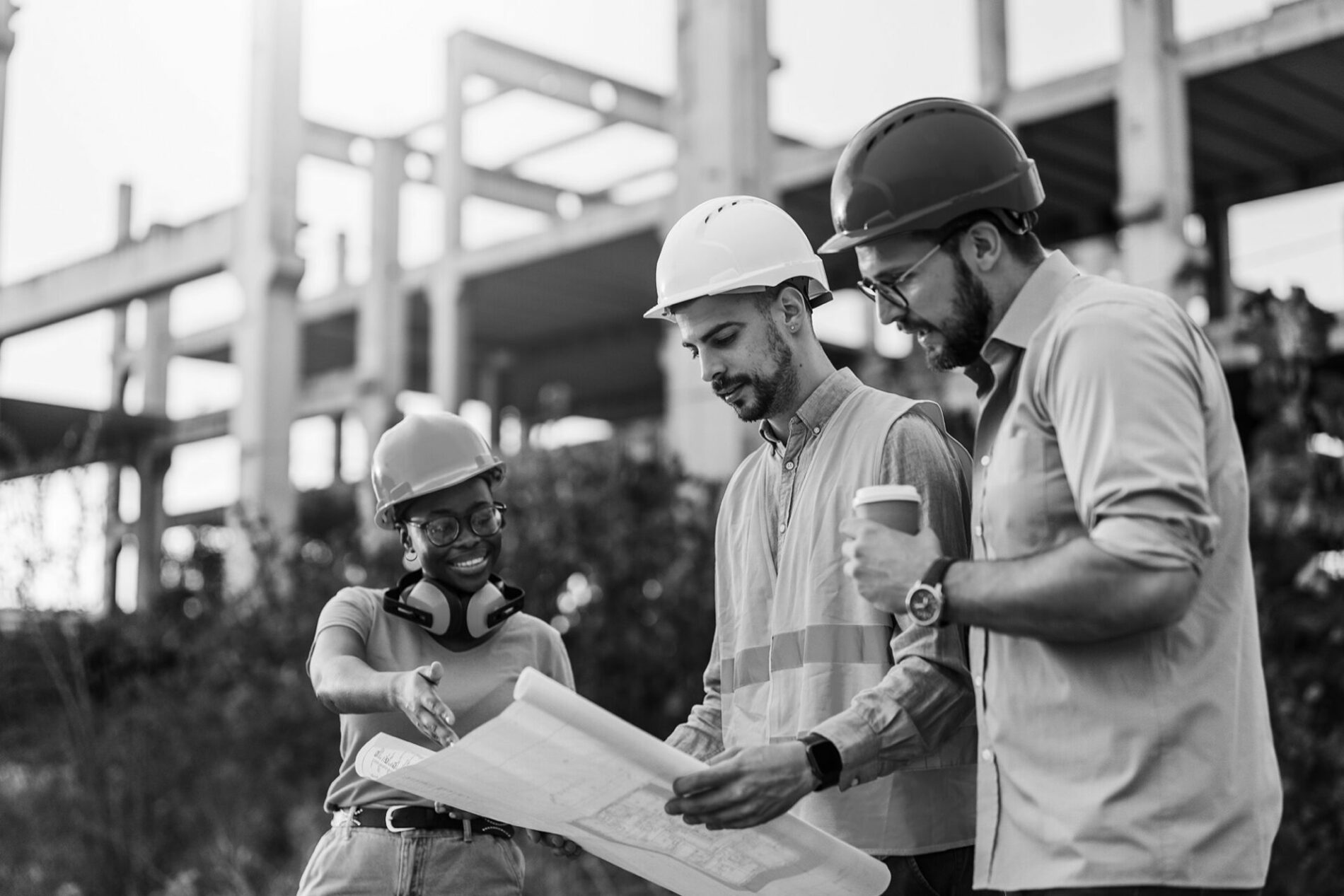
Smiling engineer shaking hands at construction site with happy architect. Handshake between african construction manager with businessman at bulding site. Team of workers conclude an agreement.

Much is being done to address this issue, however. Processes are continuously being streamlined and upgraded to ensure a greater level of efficiency while sustainable materials are being sourced to reduce the largest impact. While every element of the industry needs to move in the right direction, it is this final point that needs to be addressed most urgently. The materials used across the construction industry are some of the single biggest contributors of carbon on the planet.

Cement is big business. In fact, it might be more accurate and fairer to say that it is big, dirty business. Around a quarter of the industry’s emissions come from this material alone. Drilling down further, this equates to 8% of global CO2 emissions, or around three billion tons of carbon a year. While it is ubiquitous on the construction landscape, that does not mean that it should remain untouchable. One of the main problems with the material is that limestone and other fossil fuels are burned during its production. While alternatives are continuously being created, many of these materials fail due to any number of problems. Notwithstanding the actual strength of the substances, alternatives are either too expensive or difficult to produce to be considered genuinely viable options. For a long time now, scientists and engineers have struggled to come up with alternatives that are cleaner and more sustainable. However, success may be right around the corner.

Olivine is an abundant mineral found just under the surface. Known in its purest crystalline form as peridot, olivine is mainly magnesium silicate. Civil and environmental engineers at Imperial College London have turned to this mineral that is found in abundance not far below the soil we walk on. Through a complex process, a silica is produced that can be used as a cement substitute and as a binder or filler in other low-carbon construction products such as bricks, blocks and board. It comes as a result of a discussion two PhD students had about the potential of the material. Sam Draper, studying cementitious substitutes, wanted to know: could the silica that Barney Shanks had produced as part of his research into magnesium-based cements be used to make a carbon-neutral cement mix?

The result is Seratech, founded in July 2021. The product is what’s known as a supplementary cementitious material (SCM). SCMs are already very popular in the industry with fly ash and GGBS being the most common. The groundbreaking aspect of this new product is that, due to its highly carbon-negative nature, the cement produced is carbon-neutral and possibly carbon-negative. “The process requires less energy than other low carbon cement processes and consumes its own CO₂ emissions. The patented process is unique, and the products can be used without modifying customer’s plants, within the existing standards framework and at competitive market prices.”

“The process requires less energy than other low carbon cement processes and consumes its own CO₂ emissions. The patented process is unique, and the products can be used without modifying customer’s plants, within the existing standards framework and at competitive market prices.”

So how does the process work? By crushing and processing olivine by adding CO2 which has been sourced directly from industrial sources, two separate compounds are produced. As Shanks explains, this is where the true sustainable benefits emerge. “One is a silica powder, or engineered pozzolan, which can be added to cement, while the CO2 ends up permanently sequestered within a by-product – magnesium carbonate.”

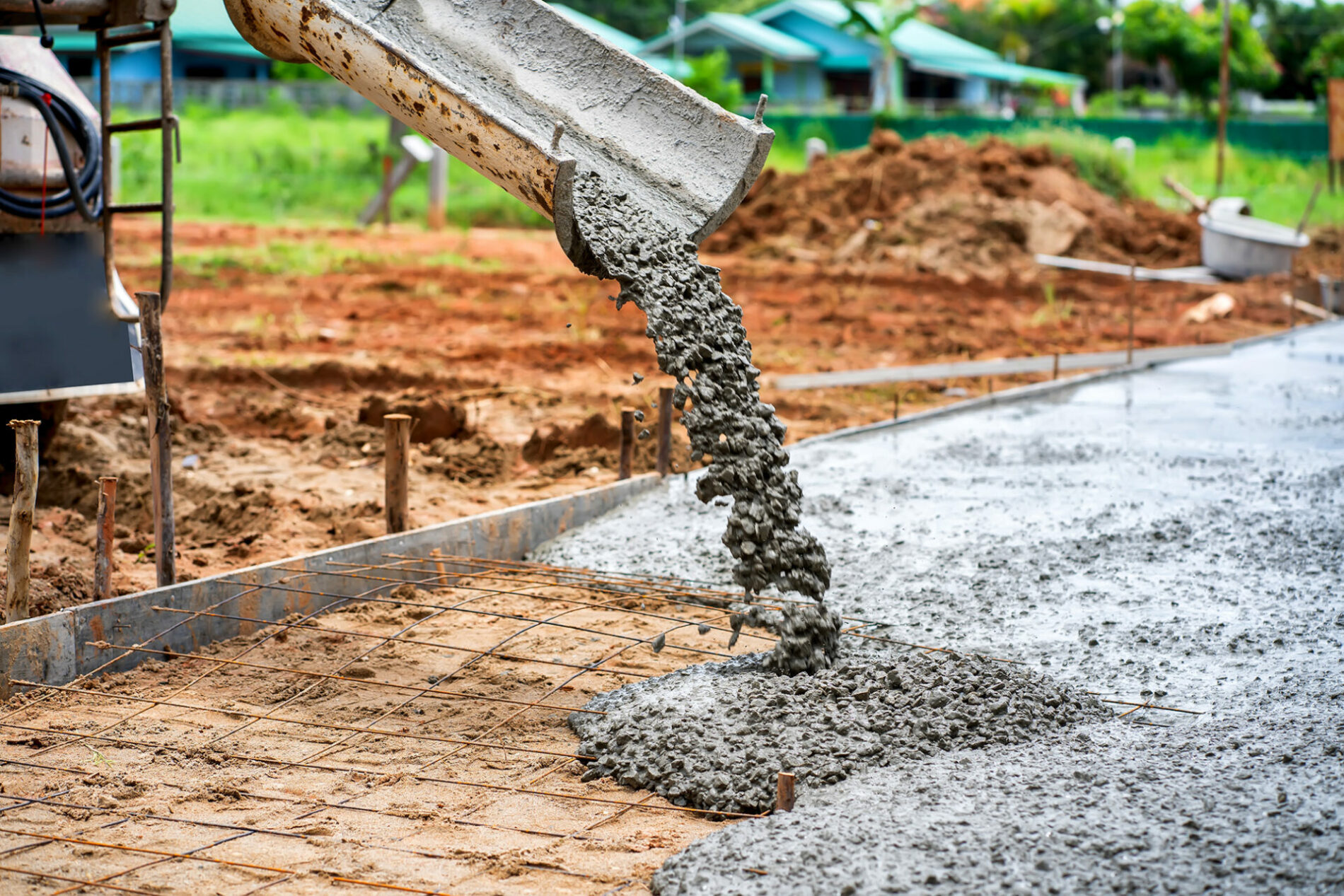
Construction workers supervise the pouring of concrete on the construction site.

While this all sounds positive, the true test of the product will be in its usage. With that in mind, how likely is this new addition to replace traditional Portland cement? As the product is still in the lab research stage so much of that is yet to be seen, but its numbers are looking good. Curing times are similar while there is little difference in strength. As Draper explains, for those within the construction industry, the transfer to this material should be a seamless one. “So far we think that there should be little difference between a standard concrete, and that made with our product. Curing times would be similar – as would strength. In fact, as far as the construction industry is concerned, they don’t need to do anything. No adjustment to plant or machinery should be needed. The idea is that nobody would notice the difference. What makes our product unique is that it can be used like ordinary cement – so as part of mixes for precast or in-situ concrete – it makes no difference.”

Traditionally, the construction industry has been reluctant to deviate from the tried and trusted material. While adaptations can be made across a number of areas, concrete comes with an almost untouchable reputation. However, early indications are that the industry might be on board with this product. Seratech was recently awarded the ‘Most Promising Solution for the Built Environment’ at the Innovation Zero awards. Innovation Zero was set up to accelerate meaningful action towards a low carbon economy and society​​. By building and connecting a global network of innovators, funders, policymakers. The event, and Seratech’s award, is designed to give a platform to leaders who inspire change​. Paul Dunne, Innovation Zero CEO explained how Seratech, alongside awardees in other categories, are providing the pathway for a more sustainable and viable future. “Our inaugural Innovation Zero Awards provided a significant showcase for collaboration and innovation and highlighted the exciting solutions and cutting-edge low carbon technologies that are helping to fight the climate crisis. I’m sure that all our winners and shortlisted entries will provide further inspiration to innovators, corporate sustainability leaders, investors and policymakers and we are looking forward to seeing the positive impact these solutions will have on our journey towards achieving net zero.”

https://www.seratechcement.com/about -us

Natural Batteries

Across the modern industrial landscape, one factor remains constant. Despite the unrelenting challenges that are seen in areas such as workforce, supply and red tape, no industry can operate without a source of power. This power, however, comes at a cost. Financial considerations, sustainability, and environmental impact are all vital and necessary metrics for the development and use of power sources. Unfortunately though, this triad of considerations rarely balances equally. The most sustainable power sources, the environmentally neutral ones, tend to come at the greatest financial cost. Despite the understanding of a global community around the importance of careful environmental stewardship, in business, the bottom line can be what matters most.

Paul Breeze, an environmental and science journalist and consultant, believes that the power industry is inextricably linked to all other elements of human development. This link, he says, has developed and changed over time. “The power industry has a major impact on the global environment, and awareness of this has grown steadily since the middle of the 20th century. Since then the effects of acid rain, of nuclear accidents and more recently of global carbon dioxide emissions on the environment have prompted major changes within the industry.” According to Breeze, civilization is too much invested on its current path to deviate now, meaning we need to find alternative solutions within the context we find ourselves. “Although the industry can adapt to mitigate these effects, power generation is such a large operation that will always have an impact on environmental conditions. This is inevitable if the world is to have electricity and it is impossible to imagine the global population deciding to do without the advances it has made possible.”

view of earth with lights lit up

It is not just the generation of power that is proving to be a challenge, however. Solar, wind, and waves can all produce vast amounts of power and are capable of maintaining the global community’s needs. The unfortunate reality however, is that much of this energy is wasted because it cannot be used quickly enough. According to the U.S. Department of Energy, the United States alone will need to add hundreds of gigawatts of energy storage by 2050 to meet its clean energy goals. In fact, the race is on to ramp up storage capabilities if it is to achieve its targets. “U.S. energy storage capacity will need to scale rapidly over the next two decades to achieve the Biden-Harris Administration’s goal of achieving a net-zero economy by 2050. DOE’s recently published Long Duration Energy Storage (LDES) Liftoff Report found that the U.S. grid may need between 225 and 460 gigawatts of LDES by 2050, requiring $330 billion in capital on the same timeline. These figures are in addition to the nation’s utility scale short duration storage needs, which will be about 160 gigawatts by 2050, according to the reference case from the U.S. Energy Information Administration’s 2023 Annual Energy Outlook.”

Clearly, storage of this power is a problem. Saving energy for a time when it is required, that is what will make or break the drive for Net-Zero. But, how is that a problem, you may ask. The battery has been a staple of human life for over two centuries. It is not as simple as that, though. The batteries we produce and consume are developed with one thing in mind; size. From phones to EVs, computers to appliances, small batteries are the key to success. They bring portability, efficiency and ease of use to a sector that prides itself on its reliability. When it comes to storing naturally produced energy, the batteries we currently have are not fit for purpose. The challenges don’t stop there either. If large scale batteries were to be produced, their location, management and upkeep would be a hugely significant consideration.

So, is there an alternative? What would happen, for instance, if we looked to other sources of power storage? Large scale natural objects that could charge, generate and store power. What we might lose in portability, we may gain massively in efficiency and power. According to some exciting developments across the energy sector, large scale batteries that use the world around us as storage could just be the key to unlocking the cyclical nature of solar and wind farms.

concept of storing solar and wind energy using natural underground batteries

Advanced Compressed Air Energy Storage is a relatively new technology that works by storing excess energy as compressed air in underground caverns. This air can be returned to power turbines in periods of low sunlight or wind. Effectively making it an underground energy storage system. Canadian company Hydrostor is working to develop the world’s A-CAES system in Kern County, California. “Our patented A-CAES technology allows grid operators to draw on clean energy, even when there is no sun to fuel solar panels and no wind to generate energy from turbines.” The project will see two football field sized caverns excavated 2000 feet under the earth. Using surplus renewable energy to run air compressors that heat and squeeze air to a smaller volume, the system works by releasing the air when needed to spin electricity generating turbines. In essence, these holes underground become natural batteries.

According to the company, there are enormous benefits to a technology it describes as being “the missing piece of the puzzle.” It is a low-cost option that can be built either as a stand-alone project or at a large scale. Not only that, it has an operational lifespan of over fifty years. It is an emission free concept which uses no fossil fuels and is a proven technology is the development and storage of sustainable energy. For Hydrostor, the Kern County project is a huge turning point. The project is expected to deliver around 500 megawatts of power per hour for eight hours before the system needs to “recharge.”

While this technology is both proven and achievable, it has not yet been adopted on a wide-scale. Concerns remain about the environmental effect of digging vast caverns underground while some environmental groups are eager to analyse the effects on above-ground eco systems. Despite this, A-CAES is gathering speed and the landmark project in California could be a turning point for the energy sector. 

Moving in the Right Direction

View in E-mag

Twelve months is a long time in business. Start-ups can flourish and thrive to become major players in the industry, while external market forces can bring companies to their knees. The prospect of anticipating the ebbs and flows of the construction industry over such a length of time is an onerous one. Many attempt to make these predictions only to see the market dip or soar unexpectedly. Midway through 2023, the construction industry was in a bit of a slump. While it wasn’t completely out, many were predicted that it was on its way down. Supply chain issues coupled with other spirally costs and a threadbare workforce meant that pessimism was in large supply. Alongside that, interest rates were soaring and projects were being hit with multiple delays.

At the time, predictions varied but most were struggling to find many positives. The U.S. Construction Market Size and Trend Analysis report shared findings that the industry was to follow up a contraction of 8.2% in 2022 with a further decline of 2.5%. This led to an outlook that was, at best, cautious. Similarly, the Construction Financial Management Association (CFMA) ended the year with an index of 96, which constitutes a pessimistic outlook. The infrastructure bill was offering a sliver of light but even that was coming under fire in some quarters with questions being raised about the equity of opportunities for companies on both sides of the union divide.

However, 2024 has turned out to be considerably brighter than anyone could have anticipated. In March, for instance, the index at the CFMA was a much more optimistic 109. Many across the industry are pointing to a number of factors for this upturn. Material costs seem to finally have stabilized and a surge of infrastructure opportunities is being experienced across the board. Alongside this, federal legislation passed in recent years seems to finally be having a positive effect on inflation which, in turn, will boost the likelihood of interest rate decreases. For the CFMA, things are moving in the right direction. “At the end of last year, the stock market rallied while credit conditions eased, rendering it more likely that projects that had been postponed in 2023 will come to fruition in 2024. CFOs are also likely looking forward to lower interest rates. Coming into the year, the Federal Reserve was expected to reduce interest rates several times. While those expectations have been trimmed in light of recent inflation data, the notion remains that the Federal Reserve’s next move will be to cut rates, rendering project financing a bit easier or at least less expensive.”

“Material costs seem to finally have stabilized and a surge of infrastructure opportunities is being experienced across the board. Alongside this, federal legislation passed in recent years seems to finally be having a positive effect on inflation which, in turn, will boost the likelihood of interest rate decreases.”

The Infrastructure and Jobs Act (IIJA) has had a hugely important impact on the construction and employment sectors. In a recent update, the White House reported that in the last three years, 670,000 jobs were created in construction. While the workforce outlook is still not ideal, this boost has led to a surge in heavy and civil engineering and construction of buildings. In fact, growth in these sectors has surpassed pre-Covid levels. Again, the CFMA feels that this has helped enormously. “Another factor at work is evidence that infrastructure work is picking up. President Biden signed the Infrastructure and Investment and Jobs Act on November 15, 2021. It required approximately two years to position many projects to break ground, but recent construction spending data indicate that more public work has begun, another reason for expanding CFO confidence. Accordingly, the Current Confidence Index expanded 7.3% during 2024’s initial quarter to a reading of 103.”

Engineering, construction site and team outdoor for building project, planning and architecture. Black woman and men contractor together for development and safety assessment discussion in city

IIJA is not the only piece of legislation to have positively impacted the construction industry, however. In August 2022, the Bipartisan CHIPS and Science Act was signed into law. CHIPS (creating helpful incentives to produce semiconductors) was designed to lure microchip manufacturing back to the United States. The need for this act was simple. In 1990, 40 percent of the world’s semiconductor supply was manufactured in the U.S. That figure now stands at 12 percent. $53 billion in federal incentives was provided for domestic semiconductor manufacturing and research and development. These incentives have pushed the manufacturing sector into overdrive. The White House reported that, off the back of the CHIPS act, $866 billion has been invested by private investors.

This is a view that has been echoed by Jay Timmons, CEO of the National Association of Manufacturers (NAM). “Every manufacturer in America will benefit from the CHIPS and Science Act, whether they make chips, make products that require chips, or are part of a supply chain disrupted by the semiconductor shortage. Our economic future and America’s leadership in the world depend on a competitive manufacturing industry. Congress has acted wisely with the CHIPS and Science Act. Now we need Congress to continue standing with manufacturers and focus on policies that will help us compete with China and other countries, not make it more expensive to make things in America.”

Twelve months in business is a long, long time. As recent months have shown, the construction industry is cresting a wave in many respects. Its resurgence across a number of sectors is expected to continue as federal initiatives and funding give the industry the boost it so badly needed last year. With backlogs increases signifying a busier calendar, it seems as though the main challenge facing the industry once more is labor shortages. In fact, the CFMA notes that the current viewpoint is that next year is set to be even busier than this one. “Backlog expectations are consistent with renewed optimism. Fully 37% of contractors indicate that backlog is higher than it was a year ago, though it is conceivable that that figure also reflects what has been a rising tide of postponed projects. Tellingly, 38% of contractors expect backlog to be higher a year from now, up from 23% during the fourth quarter of 2023. Perhaps the most interesting piece of data relates to the Year-Ahead Outlook Index. That index is up 21% on a quarterly basis and 16% on an annual basis. In other words, contractors expect to be even busier a year from now; an expectation that perhaps reflects collective anticipation regarding lower interest rates and project financing costs.”

Dissolvable Waste

View in E-mag

The issue of waste has long been a difficult one for humans to tackle. Our lives have been cultured and constructed in such a way that we consume vast amounts of products, creating enormous amounts of waste from every part of their production and usage processes. According to a recent study carried out by the UN Environment Program (UNEP), municipal solid waste is predicted to grow from 2.1 billion tons in 2023 to 3.8 billion tons by 2050. While that in itself is a shocking statistic, the report goes even further. It suggests that the financial and social costs of this rise are equally tragic. “In 2020, the global direct cost of waste management was an estimated USD 252 billion. When factoring in the hidden costs of pollution, poor health and climate change from poor waste disposal practices, the cost rises to USD 361 billion. Without urgent action on waste management, by 2050 this global annual cost could almost double to a staggering USD 640.3 billion.”

Electronic waste has been an ever-growing challenge for a number of years. As electronics become obsolete at a faster rate than ever before, much of what is produced and consumed becomes useless almost immediately. In fact, according to the World Health Organisation, e-waste is the fastest growing solid waste stream in the world with hundreds of thousands of tons ending up in landfills each year. The United Nations Institute for Training and Research (UNITAR) is responsible for monitoring global e-waste and, similarly, the numbers do not make for positive reading. A record 62 million tons of e-waste was produced globally in 2022. This is an increase of 82% since 2010 and is set to rise even further over the next few years.

So, where do we go from here? Thankfully, there are still options. UNEP outlines the need, and benefits, of a circular economy where savings can be made to both our ecology and our finances. “Projections show that a circular economy model, where waste generation and economic growth are decoupled by adopting waste avoidance, sustainable business practices, and full waste management, could in fact lead to a full net gain of USD 108.5 billion per year.”

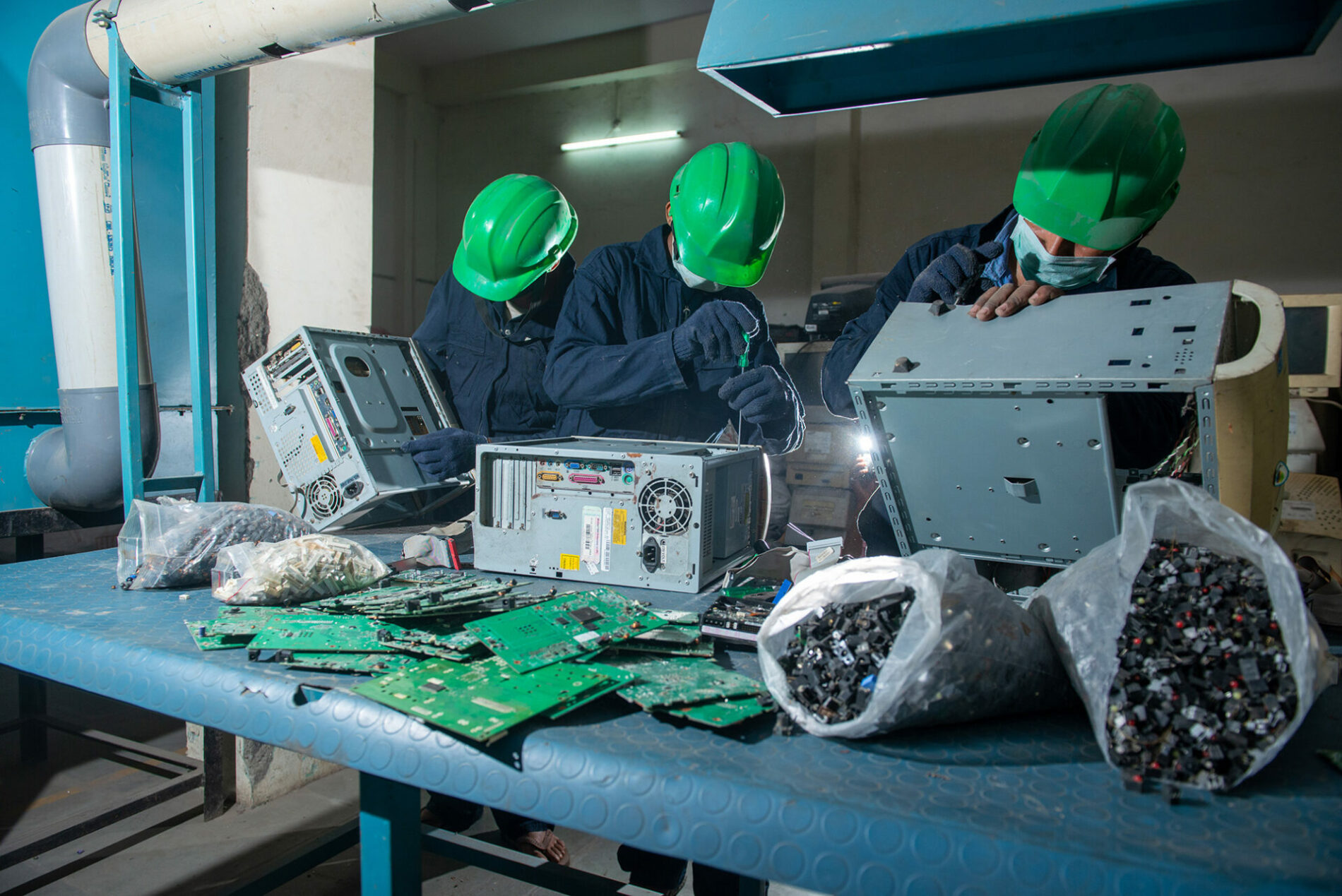
Again, e-waste has always remained an outlier in this regard. Given the nature of its production and usage, a circular economy in this sector has proved ineffective. What little reuse value is gathered in unsustainable ways. Circuit boards are generally melted in third world countries to extract the small amounts of valuable minerals. This process is often dangerous and produces toxins and other air pollutants. However, there is a very real need to get a handle on these products. Printed circuit boards (PCBs) are a ubiquitous element of electronics and make up an enormous part of e-waste. One reason why their recycling potential is minimal is down to the irreversibly cured thermoset epoxies used during their manufacturing. According to mechanical engineer Aniruddh Vashisth, these processes pose significant environmental hazards. “E-waste contains a complex toxic mixture of various metals, silicon integrated circuits (ICs), glass fibers, thermoset polymers, flame retardants, and more, which can pollute the air, soil, and water posing significant hazards for the surrounding communities. With over 53.6 million metric tons (Mt) generated in 2019 alone, e-waste is one of the fastest-growing waste streams globally and a matter of global concern.” However, Vashisth and a team at the University of Washington may have discovered a solution. The team has designed a novel way of reusing these boards, replacing the epoxy in PCBs with a type of plastic called a vitrimer. “Vitrimers flow and form new, strong chemical bonds when they are heated past a certain temperature,” he says, “allowing them to be recycled over and over, unlike the plastic in water bottles that degrade with each recycling cycle.”

“The key to this potential success is that, unlike previous attempts to recycle these materials, this process can be done while retaining the integrity of the products, meaning there is little or no loss of quality.”

The key to this potential success is that, unlike previous attempts to recycle these materials, this process can be done while retaining the integrity of the products, meaning there is little or no loss of quality. Even more impressively is the manner in which this process occurs. In order to separate the PCB fibers, the board is dipped in a solvent and heated to a mild temperature. The vitrimer then softens and swells which allows the materials to be separated and reused. Essentially, these become dissolvable circuit boards. “Unlike traditional solvolysis recycling, this swelling process does not degrade the materials. Through dynamic mechanical analysis, we find negligible catalyst loss, minimal changes in storage modulus and equivalent polymer backbone composition across multiple recycling cycles. This recycling process achieves 98% polymer recovery, 100% fiber recovery and 91% solvent recovery to create new vPCBs without performance degradation. Overall, this work paves the way for sustainability transitions in the electronics industry.”

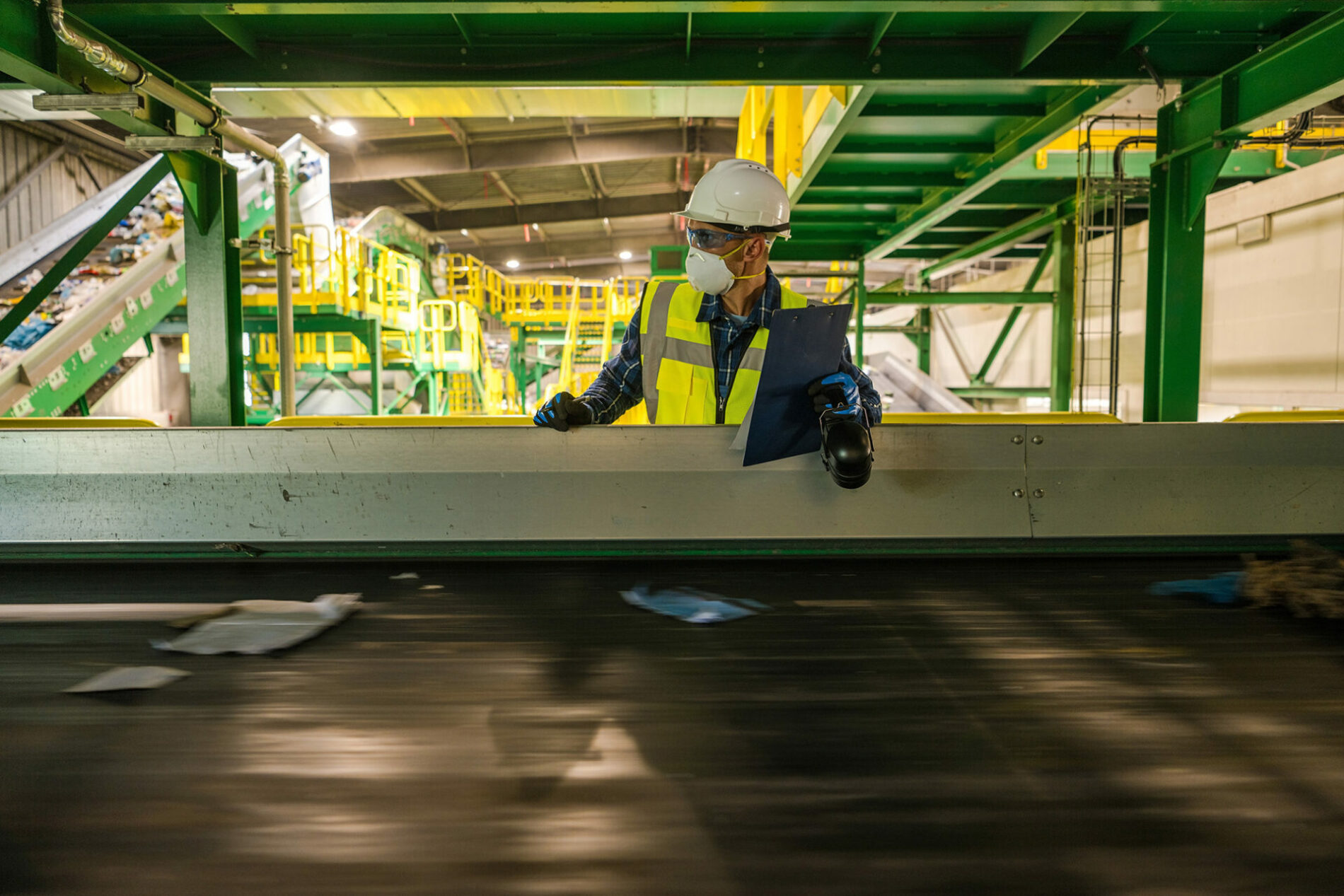
An image of man standing near conveyor belt in garbage facility.

One element that repeatedly trips up ventures such as this is cost. Potentially game-changing innovation can come unstuck through a lack of viability. This process, however, seems to be consistent with traditional recycling methods. “We use off-the-shelf chemicals that are produced at industrial scale, and the processing steps here are largely the same as industrially produced materials like epoxy, suggesting it has potential to be cost competitive in larger volumes.”

The future of electronic waste, how we manage the electronics we consume, and what we do with these items when they have reached their end-of-life is one of the greatest waste management challenges we face. Innovations such as dissolvable PCBs are revolutionary and may offer pathways to future successes, but the fact remains that individuals and governments can also raise their game. UNEP’s International Environmental Technology Centre (IETC) works towards supporting individuals and communities with operating a more sustainable approach when it comes to electronics. IETC is actively involved in reporting, advisory services, and creating international support networks to facilitate these initiatives. It says that the onus does not fall on any one cohort; rather, it needs to be a collective operation. “As consumers, we can extend the life of our electronic devices by repairing and recycling them whenever possible. Producers should prioritize designing products for durability, ease of repair, and recyclability. Several initiatives exist where producers collect discarded electronic equipment and reuse the materials. Governments must support such endeavors to reduce E-waste and safeguard informal workers from hazardous waste risks.”
https://www.nature.com/articles/s41893-024-01333-7

Carbon Negative Power

View in E-mag

The global community is on a precipice. Deadline after deadline has been missed. The clock ticks ever closer to midnight and governments seem clueless on how to move effectively towards sustained progress in terms of a reduction in carbon emissions. It seems that for every positive step, another challenge emerges. Spinning the various plates of industry, finance, environmentalism and productivity in a consumer driven landscape is indeed difficult. In fact, there may not be one solution that addresses every vested interest and meets the ongoing needs of the planet. More and more, scientists and researchers are stating that the solution may lie in a vast number of incremental changes, small successes that combine to reduce the carbon being generated. The difficulty in this is that, as our technological advances continue to impress, so too does the amount of energy required to drive them.

One way of tackling the problem is by looking to each sector individually. An equally spread tax, for example, could be more harmful than positive when some industries are creating vastly more carbon than others. For instance, Our World in Data, a team of researchers, professors and scientists working out of the top universities around the world, recently published its yearly findings. This data gives a sector-by-sector breakdown of where the 50 billion tons of carbon comes from around the world. However, before we even seek to analyze the data, the organization claims that the situation is getting worse rather than better. “Global greenhouse gas emissions continue to rise at a time when they need to be rapidly falling.”

The renewable energy icon on the nature background in The concept energy friendly for a sustainable environment.

When we look at the overall figures, the outlook is concerning. Of these 50 billion tons, energy generation and consumption accounts for an incredible 74% of the total amount. This figure which includes energy across various fields such as industry, transport and buildings, dwarfs that of cement (3%) and landfills (1.9%). The research, simply put, makes for difficult reading and according to Our World in Data, does not have a simple solution. “This breakdown clearly shows that a range of sectors and processes contribute to global emissions. This means there is no single or simple solution to tackle climate change. Focusing on electricity, transport, food, or deforestation alone is insufficient. Even within the energy sector — which accounts for almost three-quarters of emissions — there is no simple fix. Even if we could fully decarbonize our electricity supply, we would also need to electrify all of our heating and road transport. And we’d still have emissions from shipping and aviation —  which do not yet have low-carbon technologies — to deal with. To achieve net-zero emissions, we need innovations across many sectors. Single solutions will not get us there.”

Despite this, energy stands out as being a deeply problematic sector. As researchers and scientists around the world look for cleaner ways to power our society, no stone is being left unturned. In fact, the race for Net Zero has reached the point where scientists are now looking to introduce carbon negative sources of electricity in order to win this battle. While it might seem fanciful, there may actually be something to it. Research from the University of Queensland is showing early promise by designing a proof-of-concept device that actually consumes carbon dioxide in order to generate electricity.

“In fact, the race for Net Zero has reached the point where scientists are now looking to introduce carbon negative sources of electricity in order to win this battle.”

The carbon-negative power generator was designed and tested by Professor of chemical engineering Xiwang Zhang at UQ and works by generating power from the flow of charges. While the concept may seem like something from science fiction, the reality is that it is now a concept that works. “We’ve worked out how to make the positive ions much larger than the negative ions and because the different sizes move at different speeds, they generate a diffusion current which can be amplified into electricity to power light bulbs or any electronic device.” While these are early days in relation to this breakthrough, the next step is to build on the success. “At present we can harvest around one per cent of the total energy carried intrinsically by carbon dioxide but like other technologies, we will now work on improving efficiency and reducing cost,” said Zhuyuan Wang, a postdoctoral researcher and lead author of the paper in a press release.

This innovative tool is only one of many carbon negative initiatives, however. Microsoft recently announced its ambition to become carbon negative by 2030. Not only that, by 2050 the company also aims to have removed from the atmosphere all the carbon it has produced and emitted since its inception in 1975. Meanwhile, AirX Carbon, a producer of plant-based plastic, is reimagining the world of industry in its own way. Unlike traditional plastic, AirX’s plastic comes from sustainable materials and by-products from the coffee industry. “The use of plant-based materials, such as in the production of AirX, offers a unique advantage in capturing carbon emissions. Plants naturally absorb carbon dioxide from the atmosphere during their growth cycle. By utilizing biomass from plants as a raw material for manufacturing, AirX effectively captures and stores carbon within the plant-based plastic. This process helps to mitigate carbon emissions by diverting carbon dioxide from the atmosphere and locking it away in the product.”

Male Microbiologist Looking at a Healthy Green Leaf Sample. Medical Scientist Working in a Modern Science Laboratory with Advanced Technology Microscopes and Computers.

In addition to producing power that is carbon negative, AirX’s product has many uses across multiple industries. The company believes that its plant-based polypropylene offers alternatives to traditional materials in areas such as pipes and fittings, roofing and insulation, flooring and many structural components such as beams, columns and panels.

Meanwhile, in the United Kingdom, plans are underway to produce the first carbon negative power plant. The UK government has recently greenlit a $2.5 billion project with energy firm Drax which will see the company produce a carbon negative wood-burning power plant. Using energy created with sustainable materials, the plant will also include carbon capture mechanisms which will store the embodied carbon under the North Sea. The company is seen by many as a leading light in terms of carbon negative energy. “We achieved a 74% reduction in carbon intensity of power generation, from 311 tCO2 / GWh in 2017, down to 80 tCO2 / GWh in the first half of 2021. In the first half of 2021, our CO2 emissions per unit of electricity were just 9% of their 2012 amount (882  tCO2 / GWh) – a decrease of 90.9%.”

While many of these innovations are in their infancy, it is heartening to see that despite the difficult figures we are being forced to endure, much is being done behind the scenes. Through a combination of natural and innovative methods, industry —and in particular the energy field— may yet turn things around for good.

An Economic Powerhouse

View in E-mag

According to the Canadian Construction Association, the industry contributes about $151 billion to the economy annually. This figure accounts for 7.4 percent of Canada’s gross domestic product (GDP). Furthermore, the CCA states that society enjoys a number of auxiliary benefits as a result of the work being done in construction. “The construction industry is an economic powerhouse, driving job creation, strengthening supply chains, supporting investment, and feeding the growth of other economic sectors. Construction employs over 1.6 million people in Canada, creating an employment creation ripple effect in other sectors like engineering, manufacturing, technology, and retail.” This behemoth of an industry is one of the key forces driving Canadian life. Road and travel networks, internet and connectivity, housing, and retail; these sectors are all deeply reliant on the work being done on jobsites around the country. It is no surprise, therefore, to see that when the federal government recently announced its budget, construction investment was given high priority. Thankfully for those within the industry, billions will be invested in construction over the coming months and years.

Canada’s Budget 2024 came with the tagline, ‘Fairness for every generation.’ Within this budget comes a plan to increase the rate, quality, and volume of housing to ensure that Canadians have access to top quality housing at every stage of their lives. “The 2024 federal budget is the government’s plan to build more homes, faster, help make life cost less, and grow the economy in a way that helps every generation get ahead.” With a pledge to build 3.87 million net new homes by 2031, the hope is that every citizen will have access to an affordable place to live, either through purchase or rent. This will be achieved through a series of funding initiatives across the housing sector that add up to $8.5 billion. Many elements of the plan are innovative and forward thinking with the use of old federal offices, Canada Post buildings and some National Defense properties being reconverted to housing stock.

two construction workers discussing economic impact of build

Alongside this budget announcement, Prime Minister of Canada, Justin Trudeau, launched the Canada Builds program and an additional suite of changes to building legislation that would support the timely and efficient building of new homes. “One of the biggest pressures on young people right now is housing, and this is true for Canadians right across the country. We’ve already taken bold action to build more homes, faster, improve access to housing, and make homes more affordable – and we know there is more to be done. We need a Team Canada effort to tackle our national housing crisis – getting every partner on board and getting more homes built. That means every order of government coming together and building more homes for Canadians at prices they can afford, especially on land ready for development.”

“The program is on track to build over 131,000 units within the next decade.”

Trudeau’s announcement includes the delivery of a $15 billion top-up to the Apartment Construction Loan Program (ACLP) which will aim to build a minimum of 30,000 new apartments. With this, the program is on track to build over 131,000 units within the next decade. Canada Builds, however, may be the real game changer. By partnering with provinces and territories, the government is utilizing the $55 billion ACLP, making it available to support provinces that launch their own ambitious housing plans. Speaking about Canada Builds, Trudeau was highly optimistic. ““With Budget 2024, we’re making it easier, cheaper, and faster to build more homes in Canada. Today’s announcement will cut red tape, speed up development, and build more homes, so that Canadians – from teachers, to nurses, to construction workers – can afford to stay in the communities where they work. It’s making the housing market fairer for every generation.”

Does this go far enough, though? While it is hard to argue that the investment and scope of the plan is widespread, the budget has received a mixed response from the industry and the wider markets. In particular, some within the sector believe that the construction industry isn’t well equipped enough of match the level of investment being provided. Workforce issues have plagued the construction world across North America for years. However, following the COVID-19 pandemic, these challenges have increased significantly and are now an acute problem that needs to be solved immediately. Building thousands of homes, rather importantly, needs skilled workers. Thousands more than the industry currently has, in fact. Steve Robinson, founder of the Future of Work trade show, is less than impressed with the announcement. “The targets that the governments at every level are setting for us are almost unattainable unless we have all the tools we can use actually at our fingertips.” In fact, according to Chris Gardner, President of the Independent Contractors and Business Association (ICBA), the labor force is on a downward spiral with one fifth of the workforce over the age of 55. “Over the next five years, we are going to be losing an awful lot of expertise and experience, and the challenge is we don’t have enough people coming in to replace them,” he said.

Further criticisms of the budget announcement are that, if the industry managed to overcome these workforce issues and housing is built, the people of Canada are in no financial position to purchase one. According to Richard Lyall, president of the Residential Construction Council of Ontario (RESCON), the budget doesn’t address the immediate, cost-of-living challenges. “I think there is some considerable gaslighting going on right now. I’m not seeing much of a budget for young people there. The thing that still concerns me is that first-time homebuyers, younger families are still out of the market. While this budget did have the Capital Cost Allowance for apartment buildings, some extra financing money for purpose-built rentals that’s good, we needed that, but we’re still not really getting at some of the bigger issues that we have.”

This view is echoed by Ian Cunningham, president of the Council of Ontario Construction Associations. “While there’s lots in the budget to support the construction of affordable housing and infrastructure that our industry can be pleased with, it fails to address the fundamental underlying economic crisis that has plagued our economy for decades, that challenges our standard of living and the prosperity of future generations, Canada’s lagging productivity,” said Cunningham. “I had hopes for something better in this regard.”

While the budget has promised much, it is unclear if Canada has the tools to realize these plans. Unprecedented levels of funding are opposed by an inability to build or buy. The future of Canadian housing is hanging in the balance and the next few years will be interesting ones for the construction industry.

Coffee Concrete

View in E-mag

As a building material, concrete is as ubiquitous to the construction industry as anything else you could imagine. Historically, it has been used in construction for thousands of years and, despite the drive to replace it with more sustainable materials, it can be found on every jobsite on the planet. For good reason, too. There is no other building material that offers the same durability, fire resistance and versatility. Coupled with the fact that it is extremely low maintenance and cost effective, you can see why it has been difficult to replace.

That doesn’t mean, however, that concrete gets a free ride altogether. The industry has been aware of its limitations for some time. Concrete is an emissions heavy product that, in the modern construction landscape, is simply not fit for purpose. With the material being responsible for an astonishing 8% of global emissions alone, it is in dire need of upgrading. According to a report published by Princeton University, the product is a source of deep concern. “As a material that creates the majority of the world’s bridges, roads, dams, and construction, concrete releases an extreme amount CO2 each year. It’s the highest consumed product on earth besides water. Until the overall emissions are cut worldwide, the environment will continue to be polluted with over 4 billion tons of carbon dioxide annually due to this industry.”

However, as science and innovation develop, we are beginning to see various adaptations of concrete that can improve both its sustainability and strength. Processes such as carbon capture are removing the emissions during the production process while any number of technological inventions can be placed in the concrete to give it SMART features. Battery capabilities, reflective surfaces, traffic management, the list goes on. One element which is only now being investigated is that of bio-waste.

These days, coffee is sustainably sourced, ethically produced, and mostly consumed from reusable cups. But, aside from its great taste, is that where its positives end? While coffee grounds can be used as fertilizer, cleaning products and insect repellant, it has not been brought into the construction field, yet. Researchers at RMIT University in Australia may have changed that, however. It seems that, while benefiting the construction industry, there is also a growing need to find uses for our coffee waste. Incredibly, 11 million tons of coffee grounds are produced each year. Furthermore, this product emits greenhouse gases such as methane which are 21 times worse than CO2 for the climate.

“Researchers, led by Dr Rajeev Roychand, have discovered that coffee has the ability to make concrete up to 30% stronger than traditional mixes.”

Researchers, led by Dr Rajeev Roychand, have discovered that coffee has the ability to make concrete up to 30% stronger than traditional mixes. This is achieved by turning the coffee grounds into biochar, a charcoal like substance made from burning organic material, through a low-energy process. According to Roychand, the research was borne of a need to address the challenges that accompany organic waste. “The disposal of organic waste poses an environmental challenge as it emits large amounts of greenhouse gases including methane and carbon dioxide, which contribute to climate change. The inspiration for our work was to find an innovative way of using the large amounts of coffee waste in construction projects rather than going to landfills – to give coffee a ‘double shot’ at life.”

The use of coffee grounds is beneficial for a variety of reasons. Its additional strength, coupled with the benefits of stopping the grounds from reaching landfill are reason enough for the project to be a success. There are additional, secondary benefits to the use of coffee biochar. Typically, sand would be used in the concrete process. However, global levels of sand are decreasing dramatically because of this drain. By adopting coffee usage, natural sand could be left in-situ, which has tremendous ecological benefits. “The ongoing extraction of natural sand around the world–typically taken from riverbeds and banks–to meet the rapidly growing demands of the construction industry has a big impact on the environment. With a circular-economy approach, we could keep organic waste out of landfill and also better preserve our natural resources like sand. The inspiration for our work was to find an innovative way of using the large amounts of coffee waste in construction projects rather than sending it to landfills,” said Dr. Roychand.

The research isn’t stopping there, either. According to Dr Mohammed Saberian, Co-researcher at RMIT University, various other sources of biochar are readily available and could offer equally significant results. “Our research team has gained extensive experience in developing highly optimized biochars from different organic wastes, including wood biochar, food-waste biochar, agricultural waste biochar, and municipal solid-waste biochar, for concrete applications.”

coffee waste

This view is echoed by Arup, an English consulting firm specializing in urban planning. It points to the vast number of bio-materials currently being used in construction. From rice and mushroom bricks to potato peel insulation, the potential for biomaterials is enormous. The company recently produced a report, “The Urban Bio-loop,” into the viability of many of these techniques. “The use of organic waste and its untapped value could have a positive impact on the environment as well as technical, social, and economic standpoints. In the urban bio-loop, we identify a number of organic waste streams, together with their applications in building construction as products. These provide guidelines for designers and practitioners in replacing some of the traditional architectural products with equivalents made with organic waste as a resource.”

The report identified six main fields of applications currently used for natural materials. Interior partitions, furniture, acoustic absorption, thermal insulation, carpets, and envelope systems. Additionally, it found that increased use of biomaterials had enormous potential. “Use of organic waste would result in healthier products with a reduced environmental impact for the construction sector. In particular when considering that these components could be returned to the biosphere at the end of their service life, thus releasing the embedded nutrients to the soil. To make possible this transition it will be necessary a wide stakeholder engagement and the support of a regulatory framework that would allow an easier access to waste streams and make it a more attractive financial perspective.”

https://www.rmit.edu.au/news/all-news/2023/aug/coffee-concrete

Sustainable Practices – A Collaborative Approach

View in E-mag

The race to reduce and reverse environmental damage is, to use a tired analogy, coming into the home strait. Decisions of vast importance are being made in boardrooms, political offices and homes around the world. However, there is no end in sight to the missed deadlines and start warnings. It seems that no matter what is done, the bar remains unattainably high. It might, therefore, be worth considering the way in which this problem is viewed. As stated above, it is a race. When we drill down, however, we see that this may be a deeply flawed logic. A race implies a winner, a sole entrant that will walk off into the sunset having solved our problems. Evidence is now emerging that, rather than finding a magic bullet, the global community must collaboratively engage to devise a series and collection of methods that will decrease carbon emissions and make restorative changes to the climate. When it comes to finding the most efficient and sustainable practices, it seems that the key is to double up.

As part of the UN Sustainable Development goals, collective action and muti-stakeholder partnerships are a vital component of success. No government or business can successfully solve climate change alone. Interestingly, it seems that the will to collaborate is very much present. A recent report from Baker McKensie shows that 73% of business leaders are willing to collaborate with competitors to achieve net-zero.

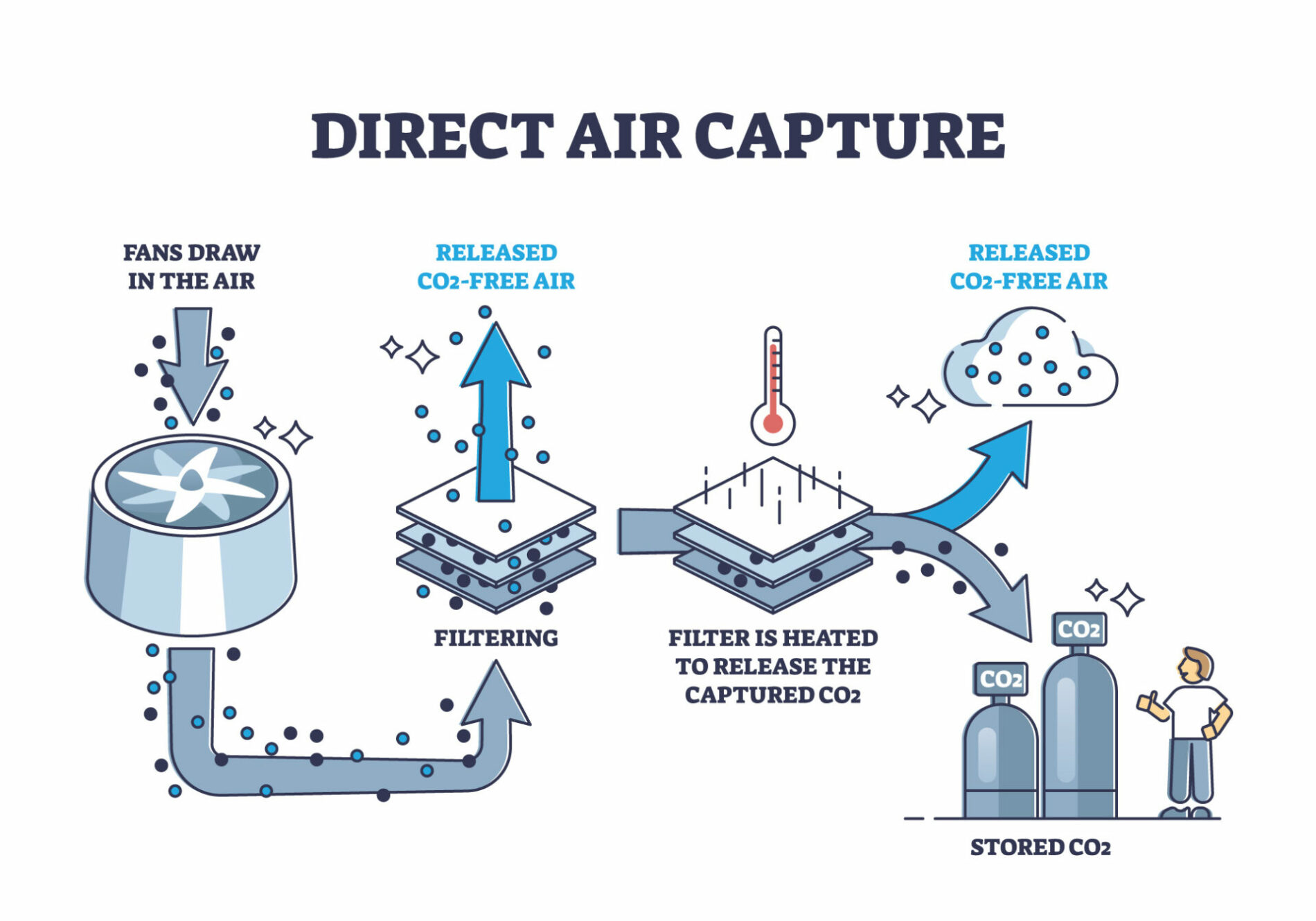
The benefits of collaboration can be seen within the methodologies and tools we use to tackle environmental issues. Efficient energy is clearly a much-needed aspect of the modern world, but its cost can be prohibitive and pivoting to new technologies is time consuming. Reusing materials, or incorporating a second use into their lifecycle, can be an invaluable addition to the process. For example, Direct Air Capture (DAC) technology is the process of removing carbon from the atmosphere and sequestering it underground. While it is an effective way of removing carbon, it has not taken off in the way its inventors had hoped. Until now, the process has been prohibitively expensive in comparison to most other sustainability efforts.

However, a novel process that has been trialed in Ohio State University has discovered a method of combining geothermal energy with DAC technology to produce what is being called a “closed loop.” According to Martina Leveni, lead author of the study and a postdoctoral scholar in civil, environmental and geodetic engineering at The Ohio State University, a combination of innovation led to remarkable results. “Carbon removal technologies are especially helpful in mitigating climate change because we can capture types of emissions that would be hard to cap in other ways. So we thought, could we combine technologies that could be beneficial to one another to meet this goal more efficiently?”

Typically, DAC works by industrial fans blowing air over special chemicals that soak up the carbon but, until now, these fans have been too costly to run. By using cheaper, geothermal energy to power them, the fans could be powered by the very carbon that they are extracting. Not only that, but Leveni and her team explored the use of recycled carbon dioxide into the system to make it even more efficient. The system uses the natural heat found beneath the earth’s surface to continuously produce renewable energy for the DAC system. Speaking about the need for collaboration right across the board, Leveni explained how there is much work that needs to be done. “New technologies can enable one another, and in integrating them, we can tackle climate change. There’s a lot of work to be done to take into account technological readiness and the policies needed to make that research happen.”

It is not just engineers and scientists that need to operate collaboratively, however. The Baker McKensie report went on to say that, more worryingly, not one CEO said they would be willing to accept a 30% loss of revenue to achieve a net-zero transition. It seems that, financially, everyone is waiting for their competitors to act first. This view is echoed at the World Economic Forum where a push is taking place to encourage CEOs to pool their resources, softening the financial impact of any transition.

As CEO of Unilever, Paul Polman set a benchmark of highly sustainable practices and he has carried this knowledge over to a new venture, IMAGINE. Set up in 2019, IMAGINE was founded “with a belief in the positive potential of human beings to lead systemic change.” It works by engaging with industries and sectors to achieve mass buy-in, thereby reaching a tipping point in the industry to ensure a faster transition to sustainable practices. “In the fashion industry, we now have 64 CEOs of the major companies. In food, we work with the 30 biggest companies and CEOs,” said Polman. “What we find is that when the CEOs come together as a collective, they become more courageous.”

IMAGINE was founded “with a belief in the positive potential of human beings to lead systemic change.”

Another example of the positive effects that collaboration can have is Partners for a New Economy (P4NE). Established in 2015, P4NE is a group of foundations that had been funding environmental projects without seeing any tangible benefits. Oak, MAVA, Marisla and KR Foundations set up a “high-risk, high-impact donor collaborative focusing on the economic system as the root cause.” The benefit of this partnership is an increasingly creative way of structuring economic systems in order to generate positive social and environmental outcomes. Jo Swinson, former leader of the UK’s Liberal Democrats. She explains how P4NE is actively tried to make structural changes that will have long-term resonance. “In order to create change within a system, you need lots of different people trying to make different changes. But the part that we are focused on is trying to see where the edges and the frontiers are and how we can expand those. So taking the emerging ideas and nurturing them… giving them the chance to grow and to develop so that they can move towards the mainstream.”

As a race, tackling climate change seems like one that we are destined to lose. Working alone has, to be fair, largely contributed to the mess the environment now finds itself. It is only through collaborative action, both through innovation and investment, that true solutions can be found.

Origami Structures

View in E-mag

Construction techniques have the complex history of simultaneously being both static and dynamic. For centuries, tried and trusted methods have existed and the ‘if it ain’t broke…’ maxim very much applies. However, alongside an adherence to traditional methods is the counterweight of innovation and forward momentum. Every day, those within the fields of engineering and science are conjuring new methods of strengthening the structures we live and work in. New tools are created which draw on existing methods but push them into exciting places. However, relatively recent developments in construction practices can sometimes stem from knowledge that has been around for considerably longer. 

You would be hard pushed to find a construction method being practiced today that had originated in the 6th century. Aside from concrete, most of what is used on modern construction sites is cutting edge and innovative. From materials to techniques, the industry is never far from the latest new design. A new development that has come out of the University of Michigan may change all that, however, with its breakthrough load-bearing materials that can be folded like origami.

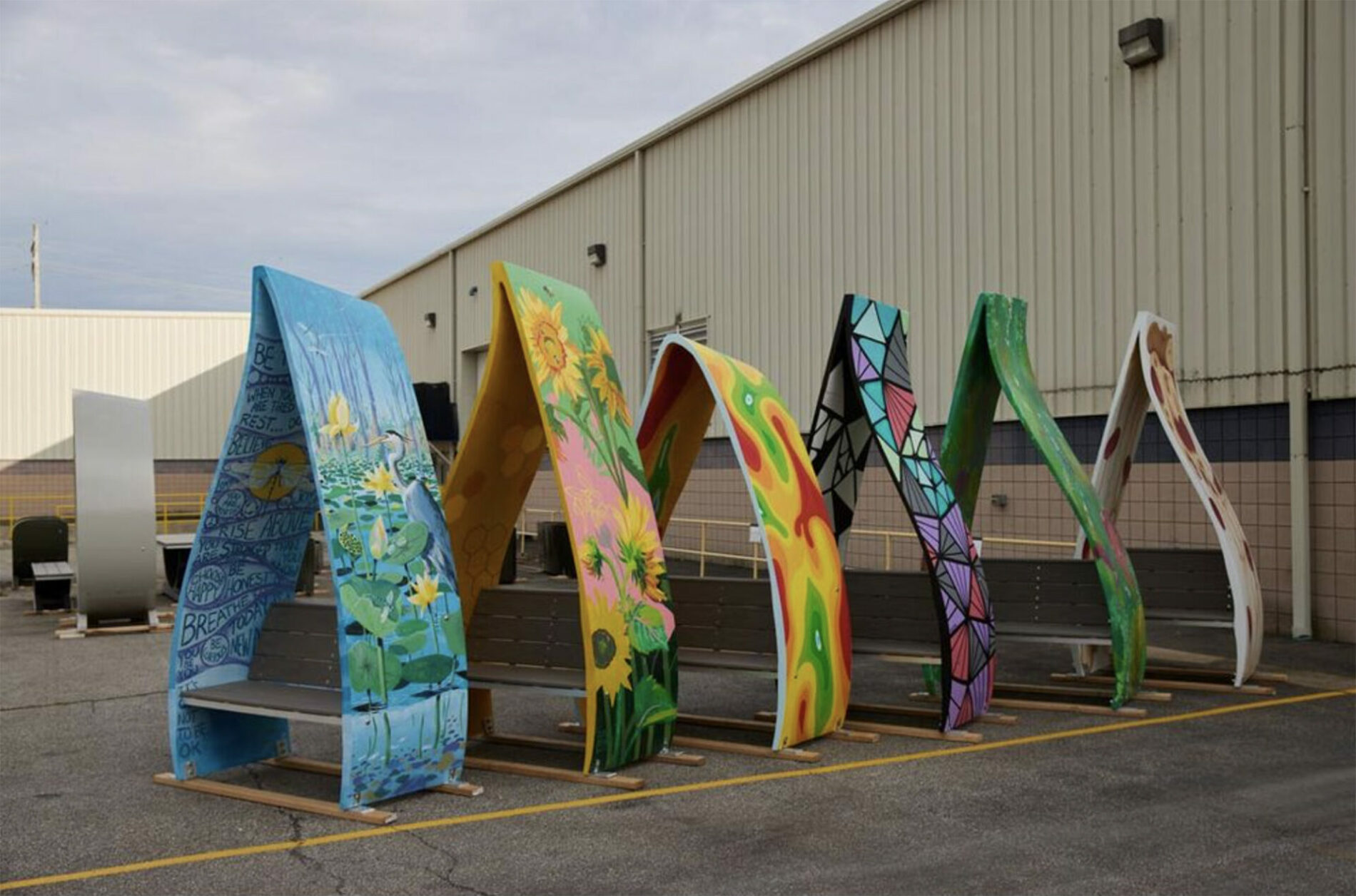
“When people work with origami concepts, they usually start with the idea of thin, paper-folded models — assuming your materials will be paper-thin. However, in order to build common structures like bridges and bus stops using origami, we need mathematical tools that can directly consider thickness during the initial origami design.” Engineers in the University team have discovered the key to creating origami systems with the necessary weight capacities while retaining the ability to deploy and reconfigure quickly. “That uniformity of the component’s thickness is what’s key and what’s missing from many current origami systems. When you have that, together with appropriate locking devices, the weight placed upon a structure can be evenly transferred throughout.” It is worth investigating, however, the impact that origami has had on building works over time.

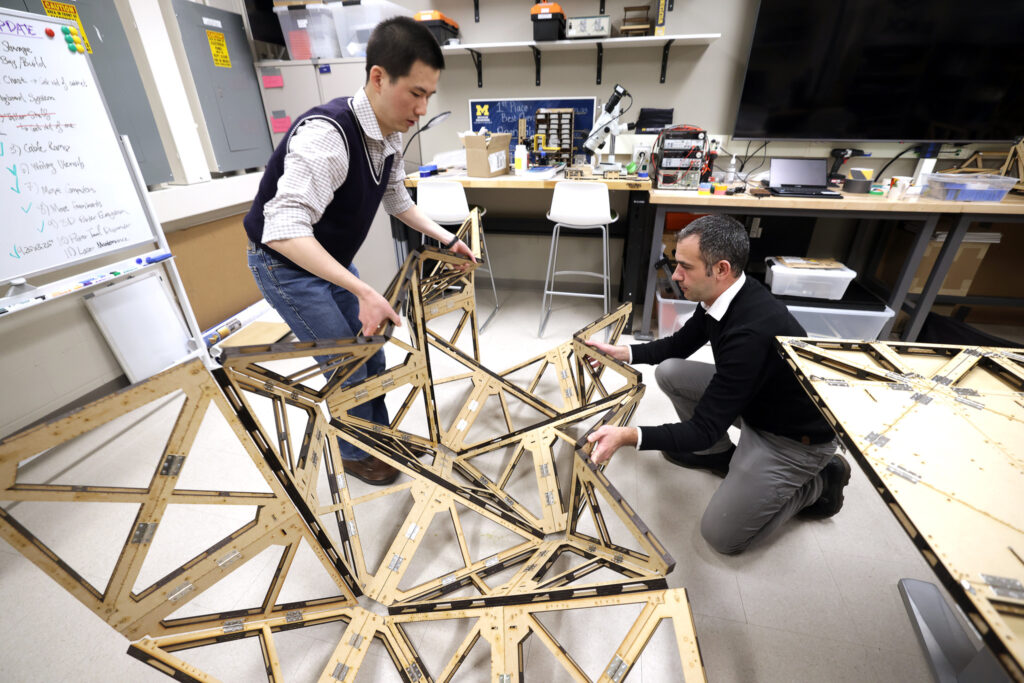
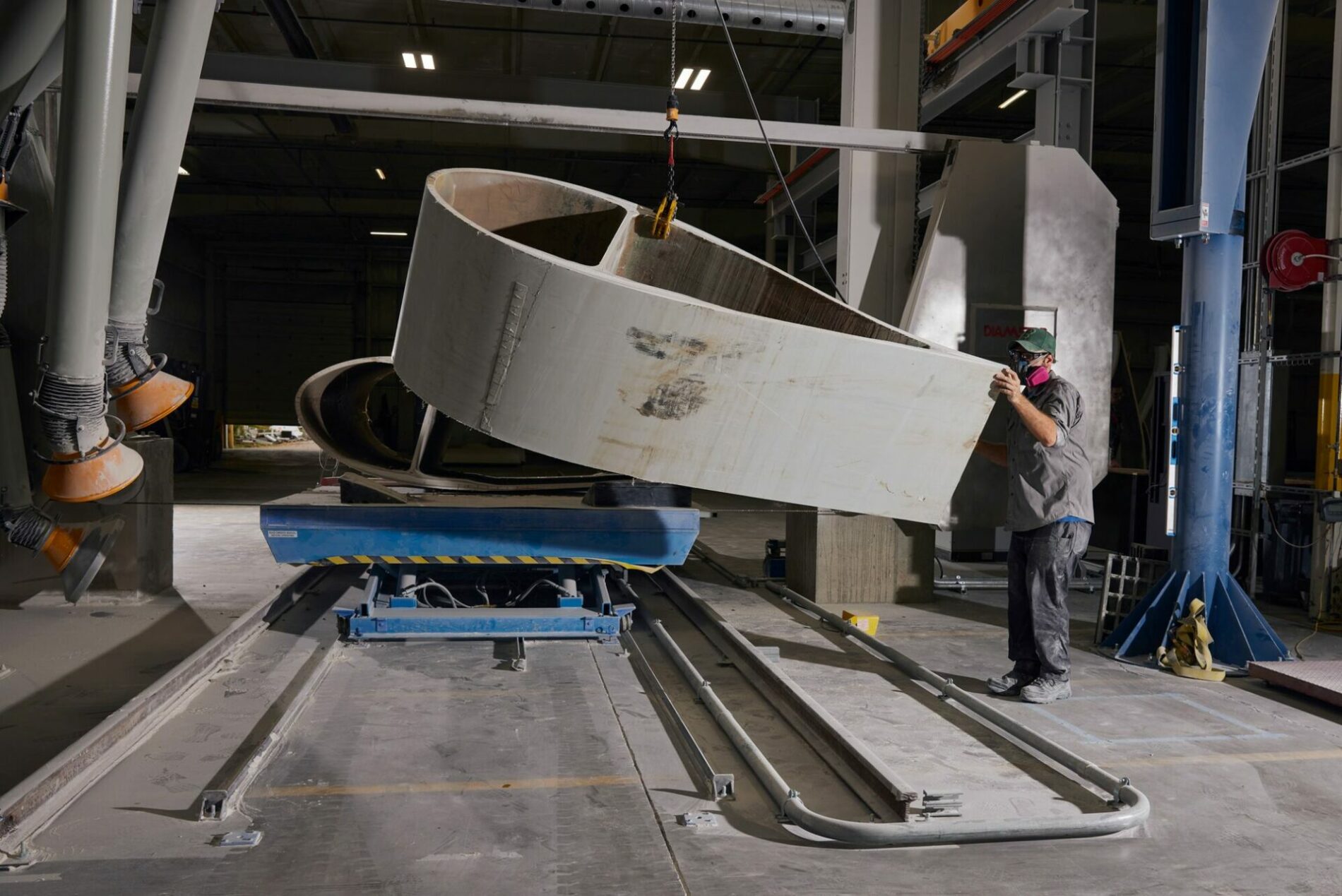
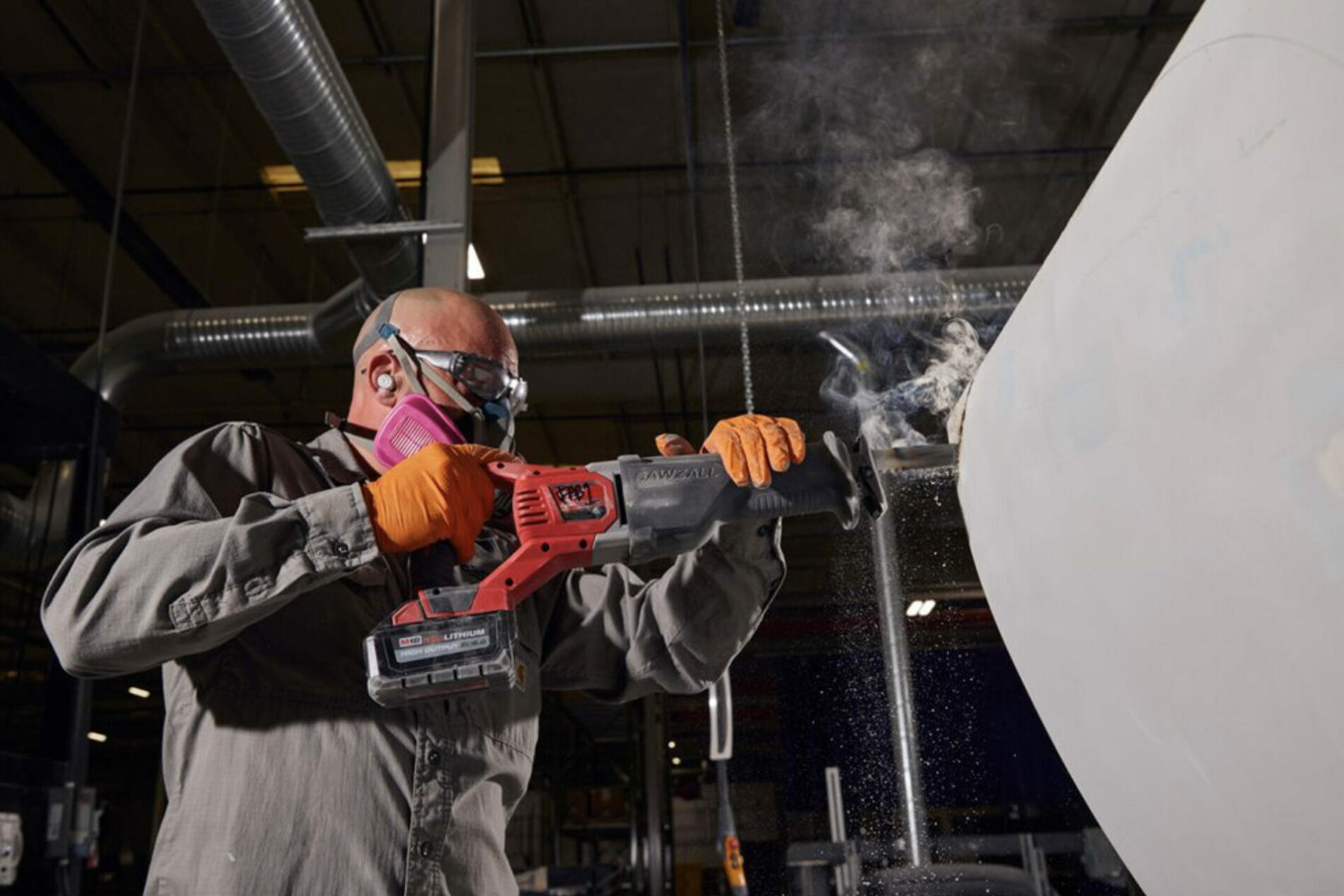
From left, Yi Zhu, a Research Fellow in Mechanical Engineering, and Evgueni Filipov, an associate professor in both Civil and Environmental Engineering and Mechanical Engineering, working in his lab. Image credit: Brenda Ahearn, Michigan Engineering

Origami is the ancient Japanese art of folding paper and has been around in some form since the ninth century. The practice involves transforming a square piece of paper into a finished sculpture through a series of folding techniques. While the use of such techniques in building and architecture may seem like a relatively new one, principles of origami have been used to create visually stunning and highly functional buildings and structures since the 1980s. At this time, Masahiro Chatani, a Japanese architect and professor, began developing practices which drew upon the ancient tradition. Chatani eventually published over fifty books on origamic architecture and is credited with being the creator of the practice.

These practices led to architectural tools which used 2D and 3D models to explore complex designs. However, architects at the Swiss Federal Institute of Technology managed to take things even further, creating complex folded plate structures using origamic architecture. According to the Proceedings of the National Academy of Sciences (PNAS) the concepts of architectural design and origami are very much based on the same set of natural laws. “Much of the recent research inspired by origami spans across fields, from mathematics, physics, and computer science to materials engineering, biotechnology, aerospace, and architecture. In mathematics and computational origami, the kinematics is usually simplified by considering rigid panels (also known as rigid foldable origami), with a focus on geometry and topological considerations.”

“Additionally, the technique of pleating —allowing surfaces to expand and contract like an accordion— is being used to make kinetic building skins that adapt to changing sunlight and can be used in retractable roof designs.”

Since then, fundamental techniques of folding have been used at architectural scale in an ever-increasing amount. Folds and creases are now commonly used to create angular, multi-faceted buildings with sky and street views from various angles and vantage points. Additionally, the technique of pleating —allowing surfaces to expand and contract like an accordion— is being used to make kinetic building skins that adapt to changing sunlight and can be used in retractable roof designs. PNAS go on to say that recent research is showing the potential for an increased use of origami in building. “The work of Filipov et al. suggests feasible engineering designs that are inspired by origami, with simultaneous deployable and load-bearing characteristics. Structural origami, such as the examples studied by Filipov et al., are bound to lead to innovative metamaterials and structures with unprecedented functional and mechanical properties, across scales. This may be the straw that will break the door for load-bearing applications of origami-inspired designs and unfold their use in architecture and civil engineering.”

origami inspired retractable roof

As these techniques have been advanced across the sector, other factors have also been required to ensure their success. Self-folding composites such as polymer and plastics change shape when heated or cooled, for example. While smart materials which can change properties electrically are increasingly being seen in architectural design.

So, what does this all mean for the future of the industry? Well, excitingly, it seems that the work being done at the University of Michigan is not happening in isolation. The National Science Foundation recently awarded a $2 million grant to a team of engineers at Penn State University who have been tasked with investigating the potential for origami structures that can relate to a variety of scales and uses. “Our aim is to develop methods to design origami structures that actively fold from an initially flat sheet to complex three-dimensional shapes in response to multiple fields (e.g., electric, thermal, magnetic). They will also actively unfold, in contrast to current origami structures that must be manually unfolded. These multi-field responsive origami shapes will be developed through collaboration with a visual artist and approximated and modeled using geometric modeling and origami mathematics.”

While this all bodes well for the future of architecture and construction, the team at Penn State have identified broader uses for the technique across multiple fields. Researchers believe that there may be the ability to use origami in medical, scientific and aeronautical applications. “For example, origami-based surgical instruments will benefit minimally invasive surgery, where there is a need for mm-scale devices that can deploy inside the body to manipulate tissue. Similarly, origami-based adaptive aircraft structures, reconfigurable robots, and deployable space structures will help enhance mission versatility.”

It seems unthinkable that a technique for folding paper into intricate, beautiful, yet largely cosmetic shapes could have such a vast and significant reach across the building and architectural sectors. However, as evidenced by the teams in Michigan and Penn State, the use of folding may be a game-changer in years to come.

Canada’s Infrastructure – Fit for Purpose?

View in E-mag

While much has been spoken and written about the U.S. Infrastructure Bill in recent years, neighboring Canada does not receive the same level of global attention. Despite this, the country is in a similar position as it tries to come to terms with creaking infrastructure and a need for investment. According to the latest data, the country has a higher GDP rate per capita than most high-income countries. However, this same data which was collated by Infrastructure Canada shows that both its spending and quality of infrastructure are marginally lower than the average for the same high-income countries. While the differences may be slight, it points to a trend of under- or poor-investment across the infrastructure sector. When we look at the spending itself, the breakdown in figures provides an increasingly complex picture.

Two thirds of Canada’s infrastructure funding go into Social Infrastructure. Further investigation shows that within this budget, 70% is spent on public buildings and health facilities. Education receives 19% while only 8% is spent on housing. While there may be some difficulty in comparing funding amounts with such blunt metrics, it is interesting to look deeper into spending on transport. While the sector only receives 11% of the overall spending, the budget spent on roads only accounts for a fraction of this.

McGill University Health Centre
McGill University Health Centre (MUHC) is a network of teaching and community hospitals in Montreal, QC

So where does this all leave the Canadian infrastructure landscape? Unfortunately, quantifiable data is hard to come by and significantly, it takes years to collect. The last released report on the sector was assembled by a group of federal bodies, associations and networks in 2019. The 2019 Canadian Infrastructure Report Card was a collective effort that followed on from similar report cards in 2016 and 2012. According to the group, the reports showed that all is not well within the sector. “[It is] a timely update on the state of Canada’s public infrastructure across all core public infrastructure asset categories: roads and bridges; culture, recreation, and sports facilities; potable water; wastewater; stormwater; public transit; and solid waste. It finds that the state of our infrastructure is at risk, which should be cause for concern for all Canadians. In order to change course, Canada’s public infrastructure will require significant attention in the coming decades.”

In fact, the report is even more critical. It showed an infrastructure network that was aging, in poor condition and struggling to meet the needs of Canadians. As far back as 2019, the statistics showed a worrying trend:
Nearly 40 percent of roads and bridges were in fair, poor or very poor condition, with roughly 80 percent being more than 20 years old. Between 30 and 35 percent of recreational and cultural facilities were in fair, poor or very poor condition. In some categories (such as pools, libraries, and community centers), more than 60 percent were at least 20 years old. 30 percent of water infrastructure (such as watermains and sewers) were in fair, poor or very poor condition.

“In order to change course, Canada’s public infrastructure will require significant attention in the coming decades.”

Five years on from the report, we are yet to be given an update. What is fair to say, however, is that infrastructure is a sector that is constantly in flux. Repairs and new construction is taking place all the time, so it could be disingenuous to paint an overly negative picture. However, the overall view is of an infrastructure network that is being underfunded and is, as a result, incrementally worsening. The report itself was critical of a number of infrastructure aspects. “A concerning amount of municipal infrastructure is in poor or very poor condition. Infrastructure in this condition represents an immediate need for action, as the rehabilitation or replacement of these assets is required in the next 5-10 years to ensure that the services it provides continue to meet the community’s expectations. An even larger proportion of municipal infrastructure is in fair condition. Infrastructure in this condition represents a view of things to come in the medium to long term. This infrastructure will continue to deteriorate over the next decade, falling into poor and very poor condition if rehabilitation or replacement actions are not taken.”

At the time, a pre-COVID world, this was an ominous view in itself. For Bill Karsten, President of the Federation of Canadian Municipalities, it was time to take action. “We’re talking about roads, bridges, libraries, arenas and more—things Canadians rely on every day. Good, reliable infrastructure supports our quality of life in communities across the country, so Canadians should find these results concerning.”

So, what has been done since then to revitalize Canadian infrastructure? The picture is unclear. Certain measures have been introduced but without quality data to back it up, we are left in the dark. Prior to the report, in 2016, the Investing in Canada plan was announced. This was a federal commitment of over $180 billion over a twelve-year period. So far, figures show that it has invested $147 billion of this in over 95,000 projects. It is currently unclear what impact this investment will have on the next Report Card, but it is hoped that there will be a positive swing across all metrics.

Another recent announcement could also herald a new dawn for infrastructure projects, particularly those in indigenous areas. Last month, Canada Infrastructure Bank (CIB) announced a $100 million loan participation agreement with the First Nations Bank of Canada (FNBC). This program will support the affordable financing and accessing of funding for infrastructure projects in First Nations, Métis, and Inuit communities. This funding, it is hoped, will ensure an improvement in living conditions, new economic opportunities, and housing. According to Ehren Cory, CEO of Canada Infrastructure Bank, the funding is vital to improving the lives of Canadians. “Through this investment, Indigenous communities will work with FNBC to access critical financing to develop much-needed infrastructure in their communities and advance socio-economic reconciliation.”

The long-term outcomes of this fund, alongside the Investing in Canada plan, are currently unknown. It is certainly encouraging to see long term projects such as Metrolinx and the Toronto Waterfront Revitalization Initiative come to fruition, but without evidence, much of this is guesswork. With no news on the horizon as to the completion of the next Report Card, we cannot be sure. Good things are happening, that is clear, but are they good enough to stem the tide? We will have to wait and see.

Co-Op Electrics

View in E-mag

In order to transition to clean energy, a number of things need to happen. Legislation and governance can only go so far. People need to make difficult choices. Alternative energy providers need to grow in popularity. One of the deep-rooted challenges when it comes to the North American energy sector, is the close relationships that traditional energy sources still have with both local and federal governments. Coal, oil, and gas sectors have strong lobbying power. Unfortunately, the reality is that wholesale change will not come unless the powers that be allow it.

It is within this context that rural energy co-ops sit. In an effort to wrestle back control in relation to energy suppliers and materials, incremental changes are in fact taking place. But first, an explanation. The term ‘rural energy co-op’ refers to the concept of local communities that either harvest or generate its own energy supply. These local groups can also identify providers and work on a collective bargaining basis to ensure the best deal for its owners —local residents. Historically however, these co-ops have been slow to move away from fossil fuels. Due to the costs involved in pivoting to renewable power, these cooperatives are largely tied into historical contracts meaning that they are reliant on coal to supply power and heat. While the idea goes that these co-ops are small operations, the facts tell a different story. Rural co-ops are providing electricity to an incredible 56% of the United States. This equates to around 43 million people and includes 92% of persistent poverty counties.

installing solar renewable energy

According to a recent report by The National Rural Electric Cooperative Association (NRECA), these co-ops also provide power to 21.5 million businesses, schools, and farms across 48 states. Clearly, the pull of rural co-ops could be a sea change if enabled to switch to sustainable sources. Surprisingly, these switches are already beginning to happen, albeit on smaller numbers that environmentalists would like. In 2016, only 17% of co-ops energy needs was being met by sustainable materials. In 2021, this figure had jumped to 22%. While this is not a monumental leap, it is encouraging, nonetheless. If we also consider that over the same period, the use of coal dropped by almost a tenth to 32%, we see a pattern emerging.

Kit Carson Electric Cooperative, a rural co-op in New Mexico, is revolutionizing the field by turning away from fossil fuels entirely. In 2010, KCEC members voted overwhelmingly to move the co-op over to 100% renewable energy. Driven by the persistence of its members, i.e., households and businesses of the local community, Renewable Taos was set up as a provider of 100% sustainable power to the New Mexico cooperative. Battling historical views and traditional mindsets, the process was aided by the falling cost of solar energy. Incredibly, the Kit Carson cooperative hit an important goal in 2022. Renewable energy now provides 100 percent of the year-round daytime electrical needs of its more than 30,000 members.

“Renewable energy now provides 100 percent of the year-round daytime electrical needs of its more than 30,000 members.”

This shift towards renewable energy sources is not merely an environmental one. While the benefits of renewable energy were certainly front and center for those at Kit Carson, there is also the small matter of cost. As environmentally sound as any project may be, people tend to vote with their pocket. After six years, the members of KCEC are reaping financial rewards also. Rates have dropped by an astonishing 33% since moving to renewables which equates to a drop of around $15 per month for users.

In 2022, a landmark law was passed which may hold the key to rural co-ops accessing renewable energy. The Inflation Reduction Act has set aside $10.7 billion for rural co-ops and other electrical service providers to access through grants and loans. These grants come with the stipulation that the providers are affordable and clean energy focused. According to Bryce Yonker, Executive Director and CEO of Grid Forward, a nonprofit industry trade organization working to advance energy modernization and innovation in the western United States, the amount of funding available is staggering. “It’s a huge amount of money,” he said. “It’s a transformational amount of investment incentives for smaller grid operators.”

Solar renewable energy

For Agriculture Secretary Tom Vilsack, this funding —and the use of cleaner energy, by extension— will provide rural communities with both an affordable and reliable power grid. It will also support new jobs and help lower energy costs in the future. This is evidenced, he says, by statistics that point to over 170,000 jobs created through investments in clean energy and climate. A projected 1.5 million additional jobs are expected to be added over the next decade. “These investments will also combat climate change and significantly reduce air and water pollution that put children’s health at risk,” Vilsack said. “The U.S. Department of Agriculture stands ready to partner with municipalities, tribal entities, entrepreneurs, rural electric cooperatives and other utilities to see this transformative investment come to life and create new economic growth and healthier communities.”

However, the transition to sustainable energy sources is not likely to be a smooth one. Fossil fuel energy providers will be reluctant to release their grip on the sector. In fact, one of the most significant barriers to transitioning is the financial implications for co-ops when attempting to break long-term historical contracts. In some instances, cooperatives are tied into contracts as long as 75 years. For Kit Carson, the prospect of a high financial penalty for breaking its contract was not enough of a deterrent. According to Maria McCoy, researcher at the Institute for Local Self-Reliance, the community is now reaping the benefits. “Kit Carson negotiated its release from Tri-state generation and transmission back in 2016 and was kind of the first to do this successfully. And so, Kit Carson immediately got a 15% savings from its new supplier, and even though it had to pay this $37 million exit fee to Tri-State, the co-op has projected that it’ll save anywhere from 50 to $70 million over the 10-year length of its new contract with this new supplier. And so, all that money can stay in the community and build the local economy. Additionally, with the new contract Kit Carson members can generate as much energy locally as they want. And so, the co-op has set and now reached its goal to generate a hundred percent of its daytime energy with solar.”

With federal funding assisting rural co-ops in financially breaking free of contracts, the stage might be set for these energy providers to pivot to renewables in the very near future. At 56% of U.S. electrical consumption, it would prove to be an enormous statement in the goal towards achieving Net Zero.

kitcarson.com

Urban Jungles

View in E-mag

Over the past hundred years or so, the landscapes that we inhabit have changed irrevocably. The scale and volume of structures have developed and grown enormously and urbanized living is now very much in the majority. Urban areas are the most human populated on the planet and, while cities only make up around 2% of the earth’s surface, around two-thirds of the human population will live in cities by 2050. This density has resulted in significant changes to the make-up of these locations and their surroundings with concrete replacing soil, brick taking the place of trees. The changes are not purely geographical, however. Figures show that cities consume around two-thirds of the world’s energy while producing 70% of global carbon emissions. When laid out, what is clear is that it is us —humans, who are the primary cause of climate damage. Our relationship with the natural world is something that needs to adapt and change.

Prior to industrialization, the relationship that humans had with the natural world was built on reciprocation. We were a member of a carefully balanced eco-system, and our place was within the hierarchy of the animal world. However, since our population had grown and technologies have developed to accommodate our greater influence on the planet, things have gotten skewed somewhat. Forests are razed, streams travel underground, animals and planets are pushed into parks, suburbs, and remote locations. Unsurprisingly, this shift has resulted in freak weather events such as flooding, heatwaves, and wildfires.

Rather than feel a sense of hopelessness, the future is actually looking brighter. According to author Ben Wilson, cities are now becoming fertile grounds for the resurgence of the natural world. In his book, ‘Urban Jungle: The History and Future of Nature in the City,’ Wilson explains how cities and urban areas are ecosystems themselves which need to be conserved. “For a long time we have been used to the idea that hard engineering can solve our problems. The lesson of climate change is that our urban way of life is tied up with nature.”

The proof of this link could be seen clearly during the COVID 19 pandemic. Throughout an unprecedented period of hibernation, nature quickly reclaimed many urban areas. Numerous cultures and strains of biodiversity thrived during this period, without having to rely on humans for food. In Nara, Japan, for example, deer who have co-existed with humans for years saw a huge boost in numbers when the expectation was that they would struggle without humans as a source of food and care. This story, and a number of others, were recently shared in a documentary film called The Year Earth Changed. Narrated by acclaimed biologist David Attenborough, the film shows the surprising and unexpected ways that the natural world reclaimed human populated areas. Footage depicting hippos lazing about in gas stations and a puma wandering the streets of a Chilean city are prime examples of how close nature is to us and the benefits that can be found by softening the boundaries.

So, how can urban jungles be encouraged in a way that is harmonious with both the human and animal kingdoms? While rewilding tends to be a concept that is linked to rural areas, city rewilding is now a developing strategy since the pandemic. According to Mossy Earth, an NGO that is trying to restore nature across a variety of ecosystems, cities can offer a positive platform to encourage and restore plant and animal habitats. “Although rewilding is generally associated with rural projects, rewilding in cities is just as dynamic and exciting and aims to achieve many of the same goals. Urban rewilding looks to restore natural processes and reintroduce nature on a city scale and has a wide range of benefits, from improving health to helping to tackle the biodiversity and climate crises.”

According to the organization, benefits can be categorized into three main areas. Environmental benefits exist, such as pollution reduction, restoration of natural processes such as rainwater capture and boosting biodiversity. The knock-on effects of this, they claim, result in societal benefits such as populations experiencing better moods, a reduction in loneliness, stress and anger, lower blood pressure and healthier immune systems. “At its core, urban rewilding is about bringing back elements of wilderness, embracing natural processes and restoring ecosystems with less human interference. Rewilding within this city context can be done through small and big actions at an individual and city-wide scale.”

“Although rewilding is generally associated with rural projects, rewilding in cities is just as dynamic and exciting and aims to achieve many of the same goals.”

Statistics show that the adoption of city rewilding is needed now, more than ever. Between 2001 and 2017, 24 million acres of natural space were lost in the United States alone. These losses came from human involvement such as housing sprawl and agriculture. Furthermore, in 2019, Reuters reported that every day, 6,000 acres of open space are converted for other uses. The concept of rewilding is not necessarily a new one, however. In 1995, wolves were reintroduced to Yellowstone National Park in an effort to rebalance biodiversity in the area. While this strategy may not be appropriate for cities, we are seeing examples of rewilding taking place in other ways. Between 2015 and 2020, for example, Ireland developed the All-Ireland Pollinator Plan. It’s capital city Dublin also created a 2015-2020 Biodiversity Action Plan which was aimed at reducing mowing and herbicide use in parks, roadsides, and other green spaces. By letting native plants grow instead of maintaining monocropped, chemical-laden lawns, native insect, bird, and bee populations thrived. Thanks to this initiative that was driven and implemented by the Dublin City Council, 80% of the city’s green spaces are now “pollinator-friendly.”

Meanwhile, in Haerbin, China, designers and architects came up with a novel solution to managing its increasing rainfall. In 2009, landscape architects made plans to protect an existing 34-hectare wetland in the center of the city. The area, which was at risk of decimation due to its water sources being cut off by development, was transformed into an urban stormwater park: the Qunli National Urban Wetland. The park now provides invaluable ecosystem services: collecting and filtering stormwater into the aquifer, recovering a native habitat vital to the surrounding ecosystem, and supplying a place for recreation in the city with a network of raised paths and viewing towers for visitors.

While many of these initiatives are a reaction to the damaging effects that industrialization has had on the natural environment, it is unlikely that cities are going to shrink. That ship has sailed, and the plan now needs to be designing ways for humans and nature to co-exist. Rewilding, as seen during the pandemic, offers benefits to every stakeholder. It is only a matter of time before it becomes the norm in cities around the world.

Upcycling – The Materials of the Past, and the Future

View in E-mag

The term ‘Upcycling’ is a relatively modern one. Coined in the early 1990’s, upcycling has been the vehicle for trending techniques and styles across multiple industries. Fashion, furniture, design, there are few areas in which upcycling has reached. In the construction world, it is a concept that is gaining traction also. Both materials and processes come with heavy energy requirements and novel ways of building are always high priority. Surprisingly, construction may actually be the one of the first industries to adopt the concept of upcycling. Examples of this process can be seen in the Roman Empire as early as the fifth century BC. Spolia, which refers to the reuse of spoils, signified the reuse of old building materials in new edifices. Spolia involved the repurposing of stones and other elements from older structures into new ones. This approach, wildly innovative for its time, not only conserved resources but also breathed new life into discarded materials.

Since then, reusing materials —stone in particular— has been a technique that has run through the development of construction across millennia. With financial, cultural, historical, and ecological benefits, it seems as though the industry has been thinking innovatively about its materials for longer than people might realize. In a modern context, sustainability is one of the most important considerations in construction. Everything from energy usage to materials made from renewable or ethically minded sources contribute to sustainable practices. The (re-)emerging market that sits squarely within the scope of this discussion is reusable materials —upcycling. Repurposed structures are currently attracting huge interest across various sectors but what if previously used materials could be repurposed to add value to communities and businesses alike?

Canvus is a furniture manufacturer based in Avon, OH. The company designs benches, planters, picnic sets and other community seating out of retired wind turbines. According to the company, the overarching goal is to address systemic issues within the wind industry. There is a chronic need, it states, for this process. “5,000-8,000 wind turbine blades are retired each year. The wind industry has struggled with recycling them due to their massive size, durability, and fiberglass material.” By upcycling them at scale into furniture designed for communities, parks, and schools, Canvus has created a solution using innovative techniques, forward thinking and sustainably minded tools. “We are a solution for every blade coming out of service and can process 100% of the blade by upcycling into furniture, aggregate for concrete products and building materials, then shredding the remainder material into fuel source for the cement-making process – making us the perfect partner for all projects throughout the United States.”

The company offers a full-service process that involves field cutting, when the blade is being brought down from the turbine, movement and logistics, upcycling, and shredding. The seamless and fully integrated process ensures that from turbine to end use, the product is handled safely and sustainably. “The Canvus manufacturing facility in Avon, OH takes the blade sections – including difficult to process pieces like root ends – and upcycles them at scale into beautiful, impactful, lasting products for communities across the country.”

While this production method is inarguably a positive thing for the industry and the climate, the unfortunate truth is that it offers very little in isolation. So, how can these processes —and this mindset— further permeate the construction industry? It seems as though, in some quarters, it already has. Realdania Byg is a Danish foundation that promotes innovation and best practices in the building sector. Working with Lendager Architects, the foundation has developed and built a single-family house called Upcycle House. The aim, and success of the project, is to “convey the principles of upcycling in a tangible and clear example.” It uses completely upcycled materials and meets all building codes to be a safe and comfortable residential structure. The load-bearing structure consists of two prefabricated shipping containers, while the roof and façade cladding are, incredibly, made from recycled aluminum soda cans. “Façade panels consist of post-consumer recycled granulated paper, which is pressed together and heat-treated. The kitchen floor is clad in tiled champagne cork leftovers, and the bath tiles are made from recycled glass. Walls and floors are covered with OSB panels consisting of wood chips that are the by-products of various production sites, pressed together without glue.”

upcycled glass wall

According to Anders Lendager, owner of Lendager Architects, the results of using recycled materials were far in excess of the company’s highest expectations. “We initially thought that a reduction of 65% CO2 was unrealistic, but when we ran the LCA (Life Cycle Assessment) on all materials throughout the entire project, it turned out that we had reduced the CO2 emissions associated with construction by 86% compared to a benchmark house. With that in mind, we are surprised that no one else is working on this. Why is it not included in everything we do as architects? Why is it not included in the building code that a certain percentage of building materials have to be recycled?”

Not stopping there, Lendager and his team decided to expand the concept. Located in Copenhagen’s Ørestad district – a reclaimed wetlands that has become a showcase for urban design projects – Resource Rows uses walls from abandoned rural dwellings as part of facades, reducing carbon consumption by 70% but also providing a weathered character that sets the development apart from your average city new build. The buildings interact with nature by harvesting rainwater for toilet-flushing and irrigation, while green roofs and vertical gardens encourage biodiversity and enhance community. “The 92 flats and rowhouses in the Resource Rows demonstrates that it is possible to reuse bricks from new buildings and waste wood without compromising on costs and aesthetics. The result is a project that saves CO2 and materials and creates strong communities among the people living in it – and it doesn’t cost more.”

Upcycling may be a new term, but the concept is rooted in the innovative techniques and strategies of the construction industry. While many are still getting to grips with the reuse of materials, construction is one step ahead. Companies like Canvus and Lendager Architects demonstrate a simple yet fundamental truth: if the desire to reuse materials exists, the industry will find a way.

Right to Work – A Crossroads for the Labor Market

View in E-mag

Union membership is at an all time low. Despite wide-scale public support for recent labor disputes such as the Hollywood writers’ strike and the United Auto Workers, members on the ground are running thin. It is a peculiar state of affairs. Recent statistics show approval ratings for unions is running at a near high. Figures collated by Gallup show that 61% of respondents believe that unions have a positive effect on the U.S. economy. While 43% would like to see unions have more influence in the country. These are clearly not superficial leanings. Rather, they demonstrate a growing acceptance of the positive impacts that collective bargaining can offer a workforce. Interestingly, these figures also mark the continuation of a five-year rising trend.

On the other hand, union membership figures are at a record low. Hovering around 10%, they have been in steady decline for over two decades. So, what can we infer from these falling membership figures, in particular in the context of growing support for the union movement? Does this demonstrate an apathy within the American public to get involved? Maybe cost-of-living challenges are prohibiting some from union fees? The answer is not quite clear. However, these statistics must be read under the umbrella of an ongoing battle around Right-to-Work laws.

asphalt worker

Right-to-Work laws are deeply complex, and politically divisive pieces of legislation. Adopted as far back as 1947 in some places, the laws are upheld in 26 states. They govern the right for an employee to choose or forego union membership in a unionized company. While that, in essence, may sound rational and fair, the laws also allow for non-members to avail of union benefits such as pay increases and representation during arbitration proceedings. According to the Economic Policy Institute, this has a detrimental effect on unions and their workers. “So-called right-to-work legislation entitles employees to the benefits of a union contract—including the right to have the union take up their grievance if their employer abuses them—without paying any of the cost. This means that if an employer mistreats a worker who does not pay a union representation fee, the union must prosecute that worker’s grievance just as it would a dues-paying member, even if it costs tens of thousands of dollars. Non-dues-paying workers would also receive the higher wages and benefits their dues-paying coworkers enjoy.”

“We are coming together to restore workers’ rights, protect Michiganders on the job, and grow Michigan’s middle class.”

The EPI conducted research into the widescale effects on workers’ pay and conditions of RTW. Factors including cost of living considerations and up to date population surveys were used. The findings suggested that, rather than benefit individual workers in freedom of choice, RTW laws resulted in lower wages throughout RTW states. EPI concluded that this was, in part, caused by unions decreased ability to advocate on behalf of all workers. “Wages in RTW states are 3.1 percent lower than those in non-RTW states, after controlling for a full complement of individual demographic and socioeconomic factors as well as state macroeconomic indicators. This translates into RTW being associated with $1,558 lower annual wages for a typical full-time, full-year worker.” Meanwhile, advocates of Right to Work laws argue that forcing workers to pay dues amounts to “compulsory unionism.” They argue that the practice is immoral and damages a state’s ability to attract new business.

It is near impossible to pull the threads of these arguments apart. They are steeped in historical and modern political biases and the laws —or rejection of them— are political badges of honor.

In a first on the American labor landscape, however, Michigan recently became the first state to repeal these laws. The state, one with a rich history of labor minded beliefs, rescinded the law that had been enacted in 2014 by Republicans. Michigan’s Democratic Gov. Gretchen Whitmer believes that the repeal of this law is a positive thing for everyone in the state. “We are coming together to restore workers’ rights, protect Michiganders on the job, and grow Michigan’s middle class,” she said.

Michigan State AFL-CIO is the state federation of labor. It currently represents over one million active and retired members of over forty unions across the state. Following on from Gov. Whitmer signing the repeal, President of Michigan AFL-CIO Ron Bieber said that the repeal affords a protective element to Michigan workers. “After decades of anti-worker attacks, Michigan has restored the balance of power for working people by passing laws to protect their freedom to bargain for the good wages, good benefits and safe workplaces they deserve.”

Alongside the repeal of RTW, the vote gave workers additional rights in a number of key areas. Michigan also restored prevailing-wage protections for construction workers, expanded collective bargaining rights for public school employees, and restored organizing rights for graduate student research assistants at the state’s public colleges and universities. Analysts believe that union numbers will gradually increase now that the bill has finally been signed into law.

But what does this all mean in the wider context. Statistics seem to indicate that workers in RTW states enjoy salaries that are around 3% lower than unionized workers. Various metrics are used to calculate these figures however, and the metrics used can vary based on partisan leanings. On one hand, some claim that district lines are being drawn up with the specific goal of favoring a political allegiance which gives a skewed view on the view of people nationally. While pro-union voices in Michigan argue that a balanced outcome will always be in favor of workers and their rights. “That’s the difference between having a legislative majority that has your back and wants to expand workers’ rights, as opposed to being in the minority and having a legislature that was to suppress workers’ rights,” said Bieber.

One thing is for certain, this issue is not one that is going away. Michigan, with its pro-labor stance and history of collective bargaining, is not the most surprising state to overturn this divisive law. However, some states, particularly in the south and west of the country, have RTW laws that are deeply entrenched, with some being enshrined in the constitution. It seems that, despite recent events in Michigan, is a long road ahead for both sides of the political divide.

Autonomous Infrastructure Repair

View in E-mag

According to the Federal Highway Administration, there are around 4.19 million miles of roads in the United States. With an ever-growing population, these roads are being put to the test like never before. Increased number, driving longer, in bigger vehicles; it is no wonder much of the infrastructure network is in need of repair. That may be an unfair criticism, however. Modern road networks will always require maintenance cycles to repair damage caused by rain, vehicles, heat, and light. The fact remains, however, that maintaining the road network is expensive business and it is one which requires many man hours, documentation, safety considerations and testing. So, is there a way to harness modern technologies to reduce the financial and human burden on overstretched governments and councils? For example, the U.S. Infrastructure Bill is a positive thing. There is no doubt about it. However, if we delve into the figures, we find that an incredible amount of money is needed just to repair and maintain the infrastructure we currently enjoy. In the context of an aging network badly in need of complete overhaul, we find ourselves asking if there is an alternative that could redirect all-important funds to the most needed projects. Every new lane-mile of road costs around $24,000 to maintain in good repair. Nationally, this equates to $231.3 billion per year.

road pothole in the city

A UK start-up company has developed technology which could significantly reduce the costs of road and highway maintenance. Robotiz3d is on a mission “to build safer, more sustainable road infrastructure with radically transformative technologies.” It is located at the Science and Technology Facilities Council’s (STFC) Daresbury Laboratory and has been testing and using AI to identify and autonomously repair potholes and cracks in a safer, faster, and cheaper way. While it may sound too good to be true, the results are demonstrating an effective and radical way to maintain infrastructure networks.

Robotiz3d came as the result of four years of research and development. The technology can record road conditions in real time, mapping and detailing cracks and other potential hazards before they become potholes. This pre-emptive repair strategy would be enormously cost-saving and would drastically reduce the man-hours needed to repair roads. Dr Paolo Paoletti, CTO at Robotiz3d, believes that this technology will genuinely revolutionize infrastructure maintenance. He explained how, incredibly, the equipment can document, report and repair. Paoletti said, “The Robotiz3d solution will autonomously identify and localize potholes, characterize their geometry, and collect measurements on the go. The ability to automatically deposit sealing material, fixing smaller cracks before they evolve into potholes, is also a first.” Not only that, but Paoletti explained how the data-driven company is able to utilize historical road maintenance figures to predict ‘black-spot’ areas that are higher risk of damage. “These features, coupled with a prediction algorithm to help prioritize work schedules, are anticipated to improve the safety and lifespan of road networks, make maintenance tasks COVID-resilient, and contribute to reductions in road repair costs, fuel consumption, GHG emission, and tyre wear.”

“The ability to automatically deposit sealing material, fixing smaller cracks before they evolve into potholes, is also a first.”

The technology is incredibly exciting, and innovative. It patrols roads autonomously and can also be controlled by remote control. It gathers and documents the condition of roads and can operate at a speed of up to 60km per hour. Working round the clock, the vehicle scans one lane at a time, providing AI generated images of roads including the depth information and volumetrics of cracks and potholes. Once identified, the technology automates repair processes from site preparation, filling and compacting, to finish, with minimum or no human interaction needed. Data collected from the vehicle can be accessed remotely in real time. Lisa Layzell, CEO and co-founder at Robotiz3d, added that the benefits of this technology are enormous both in terms of financial savings and the quality of life for residents. “This is the first autonomous technology of this kind developed specifically to tackle the pothole crisis which plagues many parts of the country, and which is estimated to have cost more than £1bn to repair over the last decade.”

Robotiz3d is currently a UK based company, but it has no desire to remain operating on a national level. The plan is to raise funding to roll out the network of highway repair robots in the UK initially with a view to growing its network into the global economy. Amin Amiri, CEO of a2e Industries, explained, “This is a true innovation that can help the UK save public money and save hassle for the citizen. We’re confident in Robotiz3d and its highly capable engineering and management team to bring this much-needed technology to market. The technology could eventually solve one of the most endemic worldwide problems of the logistics and transport industry, with transformative impact.”

robotiz3d tech concept to track roadway conditions

The concept is wildly innovative and revolutionary. However, questions will remain as to the quality of autonomous robots. Doubts always linger among us humans as to the standard of work that a robot can offer in comparison to our own discerning eye. For evidence of this, we can look to other sectors, where autonomous robots have been performing human tasks for some time. Robotic automation has been industry standard for many years in some production and factory workspaces, but one significant step up took place in recent years that may ease any lingering doubts. US Researchers reported on a completely autonomous robot that performed keyhole surgery on a pig. The Smart Tissue Autonomous Robot (STAR) carried out laparoscopic surgery to connect two ends of the pig’s intestine. According to the published paper, the robot performed the highly technical procedure to a standard “significantly better” than that of a human surgeon. “Our findings show that we can automate one of the most intricate and delicate tasks in surgery.”

It would be facetious to draw comparisons between intestinal surgery and road maintenance, but the evidence is there, nonetheless. If autonomous robots can perform one of the most intricate and delicate surgical procedure to standards higher than that of a human, our road network can certainly benefit from this technology.

With many new technologies, we must wait to see how the industry reacts. Current indications are that Robotiz3d have developed something with huge potential benefits and there is a growing interest in seeing the project roll out on a wider scale. As vast sums of federal money are currently being funneled towards maintenance, it is interesting to think that someday in the very near future, we may be witnessing the start of preventative, autonomous repair on our roads.

Bringing the Forest Home

View in E-mag

Prior to the 21st Century, one material was used across North America as the primary foundation for both building and residential structures. Given its natural abundance, it is no surprise that wood has been used in construction projects for centuries. In fact, recent studies suggest that the material has been used for the purpose of building for close to ten thousand years. While its characteristics differ from some more modern materials and techniques, it clearly has a place within today’s industry.

Evidently, materials such as steel, cement, glass, and plastic have risen to the forefront of the construction industry, and not without good reason. Demands change, and the requirements of structures are significantly greater in the modern age than at any other point in history. Super structures, heavy infrastructure, developments of massive proportions; the industry has adapted and used materials best suited for the job in hand.

roofer building a wooden structure frame

However, in addition to the needs of communities, there are also the needs of the wider population to consider. The global community is one that needs to be listened to and, as ecological disaster comes ever closer, the construction industry is now committed to developing and harnessing more sustainable and renewable materials. This is evident in the hunt for lower carbon concrete, repurposed buildings, and wind energy.

Within this context, we need to ask the question, is there space for wood to make a resurgence? It seems as though the answer, as tends to be the case, is not clear-cut. However, the material which has been used in the process of construction for millennia is certainly emerging as a viable alternative to the hegemony of concrete and steel. In fact, wooden structures are experiencing somewhat of a comeback. High-rise wooden buildings have sprung up in recent years and technological advances are enabling building contractors to make higher quality wooden structures that are safer from fire, earthquakes and strong enough to meet modern requirements.

“The material which has been used in the process of construction for millennia is certainly emerging as a viable alternative to the hegemony of concrete and steel.”

Across Europe, wooden buildings reaching up to thirty-five floors have been seen for a number of years, and this trend is moving into North America. New Land Enterprises, for example, is less than a year away from completing a 25-story mass timber apartment tower in downtown Milwaukee in partnership with Wiechmann Enterprises. The Ascent building, which will be a hybrid building made from a mix of concrete and timber, will surely raise more than a few eyebrows. However, the industry has no plans to stop there and ventures such as the Ascent building will no doubt be bolstered by the recent study undertaken by architect Jeff Sanner and a team of engineers, designers and researchers who looked into the possibility of using wood to produce the world’s first skyscraper. The study was conducted with one specific project in mind: a residential eighty-story structure on the south branch of the Chicago River. The concept project, titled River Beech Tower. “While the reasons for considering mass timber will vary by project, client, and region, the building industry is experiencing an increase in the use of mass timber products for tall buildings. In 2008 there was one mass timber building over eight stories tall; by 2014, a survey of tall wood buildings identified nearly 30 buildings over eight stories that were either complete, under construction, or in late-phase design. This research began with acknowledging how wood behaves as a material. Its properties were compared to steel and concrete in terms of structural behavior, fire resistance, construction methods, environmental impact, and architectural expression. This fundamental understanding was then applied to the challenge of designing a building with real world design constraints.”

mass timber wooden structure interior

The concept, while still at a research stage, seems promising. According to the study, while challenges still remain and further research is required, the potential is there. “The increased value of timber that is expected to result from its use as an engineered construction product is likely to confer increased value on well-managed forestry. This is less critical in Europe and North America, where there is a long tradition of responsible forest management—but in many parts of the developing world, this may be a key driver towards better long-term forestry practice. By continuing to provide provocative, thoughtful solutions,” it states, “our industry will advance the potential that these materials have to offer.”

However, the wood revolution goes further than design and research. Grown in a sustainable forest less than 300 miles away, Portland International Airport is the first major airport in the United States to have a mass timer roof. The project has been designed by ZGF Architects and is being unveiled this year. The company has worked in collaboration with Portland Airport for over six decades and this is just the latest in a long list of innovative and exciting projects it has in the works. “In 2024, ZGF will bring PDX into the future, with the main terminal expansion that doubles the airport’s footprint. The new wood structure features an undulating mass timber roof and biophilic elements throughout—sustainable and resilient, the new terminal more than lives up to PDX’s reputation as ‘America’s Best Airport’.” This reputation is surely even more apt following the project. Not only was every piece of wood sourced from within 300 miles of the airport, about half of it came from 13 small and tribal landowners in Washington and Oregon. The process was managed with such a fine eye, the architects knew every board that frames the skylights above the 26 Y-columns came from the Yakama Nation, and all the double beams in the six massive oval skylights came from the Coquille Indian Tribe. It is incredible to think that such detail and care went into the project, given that is resulted in such a powerful and positive outcome.

So, what does the future hold with regard to the use of wood in construction. Again, the answer is yet to be discovered. However, the signs are there. Timber frames, once a ubiquitous site on the skylines of North America, is experiencing a sort of come-back. With projects popping up around the world, and plans afoot for ever larger-scale structures, the traditionalist material may yet live to be the one that contributes to the industry long into the future.

www.zgf.com/work/5593-port-of-portland-portland-international-airport

Turning Buildings Into Batteries

View in E-mag

When it comes to all things energy, both consumption and its generation, it seems as though it is a question of balance. How do we mitigate against the fuels needed to produce electricity, for instance? Light, heat, power, everything is part of a system and if anything is removed from the ecosystem, everything grinds to a halt. This is not scaremongering, creating problems where they need not be. The production of energy itself requires energy in order for it to be generated. Renewables are the ideal choice, but they are not always viable. So, how else can the maximum economic and environmental benefits be harnessed from the production of energy. Well, researchers that have been trying to answer that very question believe that they may have finally found an answer.

The concept of adapting existing materials is an alluring one. Design and execution are vital components of the building process, but if they could be utilized to go beyond their primary benefits, the industry could be on the cusp of something of a gamechanger. Until now, the pathway for more sustainable practices within the construction sector has been aimed at either reducing or eliminating emissions altogether. This is achieved through a combination of sustainable practices, environmentally minded materials, and the use of renewable energy sources. While most accept that this is the most sure-fire way to achieving net zero emissions, alternative ideas are always welcome. More recently, in fact, science has been stepping into the conversation, producing innovative techniques such as embodied and captured carbon. It seems that the sector has no plans to stop there either.

As more and more buildings turn to efficiency ratings, SMART compatibility or Passive features, the goal, it seems, is to make the building do some of the work itself. Imagine so, a building that could retain and deliver electricity through the process of conduction. The concept would produce, astonishingly, battery buildings.

concept of city buildings producing electricity

Scientists at Lancaster University have been working with formulas to create a cement mixture that is capable of conducting electricity. Incredibly, this mixture, which uses an alkaline solution and the waste material fly ash is even cheaper to produce than Portland cement. According to project leader Professor Mohamed Saafi, from Lancaster University’s Engineering Department, the mixture conducts electricity via potassium ions that hop through the crystalline structure. “To make cement you have to mix the fly ash with an alkaline solution, in this case we use potassium hydroxide and potassium silicate. When you mix them together, they form a cement material, containing potassium ions that act as the electrolyte.”

“We have shown for the first time that KGP cement mixtures can be used to store and deliver electrical energy without the need for expensive or hazardous additives.”
This breakthrough is an exciting one for a number of reasons. Smart concretes themselves are not exactly new; however, with researchers from Japan first developing the idea back in the 1980’s. However, according to engineer Danna Wang, most of these are challenging to implement, using prohibitively expensive materials such as graphene and carbon nano-tubes. “High-performance cement-based composites require not only high compressive, flexural, and tensile strength, but also favorable workability and good durability.” As well as cost, these materials are designed for small scale projects only and their use in large structures is not possible.

The development from Lancaster University has identified a significantly cheaper alternative that is ideal for scaling up to the enormous super-structures that are already some of the most power intensive across the sector. It is a quick and cheap composite that is easy to produce. Additionally, because the electro-conductivity is achieved through potassium ions hopping through the crystalline structure, it does not require any expensive additional chemicals or additives. Incredibly, these hopping ions have the ability to store electrical energy. In addition to this, it has the capability to sense and respond to mechanical stresses. All this means that, when used correctly, these composites could store and discharge up to 500 watts per square meter. This could lead to, for example, houses storing daytime energy through solar panels, distributing the energy throughout the evening when needed. According to Prof. Saafi, the benefits of this technology could be wide reaching, suggesting that this composite could be an ideal solution for powering streetlights, which uses around 700 watts every night. “We have shown for the first time that KGP cement mixtures can be used to store and deliver electrical energy without the need for expensive or hazardous additives. These cost-effective mixtures could be used as integral parts of buildings and other infrastructure as a cheap way to store and deliver renewable energy, powering street lighting, traffic lights and electric vehicle charging points. In addition, the concrete’s smart properties make it useful to be used as sensors to monitor the structural health of buildings, bridges and roads.”

cement building under construction

Incredibly, this is not the only research into electrified cement currently taking place. A second study being conducted in Massachusetts Institute of Technology (MIT) and Harvard University in the U.S. is exploring the potential uses of carbon block, a charcoal-like material that is created from incomplete combustion processes. According to Admir Masic, Scientist at MIT, the materials used are highly effective, and highly interesting. “”The material is fascinating, because you have the most-used human made material in the world, cement, that is combined with carbon black, that is a well-known historical material – the Dead Sea Scrolls were written with it. You have these at least two-millennia-old materials that when you combine them in a specific manner you come up with a conductive nanocomposite, and that’s when things get really interesting.”

How it works is that, through the reaction process of cement, water as absorbed, leaving tendril-like shapes in the cement which the carbon black fills. These essentially become wires and cabling, transmitting energy throughout the entire system, aiding conductivity, and essentially turning the cement into a large-scale battery for storing and transmitting energy. According to the researchers at MIT, there are many ways in which this technology can be harnessed. “These properties point to the opportunity for employing these structural concrete-like supercapacitors for bulk energy storage in both residential and industrial applications ranging from energy autarkic shelters and self-charging roads for electric vehicles, to intermittent energy storage for wind turbines.”

It seems that scientific research may be key to unlocking the challenges facing the energy network. With large-scale energy storage being an omnipresent difficulty, utilizing the very blocks beneath our feet, turning them into enormous batteries, is a potential boost of epic proportions to the infrastructure and energy networks.

https://www.lancaster.ac.uk/news/new-smart-cement-mixtures-could-turn-buildings-into-batteries

Building the Future

View in E-mag
View Brochure

The construction industry is one of perpetual change. Companies across the spectrum of sectors are continuously growing, innovating, and developing. Meeting the needs of clients is a challenge that never sleeps and companies find themselves upskilling and rising to the many challenges on a near-constant basis. In this context, it is important to occasionally take stock, recognize your contribution to the market, and react accordingly. For twenty years, M CON Pipe & Products Inc. has delivered precast concrete drainage infrastructure across a variety of sectors in a peerless fashion. However, as the industry has developed, so too have the skills, products, and services that the company offers. With the company now bringing an all-encompassing service to its clients, Cristina Mion, General Manager, explains how a continuous process of rigorous self-evaluation led to an exciting decision. “Internal evaluation is an ongoing practice for us. Over the last 20 years, we’ve really grown — through our own operations and in the partnerships that we’ve established. A big part of our future plan is to continue offering unique customizable solutions addressing any construction challenges that are present for our customers on a variety of development sites.”

The result is OMNI PRECAST. A forward-facing company that is built on the foundation of 20 years’ experience and service to the precast industry across its many facets. The rebrand is the cornerstone of the company’s 20th anniversary celebrations, reflecting as Cristina says, “the company that we’ve grown into, and the future we’re committed to.” As she explains, OMNI —meaning ‘all’— is a brand that best covers the comprehensive body of work the company brings to its clients. “We are a precast solutions provider. We address evolving infrastructure challenges with sustainable precast products developed in collaboration with our network. With our incredibly skilled team of engineers and production personnel we’re able to provide completely custom offerings to any and all construction challenges.”

parking lot retaining wall installed by OMNI PRECAST

As part of this change, OMNI PRECAST makes clear that it is business as usual. The only difference is that clients can now enjoy a clear understanding of the pillars that drive the company. Quality, Innovation, Reliability, and Community are the foundation of OMNI PRECAST. These are not, however, aspirational targets. Rather, they are qualities that have carried this company for two decades to the summit of the precast industry. Cristina believes that these four pillars of the company operate in partnership with each other. However, quality is something that permeates every aspect of OMNI PRECAST, from relationship building to the finished product. “We are providing infrastructure for the developing communities all around us. People rely on our products to be safe, and to be sustainable, to stand the test of time. We take that responsibility very seriously.” One way that OMNI PRECAST ensures the highest levels of quality is by managing its production environment to an exacting standard. As Cristina explains, “It is an absolute priority for us in our manufacturing practices. We have really invested to make sure that every aspect of our operation caters to that quality. From our manufacturing facility, to our experienced team, , and the quality assurance practices that are in place, everything has to align with the fact that our customers expect a premium quality product.”

From Quality and Innovation to Reliability and Community, these pillars work in tandem. As Cristina points out, in order to succeed they must all be in place. This is no more evident than in the way OMNI PRECAST relates to its community. After 20 years in business, it is no surprise that the company has developed and nurtured strong partnerships in the industry. It prides itself on a comprehensive family of clients who return to OMNI PRECAST for its skill and professionalism but, as Cristina shares, community is not just about customers. From professional partnerships and associations, to the company’s own internal community, it is something that extends to all of OMNI PRECAST’s stakeholders. When we speak about community, I think that extends to several facets of the company. Obviously, one is our client relationships. We have an amazing group of customers that we work in collaboration with to make sure that they’re successful in their projects. We have also developed strong product partnerships with Stone Strong, Storm Trap, Devine & Associates, and Echelon Environmental, as well as industry partnerships, such as the CCPPA and other groups across the Ontario construction market. Beyond that, our internal community – the OMNI PRECAST team – is at the heart of what we do and the successes we’ve achieved. We are all working towards the same goal —creating sustainable, value-added infrastructure solutions. We want to be a contributing member of that and help build communities.”

OMNI PRECAST project site concrete culvert

While the name may be new, it is clear that the attributes that have sustained the company up to this point are still very much present. With a track record of providing continuously innovative solutions, OMNI PRECAST is a leader in the sector. For Cristina, “Innovation has always been a big part of who we are at our core, and it is present in all aspects of our operation, from the office through to the manufacturing facility. For instance, we were the first in North America to install the PRIMA and Smart Cast robot system from AFFINITAS, which really kind of changed the way that maintenance hole structures were produced. By doing that, we were able to address a number of challenges in the traditional manufacturing process.”

“OMNI Precast has experience and expertise across all facets of the precast sector.”

As a company that prides itself on developing and growing with the times, it is no surprise to learn that OMNI PRECAST is fully embracing digital technology to bring top-tier service to clients. “More recently, we have moved towards becoming a fully integrated, fully online manufacturing facility. We worked with a number of partners to have full visibility of our operation from the time that we get an estimate in, through to design, and order execution. This includes real-time transparency of our processes and every aspect of a product’s life cycle..” Innovation is not limited to the technology the company uses, however. As Cristina shares, every client has individual needs and an innovative approach to both product development and problem solving are a core tenet of the company. “On the product side, we are always looking at new, innovative products that address changing needs, and allow us to provide truly unique solutions for our customers.”

OMNI Precast has experience and expertise across all facets of the precast sector. Having built a reputation for quality and innovation, it is now looking to the future with a new brand that best represents the qualities that have brought two decades of success. For Cristina, it all comes down to one simple thing. What this company does really matters. While precast concrete can be hidden in the background of a project, it is the foundation upon which all other successes can be built. “We are the groundwork for growing communities. We understand the importance of the products that we supply and that they will stand the test of time. We look at the communities around us, and we understand that we were a foundational part of that. That really helps drive us forward.”

Navigating the North American Construction Landscape in 2024

View in E-mag

In 2023, the construction industry emerged from a challenging period with the resilience and determination that has long been its hallmark. Coming off the back of the pandemic, a situation which brought enormous difficulties to supply chains, site work and labor shortages, the industry found itself adapting in ways that have opened new possibilities for the future. The balancing effect that increased federal investment has brought may offer a positive spin, but the truth is that the industry has needed to dig into its deep wells of innovation and perseverance to maintain forward momentum. Despite this, the outlook is very much a mixed one and 2024 promises to be one laden with both challenges and potential. Construction in North America finds itself at the crossroads of innovation, sustainability, and resilience. With an ever-evolving landscape marked by technological advancements, changing regulations, and global uncertainties, the construction sector is gearing up for a transformative journey. But what are the key factors that will dictate the outcome over the next 12 months?

Technological Advancements and Digital Transformation

The construction industry, traditionally known for its conservative approach, is now embracing technology at an unprecedented pace. From Building Information Modeling (BIM) to AI and robot learning, construction companies are incorporating digital tools to both enhance project efficiency and reduce costs. According to a report by Dodge Data & Analytics, spending on information technology in the construction industry is projected to grow by 14% in 2024. “One of the key construction storylines is the return of enthusiasm and optimism in prospects for nonresidential growth,” stated Richard Branch, chief economist for Dodge Construction Network. “Increased demand for some building types like data centers, labs, and healthcare buildings will provide a solid floor for the construction sector.” Meanwhile, this increased demand will be met with an increased level of precision thanks to the development of higher performing techniques and strategies. The report goes on to explain the benefits: “The integration of technologies like BIM not only streamlines project management but also enhances collaboration among stakeholders. This not only reduces the risk of errors but also significantly improves overall project outcomes.”

Sustainability and Green Construction

As the world grapples with climate change, the construction industry is under increased pressure to adopt more sustainable practices. From energy-efficient buildings to sustainable and renewable materials, the focus is has shifted towards reducing the environmental impact of construction projects. While construction is not alone in this, it is certainly going to have an increasing impact on the industry in terms of costs, project management and maintaining strict budgets. According to the US Green Building Council, estimates show that by the end of 2024, green construction will account for more than 50% of all new commercial and institutional construction. Environmental scientist Dr. Sarah Thompson believes that the time for optional improvements has ended and an increased demand on sustainable practices is now the norm. “Sustainability is no longer a choice but a necessity in construction. Companies that prioritize green practices not only contribute to environmental conservation but also benefit from cost savings and improved public perception.”

Labor Shortages and Skilled Workforce Challenges

One of the perennial challenges faced by the construction industry has been the shortage of skilled labor. This difficulty, exasperated by the COVID pandemic and a mindset shift amongst people to pursue university-led careers, has meant that construction companies around the world are having difficulties in completing the many funded projects across multiple sectors. While labor issues have always presented a problem, the retirement of experienced workers coupled with a decline in the number of new entrants to the construction workforce have created a significant gap. Worryingly, according to the Bureau of Labor Statistics, the construction industry is projected to face a shortage of over 1.5 million skilled workers by 2025. While much is being done to address the issue, it is a complex challenge and, according to labor market analyst Michael Rodriguez, the solution needs to come through a combined approach. “Addressing the labor shortage requires a multifaceted approach. Investing in training programs, promoting diversity in the workforce, and leveraging technology to augment labor-intensive tasks are key strategies for overcoming this challenge.”

group of construction industry students and teacher learning trade

Regulatory Changes and Compliance

The construction industry is no stranger to regulatory changes, and staying compliant with evolving standards is crucial for success. From safety regulations to environmental policies, companies must navigate a complex web of rules and codes. As demands on companies develop and expand, so too do the rules that govern these practices. A survey conducted by the Associated General Contractors of America (AGC) reveals that 68% of construction firms expect an increase in regulatory challenges in 2024. With an ever-changing regulatory landscape, the onus is now on construction companies to invest time and money into ensuring they remain compliant. Proactive measures, such as regular training and robust documentation can help mitigate risks associated with regulatory changes.

Resilience Planning and Risk Management

Global events, such as the COVID pandemic and geopolitical uncertainties, have underscored the importance of resilience in the construction industry. While the industry has indeed demonstrated the required skills of adaptation and innovation, it has not come out unscathed from a tough few years. McKinsey & Company, in a recent report, indicated that almost 82% of construction executives plan to increase their focus on resilience planning. Understandably, it seems as though companies are reevaluating their risk management strategies and incorporating resilience planning to ensure continuity in the face of unforeseen challenges. With an increased focus on scenario planning, supply chain management and by embracing digital technologies, resilience planning for the coming year will likely go beyond traditional risk assessments.

“The key to this success lies in its ability to adapt, collaborate, and embrace opportunities.”

checklist in hand of construction industry worker

So, what does all this mean for the North American construction sector? As ever, analysists are divided in their opinions. Depending on your viewpoint, the industry is either on the cusp of greatness or a precarious precipice. What seems certain is that the construction industry is in a place of change. A transformative year, navigating a landscape shaped by technological innovations, sustainability imperatives, workforce challenges, regulatory changes, and resilience planning is ahead of us. If the industry embraces these changes to some degree, the sector could be poised for growth and evolution. However, the key to this success lies in its ability to adapt, collaborate, and embrace the opportunities that the dynamic construction landscape presents. With the hindsight of its skillful navigation in recent times, the future is cautiously positive.

Light-Emitting Cement

View in E-mag

The developments across modern society have resulted in a civilization that is unrecognizable in many ways. Notwithstanding the technological advances, transport infrastructure and housing options, there are few things that have revolutionized the planet as much as electricity. The development and generation of this power supply has supported and driven every other forward step that society has taken. Without it, our lives would be unspeakably different in every single way. It is also, however, one of those developments that have become so ubiquitous that we tend to take it for granted. For instance, without the ability to light our paths, roads, and highways, our outdoor living hours would likely be severely reduced with pathways being unsafe to travel by at night. While certain elements of our infrastructure network such as these are seen as untouchable, we are living in a time when every source of energy is coming under increased scrutiny. As commonplace as they may be, that doesn’t mean that we cannot scour our infrastructure lighting for improvements, savings and a more sustainable outlook.

Countries and regions are attempting to strike a balance between infrastructure and energy consumption. It is a delicate game that involves cost, environmental concerns and the ever-present consideration of getting elected. Difficult choices need to be made. Sustainable energy sources are not always readily available and the cost of running and maintaining road, rail and cycle networks can be greater than renewables can cover. Recent research found that one streetlight alone can cost up to $4,000 dollars to install and they have a running cost of around $200 per year. With over fifty million street lights in the U.S. alone, the cost of this network is astronomical. So, when we consider all the facts, we are left with the need to think outside the box and generate ideas that go beyond the status quo. For a number of years, that is precisely what engineers and scientists have been doing. One interesting question being brought up is self-sustaining energy. Basically, what benefit could be harnessed by an infrastructure network that generated its own light, thus negating the need to spend even more valuable energy resources?

In an effort to find innovative solutions, there have been many false steps. Solar and reflective roads have so far proved difficult to implement due to cost and viability. However, one novel technique may hold the key to a more sustainable future. Light-emitting cement is a green construction material that may revolutionize paths, highways and other road networks. Without the need for electricity, this material can light up roads and paths in a novel and staggering way. The cement absorbs solar energy throughout the daytime and, incredibly, radiates light at night. It was created by Dr. Jose Carlos Rubio at Michoacan University of Saint Nicholas of Hidalgo in Mexico and is a combination of sand, alkali, silica, industrial waste, and water. During the manufacturing process, certain additives are added to convert the material to a phosphorescent material which can give off light for up to 12 hours.

As Dr. Rubio explains, while the initial idea came about due to a gap in the market, it was not an easy path to success. “Nine years ago, when I started the project, I realized there was nothing similar worldwide, and so I started to work on it. The main issue was that cement is an opaque body that doesn’t allow the pass of light to its interior.” It was the solving of this particular conundrum that led to the transformative material being created. Typically, cement goes through a process when mixed with water that creates a gel like substance. However, an unwanted by-product of this are crystal flakes. For Dr. Rubio, the elimination of these flakes led to breakthrough. “It starts to become a gel, similar to the one used for hair styling, but much stronger and resistant; at the same time, crystal flakes are formed which make it opaque—these are unwanted sub-products in hardened cement.” By modifying the micro-structure of the material, the crystals were removed which enabled the now completely gel substance to absorb solar energy and re-transmit it as light. After a day in the sun, this cement can emit light for up to 12 hours.

One stumbling block that continuously resurfaces when it comes to new technologies is cost. Often, innovative techniques may simply not tick enough boxes to become viable solutions. Light-emitting cement is created using either sand, dust or clay which improves its sustainability credentials. In fact, the only waste created in the process is water steam. Furthermore, from a cost perspective, the process may be more expensive than traditional cement to produce but it has an estimated lifespan of around 100 years. As a result, it will require far less maintenance and repair than its counterpart. “The raw materials used for this material are silica, river sand, industrial waste, alkali and water. This process can be done at room temperature which includes the polycondensation of raw materials that doesn’t require much energy consumption. The chemical reaction between cement dust and water produces a strong and resistant mixture that looks like a gel along with some unwanted crystal flakes.”

 Light-emitting cement - concept and design by studio roosegaarde and engineers from Haijmans
2012-2015. Smart coatings, energy harvesting, sensors and other media. Concept and Design by Studio Roosegaarde and the engineers from Heijmans.

It seems that demand for such a product is high. Viability research is taking place in numerous countries around the world such as Chile, Spain, Argentina and Brazil. The hope is that the evidence will continue to point towards a material that can offset the energy needed to produce it by illuminating roads, pathways, swimming pools, tiled areas and many others. Meanwhile, in the Netherlands, the hugely ambitious Smart Highway has been unveiled. The project is a series of light-emitting technologies that support the lamination and transformation of roads and pathways. “Smart Highway are interactive and sustainable roads designed by Daan Roosegaarde and Heijmans Infrastructure. The goal was to make smart roads by using light, energy and information that interact with the traffic situation. It consists of the projects Electric Priority Lane, Dynamic Paint, Glowing Lines, Interactive Light, Road Printer, and Wind Light. Van Gogh Path shares the same vision, made of thousands of twinkling stones inspired by ‘Starry Night’. The path combines innovation with cultural heritage in the town of Nuenen in the Netherlands, Van Gogh’s place of residence in 1883.”

As we develop new technologies, it is vital that any widescale adoption is research based and viable from both a cost and ecological perspective. Dr. Rubio’s breakthrough in design and production is now building a reputation with effective and aesthetically positive projects around the world. Next time you are in a cycle lane, you might stop to wonder how things could look with the path itself lighting your way. Thankfully, it seems as though we won’t have to wait much longer.

Adaptive Reuse

View in E-mag

The race for net-zero is one that brings up many questions for stakeholders. In the near future, every sector will be grappling with considerations and challenges on how it can lower, or eliminate, its carbon emissions. That is, of course, if it isn’t already. The built environment is one section of society that is well accustomed to these kinds of concerns. From fuel and energy to materials and transportation, construction and the built environment have been working on innovative and sustainable techniques for a number of years. However, it is a two-sided coin. As new buildings are being designed with more sustainable materials and considerably lower energy needs, the lens is now being trained on the building processes themselves. While these new structures may offer state-of-the-art sustainability credentials, the very fact that they are being built at all means that solutions need to be found. We are being left with a choice, new builds which take enormous amounts of energy to produce, or historical structures which are woefully equipped to handle modern requirements.

interior of old building being renovated for reuse as office building

The situation is made even more complex due to the flexibility of the modern economy. With its many facets and elements, it is now very much a global mechanism. Digital nomads, home offices and international agreements mean that anything we need, or want, can be delivered to our door at the touch of a button. The same can also be said for the places where these items are manufactured and produced. A global economy and its technological advances mean that industries are now capable of offshoring, international reach, and unique production methods. While this can be seen as a net positive, it has produced huge numbers of empty building spaces, manufacturing plants and warehouses. As we encounter the challenge of sustainable buildings, this adds another level of concern for the industry. Additionally, a recent study has shown that the effects of these disused buildings on a local economy can cause further damage than ecological. “Overall, abandoned buildings are generally regarded as failed, stalled projects, degenerative processes, or the decay of the built environment, and are considered “pathological”, which has sparked discussions and reflections on how to treat and utilize these resources. In 2000, abandoned buildings became a major focus of the global academic community and a key issue to be addressed in the development of shrinking cities.”

“A global economy and its technological advances mean that industries are now capable of offshoring, international reach, and unique production methods.”

There is, however, cause for optimism. In some ways, it has arisen as a by-product of the cultural reset that took place in tandem with the COVID pandemic. With necessity being the mother of invention, like many things, the collective struggle in recent years has led to bright, innovative thinking. For some, these structures do not have to remain as sculptures of bygone eras. Remodeled, reused and adaptive thinking is leading to interesting things in the field with many of these structures now being adapted as low-carbon alternatives to new builds. Pritzker Prize winning architectural firm, Lacaton & Vassal, utilizes these spaces to create visionary and innovative solutions. The architects have a rich history of reimagining disused spaces and consider the process of demolition to be an “act of violence.” Anne Lacaton described the studio’s creative process in an interview as “starting from the richness [of existing buildings],” emphasizing that “we are never in the situation of making a tabula rasa.” Lacaton & Vassal use these views to prioritize renovation over demolition and have a long list of social housing projects in France. The judging team at the Pritzker Prize, the duo have revolutionized the way buildings can be viewed. “Not only have they defined an architectural approach that renews the legacy of modernism, but they have also proposed an adjusted definition of the very profession of architecture.”

adaptive reuse of old brick building into new senior living

This move towards adaptive reuse of buildings is not confined to European markets though. The concept has received considerable support in North America. According to a recent U.S. Environmental Protection Agency report, building-related construction and demolition debris account for 26% of all non-industrial waste generated in the United States. In addition to that, the report found that 90% of this debris is produced through the demolition of existing buildings.

Furthermore, Gensler, one of the largest architecture and design companies in the world, has identified Adaptive Reuse as a key driver of positive change in reaching net zero goals. “By renovating existing buildings and repurposing spaces and materials, developers can decrease the amount of carbon associated with new materials, and they can reduce the amount of debris and waste going into landfills. According to the U.S. Environmental Protection Agency, deconstruction rather than demolition of a building can save 90% of a building’s materials.” In addition to the environmental benefit of adopting this approach, the firm also cites another rather persuasive reason why project managers may start to target existing buildings. “Adaptive reuse strategies are also more cost-effective. Not only is adaptive reuse much cheaper than demolition and new construction, but property owners can also enjoy municipal incentives for converting their properties, some of which may have historic value. Additionally, reuse might speed local approval processes and minimize impacts on neighbors.”

While it may seem as though the benefits to adaptive reuse are too niche to be considered a viable alternative to new builds, it is worth noting that research conducted recently by Deloitte concluded that within the next ten years, ninety percent of real estate development will involve adaptive reuse of existing buildings instead of constructing new structures. The firm’s research shows that the method can produce benefits across a multitude of strands. “In an adaptive reuse, you take an existing building and repurpose it for a different use, while maintaining the original structure, but doing the necessary retrofits. There are multiple benefits that can accrue to the entire real estate ecosystem, be it to the Commercial Real Estate owners, developers, investors, or society as a whole. In terms of economic benefits, studies suggest that compared with a new construction, adaptive reuse and restoration can be 16 percent cheaper in terms of construction costs and take 18 percent less execution time. Also, if repurposing is done with smart and sustainable features in mind, it can help improve building performance and valuation. Socially, reuse of vacant structures could also give a new lease on life to the neighborhood while supporting the local economy and enable people to stay close to their workplaces—all the while helping preserve the social and cultural heritage of a region.”

Urban sprawl, historical considerations, cost, carbon emissions; it seems as though the choice to consider adaptive reuse is one that will only gain more traction as the industry continues its fight towards achieving net-zero.

Zero Energy Homes

View in E-mag

The concept of a zero energy home is a fast developing one, gaining interest and traction around the world. So, what makes these homes an attractive proposition? Well, in truth, there is no great secret to it. As world leaders converge once more to identify and plan new ways to tackle imminent and far-reaching climate disruption, living in a structure that is self-sufficient in terms of energy usage is incredibly appealing. When it comes to building homes however, there is no easy fix with regards to carbon emissions. Construction is an energy-heavy environment, and the effects of this energy usage needs to be addressed. Many avenues are being explored, each with varied rates of success and potential. Embodied carbon, sustainable materials, solar panels, each have their place in the construction ecosystem. However, in order to reach net-zero, the solutions need to go beyond potential and exploration.

Zero energy homes have been around, in one form or another, for much longer than you might think. In 1973, while in the midst of an oil crisis that quadrupled the price of energy, Denmark invested in significant energy conservation in building research. The resulting experiment, the Lyngby house, contained vertical solar collectors and previously unheard-of levels of insulation to store the sun’s energy year-round. While not entirely successful, the program provided enough information and had enough potential for the idea to be carried forward. According to Dr Marc O Riain, President Emeritus of the Institute of Designers in Ireland, the program, while not perfect, served as the inspiration for many future initiatives. “The team used super-insulation, recognized thermal bridging, achieved good airtightness, and used heat recovery ventilation. The complicated active systems like solar water and seasonal storage tank were prone to damage and efficiency issues and were extremely expensive. However, they pointed the way for the rest of us and we stand on the shoulders of such pioneers whose legacy we are only seeing in mainstream construction today.”

So, what is a zero energy home? Interestingly, these structures are not simply houses with solar panels and sustainable materials. The concept goes significantly further than that. Zero energy homes combine advanced design and superior building systems with energy efficiency, solar power, and the most environmentally sound techniques. The result is a home that is so well insulated, air-tight and energy efficient that it can produce as much renewable energy as it consumes over the course of a year. “Zero energy homes are better, more durable, homes from the ground floor up to the roof. Thicker more air-tight walls, fresh filtered air, and advanced window technologies, among many other features, ensure that our zero energy home is better protected and more durable than the average home.”

zero energy home using solar panels on roof

While some may fear the prospect, and potential unreliability, of off-grid living, zero energy homes are grid-tied, meaning that energy is readily available just like any other home. However, due to a range of design, material and technological considerations, the end-user will be left with a net-zero energy bill and a carbon free home. According to those at Zero Energy Project, the benefits are innumerable. “Zero energy home is not just a “green home” or a home with solar panels. A zero energy home combines advanced design and superior building systems with energy efficiency and on-site solar panels to produce a better home. Zero energy homes are ultra-comfortable, healthy, quiet, sustainable homes that are affordable to live in.”

“A zero energy home combines advanced design and superior building systems with energy efficiency and on-site solar panels to produce a better home.”

Similar to any other home, the price of these structures will vary, based on location. However, the Zero Energy Project is quick to allay fears that these homes will stand out negatively, in comparison to other houses in a community. With the technology being so embedded in the process, these houses can be built to any specification. “A zero energy home can fit your life and your style. Individuals, couples, and families, of all ages and incomes live in zero energy homes, from the warm, humid climate of Florida to the very cold regions of Alaska. These homes can range from mansions to development homes, to small cottages and tiny homes. Zero energy homes can look like any other home or have their own unique style. Across the U.S. and Canada, you will find many styles of zero-energy homes – from colonial, to modern, to craftsman, or ranch and everything in between.”

Analysis of the heat on the window with thermal imaging camera

For the Zero Energy Project, the goal is not to profit from these homes, however. The Project itself is not in the building trade. Its mission is to educate and inform, advocating for a sustainable alternative to traditional building practices. “The Zero Energy Project’s goal is to help home buyers, builders, designers, and real estate professionals take meaningful steps towards radically reducing carbon emissions and energy bills by building zero net energy homes and near zero energy homes. We envision the day when positive energy homes, which produce more energy than they consume, will power electric vehicles as well as homes, so that everyone can live well with less expense and without fear of energy price spikes, while greatly reducing our carbon emissions.”

The need for these changes is patently clear. At the World Climate Action Summit, COP28, the Global Decarbonization Accelerator (GDA) was unveiled. This is a series of landmark initiatives designed to speed up energy transition. The GDA is working towards this by focusing on three key pillars —rapidly scaling the energy system of tomorrow; decarbonizing the energy system of today; and targeting methane and other non-CO2 greenhouse gases (GHGs). This whole-scale plan for change is looking at both supply and demand simultaneously and is being led by key stakeholders, including the international organizations, governments and policy makers, NGOs, and CEOs from every industrial sector. Dr. Al Jaber, President of COP28 made clear the rationale for this initiative. “The world does not work without energy. Yet the world will break down if we do not fix energies we use today, mitigate their emissions at a gigaton scale, and rapidly transition to zero carbon alternatives. That is why the COP28 Presidency has launched the Global Decarbonization Accelerator.”

With global changes afoot, and an ever-increasing need to transition from emissions heavy energy sources, zero energy homes are a hugely important development. What began in Denmark in 1973 has grown and developed with the times. It is now a viable option for homeowners and, according to the Zero Energy Project, it is one of the wisest investments you could make. “A home is an important purchase in your life. Since today’s zero energy homes are built to tomorrow’s standards and cost less to own from day one, your investment will pay off, from the very first day to the last.”

zeroenergyproject.com/buy/zero-energy-homes

Infrastructure Bill Two Years On – A Progress Report

View in E-mag

Countless opinion pieces and articles have discussed the state of U.S. infrastructure. From rail and road networks to energy grids, bridges, and telecom systems, the country is facing significant challenges. In many instances, these individual systems and networks that guide and assist modern living would be considered standalone industries. However, as part of the Infrastructure Investment and Jobs Act, they fall under a common umbrella. This Act, a monumental, bipartisan success across the industry, has promised much. Hailed as a beacon of hope for infrastructure development, job creation, and technological innovation, this legislation and its subsequent funding was anticipated to reshape the construction landscape. We are now two years on however, and as we approach an election year, it is time to take stock. As the effects of the funding ripple across the industry, it’s essential to assess whether these promises have materialized or encountered unseen challenges. The Infrastructure Bill surged through with promises of revitalizing the nation’s backbone. The Act was a five-year $1.2 Trillion plan which included $550 Billion of new funding and this legislation vowed to transform the construction sector. But what does the industry say, and what do the numbers reveal about its impact?

The Act’s unprecedented level of funding into infrastructure projects initially sparked great optimism, given that the aging and deteriorating roads, bridges and public transportation systems across the country were coming under widespread criticism. Early indications suggested a surge in project initiatives, from the refurbishment of aging infrastructure to the ambitious construction of sustainable, future-proof structures. As the White House released figures recently, detailing where the money has gone, Senior Advisor to the President, Mitch Landrieu gave an honest assessment of the act’s efficacy. “The better idea for the country was we were going to spend time trying to get the money out the door, down on the ground and actually have something coming out of the ground. In two short years, we have more than 40,000 projects that are funded in the country in 4,500 communities in all 50 states, the territories and Washington, D.C. That’s incredible.” Indeed, Landrieu is correct, States across the nation embarked on large-scale projects, breathing life into communities and assisting the industry. However, challenges arose, primarily in the pace of implementation. Bureaucratic hurdles, environmental assessments, and procurement processes often slowed down the commencement of projects. It seems as though, while much has indeed been spent, the desire and need for these new projects is still far greater.

“It seems as though, while much has indeed been spent, the desire and need for these new projects is still far greater.”

Another element of this funding that should be explored is the type of projects that are being greenlit. According to the White House, the project list covers a multitude of sectors including airports, bridges, roads, constructing more recharging stations for electric vehicles and providing high-speed internet to every home. “This funding has led to improvements on 135,800 miles of roads and [has] launched over 7,800 bridge repair projects, increasing safety and reconnecting communities across the country.” Additionally, in relation to public transport, the federal government believes that much has been done. “The Bipartisan Infrastructure Law invests $66 billion for rail, the largest investment in passenger rail since the inception of Amtrak and an unprecedented investment in rail safety. Since President Biden took office, Amtrak has upgraded 29 stations to full Americans with Disabilities Act (ADA) compliance, and 30 more stations will be made accessible in the next year, to ensure that all passengers can access Amtrak service.”

While technically, this is true, the figures themselves tell a slightly different story. Airports make up only 14% of projects with roads and bridges far exceeding any other sector at 42%. Public transport and Electric Vehicles, Busses, and Ferries for example, comprise just 7% and 6% respectively. When we look geographically, we also see funding heavily skewed towards the Midwest which has received a third of all funding across any sector. While no clear indication is given as to why that may be, it seems that spending is not being spread evenly.

One of the bill’s primary goals was to create additional jobs across various sectors, especially within construction. The initial phase witnessed a surge in employment opportunities, providing a much-needed boost to the industry. Skilled and unskilled laborers alike found openings in the expanding project portfolios, addressing unemployment concerns and bolstering local economies. According to the White House, the figures are positive in this regard. “The construction sector is highly cyclical, with employment growing during economic expansions and declining during recessions. Consistent with this trend, the economy has added 670,000 jobs in construction since President Biden took office in January 2021—an average of 20,000 jobs per month.”

water pipe dramatic view of infrastructure construction

However, these figures do not look at specific sectors. Unsurprisingly, much of these gains have occurred in the highway, street and bridge construction industry. Since January 2021, this sector has accounted for almost half of the new jobs created. Interestingly, the other leading sector was in the construction of utilities, a sector that has not had as much funding in a like-for-like comparison. Ultimately, however, these jobs much be compared to overall national rates and the sustained creation of jobs has proved to be more challenging. The industry has, for quite some time, been facing a shortage of skilled labor. This shortage has led to project delays and increased costs for companies. Skill development initiatives and collaborations with educational institutions have been crucial in addressing this gap, but the long-term solution remains a work in progress.

The Infrastructure Investment and Jobs Act has undeniably high targets and goals. It is a far-reaching piece of legislation and is, in many ways, a tangled mess of red tape and challenges. However, it is undoubtedly a net positive for the industry and may yet be the impetus for monumental changes within the construction industry. Despite encountering anticipated hurdles, its impact on infrastructure development and job creation and is clear, though not necessarily as successful as the federal government would like. According to Landrieu, the bill’s success lies not just in funding but in navigating challenges, fostering collaborations, and adapting to an evolving landscape. “We have gotten out of the habit of having the federal, state and local governments working in coordination with each other well, and as a consequence, we’ve stopped learning how, in partnership with the private sector and labor, to build big things. We’re starting to do that again. We’ve been intentional about breaking down the stovepipes between and amongst all the [Cabinet departments], so that coming up here is like a one-stop shop. Putting aside the roads, the bridges, the airports, the ports, which I call “the what,” this is what I call “the way”: communication, collaboration, coordination — every day, all day, rinse, repeat, do it over again, get better at it, get faster at it, get more thoughtful, learn how to make decisions better. All of a sudden, you can build a lot of big stuff.”

Solar Roadways

View in E-mag

Countless industries are working towards viable solutions for the ongoing energy crisis. Infrastructure networks are at a tipping point of sorts. Historic systems are no longer able to keep up with the enormous demands being placed on them and as adverse weather conditions add to this strain, governments are tasked with making difficult choices. Do they pump addition funding into these failing systems with a view to restoring them to former glories, or should this money be invested in newer, more sustainable sources of energy. While G7 leaders may resoundingly agree that funding should be directed towards newer, cleaner sources of energy, problems persist. Clean energy grids are thin on the ground. Without these, net-zero is virtually impossible. According to Lisa Fischer, head of the energy systems program at climate think-tank E3G, storage and capacity issues fundamentally challenge the world’s ability to meet emissions targets. “There’s very little detail, so it’s quite hard to turn these targets into a grid agenda. Grids are anticipatory investments,” she says. “You have to ‘guess’ where the capacity and the demand is going to be and then invest massively. And so, the more certainty policymakers can give about the direction the better, and the easier it is for transmission system operators and developers of those grids to take that risk.”

For many, the direction has long been centered around solar energy. So, how can this viable energy source, abundant and free, be accessed across existing geographical features as time runs out? The answer may already be at our feet. Roads, paths, highways, and parking lots. The interconnecting infrastructure network is an essential part of human life. The benefits it brings are innumerable. However, the cost involved with development, maintenance and repair is enormous and their design and materials haven’t changed in decades. For some, the proposition of replacing these networks with solar panels offered an opportunity to build sustainable energy grids with minimal disruption to existing networks. Using technology that has been available for a number of years, a start-up in Idaho did try to make that a reality. Solar Roadways devised a “multi-featured, modern, modular intelligent infrastructure product which also produces clean energy in places.” The path was laid in hexagonal tiles creating a network of energy production. At the time, the company claimed that it was capable of withstanding the same weight and pressure as concrete or asphalt, and many believed that this innovative product could be the energy generating roads of the future. However, Installing photovoltaic roads is a time- and resource-heavy project. While Solar Roadways argued that the electricity gains in the long run would offset those initial costs, the company claimed its panels had a 23 percent power efficiency rate, and the project has yet to see the light of day. It was announced with huge fanfare, and initial suggestions were that the company could eventually cover all of the country’s roads in photovoltaic panels, an energy source that could generate 23.7 billion kilowatt-hours of electricity. Sadly, the project was a failure with cost and reliability being the greatest challenges. Ultimately, the technology was not at the right level and alternative solar networks offered a cheaper and easier method of accessing energy.

That does not mean, however, that combining infrastructure and solar energy is a defunct concept. Since 2014, the city of Sejong in South Korea has been operating what is referred to as a Solar Bike Lane. This five-and-a-half-mile stretch of path sits in the middle of an eight-lane highway and is furnished with solar panels that illuminate the streets below. The path’s ‘Solar Roof’ covers three of the 5.5 miles and includes an incredible 7,502 solar panels. It produces an average of 2,200 MWh of clean electricity that powers many of the streetlights and electrical signage in the city. This is the equivalent of powering 600 households. So, as Solar Roadways walls by the wayside, are Solar Bike Lanes the new direction for energy sources? Kim Geun-ho, a researcher from the Green Energy Institute based in South Korea, believes so. “Solar panels in public facilities are part of a trend in clean energy. At the beginning stage, solar power generation was mostly constructed in vast farmland and mountainous areas. It moved on to public facility rooftops, and finally have evolved to play the role of a shelter and power generator at the same time, in this case, a roof on top of a bike road.”

“One of the main causes of solar roadways’ failure was its inability to withstand the weight of road traffic.”

This example shows that there is certainly an appetite for combining transport and energy, but in effect, these panels are no different of fixed panels in any location. In the Netherlands, however, a town has taken things even further. The Dutch province of North Brabant has announced that construction has begun on a 500 meter long, ground-mounted solar cycle path that runs along a provincial road. One of the main causes of Solar Roadways’ failure was its inability to withstand the weight of road traffic. With this consideration now removed from the equation, can the project be reimagined? According to the local government, the project is more of a fact-finding mission than a viable energy source, for now. “This project is mainly intended to gain more experience with the deployment of solar cells on bicycle paths.”

The Netherlands does also have past experience with the concept of solar cycling lanes. The province of Utrecht has installed solar cycle tracks as part of a national drive to test the viability of solar power production on road infrastructure. “If the outcome is positive, solar panels on cycle paths can make an important contribution to reducing the use of fossil fuels and making the provincial infrastructure more sustainable,” the province of Utrecht said. “No agricultural or natural land needs to be used and the landscape is not affected.”

While many of these projects are still at an early stage and the road has had to endure numerous setbacks, the relationship between solar energy and transportation networks is strengthening. According to Dr. Karolina Baltins at Fraunhofer Institute, who heads up its PV power plants team, the positive effects of PV Cycle Lanes can cover many elements. “We not only use the solar power of the cycle path canopy, but we are using the knowledge gathered from the pilot project and incorporating it into our research in order to answer the diverse questions for PV in urban areas.”

It is through the use of pre-existing networks that governments can build forward, develop more resilient power grids and establish viable alternatives to fossil fuels. The journey ahead may yet prove to have a number of twists and turns, and the road is undoubtedly going to be a bumpy one, but by the looks of things, it is also likely to be one that collects and stores solar energy. With time running out to achieve net-zero, using what we already have may give countries a fighting chance.

Tech-Built Homes – Technology Serves its Local Community

View in E-mag

California is currently on track to become the fourth-largest economy in the world. Its scale, quality, and standard of living is the envy of most. However, with any place of this magnitude, significant problems exist. While the state is home to Hollywood, surf, and the Golden Gate Bridge, it is also home to more than 170,000 homeless people, a figure that is almost half of the unsheltered homeless population in the entire United States. When we look at these figures in more detail, it seems that a significant portion of these residents are to be found in the San Francisco Bay Area. The Bay Area is, on any given night, the location for nearly 40,000 homeless individuals. So, in a state as populous, scenic, and wealthy as California, what can be done to combat the rising, and now chronic homelessness situation? Additionally, can we turn to some of the residents, individual and companies alike, to assist with these efforts?

It must be acknowledged; the state of California has not been reluctant to offer financial assistance to the crisis. In the four years from 2018 to 2022, a stunning $17.5 billion has been spent trying to address the situation. However, disappointingly, homelessness figures have worsened over this time rather than improved. According to Jason Elliott, senior adviser on homelessness to Gov. Gavin Newsom, the state is nowhere near where it would like to be. “The problem would be so much worse, absent these interventions,” he said. “And that’s not what people want to hear. I get it, we get it.” While he accepts that much needs to be done, he states that it is a problem that goes back decades. “We need 2.5 million more units in California. This is a problem that is decades and decades in the making because of policy choices that we’ve made. We are not blameless. And when I say we, I mean Republicans and Democrats alike.”

homeless tent site

So, what about modular housing? The concept is not a new one. It has been used in some form for decades and is a proven way of incorporating speed and efficiency to a project, albeit at the cost of quality or longevity. Until now, the use of modular building for long-term family housing has not been explored in great detail. So, as the industry battles to keep up with an ever-growing demand for homes, what use could ‘flat-packed’ homes be to a market that is experiencing a crisis? Given that there a shortfall of seven million homes in the U.S., with the San Francisco Bay Area —the home of Big Tech— one of the worst affected, can the power of these companies be harnessed to fill the gap?

Tipping Point Community is a leading philanthropic organization that finds, funds, and strengthens the most promising poverty-fighting solutions in the Bay Area. Led by current CEO Sam Cobbs, the organization works “by pairing effective direct service grantmaking with policy work to disrupt the conditions that hold poverty in place.” It was set up in 2005 by Daniel Lurie who had previous experience in the sector having worked for the Robin Hood Foundation, an organization dedicated to fighting poverty in New York City. Lurie believes that worthwhile connections need to happen for real success. “So many organizations in the philanthropic sector have their hearts in the right place, but when it comes to fighting poverty, good intentions aren’t enough. Low-income families deserve access to the most effective services that can help them break the cycle of poverty for good, and donors deserve a return on their philanthropic investments.” One of these connections has been with Google and Facebook, two headline employers in the Bay region.

Factory_OS is a Google and Facebook backed company that is working towards modernizing, innovating, and revolutionizing the modular housing landscape. According to the company, cost, speed and quality can all be improved upon. “This process brings relentless efficiency to a profoundly inefficient industry. In Building 680, Factory_OS can build homes year-round, rain or shine, leveraging the proven principles of lean manufacturing and cutting-edge software technologies. Quality control is better. Workers are safer. Precision cutting and indoor material storage reduce construction waste by more than a third, and reduced transportation requirements lower carbon emissions, making this the greenest building method available today. On-site assembly is faster, cleaner and far less disruptive to our neighbors.”

“It is an ambitious effort to ease the housing challenge by scaling the off-site production of multifamily housing.”

Factory_OS was founded and is currently run by Rick Holliday, owner of Holliday Development, a leading provider of sustainable communities through its skill in leveraging private development to create vibrant, sustainable housing in the Bay Area. He believes that the work being done at Factory_OS will ultimately benefit those most in need. “It is an ambitious effort to ease the housing challenge by scaling the off-site production of multifamily housing. Factory_OS is a new approach to housing construction, integrating the design and build processes, powered by local union labor and pioneering in-house research and innovation,” he said.

prefabricated housing built indoors

The company operates out of an expansive 258,000-square-foot factory in Vallejo, on the outskirts of the Bay Area. According to Holliday’s co-founder, Larry Pace, the speed at which housing can be produced is staggering. “They build one floor approximately every two and a half hours,” he says, referring to the workers in Factory_OS’ HQ. “It’s fast.” Within the factory, workers contribute from various stations, preparing separate sections of a house in anticipation of it all being put together. These stations work on sections such as cabinets, roofing, plumbing and electrical wiring. From there, he says, these stations are shipped onto a building site and assembled in a matter of days, rather than months. “It literally becomes a plug-and-play. We have become very proficient at what we do, and it will revolutionize the construction industry from what we’ve seen in the past. It already has.”

For Holliday, Factory_OS has come out of a necessity to drive down the costs of housing. “My career has been 40-plus years in housing as a developer with an innovative and affordable focus,” he said. “Eight or nine years ago I started seeing a rapid increase in costs, and knew we had to look at a more cost-effective way.” By partnering with socially focused organizations and securing the necessary funding to expand this cost-effective, fast, and reliable method of producing sustainable housing, we could be at the preface of a sort of revolution. On the Tipping Point project, a remarkable 145 units were created, all at a saving of 30% compared to market rates. However, as Lurie states, things are only just getting started. “At the end of the day we need to prove it’s possible to build in a much more efficient and cost-effective manner. Public-private partnerships like ours are at their best when they enable the fast moving, flexible approaches we desperately need to accelerate the delivery of homes to those who need them most.”

Building Modular, Tackling Homelessness

View in E-mag

Across North America, local authorities have grappled with homelessness for decades. Despite numerous interventions, pilot programs, housing initiatives, figures do not seem to decrease dramatically. Since data collection began in 2007, modest decreases had been identified. However, these gains amounted to a reduction of only 17 percent between 2007 and 2016. Furthermore, in the years following on from this, the trends have slipped in the opposite direction. This situation was compounded by the COVID 19 pandemic, but not by as much as feared. According to figures collected by the National Alliance to End Homelessness, governmental measures to support citizens during COVID was likely to be an important positive factor. “Tracking COVID-related population changes proved difficult. The pandemic disrupted data collection in 2021. By 2022, the full PIT Count resumed, and data showed that the homeless population had once again increased—but by only 0.3 percent.” Despite this, data is showing that homelessness is on the rise, and it seems that alternative solutions need to be identified. Given that communities are in the midst of a housing shortfall, lead times, labor shortages, materials shortages are all contributing to a perfect storm scenario where those most in need will be hit hardest.

The latest figures collected in the US make for stark reading. Homelessness has been on the rise since 2017 and last year, 421,392 people were homeless on a given night —127,000 of these being chronically homeless. This amounts to roughly 18 out of every 10,000 people. While these numbers are concerning, it seems that data can be misleading. When analyzed by location, it seems that the US has a number of homelessness hotspots with five states accounting for much of the crisis. “Homelessness is largely concentrated in certain areas of the country. Solving challenges in a few jurisdictions would significantly advance the goal of ending homelessness. Just five states (California, New York, Florida, Washington, and Texas) account for 55 percent of people experiencing homelessness. And a mere 25 Continuums of Care (CoCs) account for 47 percent of all homelessness.” Within this context we must ask the question, can more be done to support this vulnerable cohort of society?

shipping container home

Los Angeles is estimated to have around 75,000 people currently experiencing homelessness. As these figures were released recently, Dr. Va Lecia Adams Kellum, Chief Executive Officer of the Los Angeles Homeless Services Authority was clear in her message, this is an epidemic. “The homeless count results tell us what we already know — that we have a crisis on our streets, and it’s getting worse.” However, hope also comes in a coordinated plan to decrease these numbers through innovative strategies.

NAC Architecture, in collaboration with Bernards, a Californian construction company, has unveiled The Hilda L Solis Care First Village, an innovative housing project that uses modular building and shipping containers. The village covers 64,000 square feet (5,946 square meters) and was completed in six months. It offers 232 housing units, along with a common building that holds a commercial kitchen, dining area, laundry facilities and administrative spaces. The site also has landscaped courtyards, a dog park, and parking spots for staff and residents.

“It is an extremely viable solution that brings numerous potential benefits.”

It is not the first time that homelessness projects have identified modular building as the appropriate choice. It makes sense. Quick, cheaper than traditional alternatives, and with a lower need for large scale labor, it is an extremely viable solution that brings numerous potential benefits. Chandler Tiny Home Village, designed by Los Angeles firm Lehrer Architects, opened in February 2021. Chandler Street, which is operated by Hope of the Valley Rescue Mission, is a shelter designed for stays of three to six months. As an interim measure, the site can assist clients to stabilize as they seek other housing. On-site caseworkers assist with basics such as securing paperwork to recover lost IDs, connecting people to basic services, and providing a steady address as they apply for jobs or benefits. “It’s a spot to stabilize,” says Laurie Craft, Hope of the Valley’s chief program officer. “So that when people move into permanent supportive housing, the result is good.”

Elsewhere, People Assisting the Homeless (PATH) is a non-profit group on a mission to end homelessness. “Across the state, we help people find permanent housing and provide case management, medical and mental healthcare, benefits advocacy, employment training, and other services to help them maintain their homes stably. Since 2013, we have connected more than 9,000 people to permanent homes.” The group is currently working in San Diego’s El Carrito neighborhood, finalizing a modular community of affordable housing for homeless, or at-risk individuals. In this case, shipping containers were again used to facilitate the speedy completion of the project. “Most of the folks moving in are what’s considered low-income so they’re likely not going to pay more than $300 — if that,” said PATH CEO Jennifer Hark Dietz. “It really is based on their income level.”

assembling a modular building

The cities of Toronto and Vancouver have both incorporated modular housing as a way of housing their homeless residents in a cost-effective, and dignified, manner. Michael Geller, the Vancouver-based planning and development consultant believes that this method is effective due to its size, portability and method of production. “Modular housing can be relocated; I thought of it as an idea that might well work, and it did. Normally in construction, you have consultants’ fees, but in this case, there are no architects’ fees for every unit, and you don’t have the costs of going through the approvals process. The standard module is produced in a factory. All of the Vancouver projects are virtually identical, and you avoid property taxes during construction, the insurance costs are less, the legal costs are less, the soft costs on a project are often in the order of 20% of hard costs, and one cost you don’t have is the land cost.”

As figures continue to rise, it is imperative that cities and local authorities around North America work towards viable solutions to decrease the number of homeless individuals. With modular building, one thing is certain; residents can feel safe, secure and respected in a manner that can work in tandem with a housing crisis. Abigail Bond, Executive Director of the Housing Secretariat for the City of Toronto explains is in very real, and very clear terms. “For the first sites we have opened, there have been a couple of people who were interviewed after they moved in, and it’s really positive, really life-changing. They have a front door they can lock. There’s real security and a place where they can leave their buildings knowing their things will be there when they get back. It really makes a huge difference for people.”

Constructing Art

View in E-mag
View Brochure

The construction industry takes many forms. From infrastructure and residential, commercial to environmental, there is tremendous scope across the industry for all comers. One sector of the industry that can occasionally be overlooked is that of theme and attraction building. While to some it may seem rather niche, the simple reality is that success in the sector is built on the exact same set of skills and principles as any other — hard work, innovation and professionalism. COST Inc. is a construction company based in Wisconsin, and with offices in a number of locations across the U.S. and Canada. It offers full range construction services including preconstruction, modeling and fabrication. What makes this company slightly different, however, is that it focusses primarily on Theme and Specialty Construction Services. With almost seventy years of experience in the field, it is safe to say that COST Inc. knows what it is doing.

COST Inc. started out back in 1957. John Stanwyck’s construction company was tasked to revolutionize the habitats at the Milwaukee County Zoo. With steel and iron cages no longer a welcome sight in the industry, Stanwyck started work on remodeling the zoo in a manner that was both functional are aesthetically pleasing. Since that successful initiation to the sector, the company has developed and grown immensely. Operating out of its 144,000 sq ft plant, the company has completed work in locations as diverse as theme parks, casinos, resorts, botanical gardens, residential communities, golf course, family entertainment centers, retail stores and restaurants. However, it is this integration of technology in design through construction that has led it to the highest points of the industry with no sign of slowing down. According to Tim Zimmerman, Project Manager at COST Inc., this means that the company uses a hybrid approach, incorporating cutting edge machinery with traditional methods to share its vision with a potential client. “We rely heavily on clay handmade models, which is very old school. One of the biggest components of a job in terms of moving it forward is getting approval of the model. Once the client sees the model, the job really comes to life. We use a lot of new technology such as software, but we also use an old school component in the clay model. I think it’s a huge part of our business, clarifying everybody’s expectations.

This marriage between traditional methods and new techniques is echoed by Sergio Castro, Project Manager. Castro explains that the practical benefits of collaboration using innovative tools are considerable. “A lot of these types of projects now are run through centralized models, Previously, maybe 20 years ago, everyone had a set of blueprints. Now, however, people are working on different sides of the country, or on different sides of a jobsite. They are collaborating in real time through integration models, through coordination. Everyone’s work is now integrating.”

It is impossible to maintain a successful presence in the construction industry for over six decades without an ability to move with the times. Alongside this, however, is the need to forge and maintain strong working relationships. At COST Inc., building partnerships is a vital component. As Zimmerman explains, not only have these relationships ensured that the company goes from strength to strength, but they also stand as evidence of the true value of having a quality staff. “Our business is built on the relationships that we have throughout the country. Our job is to execute the vision and the wants of the owner. We make sure that we have the best artists and personnel behind the scenes to make those things happen. We execute what our clients want. It’s timeless in a sense, so we do things the right way, we are transparent in how we operate, and the work that we have done on large-scale high-profile projects is world class. This is a product of our personnel.”

Galapagos Islands Exhibit – Houston Zoo – Houston, TX

These world class projects give an insight into the level of detail and quality that goes into a job for COST Inc. Take the Galapagos Islands at Houston Zoo, for example. With the sharpest eye for detail, COST Inc. worked tirelessly to produce incredible craftsmanship and detail on the project. As Zimmerman shares, the work produced for this job was simply incredible. “That project had a lot of focus on the finer details and on what makes the Galapagos Islands so unique. So, everything that we did there was very accurate in the real world. It all had a sense of realism to it. The rocks had to look like the Galapagos rock formations. We put a lot of emphasis on it having to look like the real thing. Every aspect, down to the algae and barnacles. A highlight for us would be the workmanship. It is exceptional, a world class exhibit.” Alongside this, Kingdoms of Asia at Fresno Zoo and Lost Island Theme Park in Iowa are also brought up in terms of high-quality projects that succeeded, in part, due to the consistently positive relationships the company has with both clients. “All of those projects are long term relationships. The relationship built over a decade or two decades, creates a tremendous amount of trust. I think people can hear each other better when you have that trust. They want a higher level of detail, and they know we can do that. They trust us to do it. In all three of those examples that actually happened. The architects and the designers have a look, tell us where to get information and references. From there, we turn it into models using computers, 3d printing, and clay models and then we turn it into real life.”

Lost Island Theme Park - Waterloo, Iowa - project by COST
Lost Island Theme Park – Waterloo, Iowa

With nearly seventy years of experience at the forefront of Theme and Specialty Construction, COST Inc. has established a reputation as one of the foremost producers in the sector. With that in mind, the question must be asked, where do you go from here? While they remain tight-lipped about specific details, the future is certainly bright for the company with several more high-profile jobs beginning in the near future. As Jared Stanwyck shares, the future will always be one of balance and steady innovation. In an ever-changing industry where new demands are being placed on those at the coal face, it would be remiss of COST Inc. to rest on its laurels. “Right now, we’re focused on North America, but future challenges we anticipate relate to things like, what are we doing to stay ahead of the curve on technological developments? These are rapidly evolving in terms of programs, model integrations, 3D scanning, and even augmented reality. The bar has been raised with higher expectations on precision and fabrication. Given the scope and nature of our projects it’s something we face quite often, but it’s also something we have always embraced. We are always learning and pushing the boundaries of what is possible. Creative thinking and problem solving is what got us here today.

Improving Inclusion in the Industry

View in E-mag

In recent years, much has been done in the construction industry to promote more inclusive practices. Workshops, education, and recruitment drives all feed into a developing picture of an industry that is welcoming to all. If we were to be honest, it couldn’t have come quickly enough. The construction industry is one of the most homogenous on the planet. The most up to date figures show that there is one group of workers in particular who are still marginalized, and seem to remain excluded from the education drives that center around gender and race. Making up 5% of the construction workforce, disabled workers are largely being left behind in the race for diversity. This figure is significantly lower than any other group when it comes to inclusion statistics. When this is coupled with the complementary statistics that only 20% of all disabled workers are in trades, and that when this is broken down further by gender, we see that a miniscule number of disabled females are in the industry, it seems as though construction has a blind spot.

A study back in 2015 gave an illuminating view into the prospective career opportunities for disabled workers in the construction field. The study aimed to identify companies that had disabled workers on their teams, and furthermore, investigate the types of jobs that these workers were carrying out. The results were not positive. “The results of the research allowed to identify that the majority of workers with disabilities were male, had physical disabilities, not using prostheses or orthoses. Most deficiencies were caused by diseases, while more than half of individuals with disabilities did not complete high school. The most prevalent job was the laborer, while about half of the cases, companies made adjustments in the workplace, of which all were of organizational type, and no financial investment for labor inclusion was necessary.” Most concerning is that, according to the research, the already-tiny representation figures is skewed even further by findings that suggest more disabled workers are in administrative positions. “According to the results, workers with disabilities typically work in offices rather than construction sites, in most construction companies. Furthermore, the types of impairment that they have are not known, the relationship between environment and impairment and the impacts of that environment, such as the type of work are not known either.”

Thankfully, there is a potential roadmap for the industry. It is a conversation that has been happening in England for quite some time, with much research and investment going into the area. Built By Us is an advocacy group for the construction industry. Its work involves mentoring, sponsorship, business and employment supports such as matching individuals to appropriate companies. “We speak up for those who are othered by creating accessible mentoring programs, changing team cultures and growing diverse leadership. We look for the best in emerging talent and invest in the future of our industry. We give voice to the struggles of being the Other in our chosen industry.” According to Danna Walker, CEO of Built By Us, the first step towards creating a genuinely inclusive workplace is to reframe the conversation and move away from a model of disability, and by adopting a strength and skills-based approach. “For decades, disability advocates have been challenging what is known as the medical model of disability – a model that focuses solely on impairment, i.e. what an individual may or may not be able to do – rather than the social model. The Social Model of disability highlights the ways in which society through thought, action and design create barriers to opportunities.”

“The Social Model of disability highlights the ways in which society through thought, action and design create barriers to opportunities.”

While this is all good news, things are not necessarily straight-forward. Government statistics have shown that business owners in the U.K. have deeply flawed views in relation to disability with over half of company owners believing that it is easier to recruit a non-disabled person. However, the conversation is an ongoing one and is getting louder by the day. A study conducted by industry professionals gathered the lived experiences of disabled construction workers. It showed that the potential benefit to companies means that these workers should be included on merit as opposed to filling any quotas. “They should seriously try to put themselves in my position, and to understand how a disability can be overcome. Also, that I always have to multi-task with things they would never think about and that a person who has worked hard to get good qualifications and has talent, needs to be valued.”

man with physical disability working in a lumber warehouse

Back in North America, the construction industry is lagging in this regard. Hope had emerged that with the Americans with Disabilities act, things may change. Unfortunately, that has not been the case. While companies have benefitted financially from other industries retrofitting their premises to be disability accessible, this critical eye has not been turned on itself. In fact, some employers have attempted to bypass the act by forcing potential employees to participate in pre-contract medicals, thus eliminating the need to make reasonable accommodations. It is this element, accommodations or adaptations that seems to be the main stumbling block for employers. In reality however, these should not put undue burden on the business and are merely a way of enabling a worker to do their job. “An employer need not create a new job to accommodate a disabled individual, but it may be required to modify non-core aspects of the job. For instance, if workers generally get a thirty-minute break every four hours, it may be a reasonable accommodation to give a worker with diabetes a ten-minute break every hour. Small expense or mere inconvenience to the employer is not enough ‘undue hardship’ on the company to bring the employee outside the law’s protection.”

The industry is highly skilled at constructing accessible structures and mechanisms that ensure disabled people are not left out. However, in order to be a truly inclusive industry, construction needs to build with disabled people, as opposed to building for them. For those at Built By Us, the benefits of a workforce that includes disabled workers cannot be understated. “Increasing diversity, building inclusion, and embedding inclusive leadership are core tenets of an innovative, outwards looking workforce.” While the North American industry is not yet there, it may perhaps learn from other markets that the value of diversity is significantly more than the cost of a salary.

Lego City – The Future is Awesome

View in E-mag

The construction world is an ever-changing entity. It finds itself in the unenviable position of being both a driver and responder to change. Any number of considerations may require the industry to undergo a complete overhaul, safety demands, available materials, innovative machinery. Conversely, those within the industry work tirelessly to explore exciting new techniques and procedures which may inspire change in a more positive manner. “A number of drivers have been identified that are expected to prompt changes for the construction sector which could have far-reaching impacts, in relation to skills and training, productivity, innovation, and the overall structure of the industry.” These words came from a British report on construction as a driver for change way back in 2010. What is interesting is that, despite the tumultuous decade that followed the report, the statement is every bit as true today as it was then.

Clearly, there is one global issue that will be the main driver of change within the construction industry going forward, and that is carbon emissions. With governments around the world committing to achieving net-zero emissions, construction is likely to be at the vanguard of whatever changes take place, both in the next few years and in the longer term. Given that construction accounts for around 40% of global emissions —this figure represents both new building work and embodied carbon from existing structures— it is clear that net-zero is going to be the most significant driver for change within the construction industry. This view is echoed by the World Economic Forum. It believes that it is embodied carbon which will prove the most difficult for construction to reckon with. “While construction industry leaders have made great strides on the operational front in recent years, this is but a first step. All too often, embodied carbon has been left out of the equation. With the problem of embodied carbon now taking center stage, this is the moment to make bold commitments and take immediate action.”

vector 3D building blocks

So, what does this action look like? Well, when it comes to lowering emissions in new buildings, two considerations become vitally important: what we use and how quickly we use it. Ironic then, given that when we consider the greatest challenges currently facing the industry, we would be hard pushed to find ones greater than shortages in both materials and labor. These two facets of the industry are foundational, and the magnitude of struggle being faced in their absence is considerable. While everything is being done to address these shortages, things do not move quickly. However, the deadline to achieve net-zero is not a fluid one. Change needs to happen fast in this regard. So, imagine the benefit that could be found by working with a product that could allow a $21 million, 96-unit housing complex to be built by just 11 workers without the use of cranes, lifts, saws or metal cutting equipment of any kind.

RENCO is a global force across the engineering, GC, and project development sectors. The company prides itself on providing innovative solutions that are ethically minded. “Since its foundation, RENCO has been providing efficient and economical solutions through the evolution of highly professional know-how and innovative approaches for satisfying client needs.” In recent years, RENCO has brought a product to the market which may be hugely beneficial to the industry on a huge number of levels. RENCO USA has devised intuitively-made building blocks that work like real-life LEGO. The idea, like most excellent ones, is relatively simple. The blocks interconnect seamlessly and are made using a composite of minerals and glass fiber. The injection molding process allows the blocks to be made in any shape needed and they can be used in floors, walls, and roofs.

“Since its foundation, Renco has been providing efficient and economical solutions through the evolution of highly professional know-how and innovative approaches for satisfying client needs.”

According to RENCO co-founder Tom Murphy, Jr. the material is the product of many years research and revision. “We worked on this for more than 10 years. We had to keep changing it to make it better and easier to work with. As we did that, making a building with it got faster and easier, and… the building got stronger each time.” However, despite these challenges, the company came through to produce an incredibly durable material that has everything a contractor would need, and then some. “RENCO MCFR is a state-of-the-art structural building system of interlocking composite building units of various types and sizes of blocks, columns, beams, joists, headers, decking, connectors, etc. These products are all adhesively joined (chemically bonded) to form monolithic structures.”

As the industry struggles to get a handle on its emissions, particularly in the context of dwindling resources and man-power, it can seem alluring —jumping into the next new thing, without giving it proper investigation. Thankfully for the industry, the blocks meet all standards. In fact, according to those at the company, the materials were put through a stringent set of evaluations before being brought onto the market. “The RENCO Structural Building System has been evaluated in ANSI certified laboratories to ASTM standards for structural performance, physical characteristics, and fire resistance. After thorough evaluation, IAPMO-UES approved and issued its Evaluation Report to permit the use of RENCO Structural Building System under the International Building Code.”

plastic colored building blocks symbolizing the color-coding of RENCO blocks

The big question now is, do they work? For some, building a house with Lego may seem a little too far-fetched, even for an industry as innovative as construction so having an evidence base will do a lot to convince a skeptical market. With this in mind, and having completed numerous projects internationally, the company has now undertaken its first U.S. project in Palm Beach County, Florida. The $21-million, four-building multifamily project is now nearing completion in Palm Springs, Fla., near West Palm Beach. Construction of the 96-unit development is being managed by Coastal Construction. Incredibly, the units require only 11 staff to install. Furthermore, they are hurricane proof up to Category 5, —a major benefit for housing projects in Florida. RENCO’s system is also earthquake resistant, and the company is now providing the Turkish government with a long-term housing solution to rebuild cities and areas recently affected by catastrophic M7.8 & M7.5 earthquakes and multiple aftershocks. According to company owner, Tom Murphy jr., the system is incredibly easy to use and will have benefits for jobsite managers for many years. “Because workers don’t require any specialized training—the MCFR system uses color-coded plans and 3D models of the interlocking system that new workers can easily follow—the system is an economical choice for the contractor from a labor perspective as well as in terms of tools and materials.

So, where does that leave things? Surely there must be a stumbling block. Medium-rise residential homes built in a few hours with no staff or no tools; it sounds too good to be true. In fact, as we dig deeper into the potential uses and benefits of the product, it seems that it is quite the opposite. “The RENCO Structural Building System currently can include up to five (5) story structures. Through continued research and development, expanded approvals are in process, with full approval to build up to eight (8) stories expected by the end of 2023. As 95% of all Americans live in 8 stories or less, we believe this next level of approval will open an incredible amount of opportunity for use of this revolutionary product.” As plans are now being put in place to achieve the further accreditation needed to ramp up production and education, we are soon going to be faced with the very real possibility of Lego houses. As always, with the construction industry standing out as a driver of change, everything is awesome.

SolarEV Cities

View in E-mag

As discussions and debates continue around the benefits and efficacy of Electric Vehicles, much is placed in the public domain. As with any information, however, critical thinking is needed. Inaccurate statements around range, safety and emissions continue to be fed to a public that is in a state of confusion when it comes to the purchase of their next automobile. Earlier this year, the United States Environmental Protection Agency (EPA), moved to dispel many of the myths surrounding EVs in an effort to combat these. For example, many advocates of the combustible engine believe that the emissions generated from both the production of EVs, and the electricity needed to charge them outweighs any benefits in terms of net emissions. However, this could not be further from the truth. While manufacturing and power do require an element of carbon pollution, it is nowhere on the scale of traditional vehicles. “Electric vehicles (EVs) have no tailpipe emissions. Generating the electricity used to charge EVs, however, may create carbon pollution. The amount varies widely based on how local power is generated, e.g., using coal or natural gas, which emit carbon pollution, versus renewable resources like wind or solar, which do not. Even accounting for these electricity emissions, research shows that an EV is typically responsible for lower levels of greenhouse gases (GHGs) than an average new gasoline car. To the extent that more renewable energy sources like wind and solar are used to generate electricity, the total GHGs associated with EVs could be even lower.”

EV Car or electric power car and solar cells for electricity generation,plug of power cable electric supply during charging at ev car.

Regardless of the PR battle that is raging, one thing is clear; the electric vehicle movement is growing. Sales figures are rising every year and the infrastructure network is developing. However, one element of the sector that is proving to be a stumbling block is the speed at which these developments are taking place. Unfortunately, for those who are tasked with decreasing emissions around the globe, the full-scale transition to electric isn’t happening quickly enough. There are a number of barriers to the mass adoption of EVs, such as the aforementioned smear campaign, but two of the greatest are range anxiety and a viable charging network. While the reality may be slightly skewed in the direction of the skeptic, these are understandable concerns and until they are clearly rectified in a public way, the combustible engine will reign supreme. While it is still in its infancy, assistance with these challenges may be on its way.

When we think of SMART cities, we imagine connected living spaces that are intuitive and helpful, providing solutions to traffic, waste management, safety and energy usage. However, the potential for connected living goes significantly further than that. Tohoku University in Sendai, Japan, has been exploring the possibility of building sustainable links between the structures of a city, and the transport that moves around it. The result of this research is SolarEV Cities. A recent study at the University looked at the possibilities of marrying EV batteries with solar rooftop panels or photovoltaics (PVs). The theory is that by linking the two, vehicles would be running on a much cleaner energy source while also supporting the local community by feeding unused energy back to the grid. For Takuro Kobashi, a study team member at the university, it is a vital step towards sustainable EVs. “We need to prioritize the use of the rooftop PV + EV system to minimize the impacts of renewable energy development on nature.”

Enabling a safe and sustainable relationship between PV and EV is something that has long been mooted as an essential step in making electric vehicles a viable long-term solution. However, according to those at Tohoku University, it can also assist in decreasing the energy needs of a city by significant amounts. With carbon emissions from urban areas accounting for around three quarters of all global emissions, decarbonizing cities is a key factor that simply cannot be ignored. Experts in the field believe that the barriers to widespread adoption of EVs are precisely those that limit the success of PVs also. One industry figure said, “Challenges to its deployment such as lack of distribution, grid availability, low consumer engagement and challenges to the deployment of the infrastructure during renovation show very close similarities with those posed by the deployment of distributed photovoltaic solar power plants (PVs). Therefore, any successful solutions should benefit both EV and PV deployment.”

The SolarEV City Concept is a relatively new idea that places and utilizes solar panels on rooftops in conjunction with electric vehicles. By doing this, electric vehicles not only reduce carbon emissions from gasoline and diesel, but their batteries have the ability to store additional power generated from the solar panels. This allows the user to powering their home when the sun is not shining. However, the efficacy of this concept concept varies widely from city-to-city. Depending on location and climate, results can vary. Despite this, the figures look positive indeed. The first study which took place in Kyoto, found that if 70% of the city’s rooftops were covered with solar panels and all cars became electric, Kyoto could reduce the emissions generated by combustible engines by 60-74% and save 22-37% on energy costs by 2030. However, for more densely urban areas in Japan, like Kawasaki and Tokyo, the reductions were less.

MALMO, SWEDEN – MAY 25 – Editorial credit: Martyn Jandula / Shutterstock.com

Further studies in Jakarta and other temperate locations also yielded success. The question remained, however, if this concept could become widespread around the globe. In an attempt to answer this question, Associate Professor Takuro Kobashi and the team have conducted the first study on the possibility of PV/EV success in a high-latitude city – Paris. The results were mixed but showed promise. When speaking about the project, Kobashi explains how a one-size fits all approach is not the right way to go. “As Paris is a highly urbanized area, we found the city could only supply approximately 30% of its electricity needs through rooftop PVs. And also, since most PV generation is consumed inside the city, the impact of EVs as storage batteries is limited. However, in the surrounding Paris region, which comprises many low-rise buildings, we discovered that covering 71% of the rooftops could meet 78% of the annual electricity demand for that year. When incorporating EVs as storage batteries into the fold, even when accounting for the supply demand of the EVs themselves, it was possible to supply approximately 60% of the electricity. Ultimately, this could lead to a 23% reduction in energy costs by 2030.” Kobashi goes on to explain that regional systems, with lower density, may offer a solution that mitigates against the challenges. “Our study not only highlights the carbon reduction potential of implementing a SolarEV City in Paris and the Ile-de-France, but it shows the need to consider regional variations.”

For some, Electric Vehicles are a passing fad designed to remove market share from the status quo. The reality is though, EVs are an absolute necessity, and fast. If communities and city planners to convene to work through local variables, pairing PVs with EVs could have a transformative effect on the energy requirements in high density areas.

www.tohoku.ac.jp/en/press/solarev_cities.html

Depaving

View in E-mag

Cities around the world are continuing to work on novel and innovative ways of cooling their streets down. Unfortunately, this is something that has now become an immediate and severe challenge. Studies initially claimed that heat contributed to around 1,500 deaths each year, with this figure largely being made up by homeless people and those working in low-paid, outdoor jobs. However, experts believe that heat-related fatalities are largely unreported and that the figure is exponentially higher. The largest scale study using more modern, accurate, measures, shows that between 1997 and 2006 there were around 12,000 heat-related deaths per annum. The big picture is that heat is a hugely damaging and dangerous aspect of modern living. According to a Bloomberg report, around one eighth of humanity lives in extreme heat for six months of every year while scientific discoveries are showing that humans are much more susceptible to heat than first thought. The resulting impact of this silent and invisible killer is also a considerable one from a financial perspective. The cost on human life can run into billions of dollars in economic damage.

The simple fact is that, when hotter climates and rising temperatures are paired with towns and cities with colossal amounts of concrete and asphalt, poor outcomes are almost guaranteed. While governments and city planners are trying to mitigate against these threats, not enough is being done. Phoenix, Arizona is America’s hottest city with temperatures getting close to 100 degrees Fahrenheit by April each year. West of downtown Phoenix, there is an area named by the 1,000 unsheltered people who live there, as “the Zone.” This stretch of shadeless streets is one of the largest homeless encampments in the United States. In this space, residents find no respite from the heat, with little support and medical attention for their heat exhaustion, peeling skin and blisters. According to one resident, the community comes together to ensure that everyone is kept safe. “If you’re going outside, let somebody know where you’re going so you can be tracked so you don’t pass out, out there,” he said. “If you fall out in the heat, you don’t want a third-degree burn from the ground.” 

broken pavement caused by extreme heat

While Phoenix is an extreme example of how heat can have catastrophic effects on a city, it is not the only such place. Heatwaves are now a common occurrence across North American cities each year, bringing significant challenges to the homeless populations that reside there. Mitigating programs and tools, it seems, may have reached an impasse. Green infrastructure such as tree-lined streets, and reflective paint that works against asphalt’s natural heat-retaining properties, can only go so far. In fact, heat related issues are not the only challenges caused by the increasing number of paved areas across the country. According to recent evidence, impervious materials such as the ones used in pavement can result in flash flooding and other weather-related catastrophes. A study conducted by Annalise Blum and a team of co-authors showed that every time a city expands its road network by one percentage point, the annual flood magnitude in nearby waterways increases by 3.3 percent. The team used data spanning 39 years and according to Blum, this has ensured the rigor of the report. “By using data in both time and space dimensions, we were able to soak up all of that noise and isolate the causal effect.” Given that paved roads and parking lots make up around 30 percent of urban areas —and this figure rises to over 60 percent in cities such as New York, there is a very real problem.

It is interesting, therefore, to learn about Depave, a re-wilding company based out of Portland, Oregon. Urban re-greening is the facilitation and development of green spaces, structures, and focal points in cities. Structures such as green walls, green roofs and even tree planting all contribute to re-greening. This strategy, called ecosystem-based adaptation by the UN Environment Program, is fast becoming a vital element of city life, both newly built and retrofitted. “Ecosystem-based adaptation (EbA) is a strategy for adapting to the adverse impacts of climate change by harnessing nature and the services it can provide. This strategy is crucial for cities and peri-urban areas, threatened by a multitude of climate hazards and home to more than half the human population.”

“Depave is on a mission to maximize the potential for re-wilding through education, empowerment and technical assistance to support disenfranchised communities.”

Depave is on a mission to maximize the potential for re-wilding through education, empowerment and technical assistance to support disenfranchised communities. “Our goal is to overcome social and environmental injustices and adapt to climate change through urban re-greening. Depave transforms over-paved places, creates resilient community greenspaces, promotes workforce development and education, and advocates for policy change to undo manifestations of systemic racism.” The company does this through its highly skilled and knowledgeable team of scientists, biologists, architects and environmentalists and covers technical elements of the process such as site investigation, stormwater treatment, funding, permitting, equipment, excavation and recycling.

According to Ted Labbe, Co-Director at Depave, the company has grown from one single project that, while initially not conceived as such, proved the efficacy of its approach. “Our first project was a one-off,” said Labbe, “But it was so successful that the next year we got solicited to do three projects, and then five the year after that. It just kept escalating.” According to Brendan Shane, climate director at Trust for Public Land, the need for depaving is a clear and simple one. “We’ve had a love affair with paving things for several generations. We have too many unnatural paved surfaces and not enough natural surfaces, and that’s creating these urban heat islands [and] rapidly flooding neighborhoods.”

Depave volunteers
Depave – Peninsula Elementary School Project

No sooner have communities managed to make some headway with the environmental considerations and challenges we currently face, even more come into view. Heat and flooding as a result of paved surfaces are issues that many may not have considered before. However, both of these are resulting in grave consequences for those citizens that live with a greater risk of damage from the elements. It is encouraging, therefore, that Depave is working towards a more sustainable and equitable future. With seven hubs set up across the United States and Canada, it is a growing and developing movement. For the company, however, things are only just getting started. “Depave’s work has always been at the intersection of the environment and community-building, and we prioritize collaborating with historically disenfranchised communities that lack access to greenspace. In 2021, we strengthened and deepened Depave’s commitment to equity and anti-racism. With financial support from the Meyer Memorial Trust, we held a virtual board retreat focused on diversity, equity, inclusion, and justice that resulted in updating Depave’s mission to empower disenfranchised communities.”

Buy Clean – Is it Enough?

View in E-mag

There is no greater challenge facing the global community than reaching and maintaining Net-Zero. This task is one that has been heralded and promised for many years, yet it seems as though it is proving more difficult than ever. The road to a mass reduction in global emissions is one that has fewer exits than ever before. It is clear that monumental changes need to be made and this will involve input and effort from every sector. Unfortunately, construction is an industry that is coming under increasing scrutiny in this regard. While it may seem unfair to those within the sector, it is not without cause. On a global scale, the built environment generates around 40% of emissions. Furthermore, of those total emissions, building operations are responsible for 27% annually, while building and infrastructure materials make up a further 13%. No matter what way the figures are viewed, construction has some work to do.

This outlook is cast into even harsher light when we consider that we are living through the largest wave of building and infrastructure growth in human existence. According to Architecture2030, there is expected to be an astronomical level of growth between now and 2060. “The world is expected to add about 2.6 trillion ft2 (241 billion m2) of new floor area to the global building stock, the equivalent of adding an entire New York City to the world, every month, for 40 years. Additionally, three-quarters of the infrastructure that will exist in 2050 has yet to be built.”

Within this context, it is no surprise to learn that the construction industry is doing its utmost to develop innovative strategies and techniques to mitigate its environmental effects. Huge amounts of money and research are going into sustainable practices and companies around the world are keenly aware of the need for better environmental outcomes on the projects they work on. However, the solution to a global problem cannot come from within an industry. Self-regulation can only work to a point and the reality is that governmental policy and decisions are required if we have any chance in shifting the dial.

Buy Clean is a Federal program that puts the onus on public funding to be spent on low carbon, American-made construction materials. Initiated by the Biden Administration in 2021, the Buy Clean Task Force was set up to harness the incredible spending power of the Federal Government by ensuring that materials were sustainable and local. Given that the annual spend by the Federal Government is around $630 billion, this is no small initiative. “Through Buy Clean, the Federal Government is for the first time prioritizing the use of American-made, lower-carbon construction materials in Federal procurement and Federally-funded projects. This is advancing America’s industrial capacity to supply the goods and materials of the future while growing good jobs for American workers.” In addition to directing this spending, Buy Clean also researches and supports the development of green materials. It has prioritized the materials with the highest embodied carbon concerns such as cement, concrete and steel, demanding that alternatives are found for these materials in particular.

“Concrete is the most commonly used construction material in the world, and one of the most carbon emissions-intensive to produce.”

While this is clearly a positive shift in governmental policy, it is not yet mandated, and many states are too busy battling with their own internal politics to turn it into law. What passes for a forward-thinking idea can suddenly turn into a political hot potato. However, New York has stepped up as the first state to adopt a “Buy Clean Concrete” mandate. This is a significant step forward in the state’s commitment to environmental sustainability and this new guidance was developed in consultation with local government, industry, environmental groups and academic stakeholders. The mandate itself is far-reaching, including mandatory emissions limits on state funded concrete and “reaffirms the state’s commitment to environmental sustainability and reducing greenhouse gas emissions in government operations.”

Speaking as the rules were announced, Governor Kathy Hochul explained how state funded projects will be required to collect New York-specific data from common construction materials, including concrete, which will be used to set lower limits on greenhouse gas emissions from concrete, starting in 2027. “Adopting Buy Clean Concrete guidelines marks a monumental step in our journey towards a more sustainable and eco-friendly New York State,” Governor Hochul said. “By setting mandatory emissions limits on concrete used in state-funded projects, we’re not just leading by example but creating a tangible roadmap for reducing greenhouse gas emissions across the board.”

It is, of course, fitting that New York is one of the early adopters of the plan. The state has some of the most demanding climate action initiatives and it aiming to reach net-zero at a much earlier stage than the rest of the world. According to the Governor’s office, New York is aiming to achieve a zero-emission electricity sector by 2040, including 70% renewable energy generation by 2030 and economy-wide carbon neutrality by 2050.

solar panels on a building helping with zero emissions goal

According to Ian Wells, Lead at the Natural Resources Defense Council Industrial Decarbonization Team, this mandate marks a significant step on the path to decarbonization. He believes it is a show of strength, and one that will undoubtedly encourage others to follow. “Concrete is the most commonly used construction material in the world, and one of the most carbon emissions-intensive to produce. This guidance is an early and critical step to cutting down on the pollution and climate harm that go into our buildings, homes, and infrastructure. We look forward to working with New York leaders in the years to come to continue elevating these standards and turning concrete from a climate burden to a climate asset.”

It seems, however, that there may not even be a need for encouragement. Many countries around the world have adopted “Buy Clean” initiatives themselves. And why wouldn’t they? It now has a growing popularity that is well-deserved. As governmental procurement figures currently stand at around 15%, it makes sense that significant drops will continue to be seen as this initiative gathers momentum and this could lead to a cut in annual emissions by hundreds of millions of tons. In Canada, many have already adopted the concept too with around three quarters of Canadians supporting low carbon purchasing requirements for public infrastructure projects, even if this leads to slightly higher costs.

The outcome of these initiative is currently unknown. We are simply too early into this crisis to see the wood from the trees. What is clear however, is that by adopting simple changes such as Buy Clean, there are saving to be made. With New York leading the way, there is no doubt that the industry will be taking note. According to Jordan Palmeri, a Senior Researcher at Carbon Leadership Forum, New York has done its homework in order to have the very best chance of success. “New York State is a leader in targeting lower carbon concrete mixes for State projects. They conducted meaningful stakeholder consults that resulted in achievable initial carbon limits with phased reductions over time.”

Can 5G Help to Achieve Net-Zero?

View in E-mag

Advances across internet services has been the single biggest global development in the past century, perhaps ever. The changes that this technology has brought to how we live our lives is unquantifiable. Shopping, travel, education, business, right down to the smart devices we carry with us everywhere and that monitor our home heating and energy. It is no exaggeration whatsoever to suggest that there is no facet of our lives that remains untouched by the internet. The merits, or otherwise, of this situation is something that divides many. Generally speaking, we have never been safer, we have never had better health outcomes, and we have never taken shelter in such high-quality living environments. However, the negative effects of a perma-online world are all too easily identified. Potential risks such as fraud, abuse and hacking offer a window into the darker aspects of the internet. It seems that as the benefits grow, so too do the challenges.

While the ICT industry is one of the most innovative and forward-thinking sectors around the globe, clearly, it is not without its problems. In addition to the aforementioned challenges, the internet —and its subsidiary industries such as cloud-based products and services— are now facing one of their greatest tests: energy. The internet and the storage required to maintain it require incredible amounts of energy and the carbon effects of this usage is enormous. Though the industry is utilizing its technology to identify, test and support the decarbonization of industry and business, its own energy consumption and emissions are areas that require further scrutiny. If we consider that approximately 66% of the global population –5.3 billion people—are using the internet on a daily basis, it is no surprise to learn that corrective action by the ICT industry could result in a decrease of around 15% of all global emissions.

concept of communication from 5G around the world

We can look at this in a number of ways. The energy required to manage and run the internet is increasing every minute. As more people and industries become internet or cloud based, the need for better, faster, stronger networks grow in tandem. So, does this mean that as the world migrates to 5G networks we are, in essence, creating even more challenges for ourselves? Logic would assume so but the answer is not always clear.

When we look at the speed of operation and the knock-on effect this has on efficiency and usage, 3G networks can be as much as 70% less efficient than 4G networks alone. This means that, while there may be an increase in traffic as we scale up to larger and faster networks, there are also significantly increased benefits. When we examine the 5G network, we see even greater increases. The network can offer 10,000 times the data traffic while its specifications call for a 90% drop in energy use per unit of data transmitted. By using millimeter-wave ranges, it allows for directed beams of communication which save large amounts of energy. However, there is a catch. According to the European Parliamentary Research Service, the benefits of a more efficient network are more than offset by the higher data transfer and traffic. “As 5G networks require much less energy to transmit the same data as 4G, they are more efficient in the ratio of power consumption to traffic. However, 5G’s higher speed and bandwidth might also increase the number of devices using the network extensively – this could become a problem.”

It is within this context that things currently stand. 5G will certainly bring huge benefits, yet these will come with a new range of issues. It is surprising, therefore, to hear many people at the heart of the rollout claiming that they will contribute to achieving net-zero by 2050. Given what we know about energy consumption with 5G, it seems a fanciful claim, at best. So, how could this be achieved? Those within the industry point to the reduction in emissions that will come through the use of 5G, rather than the network itself. Through the use of smart grids, sustainable transport, precision agriculture and smart factories, the use of 5G will have a huge impact on the overall levels of energy consumption globally. However, in some quarters, things are going even further than that already. Red Sea Global is a developer, wholly owned by the Public Investment Fund (PIF) of Saudi Arabia. The projects in its portfolio combine sustainability with luxury and, according to the company, it is using the latest technology to produce the most efficient results. “We are spearheading a new model of development, putting people and planet first and leveraging the most innovative concepts and technologies to deliver projects that actively enhance the well-being of customers, communities and environments.”

close up solar panels

The most recent of these projects is the world’s first net-zero 5G network. In collaboration with Zain KSA, the network promises high 5G connectivity speed powered by 100% renewable energy from over 760,000 solar panels to power the entire 10,810-square-mile (28,000-kilometer) destination. John Pagano, CEO at Red Sea Global believes that it is a game changing development. “We aspire to be global pioneers of regenerative tourism development, adopting 100% renewable energy at our flagship destination, The Red Sea, and working towards the achievement of a 30% net conservation benefit by 2040.”

The 5G towers were designed and built using 3D printing technology. This allowed the company to achieve its aim of being solely run using renewable energy and mitigating visual distortion. This comes in the form of design. The towers were built to blend in with the natural surroundings and, according to a company spokesperson, the result is highly impressive. “The towers have been built to blend harmoniously with The Red Sea’s unique and vibrant landscape. Inspired by the surrounding rock formations, the exterior aesthetic of the towers seamlessly interweaves into the resort’s natural habitat, ensuring minimal visual impact and safeguarding the project’s environmental integrity.”

Notwithstanding the concerns many people have with the viability of 5G from an energy perspective, the outlook is far from clear. Yes, challenges remain in terms of data transmission and energy consumption, but the ability to revolutionize and greatly reduce global emissions on a wider scale must surely be seen as a positive factor. When it comes to solutions, there is nothing that will tick every box. The world is too interconnected and our lives demand too much energy. Mitigation and reduction are key and, according to the World Economic Forum, the positive environmental potential from the ICT sector is something that everyone should be invested in. “Digital technologies, if scaled across industries, could deliver up to 20% of the 2050 reduction needed to hit the International Energy Agency net-zero trajectories in the energy, materials, and mobility industries. These industries can already reduce emissions by 4-10% by quickly adopting digital technologies.”

Empathic Design – Where Function Meets Equity

View in E-mag

The pathway of design has had many turns. While it can be seen as a fickle element of building, subjects to the transient flow of fashion and trends, it is much more complex and necessary than that. However, given its obvious links to all things contemporary, it is a facet of construction that is always subject to change. Processes and design features have always straddled the difficult areas that sits between aesthetics and function and modern considerations are no different. In fact, it is safe to say that the design field has never experienced greater challenges than the ones it faces in the modern landscape. As we attempt to migrate our built environment to a position that better reflects the multifaceted challenges facing society, design is now playing a key role. When we consider how design impacts the ability of buildings to assess, manage, and regulate itself, we can see the true picture. With technological advances becoming ever more embedded in design features, heat, light and power needs can be incorporated into the design process, thereby leading to Smart buildings of the future.

eco design with empathy and equity in mind

As design becomes an increasingly prevalent voice at the table, the industry is required to explore a multitude of avenues. Retrofitting, deconstruction, and sustainable materials are all now invaluable tools in the battle to rebalance our energy consumption against the earth’s natural resources. Design plays an enormous role in how this battle plays out, and more importantly, what chance we stand of winning. According to design expert Don Norman, design is one of the single most important factors in managing the environmental impact of the built environment. “We have to stop creating products that create great harm to the planet. We have to create products that can last for a long time and that can be repaired and upgraded when they become outdated or stop working. Alternatively, we can design as nature does. We can design in a way where the waste itself is a valuable substance that can be reused by nature. Think of an orange. It’s protected by the peel (not a plastic wrap). Once we peel the orange the peel will naturally decompose and function as fertilizer for the planet.”

While these values and skills are certainly helpful, the role of design touches many other elements of the industry. One in particular that can be often overlooked is the need for equity in terms of design, usage and context. With many sustainable practices now becoming ubiquitous, an element of rigid thinking can unconsciously encourage barriers to social equity. What people see as being non-negotiable can negatively impact those that need it most. It is only when flexibility is incorporated into the design process that equity is encouraged to emerge and thrive.

Observing what people do and how they interact with their environment gives you clues about what they think and feel. It also helps you learn about what they need.

Empathic Design is a concept that has been around for many years but is now gathering pace. It is a set of techniques based on observation and integrative consultation with the end user of a building. By placing the person at the center of the process, building designs can be identified and tweaked. According to a team leading Empathetic Design processes as Stanford University, the process is grounded in gaining insights. “Observing what people do and how they interact with their environment gives you clues about what they think and feel. It also helps you learn about what they need. By watching people, you can capture physical manifestations of their experiences – what they do and say. This will allow you to infer the intangible meaning of those experiences in order to uncover insights. These insights give you direction to create innovative solutions. The best solutions come out of the best insights into human behavior.”

For the team at Stanford, these insights and clues ultimately come from a place of empathy and equality. “Empathic design translates equity principles to equity in design. Currently, racial and gender bias in AI and other algorithm-mediated technologies is receiving due attention. This provides a relatable point of reference for students to envision how equity relates to computer engineering.” So, with that in mind, how can empathic design create true, equitable buildings?

Karen Vazquez is a Learning Experience Designer at Western Governors University, UT. For her, empathy in design is a positive approach, but it can obscure the true needs of the most vulnerable users. “In the traditional design process designers are taught to use empathy as an approach to gain a deep understanding of the problems and realities of their users,” says Vazquez. “While this is a great first step, it doesn’t always consider equity. Instead, it focuses on the most prominent themes arising from the data, inadvertently emphasizing the needs of the majority, while unintentionally leaving out the perspectives and needs of people of different races, ethnic backgrounds, and income levels.” For Vazquez and the team at WGU, equity is about approaching any design process with an increased awareness of unconscious bias, fostering humility and being willing to change. “We talk with many people from different backgrounds and perspectives. Sometimes we would hear from people with opposite viewpoints than our own. Instead of labeling someone as wrong or right, putting our own judgements and opinions aside allowed us to understand the thinking and experiences behind why someone may have their views.”

For those at Stanford, the need to increase equity in design has led to a series of studies and a re-shaping of the way it teaches design. Students are now tasked with the concept of noticing. By observing and truly noticing across a number of predesigned areas such as identity, power imbalance, context and partnership, genuine equity can emerge. “Noticing helps designers to develop a self and social-emotional awareness before entering any context or practice of empathy. This phase of our training focuses on the designer, in order to build a practice of self-awareness of their own identity, values, emotions, biases, assumptions and situatedness. From there, they can begin to reveal their authentic self, so they can empathize with humility, curiosity and courage. Noticing what one brings to any person and context allows for authentic human centered design, not “you” centered design.”

As design leads the construction industry into a brave new world on many fronts, it is important to remember that not everyone is swept along by the rising tide. Equity in construction such as the need to ensure low-income areas have access to the provisions needed for low emission homes, has never been more necessary. This can only be achieved when empathy and equity are prioritized at the beginning of a project. By identifying where our unconscious biases lie, we can make positive changes. Design may be prone to pivoting on a whim, but it seems that in modern construction it is the backbone of a fairer society.

Data Centers – A Brand New Heat Source

View in E-mag

When we consider the rapid and all-consuming growth that the global population has experienced over the last couple of decades, it is no surprise that we accept many things readily, and without analysis. Such is the pace of growth and the development of new technologies; individuals are in the unfortunate position of being simply unable to rigorously interrogate everything that enters our domain. It does, however, seem peculiar that one of the most world changing developments ever to emerge has been accepted without any analysis and its negative aspects – on both a physical and environmental level.

The global system of interconnected computer networks dates back to the 1960s. While the internet was developed and funded through research by a number of US governmental departments, its prominence since the mid-90s has been nothing short of unimaginable. The web was growing by 100 percent per year in its early commercialized days and by 2007, it was carrying around 97% of all telecommunicated information. In modern society, it is a native consideration that impacts every conceivable facet of human life with no signs of abating. So, the question that people can obviously answer is, what is the internet? Well, according to a large-scale survey that was conducted in 2019, around 86% of Americans knew what the internet was and, more importantly, how it worked. However, further research discovered that only half of the respondents knew this information. What these mistaken respondents failed to realize is that every click, mail, and message is stored on a hard drive somewhere. In enormous warehouses, thousands of computers are running on a near constant basis, storing and holding the data that we send every second. The warehouses, called data centers, are spread around the globe but they all have a number of things in common. They consume incredible amounts of energy, and they give off a serious amount of heat.

In 2023, as online usage and cloud storage grows to become an indelible aspect of human society, we have become more used to the concept of the data center. These vast warehouses that are filled with the servers which contain and transport our online information are big business. In fact, according to a number of studies, the hardware and software needed to run data centers are estimated to use between 196 terawatt hours (TWh) and 400 TWh per year. This equates to around 2% of global electricity demand. While this may seem large as it is, the figure is expected to grow to a staggering 20% by 2025. In an effort to contain the enormous carbon emissions that is produced by this demand, data centers use as much renewable energy as possible. However, clean energy such as wind, solar and geothermal can only go so far and other energy sources are impractical for either geographical or financial reasons. So, given that the energy needed to run these centers is likely to remain considerable, mitigating initiatives need to be put in place to offset this usage.  

Codema is an energy efficiency agency in Dublin, Ireland. Working with a local governmental department, the Tallaght District Heating Scheme, the company has put in place a mechanism to capture the waste heat that is generated from these centers and use it to heat subsidized housing. The scheme is Ireland’s first non-for-profit utility supplier and the project will deliver 100% of its heat demand will be recovered from a nearby Amazon data center. According to John O’Shea, an energy systems analyst at Codema, the potential for unconventional heat sources such as these “could supply as much as 10% of the EU’s total energy demand for heat and water”.

“The goal is to involve and include data centers in the battle towards lowering emissions.”

So, how does it work? Well, the science behind it is not really all that technical. As thousands of servers generate enormous volumes of heat, typically this would have been simply piped outside into the air. However, by channeling it into underground water systems which run below the city, homes, offices, and other buildings are heated through residential piping networks.

Alongside Ireland, Sweden is fully investing in harnessing the power of data center heat. To this end, it has developed Stockholm Data Parks, a joint initiative between the City of Stockholm, district heating and cooling provider Stockholm Exergi, power grid operator Ellevio, and dark fiber provider Stokab. According to those involved, the goal is to involve and include data centers in the battle towards lowering emissions. “Our vision is a data center industry where no heat is wasted. We see data center excess heat as a valuable resource that can be part of fighting climate change. The City’s objective is to be entirely fossil fuel free by 2040, and we invite data centers to play a key role in this transition.”

earth visual with communication dots and lines demonstrating data centers around the world

As part of the bigger picture, this project is part of Stockholm’s plan towards developing a network of sustainable data centers. However, there is recognition that this will not be happening quickly. That is why heat recycling is a vital step in the transition plan. “We believe that green data centers of the future will source sustainable electricity to minimize their environmental impact. In this transition, Stockholm Exergi is making the same commitment, adding renewable capacity to the system for its electricity use in Stockholm Data Parks. With heat recovery, fuel resources used for incineration can be conserved and CO2 emission reduced.” Incredibly, it seems that due to their enormous scale, the potential reach of these data centers is a large one. “With a data center load of 10 MW, around 20 000 modern residential apartments (55 kWh/m2 per year) could be heated.”

As we face into a conflicted future where the benefits of our technological advancements are now being weighed against the environmental impact, we must take responsibility for the energy we consume with every click of a mouse. Somewhere, our words are being housed in a warehouse alongside thousands of other servers. It is a difficult thought to conceptualize yet it is something that needs to become acceptable. The internet is not a concept, or an idea, it is a huge series of computers that consume massive amounts of energy. With the growth of online living only moving in one direction, it seems as though the answer is to mitigate somehow. As those in both Dublin and Stockholm are demonstrating, this can be achieved by simply thinking outside the box. “We believe it’s a win-win concept where the data center industry can reach the next level in cost efficiency and sustainability, and at the same time be part of the City’s transition to a fully sustainable energy system.”

www.codema.ie/services/district-heating

Growing the Workforce – Gen Z May Have the Answer

View in E-mag

For the past year, forecasters have been predicting a downturn in the construction sector. Throughout this period, the prospect of a recession has loomed over the industry and it seems that a combination of challenging factors such as supply concerns and skilled worker shortages have created ripples of anxiety to spread in some quarters. However, the difficulty with accepting the viewpoints of small industry cohorts is that it is rarely representative of the industry as a whole. These challenges certainly exist, nobody is claiming otherwise. However, the construction industry in North America is not quite on the precipice of meltdown just yet. In fact, it is far from it. While it may seem like an exaggeration to some, the North American construction industry is booming at a level that has never been seen before. According to expert data analysis, the market is estimated to grow at an annual rate of 3.3% between now and 2027. This is, in part, due to an increase in spending from both the private and public sectors in the areas of energy and infrastructure. Furthermore, data suggests that the industry market size is expected to reach an incredible $1,772.5 billion this year. So, with these figures allaying the fears of some within the industry, the question now is; where do we go from here?

Interestingly, the answer is… backwards. As the industry prepares to meet the demands of increased funding and projects, there is a genuine need to increase the workforce. Recent analysis from Associated Builders and Contractors revealed that the industry will need to attract an additional 546,000 workers on top of the typical pace of hiring this year. When this is coupled with the inevitable depletion of a workforce where roughly a quarter of workers are over the age of 55, we can identify potential pitfalls to capitalizing on the success happening within the sector.

Within this context, it is no surprise to see that companies are looking as far back as grade school to educate and encourage young people to consider a future career in construction. The problem with this approach is that many children are guided towards the workforce by parents and caregivers. For many of these adults, the industry can be seen in negative terms and the end result is huge numbers of students being forced into third level education.

row of gen z workers holding their hard hats

One way of challenging these perceptions, however, is by showing young people the reality of a jobsite and construction career for themselves. Riegler Blacktop, a third-generation asphalt contractor in in Florence, KY, has taken the unique approach of providing internships on a part-time basis to school students. This allows the young people to gain experience, earn money, and secure a job before they graduate. Mike Riegler, President at the company, believes that this route to discovering new entrants to the sector is mutually beneficial in that it gives students the opportunity to learn and develop skills across a variety of disciplines. “It gives you a sense of pride when you’re able to build something and turn around and see what you’ve done,” he added.

This initiative, while working for Riegler, is not doing enough for the industry as a whole, however. When statistics are broken down and analyzed, we can see that it is a generational problem. Build California is a workforce development initiative that is tasked with supplying the booming Californian construction market with the workforce that it requires. “We want to inspire, engage, and activate the next generation of California’s construction workforce. We do this by shaping positive perceptions of the construction industry, informing young people and their influencers about the real career opportunities in construction and connecting them to local training programs.”

“Gen Z is one of the most diverse generations to ever enter the workforce.”

The rationale for this initiative is simple. The research is demonstrating very clearly that certain demographics are simply unaware of the benefits to working in construction. “Only 9 percent of Generation Z is interested in a future in construction. So, where’s the disconnect? The construction industry has a perception problem and it’s up to us, the associations, professionals, and organizations that actually build our state, to change hearts and minds. We must redefine our industry. We must invest in our own legacy so that future generations aspire to be construction professionals.” The initiative showcases the diverse career and training pathways the construction industry has to offer by taking students through salaries, training avenues and prospective jobs.

This generational gap is echoed by John Trimble, CEO of C&S Companies in Syracuse. He believes that the reality is a stark one, and the time to educate young people is already here. “We have a generation gap and it’s going to be important to get some of the younger generations involved because it’s great to have it on paper but someone needs to build them,” he says. To assist with this, C&S works consistently with Syracuse Builders Exchange to demonstrate careers to local students on an annual basis. Most years, the career fairs are attended by over 600 students. Earl Hall, Executive Director of Syracuse Builders Exchange, adds, “This career is special in that you can be trained right away out of high school and get a career if you work hard. There is a significant labor shortage in the trades. Not only regionally but nationally. So, these students are coming into an industry at a time where there’s going to be unbelievable opportunities for them.”

gen z interns on construction site

For those across the industry, it is important to inform and educate. The benefits of this can be seen quickly and effectively. This is, however, a two-way street. It is vital that companies recognize the benefits that having a Gen Z (workers under the age of 24) workforce will bring. A recent study by AGC showed that having an inclusive and diverse workforce brings both financial and safety benefits. Diverse teams, it says, bring higher profits and safer jobsites. It is no surprise that construction companies are trying to attract new workers from this demographic. Matt Rosentreter, Talent Generation Manager at employee-owned construction leader Burns & McDonnell, believes that workers from this pool will bring huge rewards to the industry. “Gen Z is one of the most diverse generations to ever enter the workforce. Their unique perspectives and diverse skill sets will be critical to addressing the upcoming challenges facing the construction industry.”

In an effort to tap into this demographic, construction companies have been increasing their outreach to potential workers across career-finding platforms. Reports show that this increase is somewhere in the region of 46%. Incredibly, figures show that this has resulted in a considerable bounce-back effect. According to one online recruiter, there has been a 40% increase in applications to architecture, drafting, and construction management roles over the same time period. Further evidence of this positive development is that the education and training initiatives also seem to be having an impact. According to the most recent data coming from the industry, young professionals are starting to pivot from the tech sector in search of more stable careers. As tech giants Google and Amazon continue to lay off workers, graduates and professionals with top-tier technological skills are being attracted to careers in construction. Applications to tech roles in construction companies has increased by 84% in the past 12 months which is far in excess of the figures across all industries. Alongside the huge increase in infrastructure funding, the adaptation of jobsites to new technology is proving a big draw. These workers are finding that their skills can be put to good use in areas such as integrated project management software, 3D printing, and AI.

When we look across all metrics, the construction industry isn’t in a bad place. Most major markers of success are in place and massive projects are continuing to be greenlit on a daily basis. If the industry is to capitalize on this growth however, a shift to attracting young, skilled, workers is vital. By growing its use of technology, the construction industry can become an attractive proposition for Gen Z workers. For those already within the sector, it is important to recognize the benefits that these workers will bring. These workers, having technology as a native language, are the future of a growing and thriving industry.

Wood Cities

View in E-mag

Across the construction industry, viable solutions to concrete and steel –the most carbon heavy materials—are at various stages of development. Solutions that can potentially reduce the emissions generated by building and construction are either being trialed, tested or implemented on a small scale. While there are a number of promising developments, many are prohibitive due to their cost or the intricate processes needed to produce them. One material is different, however. Wood has been an integral part of the construction landscape for millennia. It is an aesthetically pleasing, sustainable low-carbon alternative to concrete and steel. Furthermore, the benefits of the material are well-known which means that is already enjoys the trust of industry professionals. As we search for solutions, many are turning to mass-produced timber as a viable and accessible option.

For many years, people have looked to Scandinavian countries for examples of innovative thinking and creative ideas. From automotive industries to the education sector, new models of design and practice have come from this part of Northern Europe. As Sweden, like every other country, experiences huge challenges in relation to meeting its emissions targets, it seems that it will need to come up with a solution that ensures a combination of growth and sustainability for its residents. Its plan, scheduled to begin in 2025, aims to redefine urban living through “sustainability, innovation and aesthetic excellence.” The way this will be achieved? By creating a wooden city.

Urban development company Atrium Ljungberg aims to produce the largest wooden city in Stockholm, Sweden with the first of these buildings due to be installed by 2027. The “world’s largest wood city” will be built in the Stockholm neighborhood of Sickla. The area, spanning over 250,000 sq m, will comprise of 7,000 office spaces and 2,000 homes, all created using timber. Annica Ånäs, CEO of Atrium Ljungberg, believes that the project is one that sets Sweden out as a global leader in the race to produce more sustainable living. “We are proud to introduce Stockholm Wood City. This is not only an important step for us as a company, but a historic milestone for Swedish innovation capability. Stockholm Wood City manifests our future. From tenants, there is a strong demand for innovative, sustainable solutions – a demand that we meet with this initiative.”

For those at Atrium Ljungberg, the project is one that will be firmly rooted in the environment in which the materials were created. According to the developer, nature-informed aspects will be heavily featured with the overall feel of the area being similar to that of a forest. “We sought to create an urban environment infused with the serenity of a forest, resulting in a dense, open space that bears the distinctively minimalistic and functional aesthetic of Scandinavian design. The architects innovatively incorporated natural elements into the structures – for instance, green roofs for better insulation and large windows to let in natural light, embodying our vision of a city that thrives in harmony with nature.” This consideration is an important one. As the developer explains, a side-benefit of building with this material is the positive impact it has on the wellbeing of residents. “Research has also proven other strong benefits, such as improved well-being for people and a faster, quieter construction process.”

With any alternative building material, however, concerns will be raised. It is not surprising. For an industry that prides itself on dependency and strong foundations, safety and security are vital considerations. No doubt, questions will be asked on the structural and wider safety aspects of using timber for small to medium sized structures. As Atrium Ljungberg explains, the material is made from fire-proofed timber and has massive structural benefits. “Engineered wood forms a protective char layer on the surface that retains much of its structural strength, contributing to a safer structure.”

“Mass timber is a new category of wood product that can revolutionize how America builds.”

This view is echoed by Think Wood, a provider of commercial, multi-family and single-family home design and build resources to architects, developers, and contractors. Think Wood is run by the Softwood Lumber Board and was established to promote the benefits and uses of softwood lumber products in outdoor, residential and non-residential construction. Programs and initiatives supported by the SLB focus on increasing the demand for softwood lumber products in the United States. According to the group, timber is both a reliable and sustainable choice. “Mass timber is a new category of wood product that can revolutionize how America builds. It is comprised of multiple solid wood panels nailed or glued together, which provide exceptional strength and stability. It’s a strong, low-carbon alternative to concrete and steel. Mass timber building designs are pioneering better places for us to live and work, and new code changes were passed for the 2021 code cycle that allow mass timber buildings up to 18 stories tall.”

As a relatively new material in terms of mass production and taller structures, it might come as a surprise to learn that mass timber has been used in a large number of projects across North America. One of the most recent is George Brown College’s The Arbour. While the project was delayed due to the pandemic, when completed, the 10-story building will provide an exciting alternative within the Toronto skyline. For those at Think Wood, the project will change the way we approach construction. “The $134-million project at the college’s Waterfront Campus will use an estimated 3,000 cubic meters (1050 tons) of wood and will include a mass timber research hub, helping to further advance the very technology driving the building’s construction and design. Its environmentally friendly stand-out design, created by Moriyama and Teshima Architects and Acton Ostry Architects, targets net zero emissions.” For the college itself, the COVID delay has not dimmed its belief in the project, or its long-term benefits. Building strong and sustainable infrastructure will be an important part of our community’s recovery. That’s why we’re continuing to move forward with The Arbour, Ontario’s first mass-timber, low-carbon institutional building – the future home of our School of Computer Technology, School of Architectural Studies, a childcare center, and a research hub focused on mass-timber construction. This project will create job opportunities for a wide range of skilled workers, while helping establish more environmentally sustainable building practices.”

Wood structures have been in existence for over 10,000 years and there is little we do not already know about the material. However, in recent years, we have indeed made exciting discoveries about it. Not only is it a viable material for structures far beyond small, residential homes, it has the environmental profile necessary to make it a potential gamechanger for the construction industry. Its steady growth in the sector is no cause for concern. In fact, according to those at White Arkitekter, a forward-thinking architectural design firm with offices around the world, it is something to be welcomed. “Wood combines solidity with light weight and is a material that creates unique opportunities. Not only is wood renewable, but it also uses less energy to produce and transport than other building materials. In comparison, wood also saves energy when used in buildings. When you add up all the benefits of wood, it emerges as by far the most sustainable building material – provided the wood we use comes from sustainable forestry.”

Hydrogen Highways

View in E-mag

Over the last decade, our focus has undoubtedly shifted. While growth, success, and meeting the needs of clients and the wider population remains at the forefront, it is now coupled with a determination to achieve all this while using more sustainable methods. Historically, the construction industry has a bad reputation in this regard. Some of this may be fair criticism –both production methods and building materials can be emissions heavy. However, the picture is not a simple one and many positive steps are taking place behind the scenes. In fact, industry professionals are working tirelessly to produce viable alternatives to the main offenders in this regard. With anything though, we can become overly concerned with the macro and it is important to take a step back and view the situation on a wider scale. When we do this, we see that building materials is one facet of a much larger challenge. Building may be a large contributor, but when we recognize the negative impact of construction-adjacent sectors, we see that an interlinked response is required. For instance, in haulage, transportation and infrastructure, there is much work to be done.

According to the most recent data in 2022, U.S. transportation sector emissions from energy consumption were 1.84 billion metric tons of carbon dioxide. In a global context, the U.S. has the unfortunate award of being the single largest contributor to global transport emissions. This is compounded further by the alarming fact that its contributions account for almost a quarter of the global total. Looking at these figures on a purely national level, transportation does not fare any better either. The sector is the largest contributor to U.S. CO2 emissions and accounts for over 30 percent. EVs may be helping to stem the tide and there is hope that the sector can get a handle on things. Unfortunately though, cost and access to infrastructure remain barriers to widescale adoption. Until there is a breakthrough that ticks every box, it seems doomed to fail. There is, however, another alternative.

maglev train

The prospect of super-highways where hydrogen powered vehicles travel at speeds similar to those of airplanes may seem like the stuff of science fiction. Even more futuristic is the technology that would be involved in the highways themselves. Maglev (derived from magnetic levitation) is a process that has been around for over a century but is rarely used. Maglev trains hover about a track while the pull of electromagnets guides them. With no road or track friction to slow the trains, the vehicles can reach huge speeds. Laurence Blow, founder of the MaglevTransport consulting group uses the Shanghai, where a maglev train runs from Pudong International airport to the outskirts of the city to explain the potential benefits of such a system. “There is no train in the world that can match the kind of kind of performance that you see in that 19-mile connection. It can be done in seven and a half minutes and you hit a top speed of 267 miles an hour.” Blow believes that the technology makes it a viable solution for both long and shorter distances. “Maglev is a competitor to automobiles, trains, and airplanes, as well as buses and metro-systems. Unlike high-speed, there are a lot of market opportunities here. With low-to-medium speed maglevs in city centers, you really get the benefit of low noise and low vibration.”

So how do we expand on this technology and include the wider transportation networks? As scientists have now created a new technology which is based on concept of maglev, the answer may already be here. SClev, the name given to this transportation system is a method proposed by Zhifeng Ren –a physicist at the University of Houston, that incorporates the speed and ability of MagLev while also allowing for widespread use. The goal of this research, Ren explains, is that the practical barriers to other renewable energy sources make them simply unworkable. “The goal is to move society towards fossil fuel independence. We want to get rid of fossil fuels and move to clean energy, like solar and wind. With these, however, there are problems. Both solar and wind are intermittent, and storage is a big issue. How do we store the electrical power from solar and wind? A battery is not going to solve this problem. A regular car weighs about 3500 pounds. An EV, without an internal combustion engine, exhaust, or cooling system, still weighs more than the regular one. Why? The battery. On the other hand, we have hydrogen. It is going to be the future. It has a very high density, and at the same time, there are no byproducts such as carbon dioxide. The only byproduct is a pure water.”

hydrogen fill station for hydrogen powered vehicles

The technology itself is incredible. Cars buses and trucks containing superconductive materials are suspended over a magnetic guideway and can achieve speeds up to 800 km/h. However, the challenge until now has been the side effects of these systems. While these superconductors can conduct electricity efficiently, they only work at incredibly low temperatures which is why hydrogen is used to cool the system. For Ren and his team, it was important to consider solutions to all aspects if the SClev is to be successfully developed. “To overcome the unrealistically high cost of any system that only serves limited functions, we envision a “super” system that combines multiple functions. It includes a lossless electrical power transmission and storage; transport and storage of liquefied nitrogen; and high-speed levitated transport of people and goods over long distances. In this super system, vehicles with permanent magnets (or electromagnets) will be levitated above a superconductor guideway (“SClev”) that is also transmitting and storing electrical power.”

Ren believes that with research funding, this could be a breakthrough of enormous proportions. However, he acknowledges that political will is key to unlocking the potential of Hydrogen on a widescale basis. “I do not see any big questions on the technology unanswered, but more on the financial support,” he says. “I hope to see either government or private investment. This will provide the opportunity to start large-scale projects which can demonstrate the benefits of the concept.”

As industries grapple with challenges of cost, materials, and sustainability. It seems like it is only a matter of time before Hydrogen is used on a widespread basis. The science and the technology are both already in place, it seems as though the only remaining challenge centers around cost. For Ren, industry and governmental investment is crucial. When the benefits are so evident, it is a frustrating scenario for scientists and climate advocates. However, change takes time and if the SClev project is anything to go by, the evidence for Hydrogen Highways is beginning to stack up.

https://www.anthropocenemagazine.org/2023/05/imagine-highways-that-efficiently-transport-electricity-hydrogen-fueland-vehicles-at-staggering-speeds/

Living Building Materials

View in E-mag

Since humans have walked the earth, they have designed and built structures. Driven by a need for security and shelter, these structures symbolize one of the most important facets of live, protection. While modern homes and buildings are clearly designed and built with tools and techniques unimaginable to our early ancestors, their importance has remained consistent. When we consider the changes and adaptations that have taken place in the built environment, it stands to reason that the homes and buildings we create are a representation of the society. As humans adapt, so too do our building techniques and materials. With this in mind, there are important questions that need to be asked. If our buildings embody the current thinking and capabilities of the communities that inhabit them, why are these same buildings being produced with materials that cause enormous harm to the environment?

old photo of workers building wtih concrete blocks

The nature of the construction industry is one of perpetual change and while historically this may have come in waves with periods of relative stability and consolidation in between, the modern world does not allow for pause. Simply put, modern life changes fast. While the impact of this change may be straightforward to understand, it is far from easily solved. If the way we design, build, and use our structures needs to be reevaluated, how do we adapt to ensure that the next generation of homes meet our needs?

Of course, it is not necessarily fair to draw parallels between the two in a modern sense. Scientific learning and advancements now take place at a significantly faster rate than at any other point in history. While we are still learning about the damage our structures can cause, alternative methods and materials are now necessarily able to keep up. Notwithstanding this fact, the clock is ticking and the industry is coming under increasing pressure to adapt to environmental needs. The view of governments around the world is a simple one, building work is no longer fit for purpose and solutions needs to be found. Speaking in the British Parliament, chair of the Environmental Audit Committee, Philip Dunne spoke about the ongoing change that means a complete overhaul of how we think about construction. “Much more needs to be done, and baseline standards for action need to be established. Mandatory whole-life carbon assessments, and targets to crack down on embodied carbon, provide part of the answer. Constructors and developers can then determine which low-carbon materials, such as timber and recycled steel, they can use.”

“Much more needs to be done, and baseline standards for action need to be established.”

With embodied carbon no longer being a niche technique, it has now reached the mainstream and is becoming a common feature of new projects. This ability to adapt current materials is proving to be a positive development in lowering industry emissions, however, experts believe that even more needs to be done. The construction industry is facing up to the likelihood that it needs to source alternative materials altogether. Many of these are likely to come from scientific breakthroughs or, in some cases, as accidental discoveries. Sometimes however, ‘necessity is the mother of invention,’ as the saying goes. Though this is a challenge, it is certainly not an insurmountable one. As the evolution of building work has shown countless times, innovation and new technologies are a part of who we are. The industry is constantly adapting.

building in construction wood panel walls

Led by Associate Professor Wil Srubar, the Living Materials Laboratory is a team of researchers and scientists based in University of Colorado, Boulder. Their aim is simple, to ‘Build with Biology.’ Having received over $16M in research funding, the team has set about identifying, testing, and discovering alternative ‘living’ materials that can be used in the construction industry. With projects such as load-bearing and self-repairing sand, it seems the team are leading necessary change. “By maximizing resource productivity, longevity, and recovery, sustainable materials exhibit a transformative potential to enhance the global sustainability of our built and natural environments.”

The thought of bio or living materials in construction may seem concerning to those within the industry. Questions will surely arise about the strength and durability of anything proposed as alternatives to concrete. The truth is though, construction has used biomaterials for hundreds of thousands of years. Timber and bamboo have been relied upon to support structures with no such concerns. With these materials, the biological organisms used to produce them will eventually die off meaning they will erode and decompose. Where living materials differs, however, is that unlike wood, living organisms such as fungi and bacteria can now be used in construction materials. For Srubar and his colleagues at the Living Materials Laboratory, this ‘living’ aspect is where things get truly exciting. “We already use biological materials in our buildings, like wood, but those materials are no longer alive. We’re asking: Why can’t we keep them alive and have that biology do something beneficial, too?”

One benefit the team has identified is the use of a bacteria that can be kept alive in situ. By successfully keeping these organisms alive for long periods of time, the researchers have proved that the possibility of living buildings that self-heal cracks and suck toxins from the surrounding atmosphere is not too far away. What’s more is that the potential for these buildings to interact with their environment is boundless. Chelsea Heveran, a former postdoctoral research assistant at CU Boulder, now at Montana State University, explains how buildings made with these materials will ultimately have a sense or awareness of the world around it. “Though this technology is at its beginning, looking forward, living building materials could be used to improve the efficiency and sustainability of building material production and could allow materials to sense and interact with their environment.”

self-healing concrete

These future buildings, capable of responding to an environment in real time, may be some way off but it is the efficiency and sustainability aspects that Srubar and his team have been working towards. They recently achieved success in an area that could be transformational for the industry. By experimenting with cyanobacteria belonging to the genus Synechococcus, they discovered that it has the ability to absorb carbon dioxide gas which helps it grow and create the main ingredient in both limestone and cement. What sets this discovery apart from the bacteria typically used to create self-healing concrete is that, crucially, it has a resilience that sees the bacteria survive. Self-healing materials typically have a survival rate of around 1%. With this new type, 14% of the bacterial colonies were still alive after 30 days, creating three generations in the process.

Alongside this breakthrough, the team of researchers also discovered that resilience meant that the material could reproduce. Quite literally, if the blocks were chopped in half, they are capable of growing into a new brick. This, Srubar says, is key to creating materials that thrive and live long-term. “We know that bacteria grow at an exponential rate,” Srubar said. “That’s different than how we, say, 3D-print a block or cast a brick. If we can grow our materials biologically, then we can manufacture at an exponential scale.”

With science playing an ever-increasing role in the production of sustainable building materials, the team at University of Colorado are making significant headway to finding groundbreaking alternatives. Their blocks have the same strength as mortar and provide an incredible array of benefits. While challenges still lie ahead in terms of ensuring the correct environmental factors, Srubar believes that the answers are out there. For him and his team, they just need to know where to look. “Nature has figured out how to do a lot of things in a clever and efficient way. We just need to pay more attention.”

A Reputation for Success

View in E-mag
View Brochure

In the construction industry, ten years is a long time. Ever-changing dynamics such as the delicate balance between material shortages and emerging techniques, coupled with constantly challenging workforce conditions, mean that a company must be at the top of its game to survive its first decade. Even those with the skills and work ethic needed to achieve success must rely on something a little less quantifiable, that is the ability to see beyond the here and now. Foresight is a skill that few in this business possess, and the subtle act of predicting trends can be a crucial one. Furthermore, the ability to not only gauge the marketplace but act in a proactive way that enhances a business just cannot be understated. While some companies can learn this harsh lesson too late, others consider it an intrinsic aspect of how it operates. United Steel, operating out of Mississauga, ON, is one of the foremost steel fabrication and erection companies in Canada and this year celebrates ten years in the business thanks to an astute ability to work with an ever-changing landscape.

For David Umut Yilmaz, Founder and President of United Steel, the company started out on a small scale before finding success. As tends to be the case, the idea for the company came through Yilmaz’s realization that he could do things to a higher level than anything else he was seeing on the market. “United Steel was established in 2013. Having worked for a small company for 7 years, I decided to start my own organization.” As Yilmaz goes on to explain, the company’s resources were slim at the time. “When things started, I had one truck and one welding machine, so I hired two guys and put a crew together.”

This initial crew set out with a single-minded aim, to providing the highest-quality products and services. For Yilmaz, the goal was to build a successful company based on its developing reputation as a respected name in the industry. However, these early years brought with them considerable challenges. Navigating a sector as changeable as fabrication is difficult at the best of times. As a start-up, even more so. “There were definitely a number of challenges in the early days. Finding work, managing cash flow, hiring new guys, and getting more jobs were all a challenge in those early days.” It was the circular economy that stems from doing a quality job that gave United Steel the momentum to grow and thrive. “Our first clients helped us to overcome these issues. Their response to the job we have completed was so positive and they were so pleased with how we performed that they recommended us to other people in the industry. We started getting more contracts because of the quality of our work, and it eliminated the need to advertise. When it came to hiring staff, again, the way we operate was key to overcoming this. We have always treated our employees well and we value them highly. Once they experienced that, they brought new members to our team with them.”

“It is no surprise that United Steel has an ever-growing portfolio of successful projects under its belt.”

As the company overcame these early challenges and started to achieve a greater level of success, the range of products and services it provided to its customers also broadened. As Yilmaz and his two-man crew expanded into a team of over sixty, the company began offering full-service treatment to its customers. Today, United Steel provides solutions to clients across multiple industries in Complex Structural Steel, O.W.S.J and trusses Design and Build, Custom Staircase & Railing Design and Miscellaneous Metal Work. With a wealth of resources at its disposal from overhead cranes to welding machines, it is not hard to see why the company has achieved so much in such a relatively short period.

For Yilmaz, the ability to maintain and control its production capabilities is a core aspect of what sets United Steel apart in the industry. Through a carefully coordinated growth plan that maximized the company’s ability both in terms of skilled staff and equipment, United Steel is now in a position of being able to plan, promise and deliver, regardless of the complexity of a customer’s needs. “We basically weld 85% of our products in-house instead of outsourcing these jobs. This allows us to better control the schedule for our clients while also maintaining a consistent level of quality at all times. We achieve this through our team of quality craftsmen who can provide solutions to the most complex of projects.” In addition to that, the company’s wealth of experience and industry knowledge means that no challenge is insurmountable. This is exemplified by its ability to adapt and respond to change when necessary. “We have a really strong supplier network, and we work very closely with them. This gives us the security to know that if the materials are available, we will have them when we need them, and it ensures that there are no surprises in the middle of a project.” In a post-COVID environment where lead times and availability can be problematic, it is not enough to rely on supply chains. As Yilmaz explains, United Steel goes one step further by providing a proactive and flexible approach. “If any steel is not available in the market, or if a material is going to take too long to source, our engineers can either replace it with an alternative, or build it in our own facility from scratch.”

With this in mind, it is no surprise that United Steel has an ever-growing portfolio of successful projects under its belt. The company worked on a large-scale project for Altea Active, for example. The job itself featured 91-wide curved stairs without stringers which, as Yilmaz shares, was particularly challenging. “This was a challenging stair due to its size and curve preference. It was also very costly to get the HSS stringers, so we had our design team and engineers work together to come up with solutions to achieve the curve with built-up risers. These innovative solutions helped our clients save money while still staying on schedule.” Another project of note was the Heritage Building Retention System. Unlike new builds, working on a heritage building can be very complicated due to limited options and the need to retain the spirit and character of the existing building. For United Steel, this was a challenging yet ultimately rewarding project. “On this heritage building retention system, there were a lot of discrepancies between drawings and actual site conditions. Our engineering team and foremen resolved these issues in the most practical ways, making sure they were according to structural steel codes. Also on the fabrication site, our team did an amazing job fabricating a 12’ x 12’ x 30’ tower in only 8 weeks. The client was highly impressed.”

Ten years growing and with no sign of slowing down, United Steel has established a reputation for providing high-quality products and services, based on attention to detail and a dedication to customer service. For Yilmaz, the future is one that will undoubtedly have greater challenges. However, he believes that at every point, United Steel has risen to the task and evolved as a result. While some might see problems, Yilmaz and his crew see opportunities to kickstart the next ten years. “One of the main challenges for any company is staying up to date with the evolving demands of our market. As technologies and customer preferences change, it is crucial for United Steel to continue adapting and be able to offer our clients innovative solutions to meet these demands. We conduct market research to understand evolving customer needs. Additionally, it helps us to stay ahead of industry trends. These factors, combined with hard work, dedication, and a focus on delivering value to customers have been key contributors to United Steel’s success and longevity over the past ten years.”

Growing the Industry to Keep Workers Safe

View in E-mag

“We all know the numbers. And we know that four primary hazards account for about 60 percent of construction fatalities every year. We need to continue to focus these well-known hazards to drive down the number of construction workers who are injured or killed on the job. The fact is that we all can and need to do more.” These were the words of Doug Parker, Assistant Secretary of Labor for OSHA. He was speaking at a meeting of the Advisory Committee on Construction Safety and Health (ACCSH) in June of last year. The committee is a statutory body that is charged with providing advice and assistance to the Assistant Secretary in relation to construction standards and policy matters. What that means in real terms is that ACCSH holds meetings and public workgroups that engage in research, hold open discussions, produce materials, and deliberate on industry matters with a view to making recommendations.

The four primary hazards that Parker is speaking about are more commonly known as ‘Focus Four.’ They are the four most common causes of workplace fatalities in the construction industry and they include, falls, struck-by, caught between, and electrocutions. According to the most recent statistics (2021), these four causes of fatal injuries accounted for 634 construction workers losing their lives. This figure represents a shocking 62.5% of fatalities across the industry. When we look at longer-term trends, we see that Focus Four make up almost two thirds of all workplace fatalities over an 11-year period. With this in mind, it is no surprise to see why OSHA and ACCSH have targeted them as key aspects of ensuring safer jobsites.

workers on site guiding concrete slab

The Occupational Safety and Health Administration was established in 1970. Since then, it has worked to decrease workplace injuries and fatalities across all industries. Its mission is to “ensure safe and healthful working conditions for workers by setting and enforcing standards and by providing training, outreach, education and assistance.” In relation to the construction industry, OSHA has produced a number of training courses designed to assist site managers and company owners in training their employees. The administration has also developed Focus Four specific training which consists of lesson plans, checklists, and safety exercises. While this all seems to be positive engagement from political bodies, it is important to consider the full picture when looking at safety on the jobsite.

Despite ever increasing opportunities for training and safety related funding, trending data is deeply concerning. Data from the recently published report, U.S. Bureau of Labor Statistics, 2011-2021 Census of Fatal Occupational Injuries, shows that the industry is now more dangerous than it was over a decade ago. In blunt terms, more construction workers are losing their lives while at work than they were back in 2011. When we dig into the statistics further, there is even greater cause for alarm. While more construction workers had fatal accidents in 2021 than in 2011, this most recent figure is not an outlier or anomaly. The overall figures have been getting steadily worse year on year.

While OSHA has indeed provided educational materials, it seems that engagement with the material itself is not necessarily a guarantee. According to OSHA, trainers are not required to test students on Focus Four learning material. “Trainers may utilize the tests provided to measure each student’s knowledge of the learning objectives. However, testing is not required and must not be counted toward the required student contact hours.” Additionally, there are currently no requirements for trainers to maintain test records for staff. With pressing deadlines and tight budgets, it seems that these loopholes may offer stressed business owners the opportunity to take shortcuts on safety training.

“Education and attracting workers to the industry should be of paramount importance.”

When it comes to understanding the dynamics and trends of safety, we can look to another, more surprising source. The insurance industry, while not directly involved in construction, is tasked with insuring large-scale construction projects and their workers. Those within this sector, therefore, are wise and insightful enough to know the level of risk involved. For Cheri Hanes, Head of Subcontractor Insurance Risk at AXA XL, worker statistics and safety figures go hand in hand. “Anytime you have churn in your workforce or even worse, a shortage of workers like we do right now, the risks increase. When you couple that with historically large backlogs of work that we’re seeing across firms right now, it’s likely that it will drive some frequency of workers comp claims.” In addition to this, Hanes shared concerns are the quality of work being completed, adding that repetitive jobsite tasks can be opportunities for injury or worse. “If a worker without enough experience or training misunderstands what needs to be done, an error can be repeated many, many times before it is caught.”

Even anecdotally, when viewing the link between safety figures and worker numbers, we see worrying possibilities. It is no exaggeration to suggest that fewer staff will inevitably result in longer working hours, shorter breaks, fatigue, and repetitive stress. According to Noel C Borck, ex-Management Co-Chairman of the Laborers Health & Safety, workplace safety is undoubtedly linked to the ongoing skilled worker shortage. In fact, he believes that without the necessary number of workers on-site, construction projects are accidents waiting to happen. “Although a modern construction site may seem like barely controlled chaos to a bystander, it’s actually a series of structured, planned events that are often overlapping or happening simultaneously. Contractors rely on crews of workers to each perform their tasks on time, correctly and safely to keep the entire site running smoothly and the job on schedule. That can be much more difficult to achieve if a task that would normally be completed by five workers has to be done by four or three.”

This view has been echoed by contractors across North America. According to figures published by the U.S. Chamber of Commerce Commercial Construction Index report, 80% of contractors responded they were either highly or moderately concerned about the safety risks created by too few skilled workers on their jobsites, most likely because construction jobs require skills that contribute to a safe workplace. When asked to rank current and future top safety concerns, 58% of contractors pointed to a lack of skilled workers.”

The safety picture is a concerning one on many levels. Fatalities are rising rather than falling and safety education and the mechanisms for ensuring these are adhered to seems to have its failings. What needs to be considered though, is the effect that staff shortages are having on jobsites from a safety perspective. More money than ever is flowing through capital projects and the private sector is continuing to recover from the pandemic enforced slowdown. With this in mind, education and attracting workers to the industry should be of paramount importance. As we can see from the figures, more –and better—staff will reduce fatalities. For that reason alone, things need to change quickly.

Adapting to Change with AI

View in E-mag

Buildings, in general terms, are very well designed. Much work, skill and forethought go into every aspect of their design and construction. From materials and orientation to structure, shape, and composition, rarely are any stones left unturned. As an industry, construction has adapted to what is needed at the time. Materials and design features are as much about style and aesthetics as they are about necessity. Structures are standing documents to the era in which they were built, and as the construction industry seeks to evolve once more, that is likely to continue. Alongside the need for sustainable materials and cost-effective building techniques is another consideration, however. The context within which structures are created is of equal, and possibly greater importance. Take for example the raised buildings that stand over rising sea levels, or the reinforced buildings designed to withstand earthquakes. Clearly, in instances such as these the context is of vital importance.

For many years these considerations were important, but niche. The need to factor in environmental events were low on the list when designing houses and large-scale structures. However, recent events have changed that. While weather proofing has always been a necessary component in building, it has usually consisted of angled roofs and insulation. It is only with the increase of unpredictable and frequently devastating natural weather events that the situation can become slightly more dangerous. In the U.S., flooding, hurricanes, and earthquakes are very real considerations that can greatly impact the longevity of a building. Furthermore, with evidence of geological changes happening on a wider scale, communities are now seeing an increase of these weather events in both number and intensity. The need to adapt with the landscape has never been more important. Thankfully, those within the industry are already making headway. The results are climate responsive houses. Structures in which the architectural decisions reflect the particular region-specific weather conditions of a particular area. Design, insulation, reinforced windows and vents are just some of the ways buildings are adapted to meet the environmental needs of its proposed location.

house with solar panels

In terms of how these buildings are designed, we can look to a number of sources. The meteorological office in Ireland, for example, has recently completed a series of reports that are based on past weather patterns and climate change models. The resulting information is being used to guide best practice and future building standards in the country. According to Keith Lambkin, head of the office’s climate services division, the study offers a road map for the future of climate guided construction. “One of the issues we cover is overheating. In Ireland we’re used to building to retain heat, but we have to design buildings to let heat escape. That’s particularly important in buildings such as nursing homes and hospitals where people spend most of their time indoors. But it’s also true for built-up urban areas which can become ‘heat islands.’ All those glass buildings need a rethink. Additionally, a different type of brick will work better in your house if where you live is subject to a lot of driving rain. That’s the kind of information that’s needed for climate resilient construction.”

“With a growing acceptance that adverse weather conditions have increased in recent decades, the need to proactively protect homes and structures is clear.”

While we may prefer things to remain as they always have, particularly in cases of negative global change, the statistics are clear. Climate change is resulting in an increase of extreme weather conditions. According to Kai Kornhuber, a lecturer and research scientist at Columbia University, these weather conditions are worsening in a number of key metrics. Heat extremes are getting more frequent, more severe; precipitation extremes are getting more frequent, more severe. Fire weather, which is linked to wildfires, is getting more frequent, more severe, more areas that didn’t see these conditions before.” In this context, we gain an understanding of the potential that science and data can bring to the conversation. With a growing acceptance that adverse weather conditions have increased in recent decades, the need to proactively protect homes and structures is clear. So, what is it that science can offer in supporting —and preparing— the construction industry? It seems that in addition to the careful monitoring of data, technology can also play an incredibly useful role.

A recently published study has collected and used hundreds of years of data to assist engineers and architects in the intricate nature of simulations. By analyzing and collating historical data, these simulations can predict the direction, location, and intensity of future storms which then feeds into the development of improved building codes in hurricane-prone regions. However, the key difference in this study was that, through the use of AI, the scope and magnitude of the study was far in excess of what had previously been possible. Rather than mathematically ‘building’ a storm model, as was the traditional method, the machine was taught to mimic actual hurricanes. Adan Pintar, a NIST mathematical statistician and study co-author said, “Imagine you had a second Earth, or a thousand Earths, where you could observe hurricanes for 100 years and see where they hit on the coast, how intense they are. Those simulated storms, if they behave like real hurricanes, can be used to create the data in the maps almost directly.”

storm climate change concept above house roof

The methods used to generate these simulations was meticulously planned and organized. By splitting data such as wind speed, direction, and the coordinates of the storm’s path into sets, the machine constructed models based on pattens and datasets that would previously have been missed. In real terms, the value of this new information cannot be understated. According to the National Center for Environmental Information, the total cost of rebuilding and repairing damage caused by climate disasters in the United States last year was $171.5 billion. Incredibly, this figure consisted of more than a dozen climate events that cost at least $1 billion each. The question now needs to be, how can we use this data to enhance and protect the structures we build around the world? Industry figures believe that it is vital that these weather prediction models can be incorporated into the newest building codes. Armed with additional knowledge, forecasters can now accurately predict the increasing needs of structures in hurricane zones. For those at the National Institute of Standards and Technology, the need for an increasingly coordinated approach between code committees and the scientific community has never been greater. “Each year, communities across the United States are devastated by disasters. As the frequency, severity, and cost of many of these disasters continues to increase, new collaborations and innovative solutions are needed to reduce risk.”

With billions of dollars at stake every year, coupled with the obvious risk to the safety of inhabitants, one thing is clear. New technology can offer positive alternatives to the industry. The knock-on effect of these studies is not limited to building codes, however. In far simpler terms, building materials, safety considerations, and building locations can all benefit at ground level. The research being conducted at NIST can have an impact on a global level, but it is also something that should benefit the industry, the homeowner, and the economy.

The Power of Glass

View in E-mag

Throughout modern history, construction has been constantly advancing. The precision and expertise available to the builders of today is incomparable to the structures of previous generations. While that isn’t to suggest that historical buildings are poorly designed or built – the Pyramids of Giza being a prime example of the skill that humans have always possessed, things have certainly moved forward. These changes and developments are unquestionably linked to the generations they were introduced by. The reasons for their introductions, however, are not as straight forward. Available materials and innovation in building techniques have all contributed towards the advancement of the industry but equally, style and architectural trends have been factors. Gone are the superstructures of previous generations where concrete and metal were the dominant ingredients. They have been replaced by large scale glass structures which are, for many, more aesthetically pleasing. Additionally, and not an insignificant detail for those tasked with producing these structures, glass is both cheaper to build and more environmentally conscious. With these trends in mind, it is no surprise that glass is being utilized increasingly in the construction industry. As the focus has turned to environmental concerns —amongst a growing concern about the construction industry’s own contributions to emissions targets— there has been an increasingly loud call for sustainable materials. Emissions heavy materials are being substituted and the built environment has had to adapt once again.

glass factory

The relationship between glass and the construction industry goes back centuries, at least. Through the process of glass blowing, established in the 1st Century, the material was used in vases and tiles. It was very quickly sequestered into everyday building with windows of glass being found in Ancient Rome. In 1958 however, things changed massively. Through the sophisticated float glass process, the material could be produced free of distortion and in a variety of thickness. Overnight, glass changed from being a decorative yet brittle material used to cover wall openings, to the wall material itself. Its popularity in building exteriors skyrocketed and it is now synonymous with cityscapes. However, according to recent scientific developments, its full potential in the construction industry may still be ahead.

According to Mithila Achintha, researcher at the University of Manchester, UK, the sustainable benefits of glass are many and its unique qualities make it an ideal choice when it comes to construction. “Many qualities make glass attractive, as it is transparent, chemically inert, environmentally friendly, sustainable, strong, easily available and relatively cheap.” Despite this, it seems as though there is even more that it can offer. Reactive glass, the ability for glass to change according to its environment, is nothing new. People have carried it in the lenses of their glasses for many years. The ability to respond to natural light and darken when it in direct sunlight is a neat, yet reasonably normal trick. However, the science behind these glasses is considerably more interesting, and the potential for truly transformative products may be upon us. The glass itself is in fact coated in a thermochromic material. When in contact with sunlight, its molecules are rearranged to darken the glass and block glare.

“Researchers at the National Renewable Energy Laboratory have successfully managed to great window applications that tint in the sunlight while also generating electricity.”

While that particular solution is yet to be discovered, other significant developments have already taken place. Researchers at the National Renewable Energy Laboratory have successfully managed to create window applications that tint in the sunlight while also generating electricity. According to Lance Wheeler, scientist at NREL and co-author of the study, the perception of solar power is a misguided one, at best. “There are preconceived notions of what an energy-efficient building looks like, and it usually is not highly glazed, and it probably isn’t very tall. We found that there are other ways to build high-efficiency buildings.” The need to identify solution to highly-glazer buildings is a simple one. In cities across North America, structures with a higher ratio of window to wall required significantly more energy to cool the rooms inside. Simply put, the larger the windows, the more energy it expended.

The NREL asked the question, how can we turn this problem into a potential solution? The answer was PV Glazing, an innovative technology that harnesses thermochromic materials and transforms windows into electricity generators. By placing a film of a solar-cell called perovskites over the glass, the window reacts in fascinating ways. What’s more is that, when PV glazing was installed the ratio of window to energy usage was directly inverted. Wheeler went on to explain that, while PV windows may not be the answer long-term, the potential for energy generation in high-rise and large scale building work is phenomenal. “I don’t want to sit here and say we should be building highly glazed buildings. We should be building highly efficient buildings. But if we if we choose to keep making these buildings, we’ve got to reconcile their lower performance somehow, and PV windows are one way to do that.” Furthermore, according to Wheeler and his colleagues, the research demonstrates how significant a breakthrough this is in terms of further use of perovskites and energy consumption. “The work demonstrates the extraordinary promise of perovskites to reduce building energy consumption and mitigate climate change without sacrificing the architectural freedom of glazing.” He believes that, be incorporating these technologies in high-rise buildings, skyscrapers can take a significant step towards becoming net-zero. “Picture a skyline in, like, New York City where there are these high-rise buildings that are entirely glass. They’re fully glazed. The Freedom Tower has millions of square feet of glass. It could be a power plant in itself.”

skyscraper with lots of windows

While this is a hugely exciting and transformative breakthrough. The need to counterbalance the energy consumption has its negatives. For a start, it is an reactive, rather than proactive. So, how could these technologies be advanced further to take a forward step in the battle to reduce energy consumption. The potential answer is a Smart Window. Research is currently underway to find materials that block both light, and heat, which would have a considerable impact on the heating and cooling of buildings. Rather than generate power to offset a structures energy consumption, scientists are aiming to produce materials that react to light and heat by adjusting to reflect heat, thereby turning skyscrapers into enormous passive houses. According to a recent study that looked into the viability of such technology, a high-tech design using nano-wires successfully combined electro- and thermochromics for Smart Windows. “These smart windows, which have a wide response range of 30–50 °C, can dynamically adjust their blocking performance. As the ambient temperature increases, the window’s ability to block sunlight becomes stronger. The wide response range allows smart windows to progressively adjust their blocking ability as the temperature changes, dynamically regulating the room temperature in various real-world weather conditions.”

While this particular study is still at an early stage, there is a clear indication that the relationship between glass and energy saving has a long way to run. As history has shown, design can change due to any number of factors. It seems that, as glass becomes the ubiquitous choice in high-rise building, the combination of style and innovation is one that may stay in fashion for a long time to come.

www.nature.com/articles/s41467-023-38353-4

www.nrel.gov/news/program/2022/pv-windows-unlock-goal-of-increased-energy-efficiency-of-skyscrapers.html

Invasive Materials – Construction, the Natural Way

View in E-mag

In the modern world of construction, building materials are no longer a passive element of the process. From beams and cabling to cement and wood, everything on a jobsite is scrutinized. Materials are now analyzed on any number of factors, from cost and availability to their environmental profile. Nothing is ignored. As businesses around the world experience ongoing supply issues post-COVID, experts from across the industry are continuously searching for that elusive material. Versatility, strength, and price, while also being made from a sustainable source? Sounds easy.

With this in mind, it is no surprise that the industry has started looking towards plants and natural resources. By their very nature, the materials sourced from the earth are both strong and abundant. Furthermore, in many cases they cost almost nothing. In something of a perfect storm, materials are sometimes harvested from crops or plants that are otherwise useless. From Mexican seaweed to quick growing grass, the construction industry is now awash with alternative sources of materials. Next in line, however, could be the troublesome Southern weeds – Kudzu.

Kudzu was first brought to America in 1876 for the Philadelphia Centennial Expo. An ornamental plant with sweet smelling flowers, it grew popular as both a forage crop and a solution to soil erosion. However, things didn’t continue so positively. Finding a home in the Southeast region of the U.S., the leafy vines have thrived in the hot and humid environment. In an area where warm summer temperatures regularly hit 80 degrees Fahrenheit, Kudzu has spread wildly. Having subsequently been declared a pest weed in 1953 due to its invasive nature, it is safe to say that the growing didn’t stop in Philly. Rather alarmingly, Kudzu grows around a foot per day and can cover around 150,000 acres annually which, for the people of Tennessee and its surrounding states, is a significant problem. In 2020, results from a survey conducted by Oklahoma State University and Paulina Hannon, showed that the vine could result in a loss of $167.9 million and impact almost 800 jobs in Oklahoma alone. Harron, an environmental scientist at engineering firm AECOM, explained the level of threat it poses. “I think these economic impacts definitely serve as an incentive for governments, at different levels, to look into control strategies.” At last count, the plant covers almost 8 million acres of land in Alabama, Georgia, Tennessee, Florida, North Carolina, South Carolina, and Mississippi.

So, where does the construction industry fit in and what are these control strategies? Given that it is a hard, fibrous material, advocates of Kudzu believe that it is tough, flexible, and perfect as a building material. When Katie MacDonald and Kyle Schumann began to explore the possibilities of using the plant in construction, they had no idea where it would take them. “It’s hard to avoid it, and you see it blanketing just about everything. It becomes a real presence in the landscape. Kudzu is kind of the poster child of invasive plant species. To us, there seems to be an opportunity space where we might be able to incentivize something that’s good for the environment, like remediation, by making it a useful act of building material.” In 2012, the pair started After Architecture, an architectural studio with the goal of repurposing invasive species as construction materials both as a response to the problematic plants and the pre-existing challenges of sustainable construction. For MacDonald and Schumann, Kudzu is the perfect choice. “We were thinking about the hardiness. It’s really a persistent material — that’s what made it such a challenging invasive species. It’s really hard to cut away, it rolls so fast, it entangles itself with things,” said MacDonald. “We used it as basically fibrous and loose wall assembly, and it was kind of similar to the idea of OSB (oriented strand board) which is a really standard building material.”

As After Architecture continue to explore the possibilities of Kudzu in construction, its founders are busily educating the industry. Models and examples of its efficacy are being produced by the company and many are raising eyebrows. One such example are the walls of an architectural installation called Homegrown. The structures walls were built with Kudzu and Bamboo and formed into panels using a bio-based binding agent. For After Architecture, the result is shared somewhere between traditional and the hyper-modern. “The development of a reusable, inflatable mold was driven by environmental concern and the desire to transition away from traditional subtractive methods for producing irregular molds, which are often cut from large disposable foam blocks. Using a hybrid workflow, wall designs were modeled digitally and then constructed physically using the novel pneumatic mold. Created using novel technology but physically composed of plant fibers, the installation is simultaneously primitive and high-tech.”

“Created using novel technology but physically composed of plant fibers, the installation is simultaneously primitive and high-tech.”

With the body of research growing steadily around the positive uses of this pest weed, it seems as though the tide may be changing. Kudzu is showing potential in areas as diverse as biodegradable food packaging, livestock feed, art, and cuisine. In fact, a short distance from Tennessee is Asheville, where regular meetings take place exploring and educating attendees on cooking and medicinal uses for Kudzu. However, for MacDonald and Schumann, their vine walls are not the end of the road. The pair are determined to harness the unlikely power of invasive species for the benefit of the construction industry. Their experiments and modelling have made the industry sit up and take note. After Architecture have amassed a number of awards and prizes for their research and design work, such as the 2022 Architecture R&D Award and most recently the Architectural League Prize winners for 2023. For After Architecture however, accolades are a happy by-product of the company’s work. For them, the work is demonstratable, rather than commercial. Rather than bring materials to the market, the company is bringing questions. Models and installations are triggering conversation in an environment that has been a closed shop for too long. In 1876, the sole purpose of Kudzu was to appeal to distinguished guests. Having become a thorn in the side of many, its popularity had most certainly peaked. Now however, with the aim of using a wide range of invasive plants as the stimulus for a deeper conversation around sustainability, it looks as though Kudzu is regaining some of that start quality. For After Architecture, it is just the beginning. “This area is still emerging, and there is much work to be done. A key focus is thus to identify the spatial potentials of these new material systems. Much of our work advancing biomaterial construction takes form as material prototypes and pavilions. These small-scale investigations and temporary installations can sometimes feel like demonstrations free from the constraints of permanent construction and habitation: parlor tricks.”

after-architecture.com

More Stories

Next-Gen Builders: How Labor, Technology, and Materia...

By David O'Neill

The new face of construction is not a single look but a moving target. One week it is a superintendent onboarding apprentices inside a (…)

The Digital Jobsite: How AI and Robotics Are Rewritin...

By David O'Neill

The construction site has always been one of the last frontiers of industrial automation. For decades, the rhythm of work was measured in hammer (…)

Fast-Track Canada: Building a New Era of Nation-Shapi...

By David O'Neill

For decades, Canada’s infrastructure ambitions have often struggled against the weight of bureaucracy, regulatory overlap, and long timelines. Projects deemed vital to the nation’s (…)

Training Our Way Out of the Shortage: How North Ameri...

By David O'Neill

North American construction firms are facing a sustained labor shortage that continues to challenge project delivery schedules and budgets. While the sector has seen (…)

America’s Infrastructure Boom: Roads Are Rising, but ...

By David O'Neill

“With over 60,000 projects funded through our Bipartisan Infrastructure Law, we continue to deliver on the decades-long promise to invest in American infrastructure.” That’s (…)

Building a Solution: How California’s Construction In...

By David O'Neill

California’s housing crisis is a behemoth, casting a shadow over the state’s economy, communities, and dreams of homeownership. With a shortfall of 2.5 to (…)

The Weight of Policy: Tariffs and Administrative Chan...

By David O'Neill

The U.S. construction industry, a vital engine of economic growth, is facing unprecedented challenges in 2025. New administrative policies and sweeping tariffs on imported (…)

Power Shift: Clean Energy Jobs Are Redrawing America&...

By David O'Neill

America’s next industrial revolution isn’t happening in coastal tech hubs or Wall Street boardrooms. It’s unfolding on the plains of Iowa, in Texas wind (…)

A Revolution in Building Techniques

By David O'Neill

The construction landscape in North America is evolving, driven by groundbreaking innovations that are reshaping the way we build, inhabit, and sustain the spaces (…)