



It was right after the Great Recession of 2008 when Haycon Building came on the Massachusetts construction scene, at the time doing small multi-family existing buildings and historic rehabilitation projects. Both Architects by trade, founders Patrick Haydon and David Bemiss naturally leaned towards the design build method of construction in the company’s early days, which saw them handle both the design and construction of projects. “That evolved around 2011 into doing new construction, mostly development projects, and then we started doing service construction which we are still doing now,” says Patrick. Within the markets it serves, Haycon offers preconstruction, construction management, design-assist and general contracting services. The multi-unit residential sector has become its leading pipeline of work, and within that, high-performing and Passive House buildings has become its specialty. “Most of our work is as a general contractor on a contract basis. We’re doing new construction on mid-market multi-family projects, Passive House buildings, as well as Deep Energy Retrofits.”
Though Haycon has moved on from predominantly design build work, Patrick and David still lead the team with an architect mindset, which is particularly useful in projects that champion performance and sustainability. “As the projects got bigger we kind of stepped away from the architectural aspect of things,” David says. “But being architects, building owners and developers, we have a pre-construction mentality that’s a little different than just a general contractor, and I think that’s a huge benefit to our service offerings.”
That’s Haycon’s “then and now” summed up nicely by Patrick, but there’s a lot more in the journey of this award-winning company to unpack. In 2018, when there were talks of a climate crisis but it was not yet declared an emergency, Haycon had the foresight to understand the impact it would have on the construction industry – which is responsible for over 30% of global carbon emissions – and with that, its power to make an impactful difference. “We made the decision in 2018 to focus on sustainability, Passive House, decarbonization and reducing embodied carbon. By becoming specialized in that, we got pulled into Affordable Housing which was the front runner of Passive House projects. This was very helpful because Affordable Housing is the primary construction market these days.” Deep Energy Retrofits – which are relatively new on the construction scene and something that some companies are still wrapping their heads around, – are commonplace for the forward-thinking Haycon. “It’s pretty simple,” Patrick says. “Essentially you’re putting a sweater over a building. You take the existing building, and if it’s a standard wood frame building, you peel off the exterior and put on a new exterior which includes a pretty robust insulation package. You do all you can to get air tightness achieved, which is a big Passive House box to check, and then put in high performance windows. And as we’re doing that we’re decarbonizing, we’re changing the heating, cooling, and hot water over to electric sources. The deep energy retrofit reduces the heating and cooling load drastically, which reduces energy consumption and decarbonizes.”
“We’re employing strategies that minimize the impact to the residents and reduce if there is any time off site. That’s a big part of that work.”
While the process is, to experts like Haycon at least – simple, the execution can be challenging in the multi-family residential housing market when buildings are occupied. Contractors are not just working on a building, but within someone’s personal living space. “Most of the work is on the outside, but the mechanical changeover is on the inside – the heating, cooling and hot water,” Patrick says. “Issues such as noise, dust, safety, privacy and continuity of services become much more complex to manage in occupied residential buildings. There is a risk of extended project timelines and limited access to critical areas of the home, and so careful phasing, communication, and professional services is important. “We’re employing strategies that minimize the impact to the residents and reduce if there is any time off site. That’s a big part of that work.”
One such project is Hano Homes in Allston, which saw the deep energy retrofit of a 20-unit income-restricted community to significantly reduce its carbon footprint. As General Contractors on the project, Haycon provided energy-efficient solutions such as high-performance building envelope, triple glazed windows, and rooftop solar, moving the property closer to net-zero performance. These complex works were carried out while tenants remained in place, with careful consideration given to minimizing disruption. The result is a healthy living environment with a projected 70% reduction in energy use, and a benchmark for sustainable and affordable housing in Boston.
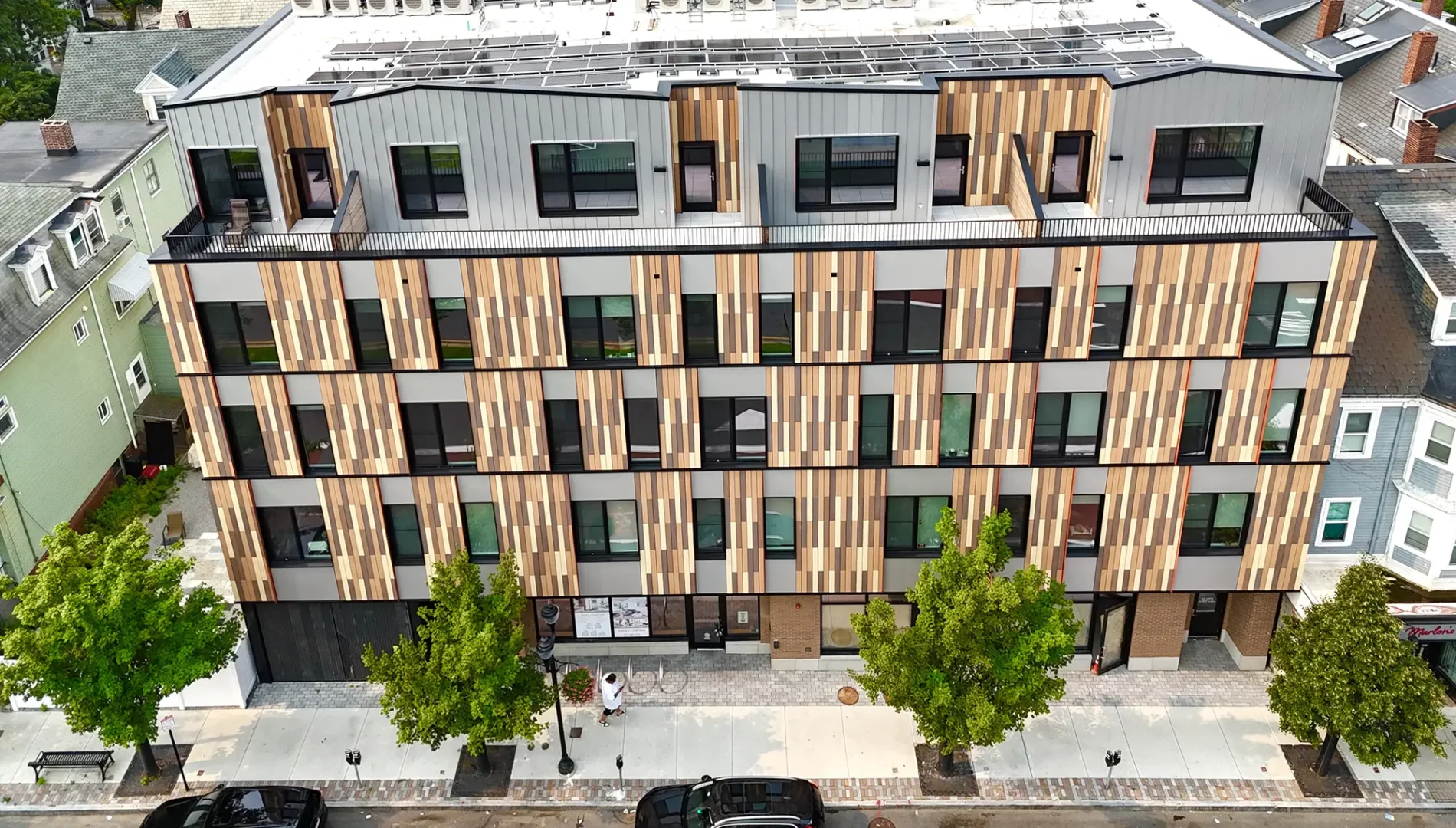
Another project that stands out to Patrick is 11 East Lenox, a mixed-use multi-family development and the first and only Mass Timber Passive House residential building in New England. The project, which received full Passive House accreditation, was built on the innovation and sustainability that Haycon has become known for. It features energy-efficient technology such as PV arrays, a VRF system, energy recovery ventilation and high-performance windows, all of which reduce the overall carbon footprint. Haycon’s scope included a Life Cycle Analysis (LCA) which compared the environmental impacts of the as-built Mass Timber building to an equivalent steel building, taking into account embodied carbon and highlighting the benefits of mass timber as a construction material. 1005 Broadway, a 38-unit affordable housing development in Chelsea featuring an all-electric HVAC system and rooftop solar panels, has also received full Passive house accreditation.
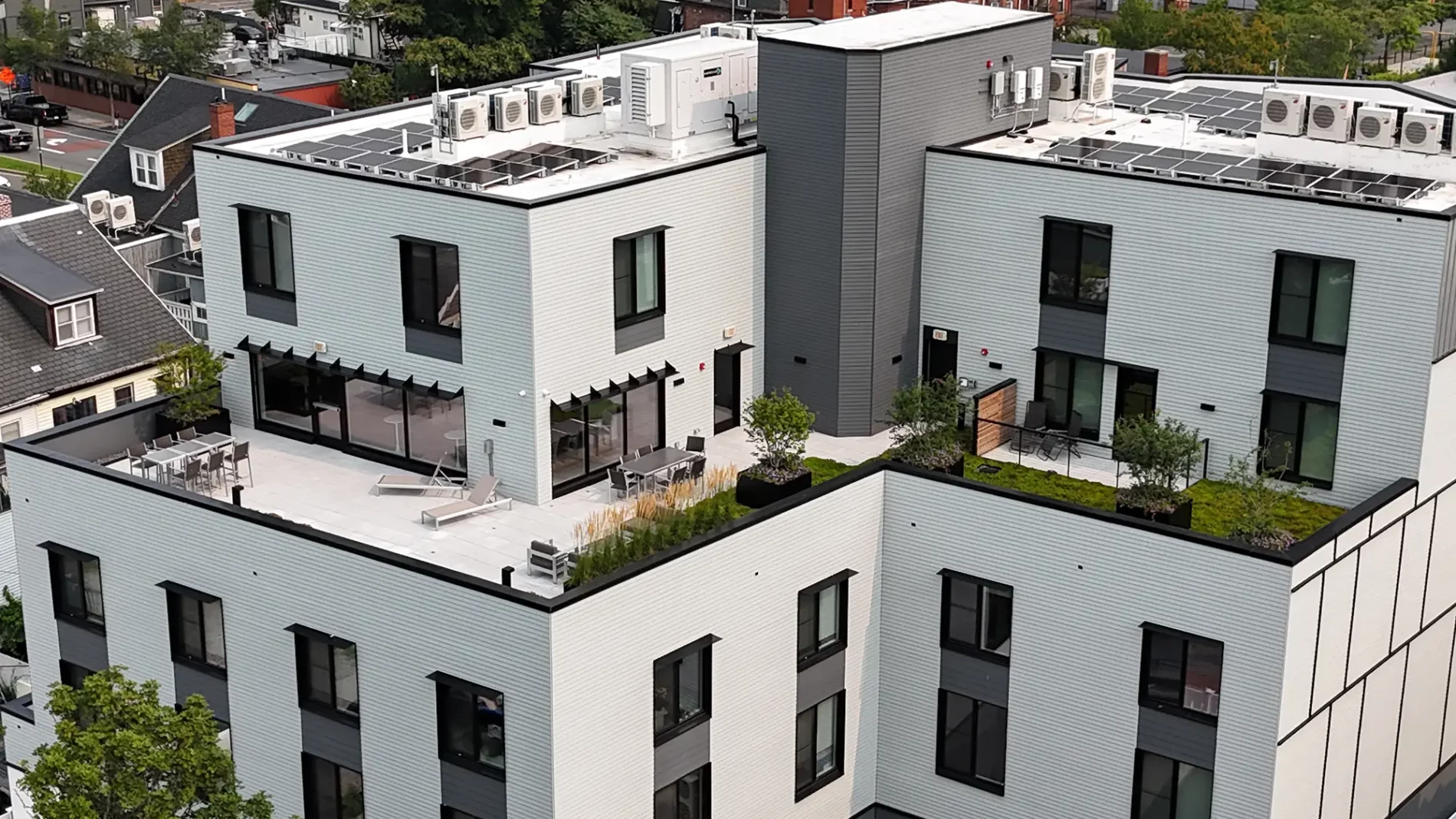
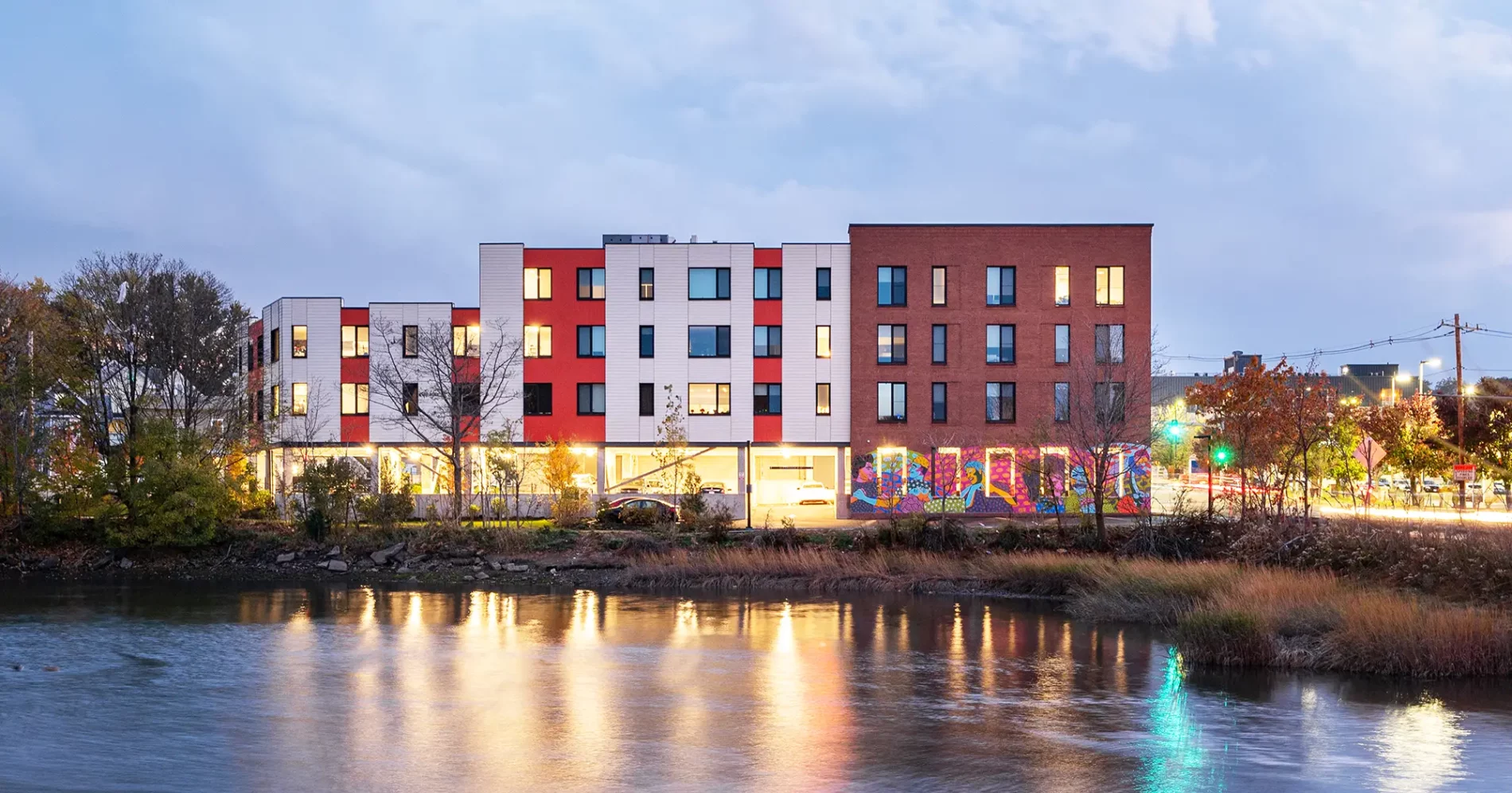
A project that aptly represents the forward-thinking mindset of Haycon and it’s collaborators is Jamaica Plain’s Brookley Flats at 10 Stonely. The development was built to Passive House Standards with sustainability embedded into every aspect, from the structural execution to the modern finishes. The coordination of air-sealing, insulation, and high-efficiency systems demanded an attention to detail that only an experienced company like Haycon could master, and this detail is evident in the finished project – a forward-thinking housing development with unmatched energy performance, and a model for affordable and sustainable housing in Boston.
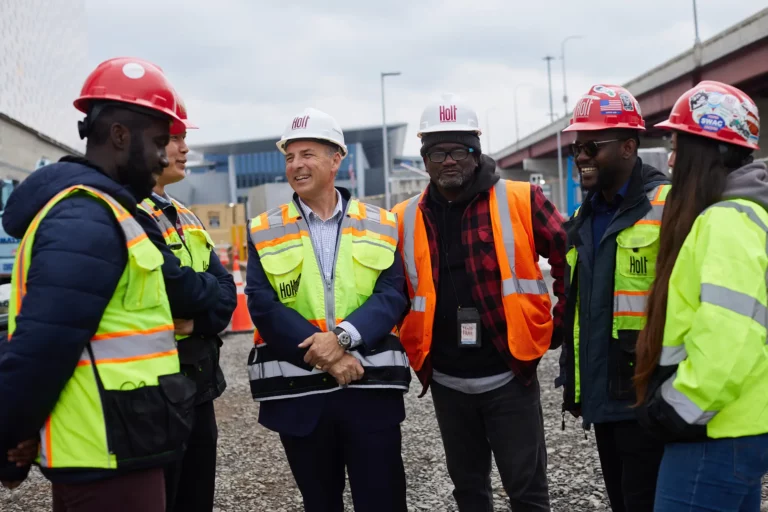
Today, Haycon finds itself in a position where it has both the skill and the demand to scale up, but at the same time enjoys the close-knit culture it has fostered over the years. “We have a family style culture here where everybody works together and gets things done,” Patrick says. “There’s good collaboration, and it’s not very corporate. We’re only 30 people and that’s eight to ten Project Management, several people in the office, and a number of people out in the field, so we’re not a huge company but an extremely efficient one. I would like to maintain the size of our company and do the six or eight projects that we’re currently doing, but at some stage you have to make the transition to be more corporate, because you have an evolving staff, dollar volume and a significant workload. We’d like to stay where we are at roughly, but it’s hard because you get opportunities and you get lost opportunities, and timing is very difficult with construction because it’s really all about when. That’s the big question that we’re always tracking.”
Patrick looks at construction companies as a tool chest of different resources, each contributing to how the company carries itself in the industry. “The way I’ve looked at construction is, what’s your tool chest?” he says. “How can you tool yourself as a construction company to be able to execute development and construction projects most effectively.” Just some of the tools in Haycon’s chest are a central nearby facility and construction yard, internal virtual design coordination, state-of-the-art AI and Project Management software, and a staff of Certified Passive House Builders. “We have a yard in Boston where we can stage stuff, we can do our own excavation, and sometimes we can do our own building enclosures. So we’re nimble in that regard.”
Haycon has a solid team, valuable resources, and the industry know-how to deliver a streamlined experience for its clients. It’s location in Roxbury is in close proximity to its coverage area, offering further convenience and agility when it comes to serving sites more efficiently. Taking a wider look at the Boston construction scene and the outlook for the future, Patrick says that “the Affordable Housing market is starting to become saturated on the development and the construction side, because the market rate development is very hard to make financeable. Hopefully all that corrects itself in the near future, and there’s a balance of affordable and market rate housing getting built. We seem to have a great brand in the Affordable Housing world, and are doing good by our plans, so hopefully we stay strong.” With an established name in the Affordable Housing market, a tool chest of valuable resources, and a push for a more sustainable built environment through Passive House and Deep Energy Retrofits, Haycon are on the path towards continued success in the Boston construction industry.