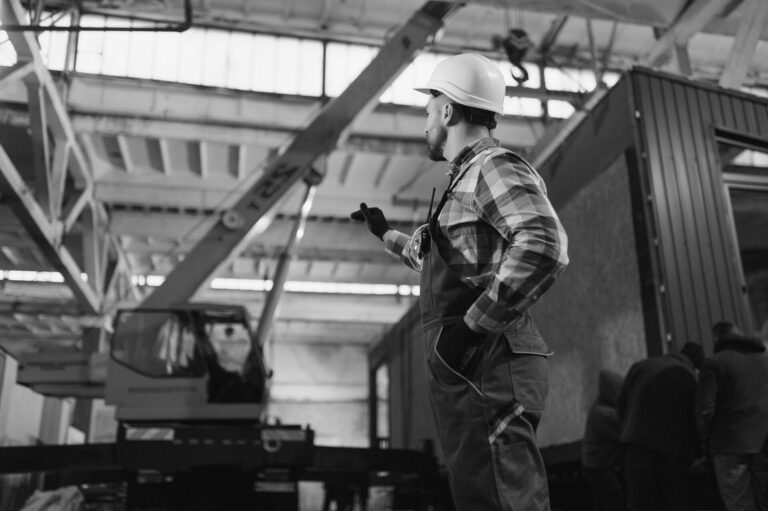









In construction, momentum is measured not just in cranes on skylines or backlogs on balance sheets, but in people. Skilled tradespeople, project managers, estimators, engineers, and apprentices are the force behind every milestone. Yet across North America, the industry faces a persistent and structural workforce shortage that has become one of the defining challenges of this decade.

The numbers are clear and consistent across major industry bodies. The Associated Builders and Contractors estimates that the industry must attract an additional 439,000 workers in 2025 on top of normal hiring needs simply to meet demand. Anirban Basu, ABC’s Chief Economist, stated plainly: “The construction industry will need to attract an estimated 439,000 net new workers in 2025 on top of normal hiring to meet demand.” He added, “If it fails to do so, industrywide labor cost escalation will accelerate, exacerbating already high construction costs.”
Similarly, the Associated General Contractors of America reports that workforce shortages are now the leading cause of project delays. Ken Simonson, AGC’s Chief Economist, said, “Construction workforce shortages are not just a problem for the construction industry. Construction projects of all types are being delayed because there aren’t enough qualified workers available for firms to hire.” AGC data shows that 92 percent of firms are having difficulty filling positions.
This is not a short-term hiring blip, however. It is structural. Harvard’s Joint Center for Housing Studies has documented that the U.S. construction workforce remains roughly one million workers below its mid-2000s peak, even as construction demand rebounds. The shortfall is compounded by demographics. A significant portion of skilled tradespeople are approaching retirement age, while younger generations have not entered the trades at comparable rates.
Brian Turmail, Vice President of Public Affairs and Workforce at AGC, has emphasized the urgency of reshaping perception and pipeline simultaneously. “If we are going to rebuild America’s infrastructure and housing stock, we need to rebuild the construction workforce at the same time,” he has said in industry briefings. The issue is not just volume, but readiness. AGC surveys show that more than half of contractors report that available candidates lack necessary skills or certifications. Michael Bellaman, President and CEO of ABC, has warned that failing to address workforce development comprehensively will have broader economic implications. “Not addressing the shortage through an all-of-the-above approach to workforce development will slow improvements to our shared built environment, worker productivity, living standards, and the places where we heal, learn, play, work and gather.”
Those comments capture a key shift: workforce development is no longer a human resources function. It is a core business strategy, and leading contractors are responding in multiple ways. First, apprenticeship programs are being expanded and modernized. Registered apprenticeship remains one of the strongest pipelines into skilled construction careers. According to U.S. Department of Labor data, apprenticeship enrollment in construction trades has grown steadily in recent years, supported by both union and open-shop programs. Sean McGarvey, President of North America’s Building Trades Unions, has repeatedly emphasized the power of structured training. “Our apprenticeship programs are the gold standard for workforce development,” he said during a recent industry address. “They provide workers with earn-while-you-learn opportunities that lead to family-sustaining careers.”
Second, the industry is reframing what construction work actually looks like. Modern jobsites are increasingly digital. Building Information Modeling, reality capture, drone surveys, robotics, and advanced prefabrication have transformed how work is executed.
Jensen Huang, CEO of Nvidia, speaking at the World Economic Forum in Davos, highlighted that even in an AI-driven era, skilled trade labor remains essential. “It’s wonderful that the jobs are related to tradecraft,” he said, referring to the surge in data center construction. “You need electricians, plumbers, steelworkers — these are foundational skills.” His remarks underscore a broader truth: automation is not replacing construction labor. It is increasing demand for technically capable tradespeople who can build complex, technology-intensive facilities.
Data centers are a prime example. As cloud computing and artificial intelligence accelerate, contractors are racing to deliver facilities that demand precision electrical installation, complex cooling systems, and rapid delivery schedules. According to industry reporting, wages in this segment have climbed significantly due to high demand. One contractor quoted in national business coverage described the market as a “gold rush for construction workers,” reflecting both opportunity and strain. Yet higher wages alone will not solve the shortage. Cultural perception remains a barrier. For decades, construction was undervalued in high school career counseling compared to four-year university paths. Industry leaders are actively working to change that narrative.

Mike Rowe, longtime skilled trades advocate and founder of the mikeroweWORKS Foundation, has frequently stated, “We’ve elevated the importance of a four-year degree to the point where we’ve made other forms of education look like consolation prizes.” While not a construction executive per se, Rowe’s commentary reflects a sentiment echoed by many contractor CEOs: skilled trades must be presented as first-choice careers, not fallback options.
Major firms are now partnering with high schools, community colleges, and technical institutes to introduce students to trades earlier. Site tours, internship programs, scholarship funds, and pre-apprenticeship tracks are expanding. Retention is equally critical. Turnover remains costly. Contractors are increasingly investing in mentorship, leadership development, and internal career pathways that move craft workers into supervisory and management roles.
Bill Haslam, former Tennessee governor and co-chair of workforce initiatives focused on skilled trades, once observed that “If you can show people a path to advancement, they’ll commit to the journey.” That philosophy is gaining traction inside construction firms that recognize that career visibility drives loyalty. Technology is also being leveraged to increase productivity and reduce pressure on limited crews. Prefabrication and modularization allow certain work to be shifted offsite into controlled environments, improving efficiency and reducing field labor intensity. Robotics for repetitive tasks, such as layout or rebar tying, are being piloted across major projects. But as Basu cautioned, technology is a supplement, not a substitute. “Even with productivity gains, the industry will still require hundreds of thousands of additional workers,” he has said in economic outlook briefings.
For April, a month when hiring accelerates ahead of peak construction season, these themes feel particularly urgent. Backlogs are forming. Infrastructure funding continues to move through pipelines. Airport expansions, healthcare projects, residential conversions, and manufacturing facilities are breaking ground. Yet none of it advances without skilled hands. The firms that will lead the next decade are those that treat workforce strategy as a pillar equal to finance, safety, and delivery. That means investing in apprenticeships. Embracing technology without abandoning craft. Building inclusive pipelines that widen the talent pool. Offering wages and culture that compete with other industries. And most importantly, demonstrating that construction is not just work, but a long-term profession with dignity, advancement, and impact.
The workforce shortage is real. The pressure is measurable. But so too is the opportunity. Construction has always been an industry defined by what it builds. In 2026 and beyond, it will increasingly be defined by how well it builds its people.