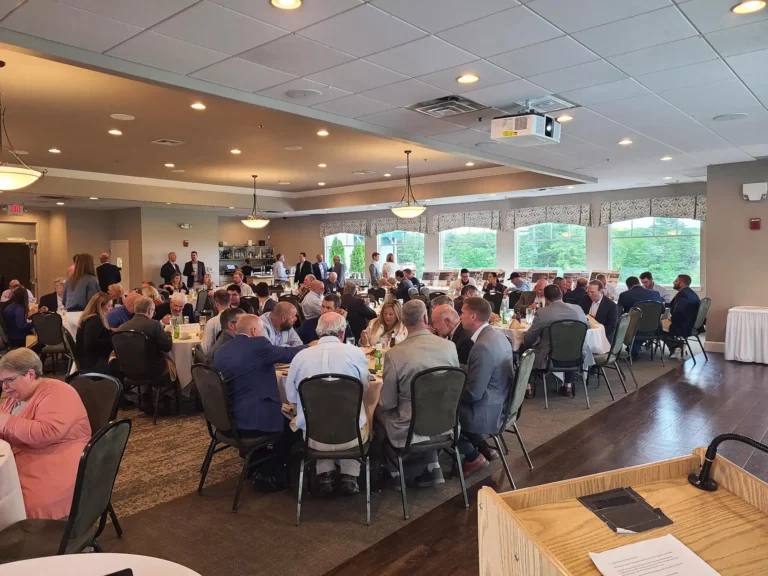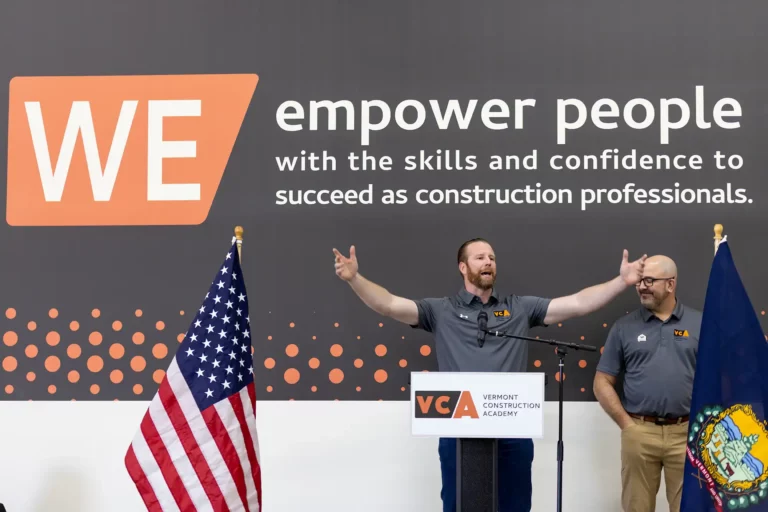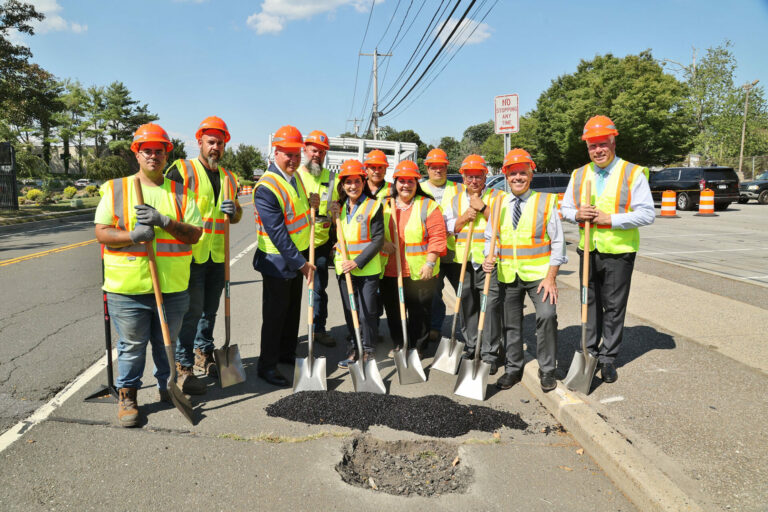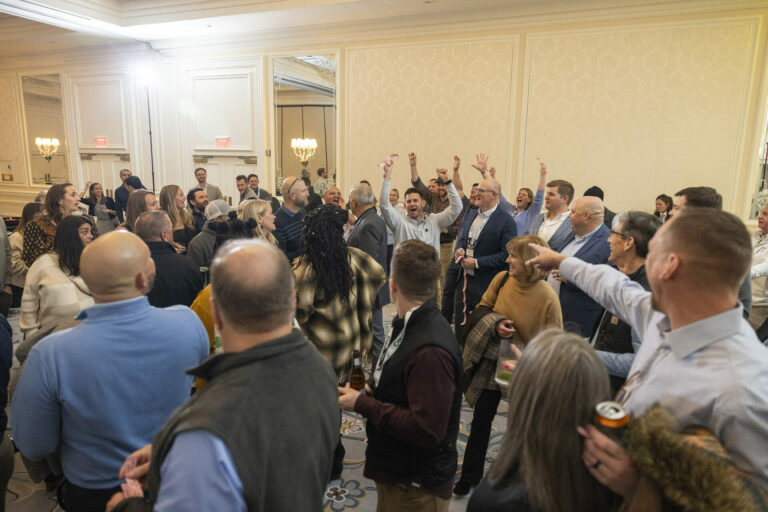







In the world of New York construction, an industry defined by its intensity, competition, and constant change, the Building Contractors Association (BCA) stands out as both a stabilizing force and an advocate for progress. Founded in 1933, the organization represents more than 200 unionized contractors across the five boroughs, and Long Island. For over ninety years, it has helped shape how the city builds, negotiating labor agreements, supporting workforce development, and promoting the safety and dignity of the people behind every project.


Today, under the leadership of Managing Director John O’Hare, the BCA continues to strengthen its mission: “to serve as the collective voice of union contractors with the building trades and ensure that their interests are represented fairly and effectively,” as O’Hare puts it. That mission remains critical in a market that is increasingly divided between union and non-union labor.
The BCA’s foundation rests on a simple but powerful idea; cooperation. It was formed during the Great Depression to “bring order to an industry that was chaotic,” O’Hare explains. “It was an adversarial time between management and labor, and the association was created to negotiate fair and equitable agreements that would stabilize the market.”
More than ninety years later, that balance between advocacy and partnership remains at the heart of what the BCA does. The association holds 18 collective bargaining agreements with various construction unions, from laborers and carpenters to ironworkers and engineers, covering the majority of trades on a job site. It is also the largest contractor association in New York with the authority to negotiate directly on behalf of its members.
“We’re a management association that represents contractors in all areas of collective bargaining,” O’Hare explains. “We negotiate contracts, administer them, and ensure that the rules are followed. We also provide our members with guidance on compliance, safety, and best practices.”
That structure, he says, provides stability in an unpredictable market. “The BCA gives contractors a seat at the table. It allows us to manage relationships with organized labor in a professional way, rather than leaving each company to fend for itself.”
While the BCA’s mission has stayed constant, the landscape around it has changed dramatically. The most significant shift, O’Hare says, has been the rise of non-union construction.
“Historically, New York City was about 90 percent union,” he says. “Now we’re close to 50/50.” The challenge, he adds, isn’t just competition—it’s maintaining standards. “Non-union companies are getting more sophisticated. They’re hiring our trained people and offering them bonuses. That’s changing the quality of the work and narrowing the gap.”
“Non-union companies are getting more sophisticated. They’re hiring our trained people and offering them bonuses. That’s changing the quality of the work and narrowing the gap.”
Still, O’Hare remains confident that the BCA’s members stand apart because of their skill, safety, and professionalism. “Union contractors are the gold standard,” he says. “We train our people for four years. They go through certified apprenticeship programs that teach safety, quality, and productivity. That’s what differentiates us.”
Even so, high insurance premiums, driven in part by New York’s unique Scaffold Law, which imposes absolute liability on contractors, continue to challenge competitiveness. “Insurance costs are now 9 to 11 percent of a project,” O’Hare notes. “No other state in the country operates this way.” The BCA has long advocated for reform, arguing that shared responsibility would lower costs while maintaining safety.
If the BCA is the voice of New York’s union contractors, its heart lies in its people. Through apprenticeship programs, mentorship, and community outreach, the association helps build pathways into the trades for those who might not otherwise have access.
“The average age of a tradesperson today is over 40,” O’Hare says. “We have to bring younger people into the industry, and we’re doing that by promoting programs like Helmets to Hardhats, Pathways to Apprenticeship, and Construction Skills.”
Each of these initiatives opens doors: veterans transition into civilian careers, formerly incarcerated individuals find new purpose, and high-school graduates gain a skilled trade instead of college debt. “We’re changing lives,” O’Hare says. “We’re showing people that construction isn’t just a job—it’s a career with real benefits, pensions, and healthcare.”
O’Hare also serves as trustee on several of the city’s largest joint labor–management funds, including pension, welfare, annuity, and training programs representing a combined value of more than $14 billion. These funds, he explains, are what make union construction sustainable. “We’re providing retirement security to people who have given their lives to this industry.”
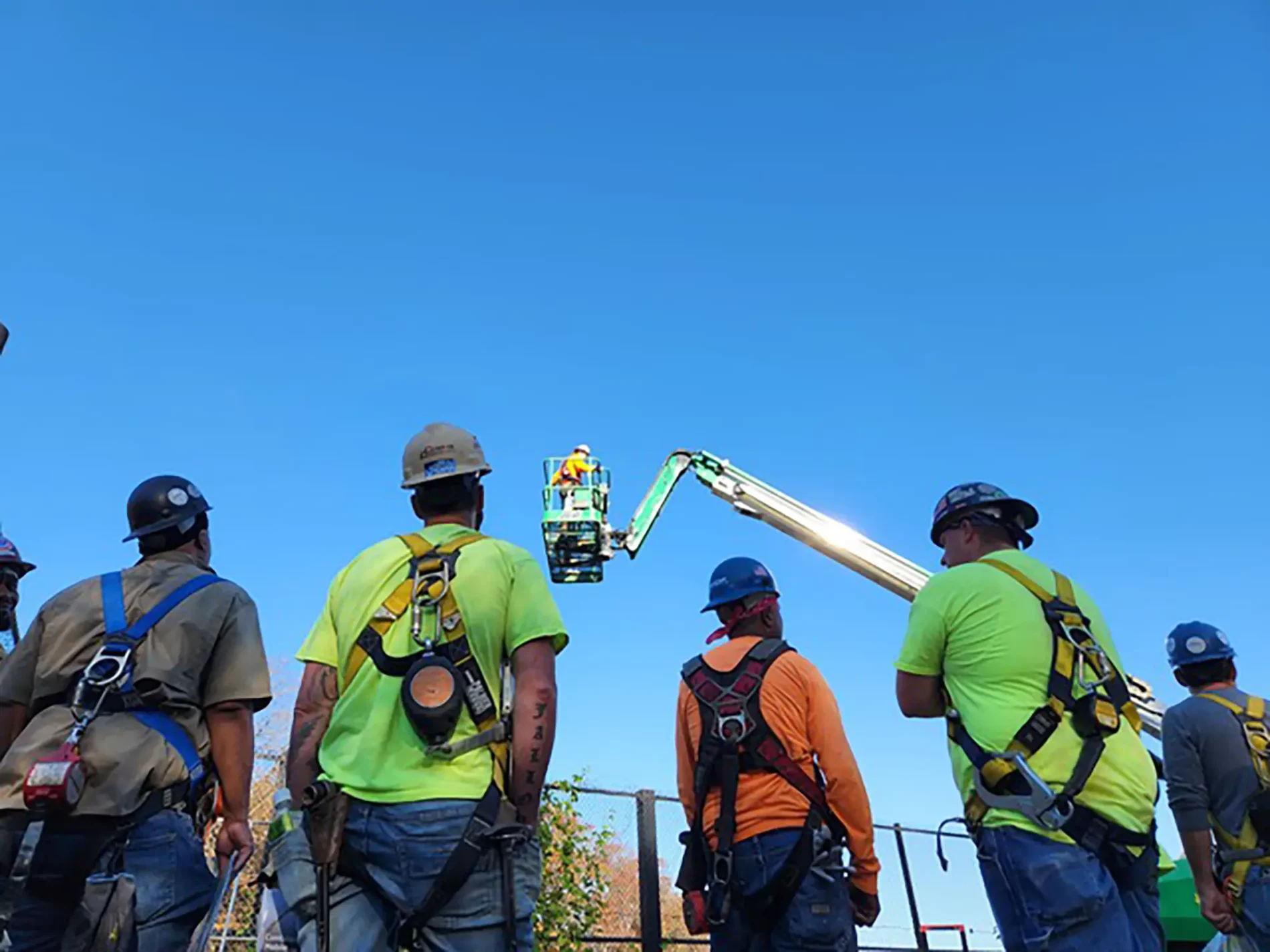
One of the BCA’s most impactful programs is also its most personal. In 2017, following a series of tragic on-site accidents the association launched—in partnership with the BCTC—the Building and Construction Industry Safety Fund, which initially offered a small death benefit to the families of workers who died on the job. But over time, that initiative evolved into something deeper—Hope Lives, a program dedicated to mental health, addiction awareness, and overdose prevention in the construction industry.
“The first year we gave out five thousand dollars to a family that lost a loved one,” O’Hare recalls. “This fund has now grown to over a million dollars in assets. This means that we are able to provide twenty thousand dollars to each family.” The organization conducts Narcan training sessions at job sites during lunch breaks and distributes free Narcan kits to both union and management employees.
“It’s been eye-opening,” O’Hare says. “We’re dealing with opioid addiction, alcohol abuse, suicide and depression—things that people don’t like to talk about. But construction is a tough business. These workers get hurt, they’re in pain, and sometimes that pain leads to dependency.”
Every dollar raised for the safety fund comes from an annual golf outing, which has become one of the most successful fundraising events in the New York construction calendar. “The BCA underwrites the entire cost for the outing,” O’Hare emphasizes. “Everything goes straight to the fund.”
The program has drawn attention from the City Council, which is now considering legislation to make Narcan a required safety tool on construction sites. “It should be like a fire extinguisher,” O’Hare says. “You hope you never have to use it—but if you need it, it’s there.”
The BCA’s commitment to community doesn’t stop there. Roughly a quarter of its annual budget goes toward charitable giving, including scholarships, disaster relief, and veterans’ organizations. Its scholarship fund supports 20 students each year for four years, providing 80 active scholarships at any given time.
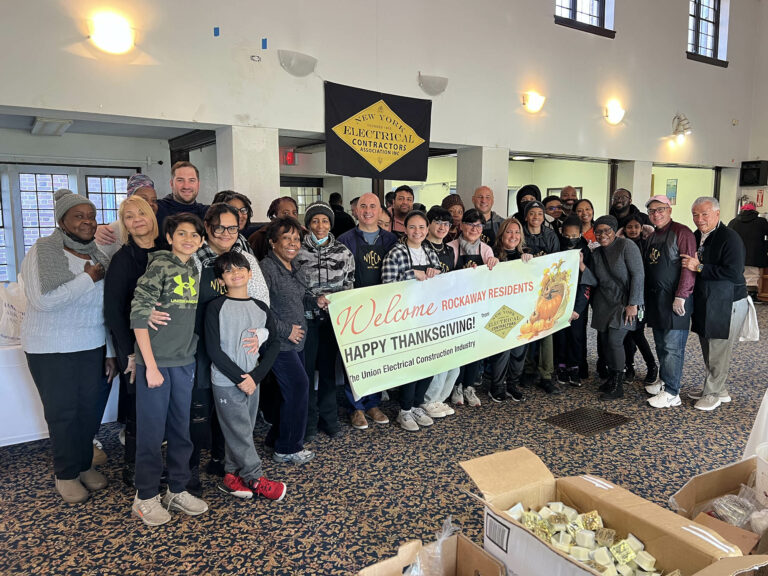
Through its long-standing partnership with Heart 9/11, a union-led disaster response organization, BCA members have helped rebuild communities affected by hurricanes, wildfires, and other emergencies. O’Hare himself was recently honored by the group, with more than $1 million raised at the event. “It’s one of the most meaningful recognitions I’ve received,” he says. “It shows what this industry is really about—people helping people.”
Despite economic headwinds, O’Hare is optimistic about the future of construction in New York. The BCA’s members are busier than ever, with significant opportunities emerging from infrastructure investments, housing initiatives, and private-sector projects.
Among the most promising trends are commercial-to-residential conversions, a growing need for affordable housing, and the expansion of renewable energy and public works.
Yet O’Hare stresses that growth must be matched with responsibility. “We have to make sure we’re training the next generation, maintaining safety, and protecting our workers,” he says. “That’s what the BCA stands for.”
For O’Hare, who has been with the association since 1998 and Managing Director since 2017, those values are personal. “What makes us unique is that we’re not an adversarial organization,” he says. “We’re management and labor working together to make this industry better. We have our differences, and we settle those at the collective bargaining table, or through ongoing meetings. It is a relationship based on mutual respect, trust and a shared interest in getting the job done.”
After more than 90 years, the Building Contractors Association remains what it was always meant to be: a bridge between contractors and unions, business and government, profit and purpose. “Our job,” O’Hare says, “is to make sure the people who build New York are treated with respect. That’s what keeps this city standing.”