







In New York City, construction at scale has always depended on more than technical execution. It requires alignment between contractors, labor, public officials, and the communities that ultimately live with the results. Few figures embody that reality more clearly than Allan Paull, Executive Vice President at AECOM Tishman and President of the Building Contractors Association, whose career reflects a long-standing commitment to collaboration as the engine behind the city’s most ambitious projects.
The Building Contractors Association exists, as Paull explains, “as the unified voice of unionized construction contractors,” with a mandate rooted in facilitating major construction projects across the New York region through “long-term, stable and equitable relationships with our union workforce.” That model, he notes, has allowed contractors and labor leaders to work together to reshape the city itself. “The members of our organization, in concert with the experienced leaders of unionized labor, have been able to reshape and reimagine New York City’s skyline, creating some of the world’s most iconic structures that have generated billions of dollars in economic activity for the Empire State.”
Paull’s involvement with the BCA grew from that belief in partnership. “Working closely with union labor is critical to the success of any major construction project in New York,” he said, describing his decision to join the organization’s Board of Directors as a way to play a more active role alongside labor leadership. He stepped into the role following the retirement of George Chironis, a longtime AECOM Tishman employee, and quickly became part of an effort to modernize how contractors and unions work together. “Since joining the BCA, our leaders have been able to modernize the construction process by removing inefficiencies in our collective bargaining agreements with labor,” Paull said. “By working productively with labor leaders in recent years, we have strengthened the relationship between contractors and labor, collaborating on major projects that have not only created thousands of new jobs but improved the quality of life for millions of New Yorkers.”
That collaborative framework mirrors the culture of AECOM Tishman itself. With more than 125 years of history in New York City, the firm’s identity is tied to the evolution of the city’s built environment. “For more than 125 years, AECOM Tishman has served as the leading builder in New York City, transforming neighborhoods into dynamic, vibrant communities that have made the Big Apple a better place to live, work and build,” Paull said. He pointed to landmark undertakings such as the redevelopment of the World Trade Center and the rise of Hudson Yards as examples of the firm’s role in setting standards for large-scale construction management execution. His own tenure at the company spans more than four decades. “I am proud to have worked here at AECOM Tishman for more than 45 years,” he said.
Paull’s election as President of the BCA has strengthened the link between firm-level experience and industry-wide leadership. As head of the largest organization representing building contractors in the region, he sees the role as an opportunity to share knowledge and align priorities. “As President, I have been able to bring our company’s experience and expertise to the organization and share ideas with other member firms as we work collaboratively with unionized labor to lead the region’s largest, most challenging and most successful projects,” he said. “It has been an honor to serve as BCA President and be able to partner with fellow industry leaders to support New York’s economy of today – and tomorrow.”
“It has been an honor to serve as BCA President and be able to partner with fellow industry leaders to support New York’s economy of today – and tomorrow.”
Beyond individual companies, Paull views organizations like the BCA as essential to the health of the construction sector. The association represents construction managers, general contractors, and subcontractors, advocating for member firms to ensure what he describes as “a fair, equitable and successful construction process.” Its influence extends deeply into the city’s labor framework. “As the unified voice of the industry, the BCA has served as signatory to 19 Union Collective Bargaining Agreement (CBA) out of approximately 34 CBAs in New York City,” Paull noted.
The association’s role is not limited to bargaining. Throughout the year, it engages with elected officials at both city and state levels on legislation affecting contractors, while also hosting safety committee meetings with regulatory agencies to address emerging risks and trends. Paull highlighted the organization’s partnership with the Building Construction Trades Council and the NYC Building and Construction Safety Fund, which supports families of workers injured or lost in construction incidents. “As a part of this effort, the BCA fully sponsors an annual golf outing which raises more than $200,000 for the impacted workers and their families,” he said.
Market conditions, Paull believes, present a mix of resilience and challenge. “The future of non-residential construction in the New York City region looks solid,” he said, pointing to several high-profile developments preparing to break ground, including three new casinos expected to spur economic growth and job creation. Residential construction, however, remains more complex. “Residential construction remains a challenging process due to ongoing material cost increases, insurance requirements and other government mandates that make it difficult to build new housing,” Paull said. Despite those headwinds, he emphasized that member firms remain committed to working with labor and government partners “to find new solutions that can help the industry build more quality, affordable housing.”

AECOM Tishman’s recent project portfolio illustrates both the scale and complexity of work shaping the city today. Among the firm’s notable accomplishments is Waterline Square, a three-tower luxury residential development along the Hudson River. Serving as construction manager for the project, AECOM Tishman delivered a development comprising One Waterline, a 37-story, 573,000-square-foot tower designed by Richard Meier & Partners Architects with 272 units; Two Waterline, a 1,128,000-square-foot structure designed by KPF featuring 646 apartments; and Three Waterline, a 34-story, 330,000-square-foot tower designed by Rafael Viñoly with 244 apartments. All three share access to the 100,000-square-foot underground Waterline Club, a central amenities hub.
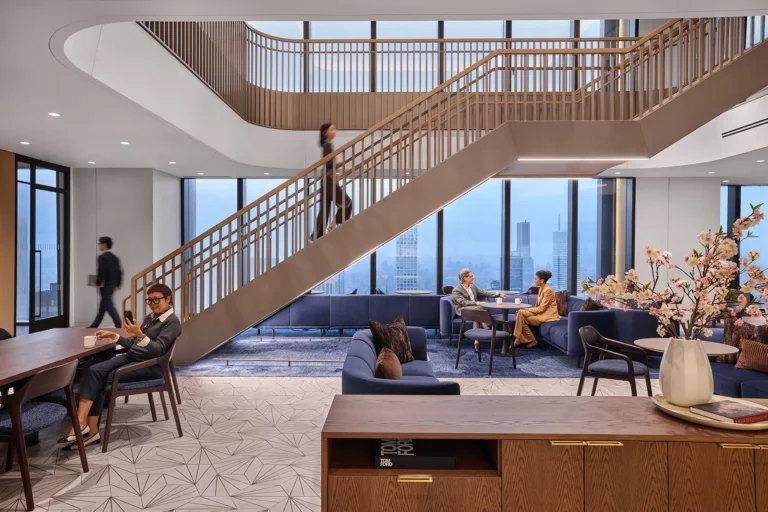
The firm also recently completed construction management services for JPMorganChase’s new headquarters at 270 Park Avenue. Designed by Foster + Partners, the 1,388-foot, 60-story all-electric tower opened in October and accommodates 10,000 employees across 2.5 million square feet. Paull highlighted its broader urban contribution, noting that the project includes “2.5 times more outdoor space than the previous building,” with public plazas, green spaces, and widened sidewalks designed to enhance Midtown’s public realm. As New York City’s largest all-electric tower, the building operates at net zero emissions and sets new benchmarks for indoor air quality, sustainability, and wellness.
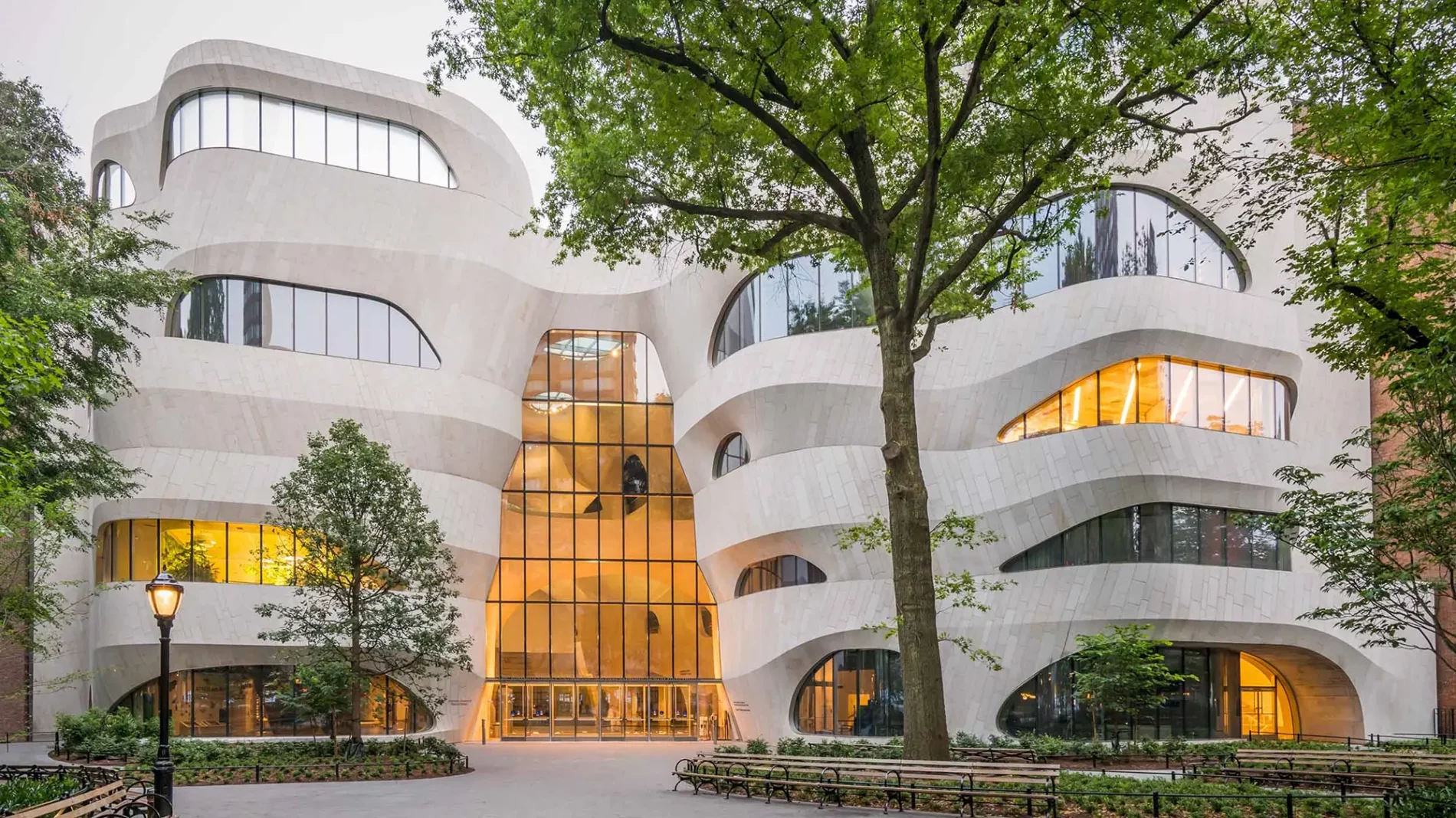
Another recent milestone was the American Museum of Natural History’s Gilder Center for Science, Education, and Innovation. Serving as construction manager, AECOM Tishman delivered the LEED Gold expansion designed by Studio Gang, encompassing education and exhibition spaces, research facilities, and immersive visitor experiences. Paull described the scope as transformative, ranging from the Insectarium and Butterfly Vivarium to the Collections Core and the Invisible Worlds Immersive Experience, alongside laboratories, a research library, and a new restaurant.
Looking toward 2026, Paull sees opportunity tempered by the need for compromise. “There are tremendous opportunities for growth in the affordable housing market,” he said, adding that success will depend on collaboration among government, developers, contractors, advocates, and the workforce to make projects economically viable.
Workforce development remains central to that future. Paull underscored the importance of union apprenticeship programs, which he described as producing “well-trained workers for careers in the construction industry.” With union support, contractors gain access to a workforce capable of delivering complex projects safely and efficiently. “A trained workforce not only enhances construction site safety, but it can reduce insurance costs and accelerate project timelines,” he said.
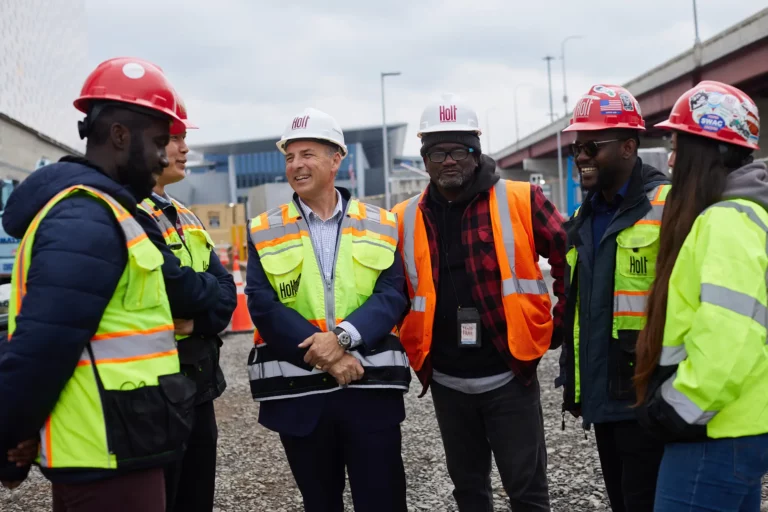
Training facilities and apprenticeship programs, particularly those based in New York, are essential to sustaining the industry. Paull was direct on this point. “Apprentice training programs and facilities are essential to ensuring the construction industry has a trained workforce for the future,” he said. He also highlighted outreach programs operated by the Building Construction Trades Council that attract high school students, veterans, formerly incarcerated individuals, and women into construction careers. “These programs are highly successful and have changed the trajectory of people’s lives for the better,” Paull said. “The BCA fully supports these programs.”
For Paull, the through-line across leadership, projects, and workforce development is clear. Construction at its best is a collective effort, built on trust, training, and long-term relationships. Through his dual roles at AECOM Tishman and the Building Contractors Association, he continues to advocate for an industry that delivers not only landmark buildings, but enduring economic and social value for New York City and the people who build it.