








On most weekdays, New Yorkers do not think about capital plans. They think about whether the train shows up, whether the platform feels safe, whether the elevator works when they are hauling a stroller or a toolbox, and whether the signal system is going to turn a twenty-minute ride into an hour. But capital plans are the reason those everyday details get better or don’t. And in 2025, New York committed to the biggest bet it has made on transit infrastructure in a generation: the Metropolitan Transportation Authority’s fully funded $68.4 billion 2025–2029 Capital Plan.
The plan is broad, but its logic is blunt. After years of running one of the most heavily used transit systems on earth with assets that are aging out, the MTA says the work must be focused on state of good repair. When the plan was released, MTA Chair and CEO Janno Lieber described it as the product of “the most comprehensive analysis the MTA has ever undertaken” to understand what the system needs. He added that “more than 90% of this proposed plan” is aimed at bringing the network back to a state of good repair, and he framed the work in generational terms: “These investments are necessary to serve the following generations and the future of the region’s economy, environment, and social and economic equity.”
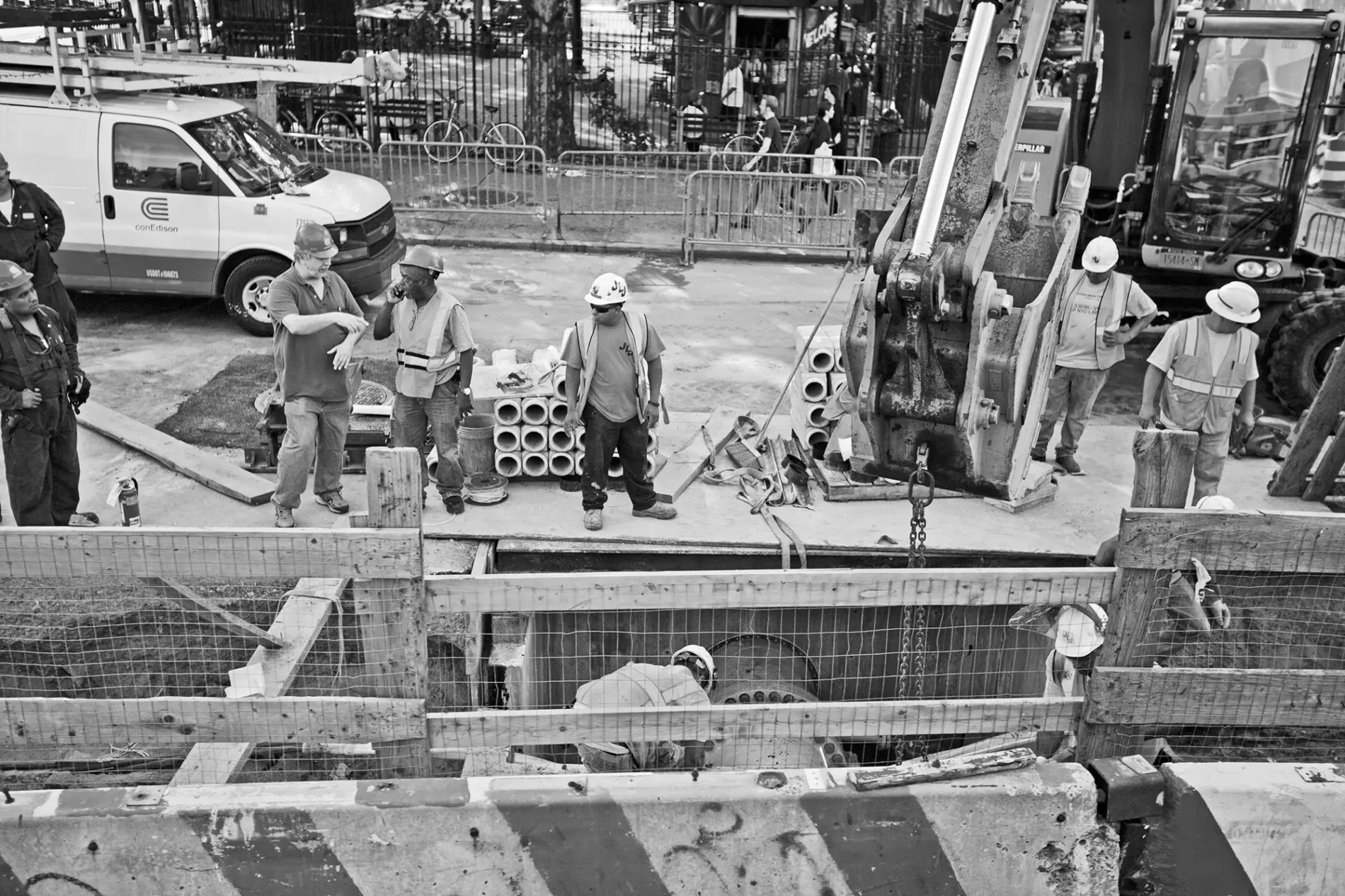
That is the strategy. The execution, however, will be its true test. Because in New York, “capital” does not mean a single jobsite. It means hundreds of simultaneous work zones: track beds and power substations, stations and elevators, signal rooms and yards, bus depots and rolling stock orders. It also means union-heavy labor by design, which is central to both the politics and the practicality of rebuilding a system that never truly shuts down.
When the MTA and the Partnership for New York City released an independent economic impact analysis in early 2025, it did more than make the case that transit spending supports riders. It argued that capital spending is a jobs engine, a statewide procurement machine, and a durable pipeline of middle-class careers. Lieber called the plan “a smart play for all New Yorkers,” saying it would “support more than 70,000 jobs and generate billions of dollars in economic activity in every corner of the State.”
For organized labor, the point is not abstract. Gary LaBarbera, President of the Building and Construction Trades Council of Greater New York, put it in bread-and-butter terms: “Funding mass transit initiatives not only improves our infrastructure but also grows our economy and bolsters our middle class,” he said. “This study affirms that the Capital Plan proposed by the MTA does just that through the creation of thousands of good paying union careers that will help hardworking people all around the state support their families and communities. Investing in our transportation system means investing in the futures of all New Yorkers.”
The word that keeps surfacing in the MTA’s case for this plan is not glamour. It is repair. Trains have life cycles. Signals do too. Stations that look timeless often conceal systems that are anything but. The plan’s priorities, as the MTA laid them out, include large rolling stock orders, accessibility expansion, modern fare gates, power and signal work, and climate resilience. It is not hard to understand why, if you have watched the ripple effects of a single failure during rush hour.
But New York’s capital conversation always circles back to one question: can the work be delivered at a cost the public can accept? The MTA has tried to meet that question head-on by elevating Construction & Development as a delivery engine. When the plan was released, MTA Construction & Development President Jamie Torres-Springer pointed to reforms already underway, saying: “The new MTA’s approach to capital construction is allowing us to deliver projects better, faster, and cheaper.” He added that from planning through construction, the agency intended to “keep innovating and driving costs down.”
“The new MTA’s approach to capital construction is allowing us to deliver projects better, faster, and cheaper.”
That promise is an importane one. The scale of work is enormous, and because New York’s history with megaproject cost escalation is well known. Cost control is not only a taxpayer concern. It is also a union concern. High-quality union labor thrives when there is steady work, predictable pipelines, and owners who are confident that capital investments will not become political liabilities.
This is where the plan becomes more than a spreadsheet. It becomes an operating philosophy. The MTA is essentially arguing that the best way to control costs is not to underinvest, defer, and then pay more later. It is to rebuild methodically, to standardize where possible, and to keep the system from falling into a reactive maintenance cycle that burns money and burns public trust.
The other major force shaping the plan is funding structure, and the politics attached to it. In early 2025, the plan still had a substantial funding gap, and watchdogs pointed out that the MTA had identified only about half the funding for the $68.4 billion program. What changed was Albany’s final decision to fully fund it in the FY26 Enacted Budget, and the reappearance of a stable capital narrative: transit as a core service, not a discretionary line item.

When the MTA Board approved the resubmission of the plan in May 2025, MTA Chief Financial Officer Kevin Willens made that case in plain language: “Funding transit, whether operating or capital should be treated like a core government service like water, sanitation and healthcare. It is an investment in infrastructure that is critical to the economy of the city and the state.”
Governor Kathy Hochul’s administration framed the funding decision as a historic turning point. In a January 2026 announcement marking $15.8 billion in MTA capital commitments in 2025, Hochul said: “New York is investing in transit like never before, with record levels of investment being made to upgrade our existing system and to bring better transit to more communities.” She tied that record year of awards to rider experience and long-term system health: “The historic year for capital investments at the MTA… will improve the commutes of millions of New Yorkers and will ensure that this lifeblood of the entire region is able to deliver for riders for years to come.”
Lieber, in the same announcement, focused on the tangible outputs riders can recognize. “New Yorkers want to know where congestion relief revenues are going,” he said. “The answer is right back into the transit system with new train cars, modern signals and more ADA elevators. Thank you, Governor Hochul!”
This is one of the plan’s defining features. It is easy, in infrastructure, to talk in billions and forget the unit costs of daily life. The MTA is now trying to narrate capital work in visible improvements: elevators that work, signals that reduce delays, cars that break down less, stations that feel safer and less chaotic. In other words, the plan is attempting to re-earn legitimacy project by project, not slogan by slogan.
For union contractors and trades, the scale of the plan also signals something else: continuity. Public works construction is not just a labor market. It is a training ecosystem. The jobs are not interchangeable. A signal modernization program needs a pipeline of specialized labor. Heavy civil scopes require seasoned field leadership. Station rehabs demand coordination across multiple trades, often in tight windows, often overnight, often while protecting public access.
That is why the economic impact language in the independent analysis is not just rhetoric. It reflects how capital spending ripples outward. The analysis cited more than 70,000 jobs supported, and it drew attention to the statewide effect of MTA procurement. For a region that depends on mobility, and an industry that depends on predictable pipelines, the capital plan is not simply about “transit.” It is about a public owner choosing long-term construction as a governance strategy.
Still, the plan’s success will be measured in the field. Cost control is not only about labor rates or materials. It is about how work is sequenced, how designs are standardized, how change orders are managed, how risks are priced, and how disruptions are minimized. It is about whether the MTA can sustain a culture of delivery discipline while handling a program this large.
New York has reasons to be skeptical and reasons to be hopeful. The skepticism is rooted in memory: projects that grew, schedules that slipped, public patience that ran out. The hope is rooted in the last few years of institutional change inside the MTA’s capital arm, the political choice to fully fund the plan, and a clearer public narrative about what the money is buying.
There is also a broader truth here, one that every contractor understands. Deferred maintenance is not neutral. It is a choice, and it accrues interest at brutal rates. The MTA’s $68.4 billion plan is an attempt to stop paying that interest and start paying down principal. If it works, the outcome will not be a ribbon cutting. It will be a system that feels less fragile. It will be fewer cascading delays from a signal failure, fewer stations that trap riders without elevators, fewer decades-old assets limping along past their intended life. It will also be a steadier runway of union careers that are built around training, safety culture, and long-term craft. And if it fails, New York will learn an older lesson again: that infrastructure does not forgive neglect, and neither does public trust.
For now, the plan is funded, the projects are moving, and the questions are sharpened. Can the MTA rebuild New York’s transit backbone while controlling cost and complexity? Can it deliver “better, faster, and cheaper” without sacrificing safety, quality, or accountability? The next five years will answer that in the only way construction ever answers anything: not with promises, but with work.