




When modular construction first came about it was often seen as a compromise rather than a choice. The term brought to mind temporary structures and trailer park-style homes that were built fast and to lower quality standards. But this opinion of modular construction is an outdated one, contradicted by the application of the method in recent years to new sectors including high-end apartments and luxury hotels. As the market has faced challenges with housing and labor shortages, modern methods of construction have grown in demand, and today modular construction means not just faster build time but also tighter quality control, reduced waste, improved energy efficiency, and often even higher precision than site-built developments. Tasu Construction of Squamish, British Columbia, were early adopters to modular building solutions. The company has evolved in tandem with the industry itself, applying the modern construction method to housing, education, and commercial environments. “We specialize in modular and offsite construction solutions,” says Callum Norrish, the company’s Vice President. I’m joined by Callum and Director of Business Development Jamie Hutton, who take me through Tasu Construction’s history in the modular construction space and the outlook for the wider industry as it continues to grow and evolve.
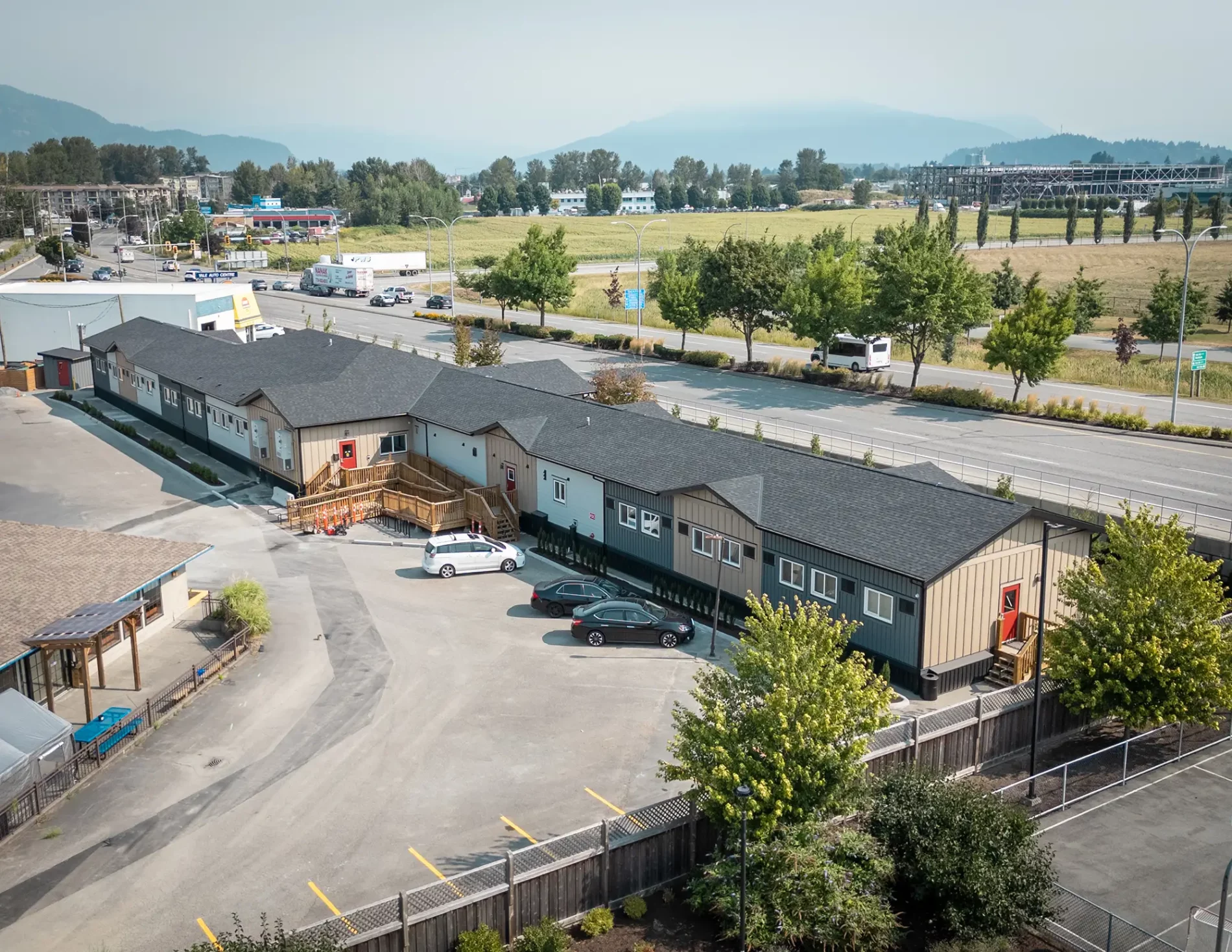
“The company originally started back in 2010 with a focus on remote workforce camps,” Callum continues, “so that’s camps for logging, mining, oil, gas, and energy infrastructure, often in the middle of nowhere where accommodations weren’t available. Modular construction really lends itself to that industry because it’s faster and you can build a lot off site.” The company, which operated then as Landsea Camp Services and Landsea Construction Ltd, laid down roots in the remote workforce accommodation space, which remained a large part of its portfolio in the decade that followed. “Flash forward to 2022 – the camp operations division of the company was sold. The buyer didn’t want a construction division, so a name change was initiated, and a new construction company was formed under the Tasu brand in late 2022.” As Tasu Construction evolved from camps, it continued to apply that same skill set to regional and urban environments. “That started with utilizing modular buildings for temporary emergency shelters, and then taking it to the next step to build permanent multi-story, multifamily supportive housing solutions. That experience has led us down other avenues with modular schools, childcare facilities, offices, and commercial buildings. We did our first BC supportive housing project in 2019, our first multifamily project in 2021, our first school in 2025 and our first six-story modular building in 2025.”
That brings us to the current day, where we see Tasu Construction operate as Western Canada’s most adaptable modular construction and installation company. “What people don’t know from the outset,” Jamie says, “is that Tasu Construction is not a manufacturer. Rather, we are a modular construction and installation company working in partnership or in conjunction with a network of specialized manufacturers. In the marketplace, there’s very few companies that have the depth of experience in volumetric modular like what Tasu does. Our work spans the entire project life cycle, everything from early planning and design coordination, coordination of off-site fabrication, transport, logistics, utilities, and final commissioning. So, we can do everything; the full scope from end to end on a project, or we can slot in as a specialty subcontractor, depending on what the requirements are.” Tasu Construction’s early experience delivering remote workforce camp accommodation for the industrial markets played a formative role in shaping its capabilities. Often challenging and demanding, these projects established a strong foundation and skill set, allowing the company to adapt and extend its craft into new sectors over time. “We originally built our reputation delivering complex remote workforce camp projects, that background has very much shaped what we do today,” Jamie adds. “We have delivered projects in extremely remote and challenging environments, whether that be rural northern settings or complex urban settings. Today our services have moved well beyond just those remote camps, and we now have experience across supportive housing, single family housing, multifamily and multistorey projects. We do that with our own in-house trades, and that portion of our business is growing. We have a dedicated team of red seal plumbers, carpenters, and laborers, and we can coordinate full utilities installation with our project management and project development teams. We have a huge range of capability in house that makes us a lot more efficient, because we’re not relying as much on subcontractors.”
“We originally built our reputation delivering complex remote workforce camp projects, that background has very much shaped what we do today.”
Tasu Construction’s growth reflects a broader shift in the market as prefabricated construction becomes increasingly mainstream. “While volumetric modular remains our core specialty, the language around modular has evolved alongside the industry itself. Historically, the term carried outdated perceptions often associated with mobile homes or temporary structures. Today, prefabricated construction represents a far wider spectrum of modern building methods, including hybrid systems, panelized construction, and mass timber. We are seeing more projects that integrate different prefabrication methods, and as that’s happening, the market is starting to become more and more switched on to off-site as a viable option. For us, we’re really well positioned to capture a big swing in a market trend here.”
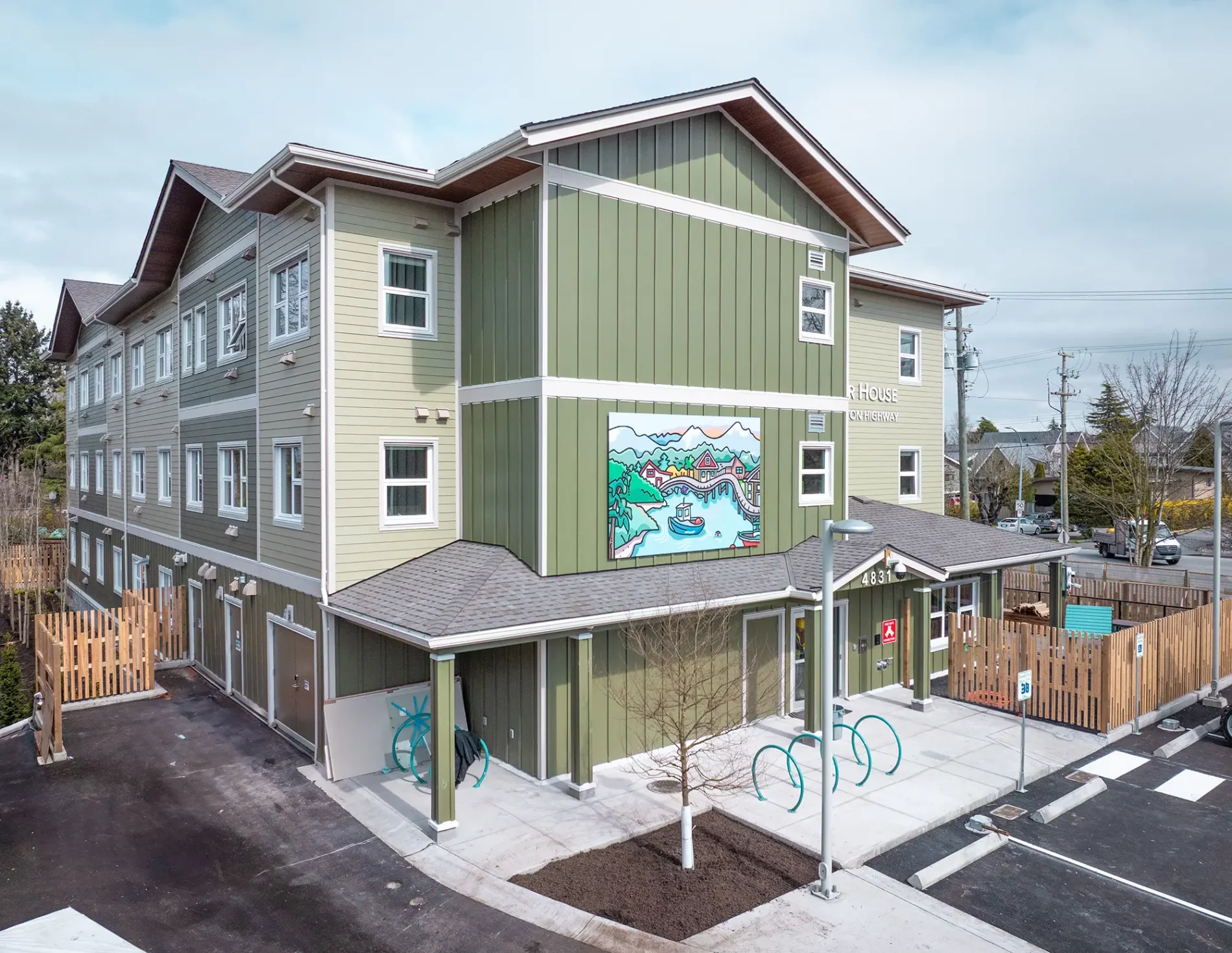
Surrey Rapid Housing Initiative is Tasu’s largest multifamily project, and one that represents both the company’s and the market’s evolution in the residential space. “It’s six storeys, which is the tallest you can go with wood framed modular construction,” Callum says. “Structurally, no one’s been able to take it higher than that.” The project, which offers supportive housing for low-income people in Surrey, is made up of studio suites and common areas with amenities on the ground floor. “We worked as a specialty subcontractor for a large general contractor who have had a few challenges which have slowed down the project. Otherwise, we would be in and out of there in six months. But it’s been a really good project for us, and we hope to do more of that type and scale in the future.”
Another sector that lends itself well to modular construction where buildings are occupied and the holiday’s offer only short windows of time for construction works, is the school sector. “Another project we completed last year is called the Nicomekl School expansion,” Callum says of an eight-classroom addition to an existing school in Langley, made up of sixteen modules and accommodating up to 200 students. This marked the company’s first modular school project, and one that they hope will lead to many more of a similar nature in the education sector. “It was designed and fabricated with a manufacturing partner,” Callum continues, “the same manufacturer that we worked with in Surrey. We did full craning, service connections, the roofing finished as much as possible, and then the general contractor did foundations and siding.” This project saw Tasu Construction showcase its skillset not just in modular construction and installation, but also in project management, logistics, utilities and interior finishings.
Tasu is committed to building long-term relationships with First Nation Communities across Western Canada. Taking into account Indigenous values and the cultural importance of such communities, Tasu leads these projects with transparency and sensitivity to build trust-based partnerships. Speaking of this commitment, Callum highlights a recent project for Esk’etemc, just South of Williams Lake. “In 2024 we did phase one, which was ten single family homes on reserve in community. We were the general contractor and did turnkey from start to finish – design, permitting, manufacturing, installation, and commissioning.” Off the back of a job well done, Tasu Construction was called back the following year to deliver a further eight homes for the community. “We handed that over in early summer 2025,” Callum says of the single-family homes built on sustainability and environmental responsibility. “Obviously the client was happy since they called us back to deliver more housing. It’s for a First Nation community in need, and it went really well for us. We’re really proud of it.”
Tasu Construction’s future outlook is in line with the overall outlook for the modular construction industry. Opportunity, innovation, and evolution are what leads the way towards continued growth and success. “We see a lot of market opportunity out there,” Jamie says. “We’re really focused on very disciplined and controlled growth, and a deeper specialization in what we do. We’re going to continue to build on our strengths in complex volumetric modular delivery, especially in our core markets and First Nation remote community projects. At the same time, we’re going to continue to expand on our permanent modular and multistorey projects. Demand in those areas is quite strong and we see it increasing, particularly in light of provincial and federally funded programs that are specifically aimed at driving prefabricated housing delivery. We’re quite well positioned currently with everything that’s going on there, and there’s a lot of external drivers in the marketplace that really make prefabricated a very attractive solution.” While some opportunity comes from the evolution of modular construction and the wider perception of it as an attractive construction method, some comes from socio-economic issues that demand a new way of doing things. “In Canada we have a housing affordability crisis, a housing shortage, and the ability to get housing units to market faster is key,” Callum says. “That’s why we’re seeing these funding programs from different levels of government.” The ongoing skilled labor shortage presents a further market challenge for most construction companies but an opportunity for Tasu, as prefabricated construction becomes a viable option to replace more traditional and labor-intensive building practices.
“Our goal is to continue to position our brand as a trusted partner in the marketplace while continuing to develop relationships with development firms, architects, and large general contractors,” Jamie says. “We have a very specific skill set and project experience that’s hard to find in the marketplace, and a lot of opportunity out there for us to capitalize on.” For Tasu, a job done fast does not mean a rushed job or a low quality one. At the core of modern construction methods such as volumetric modular construction is efficiency, and not just in program delivery but also in cost control, quality standards and waste reduction. As more and more companies in Western Canada and beyond continue to embrace modular construction and all its benefits, its Tasu Construction, backed by years of experience, leading the charge.