



For decades, the construction industry’s largest challenges revolved around labor, materials, financing, and delivery. Today, another constraint is rapidly moving to the top of the list: power. Across North America, a race is underway to build the infrastructure needed to support the next generation of artificial intelligence, and data centers, once considered a specialized segment of the construction market, have become one of the primary drivers of demand for electrical infrastructure, utility upgrades, energy generation, industrial construction, and skilled labor.

Artificial intelligence is often discussed as a software revolution, but in construction terms, it is also a physical infrastructure story. Every AI model, cloud platform, and digital service relies on facilities filled with servers, cooling systems, electrical equipment, backup power systems, and miles of cabling. Building those facilities requires contractors, engineers, electricians, utility providers, and manufacturers working at a scale and pace that is beginning to reshape the industry’s understanding of what digital infrastructure requires.
According to Goldman Sachs Research, U.S. data center power demand is expected to rise from 31 gigawatts in 2025 to 41 gigawatts in 2026 and 66 gigawatts by 2027, more than doubling in just two years. The firm estimates that U.S. data center capacity will reach approximately 95 gigawatts by the end of 2027 as AI investment continues to accelerate. In practice, that means the construction of the AI economy will depend not only on the buildings that house computing infrastructure, but on the power systems capable of supporting them.
The implications extend far beyond the technology sector. Electrical contractors are seeing unprecedented demand for power distribution systems, substations, switchgear, backup generation, and utility interconnections. General contractors are delivering increasingly complex facilities with compressed schedules. Manufacturers are expanding production of critical electrical equipment. Utilities are racing to strengthen transmission networks and add generating capacity. In many markets, the question is no longer whether projects can be financed, but whether sufficient power can be delivered in time.
The trend is not limited to the United States. The International Energy Agency projects that global electricity consumption from data centers will more than double by 2030, reaching approximately 945 terawatt-hours annually. To put that figure into perspective, the IEA notes that this would be slightly more than Japan’s total electricity consumption today, with AI identified as the most important driver of that growth alongside rising demand for other digital services.
“The International Energy Agency projects that global electricity consumption from data centers will more than double by 2030, reaching approximately 945 terawatt-hours annually.”
Those numbers help explain why power has become a strategic issue for owners, developers, contractors, and public agencies alike. Historically, data center operators focused on access to land, fiber connectivity, and favorable business environments. Increasingly, however, power availability is becoming the primary site-selection criterion. Communities with sufficient electrical capacity are finding themselves at the center of enormous investment opportunities, while regions facing transmission constraints or utility delays risk losing projects altogether.
That shift is already influencing investment patterns across construction and energy. Reuters recently reported that data center investors are acquiring power infrastructure developers as they race to secure generation capacity and grid access, with demand projected to rise from 31 gigawatts in 2025 to 66 gigawatts by 2027. The same report described the strategy as a way for developers to better align digital infrastructure with the power assets needed to support faster deployment and reduce exposure to grid connection delays.
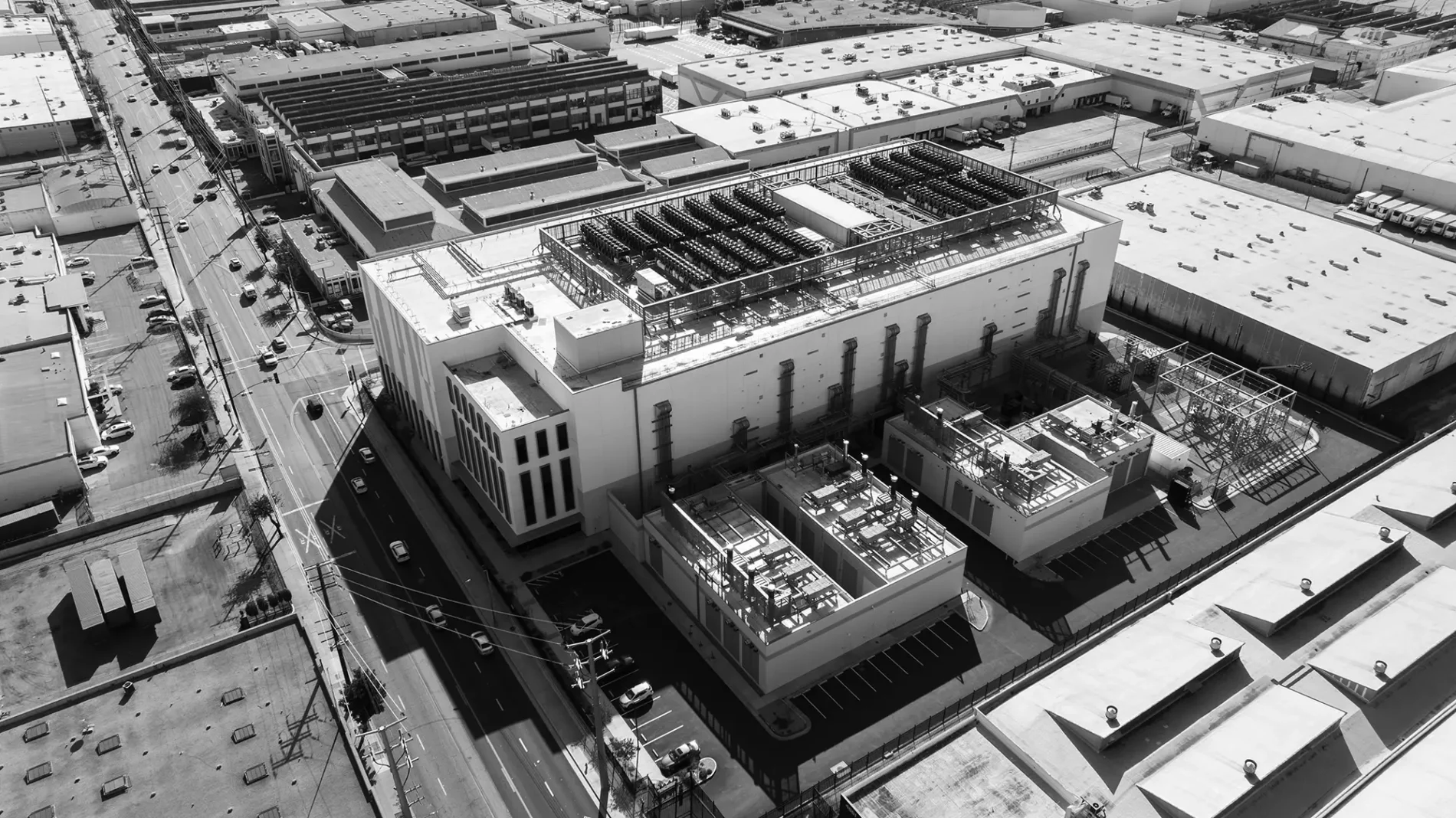
This convergence of digital infrastructure and energy infrastructure represents a significant change for construction. Traditionally, data centers were viewed as specialized buildings. Today, they are increasingly acting as catalysts for broader infrastructure development. New facilities often require transmission upgrades, substations, renewable energy projects, battery storage systems, and utility improvements. In many cases, the infrastructure supporting a data center extends far beyond the boundaries of the facility itself.
That creates opportunities across multiple construction sectors. Electrical contractors are among the most immediate beneficiaries, as modern data centers require highly specialized expertise in power distribution, controls, redundancy systems, commissioning, and ongoing reliability. As AI workloads become more intensive, those systems become larger and more complex. At the same time, civil contractors, utility contractors, concrete specialists, steel fabricators, and industrial builders are increasingly involved in delivering the physical infrastructure required to support reliable electricity at scale.
The growth trajectory shows little sign of slowing. Goldman Sachs Research has projected that global power demand from data centers could increase by as much as 165 percent by the end of the decade compared with 2023 levels. More recent analysis has raised the outlook further under certain scenarios, suggesting that demand could grow by more than 220 percent by 2030. Whether those projections land at the lower or higher end, the direction of travel is clear: the AI economy is placing power infrastructure at the center of construction planning.
Yet the industry’s biggest challenge may not be financing or technology. It may be execution. The same infrastructure boom creating opportunities for contractors is also exposing weaknesses across the supply chain. Utilities are struggling to keep pace with demand. Lead times for critical electrical equipment remain a concern. Skilled labor is difficult to find in many markets. According to the International Energy Agency, approximately 20 percent of planned data center developments face delays linked to grid constraints and infrastructure bottlenecks, making power availability one of the largest obstacles to future development.
For construction companies, that reality is creating both opportunity and responsibility. The projects being built today will help determine whether regions can support the next generation of digital infrastructure. Data centers may occupy the headlines, but they are only one component of a much larger transformation. New substations, transmission lines, renewable energy facilities, battery storage projects, manufacturing plants, and utility upgrades all form part of the same ecosystem.
In many respects, the industry is witnessing the emergence of a new form of infrastructure economy. Just as highways, railroads, and telecommunications networks shaped previous eras of growth, power infrastructure is becoming the foundation on which the AI economy will be built. That foundation will require not only major capital investment, but also strong coordination between developers, utilities, contractors, regulators, and local communities.
The scale of investment is difficult to ignore. Goldman Sachs has estimated that AI-related infrastructure spending could exceed $1 trillion by 2027, with power availability increasingly becoming the critical factor determining where that investment ultimately lands. For contractors, the message is clear: the future of construction is no longer solely about buildings. It is about enabling the systems that make those buildings function.
As artificial intelligence continues to reshape industries around the world, one reality is becoming increasingly apparent. Before AI can transform the economy, the construction industry must build the grid that powers it.