




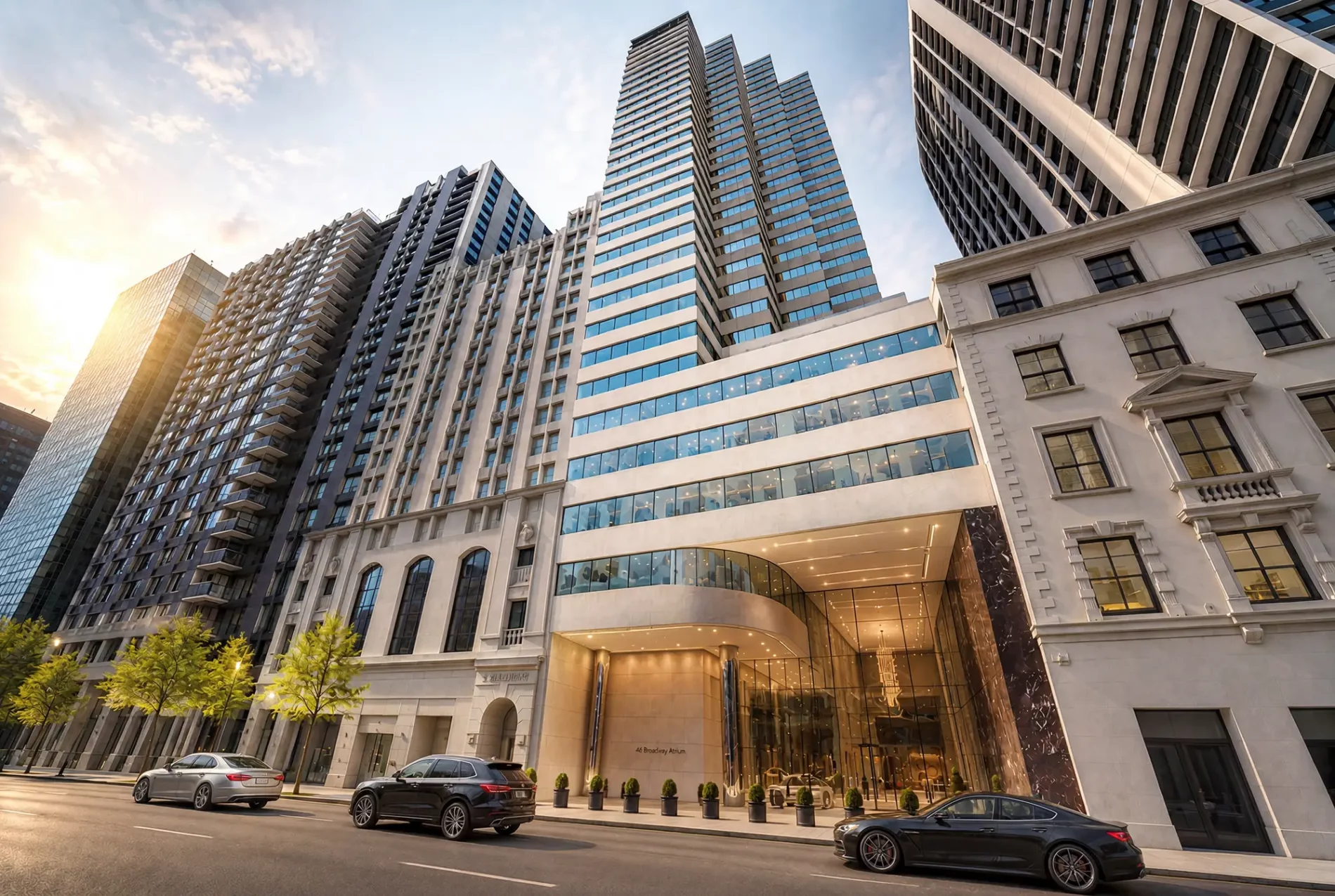

In New York City, construction rarely begins with breaking ground. Long before crews arrive on site, projects are shaped by zoning regulations, environmental reviews, engineering studies, permitting requirements, and countless decisions that determine whether a development will ultimately succeed. For Promont, those early stages have become just as important as the construction itself.
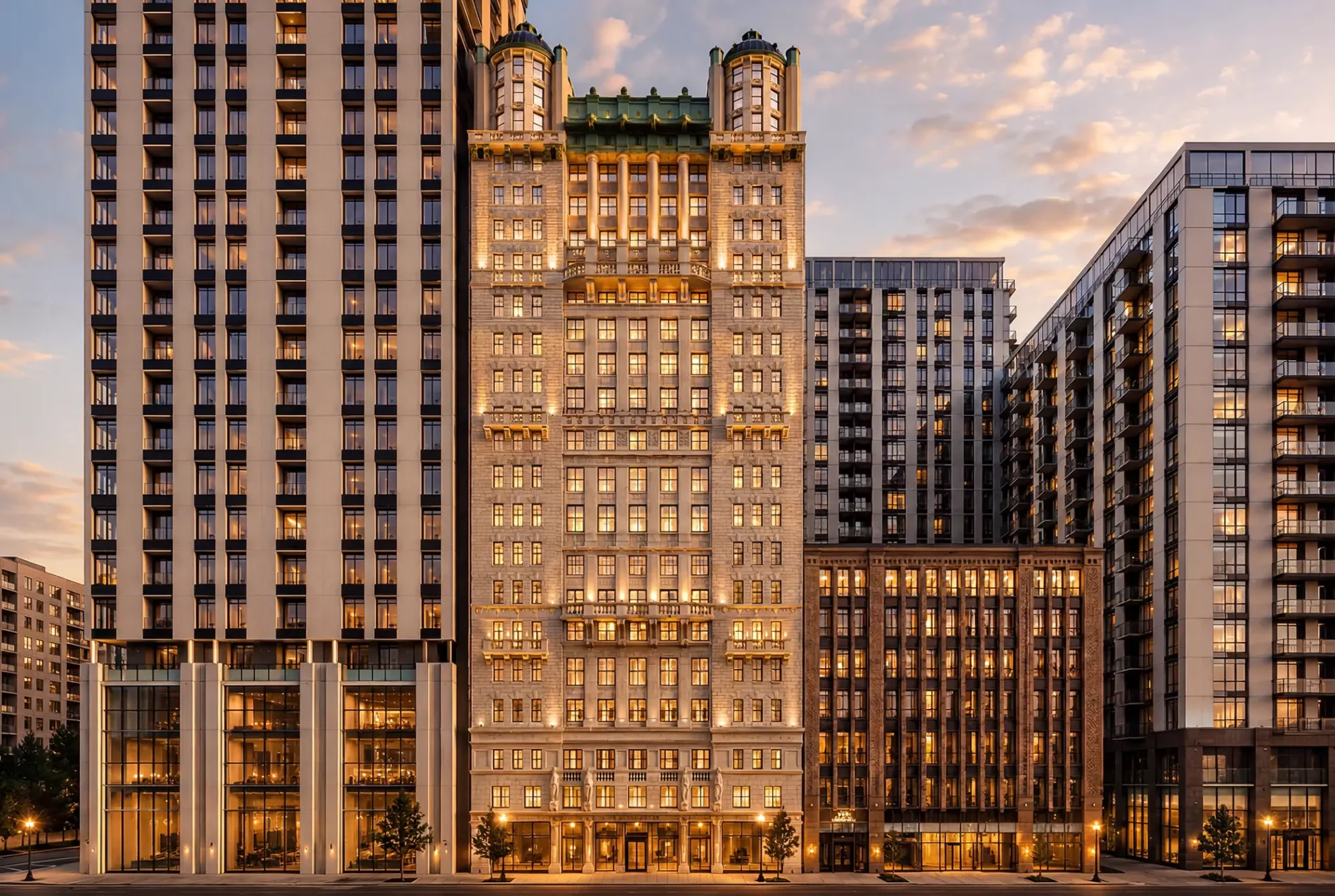
While the company has earned a reputation as a general contractor capable of delivering complex commercial and institutional projects, its evolution over the past two decades has been driven by a broader ambition. Increasingly, Promont is working alongside owners from the earliest stages of development, managing everything from due diligence and design coordination to construction and project completion. The result is a business that has grown beyond traditional contracting to become a development partner for clients seeking both strategic guidance and technical execution.
Chief Executive Officer Marty Waisbrod’s own career reflects that evolution. “I started off in the high-end residential market,” he said. “I was building multi-million-dollar homes at the beginning of my career, then I subsequently moved into commercial construction about 15-plus years ago, and that’s where I’ve been ever since.”
The move into commercial construction opened the door to a wider variety of projects, but it also revealed another opportunity. Many experienced real estate investors understand the financial side of development yet have little desire to manage the complex web of consultants, approvals, and technical decisions required to bring a project to life. Promont responded by expanding its role well beyond construction. “Besides general construction,” Waisbrod explained, “we’ve also gotten into the fee-development business where we develop private projects for owners that are savvy real estate investors or operators and owners but are not interested in getting their hands dirty with the actual development.”
From there, the company assembles the team needed to move a project forward, coordinating architects, structural and mechanical engineers, interior designers, permitting specialists, and other consultants before construction even begins.
Rather than viewing those services as separate disciplines, Promont treats them as interconnected parts of a single process. Decisions made during planning influence construction, while construction expertise often improves the decisions made during planning. Bringing those perspectives together allows the company to identify challenges earlier, refine project budgets, and reduce unnecessary delays once work reaches the field.
The model has proved particularly valuable in New York City, where every site presents its own combination of logistical, regulatory, and technical challenges. “In my career, we’ve built every type of building imaginable, under the sun,” Waisbrod said. “We’ve built from multifamily residential buildings to big box retail. We built for Michaels, 7-Eleven, Retro Fitness, Blake Fitness, American Apparel – back in the day when American Apparel was in business, we built a lot of their stores.”
Commercial work remains central to the business, but the company’s portfolio extends well beyond retail and office construction. Promont has completed institutional facilities including a parole processing center, a homeless shelter, and a Federal Social Security Administration office, alongside healthcare, mixed-use, and educational developments.
“Our specialty is that we specialize in everything,” Waisbrod said. While the remark is delivered with characteristic humor, it reflects a deliberate business strategy. Instead of focusing on a single building type, Promont has developed the internal expertise needed to adapt to different sectors, allowing lessons learned on one project to inform another. Experience gained coordinating institutional work can strengthen commercial delivery. Knowledge developed through adaptive reuse can improve mixed-use projects. The diversity of the portfolio has become one of the company’s greatest assets.
“Our specialty is that we specialize in everything.”
Supporting that versatility is a comprehensive suite of services that begins well before construction starts. Site assessments, land-use analysis, surveying, permitting, code compliance, and design coordination all form part of the development process, helping clients evaluate opportunities before significant capital is committed. Once projects move into construction, Promont manages scheduling, procurement, site logistics, consultant coordination, and daily communication between owners, designers, and trades.
Technology also plays an increasingly important role in project delivery. Building Information Modeling enables teams to identify coordination issues digitally before work begins on site, reducing conflicts between building systems and minimizing costly rework during construction. In New York City, where space is limited and building systems are often densely integrated, that level of coordination can have a significant impact on both schedule and cost.
The company has also expanded its expertise to help owners respond to New York City’s evolving sustainability requirements. Local Law 97, one of the country’s most ambitious building emissions regulations, places increasingly stringent greenhouse gas limits on many large buildings throughout the city. Promont works with owners to incorporate compliance strategies into project planning, helping them navigate complex regulatory requirements while positioning assets for long-term performance.
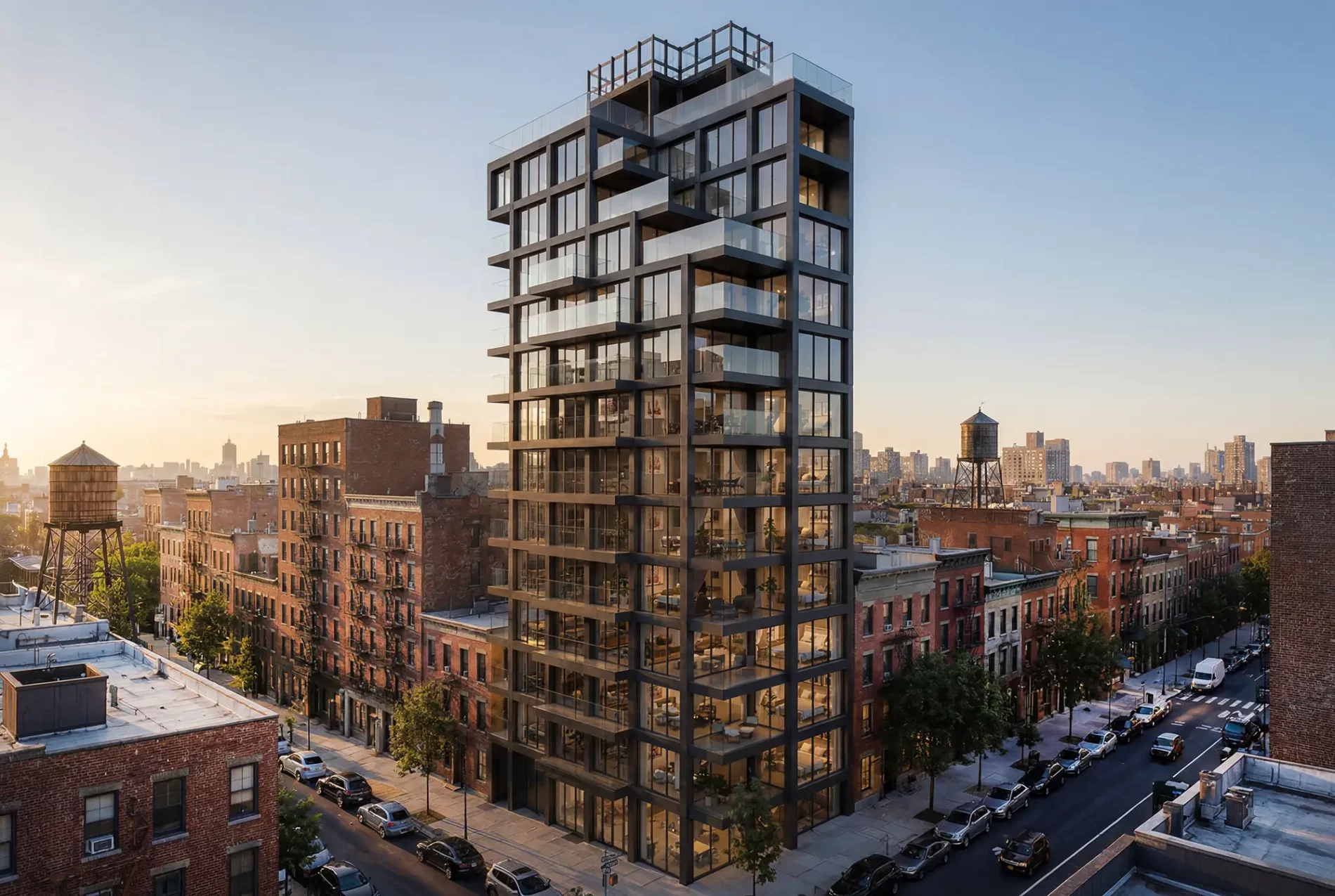
Those capabilities become most visible through the projects themselves.
Another project that illustrates Promont’s approach to adaptive reuse is 15 Park Row in Lower Manhattan. Once home to the flagship J&R Music World store, the historic building served for decades as a retail destination on its lower floors, with offices, warehousing, and operational space occupying the levels above. Promont partnered with Fogarty Finger to transform the former commercial property into a 96-unit residential development, carefully balancing the building’s historic character with the demands of modern urban living.
The project extended well beyond a straightforward conversion. The historic lobby and common areas were restored while incorporating upgraded lighting, sprinkler systems, HVAC infrastructure, and other contemporary building services. Former back-of-house and storage areas were reimagined as resident amenities, including a communal lounge, children’s play area, and fitness center, allowing spaces originally designed to support a retail operation to serve an entirely new purpose.
Like many adaptive reuse projects in New York City, success depended on navigating the complexities of an existing building while respecting its architectural heritage. Coordinating historic preservation requirements alongside modern residential standards required close collaboration between the project team, consultants, and design partners throughout the redevelopment process. The finished project reflects Promont’s ability to unlock new value from existing buildings while preserving the qualities that make them significant parts of the city’s architectural fabric.
A different set of challenges emerged at 178 Flatbush Avenue in Brooklyn.
Located adjacent to Barclays Center, active subway infrastructure, and neighboring party walls, the project demanded careful coordination with multiple public agencies while construction progressed within one of New York City’s busiest urban environments. Excavation and foundation work required approval from the Metropolitan Transportation Authority, while traffic management plans had to satisfy the Department of Transportation. Construction also continued through the uncertainty created by the COVID-19 shutdown in 2020, requiring the team to continually adapt schedules and operations as conditions evolved.
Elsewhere in Brooklyn, Promont completed a significant mixed-use development at 1039 Coney Island Avenue after transforming a former gas station site into a new commercial building. Beyond the technical challenges associated with redeveloping the property, the project required extensive coordination with the Department of Education because of its proximity to a nearby school. During the pandemic, Promont also secured an essential-work permit that allowed construction to continue when many other projects had paused.
The company’s healthcare expertise is reflected in the renovation of Doral Health & Wellness at 391 Eastern Parkway in Crown Heights. Working alongside Paul Jacob Hill Architecture & Design, Promont delivered a modern medical facility designed to meet stringent healthcare requirements while creating a more welcoming environment for patients through improved lighting and interior design.
Knowledge of local communities has also proved valuable. At 646 Parkside Avenue in Prospect Lefferts Gardens, the company completed a five-story commercial expansion with Bricolage Designs just a short distance from another Promont project. Familiarity with the neighborhood, permitting processes, and surrounding conditions helped streamline delivery while reinforcing relationships built through previous work.
Although New York City remains the company’s primary market, Promont is now applying the same development model to new regions. “We’re hyper-focused on increasing the size of our jobs,” Waisbrod said. “Number Two, the locations of the projects. For example, we’ve been expanding in the New Jersey industrial market as well as the Florida market. We actually spent the better part of the last year building connections and relationships with vendors in Florida, and bidding on a few very large jobs there.”
Expanding geographically represents the next stage in the company’s evolution, but Waisbrod believes the underlying philosophy will remain unchanged regardless of location. “We offer a lot of insight along the way,” he said. “We sort of take the role of if we were building this for ourselves, how would we build it. We don’t just say, ‘Okay, that’s all it says in the plans; that’s where we’re going to build it.’ If it’s a bad idea to build it that way, screw it. That’s not the way we look at things.”
The approach is less about simply constructing buildings than helping owners make better decisions throughout the life of a project. By combining development expertise, technical knowledge, and construction management under one roof, Promont aims to remove complexity for clients while creating projects that perform long after construction is complete. “We try to treat every one of our clients as potential VIP customers, and not a one-off,” Waisbrod said.
After years of building everything from retail stores and multifamily housing to healthcare facilities and institutional projects, that philosophy continues to define Promont’s next chapter. As the company expands into new markets and larger developments, its ambition extends well beyond constructing buildings. It is focused on helping clients turn ideas into successful projects from the moment a site is identified until the doors finally open.