



















Associations

city ahead on a road at night

Civil Engineering & Infrastructure

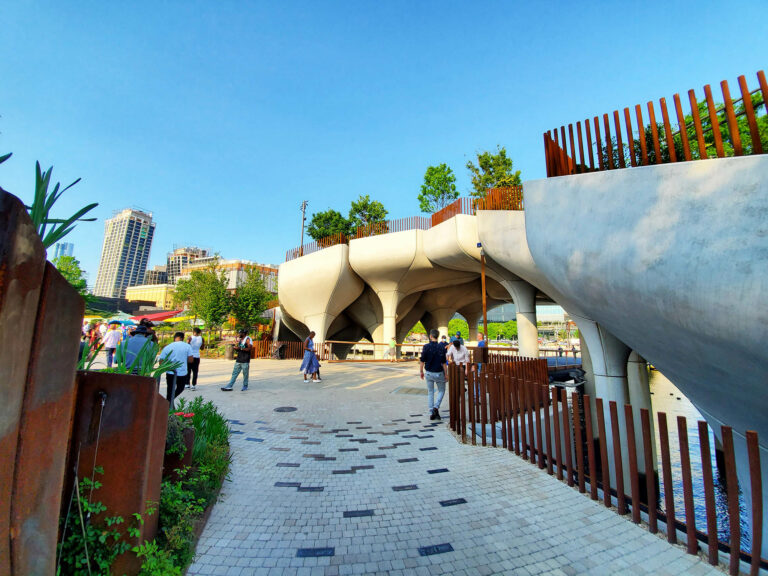
modern concrete structure

Concrete

design build drawing with construction tools

Design Build | CM | GC

multiple excavators parked in a row

Equipment

green tree outside office building

Green Building

thumbs up

Positive News

toolbelt construction tools

Specialty Contracting

Steel

Amphibious Architecture – Rising with the Tide

View in E-mag

Cities are sinking. As catastrophic and alarming as this thought is, it is not necessarily something that is new to scientists and engineers. In fact, when we consider that Venice, the most famous of these sinking cities has navigated this issue through an inventive and lucrative tourist industry, we can take a step back and view it for what it really is. In general terms, Subsidence is the downward vertical movement of the Earth’s surface. Caused by both natural and human activities, it is a common and well-known geological feature that is a natural, and perfectly normal part of house building. Research has long been studying the effects of subsidence on large-scale built-up areas such as cities. It stands to reason that, with skylines expanding continuously, the effects on the surface below may also be changing. 

The results of these studies are complex, however. Various factors play a part in determining the effects that the built environment can have on a piece of land. From underlying soil type and the buildings foundation modes to natural topography and location, many cities could be finding themselves in precarious situations. The US Geological Survey and the Graduate School of Oceanography at the University of Rhode Island has recently conducted a study on the effects of building in New York City. In the first piece of research that specifically looks into the contribution of the built environment on subsidence, researchers noted that NYC is sinking at a rate of 1-4 millimeters per year. While this is in line with regional rates, it discovered that some areas fell far outside these acceptable levels. In fact, researchers calculated the mass of all buildings in the city and discovered that, depending on the soil type of a particular area, some buildings have the potential to sink over 600 millimeters. The findings of this paper, titled: The Weight of New York City: Possible Contributions to Subsidence From Anthropogenic Sources, suggest that the risk of large-scale buildings on flood risk is actually quite a significant one. Researchers also stated that, due to the escalation in storm intensity over recent years coupled with the rise of sea levels, coastal cities such as New York City are at risk. “As coastal cities grow globally, the combination of construction densification and sea level rise imply increasing inundation hazard. The point of the paper is to raise awareness that every additional high-rise building constructed at coastal, river, or lakefront settings could contribute to future flood risk, and that mitigation strategies may need to be included.”


Editorial credit: George Wirt / Shutterstock.com

These views are echoed by a recent Intergovernmental Panel on Climate Change (IPCC) report which found that the rate and focus of “climate sensitive planning” is far slower and effective than it needs to be. “Many cities and settlements have developed adaptation plans, but few have been implemented so that urban adaptation gaps exist in all world regions. Exposure to climate-driven impacts… in combination with rapid urbanization and lack of climate sensitive planning, is affecting marginalized urban populations and key infrastructure.” When we look at the situation globally, the stark nature of these challenges come sharply into focus. Jakarta, the capital city of Indonesia has the unwanted accolade of being the fastest sinking city in the world. Astonishingly, the city is dropping by around 30 centimeters per year. With much of the city sitting below a rapidly rising sea level, flooding is common, and it is estimated that in much of the city will be uninhabitable by the end of the decade. 

So, what can be done to mitigate against these challenging conditions? Given that the current proposal from the Indonesian government is to relocate the capital to an under-construction city 800 miles north of Jakarta, it seems viable solutions need to be found quickly. According to the IPCC report, the most necessary changes that need to take place revolve around carbon emissions. While these widely accepted yet challenging targets are the best way of solving the crisis, alternatives are necessary. Pervious pavements and underground tunnel systems to absorb stormwater need to be developed in cities while grey infrastructure and retrofitting should be prioritized. The report suggested the widespread introduction of elevated houses which stood on stilts, but it was something else that truly grabbed the headlines. 

Amphibious architecture is the process of designing buildings that work with water, rather than against it. 

Amphibious architecture is the process of designing buildings that work with water, rather than against it. Rather than adopting traditional building methods, amphibious structures are not fixed and, as the tide rises around them, so to do the buildings themselves in a way that is comparable to a boat. For Elizabeth English, Associate Professor at the University of Waterloo and organizer of the International Conference on Amphibious Architecture, Design and Engineering that took place in Ontario recently, it is a case of acceptance. “With amphibious construction, water becomes your friend. The water gets to do what the water wants to do. It’s not a confrontation with Mother Nature—it’s an acceptance of Mother Nature.” While starting her career studying the effects of wind and hurricanes, English pivoted to the effects of water on the built environment having seen the effect of Hurricane Katrina. “Katrina was much more a water event than a wind event. I started looking at the implications of all the flood damage and the social disruption that it caused, and I became very, very angry about the cultural insensitivity of the solutions that were being proposed.” These insensitivities consisted of recommendations to permanently elevate homes which, for English, would have destroyed any remaining element of community to an already devastated region. 

houses on stilt to sit above water level in indonesia
Editorial credit: CYSUN / Shutterstock.com

Taking her lead from the Netherlands, a country that has historically had to think creatively about flood mitigation, English discovered amphibious homes. While she felt that it had potential, it was not a suitable solution for the low-income communities that were most likely to be negatively impacted. English founded the Buoyant Foundation Project, a community initiative that designed, tested, and retrofitted amphibious foundations in New Orleans. By using a system that attached a steel frame to the underside of the house along with foam buoyancy blocks, the house would rise and hover above the tide when surrounded by water. For English, the project was an enormous success. The foundation had a system that, while not necessarily perfect, was simple, effective, and cheap. Incredibly, things did not stop there either. To date, the Buoyant Foundation Project have designed amphibious housing for low-income areas such as Nicaragua and Jamaica while designs have recently been used to build a bespoke residential home on the Thames River in London. 

In the context of rising sea levels and increasingly disastrous weather events, the need to protect against flooding has never been more necessary. As cities such as Jakarta and New York City sink underwater, feats of engineering are needed now more than ever. Sadly however, the greatest level of need comes from those communities who can ill afford it. For English and her colleagues at the Buoyant Foundation Project, the goal is not on solving the world’s problems, it is about providing equity. The Buoyant Foundation Project focuses on retrofitting as a less expensive and more sustainable way to increase the resilience of existing communities located in flood-prone regions. Retrofitting existing buildings produces less demolition waste and requires fewer new materials compared to building entirely new buildings.” 
Deconstruction – The Art of Care

View in E-mag

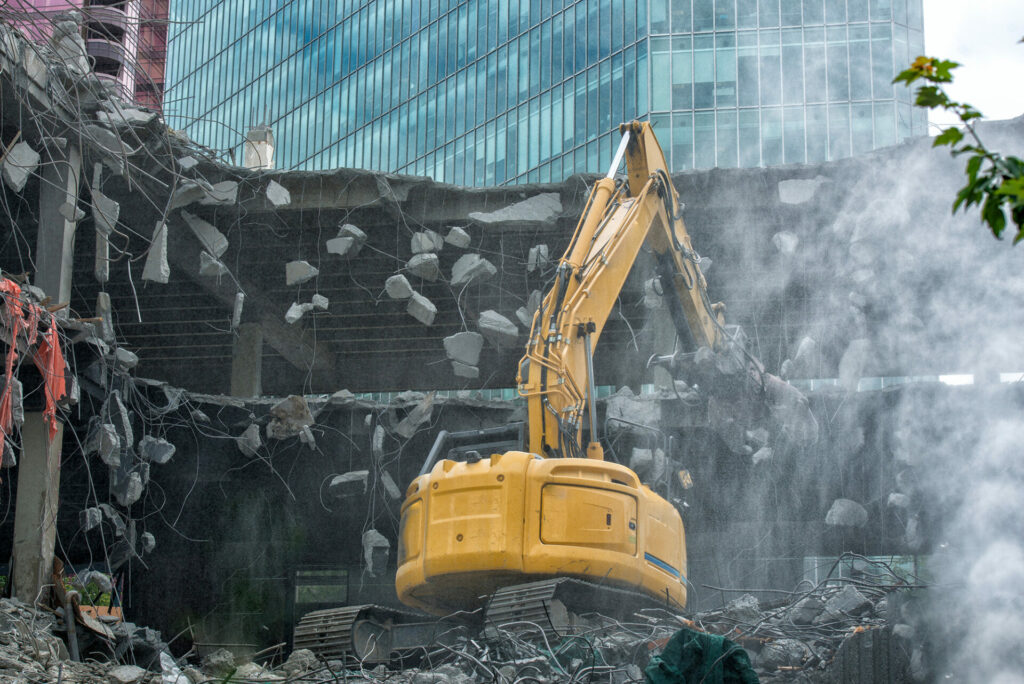
It goes without saying that in the construction industry, waste is not welcome. With rising costs and the drive to create a more circular economy, the concept of materials ending up in landfill is not a palatable one. C&D (construction and demolition) waste includes a vast array of material. Steel, wood products, drywall and plaster, brick and clay tile, asphalt shingles, concrete, and asphalt concrete. These materials are unfortunately end up landfill, deriving from construction projects and sectors such as buildings, roads, and bridges. According to the U.S. Environmental Protection Agency, latest figures show that the C&D sector accounts for an astonishing 600 million tons of debris and waste every year. For an industry that is trying to change public perception and be seen as net positive contributors to the growing climate emergency, statistics such as these aren’t helpful.

However shocking these figures may seem, headline statistics may not be the fairest method of passing judgement on a sector. In fact, if we drill down into the industry, changes are taking place in a variety of forms. Calls for the use of sustainable materials are growing by the day and environmentally friendly methods are gathering speed across the industry. The construction world is, despite the narrative that plays out in some quarters, playing its part.

As with anything however, more can always be done. As we find ourselves in an industry that is no longer happy to accept carbon neutral, carbon negative has now become the goal in terms of generating emissions. So, with that in mind, where does material waste fit into the conversation? Within an industry where deadlines and efficiency are a core feature, it is interesting to note that unlike most other aspects of a successful business, the key may be found by simply slowing down.

The United States is in the midst of a housing crisis. With widespread acceptance of this and stakeholders from every industry holding opinions on how it should be tackled, the market is not in a good place. However, the incredible truth is that despite this, hundreds of thousands of homes are demolished every year. The reasons for this are a combination of safety, location, and trends. Unfortunately, some homes are no longer fit for purpose. While this may be a bitter pill that we need to swallow, we can look for the potential positives. With these demolition projects racking up the aforementioned 600 million tons of debris each year, some can be salvaged. Unfortunately, by its nature, the process leaves much of these materials unusable. While concrete can indeed be recycled, a significant amount, some 145 million tons, also ends up in landfill. So, in an uneven landscape, where are the positives?

The Birch Group is a Minneapolis non-profit construction company that specializes in the sustainable reuse sector. Having amassed a huge amount of experience across all facets of construction, the company is currently working on growing the number of clients that avail of its Deconstruction service. This process is not merely a token nod to sustainable practices, either. The company identifies savings for each client, explaining that by prioritizing ‘waste diversion’, residential, commercial, and mixed-use renovation projects can yield significant cost savings. “With 27 years of experience in rehabilitating dilapidated residential, commercial, and mixed-use properties, we have an in-depth understanding of the expenses involved in property renovation, remodeling, and redevelopment. Our exceptional expertise in building material reuse makes us unparalleled in waste diversion initiatives.”

“Our purpose is to revive and reinvigorate materials that have reached the end of their useful life, while also fostering a sustainable future for all.”

Deconstruction is a term that can often be mistakenly grouped with Demolition services. While essentially, the result is the same on the ground, the process and benefits are markedly different. In fact, according to the Birch Group, the impact of deconstruction goes much further. “Our purpose is to revive and reinvigorate materials that have reached the end of their useful life, while also fostering a sustainable future for all. Through our work, we aim to revive communities, promote environmental protection, and create job opportunities through workforce development.” By taking a considered and skilled position, each project is approached with care and planning.

Birch Group describes its process in three parts, with deconstruction standing alongside the pre- and post- stages. From site visits and comprehensive inventories to Environmental Impact Reports and grant application documents, everything is covered. It is what happens during the deconstruction process itself that holds the most benefit for clients though. Led by experienced carpenters, the team carefully removes all identified reusable materials. At the helm is deconstruction expert, Petrina Rhines.

Having completed a carpentry apprenticeship three years ago, Rhines decided to pursue a more innovative approach to the reimagining of the city’s decaying buildings. By picking apart each building, removing materials in a manner that leaves them in reusable condition, the projects are disassembled, rather than flattened. In addition to that, the materials are then sold by the Scrapbox Salvage store, a non-profit salvage company that aims to “reclaim and harvest everything from lights, flooring, windows, doors and more for resell to the public.” With a new inventory arriving in store each week and assistance with accessing tax savings and installation grants, the store is proving to be a huge hit. This partnership stems from a shared view of how materials should be treated. Instead of bulldozing, we should slow down a little and look at what we are doing. According to Rhines, the reason for setting up Birch Group is a simple yet vital one. “Essentially, we’re trying to keep as much trash out of the waste stream as possible. We’re doing all of this by hand too, so we’re also reducing a lot of pollutants that would go into the air.”

While deconstruction by hand certainly has its benefits in terms of salvageable materials and environmental practices, it may not be the most effective tool to combat 600 million tons of waste. Thankfully, that is where education comes in. With a staff of 25 and growing, Birch Group is certainly seeing its message spread locally. By sharing information about the process even further, the hope is that it may catch on to become something remarkable. Birch Group has struck up a partnership with Hennepin County and Reuse Minnesota, a professional network to advance the reuse sector, offering workshops and presentations to a number of local high-schools. By reaching the community at a younger age, Rhines is hopeful that things will change over time.

Only one year in, Rhines and Birch Group are changing the narrative. While it may still be early days, it seems that deconstruction and the benefits that come from it could potentially be life-changing in more ways than one. “The training for deconstruction careers is short. You can learn on the job and get started in a career in a short period of time. College isn’t for everyone, and we are just showing students that there are other opportunities out there. More than anything though, we’re trying to catch them while they’re young and instill in them sustainable business practices. Hopefully they will carry that sustainability mindset through their lifetime, and they will become lifelong learners within the sustainability world.”

https://www.thebirchgroup.org

Net-Negative – The New Challenge

View in E-mag

It seems as though the pathway to a more sustainable construction industry is continuously being filled with roadblocks. Notwithstanding the strong lobby groups that advocate on behalf of environmentally destructive materials such as fossil fuels, there is the difficulty of change and viable alternatives. The industry is not one that necessarily welcomes change, given that many materials currently being used have been around for centuries. However, it is unfair, and simply not the case, to assume that the construction world is not adaptable. In fact, in countless ways the industry is nimble, innovative, and highly flexible. With the advancement of AI and 3D printing, we are seeing glimpses of a construction industry that embraces change and moves forward in a more positive and sustainable way. The problem is, however, that many construction materials and the way modern buildings are made mean that the industry finds itself in a difficult spot. Simply put, the level of pollution created by construction is too high.

In a White Paper document published by the World Economic Forum in 2021, the Global Future Council on Net-Zero Transition made stark warnings in relation to the necessary changes that need to take place on a global scale. “Three things need to happen to limit global warming to safe levels in line with the Paris Agreement: greenhouse gas emissions need to be halved by 2030; net-zero emissions must be achieved by 2050; and global emissions will need to become net-negative emissions after 2050.”

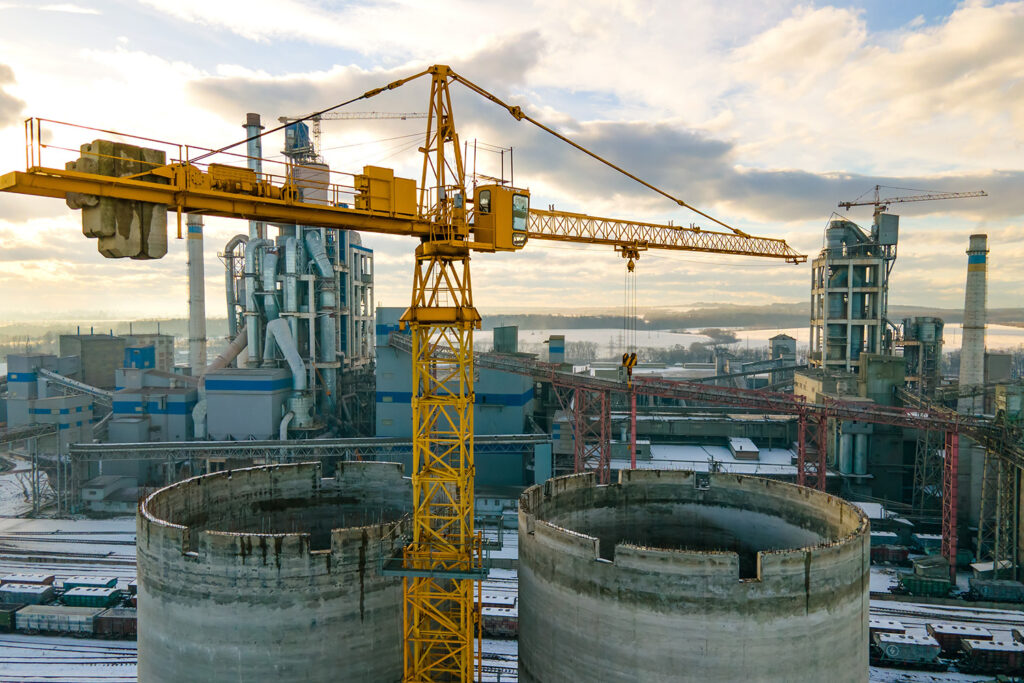
Aerial view of cement plant with high factory structure and tower crane at industrial production area.

While many will be familiar with the term net-zero in relation to carbon emissions, the concept of ‘net-negative’ is somewhat more recent. The International Energy Agency explains it as follows. “Carbon neutrality, or “net zero,” means that any CO2 released into the atmosphere from human activity is balanced by an equivalent amount being removed. Becoming carbon negative requires a company, sector, or country to remove more CO2 from the atmosphere than it emits.” With the construction industry being heavily reliant on concrete, a material that accounts for almost one tenth of the world’s carbon emissions alone, it appears the industry is facing an incredibly difficult task to bring it to fruition.

The drive for net-negative could be given a massive boost with the introduction of an innovative new building technique called Breathe Bricks. Designed by Carmen Trudell, a professor at Cal Poly San Luis Obispo College of Architecture and Environmental Design, this process is made from a type of porous rock and is based on the basic principle of air filtration. By using an innovative design and including a ‘cyclone’ within the structure, these bricks absorb polluted air and release clear air in return. The research and testing that brought this process to fruition is based on the concept of filters. Indeed, Trudell worked with engineering professor Tracy Thatcher to develop a building component that works as a sort of passive filtration system. The Breathe Brick itself is a porous masonry unit that stacks to produce a filtration and structural façade system.

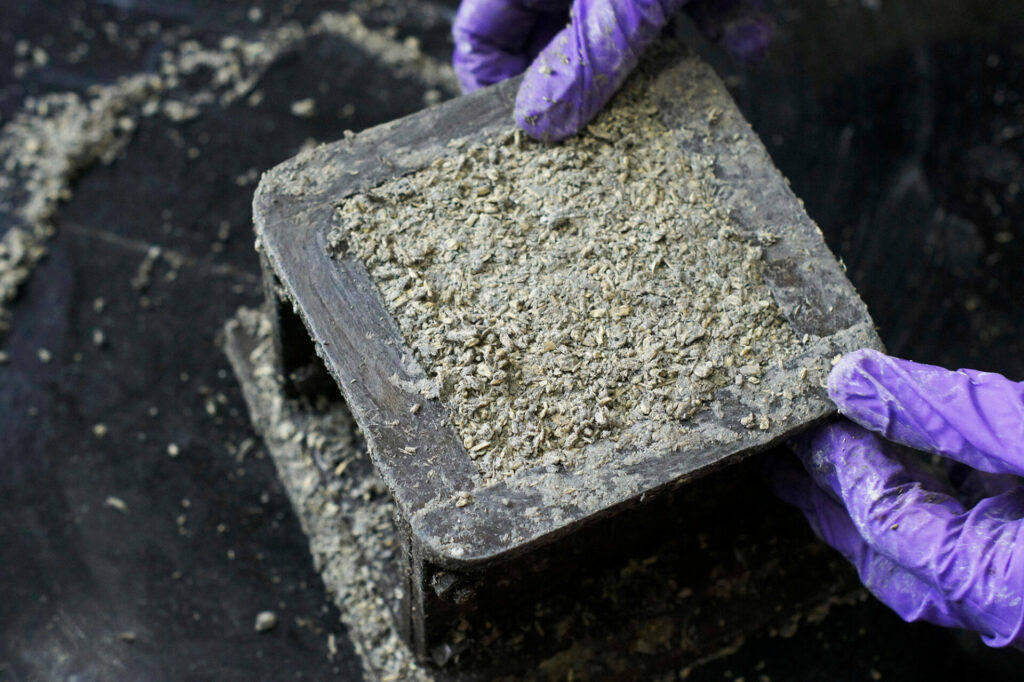
Breathe Bricks are not the only materials that are assisting in the gradual shift towards a net-negative construction landscape, however. In a huge turnaround for what had been a virtually ignored material, hemp is making something of a comeback in recent times. While industrial hemp has been used as part of the construction process for thousands of years, it has been ignored in more recent times. However, it is now becoming a genuinely exciting proposition for meeting net-negative targets. Due to its incredible properties such as fast growth, dense canopy, and its ability to grow in nutrient-poor soil, it is vastly more efficient at sequestering carbon than trees. While in construction, when combined with a lime-based binder it forms a material called Hempcrete, a carbon-negative building material that can sequester around 100 kgs of CO2 per square meter. The mix creates a long-lasting fibrous insulation wall assembly that is fire-resistant, carbon-sequestering and repels mold and pests. Because hemp sequesters carbon while in the walls of a building, hempcrete is an excellent zero-carbon building material that can offset the construction industry’s carbon footprint. While the lightweight blocks do not have the structural strength for load-bearing situations, they have many uses on a jobsite. From replacing traditional drywall, to its benefits as both insulation and siding, it offers huge energy-saving benefits.

Coexist Build, a PA-licensed architect-led company that is “determined to revolutionize conventional construction practices and bring healthier options to the market,” is one of the loudest voices in developing hempcrete as a genuine option. The company combines an architectural studio with its very own regenerative organic farm to run a research and development lab for hemp-based materials. The main aim of Coexist Build is to produce building materials that give back to the environment they are built from. In essence, it is seeking to produce net-negative. “We develop systems that create an ecosystem where the natural world can coexist with humans in a clean and healthy way because our systems give back. We believe there is a lot to be explored and that is why we operate a research and development facility to innovate and create new materials and systems that work.”

hempcrete block

The company was set up by husband-and-wife team Anastasiya Konopatskaya and Drew Oberholtzer with Konopatskaya recently assisting in the writing of a successful application for hempcrete to become officially approved in the model US residential building code for 2024. The hearing was overseen by the International Code Council and is an enormous breakthrough for advocates of the material. Speaking after the successful application, Konopatskaya said that the certification is a huge step forward. “It is a groundbreaking achievement. As an architect, including hemplime into the building code is of paramount importance. It will allow architects like myself, focused on sustainability, to specify this product in any municipality across the US.”

Due to industrial hemp production only recently being legalized in the United States, much of the hemp used in hempcrete production is still imported from Europe. Despite this challenge, production is well under way and blocks are now being brought to the industry. According to Oberholtzer, this shift in production will have hugely positive effects on the scale of carbon savings that can now be achieved. “The biggest variable in the amount of carbon sequestered in manufacturing hempcrete is transportation of raw material to a manufacturer and [then to the] project site. With the development of local supply chains from seed or farm to gate, the amount of carbon sequestered will be optimal.”

Since 2019, Coexist has been developing hempcrete and demonstrating its potential with the goal being a shift in the way the industry thinks and acts. With much work being done since then, it seems as though things might be paying off. Recently, hempcrete has been reaching the mainstream with commercial projects such as the American Airlines Terminal upgrade at LAX, to residential condos in TriBeCa. For Oberholtzer, Konopatskaya and all at Coexist Build, attitudes are changing. With net-negative now becoming a necessity rather than an add-on, it can’t change quickly enough. “Concern over toxics, allergens, synthetics, and plastics is rising. Also, people care more about the Earth than ever before. Attention is being given to carbon embodiment, carbon impact, regenerative materials, recycling, sustainability, waste, and renewability. Coexist Build addresses all of these concerns through the design and construction, using methods and materials that are natural and coexist with the environment.”

BlocPower – The Building Blocks of Green Equality

View in E-mag

Ecological architecture, the process of preserving and complementing the natural elements within an urban setting, seems like a relatively recent concept. Given the prevalence of environmentally minded planners, architects, and builders, the feeling as that practices are gradually shifting towards a place where sustainable buildings are the norm. The truth is, however, that ecological architecture has been around for as long as dwellings have been constructed. Humans have long been aware of the symbiotic relationship its urban developments have had with the earth and its resources. A prime example of this is Angkor Wat, a UNESCO heritage site in Cambodia and the largest religious structure on the planet. This enormous 12th Century temple uses a complex irrigation system that stores water, heats and cools the structure when necessary, and waters crops. In addition to this, all natural building materials used in its construction were locally sourced meaning that it has a considerably smaller carbon footprint to many structures a fraction of its size. What does this all mean in the context of a growing climate emergency? Despite the clear and obvious need to mitigate the worst effects of construction and the wider impact of human consumption, we are at a crossroads.

Angkor Wat, Cambodia

While ecological structures may not be as recent as we thought, the fact remains that in order to meet emissions targets, big changes are undoubtedly required. While every industry needs to step up, the construction world is unfortunately one of the main offenders. From transport, materials, processes and embodied carbon, buildings and the work needed to produce them, generate enormous amounts of emissions. Concrete and energy usage, for example, rank highly on the list of sectors and materials that need a rethink. A report recently published by the National Institute of Construction Management and Research in India makes for stark reading. “Climate emergency is a threat to humankind and future development. Construction sector contributes to 39% of worldwide carbon emissions; with 28% coming from energy usage, and 11% from embodied carbon.”

Solutions are being found but they are very much in their infancy. Passive House, captured concrete, SMART buildings and cities; each are providing successes in the ongoing challenge to reduce emissions but, unfortunately, these are on a small scale. Research is demonstrating that despite these innovative techniques, much more needs to be done. “One can suggest to opt for green building concepts, but it is imperative to acknowledge that the recent growth of sustainable ones are insufficient to offset the negative impact of current structures. Pre-existing buildings pose a threat due to the amount of energy they consume. Additionally, about 80% of greenhouse gas emissions are related to energy. Due to the quantum of resources and money required, tearing down existing infrastructures, and establishing new state-of-the-art facilities with cutting-edge products and technology is not an option.” The result of this realization is that, rather than new designs, structures, and techniques being built from scratch, many are looking into the possibility of retrofitting as a means of minimizing disruption. The problem with this however, is that the cost of this work is often prohibitive, and the knowledge required to complete the work to the highest standard can be lacking.

“BlocPower is helping create a world where every home and building can be an opportunity for progress, an engine for change.”

BlocPower, founded in New York City by Donnel Baird in 2014, is a cleantech company that has quite an ambitious goal. The company is working towards reducing emissions and fight climate change through a focus on renewable energy. BlocPower describes itself as “a climate technology company that analyzes, finances, and upgrades homes and buildings.” What is different about this company is that, rather than merely being a retrofitting and green technology provider, it is aims to achieve this while also removing the financial barrier of retrofitting and assisting lower-income areas. “BlocPower is helping create a world where every home and building can be an opportunity for progress, an engine for change. A world where communities are connected and upgrading your property from one that pollutes to one that powers the next generation of the green economy.”
The rationale and drive behind this company has its roots in Brooklyn, NY, where Baird grew up in a one-bedroom apartment. Baird’s experiences of a home being heated during the cold winter months using a gas cooking stove proved formative. For him, BlocPower is a vehicle to tackle climate change while also addressing the inequalities that he and his family lived through. The company offers many technological services and products such as smart, low-cost sensors and thermostats, and updating heating and cooling systems. Not only this, BlocPower hires and trains local vulnerable populations to perform the retrofitting, providing education, skills, and employment to low-income communities. For Baird, this is non-negotiable. ““The challenges of climate change, economic recovery, public health, and racial inequity are all intertwined. Green building technology offers scalable solutions for all of them.”

man sitting on couch with remote for ac designed by blocpower

So, how does it work? BlocPower works with the homeowner to identify their needs, upgrade wish-list and a timeline. From there, the company provides financing options with no upfront costs and takes on the project management to ensure that things run smoothly. “We handle the contractors, permits and incentives needed to get your project done right and at the best price.” By offering this bespoke, one-stop-shop for green home and energy upgrades, the company assists those for whom retrofitting was previously unattainable. “BlocPower uses proprietary technology to analyze, finance and upgrade homes and buildings with the latest in energy-efficient, electric technology and appliances. In this way, we reduce soft costs, shorten project timelines, and make the benefits of these upgrades accessible to all.” Unsurprisingly, there are many people eager to work with the company and contribute to creating an equitable and effective climate solution. Since its founding in 2014, the company has completed 5,000+ energy efficiency projects nationwide. By utilizes its own software program, BlocMaps, it has assisted municipalities, utility companies, and sustainability experts to plan, manage, finance, and implement equitable decarbonization strategies.

The road to carbon neutral, or indeed carbon negative, building structures may be some way off. Education and financial considerations are still very real barriers that preclude the most vulnerable communities to the conversation. BlocPower is changing that. By offering advice, funding supports and training, it is working with communities to ensure that the pivot to sustainable buildings is an equitable one. For too long now, the ability to make energy savings has been reserved for those who need it least. BlocPower is trying to change that, one home at a time. For Baird, it is not about his own company. He believes that it goes much, much further than that. “I went to Glasgow, I went to the climate negotiations for the first time, and it was amazing to get there and see people from all over the world that had devoted their entire career, their lives to climate. They were there to push forward a global deal—but what was needed, then and now, was for the Americans to set the tempo on what’s possible to achieve in this moment. I’m so excited about the opportunity we have as Americans to really lead the world and lead this nation forward on climate change.”

www.blocpower.io

Supporting the Precast Industry Through Education

View in E-mag
View Brochure

While the debate rages on regarding the viability and sustainable use of concrete, it is undoubtedly a challenging landscape for those within the sector. The industry is demanding improvement from all sides, cost, quality, and sustainability. This particular combination can be difficult to balance and, as tends to be the case, compromise is needed. However, it is within this discussion that precast concrete has emerged as a solution. Its strength, versatility and a more positive environmental profile all contribute to it being a building material that is growing in both use and reputation. Emerging from two separate groups representing the bridge and transportation sector (CABA) and buildings/parking structures (MAPA), the PCI Mid-Atlantic Chapter of the Precast/Prestressed Concrete Institute (PCI) was formed in 1978 to promote the accelerated growth and increased marketability and profitability of businesses in the precast concrete industry throughout the Mid-Atlantic region serving companies in New York, New Jersey, Pennsylvania, Delaware, Maryland, Virginia, and Washington, DC.

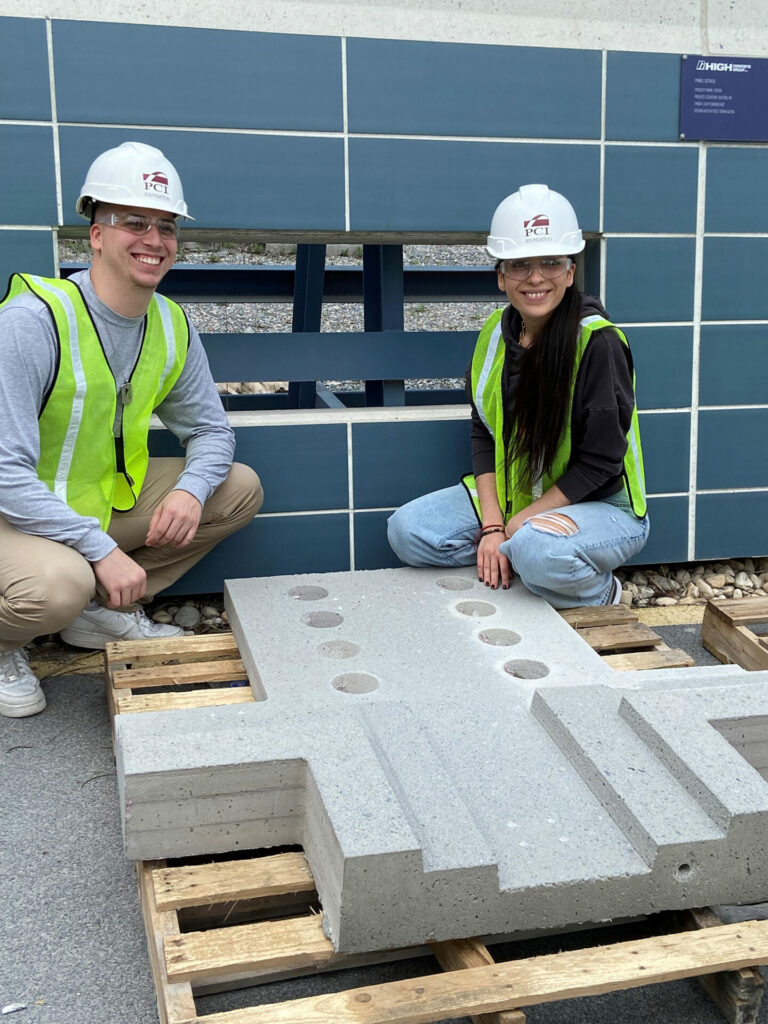
While Cast-in-Place concrete may have an advantage from a historical viewpoint, the Precast sector is making huge forward strides and is fast becoming the go-to building material. Undoubtedly, this is an industry that has grown and developed hugely in recent decades. For Dawn Decker, Executive Director of PCI Mid-Atlantic, this momentum has been in tandem with the education work the association does on behalf of its members. “As the precast and prestressed concrete industry has evolved with more market data and research findings, we’ve expanded our education and awareness outreach to include more stakeholders that influence the design, specification and construction of buildings, bridges, and parking structures. Additionally, Jim Voss, president of JVI-Inc., established the PCI Foundation in 2001, a separate non-profit from PCI with its own operating budget. The PCI Foundation focuses on providing curriculum development grants to schools of architecture, engineering, and construction management.”

concrete bridge project by PCI

In addition to this education piece, the association also works to support its members in a variety of other ways. Through a combination of marketing and facilitating connections right through to providing resources, support and expertise, members benefit from the reassurance of having an association with a huge knowledge base in their corner. “Our chapter is focused on supporting precast professionals, generating greater awareness for precast, and improving the communication between our industry, academia, and design community to foster beneficial working relationships for all.”

Marketing a hugely well-known product in an industry that has been working with concrete for generations may seem like an unnecessary venture, however, it is a vital aspect of the work PCI Mid-Atlantic does. By generating marketing content for the chapter, member businesses, academia, and PCI as a national institute, the chapter works tirelessly to promote and increase awareness and use of precast and prestressed concrete for bridges, buildings, and parking structures. As Decker explains, the need to keep Precast concrete on everyone’s mind has many benefits. One of the most important being the need to attract talent to a sector that can struggle to fill working positions. “Our members are constantly recruiting new employees in various roles in their organizations; this is one of their greatest challenges. Last year we established a Career Center with job descriptions linked to our 10 workforce development videos and a zip code plant locator to generate applicants – we’re committed to supplementing company efforts to get more people working in our industry. To that end, we’ve started sharing employee stories highlighting Women in Construction, our Young Professionals Network, and this year, we’re launching a Veterans in Precast blog series. The people that work in our industry are our greatest asset and we need more people to join us. Celebrating our member employees is part of these initiatives.”

“Members benefit from the reassurance of having an association with a huge knowledge base in their corner.”

As the industry pivots to more sustainable practices, PCI Mid-Atlantic’s members benefit from its ability to harness industry leading knowledge and they receive legislative advice on current challenges. At PCI Mid-Atlantic’s annual winter meeting, Emily Lorenz, a PE, industry expert and consultant, gave a talk about legislation that is incorporating sustainability criteria, such as low embodied carbon concrete. As Decker shares, its members are in various stages of improving their manufacturing practices and environmental footprint as well as conducting LCAs (life cycle assessments) to produce EPDs (environmental product declarations). By providing this information to members, businesses in the sector can be best prepared to overcome the challenges of introducing EPDs. As Lorenz explained, the legislation surrounding these requirements make for a very disjointed approach. “Things are moving quickly to prepare for the federally funded infrastructure work. Agencies are looking to EPDs and setting limits in an effort to build toward a more-resilient and zero-carbon future. But some of the guidance or model code language doesn’t conform to the requirements in the ISO standards related to comparisons. Some agencies have established environmental benchmarks that don’t correlate to current construction methods. Others are based on best practices for buildings including energy performance and construction types. This scattered approach […] makes it difficult for designers and product manufacturers to comply.”

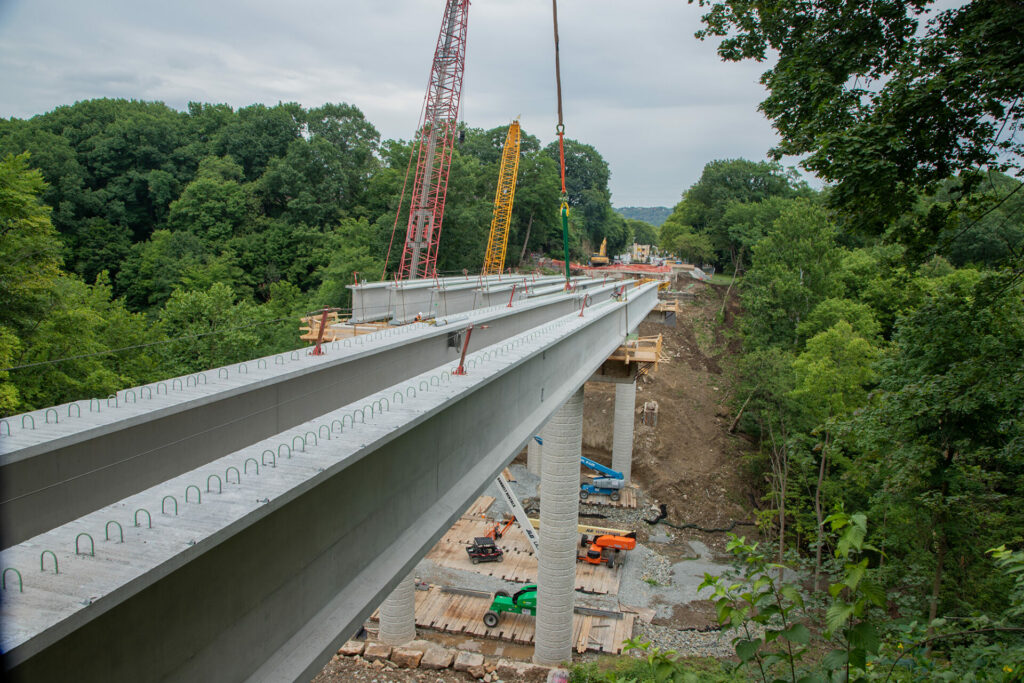
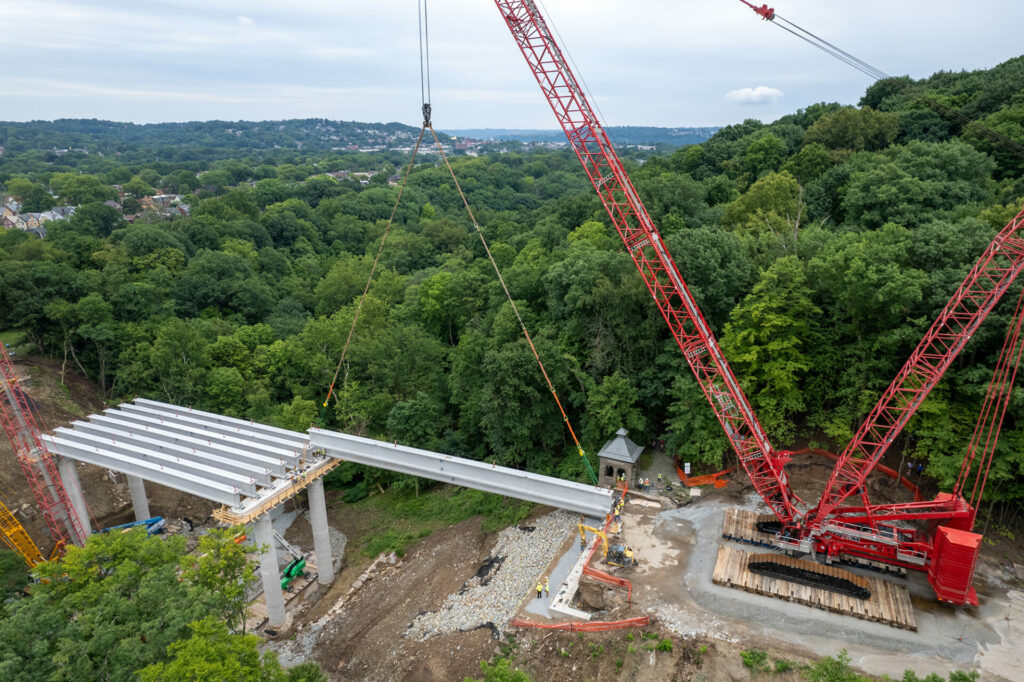
With these complex and on-going challenges facing members, it could be easy to forget the innovative and high-quality projects that are being completed every day. Speaking to Decker, she was keen to reinforce the message that using precast prefabricated components produced in factory-controlled environments deliver resilient, durable, low maintenance and beautiful structures. Fern Hollow Bridge in Pittsburgh is a prime example. This three-span replacement bridge that sits almost 100 feet above ground consists of 21 Prestressed Concrete Bulb Tee Beams, each one an impressive 155 ft long, weighing over 100 tons. With conventional methods, replacing a bridge this size would’ve taken about three to four years, plus for planning the bridge, choosing its design, obtaining approval, installing an abutment, and cleaning the site. With precast concrete construction? Fern Hollow Bridge in Frick Park was completed in under a year. “This is extremely, extremely fast. On a normal bridge project, we probably would’ve been about year three before we reached this point,” said Cheryl Moon-Sirianni, District Executive at Pennsylvania Department of Transportation (PennDOT). As Decker explains, this project was incredibly challenging. As the bridge had collapsed, there was a need to move decisively and navigate a complex landscape. “The collapse of Fern Hollow Bridge begged the need for an emergency acquisition system. The project team was stacked with both public and private players who worked intensely to meet unprecedented construction rates, delivering the bridge beams just six months after the initial collapse. It’s incredible for a bridge project of this magnitude to move so quickly and open in less than a year, and it’s all thanks to close collaboration and a push to meet this community’s urgent need.”

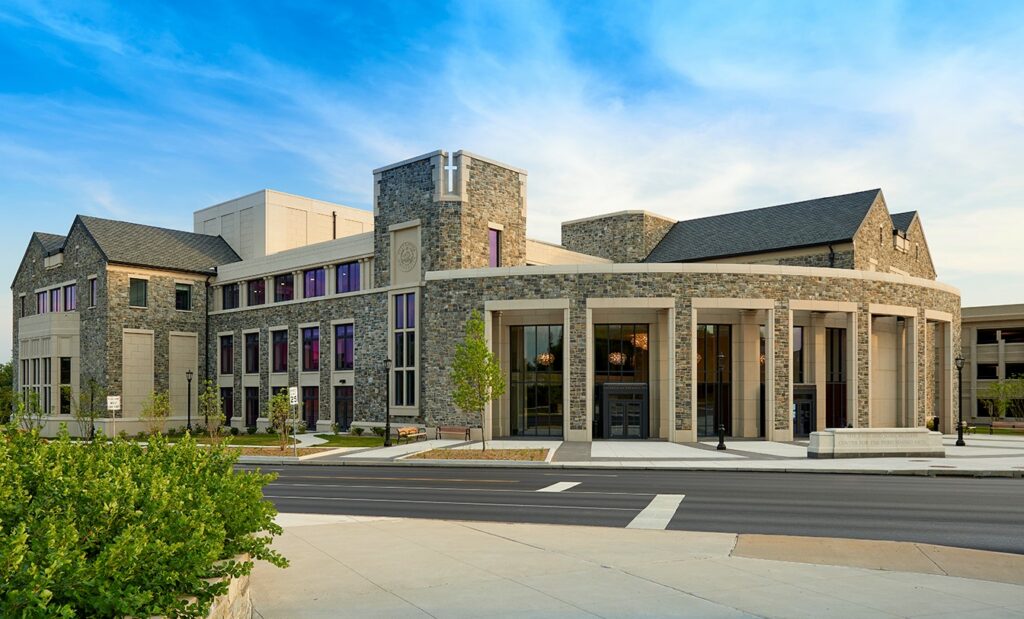
 John and Joan Mullen Center for the Performing Arts project completed by PCI members
John and Joan Mullen Center for the Performing Arts at Villanova University

Another example of the quality work being completed by PCI Mid-Atlantic members was the John and Joan Mullen Center for the Performing Arts at Villanova University. Villanova University wanted to maintain the Gothic revival architecture found throughout the 175-year-old campus in the design of their new performing arts center. Additionally, they aimed to achieve LEED Silver with notable inclusions such as reflective roofing, a green roof over the main proscenium theater, recyclable materials, low-emitting finishes, and an energy-efficient HVAC system. “The client and design team utilized architectural precast concrete due to construction cost savings and better lead time of the exterior wall related to a traditional stone façade construction. This was based on the rigorous construction schedule reviewing lessons learned from a traditional stone veneer project being constructed at the same time across the street. The John and Joan Mullen Center for the Performing Arts at Villanova University was completed as a $50 million, three-story, 85,000-square-foot structure that houses a full-size theater and various arts-related classrooms.”

With a rich history and an ever-growing awareness of its benefits, Precast Concrete is becoming the best choice on projects that require strength, efficiency, accelerated construction and additional sustainability. For Decker and those at PCI Mid-Atlantic, the future will be one of continued support, education, and advocacy. As she explains, this will benefit members both today, and long into the future. “We need more visibility at high schools to let guidance counselors know about our industry for those students that don’t want to pursue a college education. A recruitment path for our members in their local communities. Our goal is to create a strong precast community that is inclusive of all our diverse stakeholders. When we come together, we want to learn, innovate, and advance all while celebrating what precast and prestressed concrete has to offer.”

Building the Future: Unleashing the Power of AI

View in E-mag

The construction industry is an ever-evolving landscape. It is a sector that thrives and depends on innovation, progress, and outside-the-box thinking. In fact, it is this steady influx of technological advancements that have ensured that the industry remains at the forefront of community, industrial and infrastructure growth. Among the latest groundbreaking technologies that have the potential to reshape the future of construction, artificial intelligence (AI) stands at the forefront. While innovation and tech developments tend to be greeted with open arms across the industry, AI has not been universally welcomed. Rather, it is being viewed with a skeptical eye and industry professionals fear that their jobs and livelihoods are at risk. As AI finds its place within the industry, questions are being asked about its impact on employment and the dynamic relationship between humans and machines.

Henning Roedel, in his role as robotics lead for the innovation team at California-based DPR Construction, has spent a lot of time thinking about the potential benefits and challenges of the nascent rise of AI in the construction industry. While he can accept that a certain level of apprehension is understandable, he feels that the suspicion is ultimately misguided. “We don’t think about how to reduce our staff size, because we have enough backlog and work ahead of us that we need more people. You need to flip the displacement question around because we currently don’t have enough people in our industry to meet the construction needs of society as it is.” This is not, however, the biased view of an insider. Statistics show that in March there were more than 341,000 unfilled jobs in the sector.

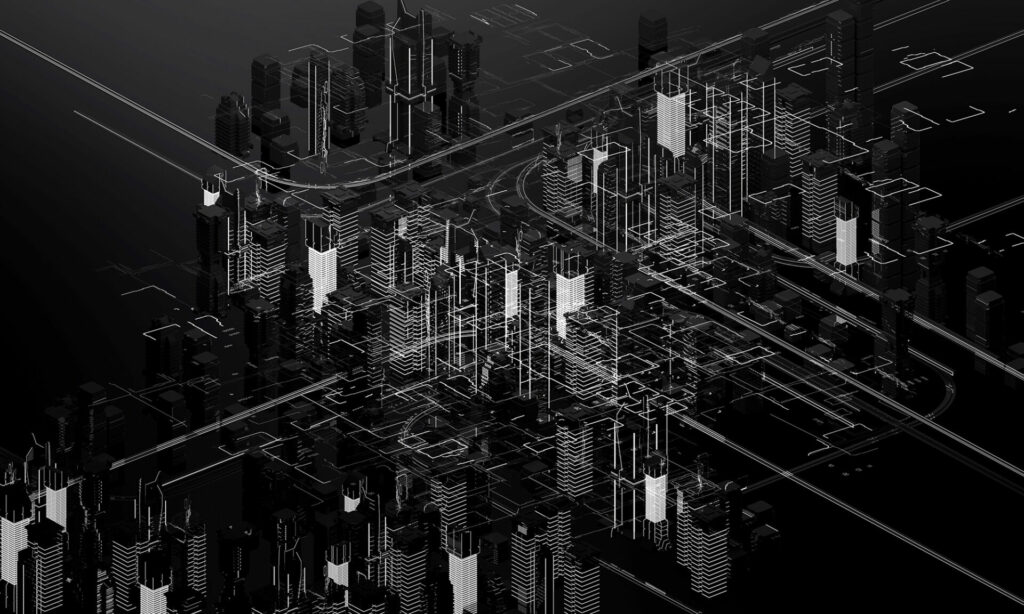
computerized hypothetical city made by AI

According to Roedel, the emergence of AI in construction is not causing mass redundancies across the industry. In fact, quite the opposite is true. Through the skillful use of technology, both AI and robotics, the industry is managing to stay afloat amidst a tidal wave of job displacement and abandonment. “AI and robotics are solutions to that growing crisis of not being able to build enough homes, offices, and roads to keep people living healthy lives,” said Roedel, whose firm has been using both to help workers get more done. “The tools that are coming out are amplifying the lives of both our field and corporate office staffs, who can leverage ChatGPT and other tools to save mental time and productively move onto the next task that much earlier.”

In what may come as a surprise to some, AI is already well established in certain fields. With leaders harnessing its ability to analyze vast amounts of data and make predictions based on patterns, the tool is already making significant contributions to the industry. In the realm of design and planning, AI-powered algorithms can generate optimized floor plans, allowing architects and engineers to explore countless possibilities in a fraction of the time it would take using traditional methods. According to Bob Banfield, machine learning engineer at Trimble Construction, these algorithms are at the core of the highly efficient technology. “Machine learning includes many algorithms. Here’s a quick example: if you were looking to find out whether or not you are liable to get some type of disease, one type of learning algorithm might work its way through a tree of questions like, ‘how old are you?’ Then, ‘okay, do you exercise?’ And so on. If you say yes, you go down one branch, and if you say no, then you go down another. That’s a perfectly valid machine learning algorithm. It’s like the game 20 Questions you might’ve played as a kid, except in machine learning those questions are automatically generated.” These algorithms consider factors such as material usage, energy efficiency, and structural integrity, ensuring that the final product is not only aesthetically pleasing but also functional and sustainable.

“AI in construction is not about replacing workers but rather supporting them by augmenting their capabilities.”

While rapid advancements in robotics are now leading the industry towards a deeper, AI-driven level of automation on construction sites, the industry is not yet convinced. However, the evidence is continuing to mount. Intelligent machines, equipped with sensors and cameras, can perform tasks that were once labor-intensive and time-consuming. Robotic arms can lay bricks as precise as the human eye, while autonomous vehicles transport materials with incredible efficiency. Rather than create more challenges for those working in the field, these tools enhance productivity, reduce human error, and minimize safety risks, leading to savings in both cost and time.

As AI and automation continue to make strides, concerns arise about the potential displacement of human workers. However, industry experts argue that the role of AI in construction is not about replacing workers but rather supporting them by augmenting their capabilities. Robert Thompson, a renowned construction technologist, affirms, “AI is not here to take jobs; it’s here to elevate them.”

AI hand holding building concept

When viewed in the context of a chronic skilled worker shortage, the resistance to AI seems even more perplexing. By eliminating mundane and repetitive tasks, allowing workers to focus on more complex and creative aspects of their jobs, the industry could maximize the abilities of the staff it has currently on jobsites. According to Roedel, the use of AI should not only be a given, but it should also be a welcome respite from the challenge of keeping the industry alive. “AI and robotics are solutions to that growing crisis of not being able to build enough homes, offices, and roads to keep people living healthy lives,” said Roedel, whose firm has been using both to help workers get more done. “The tools that are coming out are amplifying the lives of both our field and corporate office staffs, who can leverage ChatGPT and other tools to save mental time and productively move onto the next task that much earlier.”

If we are to critically evaluate the potential outcome of an AI-supported construction industry, we cannot discount workers fears completely. Current sectors of the manufacturing and infrastructure industries are already thriving through the use of robotics, effectively removing the need for human involvement on production lines around the world. It is, seemingly, an issue of balance. Where does an industry go in terms of ensuring the humans at the coalface are protected and utilized to their full potential? With the market size for AI in construction forecast to grow by over 30% annually and move past the $8.5 billion mark by 2031, it is a very real conversation that needs to take place sooner rather than later. However, for Roedel and DPR, there are certain benefits of AI that will always trump personal interest, regardless of your standpoint. “We want to see more of these tools at work in high voltage scenarios and hazardous environments. Any hazmat applications where we can put the smart machines in and take the people away, so much the better.” With its potential to lower costs, increase productivity and vastly improve workers safety, AI is a conversation that is certainly worth having.

Two-Story 3D Printing – Housing Revolutionized

In a post-pandemic world, it seems as though challenges are mounting. The cost of living is rising to extreme levels while concerns continue to grow around environmental and social issues. Underpinning this sense of anxiety is the acute shortage of residential housing, a problem that seems to be facing every community worldwide. The construction sector is, unsurprisingly, at the center of these challenges. It is an industry that is seen by some as both the cause of these issues and its potential savior. With innovative new techniques, materials and designs coming onstream every day, it seems that much is being done to work through a challenging environment. However, in recent times, one particular development has offered a glimpse into a future that is both equitable and sustainable. In order to meet the growing demand for affordable and sustainable housing, innovative companies have turned to 3D printing. This exciting development, offering a cost-effective and eco-friendly solution to the housing crisis, benefits from minimal waste, quicker build times and a lower carbon footprint.

While 3D printing has certainly made those in the construction world sit up and take notice, it hasn’t yet taken over. Techniques are advancing and appear to be close to a level that could be rolled out on a wider scale, but a number of factors leave it at risk of stagnating. Prohibitive costs and a lack of knowledge across the industry are evident barriers to its ongoing success. However, for a sector that thrives on novel and innovative advancements, it shouldn’t be that way. The potential benefits of 3D printing in relation to the construction industry could not be clearer. It is incredibly fast, for starters. Amidst a housing crisis, this is reason alone for the sector to be prioritized. Despite these benefits, it is an area still in its infancy. Start-ups are appearing in small numbers and highly impressive mini-projects are breaking ground but thankfully, that may not be the case for very long.

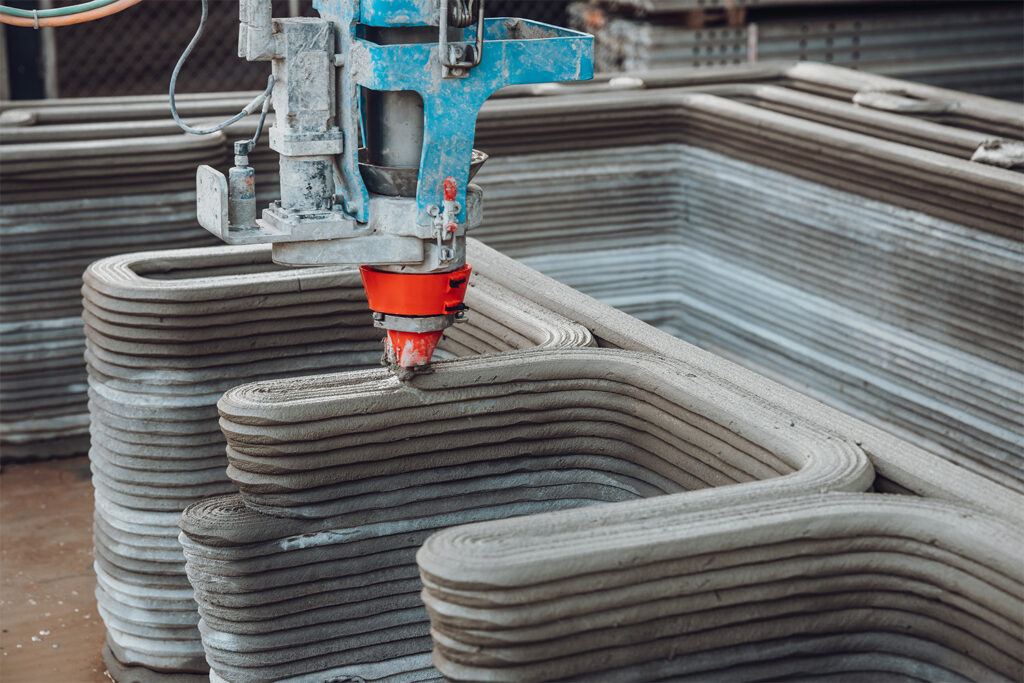
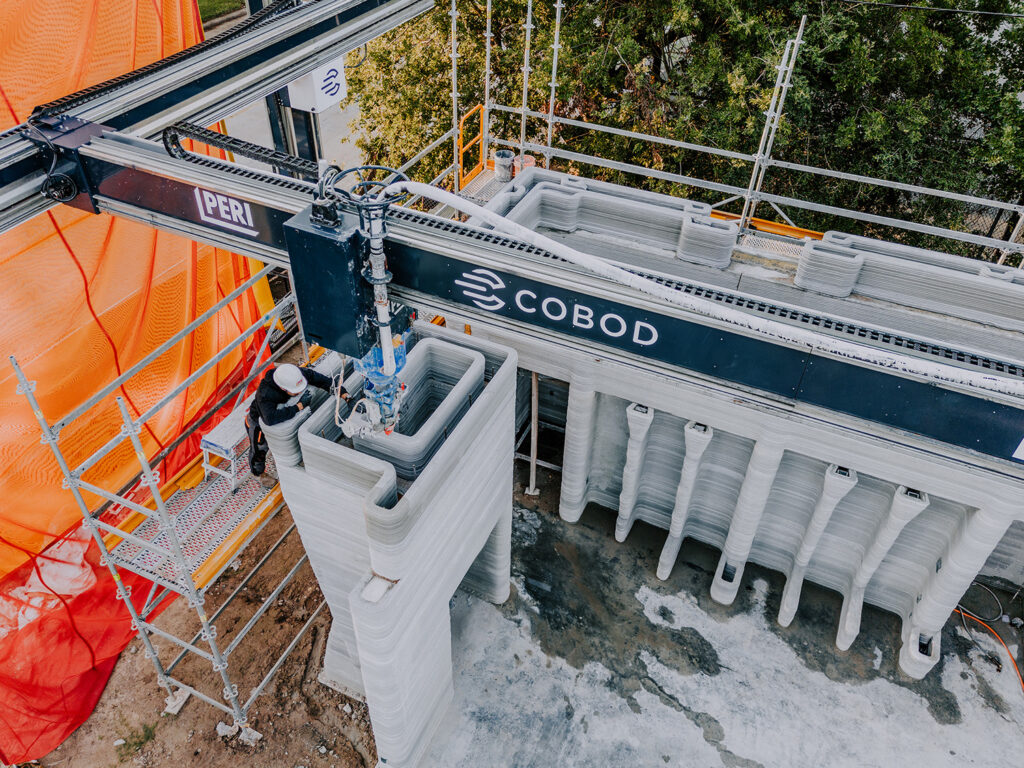
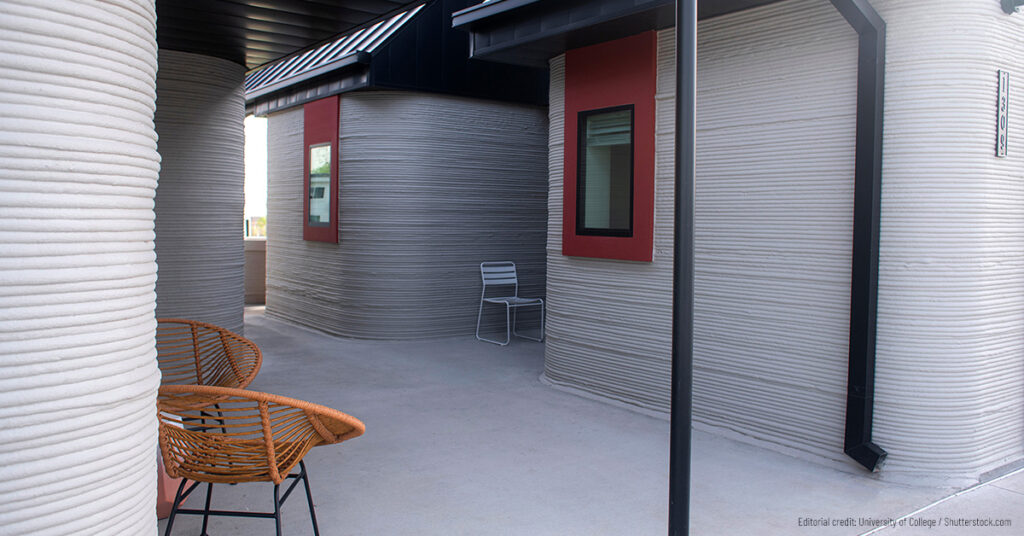
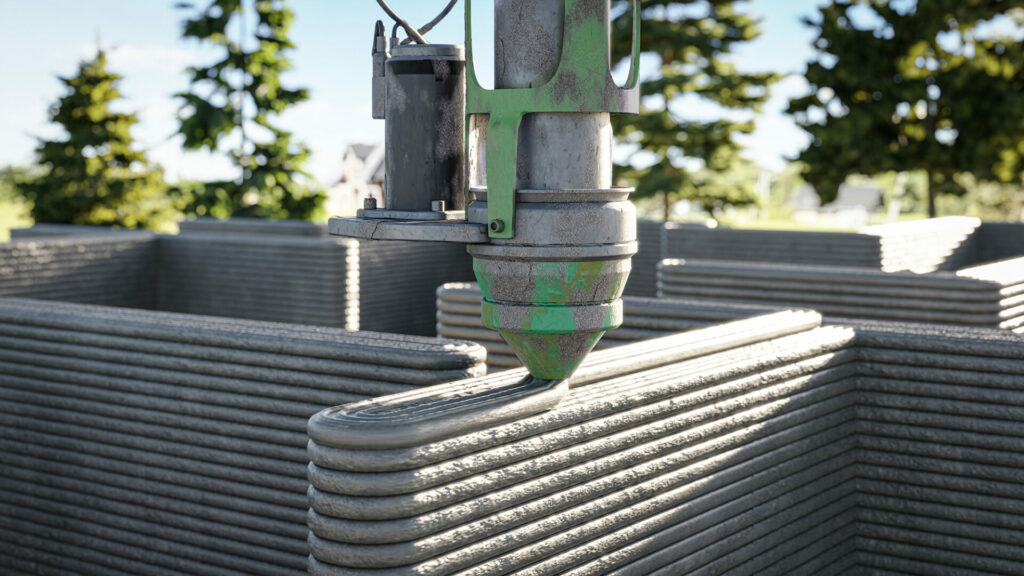
The culmination of a two-year collaborative effort between architectural designers Leslie Lok and Sasa Zivkovic, principals of HANNAH; along with PERI 3D Construction, and CIVE, one of the leading engineering and design/build contractors in Houston has resulted in the ‘House of Cores,’ the first ever two-story house built by using a 3D printer. The structure, an incredible 4,000 sq ft, is designed and produced to showcase the vast potential that 3D printing can potentially have on the housing market. According to HANNAH, the house has, unlike other 3D-printed structures to-date, a customized design and has been built through design solutions that weave existing construction methods with new technology. “With a hybridized construction method that combines concrete 3D printing with wood framing, this approach allows the two material systems to be used strategically and aims to increase the applicability of 3D printing in the U.S., where framing is the one of the most common construction techniques. The building design is conceptualized as a series of printed cores that contain functional spaces and stairs. The spatial cores are connected by wood framing to produce an architectural alternation of concrete and framed interiors. The project’s scalable design and construction process is applicable for multifamily housing and mixed-use construction.”

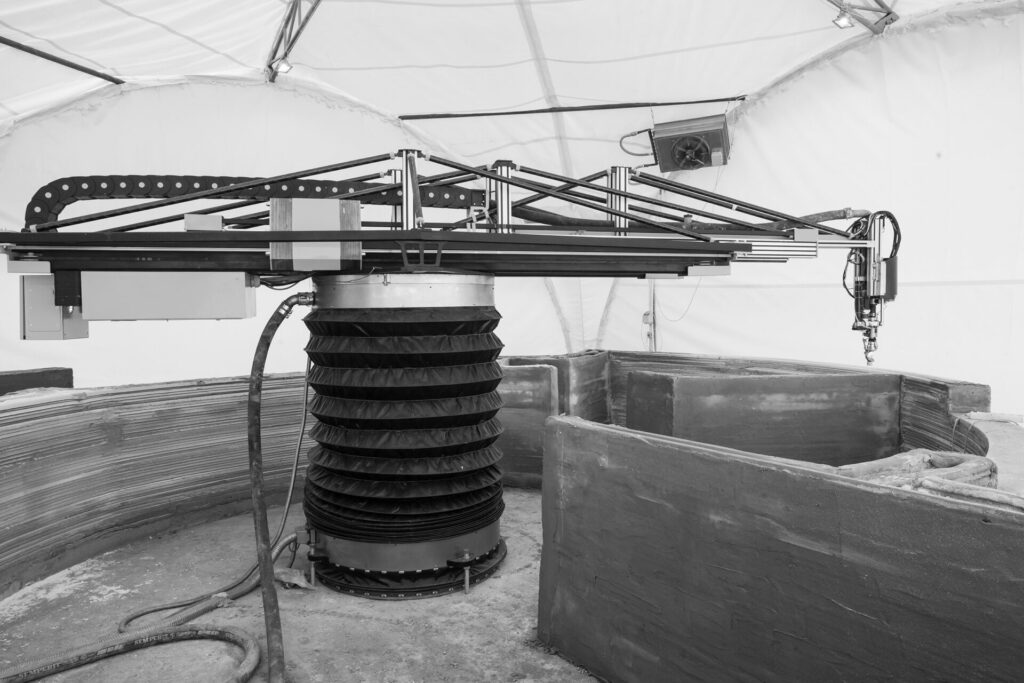
The printer, the COBOD BOD2 gantry printer is an enormous piece of equipment that weighs more than 12 tons itself and is the work of cutting-edge 3D construction company, PERI. By utilizing the printer’s ability to work through custom designs and effective layout capabilities, the structure a three-bedroom house, was erected in an incredible 330 hours. According to Fabian Meyre-Broetz, CEO of PERI, the project demonstrates the company’s ability to lead the way when it comes to modern construction methods. “We are incredibly proud to not only showcase the possibilities of the BOD2 3D construction printer but also our extensive know-how in planning, engineering, and printing on this project, which is the seventh and largest one we printed so far. We are convinced that it will set new standards from a design as well as printing execution perspective and underlines our role as the forerunner for this new construction technique.” This view is echoed by Lok who believe that, due to the intrinsic challenges when building a two-story building, the printer itself was a vital aspect of the project’s success. “You can actually find a lot of 3D-printed buildings in many states,” Lok said. “One of the things about printing a second story is the technical requirement of the machine. And of course, there are other challenges: structural challenges, logistic challenges when we print a second-story building.”

“By consolidating traditional methods and harnessing the potential and power of cutting-edge techniques, the construction industry has once again come up with a solution that may yet revolutionize the housing sector.”

While the project is the culmination of work from many parties, the work on the ground is being completed by CIVE, the Design-Build firm that looked after the engineering and GC work. In a sector where sustainability needs to meet with functionality, the project could be a crucial turning point in the challenging environment facing both the construction industry and the housing market in general. For Hachem Domloj, President at CIVE, it marks an enormous turning point. “Having the opportunity to be the engineers and general contractor for the first multistory 3D-printed structure in the U.S. has been an honor. We can see how this technology and our team’s approach is providing the scalability to larger commercial developments. Collectively, we’re changing the way our country builds, and paving the way for more affordable housing, higher structural integrity, and faster building capabilities. The possibilities of 3D printing are endless!”

With the need for more housing growing, it seems as though time is not on anyone’s side. Supply chain issues, skilled labor shortages and rising costs are all compounding a situation where a solution needs to be reached immediately. However, the ‘House of Cores’ is a genuine breakthrough. On this project, 3D printing has moved from niche to mainstream. It is no exaggeration to suggest that this could signal the beginning of an end to the crisis. As for those involved, the structure is already a massive success. By consolidating traditional methods and harnessing the potential and power of cutting-edge techniques, the construction industry has once again come up with a solution that may yet revolutionize the housing sector. “For the design of the project, we developed a hybrid construction approach that couples innovations in concrete 3D printing with traditional wood framing techniques to create a building system that is structurally efficient, easily replicable, and materially responsive,” said Leslie Lok and Sasa Zivkovic, of HANNAH. “The project also highlights the exciting design potential of mass-customized architectural components to meet homeowner’s needs and to simplify building system integration. These design efforts aim to increase the impact, applicability, sustainability, and cost efficiency of 3D printing for future residential and multi-family buildings in the U.S.”

Plantd: The Power of Speed

At the heart of any progress that the construction industry has made, there is one thing that has made it all possible. While skill and techniques are vital components to a developing and innovative sector, they would be nothing if it weren’t for the materials being used to create, to build and to construct. With every advancement in material and its usage, there follows a series of innovative methods, each one adapting these materials and applying them in novel ways to the betterment of the construction world. This relationship has been mutually beneficial and has pushed our global communities forward in unimaginable ways.

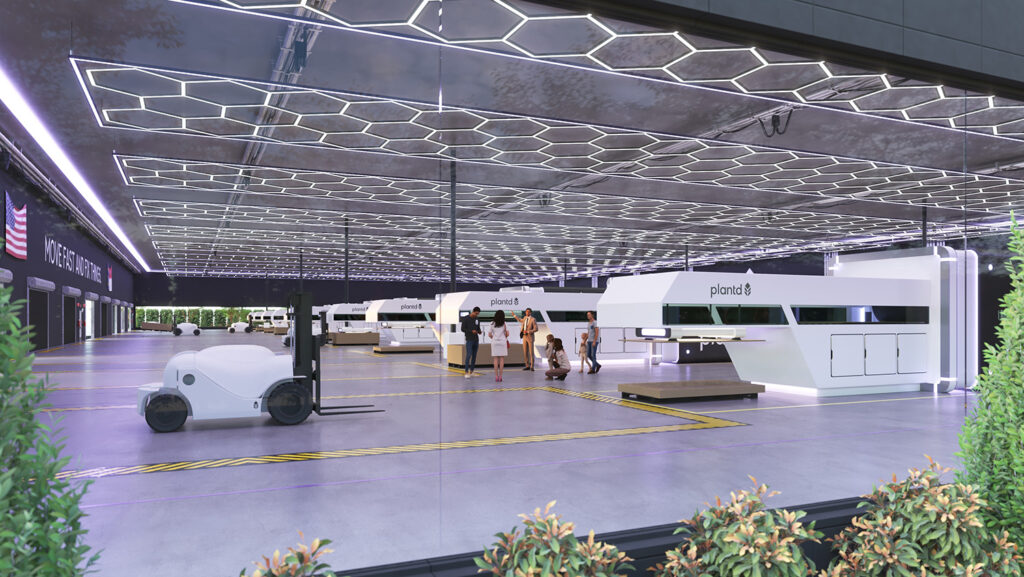
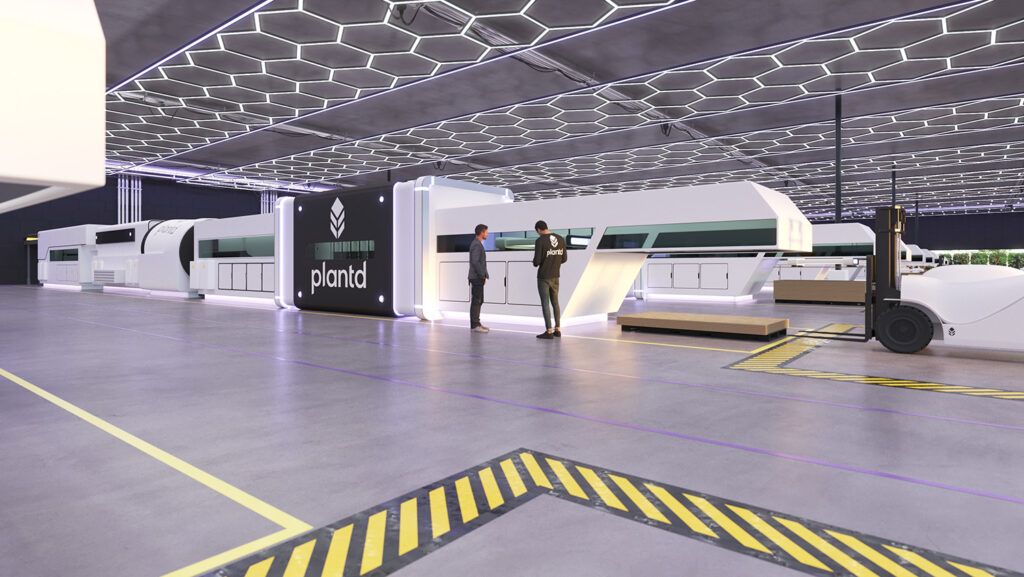
As building materials become ever more expensive, the construction industry now finds itself in a difficult place. Costs are rising across the board and sustainability issues are stacking up. For those at Plantd Materials, the alternative building material start-up that was founded by Josh Dorfman, along with Huade Tan and Nathan Silvernail, both former SpaceX engineers who have worked for years, designing, and building key systems and components of the Dragon cargo and crew spacecraft, we have reached a crossroads where difficult decisions need to now be made. “Throughout history, civilizations have advanced at the speed of material innovation. Timber, steel, and concrete enabled remarkable progress, but today they are the problem, not the solution. Continuing to build with these materials accelerates climate change and promises to impede progress by threatening our future on this planet.”

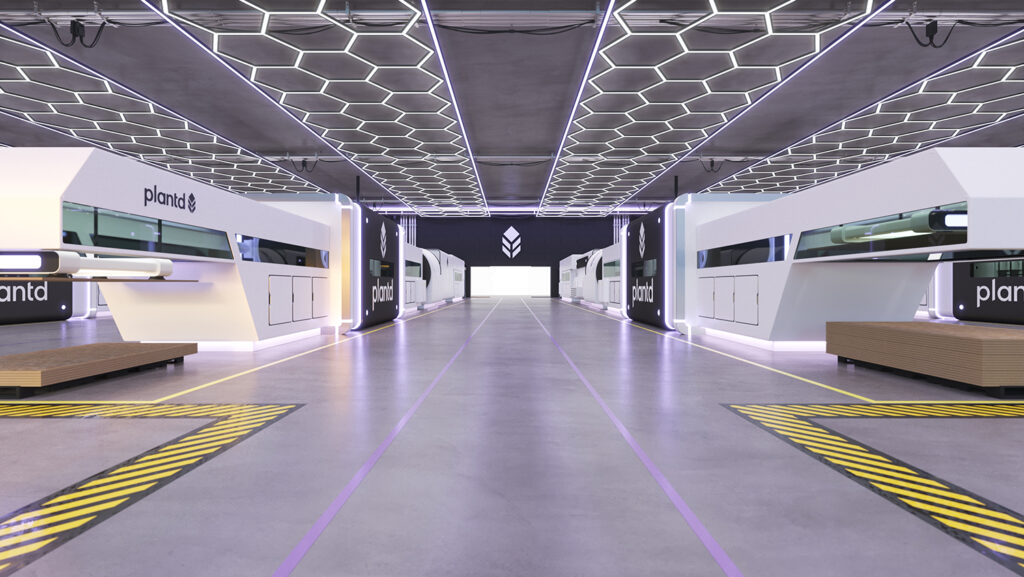
Photo by Plantd Materials

The solution is clear, yet incredibly complex. While innovative minds are attempting to pivot away from concrete to a more environmental and sustainably produced material, traditional values still hold firm. Additionally, alternatives remain costly and niche when compared to the historical might of concrete. However, one material is proving to be a viable source. Having been used in structure building in some capacity for many years, forward thinking individuals and companies are looking towards timber as a means of finding a sort of balance. With this in mind, it is little surprise to learn that structures built solely of wood are enjoying something of a resurgence. Techniques and practices have now advanced to the point where timber is offering genuine alternatives to brick and cement. At Plantd, the goal is to offer climate-positive alternatives to legacy building materials, while maintaining the high standards that are necessary in the construction world. “Building with Plantd materials enables home builders to offer their customers homes that are affordable, durable, and sustainable. And by sequestering atmospheric carbon dioxide within structural frames, homes built with Plantd materials will play a key role in solving climate change.”

There is one small sticking point, however, and that is time. Forests, while sustainable by their very nature, do not spring up overnight. So, what can be done to offset the lead-in times of these materials. This particular issue has been a concern for Dorfman and his colleagues at Plantd Materials for some time. In fact, he says that speed has always been an intrinsic part of what the company is trying to achieve. “We started with the question, “What’s the fastest way to remove carbon from the atmosphere and turn it into useful, durable products?” The answer to this particular challenge is already here. The company’s flagship product is a wood-panel materials designed for homebuilding. However, this material differs from the norm slightly. Incredibly, Plantd’s product comes from a fast-growing species of grass. Plantd’s proprietary low carbon-emissions production technology transforms fast-growing perennial grass into durable, carbon-negative building materials that, rather impressively, outperform competitive products on key attributes, including strength and moisture resistance. According to Dorfman, the product is right up there with anything else in the industry, too. “We see the greatest opportunity to lock away the most carbon when we make a superior product than what exists today.”

“Starting with structural panel products for walls and roofs, Plantd will fabricate building materials that are a direct substitute for traditional home construction products and require no alternative installation techniques.”

The process itself is fast-paced and highly innovative. Its plan is to replicate existing materials and techniques, supporting the industry in necessary changes without causing stress and apprehension in a fragile, post-COVID setting. In a press release announcing that it had secured $10M in Series A Funding, Plantd explained both the process and long-term strategy for its success. “Starting with structural panel products for walls and roofs, Plantd will fabricate building materials that are a direct substitute for traditional home construction products and require no alternative installation techniques. By cultivating fast-growing perennial grass instead of cutting down trees and pioneering novel production technology to minimize carbon emissions, Plantd Structural Panels™ retain 80% of the atmospheric carbon dioxide captured in the field, which is then locked away inside the walls and roofs of new homes.” For Dorfman, it goes even further. He sees the opportunity for Plantd to surpass existing materials by being a superior material, while also being more sustainable and competitive. “We can’t move quickly enough to solve climate change unless we develop profitable methods to take carbon dioxide out of the atmosphere,” said Dorfman. “We’re going to change an industry by offering builders a better product at the same price and, in the process, scale a business that can help save the planet.”

Photo by Plantd Materials

Unsurprisingly, for a company that values speed, the company has set to work, moving forward at a rapid pace. With funding secured, Plantd moved to locate and open a facility that can bring its products to the mass market. With a ribbon cutting event taking place in early May to celebrate the opening of its production facility and headquarters in Oxford, North Carolina, the company is going full steam ahead. The 80,000-square-foot warehouse and offices were originally occupied by the Santa Fe Natural Tobacco Company. An anchor facility for the town of Oxford, the location provided local jobs and farming contracts to this historic hub for manufacturing and agriculture that had previously been lost when the tobacco factory closed.

So, when faced with a multifaceted challenge that was both complex and urgent, it seems as though Plantd may have made a breakthrough. With timber becoming an ever increasingly viable, and preferrable building material, Dorfman, Tan and Silvernail have utilized the power of grass, its rapid growth cycles, and scientific innovation to produce a product that meets all requirements, and then some. Not happy with merely providing alternative, Dorfman believes the company and its product can make long-lasting change that not only benefits the construction industry, but the world itself. “Plantd is innovating across the entire value chain for building materials, cultivating new sources of biomass that allow trees to remain in the ground and pioneering new machines and production technologies that remove cost and carbon emissions at every stage of business operations. In Oxford, we see an unparalleled opportunity to reshape the construction industry, build a credible climate change solution, and bridge this rural region into the 21st-century economy. Integrating into the economic and social fabric of this area is the foundation we will build upon to drive positive impact at the local, national, and global levels.”

www.plantdmaterials.com

Sargablock – Solutions from Under the Sea

The construction world, and structure building in particular, has long been associated with concrete. In fact, the relationship between the industry and its most famous building material is one of the most enduring around, going back thousands of years. However, it has become ever more apparent that it is a problematic relationship. Furthermore, it is one that the industry needs to diversify from. As sustainability targets and carbon goals all loom ahead, the industry is facing up to the very real possibility that, for the first time ever, the construction landscape will no longer be solely a concrete one. Despite concrete still being the go-to when it comes to a reliable and durable material, those within the industry are acutely aware of the need for alternatives. Innovative minds have already been making headway in this regard with a variety of interesting ideas being launched from compacted plastic to fungi. While each bring something new to the table, nothing has yet shown the potentials to usurp concrete. It is in this context that we find Sargablock, an incredible new material created using marine macroalgae. While this term may not mean much to some people, it is most commonly recognized by another term, seaweed.

Seaweed is the ubiquitous underwater material, covering an astonishing 3.4 million square kilometres of our oceans. Needless to say, it has many uses and the biological and environmental service it provides to coastlines and the ocean itself cannot be understated. It is not, however, the most welcomed and loved plant on the planet. To put it mildly, human interaction with seaweed tends to land somewhere around ambivalence and frustration. It’s unsightly color washes ashore, leaving bathers to battle against its well-known smell. According to Shelly-Ann Cox, chief fisheries officer for the Barbados government, the negative impact of seaweed is much more serious than first imagined. “Every year we’re seeing more and more countries reporting of the influx, and the devastating impacts on tourism, fishery sectors and transport.” While, these factors will certainly be troublesome for any tourist destination, the situation gets worse. A recent study has shown the possible link between the toxic Sargassum seaweed and preeclampsia in pregnant women. According to the research results, the seaweed poses a serious risk to the health of pregnant women. “Along with traditional risk factors, environmental exposure to sargassum strandings might potentially trigger early onset of preeclampsia between the 20th and 37th week of amenorrhea. This preliminary finding highlights the need for specific anticipatory public health measures for pregnant women impacted by the recurring environmental problem posed by sargassum invasion.”

Photo: Emily Mkrtichian for UNDP Mexico | undplac.exposure.co/sea-change

For years, governments and local communities have struggled with the very real practical difficulties in removing this particular variety of seaweed as it lands onshore. With ocean temperatures rising, enormous amounts of sargassum are arriving during peak seasons with thousands of tons of it hitting beaches every year. Due to its composition, it cannot be utilized in the same way as other types. Due to as high level or arsenic, it cannot be used for fertilizer or composting. According to Patricia Estridge, CEO of Seaweed Generation, a UK start-up working to commercially process seaweed, the limit to what can be done with the weed is an enormous barrier to these communities. “I think I’ve replaced my climate change anxiety with sargassum anxiety. There are so many climate-positive uses for seaweed, but then there are many different seaweeds in the ocean,” says Estridge. “No one could think of a commercially viable solution for sargassum.” This was the landscape on the beaches of Riviera Maya, Mexico when, faced with no alternative, the local government issued a requirement to clear the fowl smelling sargassum variety to landfill.

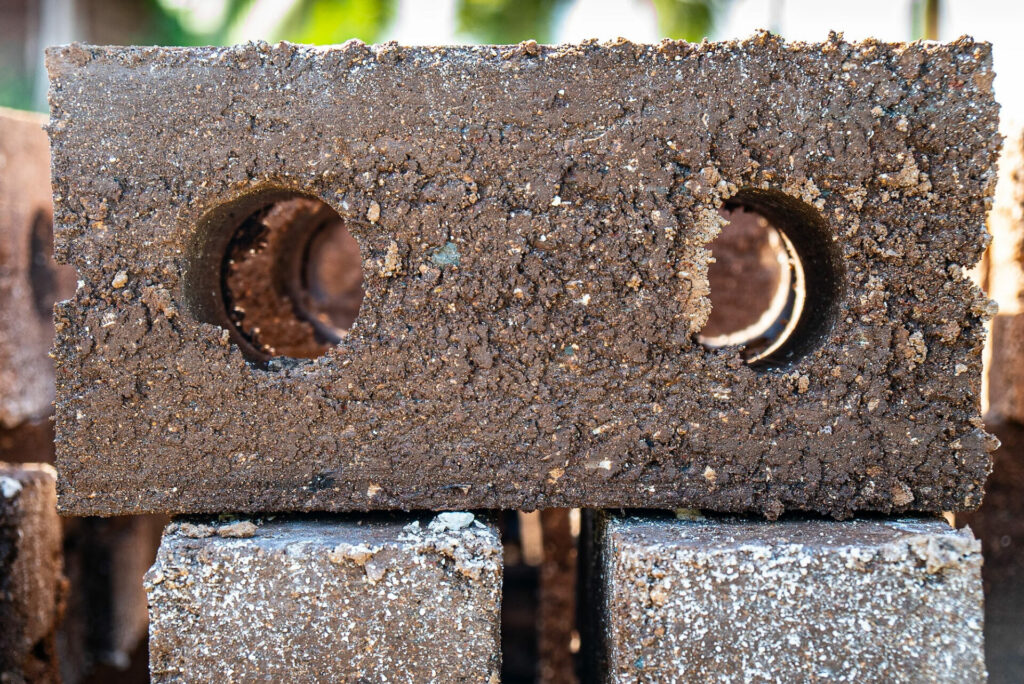
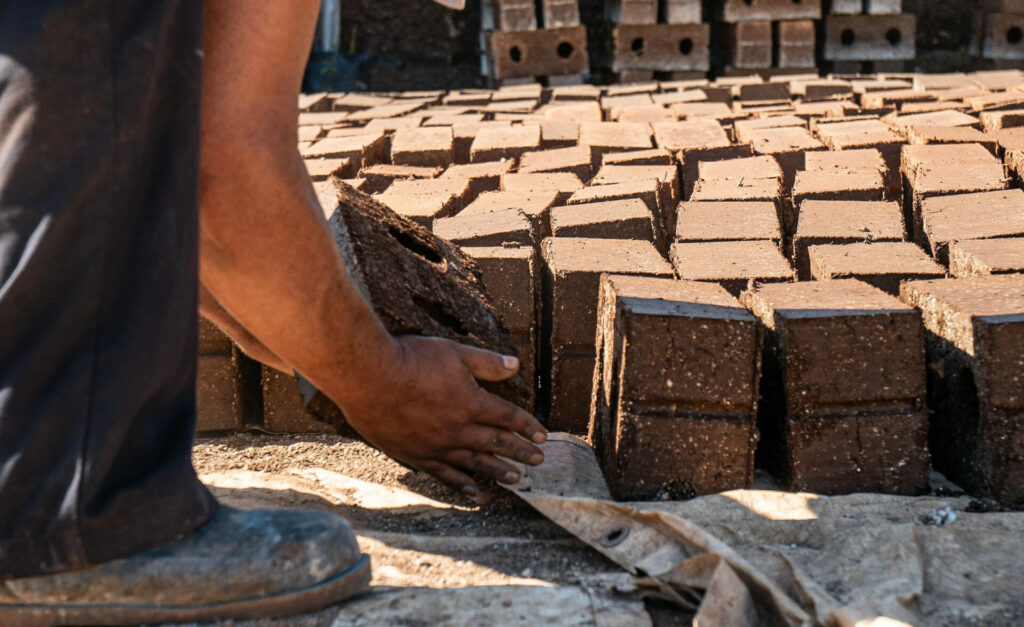
Omar de Jesús Vazquez Sánchez grew up in poverty. As a young immigrant to the United States, he fell into a cycle of low-paid jobs and substance abuse. However, it was his experience as an addict that gave him the ability to radically reimagine the potential for this problematic weed. “When you have problems with drugs or alcohol, you’re viewed as a problem for society. No one wants anything to do with you. They look away. When sargassum started arriving, it created a similar reaction. Everyone was complaining, I wanted to mold something good out of something everyone saw as bad.” Sanchez decided to do something different. From this challenge, he gained a new lease of life. Initially working to clear the seaweed from beaches —his cleanup crew provided employment and a highly profitable service to the local community. “Where others saw a problem, I saw an opportunity to turn it into its own sustainable solution, including placing it in service of people who need it the most. I started collecting sargassum seaweed to use as fertilizer for my business, Blue-Green Nursery, and selling it in small amounts to my clients. Soon I obtained permits and within a year was employing about 300 families to clean the beaches for local hotels and resorts.” This isn’t where Sanchez’ story ends, however. Working with the material, he stumbled across an alternative, and highly exciting potential use for the material. Sargablock was born. Sargablock is a construction material made from sargassum seaweed. “It occurred to me that we could turn sargassum seaweed into construction bricks as it was already being used to make products like plates and other things. Inspired by the memory of my family’s little adobe house, I developed Sargablock, an architectural brick made from the sargassum seaweed that spoils our beaches between April and October.”

Photo: Emily Mkrtichian for UNDP Mexico | undplac.exposure.co/sea-change

The blocks created using the material have passed building regulations and since 2021, Omar’s company has used almost 6,000 tons of seaweed, building structures all around the state of Jalisco. The process, however, is highly innovative and goes beyond many of the alternatives that industry professionals have suggested for years. “I adjusted a machine designed to make adobe bricks so that it can process a mix of 40% sargassum and 60% other organic materials for the Sargablock. The machine can turn out 1,000 blocks a day, and after four hours of baking in the sun, they are dried and ready to be used. After we built Casa Angelita, the first sargassum house named after my mother, Sargablock became one of the first seaweed projects to get off to a solid start in our state of Quintana Roo. From there, I was determined to use sargassum seaweed as a low-cost building material to build affordable housing throughout the Riviera Maya so that families can live in their own homes.”

For Sanchez, this project is much more important than running a profitable business. He has battled adversity and has come out the other side. By using skill, innovation, and determination, he is now in a position to contribute positively to his local community. In fact, the UN Development Program recently selected Omar’s work to be featured in their Accelerator Lab global broadcast to alert the world of its value and ingenuity. With the escalating costs of building amidst a housing crisis, coupled with the problematic issue of concrete emissions, Sanchez may have discovered a solution that works on a variety of levels. “Now we have a first artisanal factory in Mahahual, a tourist town where a dock for cruise ships operates, and we are creating jobs. A sargassum house could last 120 years, and we would like to have 10 houses finished by the end of the year, which will be donated to underprivileged families. My vision goes beyond turning a profit; I would like to see a country where local entrepreneurs create thriving, sustainable businesses that give back to their communities.

fortomorrow.org/explore-solutions/sargablock

undplac.exposure.co/sea-change

Construction in Space

View in E-mag

The construction industry has existed, in some form, as long as life itself. For millennia, structures have been produced for protection, shelter, and comfort, many of these being as complex and innovative as circumstances allowed. Long before modern technologies had been developed, creative minds have used the tools around them to build and to develop structures. While this has all been of huge benefit to us as a global community, it has not always been a smooth ride. Alongside the tumult of the business world, labor shortages and supply chain issues, the construction industry is in a constant battle with the earth that we are building on. Practices have advanced and are now reaching a point where environmental impacts can be offset to a degree, but the construction world is by no means a clean one. Innovation and science are combining to produce the most sustainable materials while processes have become so refined that the impact on land is minimal, however, there is still an impact. Unsurprisingly, the industry is looking for alternatives. With unnerving predictions of climate related conditions and the diminishing ability to develop new types of energy, our view has turned slightly further afield.

Since the sixties gave rise to space exploration, we have had a fascination with the detailed mapping, understanding, and prospect of habitability of it. Science fiction has long been a fan of building worlds where space travel and settlements are the norm. While, until now, these stories have been just that; fiction, it seems as though the construction world is set to become even more exciting. In a fascinating mix of technology and construction know-how, the idea of permanent structures in space are closer than ever. NASA’s Artemis Mission is a project that is on track to making deep space travel and exploration a reality. “Artemis I is the first integrated test of NASA’s deep space exploration systems: the Orion spacecraft, Space Launch System (SLS) rocket and the ground systems at the agency’s Kennedy Space Center in Florida. The first in a series of increasingly complex missions, Artemis I is an uncrewed flight test that will provide a foundation for human deep space exploration and demonstrate our commitment and capability to return humans to the Moon and extend beyond.” In an example of just how transformative this could be, it seems the potential of the mission is limitless. “With Artemis I, NASA sets the stage for human exploration into deep space, where astronauts will build and begin testing the systems near the Moon needed for lunar surface missions and exploration to other destinations farther from Earth, including Mars. With Artemis, NASA will collaborate with industry and international partners to establish long-term exploration for the first time.”

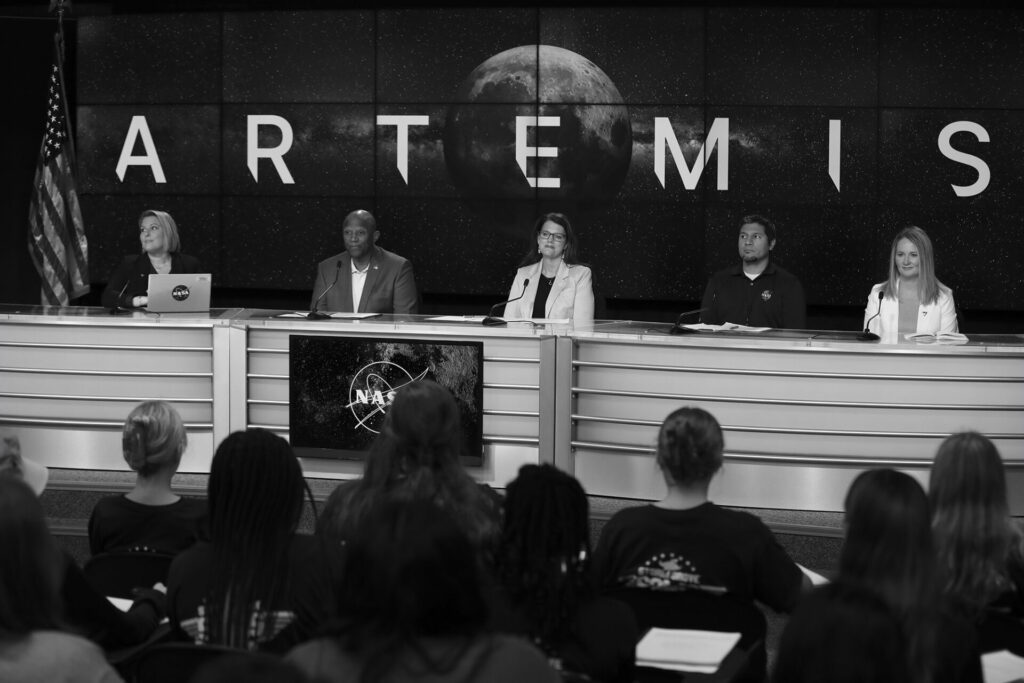
artemis media brief discussing future space exploration
From left, NASA Communications’ Leah Martin, Kennedy Space Center Deputy Director Kelvin Manning, Artemis Launch Director Charlie Blackwell-Thompson, Space Launch System Resident Management Office Manager Elkin Norena, and Space Launch Delta 45 Weather Officer Melody Lovin participate in an Artemis I student media briefing inside the John Holliman Auditorium of the News Center on Jan. 19, 2023, at the Florida spaceport. As part of NASA’s NextGen STEM project, students from Florida’s St. Cloud High School and Storm Grove Middle School in Vero Beach, participated in person during the briefing, while middle and high school students across the country had the opportunity to ask questions of the panel via phone to discuss the Artemis I mission and the agency’s future of human space exploration.

So, what does this all mean? According to NASA’s Steve Creech, the goal is to progress further than we ever have before. “Apollo was awesome, but a lot of it was to just prove that we could do it. I’m not saying it wasn’t important, but this time we want to do it in a way that’s sustainable and that leads to next steps.” While the answer may not be entirely clear, it seems as though the construction industry will soon be tasked with meeting demands more stringent and complex than ever before. In fact, much preparatory work has already been taking place in recent years. Space construction has been taking place for quite some time. With repair work and similar projects taking place on satellites, scientists are well aware of the challenging conditions that are involved in these endeavors. The European Space Agency (ESA) has been conducting studies and research into the challenging conditions that would be faced by construction materials used outside of earth’s atmosphere. “To get the range on the Moon, you need mobility systems, the crew can’t go very far on foot. The science we want to do is in a lot of locations around the Moon, the goal is to build systems that would be capable of month-long or better excursions.” However, according to Aidan Cowley, scientific advisor at ESA, it is this extended period of time that proves the most challenging. “You’re dealing with three major challenges – radiation, temperature extremes and meteorite impacts. On the Moon you’re exposed to solar radiation and cosmic rays at a much more dangerous dose level and temperatures can range from 100C (212F) in the day to -180C (-292F) at night. Then, all you need to do is look at the Moon and you see its craters; it’s being constantly pelted by micrometeorite impacts, and this essentially ablates and damages anything on the surface over time.”

construction site hypothetically in space on another planet

The good news in this regard is that the construction industry has developed materials capable of withstanding these conditions. From transparent aluminum to 3D Graphene, the work has already been done in this regard. One barrier, however, is the transportation and cost of sending these materials to such a hostile environment. That is why, according to Cowley, it is vital that technology it utilized in combination with locally sourced materials. “If you look at the history of our civilization, every time we move to a new location, a new continent, we look around to find what resources are there and we use them to sustain ourselves,” says Cowley. “This is how we proliferated across the planet.” By using naturally occurring lunar resources such as minerals, sunlight and water ice, projects can move from potential to reality. In addition, according to Rachel Klima from Johns Hopkins Applied Physics Lab, it is vital that the concept of waste should no longer be tolerated. “If you really want to do it for the long term, we need to make the most of every resource that we bring or extract. If you have waste heat, use the heat for something… if you have waste metal when you’re trying to create oxygen, use the metal… if you have waste scrap metal, use the scrap metal,” says Klima. “You don’t want to trash things up!”

The thought of using local materials such as rock and ice brings to mind thoughts of very basic, and unhospitable structures. The truth is considerably more dynamic and exciting. ICON, the Texan 3D structure printing company that specializes in advanced construction tech was recently awarded a $57.2 million contract to develop ‘Olympus,’ a 3D-printing system that could be used for building on both the Moon and Mars by using local materials. According to ICON CEO Jason Ballard, the potential benefits are incredible. “Olympus will allow us to build all the elements of infrastructure necessary for a lunar outpost and ultimately a moon base. This is launch and landing pads, roadways, habitats, you name it — all the things we need on the moon.”

With further plans for using lunar rock and 3D printed pavements to create a road and infrastructure network on the Moon, it seems as though the plans are growing exponentially by the day. What was once science fiction is now much more than that. The collaborative efforts of the construction and scientific fields are ensuring that human life is on the cusp of its most advanced development ever. While change and growth on earth may always be the primary goal of the industry, it is always reassuring to know that the industry continues to dream big.

Glass Half Full

View in E-mag

When it comes to essential materials in the construction industry, a number of them come to mind. Concrete and its myriad uses, for starters. In addition to this, stone, sand, and metal in their various iterations are never too far away from a job site. Building materials such as these have supported the industry at every juncture and are synonymous with construction. However, there is another material that may not be one that automatically comes to mind. Despite its subtle input in the construction world, it deserves its place at the table. Glass has been an essential material in the construction industry for centuries. Its combination of versatility and durability make it a material found across multiple sectors. In addition to the innovative design solutions and sustainable building practices, it is a key aspect of modern architecture. The material can be found in windows, doors, facades, partitions, skylights, and numerous other applications in the construction industry.

One key aspect of glass is that, due to its durable nature, it can withstand harsh weather conditions while still maintaining an aesthetic appeal. Coupled with its resistance to corrosion, chemical damage, and UV radiation, it is clear why the material has become a key aspect in the ongoing search for more sustainable construction practices and materials. However, while all this may be true, it does not tell the full picture. Glass, along with its many positives, is not perfect. In fact, while it can be seen in many quarters as an environmentally friendly alternative to single-use plastic, glass is equally problematic. Technically yes, it is indeed recyclable, and it is made from mostly natural materials. The simple fact is though, that most of the glass in use today ends up in landfill, where it can last for hundreds of years. With an ever-increasing demand from the construction industry to ensure the highest use of sustainable and recycled materials, the incredible fact that Americans discard over eight million tons of glass each year is deeply concerning. When this is seen in the context of figures from the EPA that less than 30% of glass used in the country is recycled, it is even more so. For a material that is infinitely recyclable without a loss of quality, it seems peculiar that so much of it is wasted. According to Recycle Across America, “More than 28 billion glass bottles and jars end up in landfills every year — that is the equivalent of filling up two Empire State Buildings every three weeks.”

recycled glass

There is news, however, coming from a New Orleans start-up company called Glass Half Full. The company has taken control of things and is working towards using the natural benefits of recycled glass to promote a circular economy. The benefits of this should be of huge interest to those in construction. According to the company, the goal is clear. “We collect NOLA’s glass and recycle it into sand and glass cullet for coastal restoration, disaster relief, eco-construction, new glass products, and much more.” By crushing 100,000 pounds of glass each month, the company works with local businesses to reuse the raw ingredients in innovative ways. From jewelry to landscaping and construction, insulation to water filters, it seems that the sand produced from recycled glass is pure enough to mitigate the need for a material that is already in scarce supply.

“By crushing 100,000 pounds of glass each month, the company works with local businesses to reuse the raw ingredients in innovative ways.”

The process itself, according to Glass Half Full, is quite a simple one. By facilitating the collection and drop-pff of bottles, it is a case of basically, smashing it all up. “We offer multiple free drop-off hubs across the city, where we collect glass “waste” from residents throughout Louisiana. We also offer collection services for residents, businesses, and events spanning several parishes. Once we’ve diverted this glass from the landfill, we sort it by color and remove all plastic and metal components. Having been collected and sorted, we then process the glass by pulverizing it with hammer-mill crushers at our local facility on Louisa St. We sift the crushed product to remove labels and sort the various size distributions. From there, we are left with sand products ranging from super soft, beach-like powder to chunky glass gravel.”

So where does that leave the construction industry? It seems that, when crushed to become sand of various coarseness, the options are almost limitless. Crushed glass can be used as an aggregate in concrete and asphalt, reducing the need for traditional materials like sand, gravel, and crushed stone. The material also has insulating properties, being the primary constituent in glass wool insulation, which is used to insulate walls, roofs, and floors. In addition to all this, recycled glass can be used to create walls, floors, and countertop tiles. Truly, when you scratch the surface, it seems as though recycled glass can occupy a much wider space within the construction world than previously suspected.

Another, possibly more vital aspect to the work being done by Glass Half Full is the positive effect this will have on eco-systems and coastlines. Sand is a high value product. Its use in concrete and auxiliary construction processes cannot be overstated and the over-extraction of sand from local waters is an ongoing issue for conservationists. The impact of this has led to a global crisis. “We are currently facing a global sand shortage as this natural resource is depleted at an alarming rate. With the sand we create, we aim to provide a sustainable alternative to exploitative sand extraction techniques like dredging and mining, which disrupt local ecosystems, contribute to the coastal erosion crisis, and costs millions of dollars annually. Restoring Louisiana’s diminishing coast will require hundreds of thousands of cubic yards of sand, further intensifying coastal erosion if this sand is dredged and sucked from the bottom of our waterways. Our recycled glass sand can rebuild entire coastlines at a fraction of the price.”

Glass may well have a complex relationship with the construction industry. Its benefits are enormous, yet it doesn’t get the credit it deserves. All the while, the extraction of the material has catastrophic effects on coastlines and eco-systems. Yet, the work being achieved by Glass Half Full gives a window into the potential benefits of a re-think. The growth it has experienced in such a short time is an indicator that there is an appetite for this. Glass is famed for its transparency, maybe the industry could do with looking at it a bit harder. “We launched Glass Half Full in a backyard. We began collecting and hand-crushing our friends’ glass with no real expectation for what this project would become. As word spread, participation and support grew, and soon we obtained the resources to move to a location uptown. After quickly running out of storage space (a good problem to have, in our opinion!), our supporters rallied to help us expand into a new processing facility on Louisa St, where we would have the ability to scale up our operations and accept more glass. From there, it was history– we are now backed by a growing team of staff, volunteers, and community members who pitch in daily to divert tens of thousands of pounds of glass from NOLA’s landfills every single week.”

glasshalffullnola.org

Talking Concrete

View in E-mag

It goes without saying that the concrete industry in North America is considerable in both scale and scope. The material, most widely associated with the construction sector, is pretty common. For centuries it has remained a constant, supporting and advancing industries as wide and diverse as architecture, infrastructure, and an unending variety of precast products. With over ten billion tons of it being produced annually in the United States alone, it is the most widely used material on the planet by a considerable distance. When we consider concrete, however, it seems to be in something of a static state. The mix that supports and hold most modern urban infrastructure has not changed substantially in hundreds of years and, for some, that seems to be accepted without question. Why is it though, on a planet where innovation and advancements are demanded on a daily basis, that concrete gets something of a free ride? More importantly however, does concrete provide an opportunity for technological development or is it a case of, ‘if it ain’t broke…’?

The truth, as trends to be the case, is not quite as blunt. While concrete may have been used extensively to build the incredible structures of Ancient Rome over 2,000 years ago, the material produced today is the work of much innovation and science. In fact, its evolution has come a long way since then. From bendable and self-healing concrete to breathable and recycled concrete, there is huge variety in the sector. One of the more interesting varieties is the self-cleaning kind. This photocatalytic concrete is developed by using a mixture containing titanium dioxide (TiO2) and, incredibly, breaks down harmful pollutants air. However, the leading drive in the concrete industry is its decarbonization. Carbon capture and Green Concrete are proving to be incredibly useful tools in the battle towards net-zero. According to the European Cement Research Academy, the goal is clear. “The global cement and concrete industry has embarked on a net-zero CO2 transition which is the biggest transformation ever undertaken in this sector. It is beyond question that this transformation will require tremendous effort, but the cement and concrete producers are fully committed to making this enormous task a success and delivering net-zero CO2 cement and concrete by 2050. As this transformation towards net-zero CO2 is so enormous, it is clear that an ongoing ex- change among all participants along the value chain is necessary. Different roadmaps have addressed policy tasks which comprise the need for a coherent framework of regulations and supportive actions. It will be this joint effort of the sector, policy makers and all stakeholders from the cement, concrete and construction industries, as well as the involvement of society, which will make the journey towards net-zero CO2 possible.”

While this race to decarbonize concrete cannot be allowed to slow, other innovations are also taking place across the industry, each one bringing fascinating benefits to the way we live our lives. SMART products are now ubiquitous. With the perma-connected lives we now live, there is very little in our world that is not monitoring our behaviors and actions in some shape or form. Our houses can tweak air quality or temperature based on our physical movements and the lighting systems in our neighborhoods double up as CCTV. So, what next, and does concrete have a place in the SMART revolution? Well, thanks to an invention coming out of Purdue University in West Lafayette, Indiana, the answer is a resounding yes. Incredibly, due to the latest advancements hitting the industry, the ground we walk and drive on now has the ability to talk. 

This groundbreaking development is the result of many years work with scientists at Purdue University, headed up by head of Purdue’s Lyles School of Civil Engineering, Luna Lu. According to Lu, with around 20% of the US interstate highway system being made of concrete, the need for a material that works positively for its environment is essential. “Traffic jams caused by infrastructure repairs have wasted 4 billion hours and 3 billion gallons of gas on a yearly basis. This is primarily due to insufficient knowledge and understanding of concrete’s strength levels. For instance, we don’t know when concrete will reach the right strength needed to accommodate traffic loads just after construction. The concrete may go through premature failure, leading to frequent repairing.” Research from initial tests and pilot programs are hugely promising and show that the material works on multiple levels. “The invention, a sensor that allows concrete to ‘talk,’ decreases construction time and how often concrete pavement needs repairs while also improving the road’s sustainability and cutting its carbon footprint. Embedded directly into a concrete pour, the sensor sends engineers more precise and consistent data about the concrete’s strength and need for repair than is possible with currently used tools and methods.” Encouragingly, more than half of U.S. states with concrete interstate pavement have signed up to participate in Federal Highway Association funded program. Currently, Indiana, Missouri, North Dakota, Kansas, California, Texas, Tennessee, Colorado, and Utah are taking part with a number of others set to join imminently.

concrete pour

While the program is expected to yield further positive results, it is vital that this technology can be rolled out on a wide scale basis. With benefits emerging from both sustainability and technological standpoints, the technology could be a real game changer in the concrete world. Thankfully, Lu is also spearheading its wide scale production. “Wavelogix has developed a proprietary IoT sensing and data analytics platform for infrastructure testing and monitoring for the public infrastructure, vertical and other commercial construction and precast concrete markets. Our award-winning electrical impedance-based sensing technology provides real-time, in-place concrete strength without the need for any pre-established maturity-curve or index, enabling construction engineers to make accurate data-driven decisions with respect to materials selection, construction schedules, budgets, and allocation of other critical resources. Ultimately, the data Wavelogix will collect from thousands of construction projects and structures across the country will enable it to not only assess the current condition of bridges, roadways and other structures but also predict their future stability.”

With many interstates ready to adopt the innovative material and Wavelogix reading its products for the open market, it seems as though SMART concrete is very much ready to launch. Alongside the technological advances that the mixture has gone through over a few thousand years, SMART concrete may yet be the most important. To back up this huge claim, those at Purdue University are claiming that through the implementation of this technology, millions of dollars will be saved every year. With construction codes demanding a higher cement content than necessary in order to meet strength thresholds, Lu believes that concrete mix “over design” amounts to over one billion tons of carbon annually. “The biggest problem with concrete mixes is that we use more cement to increase the concrete’s strength. That won’t help open the road to traffic any sooner. I feel a strong sense of responsibility to make an impact on our infrastructure through developing new types of technology. In the field of civil engineering, if we don’t make an impact on the world, there won’t be a world to worry about.”

www.purdue.edu/newsroom/releases/2023/Q1/talking-concrete-could-help-prevent-traffic-jams-and-cut-carbon-emissions-interstates-throughout-u.s.-consider-purdue-invention-to-reduce-road-repairs.html

Vehicle to Grid

View in E-mag

As industry ebbs and flows, change is a constant and by its very nature, innovation will drive sectors forward. As these areas grow, the landscape will continuously alter. From the development of new materials to the need for more sustainable practices, no commercial environment can stay the same. If we look at these industries, we are always told the same thing. Change is positive. While the headlines might seem clear cut, the reality is somewhat more nuanced. For example, do industries welcome this change, or are some battled to retain the status-quo? What happens when there is a resistance to change? Furthermore, a critical look at any industry would show that occasionally, change can take place too quickly. Infrastructure and processes, policies and laws, these things take considerable time and have been developed through intensive dialogue with stakeholders. When rapid change takes place, can society be left behind in some regards? If so, how do we respond? More importantly, how can we remove the emotion from these changes to make lasting decisions that benefits workers, companies, and individuals alike? While the question is ongoing and with no clear answer in sight, we look to those on the ground. 

One area that has often faced such challenges is the automotive industry. For generations, the sector has grappled against change in a way that few others have experienced. From developments in both appearance and speed to significantly more advanced capabilities, the automobile has seen it all. Crank-up engines to smart vehicles, the history is long and storied. At every step, however, these changes have been faced with opposition. Even now, as the vehicle steps into a more environmentally friendly chapter, challenges remain. It is within this context that we look at the Electric Vehicle. With an ever growing need to transition from fossil fuels, it is an important step in human development. The emerging market is baked by science and societal demand. However, the EV has not been welcomed with open arms and detracting voices can be found across the industry. In fact, a recent bill put forward by Republican lawmakers in Wyoming wants to end EV sales by 2035. According to the bill, “The proliferation of electric vehicles at the expense of gas-powered vehicles will have deleterious impacts on Wyoming’s communities and will be detrimental to Wyoming’s economy and the ability for the country to efficiently engage in commerce.” While this may come from the extreme end of EV opposition, it is clear that the road ahead is far from smooth. 

EV battery

Despite this, however, the EV market is continuing to show its potential. Figures show that sales of both fully electric and plug-in hybrid vehicles are growing exponentially every year. For example, in 2021, 6.6 million cars were sold worldwide with more EVs being bought each week than there were in the whole of 2012. Evidently, the sector is growing. However, the question that remains is a simple one, are we ready for a full transition and if not, what problems do we face? One interesting aspect of this market that has yet to be resolved is what happens to EV batteries once it reaches the end of its lifecycle? More importantly, can they be put to good use? While the answer to this question is not yet definitive, it is showing promise. 

Connected Energy is a UK based company seeking to become a world leader in battery energy storage. While many energy companies around the world offer similar services, Connected Energy is different. By using the ‘dead’ batteries from EVs, Connected Energy has created what it calls a second life. The rationale for this technology is both urgent and fascinating. The battery used in an Electric Vehicle is only capable of providing the level of performance needed for about a decade. After this, the battery will need to be replaced. The battery itself, however, is far from finished. In fact, despite being ‘dead’ in terms of an EV, these batteries still retain around 80% of their original capacity which makes them incredibly useful. According to Matthew Lumsden, chairman of Connected Energy, the need to find alternative uses for EV batteries is vital. “As the batteries degrade, they lose their usefulness for vehicles. But batteries can be used for so many other things, and to not do so results in waste and more mining of natural resources.” In a complex procedure, the power is extracted from these batteries and remarkably, is then returned to the local grid. “By extracting the value from the finite resources already embedded in them, we double their working lives. We are driven by helping to solve the challenges of the energy trilemma by disrupting the throwaway economy. Bringing huge environmental benefits to our partners and our customers.”

“Despite being ‘dead’ in terms of an EV, these batteries still retain around 80% of their original capacity which makes them incredibly useful.”

One impressive example of how this ‘second life’ can have real-world benefits is in the project that Connected Energy has rolled out in collaboration with the city of Nottingham, UK. By using the energy collected and stored from dead EV batteries, coupled with two-way chargers and solar panels, energy is being returned to the local grid on a daily basis. This ‘vehicle to grid’ system assists the local energy grid at peak times throughout the day, ensuring that residents have sustainable and reliable energy supplies. According to Nottingham City Council’s Technical Lead, Steve Cornes, the project has a number of benefits. “We are trying to create a virtual power station. The solar power and battery storage will help us operate independently and outside of peak times, making our system more resilient and reducing stress on the national grid. We could even make a profit.” 

electric vehicle

The Vehicle to Grid system may be a relatively new one, but it is gathering momentum. While Nottingham is an example of its benefits, the city is not alone in moving forward with this innovative and essential technology. In the U.S., Fermata Energy has partnered with Nissan to produce the first ever bi-directional charger for the Nissan Leaf in the States. The company’s FE-15 charger recently met all requirements from Nissan and is UL 9741 certified which means that it is V2G compliant. While the Nissan Leaf may be currently the only EV in the US with this capability, this may soon change. By utilizing Fermata’s FE-15 charger, Leaf owners may soon have the ability to return energy to the grid and also, potentially, sell electricity back to their utility. The FE-15 also continuously monitors a building’s electrical loads, drawing on the EV’s energy to provide power to the house at peak times and during periods of high energy usage.

As we have seen countless times before, change can take place too quickly for society. In the case of Electric Vehicles, the secondary industries that support and consolidate this new technology need to get moving. If EVs are to succeed, infrastructure needs to catch up. In the midst of an infrastructure crisis when energy grids are fragile and overworked, this innovative measure could be the key to addressing the latest challenge facing the automotive industry. As society grappled with the EV questions, it seems that some of the answers might be already here. For Jessica Dunn, Senior Analyst at the Union of Concerned Scientists, it can’t come quickly enough. “Over the next decade we are going to see this gigantic wave. Companies are recognizing this is a necessary industry. They need to ramp up infrastructure for recycling and reuse.”

Advancing the Industry with Dedication and Advocacy

View in E-mag
View Brochure

Construction is one of the most fast paced and diverse industries in the world. Technological advances across all sectors mean that companies can now reshape the industry environment on a near seasonal basis. External challenges, an omnipresent feature of the industry, can be navigated with skill and innovation. However, with such positive developments in our day-to-day experiences, it could easily be forgotten how much the construction world has developed and thrived since the industry took off over a century ago. Using any metric, the industry is better paid, safer and more inclusive than ever before. While more can always be done, it is important to acknowledge where the industry is now.

The Laborers’ International Union of North America (LiUNA) is one of the largest unions in North America with over half a million members. Established in 1903, its highly skilled and experienced members work across a range of sectors in both the construction and energy industries. However, while the core focus and goal of the union is to enhance the opportunities for its members, the overarching ethos of LiUNA goes much further. “A half-million strong, we are united through collective bargaining agreements which help us earn family-supporting pay, good benefits and the opportunity for advancement and better lives.”

The LiUNA story is one of dedication and empathy and, in the words of Joseph S. Mancinelli, LiUNA’s International Vice President and Regional Manager for Central and Eastern Canada, it has led to the betterment of all workers, unionized or not. “The basic rights that someone has were achieved through the fights of the unions of those days. So, even people who don’t have anything to do with trade union, are the beneficiaries of the struggles and conflicts of the past.” The conflicts he is referring to are the struggles that took place on job sites all over North America around the beginning of the twentieth century. As industry boomed, the pressure placed on laborers was immense. Exploitation and a non-existent legislative program led to workers being forced into deeply unsafe environments with no protection or advocacy. These workers represent the “true heroes in the labor movement” because, as Mancinelli stresses, the gains they secured are still being felt today. “They had absolutely no protection, no legislative protection, and no legal protection. They had to fight for a glass of water on the jobsite. I mean, things that we take for granted nowadays. These heroes fought for human rights and civil rights and those fights were not easy. In the early days the employers fought back by paying private police forces. People got hurt and people got killed to fight for the basic rights that nowadays we would take for granted.”

For those at LiUNA, these rights that benefit all construction workers throughout North America are much more than entries in the history books. In fact, the work being done by the union every single day is designed to ensure that these rights are both maintained and built upon. As Mancinelli explains, the thrust of the work being done at LiUNA is to ensure that workers are protected, and the current high standards are maintained. “Much of our work is legislative in order to maintain the hard-fought battles of the past. You have to keep on top of the legislators all the time and it is vital for us to have a strong and vigorous legislative agenda.
Our work is spread out over many levels of government and what that means is countless amounts of hours spent with federal politicians, provincial politicians, regional politicians, and municipal politicians.” While much of this work takes place in order to further the opportunities of its members when it comes to governmental funding, LiUNA also works tirelessly to advocate for its members and protect their rights in terms of health and safety. While the construction industry is considerably safer than it was a century ago, Mancinelli explains that for LiUNA, there will always be work to do in this regard. “The construction industry is obviously much safer than it was in 1903. Nevertheless, there are still some dangers that that need to be addressed. For example, working at heights is one of the most important ones. There have been far too many workers who have either died or been seriously injured by workplace falls. Road accidents are another important one. Our workers are working on highways, and we need to continue working with governments to ensure that proper safety measures are put in place on these highways and that barriers are put in place while our members are working so that they’re protected from drivers.”

“The work being done by the union every single day is designed to ensure that these rights are both maintained and built upon.”

One important aspect of the work LiUNA does is to educate and empower workers to advocate for themselves. This advocacy comes through high quality training in areas ranging from safety to productivity. For Mancinelli, the rationale is simple. Healthy and productive workers are popular workers that will be welcomed with open arms onto any jobsite. “We have education and training centers in every municipality across the country. We educate our members on health and safety protocols. They can become advocates on the jobsite, and they can protect their own lives and safety. You know, your ability to stay employed depends on your ability to work and if you get hurt, you can’t work in construction anymore.”

While health issues may pose a threat to the number of construction workers available for work, there is a more pressing challenge, one that is putting huge strain on the industry’s ability to meet the demands of aging infrastructure and natural growth. The shortage of skilled workers is something that companies and unions have struggled to address for a number of years. Unfortunately, there is no quick fix, no overnight measure that can produce the required number of workers. Mancinelli accepts that it may be a long road to attract young workers to the industry, but LiUNA is not waiting around. In fact, the union has developed relationships with both school boards and government alike, working together to provide training, exposure, and insight at all educational levels. “We hold career days for school age children at our training centers. We have partnerships such as the Ontario Youth Apprenticeship Program where students can earn while they learn. Also, we hold summer programs where students can get an insight into a career in construction. On these programs, they learn new skills and earn income at the same time.” For LiUNA, the problem is multifaceted, and the solution is a long-term one. Mancinelli explains that a generational aspect is at play where parents are directing their children into university. A huge body of work is needed to educate young people on the benefits, both mentally and financially, that are available to the modern construction worker. “Most parents over the last, let’s say, 30 years have wanted their children to go to university and become accountants, lawyers, teachers, doctors, nurses. We have to market ourselves and help the public understand that this is a viable, long-term profession. It is one with the opportunity to have great financial returns and it is also a profession that gives you a lot of fulfilment. You can drive by a building and say, ‘I built that.’ There is a huge sense of satisfaction in that.”

liuna retired workers

It is clear that the work being done by LiUNA benefits its members and the construction industry in general. Education and advocacy work are its core goals. However, these long-term strategies are coupled with supporting the needs of its members today. The marketplace is a challenging one where businesses use any means necessary to get ahead. This is amplified even further when the economy goes through its eventual low periods. LiUNA, in recognizing this, uses its $12 billion pension plan to invest in construction projects that benefit its members, the industry and local communities alike. “We create work by investing in construction projects. All of a sudden, we are seeing a greater level of economic activity and work and also the ability for our contractors to bid on that work.”

While the history books may show that the workers that started collective bargaining in North America are real heroes, the spirit of community and support is very much alive and well at LiUNA. As work continues to support members each day, plans for future proofing the industry and its workers remain top priority. For Mancinelli, these two facets of the work LiUNA does cannot be disentangled. Simply put, the work being done today by its members lays the foundation for the next generation. “This leads to a shift in attitude. Not only from our contractors, but from communities and the regular guy on the street because we are investing in community projects that are desperately needed like residential and affordable housing. This will also help to get people into the construction industry. It’s circular. We invest in the communities and young people in these community want to be a part of it.”

Improving Opportunities for Women in the Workplace

View in E-mag

Every year that passes, the construction industry develops and adapts. While sometimes this can be the result of market forces and innovative breakthroughs, occasionally it is a response to societal change. As the industry attempts to meet the increased demands being placed on it by inflation and competition, the voices calling for increased diversity grow ever louder. For decades, the North American construction industry has been known as a male-dominated field, with women making up only a small percentage of workers. This is not a new finding, and it is certainly not a helpful one either. The imbalance has long marked the industry out as being one of the least inclusive and diverse across the job spectrum. However, in recent years, the number of women pursuing a career in construction is growing. With the industry struggling to hire skilled workers, resulting in delays and shelved projects, one must question the rationale for excluding half of the world’s population.

While the biggest challenge facing women remains the lack of representation –according to the Bureau of Labor Statistics, women make up only 10.3% of workers in the construction industry—the figures are rising. Companies are now actively seeking to diversify their staff and advocacy groups are busily educating the industry. One such organization is the National Association of Women in Construction (NAWIC). Founded in 1955, NAWIC is a professional association that provides support and resources to women working in the construction industry. It offers education and training programs, networking opportunities, and mentorship programs. Similarly, there is the Women Builders Council (WBC). Founded in 2004, the WBC is a national organization dedicated to advancing women in the construction industry. The WBC advocates for women’s rights in the industry and hosts an annual conference that brings together women from across the country.

female construction worker under bridge jobsite

With this being said, the reality is that the North American construction industry is at a crossroads. Supply chain disruptions are impacting companies and customers equally. Decarbonization is a constant challenge for every sector while an aging workforce is struggling to keep up. This is exemplified by the startling statistic that for every four people leaving the industry, only one enters. All the while, governmental investment on the failing infrastructure network has yet to take off. It is within this context that the National Center for Construction Education and Research (NCCER), conducted focus groups across North America with 176 tradeswomen. The goal was to “better understand their unique contributions to the construction industry and get their opinions on how to make the industry a preferred choice for women.” The results of these focus groups formed the basis for white paper report, titled “In Her Own Words” which was published last month.

NCCER produced the report with the aim of addressing and highlighting both the challenges and opportunities for women working in the construction industry. The paper was based on the aforementioned focus groups, interviews with women who have experience in the sector, as well as industry experts and stakeholders. The results made for interesting reading. Given that most reports on the topic simply report on statistics and numbers, NCCER sought to go beyond this and explore the lived experience of these women. While not entirely surprising, “In Her Own Words” highlights the fact that women experienced significant challenges and barriers to accessing a sustainable career in the field. In addition to the underrepresentation of women in the industry, the report explored the barriers women face, and how these barriers impact the industry in terms of productivity and diversity.

“The women we spoke with talked a great deal about how the craft training they received opened doors for them and created loyalty to the companies who provided it.”

Despite the PR campaigns and press releases, the most alarming aspect of the responses is that bias and discrimination is still being experienced by women. Responses show that the recruitment process in particular is cause for major concern with most respondents claiming that they have been overlooked for promotions and are paid less than their male counterparts. “A survey of 272 tradeswomen found that 57% have never had a female supervisor during their time in the industry. However, 69% of the same tradeswomen indicated that they wanted to be in a leadership position at some point in their career. This is a clear sign of a disconnect in the leadership pipeline. This discrepancy between women seeking leadership roles but not seeing other women in leadership positions can directly affect the retention of women at a company and in the industry as a whole.”

The inflexible nature of the industry, particularly when it comes to working hours and site-based roles, was highlighted as another challenge in terms of equal opportunity. According to the report, invisible barriers such as these can make it difficult for women with caring responsibilities to enter or progress in the industry. “A survey of 770 women in construction found that 25% of tradeswomen reported facing disciplinary action for missing work to attend family emergencies. Whereas only 4% of women in managerial, administrative, and technical positions reported being disciplined for missing work for similar reasons.” As one focus group participant explained, the reality for many women is that they are expected to perform a dual role. “Women have to have more options for flexible hours or childcare because a lot of women are the providers and they’re also the caregivers.”

Two Specialists Inspect Commercial, Industrial Building Construction Site. Real Estate Project with Civil Engineer, Investor Use Laptop. In the Background Crane, Skyscraper Concrete Formwork Frames

One very significant finding was that many of the women interviewed struggled to access training and development opportunities, particularly those focused on technical skills. In fact, many of the focus group women reported that they were routinely assigned “easier” or “basic-level tasks” than their male colleagues. However, in this regard, there were also positives to be found. When training opportunities were offered, the companies involved benefitted significantly in terms of output and loyalty. “The women we spoke with talked a great deal about how the craft training they received opened doors for them and created loyalty to the companies who provided it. Some of the tradeswomen with a particular firm started out in basic roles, such as a bus driver or custodian. Once they were exposed to construction, they were interested in advancing for both financial reward and personal empowerment.”

Significant other issues were raised throughout the white paper such as limited networking opportunities and a lack of visible role models. In all, the report suggests that claims being made that construction is becoming more diverse may be misguided or, at the very least, premature. However, while these headline-grabbing results make for uncomfortable reading, the report was not without its positives. Both focus group participants and industry experts such as project management teams shared the view that women bring remarkable and unique qualities to the jobsite. The most frequently noted benefits were focus on teamwork, attention to detail, jobsite cleanliness and organization, and improved safety performance. According to the NCCER, the reasons for this are fascinating. “The management team members shared how women are much more focused on following the prescribed work process as designed, instead of relying on experience and physical strength. This can result in positive effects on safety and reduce injuries. Furthermore, it was stated that women often follow the plan and think through how they can complete the work without rushing.”

The construction industry may not yet be in crisis, but it is certainly rife with challenges. Labor shortages, rising costs, and a reputation for being the most dangerous occupation on earth. The results of the NCCER white paper seem bleak. The truth is, however, that it might just offer the industry a roadmap to future success.

For the full report, visit:

nccer.org/docs/default-source/research/in-her-own-words-white-paper.pdf

Vision Zero

View in E-mag

When populations increase, so do many other factors such as the demands placed on services and infrastructure. This may seem obvious but the effects of this growth can have a lasting impact. While many of these changes and developments are mere byproducts of growth, each one is intrinsic to the balance and success of a town or city. The equation is a simple one; an increased volume of people brings with it widespread growth. Production, costs, litter, traffic; all are affected when an influx of people move in. Let’s put it another way… When humans arrive, they do not travel alone.

Understandably, cities and towns have developed as they have grown. Industry has adapted to ensure that developing spaces are met with the necessary tools to thrive. Infrastructure and building work are in a constant cycle of renovation and rebuilding while new technology and innovation are constantly redefining what it means to live in modern communities. However, ongoing growth does not always lead to positive outcomes. Various metrics show that some of the more negative aspects of society can grow exponentially also. Pollution, crime and poverty all remain high on the list of concerns for modern city dwellers. So, what happens when a location develops and the negative impact of larger groups is felt? This is where policy is key. City planners need robust and forward thinking budgetary policy that will equip and support stakeholders. Police, waste disposal, education; each requires two things, money and expertise.

Aerial view of New York downtown building roofs. Bird's eye view from helicopter of cityscape metropolis infrastructure, traffic cars, yellow cabs moving on city streets and crossing district avenues

With that said, one area of population growth that is often overlooked is traffic management. It is no surprise to learn that in recent years, as the number of cars, cyclists and buses have crowded our streets even further, the number of road fatalities has also risen steadily. Across various states, figures are trending upward at an alarming rate – roadway deaths increased by 20%

between 2020 and 2021. In fact, according to a recent study, more than 42,000 people are killed on U.S. streets each year and when international figures are added to the discussion, the numbers become ever more stark. So, the question is this; are these deaths an unfortunate side-effect of a growing population or can something be done? According to Vision Zero Network, we already have the answers. “Each year, the population of a small city is needlessly killed on American streets and thousands more are injured. We call this suffering traffic “accidents” — but, in reality, we have the power to prevent traffic collisions.”

Vision Zero Network is a non-profit project committed to building momentum and advancing Vision Zero in communities across North America. It’s goal is a simple one. Preventable deaths should indeed be prevented. “Our goal is safe mobility for all. We recognize that everyone has the right to safe mobility, whether walking, bicycling, driving, riding a scooter, using a wheelchair, or riding transit. Yet, each year in the U.S., tens of thousands of people are killed, and millions more injured, in preventable traffic crashes. These are our friends, family members, colleagues, and neighbors. We can prevent these tragedies.”

Vision Zero was first developed and implemented in Sweden in the 1990s. It’s aim is to eliminate all traffic fatalities and serious injuries. While this is clearly no small task, the strategy has taken off throughout Europe and is gathering momentum in the U.S. also. By adopting standpoints that are directly at odds with the traditional road safety mindset, genuine change is being made. With Vision Zero, traffic deaths are preventable, rather than inevitable. Furthermore, the strategy acknowledges that humans will make mistakes while driving and, with this, comes the need to ensure that these failings and mistakes only result in minor accidents. This can be achieved by demanding change from policymakers in relation to improve the roadway environment and policies such as speed management. This approach is multidisciplinary in nature, meaning that diverse stakeholders from traffic planners to pedestrians work collaboratively to identify clear goals and actions.

“Vision Zero is not a slogan, not a tagline, not even just a program. It is a fundamentally different way to approach traffic safety.”

At Vision Zero Network, the message is clear. Lip service and good intentions will change nothing. Instead, honest self-reflection coupled with tragic planning and community led action is the only way of shifting the dial on entirely preventable deaths. “Communities that want to succeed at Vision Zero need to acknowledge that business as usual is not enough and that systemic changes are needed to make meaningful progress.” With a data-led approach and a focus on collaboration and SMART targets, the formula has demonstrated massive success in a variety of contexts. Simply put, this framework saves lives.

Many cities in the U.S. have joined the ranks of cities and communities that are pushing for Vision Zero.

So, why has the United States taken so long? The truth is that, confusingly, it hasn’t. Many cities in the U.S. have joined the ranks of cities and communities that are pushing for Vision Zero. Another truth, and one that is much more unpalatable, is that despite signing up to the framework, most of these cities have seen huge increases in the numbers of road fatalities. The reality is somewhat more nuanced than these facts may seem. While signing up to Vision Zero has been an easy decision to make, making the required changes to policy and infrastructure has proved to be infinitely more difficult. “It’s an easy thing for a politician to say that they’re committed to Vision Zero,” said Jeff Paniati, the executive director of the Institute of Transportation Engineers, “without actually doing anything different from what they were doing before.” While it seems as though everyone is in favor of change in theory, traditionalist views of car ownership and freedom of choice creep in and throw a spanner in the works. Seleta Reynolds, the director of the Los Angeles Department of Transportation, feels that the culture in America is proving to be a much deeper barrier to change than originally anticipated. “A moment comes when a person shows up to do the actual [infrastructure] project, and it’s down the street from your house. Whether it’s a bike lane or a bus lane, the calculus suddenly changes, and it feels like a fundamental assault on your way of life.”

However, the future for Vision Zero in the U.S. is not completely bleak. Jersey City, the only city in New Jersey to adopt the Vision Zero framework and recommendations, is an outlier. Not only that, it is succeeding where many others have failed. Incredibly, through a series of initiatives, education and innovative road design, Jersey City did not have a single road death throughout the year of 2022. During COVID, the city used the time as an opportunity for experimentation. “We took advantage of less cars on the street,” said Mayor Steve Fulop in an interview at his office. “And we said, let’s try to do things that we probably couldn’t do as easily under regular circumstances. That included a lot of redesigning of roads.” So, what has the city done differently and why have these initiatives worked when others haven’t? The answer is simple, communication. Small interventions such as diversions, roundabouts and redesigns have been piloted on a weeklong basis with full transparency and robust feedback sessions before, during, and after. By involving communities, the mistrust that may stem in other areas fueled by a fear of losing the traditional American heritage and legacy of the automobile has disappeared. Barkha Patel, Director of Infrastructure, explains how, through careful negotiation and mutual respect, the goals set out in Vision Zero may yet become a reality. “We’ll do notices, let people know what it is, and then for a few days, staff will be out there to interact with the public and explain what’s going on, and how to use the improvement. Then we’ll take it away whenever we’ve committed to it. Because that transparency with the community is a really big part of it, too.”

visionzeronetwork.org

Educating Towards Equity

View in E-mag

The concept of renewable energy is a simple one in theory. Creating heat and energy through fuel sources that may well have a perpetual lifecycle is a vital aspect of any governmental policy. In order to reduce carbon emissions, decrease global warming and meet climate targets, sustainable and renewable fuels need to be top of the agenda. Science and innovation, coupled with the skills inherent in construction and technology, mean that the drive towards transitioning to renewables should be attainable, if not easy. So why is it that this issue is hit with delays and stumbling blocks at every corner? Powerful lobby groups and single use fuels seem intent on clinging onto power while seemingly accessible and sensible choices struggle to gain traction. Given that the motivation to making this transition seems as political as it it environmental, it may yet be a long road ahead. However, lobby groups and politics are not the only barriers to renewable energy.  

ground mounted solar power plants renewable energy source

When it comes to environmental reform, we are always told to do more. From every corner of the globe the message is clear; the planet is on an unsustainable path and we humans that inhabit it are called to action. Notwithstanding the glaring omission of including large scale businesses in this conversation, it seems as though a crude tool is being used here. Everyone needs to recycle, people should live sustainably, we should all ‘go electric.’ Well-meaning and ideologically-correct as it is, it seems that we are continuously bombarded with both evidence and conjecture. We are told that sustainable fuel is needed while fossil fuels bans should be imposed in domestic settings… but are things as simple as this? On closer inspection, it seems as though the gravity of the situation means that our lived reality can rarely keep up. It goes without saying that the goals are worthwhile and these voices have merit. The problem with these rigid demands, however, are that very few people are in a position to actually follow them. It is widely regarded that families experiencing unemployment or poor housing solutions are in a difficult position when it comes to buying more costly, yet sustainable, foods or items. The ability to repurpose — or in some cases rebuild — heating systems is certainly not universal. With the cost of living spiraling out of control, families and homeowners across North America need to make savings wherever they can. When this is viewed on a larger scale however, even greater problems emerge.

The unfortunate truth is that climate change poses the greatest impact to those least responsible for it. This includes low-income and disadvantaged communities, women, racial minorities, marginalized ethnic groups and the elderly. These facts form the cornerstone of the Climate Equity movement. Climate equity involves the equal distribution of the benefits of climate protection efforts and also alleviates unequal burdens created by climate change. Simply put, Climate Equity is ensuring that those most effected by the devastating impact of climate change are given the most tools and protection to combat it. As programs and initiatives to reverse the effects of climate change are announced around the world, it is imperative that recognizing the need for climate equity is a vital aspect of any initiative. According to World Resources Institute, a science- and evidence-based institution established in 1982 to carry out rigorous policy research in the areas of global environmental and development issues, the benefits of climate equity are substantial. “Low-carbon and resilient climate action can be a powerful engine to revitalize global economic growth, contribute to poverty reduction, generate jobs and expand income opportunities, all while vigorously countering growing climate risks. Among other benefits, ambitious climate action could lead to benefits like improving food security, reducing energy costs, creating more than 65 million new low-carbon jobs and preventing 700,000 air pollution deaths in 2030.”

In a world where climate inequality, in both the funding and infrastructure required to alleviate it, plays a massive role, what can be done to redress the imbalance? Thankfully, solutions are not too far away. The Africa Renewable Energy Manufacturing Initiative (AREMI) launched at Abu Dhabi Sustainability Week 2023 recently to great fanfare. Those behind the initiative, philanthropic groups and environmental organizations, are driven to empower African countries by sharing skills, information and opportunity. “Our goal is to drive investment and mobilize action in African countries to scale up renewable energy manufacturing capabilities. This international Initiative will help drive the financial, technical, and socioeconomic investments required to unlock the continent’s potential for up to 1.2 Terawatts of clean energy, 14 million new jobs and 6.4% growth in GDP by 2050.”

roof mounted solar power plant on a factory roof in Kenya in Africa

In addition to this plan, detailed research has been conducted to highlight the challenges and benefits of renewable energy production in Africa. The results of this report were intriguing. While recognizing that Africa will be under considerable pressure to develop and grow its power network, the potential is there to meet these needs in sustainable and practical ways. According to research conducted by the group, Africa’s demand for power is projected to double by 2030 and grow by a factor of eight by 2050. With current infrastructure in place, these demands are virtually impossible. However, the fact that the continent has almost unlimited potential for solar energy, coupled with abundant hydro, wind and geothermal energy sources gives rise to the hope that changes can be made. “The report – supported by Bloomberg Philanthropies, the African Climate Foundation, and the ClimateWorks Foundation – analyzes Africa’s renewable energy manufacturing landscape, highlights pathways to accelerate a homegrown renewable energy industry, and provides a roadmap to help bridge the gaps and achieve a just, equitable, and green energy transition in Africa.”

To ensure that the transition to renewable energy sources is conducted in an equitable manner, solutions need to be provided. While Africa is not the only example of climate inequality, the Africa Renewable Energy Manufacturing Initiative is leading the way in terms of providing the education, tools and assistance needed to balance things out. As part of the work being done by AREMI, ten key opportunities across eight different African countries were identified. Its research considered the readiness of each country to make transitions and considered many key success factors including demand, manufacturing scale, political stability, policies and regulations, trade relations with China, infrastructure and the ability to export. According to those at AREMI, the potential benefits are enormous. “On average, Africa could experience a ~6.4% increase in GDP between 2021 and 2050 that is directly attributable to the energy transition. Economic growth is expected to be driven by public investment and expenditure; private investment in energy transition technologies; and net trade differences. Key sectors likely to benefit from this transition include electricity supply—for underserved and low-income areas—public and personal services, basic manufacturing, and business services.” While the transition period to renewable energy is fraught with political struggles, the benefits are clear for all to see. This transition not only positively impacts the environment, it provides solutions to some of the greatest inequalities still present today. The question of balance and equity is a difficult one. It seems, however, that the questions may finally be nearing an answer.

www.seforall.org

Leveling the Playing Field

View in E-mag
View Brochure

“The future is yours to take.” These are the words that meet you on the ABC Wisconsin website. A clear message that, despite the challenging times we have all lived through, opportunities remain, and hope is abundant in the construction industry. Associated Builders and Contractors is the largest association of “Merit” companies in the United States. What this means in real terms is that the association supports, advocates, and educates for its members based solely on parity and balance in support of free market enterprise. For those at ABC Wisconsin, this is not about winning, or politics, or power, it is about national pride and fairness. Representing over 900 firms in Wisconsin, the chapter believes that “these beliefs translate into a healthy, competitive and professional climate, the results of which are proudly reflected in ABC member’s construction accomplishments.”

One key indicator of success, however, is longevity. ABC Wisconsin has been supporting its members since 1972 which means that this year has been a landmark one for the association. John Mielke, President, explains how this year acts as both a nod to its past successes and also the current positive state of the industry and its members. “The chapter was started in 1972. So, this past year was our 50th anniversary. We’ve grown steadily for all those years and currently we are at a high watermark in terms of membership numbers, retention numbers, apprenticeship participation, member services, size, and capability of our staff. It has really been an upward trajectory.”

For Mielke, it is important to point out that the current team leading the association have a blend of youth and experience. This historical link to its foundations is being carried into a bright future with energy. “When the association was first set up, many of our current leadership team were also there at the time. So, we’ve got some longtime staff and some dynamic and talented new hires.”

ABC Wisconsin members attending a town hall meeting with U.S. Sen. Ron Johnson

ABC Wisconsin is the second largest chapter in the country. This is not a claim to be taken lightly. In a market that can be difficult to break into and even tougher to remain in, the association has maintained a significant presence for over half a century and, impressively, boasts a 94% membership retention rate. For Mielke, the reason behind this is a simple yet vital one. “I think the constant is quality staff, people who deliver quality services. We are always looking to deliver more member value. We are very member centric and are driven by member needs. In another realm, you might call it a strong customer base, but I would call this a strong membership focus. The most common thing I hear is ‘I love working for the members and love the work they do.’ I mean, it’s the American success story in so many ways. You have people who started a small business, and it grew and became successful. It’s just a fun environment to work in and be part of and I think the people that are on the staff here, just really enjoy and appreciate that.”

The work being achieved by its members is at the core of everything being done by the association. It is clear from speaking to John Schulze, Director of Legal & Government Relations, that those at ABC Wisconsin support all business within the construction market. What makes this association truly different is that there is an appreciation for construction in general and the association only wants to see great work being achieved in a fair and equal manner.

“We run an extensive and very successful apprenticeship program.”

“Our focus has always been open competition. Free and fair competition from a legislative standpoint. And there have been times where people have tried to pass legislation that would advantage our members, but still lock up the market. That’s not something we’re interested in. Our message is consistent, we will support a project because we think it’s a good infrastructure investment. We want our members to be able to bid on this if they want you. Some will bid and get it and hopefully that’s great, but some won’t. Our thoughts on this are, just tell us what the rules are. Let’s make the rules fair. Let’s knock down barriers to competition in Wisconsin.”

One aspect of the work ABC Wisconsin has been doing centers around education. It is a vital aspect of construction, both from a safety standpoint and also as a way of supporting the industry. Encouraging young people to consider construction as a viable career path is of huge importance to an industry that has historically experienced ongoing worker shortages. Elizabeth Roddy, Recruitment and Training Director, explains how educating the industry begins long before a boot lands on the jobsite. “We see training as lifelong education. Much of the work being done is through speaking to high schoolers and young people. Encouraging them to get into the industry. We try to explain why people would want to consider careers in construction We run an extensive and very successful apprenticeship program. We have 35 years of experience in registered apprenticeships which is something that has certainly helped our members to build a workforce. We want people to choose this industry because it’s their passion.”

ABC Wisconsin apprenticeship program awards

This education extends, critically, to the area of safety. Part of attracting new workers to the industry is through analysis and training around the risks involved in working in construction. Historically, the industry has been known as a dangerous one. However, due to innovative new methods and products, construction is becoming safer, and more technology based. Don Moen, Human Resources and Safety Officer, explains how advancements across the industry and offering a more sustainable and safer environment for workers. “We offer extensive safety training to our members, and we talk to them about great new technology. We’re looking at a lot of robotics, and we are introducing the companies that build these products to our members. For example, there are products that reduce wear and tear on the shoulder areas and devices that assist with heavy lifting. There is technology that is picking the blocks up and laying them down; all the person has to do now is control that machine, which takes a lot of the old wear and tear type injuries away.”

While ABC Wisconsin successfully worked with the administration to ensure that its jobsites remained open throughout the pandemic, the industry slowed down considerably. As Mielke says, it would be fairer to suggest that things slowed, rather than stopped. “The interesting thing was that construction, at least in Wisconsin, and this wasn’t true across the country, was considered an essential job during the pandemic. That is something we worked with the administration to make sure of. Our people worked through the pandemic the whole time and you know, we certainly had to deal with increased safety protocols and maybe, you know, material shortages and other challenges, but they never really stopped, they kept moving, kept moving forward.” Despite this, understandable delays occurred, and the industry is currently experiencing somewhat of a backlog. This means however, for ABC Wisconsin members, that 2023 is shaping up to be the busiest year in recent memory. “Our members are booked well into next year. As I can say is that the members we are speaking to are busy, and they are busy well into 2023.”

With an association, it is natural to assume that the interests of the membership take preference above all else. While those at ABC Wisconsin certainly advocate fiercely for members, the overall goal isn’t necessarily success about all else. When I ask Mielke what he feels his members can offer a potential client, the answer is refreshing, fair and open. “You know, I don’t like to frame the question that way. What does an ABC member offer versus a union member… We hope all of our members offer quality, safe projects, dedicated workers and are interested in delivering for the customer. That’s not because they’re trying to be different or better than a union company. It’s because they’re trying to be the best company they can be.”

Wastewater Forests

View in E-mag

Egypt and its historical dynasties have been developing and evolving for thousands of years. The country has a Egypt and its historical dynasties have been developing and evolving for thousands of years. The country has a long and illustrious history of innovation, construction and creative thinking. One only needs to consider the meticulous detail involved in creating languages as complex as hieroglyphics and the awe-inspiring pyramids of Giza to appreciate the level of thought and skill that is abundant in the area. Alongside this, the country also benefits from the Nile River and its fertile banks and deltas. Diverse ecology and the settlements that were attracted to the areas have ensured that Egypt has maintained a strong presence in the global economy. While the area surrounding this enormous river contains wide, deep valleys, the idea of growing large swathes of greenery and trees in the country is mostly a fanciful one. The country is a staggering ninety-six percent desert and the small part of what is left has been carved up between cities and farmers. With such a large portion of the country being desert land, it could seem as though Egyptians are comfortable with the yellow and blue of sand and sky. What may not be as well known, however, is the ecological danger that these deserts possess. Deserts cover one third of the earth’s surface and it is estimated that they are expanding by thousands of square miles each year, taking over otherwise essential land for food and growth.

Deserts can be unfairly dismissed as cold and lifeless. The truth however, is far from this misconception. With each desert having its own unique biological profile, they are abundant with both flora and fauna. Furthermore, species of which exist in these environments exclusive to anywhere else on the planet. According to environmentalscience.org, the distinct balance of these environments makes them both vital and delicate. “The Mojave Desert is a case in point; it’s one of the harshest environments on the planet with a humidity level that rarely goes higher than 40%, yet it maintains abundant biodiversity throughout the seemingly barren topography. All species have adapted to live in this harsh environment, and many are protected because of their geographical limitations and delicate ecological requirements of coping with the high temperatures and dry environment.”

teak tree serapium forest

The importance of deserts is clear. However, in the case of Egypt, there are additional details which add nuance and context to any discussions around these sandy lands. With such an enormous percentage of the being classified as desert, it is vital that Egypt prevents further erosion of otherwise fertile ground. Food supplies and economic growth largely hinge on the countries ability to limit the desertification of its natural resources. “Desertification is the process of land degradation in arid, semi-arid and sub-humid areas due to various factors including climatic variations and human activities.” Simply put, desertification results in persistent failing of fragile ecosystems due to man-made activities, with overgrazing being the major cause of desertification worldwide. Other factors that cause this include urbanization, climate change, overuse of groundwater, deforestation, natural disasters, and tillage practices in agriculture that make soils more vulnerable to wind. In a country where four percent of its land can be used to home and feed a population, this is fast becoming a crisis.

According to the United Nations Convention to Combat Desertification (UNCCD), land degradation is a global environmental issue with numerous for socio-economic and ecological development. “Land degradation leads to reduced production capacity in addition to soil erosion, physical/chemical/biological/economic land deterioration, and long-term loss (or degradation) of vegetation.” So what can be done about this? The answer is as startling as it is innovative. Trees. It should come as no surprise that a country with such a rich heritage in construction, innovation and infrastructure has tapped into the abundant combination of intense heat and locally sourced wastewater. The results of this combination are staggering.

Egypt’s Serapium Forest is located on the outskirts of Cairo, an area of vital importance to the livelihood of Egyptians. For two decades, the trees planted there have been irrigated with treated wastewater and as a result, they have grown over three feet wide in this time which is truly a remarkable achievement. The forest, which is a short distance from the Ismailia governorate, was originally a dry desert that saw no irrigation and plantations. With over 40,000 people living in the area, Ismailia’s residents were proactive in utilizing the significant amount of wastewater that are produced everyday. Remarkably, while only 15% of the forest project has been completed, it is already nearly 8,000 kilometers long and is scheduled to be completed by the end of 2030. When finished, Serapium Forest will cover over 100 million hectares (247 million acres).

“When finished, Serapium Forest will cover over 100 million hectares (247 million acres).”

The forest is the result of a research collaboration between German and Egyptian scientists. The group directed efforts to utilize Egypt’s abundance of sunlight to grow massive plantations. Established in 1998 by the Ministry of State for Environmental Affairs, in cooperation with the Ministry of Agriculture and Land Reclamation of Egypt (MALR), the project aimed to implement the National Program for the Safe Use of Treated Sewage Water for Afforestation. While the primary goal for the project, from a MALR perspective, was to halt the spread of deserts into fertile areas, it faced huge challenges due to Egypt’s lack of clean water and rain during the winter. However, the innovative and ambitious program harnessed the sewage wastewater, thus making the project sustainable and resource efficient.

According to Hossam Hammad, a Professor of agriculture at Ain Shams University in Cairo, the benefits of using this water are incredible. “The wastewater is rich in phosphorus and nitrogen, something that has supercharged the trees.” With these trees offering the ability to slow down desertification as well as stopping erosion, providing shade and moisture, it seems as though the decision to use wastewater has given Egypt a chance of clawing back some of that ninety-six percent. In addition to this, Ragaei Saafan, project manager at Serapium Forest, believes that using sewage water to grow trees in the desert will help transform large areas of the Egypt into economically viable areas. “Treated sewage water is funneled into the area, and has been a boon for making previously infertile land arable and economically viable. The evergreen forest will help to purify the air all year round, as well as exerting nutrients into the area that will help the nation’s efforts in combating desertification.”

While the battle to halt the desertification of potentially vital lands has certainly not yet been won, the emergence of Serapium Forest offers the hope that it may be, one day. Not only has this innovative use of wastewater proved transformative in the goal of retaining healthy land in an area just outside Cairo, it has also provided the blueprint for other countries where desertification is an issue. With afforestation offering cleaner air and assisting with lowering the high summer temperatures, this project and developing similar ones will be keenly watched in the coming years.

atlasofthefuture.org/project/serapium-forest/

Building Relationships

View in E-mag
View Brochure

The world of concrete is, generally speaking, a simple one. This composite mixture, the second-most-used substance in the world after water, has been used in some form for thousands of years. While the construction industry may have advanced both technologically and logistically, concrete has remained largely untouched. The reason for this is that since its first known use –the floor of a hut in Israel, dated around 7000BC—it has performed consistently and excellently. That is not to say, however, that the handling, usage, and delivery of concrete cannot move forward with the times. Rising from previous incarnations of Kato Construction Equipment and ShotCrete Plus, CanCrete is a specialist in the Ontario concrete pumping sector. With a rich and successful history, the company is utilizing its knowledge and passion for servicing its clients to becoming the number one supplier of pumping equipment, parts, and associated repair.

For Eric and Marcia Duiker, the goal has always been a simple one; to offer solutions, partnerships, value, growth, and responsibility. Starting out a decade ago, the purpose of the company was also to offer local solutions to an otherwise disadvantaged community. As Eric puts it, the concrete industry in Ontario at the time was unable to source products and services locally. This meant that companies were being forced to endure unacceptable delays. “There was a need in the Ontario market to have some local products available. If you weren’t purchasing products from ShotCrete Plus, you had to order it in from the west coast or somewhere in the United States. It was impossible to pick something up the same day.” While the rationale for CanCrete therefore made perfect sense, the business model itself was somewhat niche. While this would understandably create challenges for the company, it led to a greater level of service to local clients. “At the time it was fairly niche, but there was also a very clear need for it. It goes without saying that if you can fix your truck immediately and use it tomorrow, it is much more advantageous than having to wait longer for parts.”

Initially, CanCrete worked on small line equipment and aimed to build relationships with customers that used trailer and skid mounted pumps. However, the success of these relationships led to the company expanding to larger equipment over time. Today, the company is the leading provider of concrete pumping equipment in the region. As Eric explains, the dedication to building positive relationships and coming through for its customers ensured that CanCrete’s growth was on an upward trajectory from Day One. “We have exceeded our growth targets and projections year over year. While we initially worked with smaller machinery, we started doing the mobile boom pumps and high-rise equipment for Ontario in 2017. In 2019 we expanded these product lines to Quebec and eastern Canada and then in 2022 this developed further to Manitoba in Western Canada.” For Eric, these developments and growth has meant that the company has a gradually expanding geographical footprint.

From the outside, it might seem as though CanCrete is offering an identical service to any other sales company. However, this view belies the intricacy and knowledge required to truly understand the needs of its clients. Eric explains that it is only through a decade of experience with logistics and context in a variety of locations can the company truly meet the needs of its clients. “The way we describe it is that we provide services for anything that is more difficult than water. Anybody can pump water. It is when a mixture contains solids that they become difficult to handle. On the extreme end, pumping concrete is one of the most difficult and most abrasive products. That’s really why our services are so niche. We have a wide range of products from diesel, gas and electric powered that come in every shape and size to accommodate any need our client might have.”

“We provide services for anything that is more difficult than water.”

With an ongoing commitment to providing the highest level of service to its clients, it is unsurprising that CanCrete goes even further. While other businesses in the region offer parts and servicing, CanCrete only provides the highest quality products which ensure that clients receive the absolute best. While Eric accepts that his company’s refusal to stock entry level products can mean that some potential clients can be priced out of the running, he explains that the clients that want the highest level of performance are never left disappointed. “The products that we sell are on the premium end of the product line. The brands that you see on our website are guaranteed to be incredibly well designed and well-engineered. If a customer says that we are expensive, our reply is that yes, we are, but we are also the best and our product will pay for itself.” According to Eric, this in turn leads to continuous working relationships and growth on both sides. “We are looking to partner with our customers. We wouldn’t be profitable if they weren’t also profitable. That mutually beneficial relationship is really important.”

putzmeister equipment

One product line in particular has provided excellence to clients in the region and has solidified CanCrete as the premium provider of concrete pumping equipment. As the sole and exclusive distributor of Putzmeister in Canada, CanCrete is in the enviable position of being able to offer its clients premium products that come with the added value of peace of mind. The rationale for this relationship was that it allowed the company to build on its knowledge base and pass this expertise on to its clients. “We were originally an end user of the [Putzmeister] product. It was the best and if it worked for us, it would obviously work for anybody else. So that was a big driver in developing this relationship but also it was important for clients to have that regional support. Having a local dealer was not actually a concept that the concrete pumping industry was overly familiar with at the time. In fact, a good chunk of North America still doesn’t have a dealer network. However, in any area, machinery inevitably gets more complicated. Concrete pumps are the same. The electronics have advanced, and the trucks have advanced. Having a local dealer is really a business model that works. Importantly, these are products that, when you sell them, you can stand behind them and if a client is stuck, we can be with them the next day.”

Celebrating its ten-year anniversary this year, CanCrete is well on its way to delivering on the ambitious goals it set out to achieve. Concrete may well be one of the oldest materials known to mankind. While the way is it used has certainly developed over time, some things simply do not change. As the saying goes, why change a winning formula? For Eric and those at CanCrete, the sentiment is similar. A decade in business and impressive growth along the way, the question of change doesn’t even need to be asked. As for the future, unsurprisingly it is simple; more of the same. “Our success goes back to that mutually beneficial concept. What’s good for our customers is good for us and having long lasting, repeat customers is really what we want to continue doing. We want to continue giving people the right products and continue to support them as best we can.”

Representing Members at the Heart of the Nation

View in E-mag
View Brochure

As Chief Executive Officer with Associated General Contractors (AGC) of Metropolitan Washington DC – a chapter of the Associated General Contractors of America – Cherie Pleasant takes enormous pride in the work of her members. This is, she explains, an exciting place to be involved in construction. Based out of Arlington, Virginia, hers is one of the oldest chapters in the country, tracing its origins to 1929. It represents General Contractors, Specialty Contractors and Service and Supply Providers in the construction industry. Members are located in DC as well as in Maryland and Virginia. Like other chapters, this one is autonomous, yet it works in tandem with the national organization. What is unique here, says Pleasant, is that they are the only chapter that is a regional one. “We encompass the District of Columbia and several counties in northern Virginia and two counties in Maryland,” she explains. “There’s a lot of construction going on here. We do in the region of $18 to $20 billion and more of construction in the area annually.”

As for numbers, chapter membership stands at around 250. However, the average member is generally pretty large in terms of size. “An average-sized contractor here in our market does $150m of construction a year,” Pleasant says. “That is just a medium-sized one. We have ten that are doing over a billion dollars of construction in DC. One does $3bn in DC.” As with the other AGC chapters in the US, this one grew “organically” and is hugely responsive to local needs. Having said that, many of the issues here are common across the industry. Pleasant lists a couple of areas of concern: “Members,” she says, “are concerned about workforce and supply chain issues and escalation of material pricing.”

As for the projects they are involved in, there is a huge mix of work taking place here – everything from highway construction and utilities to work on hospitals and proton therapy labs – “cutting edge work that not every contactor could do.” Then of course, there are those iconic Washington DC buildings and museums to work on, like the Smithsonian, for example. This is clearly a source of enormous pride.

“Washington DC”, says Pleasant, is simply “a really unique city to build in.” It’s little wonder that she clearly loves her role – one she has occupied since 1995. There is that unique mix of course, but also the fact that she genuinely loves the industry. Pleasant displays an enthusiasm that is palpable along with massive admiration for her chapter members, the work that they do and the “can-do” attitude they exemplify in the face of whatever is put before them.

Pleasant explains: “There are always challenges and one thing I love about construction people is that they are used to challenges.” Thinking back to COVID-19, she recalls one interview she gave to The Washington Post. “I talked about how construction people are used to being over-regulated and dealing with challenges all the time,” she says. This was just another one they had to deal with. “We have the caliber of contactors who are able to turn on a dime and deal with what they need to deal with,” exclaims Pleasant. The message is clear: If ever there was an industry that is good at meeting challenges, it’s construction.

During the pandemic, “we were deemed essential from the beginning here. Mostly people were continuing as before.” Nonetheless, a lot of work went into providing information such as in connection with virtual or online applications for permits, for example. “We also rocked online training in 2020” adds Pleasant. This is all the more impressive when we consider how this AGC chapter has just three staff. Of course, Pleasant does give full credit to the AGC of America. During the pandemic, she says, they remained on top of the situation always, providing free webinars for members, for example. “Anything we needed, they were on top of getting it to us.” Now we are of course seeing a return to normal and there is a big group of people who are desperate to get out there again and be with their peers, Pleasant notes. “We have really gone back to in-person meeting a lot,” she adds. “Yet some companies still resist or are cautious for employees and don’t want to send them to places that they might get sick.”

agc washington dc current and past executives

2022/23 President – Adam Grunley, Grunley Construction, 2022/23 Senior Vice President – Brunson Cooper, Corenic Construction
2022/23 Vice President – Matt Buck, Associated Builders, Chief Executive Officer – Cherie Pleasant
Past President (2021) Terry Edmondson, Clark Construction

Networking events will always be part and parcel of course – whatever way they are carried out – in real life or virtually. It’s a huge part of what they do. “We do a lot of meetings with owners, and we bring owners and contractors together to talk about problems, explore creative ideas and develop best practices,” Pleasant further explains. “One thing I love about my AGC chapter is that members are very willing to share. Even though there is competition, people know that – in the long run – if you are a good contractor you are going to get your share of business. Members also joint venture a lot together. It’s a nice atmosphere. I just think the caliber of the contractors we have here is so high that there is no petty stuff going on.”

This sensible, inclusive and collaborative approach pays dividends in many ways and clearly a lot of this comes from the top down. The same approach extends to interactions with bodies like DC City Council. “I wouldn’t say we lobby DC City Council,” says Pleasant. “I’d say we work with the city council on issues, where we try not to be so defensive. We try to say, ‘here’s how we can work together to make it better for the District of Colombia and the contractors’.”

agc of dc reception

Not surprisingly there are many hopes for the future in the DC chapter and lots of initiatives that are going from strength to strength. Pleasant wouldn’t have it any other way, of course. “I think when you stop being creative and thinking of things to improve on it’s time to quit” she declares.

For the coming year, Pleasant is looking forward to continuing to get back “to normal meetings and normal interaction with our owners.” In November 2021, the chapter held high profile “owner meetings” with twenty-six speakers in a day and with five panels. “We called it, ‘What do owners really want and what can you do about it?’,” Pleasant explains. This is an event they are planning to revisit, at time of writing. Meanwhile, they started a subcontractors’ council in 2019 and now the subcontractor membership is growing a lot. “This council plans their own events and their own interaction with the GCs. Ten to fifteen years ago we mainly only had GC members. As for new members, I have a new incentive with new board whereby it is their job to recruit two members each. They are doing really well with that.”

Last but not least, there are the chapter’s much-anticipated awards to come. “It’s always an amazing event,” says Pleasant. “We are now in our twenty-second year. The ceremony is a big affair. It’s always fun too. This year we are going to the US Institute of Peace on Constitution Avenue. It’s one of the most one of the most beautiful spaces I’ve been in… And built by one of my members.”

Naturally.

Civilian Climate Corps – Local and Global Care

View in E-mag

New York City has long been at the forefront of the green movement. From the demands placed upon businesses to retrofit buildings, to a more sustainable footing, right through to the Green New Deal which has revolutionized the way we think about sustainability, the city is pushing forward in earnest. It is therefore unsurprising that NYC is once again leading the pack in terms of green construction. Alternative energy, cooler buildings and energy neutral designs are all high on the agenda when it comes to the built environment. Buildings have long been acknowledged as the highest emitters of carbon in densely populated areas. As such, New York City has placed strict regulations on the decarbonization and modernization of its buildings. Gas connections to new buildings has been banned and caps have been placed on existing buildings. By 2027, all buildings will need to be fully electric. If successful, the results will be incredible. It is estimated that by 2050 New York City will have decreased its carbon emissions by 80%.

That is the good news. As with anything, there are two sides, however. The unfortunate truth is that there are serious challenges to the success of these goals and not just in New York City. Across America, states and businesses alike are attempting to meet climate goals. The main issue they face is one that has almost become synonymous with the construction industry and that is the lack of skilled workers capable of doing the work required.
Take electricians for example; according to Rewiring America, an electrification nonprofit, the nation needs a million new electricians just to meet the demands of rewiring in anticipation of the energy transition. According to Ari Matusiak, CEO of Rewiring America, the situation needs to change. “The pipeline for new electricians has been too narrow for too long. The scale that is needed to meet the moment when it comes to our climate goals—but also to deliver savings to households and to reinvest in our communities—is massive. And that requires people who know how to do that work.”

HVAC technician in streets of new york city

Enter BlocPower, a Brooklyn-based climate technology company rapidly greening American cities. Since its founding in 2014, the company has completed energy projects in over 1,200 buildings. The company has, in recent times, been working with New York City to remedy the debilitating shortage of workers in order to meet current targets. According to Donnel Baird, CEO of BlocPower, the company is helping because the need is undeniably there. “America has a shortage of skilled construction workers of any kind.” To combat this, the company has set up the Civilian Climate Corps, a program designed to bring new faces into the construction world and ease the challenges being faced in the industry. The goals of the program are multifaceted and, according to the company, are hugely beneficial to the new recruits. “They can earn competitive wages throughout the program, including during training sessions prior to onsite work. [In addition to this] they will receive valuable, transferable technical training that prepares them for a career in the rapidly growing field of green construction and they will connect to employers who want to hire employees with the skills the training program helps to develop.” Since 2021 the program has trained over 1,700 workers and received $37 million in funding from the mayor’s office.

“Working with BlocPower, we are creating an upstream solution to several downstream problems, including gun violence, unemployment, and environmental injustice.”

While this is always music to the ear, the company is attempting to go even further. Alongside assisting the construction industry, BlocPower is also trying to help with another challenging aspect of life in New York City. “We are going into the lowest-income communities, where folks are at risk of gun violence—personally, their families, their communities—we’re training them on the latest, greatest software to install green infrastructure in urban environments, in rural environments,” Baird said in 2021. “That’s going to solve not only crime rates in low-income communities in New York City,” he added. “It’s going to solve the business problem of the shortage of skilled construction workers across America.” The program recruits trainees from low-income areas identified as having high rates of gun violence. It consists of a one month training course entered around workplace etiquette and business communication classes followed by an additional two months of technical training, which includes low-voltage electrical work, heating, ventilation, and air conditioner (HVAC) installation and workplace safety training. Most members then move on to on-site apprenticeships. The program is open to residents of the five neighborhoods with the highest rates of gun violence: East New York, Flatbush and East Flatbush, Far Rockaway, Harlem and Melrose. In its first year, 30% of participants found full time employment and 62% have passed Occupational Safety and Health Administration training.

New York City sunset over manhattan

Given the dual mandate that this program has, both of vital importance to New York City, it is unsurprising that ate last year, Mayor Eric Adams announced a further infusion of investment in the program. Announcing that an additional $54 million is being allocated to the program in order to train an additional 3000 workers, Mayor Adams said, “If we want less crime on our streets, we must make sure people are employed and they see the opportunities of the future. Green jobs are going to bring green dollars into communities and really put people on a pathway of success.” Speaking further, Mayor Adams acknowledged that these issues are both proving to be hugely challenging for New Yorkers. He did additionally offer hope that the partnership can make positive changes across a number of fields. “It is not easy to turn your life around, or to fight the climate crisis, but our Precision Employment Initiative allows New Yorkers to do both. That is why we are investing $54 million into expanding the program, serving up to 3,000 New Yorkers. Working with BlocPower,
we are creating an upstream solution to several downstream problems, including gun violence, unemployment, and environmental injustice.”

In recent times, the idea of a Climate Corps has been a contentious one. President Biden had included it in his bid for office while early in his Presidency he states that a program was needed that could “mobilize the next generation of conservation and resilience workers.” However, funding for such programs were eventually dropped from the final version of the Inflation Reduction Act. However, there is still belief that this model can be reintroduced at some point. For those at BlocPower, New York City is looking like a viable blueprint that can be rolled out across the nation. Other cities such as Ithaca and Menlo Park have announced partnerships with BlocPower in order to decarbonize their locality. While the program is still in its infancy, it seems to have massive potential, both in New York City and further afield. According to Baird, BlocPower is now actively working on duplicating this program in other cities to help them address the labor shortages in their communities while preparing the local workforce for green economy jobs. “There’s a lot of excitement. We do think it is a model for different cities across the country,” he said.

Wind Energy in Coal Country

View in E-mag

As the history books demonstrate, West Virginia has always been big business. While statistically it may not be the largest or the most populous state, its strategic location has ensured that it has been an interesting proposition at multiple times throughout the formation of the nation. With its stunning mountains and rolling hills, it is widely regarded for outdoor pursuits such as skiing, rafting, rock climbing and hunting. It is not just its visual and geographical appeal that makes West Virginia such a draw, however. The area is somewhat of a mecca for fossil fuels. The area is steeped with a rich heritage of mining and industry. Historically, salt mines and limestone have been key drivers of work and wealth in the state, but it was the second half of the 19th century when the real industry was to awaken. It had long been known that the state had a wealth of coal beneath the ground, but until that time, it had only been mined and burned independently. Investors and industrially minded people suddenly found West Virginia to be of huge importance and the mines that opened there fueled much of the Industrial Revolution. With all this in mind, it is understandable that the locals are fiercely proud of their roots in the industry. Predictably, they are also reluctant to change. With rising evidence around the need to transition to more sustainable fuels, this area of the country is digging its heels in.

Having examined wind maps throughout the state, the U.S. Department of Energy has determined that West Virginia has significant wind opportunities. So, given that the potential is there, what is stopping industry from moving in? Current figures show that coal still accounts for almost 93% of all energy generated in the state. In addition to that, according to the U.S. Energy Information Administration, it is the second largest coal producer in the United States and ranks fifth among the states in total energy production. Clearly, alternative fuels have an uphill battle. Notwithstanding the importance of the coal industry on jobs and revenue.

wind energy turbines on hilltops of west virginia

While this might be cause for anger or frustration, it doesn’t necessarily need to be that way. With historical links to the coal mines dating back many generations, people are understandably attached to their past. However, how does a conversation take place where respect for the values and history of a place takes equal footing with the need for more environmentally sustainable practices and fuel sources? Is there scope for a state, with such attachment to fossil fuels, to make brave transitions that will undoubtedly upset many of its residents and workers. Change can happen alongside legacy though, and despite the outwardly negative outlook, the truth is that these conversations are in fact taking place. Even more positively for the residents of West Virginia, it might be happening in a way that they can get on board with.

Clearway Energy Group is, all things considered, a big player in the renewable energy sector. In fact, with over 5,600 met MW of installed wind, solar and energy storage projects, it is one of the largest renewable energy owners in the United States. In discussing its operations in West Virginia, it is evident that the company’s goal is to ensure a positive and successful transition to sustainable energy. “Clearway Energy Group helps lead the transition to a nation powered by clean energy. As the largest wind energy company in West Virginia, we have more than 580 MW of wind farms in our portfolio and project pipeline, enough to power 210,000 homes.”

“Training, revenue, and community involvement are all important aspects of shifting the mindset of people that have relied upon coal and fossil fuels for generations.”

Given the legitimate concerns around employment and revenue, it is vital therefore that Clearway supports communities as part of its efforts. Training, revenue, and community involvement are all important aspects of shifting the mindset of people that have relied upon coal and fossil fuels for generations. In this regard, Clearway’s vision is one of positive engagement. “In the communities where we operate, Clearway ranks as one of the highest taxpayers, with $3.3 million combined state and local taxes paid annually. We have also fostered more than 60 long-term community partnerships with local nonprofits, educational institutions, and organizations. Each new wind farm provides an opportunity to enhance a new community, and we look forward to finding even more ways to give back.”

So, where do these new wind farms come in? In recent times, Clearway has opened a small number of farms in the state. Mount Storm Wind and Pinnacle Wind. The farms are 264 MW and 54 MW respectively. However, a recent acquisition feels like the moment when the industry will sit up and take notice of wind energy. Black Rock Wind “powers Grant and Mineral Counties with reliable, affordable, clean energy – and helps West Virginia create a better, more sustainable future.” The company which was originally West Virginia’s first wind farm, was recently acquired by Clearway Energy and has created over 200 jobs this year. While adding nearly 16% more generation to the energy grid, it has also invested over $460M to the local economy. The move is the clearest indication yet that Clearway is in it for the long haul with CEO Craig Cornelius saying, “We are very proud to say that we are the largest operator of wind power plants in the state of West Virginia. In the last year alone, Clearway will have invested $460 million. A huge investment that reflects what we see as a bright future.”

wind energy turbines on hilltops of west virginia

At the launch of the farm, Governor Jim Justice was highly enthusiastic at the prospect of the farm providing a genuine shift in the way energy is sourced in the state. “Gosh, this is so necessary that we have within our state, and this is really good stuff. Today we’re announcing a great move by Black Rock, a great move in the State of West Virginia, and so many, many, many good things that are about to happen here. I’m a complete believer that West Virginia has to be a diversified state. We don’t want to forget how important [our coal mine jobs and our natural gas jobs] are… but we have embraced the all-encompassing thing. And this wind farm will amp up our wind production. We absolutely do not run off and leave our [fossil fuel] jobs, but at the same time, we absolutely want to embrace all the other ways we can move forward with manufacturing and great jobs.”

While much work is to be done to convert many in West Virginia, the conversation has started. This mountainous and beautiful state has much to offer and perhaps the reluctance to shift away from fossil fuels comes for a place of concern. Regardless of the reasons why, the roadmap is clear. Fossil fuels are yesterday’s news and sustainable energy is the only show in town. Clearly, in a part of the world where coal is king, the sector is still in its infancy, but the signs are there already. Wind can be an ally to a clean and smooth transition.

Microhome Villages – Creating a Community from the Ground Up

View in E-mag

As the capital city of Texas, Austin has a reputation for eccentricity and diversity, its local motto being “Keep Austin Weird.” A cultural mix of Tex-Mex cuisine, live music and film festivals have earned the city the accolade of being one of the Best Big Cities to live by Money magazine. It has a population of almost one million people and is deeply loved by its residents. In terms of social issues, Austin has a long history of vocal citizen resistance to development projects perceived to degrade the environment or to threaten the natural and cultural landscapes, which has contributed to it being awarded the Greenest City in America by MSN.

However, despite all this, Austin is not a utopia. According to the most recent figures, around 4,000 are experiencing homelessness in the city and its surrounding areas. This number combines both unsheltered homelessness (people sleeping in tents, cars, abandoned buildings, and other places not meant to live in) and sheltered homelessness (emergency shelter, transitional housing, and other short-term indoor settings). With this number of its residents experiencing homelessness, Austin is struggling. Furthermore, when this is coupled with the recently voted law banning homeless people from camping in public spaces, the problem goes from disastrous to chronic. Residents of the city are now being evicted from parks and other encampments with literally no other options available to them. Clearly, this is a situation that needs to change. 

Thankfully, this change is coming. The Ending Community Homelessness Coalition (ECHO) is a 501(c)(3) non-profit organization and is the lead agency that plans and implements community-wide strategies to end homelessness in Austin and Travis County. As the backbone for the homeless services system, ECHO works closely with nonprofits and government agencies to coordinate assistance and housing for people experiencing homelessness in our community. The work being done at ECHO is built on an inspiring level of dedication. “Our Mission is to provide dynamic, proactive leadership that engages policymakers and the community to end homelessness. Our Vision is a community fiercely focused on ending homelessness.” According to ECHO, real change can be achieved through providing a service that is supportive, affirming and welcomes diversity. “We support people in the context of their circumstances. We recognize and honor their experiences, dignity, knowledge, aspirations, and ability to overcome adversity. Also, we believe that people are experts in their own circumstances and so we couple their expertise with data to inform our system.”

microhome village in texas built using 3D printer for homeless and low income housing

As the number of Austinites suffering from homelessness increases year on year, the pressure is on organizations such as ECHO to do more. Personal safety, either from the threat of violence or heat related illness, is of huge importance.

Some of the programs that have been implemented to reduce and assist those experiencing homelessness are, in fact, seeing benefits. One such project comes in the form of “the country’s only master-planned development for people coming out of homelessness.” Community First! Village in Austin is a master-planned neighborhood of microhomes, tiny homes, and RVs. According to those at MLF, the team behind the village, the sense of community lies at the heart of the issue. By offering a welcoming community, the Austinites can reconnect with their city. “As a result of the multitude of connections we’ve made with our homeless neighbors, we’ve learned that the single greatest cause of homelessness is a profound, catastrophic loss of family. It’s from this understanding that MLF’s vision emerged to build Community First! Village to welcome home our friends who had been pushed to the fringe of society. Often referred to as the most talked about neighborhood in Austin, Community First! Village is a 51-acre master planned development that provides affordable, permanent housing and a supportive community for men and women coming out of chronic homelessness.”

The founder of MLF, Alan Graham, left a successful real-estate development position and launched back in 1998 to serve Austin’s homeless with a community based approach. The impetus for starting out was a deep desire to serve. “I started developing pretty deep relationships with men and women out on the streets. In 2003, I started spending the night out on the streets. I’ve personally spent about 250 nights there.” Incredibly, the project developed incrementally and has really been a labour of love. Graham initially helped one homeless man to transition to independent living by assisting him with acquiring an RV. As word got around, he assisted numerous others. Finally, Graham secured 27 acres of land to build what would become the village’s first phase. What makes the community even more special for Graham is that it is not only a professional venture. It is his home. Graham and his wife live in the village as well.

Graham initially helped one homeless man to transition to independent living by assisting him with acquiring an RV. As word got around, he assisted numerous others.

Set up with the goal of assisting people in transition from homelessness, it has been such a success that it is due to grow and develop further soon. Incredibly, the village has permanent housing for the almost 350 individuals living there, and the retention rate of residents is 88 percent. Given the nature of the problems facing homeless people of Austin, it is encouraging to hear that, through a series of new investments, Community First plans to triple its footprint in the near future. 

It is important to note that, for MLF, the physical space is only one aspect. With communal kitchens and bathrooms, the list of amenities available is growing steadily. With a health clinic and a small food store in the neighborhood, a new gathering space called The Living Room about to open, and a weekly farmers’ market where food grown in the neighborhood is distributed to residents, the village is growing into a space where people can develop and thrive as partners and community members. “We’re instilling and putting back the basic building blocks of one being able to live,” says Thomas Aitchison, MLF’s director of communications, “so they are afforded the same access to essential and basic functions in life.”

At the heart of these functions are relationships. The title itself, Community First! Is a clear indication of the motivation behind the project. “We’ve created a destination for people to serve,” Graham says. “Prior to Community First! Village, if you have a heart for serving, if you have a heart for the homeless, your options are quite limited. We provide a destination, so it’s here now, and people come to us, as they find out about it, it’s that proverbial snowball going down the hill … we get to contrast between hopelessness and hopefulness.”

mlf.org/community-first/

Green Asphalt – Infrastructure with a Circular Economy

View in E-mag

As funding becomes available to modernize the infrastructure network across the United States, the public needs to sit up and take note. Every taxpayer’s dollar will, quite rightly, be made to go as far as it can and that is why project managers across the country will look to sustainable practices and materials. Infrastructure, as we are well aware, can be a resource heavy sector. Given that it, by its very nature, needs to be updated and replaced over time, it makes sense that it may not be the most sustainable type of construction work. When public money is being spent, however, the onus is on the industry to go as far as it can. From green practices to environmentally sound materials, much is already being done in the sector. Innovation and effort are combining impressively, and it feels as though genuine change is happening. For one sector of the industry, there are questions, however. Roadways and asphalt have a bad reputation. The material conjures up images of work that is messy, hot, and not exactly the most environmentally friendly. So, what if there was a way to lower the impact of asphalt and to change the narrative in a positive way?

In the U.S. alone, there is approximately 160,000 miles of roadway. This is a staggering number and that is before we include local streets, roads, and parking lots. Basically, this makes for a lot of asphalt. On a positive note, and something that is even more shocking than this, however, is the fact that asphalt pavement is the most recycled material in the United States. According to the Federal Highway Administration, 73 million tons, which is more than 80% of the reclaimed asphalt pavement removed each year during widening and resurfacing projects is reused in pavement. By comparison, this figure is substantially higher than the percentages for recycled newspaper, glass, plastic, and aluminum cans and magazines. Remarkably, this mixture of stone, gravel, or sand and viscous liquid tar is, when extracted from worn-down city streets, both sustainable and recyclable. In New York City, the roadway resurfacing program works to use recycled asphalt pavement and repurpose it throughout the five boroughs. In an effort to reach the mayor’s goals to become a sustainable city, it seems as though recycled asphalt could be a game changer.

Background old cracked asphalt road scrap heap damage on the ground to be recycled.

According to the Department of Design and Construction NYC, recycled asphalt is of huge importance in the city’s sustainability goals. The Department sees the material as a huge benefit from both an environmental and financial standpoint. “Recycled asphalt is another method DDC employs to meet Mayor de Blasio’s goals for a more sustainable City, reducing landfill use and helping to meet the City’s target of reducing greenhouse gas emissions by 80 percent by the year 2050. With thousands of miles of streets in the five boroughs, there’s great potential for this to have a substantial effect on the environment while reducing infrastructure costs.” In terms of maintenance and upkeep, asphalt is used to resurface New York City’s 6,000 miles of roadway. The process is both technical and wonderfully simplistic. “We first mill the streets using razor-sharp claws that dig up the surface layer of the asphalt. That layer is then filtered, ground to a specific gradation, and mixed with a glue-like rejuvenating agent – perfect for making the new mix stick together in the streets.”

So, with this amount of asphalt usage in NYC alone, how can the industry use the most recycled material in the country to benefit end users, providers, and taxpayers? The answer is simple. Recycled asphalt benefits a project on a number of levels. From eliminating the need for further quarry excavation or transportation, to lower usage of petroleum and heat, it is clear that this material has a very long life expectancy. Currently, NYC uses a minimum of 30% recycled asphalt pavement (RAP) to create new asphalt but, according to a Long Island producer, this figure can be increased dramatically.

“By using ‘Reclaimed Asphalt Pavement (RAP)’ the company is the first 100% green asphalt provider in the country and the only one currently in New York City.”

Green Asphalt is a provider of asphalt pavement materials. What makes this particular company stand out, however, is that every square inch of asphalt it produces is recycled. By using ‘Reclaimed Asphalt Pavement (RAP)’ the company is the first 100% green asphalt provider in the country and the only one currently in New York City. According to those at the company, the benefits of 100% recycled asphalt are immeasurable. Tested to extreme temperatures and with the ability to be recycled numerous times, the product can be of enormous value to the public sector. ““We call it black gold. All the money in asphalt is in rocks, bitumen, and liquid asphalt – or petroleum, which is the most expensive part of the mixture. Our material is completely green, cost effective, and locally sourced.”

Financial considerations aside, the material also has huge benefits environmentally. At every step of the process, CO2 gases are being emitted. By removing these processes, the outcome is a net positive. According to Nima Roohi Sefidmazgi, Ph.D., Quality Control Manager at Green Asphalt, 100% recycled asphalt is clearly the most environmentally profitable choice. “The whole process of making asphalt pavement – the excavating, trucking, crushing, refining – all of this makes a lot of CO and CO2 gases. Thirty percent is good, but we can do better. By making 100% recycled asphalt, we are saving lots of units of pollution. We have an unlimited source of material in the city streets. This means we have so much RAP and we need to use it. The best part is you’re not damaging the environment; you’re not putting excess material in the landfill.”

Aerial view on the new asphalt road under construction

With such potential to be recycled, it will come as no surprise that the industry itself is doing much of the heavy lifting when it comes to recycling. Obviously, extraction and production can be an expensive endeavor and it makes perfect sense that reusing existing materials is a much most cost-effective strategy. The asphalt industry recycles almost 100 million tons of its own product each year. This saves the U.S. taxpayer an incredible $1.8 billion annually. According to Green Asphalt and DDC, New York City alone could save around $5M in annual costs by migrating to 100% RAP.

With an ever increasing need to think smart both financially and sustainably, it is always a good thing when ready-made solutions are found. By creating a circular economy, the asphalt industry is doing what it can to change the narrative. Asphalt can be seen as something that creates mess, heat, and waste. The facts tell a different story though. If we scratch the surface, it turns out that asphalt is a remarkably effective material over long periods of time. We are in a place where every dollar counts and, with an infrastructure network in bad need of repair, Green Asphalt could be the solution. “When choosing recycled asphalt, there are many environmental benefits, such as preventing valuable materials from going into landfills and reducing the transport of materials in and out of the city. By using RAP, both our company and customers are protecting the future of our environment by reducing the carbon footprint one ton at a time.”

www.gogreenasphalt.com

Prioritizing Inclusion Across the Industry

It seems as though we have been here before. Industry leaders are once more speaking out about diversity and inclusion on jobsites across North America. The most forward-thinking companies are putting their names, and their ideas, together to formulate plans and facilitate discussions. The goal is simple, creating a welcoming and safe jobsite for all. Seems like it should be the most natural thing in the world, doesn’t it? When we dig into the statistics however, it is anything but. According to the U.S. Bureau of Labor Statistics, the construction industry is a staggering 88.6% white. This is far in excess of the 78% found across the general workforce. While, this is not necessarily a problem in itself, when viewed in the context of an industry that was trying to deal with rising instances of nooses and offensive graffiti appearing on jobsites, it became clear that work needed to be done. Even back in 2020, as numerous instances of racism were reported on construction sites, construction workers of color were reporting that despite a heightened media coverage, these attacks were not new. In fact, many workers explained that they had dealt with these kinds of incidents for their entire careers.

In the wake of George Floyd’s murder in 2020, discussions were taking place between Turner Construction CEO Peter Davoren and Gilbane Chairman Tom Gilbane Jr. on how best to move forward in an inclusive way, while applying best practices for addressing such divisive social upheaval. These discussions led to similarly minded companies Mortenson, DPR, McCarthy and Clark Construction collaborating to devise and launch the inaugural Construction Inclusion Week in 2021. Davoren explains that respect is the one simple idea that drives CIW forward and places it as a non-negotiable aspect of the work being done at Turner Construction. “We live in a crazy world, and in a politically divided country. But your workplace is supposed to be a safe haven from all that, where people are treated with dignity and respect. That’s what we teach our children in school. Why can’t we bring that same behavior into the workplace? You don’t need to show up with your political flag. You just need to show up to treat others the same way, and then go build something to be a part of something extraordinary.”

group of diverse construction workers demonstrating construction inclusion week CIW

Construction Inclusion Week 2021 was an enormous success. Over 1,200 firms took part to discuss and listen in a week of education and advocating for equality and inclusion. The week was modeled on Safety Week, which helped to decrease the number of reported incidents on jobsites dramatically. However, what was clear to the companies at the heart of the drive was the need to be welcoming and open. It was recognized that these are not easy discussions and, the formal conference model could, perhaps, be exclusionary in itself. To this end, the event’s founding companies stressed that it was an “industry-wide effort to foster safe spaces for difficult conversations, provide educational insights and promote a more inclusive construction industry.”

What is novel about CIW was the sense of understanding that permeated the event. While many believe that racism has no place in society, let alone in the workplace, the need to respectfully engage with companies on all levels is the only way to achieve success. Finger pointing and rants were certainly not on the week’s agenda. Inclusion is for all, and this fact wasn’t lost on the organizers. In fact, it was a key factor in the model that Construction Inclusion Week promoted. “We recognize and understand that each of our firms may be at different places in our diversity, equity, and inclusion journeys. Our intent is that Construction Inclusion Week fosters conversations that create alignment and take us further on this journey for our people and industry partners. If we genuinely want to attract, retain, and develop the best talent for our industry and maximize the diversity of our suppliers, we must grow our industry’s culture to be truly inclusive.”

While the inaugural event in 2021 was a success and a huge step forward in raising important conversations, this year’s event was even better. The number of attendees almost doubled on last year’s figure with 2,345 companies registered for the event which ran from Oct. 17th – 21. According to Davoren, this increase is evidence that stakeholders within the industry are seeking change. “We have more champions on the trade-partner level than ever before who are dedicating their businesses to eliminating hate and bias, and upgrading the behavior on projects so all workers are treated with dignity and respect.” CIW was broken down into daily themes, with each day focusing on a different area of inclusion within the industry. From accountability and belonging, through supplier diversity and workplace culture, the week finished up with the topic of community engagement. Events on each day took place in a variety of settings, from in-person talks and panel discussions to online video content, discussions, and seminars.

“Our intent is that Construction Inclusion Week fosters conversations that create alignment and take us further on this journey for our people and industry partners.”

CIW attendees were encouraged to download an online guide which was carefully designed to assist companies in mapping out activities, toolbox talks and events they could run at their own companies and jobsites. In addition to this, CIW 2022 brought a number of new offerings to the table such as the opportunity for companies to self-assess their own diversity, equity and inclusion maturity model, training guides and webinars, daily simulcast events and a planning schedule template. With incredibly well attended talks and record number of companies registered, it seems as though the week was a success. However, do events like these translate into change within the industry? For Davoren and those at Turner Construction, the answer is not necessarily clear, yet. The company recently shut down a $1.5 billion Meta data center build near Omaha, Nebraska when racist graffiti was found. While he accepts that closing a jobsite is an extreme response, he feels that it is also a necessary one. “Are we still having bias motivated events? Yes, unfortunately, we are. I don’t know the reason why. But here’s the information I know about what happened in Omaha, Nebraska: There are 1,350 people on that project. When we shut it down, there were 1,349 people that were really upset that one person defaced the project and made them collateral damage. It may seem like shutting the job down is punitive, and it is. But that symbol of hate was intended for somebody, and we need to support them.”

From the outset, it has been accepted that tacking racism on the jobsite is an enormous task. Historical bias and a tempestuous political landscape have come together in recent times to create a perfect storm for hate and prejudice. What’s undeniable is that, in order to move this conversation forward, inclusion needs to be addressed from multiple angles and the industry needs to listen to every voice. Standing up for marginalized workers is at the core of what Davoren and those at CIW are doing. With record attendees and media coverage to boost the message, Dan Johnson, CEO of Mortenson feels that positive change is already taking place. “For years, if there was racist graffiti on a project site, you would just go paint over it and not tell anybody. Now, we’re stopping multibillion-dollar jobsites because someone wrote graffiti. I hate to say it, but there’s a positive context to that happening.”

Cool Roadways Partnership

Los Angeles has a lot going for it. With a lifestyle and climate that is envied around the world, it is commonly acknowledged to be one of the most advantageous cities to live in. Even paradise has its flaws, however. As the global temperature rises, so too do those balmy cities. For residents of Los Angeles, the reality is somewhat skewed. Studies have shown that heat waves are becoming more frequent and are lasting longer. For example, a 2016 paper by climate scientist James Hansen shared findings that extreme summer heat now occurs around 7% of the time. Depending on your demographic, you can enjoy swimming pools and air-conditioned condos, or you can endure the risk of heatstroke and outdoor working environments with little opportunities for shade and hydration. With a growing number of people reporting to hospital facilities with heat-related illnesses, these studies also demonstrated that the majority of these cases are low-income earners and those that lack access to health care. It is in this context that L.A. has appointed Marta Segura as Chief Heat Officer. Tasked with raising awareness around the risk of heat and actioning programs to offset these dangers and bring down the local temperature. Not an easy job.

Segura is not new to the field. She is also Director of the Climate Emergency Mobilization Office, an organization that is “catalyzing collaborative and equitable climate solutions to co-create community climate resilience & thriving, healthy communities for all of the City of Los Angeles.” In becoming the city’s first Heat Officer, she becomes one of only seven worldwide and has set to work straight away. One of the first actions was to mobilize her team to launch a social media campaign. The purpose of the drive is to educate and increase awareness of the city’s network of cooling centers, facilities where people can refuge from the heat.

evidence of climate change with bright orange heat sky over LA

While text alerts and temporary respite from the intolerable heat is certainly a step in the right direction, it is a sticking plaster. Thankfully, Segura and those at CEMO are well aware of this and have become involved with Cool Roadways Partnership, a U.S. arm of the Global Cool Cities network. According to those at the group, the need to build infrastructure that is equitable and sustainable, while also addressing the very real dangers of heat-related illnesses was borne from necessity. “The need to protect people from rising temperatures is one of the crucial resilience and sustainability challenges of the 21st century. Heat has negative implications for nearly every aspect of our communities including health and well-being, air and water quality, infrastructure, energy use, and economic prosperity. The burdens of heat are borne disproportionately by low- income communities of color, making efforts to improve heat resilience a critical social justice and equity goal. Pavement makes up about a third of urban land surfaces but, unlike roofs, there is not a nationally scalable way to make it a heat mitigation solution.”

The goal for this group is to create and promote sustainable solutions to the ongoing risk of heatwaves which disproportionately affects POC and low-income earners. Cool Roadways work to decrease pavement temperatures through a range of strategies such as sealcoats, pavement rejuvenators and permeable asphalt. “Cool roadways can reduce air temperatures by up to 7°F and that magnitude of cooling will have a substantial positive effect on the quality of life in our communities. Cool roadways have been shown to substantially extend roadway life, thus reducing road maintenance costs. In addition, cool roadways are often light in color and are better illuminated at night, enhancing visibility and safety,” said Davis Koleas of GuardTop LLC, a Founding Partner of the Cool Roadways Partnership.

“Cooler city air means fewer dangerous heat days and less smog — all of which makes cities healthier, more livable, and less vulnerable during heat waves.”

With projects ongoing to develop strategies to mitigate against this challenge, a further question emerges; does this problem stretch beyond Los Angeles and what can be done to resolve it? Global Cool Cities Alliance (GCCA) launched in 2010 to accelerate a world-wide transition to cooler, healthier cities. Its mission is to advance heat mitigation policies and programs that promote efficient and comfortable buildings, healthy and resilient cities, and mitigate the warming effects of climate change. According to GCCA, this will be achieved through collaboration and innovation. “GCCA supports strategies that increase the solar reflectance of urban surfaces such as roofs, walls, and roads as a cost-effective way to achieve significant cooling results.”

So, where does the construction industry fit into all of this? Thankfully, the partnership and collaborative outreach of GCCA sees construction as a major player in the development of successful policies and programs. “The GCCA approach is to cultivate partnerships with cities and other stakeholders to give them the tools and support they need to identify successful policies and programs, adapt them for each city’s unique characteristics, and connect with experts and partners to help with implementation. We work with companies and governments to help grow new markets for technologies and materials. We also link the diverse world of experts and researchers who study urban heat islands and cool materials.” In real terms, this means that the organization will cultivate partnerships with cities, governments, networks, and companies to promote the use of cool roofs and pavement programs. By forging these links and supporting these efforts, the goal is to share best practices and link experts in the field to the programs that they can assist with. In addition to this, the construction world will be involved through developing building codes and specifications and by devising and implementing the Cool Roofs and Pavements Toolkit, a detailed report that helps local departments and builders alike work to best practices and the highest standards.

man painting a commercial roof top white as part of a Cool Roadways Partnership initiative

While in L.A., the need to protect citizens from the heat is at a crisis point, there are additional benefits that cities and the businesses in them can access through adopting a cool buildings program. Buildings with reflective roofs require less energy to cool and, by absorbing less heat, these light-colored surfaces also lower local air temperatures. “The concept is simple. When sunlight shines on a surface, some of that solar energy is reflected into space as light and some is absorbed on the surface as heat. A lighter colored surface will reflect more light and keep that surface and the areas around it cooler than a dark colored one. Cooler city air means fewer dangerous heat days and less smog — all of which makes cities healthier, more livable, and less vulnerable during heat waves. In addition to reducing greenhouse gas emissions through improved efficiency, increasing the reflectivity of surfaces cancels the warming effect of greenhouse gases already in the atmosphere and help us immediately address the challenges of climate change. Taken together, these benefits are worth billions of dollars to the growing number of people that live and work in urban areas.”

With global temperatures causing genuine concern for both individuals and governments alike, it seems as though, through careful planning and the skilled services of construction companies, infrastructure can be designed, built, and retrofitted to passively benefit large swathes of the earth’s population. While this program is in a relative infancy, the information is clear, and it is ready to go. Cooler buildings, roads and infrastructure is clearly the way to go.

globalcoolcities.org

Local Infrastructure Hub

Public funding and infrastructure go hand in hard. The networks running through the country, from internet to electricity and roads, are all reliant on governmental budgets and procedures. Without this invaluable aspect of public finances, the country would soon grind to a halt and inevitably fall behind on an international scale as transport and business slowed to a stop. Understandably, this money is fiercely competitive. With only so much on offer, every cent is hard won, and the viability of a state, city or neighborhood can be decided on how much of this funding it receives. With this in mind, you would assume that public finances are spread evenly and distributed in an equitable and transparent way. Unfortunately, that is not the case and to some onlookers, it seems as though the system is designed in such a way that smaller organizations, towns, and cities are precluded from accessing funds. With the application processes being time consuming and onerous, many lack the finance, time, and knowledge to successfully apply for grants and other funding opportunities. Sadly, if this cycle of allocation continues, towns and cities will dry up, leading to some of the smaller, more diverse locations simply dropping off the map.

With the Infrastructure Bill now a reality and finances finally becoming available. It is important that there is finally a level playing field when it comes to the distribution of this funding. Infrastructure throughout the United States is in desperate need of rejuvenation and, historically speaking, the largest cities have had the loudest voices when it comes to allocating funds. While funding is indeed available to all, invisible barriers do exist that impede smaller communities from accessing the money needed to create spaces that work for their inhabitants. With billions of dollars in competitive grants available, the strongest and fittest usually end up winning. Having the know-how and staff required to process complex applications can mean that smaller municipalities and towns don’t stand a chance.

NEW ORLEANS, LA — Editorial Credit: William A. Morgan / Shutterstock.com

Thankfully, there now seems to be some hope for these towns. The Local Infrastructure Hub is a national program which was founded this year by a number of philanthropic groups. “The Hub” has a simple aim, to help local leaders navigate and understand the large quantities of information from the federal government on nearly 400 funding opportunities available. Given that each of these opportunities may have bespoke application requirements, it is hugely important that there is assistance in navigating this maze of information. Furthermore, the Infrastructure Hub’s main aim is to assist cities and towns that have not been successful in accessing funding in the past. “The Hub will help cities and towns develop competitive funding applications that are most likely to be awarded federal grants. There will be a special focus on helping traditionally underserved cities and towns.”  

The Hub has been set up by Bloomberg Philanthropies, in partnership with National League of Cities and was launched this year, releasing the first wave of supports and programming in July. The launch was hosted as an online gathering and was attended by nearly 600 people, representing more than 370 cities, and including 182 mayors. The launch itself gave attendees an early taste of the potential supports to come. “The convening covered a range of topics including how mayors can overcome leadership challenges to take advantage of this unique opportunity; how the Local Infrastructure Hub can support cities to advance racial wealth equity and climate goals; and strategies to develop strong applications for the Safe Streets and Roads for All program.” The rationale is, while simple, deeply effective. By supporting Mayors, cities will benefit. At the launch, Michael R. Bloomberg spoke of the importance of utilizing this funding is strategic and effective ways. “After many years of inaction, Congress finally stepped up and passed a large infrastructure bill. Now, it’s up to mayors to responsibly use it and deliver projects on time and on budget. And more importantly, to dream big and make sure we are building more sustainable, healthy, and vibrant communities – with more options for walking, biking, taking mass transit, and charging electric cars.”

“According to The Hub, the Bootcamps will focus on strategic and strong funding applications, exploring potential pitfalls and putting small cities in better positions in terms of funding applications.”

Since becoming operational, The Hub has been offering advice and making itself known through a coordinated media campaign and by running both live events and online technical assistance. The Events will be run through a calendar of online webinars and have been broken down into four main categories: Tech and Innovation, Big Grant Opportunities, Delivering Results and Federal Assistance. According to those at The Hub, these webinars will be hosted by experts and will be interactive events where attendees can become involved and ask questions of the panel. “Events will comprise of fellow mayors, renowned policy experts, and special guests for exclusive presentations, timely information, and opportunities to get answers to your questions about winning competitive funding for your community under the Bipartisan Infrastructure Law.” However, with the need to support communities becoming ever more pressing, The Hub has taken things one step further and is running ‘Boot-Camps’ which offers additional supports to ensure that “all cities and towns can access federal infrastructure funding to drive local recovery, improve communities, and deliver results for residents.” According to The Hub, the Bootcamps will focus on strategic and strong funding applications, exploring potential pitfalls and putting small cities in better positions in terms of funding applications. “Submitting strong applications for federal infrastructure money can be challenging for small and mid-sized cities, towns, and villages. To assist underserved local governments with populations of approximately 150,000 or less, the Local Infrastructure Hub is offering a series of bootcamps. The bootcamps are designed to help small and mid-sized local governments take advantage of the grant opportunities available through the Bipartisan Infrastructure Investment and Jobs Act.” Over the next two years, there will be at least 30 bootcamps, each tied to a specific category of funding with the first five bootcamps ranging in topics from energy efficiency to flood mitigation.

While it might seem insignificant or trivial, it cannot be understated how big a support The Hub can be for small communities. New York City Mayor Eric Adams commented on the importance of the Local Infrastructure Hub, saying that without “the technical know-how to draw down on those dollars to put a shovel in the ground and get these projects, moving forward,” cities would miss out on the once-in-a-lifetime opportunity to improve local communities. With a historically significant amount of funding being made available, it seems like there is potential for small and medium communities to finally develop alongside the headline states. Adams also commented on the most important aspect of the work being done by The Hub, equity. “Infrastructure is more than just repairing our roads and bridges — it’s about addressing America’s built environment with equity in mind.”

localinfrastructure.org

Intelligent City

The construction industry has long been recognized as one of the biggest contributors to positive change in modern society. With an innovation and growth orientated mindset, it is impossible to imagine a world without design, or architecture, or building work of every other kind. With anything in this world however, balance is always needed. Just like the cyclical nature of business, the planet and its seasons bring change and adaptation. With geographical and meteorological considerations always playing a part in design, materials and locations, the planet and its built environment are intrinsically linked. As our industry continues to grow in an effort to meet the demands of the earth’s population, the need to remain environmentally neutral has never been greater. While the effects of the construction industry may well be justified by the benefit our projects and structures provide, they still need to be addressed and reduced as much as possible.  

In order to reduce and remove these effects, we must start at the beginning and critically analyze our own industry. When construction is put under the microscope however, the results are a little unclear. By seeking out the single biggest challenge facing the housing and construction markets, we may end up biting off more than we can chew. Sustainability? Labor? Supply? Decarbonization? Perhaps the more appropriate question would be to ask if there is any single biggest challenge. Without jumping to negative conclusions, it seems as though the construction world is facing a number of issues, each with a viable claim to being the most pressing. Furthermore, when you add in the concerning need for more affordable housing right across North America, it looks like the housing and construction industries have their work cut out for them. In this regard, recent studies have shown that the U.S. alone is about 3 million houses short; a problem that has only been exacerbated by the pandemic. So, how do we move forward in a way that has a net positive for so many challenges?  

sustainable urban housing solution

Intelligent City, a team of ambitious, open-minded, and motivated architects, designers and engineers was founded in Vancouver in 2008. The company’s mission is a simple, yet deeply challenging one; to empower people to live better urban lives. According to those at Intelligent City, this can be achieved using forward thinking and revolutionary techniques. “Through the convergence of high-rise mass timber, design engineering, automated manufacturing and parametric software, the company is introducing a sustainable, adaptable, and product-based paradigm for the delivery of urban housing solutions.” What this effectively means is that Intelligent City combine sustainable materials with cutting edge designs to offer real differences in the housing market. The company has been a “leader in innovative urban housing, sustainability, building technology and design methodology and has gained municipal approvals and broad government support for its mass timber building system and technology development.” By combining many positive and innovative systems such as automation, robotics and sustainable practices, the company is introducing an alternative to historical and out of date methodologies.   

While all of this may sound impressive, the proof as always, is on the job site. Indeed, as those within the industry are well aware, it is in the real world where things really count. Cutting edge ideas do not solve anything unless they can be put into practice in a way that the industry can get behind. While buildings have a significant impact on our daily lives and the environment, the housing industry has, unfortunately, been unable to adapt and respond as yet. With a sector as vital as the built environment, it is therefore necessary that the work being done at Intelligent City goes far beyond PR. Thankfully, what Intelligent City is bringing to the market seems to have real potential though. “Our solution is a market-ready, fully integrated housing platform for mid- to high-rise mixed-use urban housing, using off-site prefabricated mass-timber, Passive House, digital design and robotic technologies.” This combination of pre-fabrication, sustainable materials and environmentally conscious design is something that has never been seen before in the housing market. Alongside the use of robotics and AI, the process genuinely seems to be addressing multiple challenges faced by the industry.  

“Our solution is a market-ready, fully integrated housing platform for mid- to high-rise mixed-use urban housing, using off-site prefabricated mass-timber, Passive House, digital design and robotic technologies.”

In addition to this, the company works with its clients at all stages of the project. From a consultation and preliminary design phase right through to post-completion, Intelligent City uses relationships built with housing agencies, non-profit organizations, private owners and developers to ensure that it has the required knowledge base and skill-set to complete projects to the highest standards. This six-step process covers a feasibility study, schematic design, design development, virtual contract docs, prefabrication and on-site construction and finally a post-construction commissioning. What sets the company apart is that is it the main contact at every step. According to Intelligent City, “we establish a strong relationship and accompany our clients on every step from design to development, understanding that, together, we can achieve transformational change in urban design.” Evidently, this is a company that is aiming very high indeed.  

smart home in intelligent city

In terms of the potential benefit for clients, the evidence is beginning to mount. Take the Monad on 4th, for example. This four floor apartment block in Vancouver gave the company food for thought at its design stage. Instead of finding ways to recreate the designs and work of others, Intelligent City sought to shift the idea of what modern urban living could actually look like. “We establish a strong relationship and accompany you on every step from design to development, understanding that, together, we can achieve transformational change in urban design.” 

So, what next? For Intelligent City, it seems the company is only getting started. Exciting use of robotics and next generation technology is allowing the company to work faster, smarter and cheaper, all with a highly sustainable outlook. These prefabrication robots ensure that work is completed in a way that ensures “speed, accuracy, cost efficiency and variability.” However, built into its designs is the truly innovative part. Using mass timber materials and forward thinking assembly methods, the company is future proofing its buildings so that they can remain efficient and resilient in years to come. “We establish a strong relationship and accompany you on every step from design to development, understanding that, together, we can achieve transformational change in urban design.” Whatever challenges the housing and construction markets throw up, however the road twists in an industry that is never straightforward, it is clear that Intelligent City is working overtime to ensure these are met head on. What’s more is that, with one eye on the latest technologies and most environmentally friendly materials, the company is now in a position to find innovative solutions to problems that the industry is yet to face. How Intelligent.

intelligent-city.com

Family Owned with Community Values

View in E-mag
View Brochure

With a rich and storied history, the Shenandoah Valley is well known and for great reason. This cultural region that spans eight counties across Virginia and West Virginia is proud to hold some of the most breathtaking and picturesque sights in North America. In addition to that, it is home to Shenandoah Valley Bluestone, a blue tinted limestone that has been used by the Valley’s earliest European settlers. This stone, seen throughout the region, is also one of the most identifiable features of another local institution. Frazier Quarry, a large family-owned aggregate producer, and stone product retailer that “come from a long line of quarry folks” are delighted to be recognized as the leading producer of Bluestone in the valley. The company, originally founded in 1915 as Betts Quarry became The Frazier Quarry in 1946 and it has remained the top producer of stone-based products in the region ever since.

What truly sets this company apart from its competitors, however, is an unshakable belief in providing the gold standard service in everything it does. From product to service, communication to after care, The Frazier Quarry has a determination that has been distilled through generations of relationship building to be the best and to give its clients the best. “We’ve tried to stick to one thing and do it well. That thing is crushed stone. We strive to ensure our customers have quality products to work with. Our customers are using our stone in finished products such as ready mix or asphalt, and in doing so they expect consistency and quality. That’s where we made a name for ourselves.” When asked how TFQ can be so sure that its stone is better than other quarries, the answer is simple. ‘We’ve been doing it for over a hundred years.” These are the words of Mike Frazier, Operations Director. Mike goes on to say that a considerable part of the company’s longevity can be attributed to the ongoing relationships it has built up over long periods of time. “Having an excellent product and building relationships with customers has allowed us to stand the test of time.”

Given that the company has been in existence for over a century, it makes sense that it has picked up a few skills along the way. What’s more than that, it’s unlikely there is a business with that sort of history anywhere in the country that hasn’t made a few wrong turns along the way. For those at Frazier Quarry, these mistakes are, and always have been, learning opportunities that only add to the knowledge and experience on board. David Frazier, Vice President of Sales, is quick to point out how each step of the company’s journey has led to where it now stands. “I would say that we’ve made some mistakes in the last one hundred years. We have learned from every one of them and I feel like we make a lot less mistakes now than we may have made at the start.” One of these lessons, as David says, is to have retained the “small family business” model. By doing so the company has been nimble and agile enough to remain responsive in an ever-changing market. “Being a small, family-owned business, we can adjust to the market quickly and suit our customer’s needs. If a new industry comes to town, we can readjust our operations relatively quickly to adapt to servicing that customer. Or if we have a customer that wants a slight change in their finished product, we have the knowledge and capability to do that for them too.”  

“Being a small, family-owned business, we can adjust to the market quickly and suit our customer’s needs.”

This belief in putting the needs of the customer first is not just a business decision. One of the core aspects of TFQ is its steadfast commitment to remaining a part of the local community. As a small, family-owned business that values relationships above all else, this personal touch plays a huge part in everything the company lends its hand to. As David puts it, these community links go much further than transactional. “I mean, we attend the same schools, same churches, and same community events. We are part of the community.” In fact, it is clear that rather than just work alongside the community, those at Frazier Quarry want to be a contributor of positive change too. Mike explains how the company works to do just that. “We started the Frazier 5k around six years ago. We actually bring the community in to one of our operations. We direct the participants down into the pit and bring them back out. This way, we can educate them on what we do and then we put the ball in their court by asking them to reflect on how they consume crushed stone. It helps to develop a connection with our community and now they know where their foundations come from.”

These connections and relationships go some way to explaining the massive success that TFQ has experienced in recent times. A dedication to doing things the right way, coupled with an unwavering commitment to high quality service, has resulted in the company expanding into a third plant in Timberville, VA. For Kevin Baker, CEO of Frazier Quarry, this move demonstrates the cyclical nature of business and is evidence that the company is heading in the right direction. “This plant is kind of a reopening, if you will. We have operated here in the past from a mobile plant perspective and, historically, we even had a static plant here back in the 90s. I believe it is going to further help us expand our geographical reach and it will allow us to build our capacity, our inventory and our assets for the company. With this plant, we have the ability and opportunity to work with some newer technologies in the mining industry that we haven’t been able to do in our other plants.”

frazier quarry process view

With a history that goes back over a century, those at The Frazier Quarry could be forgiven for resting on their laurels. Surely, after this length of time they have seen it all? Unsurprisingly, that sort of thought couldn’t be further from their minds. In fact, training and education are huge hot topics for the team at TFQ. Building on their “people” is how the company is going to move forward in future. As Kevin explains, “For us, we will get to the next level by doing what we always do. We will focus on our people, our training, and our safety. We do believe that a safe operation will be a very productive and low-cost operation. So, to get to that next level, it all comes down to our people and focusing on the training. We need to make sure that we give our people the best training, whether that is from a safety side of things or an educational piece with training on the new automation and the new equipment that’s coming out. So again, we’re very people focused.” With one hundred years or so under their belt, you wouldn’t bet against them doing a hundred more.

Building Through Collaboration

View in E-mag
View Brochure

They say that the only certainties in life are birth, death, and taxes. In business, this adage equally holds true. Challenging market conditions such as difficult supply chains and skilled labor shortages only add to an environment where every decision can be a gamble and only the best, most innovative survive. Success is never a guarantee and those within the construction industry that lose the highest level of focus and drive tend to fall by the wayside. “Our core values really spell it out. We always have quality and integrity at the top of what we do. That is our core value and I think that’s reflected in the people that we hire and the culture that we try to uphold.” These were the words of Cameron Salter, Senior Marketing Communications Coordinator at Rogers-O’Brien when we spoke to herself and Alan Codina, Vice President of Operations at RO for our recent feature. In part one, Salter and Codina were clear that only through a combination of relationship building and an unwavering dedication to top quality service has Rogers-O’Brien been able to become, and maintain, its position as Texas’ Premier Builder. When we pick up the conversation, it is evident that these relationships go much deeper than surface level.

With relationships at the heart of everything at RO, it makes sense that this translates to the in-house culture and genuine respect and camaraderie that is evident when speaking to Codina. When the term culture is brought up, he is quick to point out that the company operates as a family. “Even though we are 400 or so employees, Justin and all of the management ensure that we have open-door policy so to speak. I know that sounds cliché, but it is true. In our company, you can speak to anyone else with relative ease. There are no barriers, for example, that prevent me from calling up Justin or anything like that.” This openness and accessibility are something that also translates between offices, and this is something that, as Codina points out, ensures that the family culture is present right across the board. “We always want to maintain this culture and ensure that there is a lot of communication within each office. In addition to that, all the offices work together. This makes sure that a customer or client or an employee would have the same experience if they were in Houston or San Antonio, or Austin, or Dallas. They are all being treated the same.”

torre building
Torre – Austin, TX

With such high value being placed on relationships, both internal and external, it is no surprise to learn that RO is considered the most consistently high performing operation in Texas. This high level of expertise and professionalism has led to several memorable projects. One such project, the Torre building in the West Campus district of Austin, is a perfect example of how positive relationships lead to ongoing collaborative successes. This award winning 18-story apartment complex includes 153 units, including both single and two-story townhouses, 15 levels of residential units and two levels of above-grade parking was put together in collaboration with lead architect, Rhode Partners. In addition to that, the building’s 18th story features a large indoor amenities area, as well as a rooftop deck.

the torre building by RO

For Codina, the project epitomizes how relationships lie at the core of RO. “With Torre, we worked with a repeat customer. We have worked with them on four or five projects to date. So, this relationship came about from the first job we did with them. We were in the middle of digging a hole and we started noticing that the floor-to-floor heights were not quite right. We worked with the design team and the architectural team and were able to identify that we weren’t deep enough. By demonstrating this using our technology and our spatial clash detection, we convinced them that we needed to go another two feet deeper, which made all the difference in the world. This allowed them to get the heights that they were looking for on the project. This success led to the second project and by then we had homed in on those processes.”

Ongoing experience and a knowledge of the local area is something that has also been an integral aspect of what RO can offer a client. With city authorities in Austin trying to encourage more residential developments downtown for many years, it was Rogers-O’Brien that had the vision required to finally make it a reality. Working with Ziegler Cooper Architects, another long-time partner, RO built The Quincy, a 30-story, mixed-use development, towering over the famous Rainey Street District. Given that this project was completed during the single biggest challenge to face the construction industry in recent times, it is clear when speaking to Codina that he feels a huge sense of pride that this project encapsulated everything good about the company.

The Quincy – Austin, TX

This one was a little bit unique. It is one of the first to be completed near Rainey Street. Austin has been pushing forward to get more people living downtown for a few years and this was the culmination of our work in this area. We were awarded this partly based on our experience working downtown and their own experience of working with us. In addition to that, we had to complete this project during COVID times. We had to keep our commitments with deadlines, and we had to deal with a lot of the code restrictions while also managing all the uncertainty during COVID. So, we had to endure and figure out new protocols. We had to figure out different ways of doing construction, different ways of doing shifts and creating open air areas etc. There was a lot to overcome on this project. Not to mention the fear and anxiety of building during those times. I think that this project is a huge success story.”

In terms of demonstrating the bespoke service that Rogers-O’Brien offers its partners, it is hard to look past The Quincy; a high stakes project performed impeccably during challenging times, coupled with innovative and site-specific requirements. What encapsulates the RO experience even further is that the project was founded on existing relationships. This, according to Codina, is something they refer to as the RO Ride. “One of our core values is the RO Ride. We are always focused on trying to get repeat business and find ways to work together as a team in collaboration. You will hear a lot of words like these being spoken around our companies because we are always trying to work together, and we try to find people who excel when working as part of a team. It’s not just a superstar who’s doing it all. Right from the top, we are trying to empathize, to understand what our family is experiencing on the frontlines. That’s really where success stories usually happen, on the front lines out on the jobsite, or behind the computer in the office. That’s where the bulk of our people are so if we concentrate on these people, these relationships, we can work together to achieve success.”

Automation – The Future of Construction?

View in E-mag

The construction landscape is an ever-changing one. From design and planning right through breaking ground and completion, companies are always mindful of the ‘variables’, those nameless possibilities that can occasionally throw a spanner in the works, at the worst time possible. Unfortunately, recent years have thrown more than a few spanners our way and the construction industry has had to think on its feet more times than it would ideally like. From ensuring jobsites were safe and COVID compliant to navigating lead times and managing supply chain delays, the list of difficulties facing the industry has built up. What makes all this even more problematic is that it is happening under the omnipresent cloud of a skilled labor shortage. Time and time again, businesses are complaining about the difficulties they face when trying to get ‘boots on the ground.’ So, what can be done to help construction find its feet again after a difficult few years?

The answer might already be with us and, as strange as it may seem, could point to a sea-change in the way building work is completed. Whether we know it or not, automation is here and the evidence shows that it is here to help. While it was once completely unthinkable, technological advancements are now nudging construction leaders into a brave new world and automation is no longer the scary enemy it once was. This magazine has always sought to report on the more cutting edge and innovative tools being used in the construction world and automation is no different. Over the past year we have reported on robotics, AI, and 3D printed houses to name a few. Over this time, however, the rise of automated services in construction has only continued to grow.

construction automation concept with green overlay

It is important to point out that automation or, the process in which autonomous equipment takes part in construction activities, is not here to replace works and it is not a threat to the livelihood of the industry. Amir Behzadan, an associate professor at Texas A&M University believes that the days of robots replacing humans is a considerable way off. “We need years to collect data before it can do more than lay a row of bricks,” Behzadan said. “We don’t have the oceans of data needed to train such robotic workers.” This view is echoed by Mark Erlich, a fellow at the Harvard Labor and Worklife Program at Harvard Law School. According to Erlich, “It is one thing to have a robot ‘standing still’ and laying bricks from a fixed position. It’s another thing to have a robot that goes from room to room in a building and has to figure out where all the materials are.”

In addition to this, there is the slight issue of a labor shortage. So, with that in mind, could automation perform lower order tasks and free up some manpower where it is truly needed? Feedback from across the industry has shown that automation is currently being used in a number of areas. From efficient decision making at the design stage due to BIM to reduced costs and on-time delivery of projects, the possibilities are growing steadily. The reality is that robots and automation can ensure efficiency and productivity which, given the current state of play, is music to the industry’s ears.

“From efficient decision making at the design stage due to BIM to reduced costs and on-time delivery of projects, the possibilities are growing steadily.”

One huge positive when considering robs and automation is the issue of safety. Across North America, construction related deaths and injuries make the industry one of the most dangerous in the region. Through the careful implementation of automated machinery, remote operation and better visibility, jobsite injuries and deaths can be considerably lowered. In fact, over 30% of construction workers feel safer on the jobsite as a result of having robotics in situ.

It is one thing to throw facts and figures around, however, when new technology is still attempting to break into an industry fully. Despite the mounting evidence and increased usage, automation is still largely considered to be a threat to the industry. In this context, news emerging from Montana is sure to be a game changer. Building code regulators have made the highly significant move to approve 3D printed walls as an equal for walls made with traditional concrete masonry units. The application was granted to Tim Stark, a General Contractor who submitted documents, filings and testing reports developed by Apis Cor, the Florida based construction company that specializes in 3D printed construction.

construction automation machinery 3d printing walls out of concrete
Editorial credit – Ranglen – Shutterstock.com

Apis Cor is the only construction company that has 3D printed walls that comply with international building codes. As Anna Cheniuntai, co-founder and CEO of Apis Cor explains, the process itself is incredibly straight forward. “It’s basically like a machine that comes to the construction site and then extrudes the material, the concrete-like material, layer by layer, creating the desired shape for building directly on site.” Furthermore, Cheniuntai claims that the endeavor will lower costs by up to 30%, something they believe will be a massively positive development for the industry. “Home builders, they want to build more because demand is there, obviously, but they can’t, because they really have to rely heavily on the labor, which is limited today,” Cheniuntai said. “We see that a lot of people really like to live in the construction industry. However, now with the robots, we can fill this gap, providing more houses much quicker.”

These are not just PR statements, however. Companies working to promote the use of automation in construction have statistics to back up these claims. Intelligent City, a leader in innovative urban housing based in Vancouver, uses robotic automation on its prefabricated modular homes. The result of these projects is astounding; 15% greater production efficiency, 38% faster completion, and 30% waste reduction. Given that the evidence is there right before our eyes, the question is, how long before this becomes standard?

Construction is one of the oldest trades on the planet. We have been building as long as we have existed, and it goes without saying that the industry has adapted to change from time to time. While concerns around automation may contain a semblance of fact, the evidence is gradually showing that this fear is largely unfounded. Technology now exists that can make our jobsites faster, cheaper, and safer. Robots, printers, and drones are not here to take our jobs. In fact, these technologies will ensure than our jobs are more sustainable. If we are to move forward as an industry it seems inevitable that automation will become an industry standard. From design right through to 3D printing, the whole spectrum of skills can be supported through innovative machinery. What this ruling in Montana shows is that the industry is finally taking steps to making these futuristic technologies an everyday occurrence.

Community Microgrids – Renewable Energy, Locally Produced

View in E-mag

Construction and energy are two industries that are intrinsically linked. Historically, they have worked in tandem to support growth and the development of many supplementary industry. In addition to all that, they are mutually reliant on each other. While growth and building work leads to an increased need for power and energy, the construction industry continues to be at the forefront of energy plants and infrastructure networks. However, what happens when the speed of growth and building work accelerates at a pace that is difficult to keep up with. With the ever-increasing strain on the national grid, coupled with the ongoing issues of an aging infrastructure network, this very problem is being faced. Simply put, the importance of discovering alternatives and solutions has never been more urgent. Around North America, small scale projects and off-grid living arrangements exist. However, as positive as they are, these are ultimately insignificant when we look at the big picture. While it is important that these projects continue to grow and expand, they need to exist alongside larger scale energy alternatives. So, how do we identify and build these?

When we look at alternative energy sources it is clear that, while there are options, many of these are imperfect. From costly production methods and time-consumption to supply and knowledge base, the sustainable and renewable energy sources are still in their infancy. Having said that, as one of the largest users of energy globally, coupled with the ongoing energy needs of the built environment, the construction industry is not in a position to argue and the search for sustainable energy that can be used on a much broader scale, is now called for. According to research conducted by the Georgie Institute of Technology, this need for sustainable practices, in particular in the built environment, is inescapable. “The complex problems shared by cities throughout the USA are evidence of the impacts of urban sprawl: increasing traffic congestion and commute times, air pollution, inefficient energy consumption and greater reliance on foreign oil, loss of open space and habitat, inequitable distribution of economic resources, and the loss of a sense of community. These combined pressures, along with the challenges faced specifically by stakeholders of the built environment, have led to a growing awareness of the need for change.”

a microgrid community with solar panels on roof of parking lot

The Clean Coalition is a nonprofit organization whose mission is to accelerate the transition to renewable energy and a modern grid through technical, policy, and project development expertise. Originally called the FIT Coalition, the group started in early 2009. With targets to lower emissions being missed around the world and time running out to arrest the greatest impacts of climate change, the group has set an ultimate goal of the “United States being 100% powered by renewable energy, substantially from local sources.” While this may seem unachievable, it is supported by a number of smaller targets that the organization hopes to achieve by 2025. They call these 25X25. According to The Clean Coalition, “from 2025 onward, at least 80% of all electricity generated from newly added generation capacity in the United States will be from renewable energy sources. Furthermore, at least 25% of this electricity will be from local renewable energy sources. Locally generated electricity does not travel over the transmission grid to get from the location it is generated to where it is consumed.”

According to The Clean Coalition, “from 2025 onward, at least 80% of all electricity generated from newly added generation capacity in the United States will be from renewable energy sources.”

While it may seem that these goals themselves are too stringent to succeed, those at the Clean Coalition are quick to point to the growing number of successes already taking place as part of these plans. With Feed-in-Tariff programs popping up across the country, microgrids becoming much more than just theory and research-based advocacy work that are influencing policy decisions in California, it seems as though the organization may be on the right track. “The Clean Coalition has had significant impact shaping policies and programs that enable the deployment of clean local energy to address climate change and secure economic, environmental, and resilience benefits for communities. Through cutting-edge programs, policies, and initiatives, we have helped bring nearly 3 gigawatts of clean local energy online — enough to provide peak power to nearly 3 million American homes.”

In addition to this, the organization is working with local areas to develop Community Microgrids, “local grid area(s) served by one or more distribution substations and supported by high penetrations of local renewables and other distributed energy resources.” According to those at The Clean Coalition, Community Microgrids offer viable, sustainable solutions to the energy crisis that the nation is sleepwalking into. “Community Microgrids represent a new approach for designing and operating the electric grid, relying heavily on DER to achieve a more sustainable, secure, and cost-effective energy system while providing indefinite, renewables-driven backup power for prioritized loads.”

solar panels creating microgrids for a city

Community microgrids have existed in various forms for many years with Thomas Edison being credited as designing the very first one back in 1882. Since then, they have mainly been used on islands, in rural communities and to support military bases. What Clean Coalition are doing is trying to extend the use of these microgrids to support the energy needs of urban locations. While this is a new and developing market, they are now being taken seriously. In fact, community microgrids are now springing up across North America with over 160 microgrids operating in the US today. One such Microgrid that is attracting huge interest is the Long Island Community Microgrid Project which was first announced in 2015. The project was one of the first projects awarded funding through the NY Prize Community Microgrid Competition and aims to achieve nearly 50% of its grid-area electric power requirements from local solar. According to those at Clean Coalition, the project is expected to deliver many benefits to the community such as reducing the dependence on both the transmission grid and local, oil-based generators and it will also maintain electrical services for critical loads during grid outages. Overall, the benefits are staggering. When fully developed, the project will save $38M in avoided transmission costs, will add $32M in wages to the local economy and provide a reduction of 7M pounds in GHG emissions. “The result will be an optimized local energy system combining up to 15 megawatts of solar power with a 25-megawatt-hour energy storage system. The renewables-based solution will also provide backup power to critical loads, including two Suffolk County Water Authority water pumping and filtration plants and the Springs Fire District facility, during outages.”

The argument for the use of renewable energy may be one with further twists and turns but the bottom line is clear. Community microgrids offer cost effective, sustainable energy to local communities which, in turn, can benefit and support both the infrastructure networks and the construction industries that supply and maintain them. Change may take time and industries tend to need conclusive evidence before migrating to new energy sources. What is being done at Clean Coalition goes someway to making a convincing case. Surely it is only a matter of time before more communities listen to what they are saying.

clean-coalition.org/community-microgrids

Biochar – Using Soil to Build a New Future

View in E-mag

Any attempts to divert from the status quo tend to be met with apprehension. Humans, by their nature, are happy with routine and predictability. Change equals confusion and in business, that is not a good thing. Notwithstanding the inherent difficulties in educating and repurposing an industry that has traditionally relied on fossil fuels to move it forward, there is also the small issue of cost. Not only is it confusing, but change can also be expensive. So, what would it mean to the industry if a breakthrough were to be realized that could tick both the sustainability and profitability boxes, while also offering the possibility of managing the steep level of emissions that construction currently produces? The industry would sit up and take notice, no doubt.

Biochar is a charcoal-like substance that is made by burning organic material from agricultural and forestry wastes (also called biomass) in a controlled process called pyrolysis. Although it looks a lot like common charcoal, biochar is produced using a specific process to reduce contamination and safely store carbon and has been a known process and substance for over 2000 years. However, it wasn’t until the 1960s that Dutch scientist Wim Sombroek chanced upon the material in Brazil’s Amazon basin. A hugely positive material, biochar is a charcoal like substance that hugely increases the productivity of agricultural land and is created from plant waste. In fact, from a sustainability perspective, it is peculiar that this material is not more widely used. The practice converts agricultural waste into a soil enhancer that can hold carbon, boost food security, and increase soil biodiversity, and discourage deforestation. In fact, researchers familiar with the benefits of the product believe that the possibility exists of capturing more than one billion metric tons of CO2, the equivalent of several percentage points of worldwide emissions, by incorporating biochar into the soil. The process creates a fine-grained, highly porous charcoal that helps soils retain nutrients and water. Additional benefits of using biochar are an increase in food security and cropland diversity in areas with severely depleted soils, scarce organic resources, and inadequate water and chemical fertilizer supplies.

gloved hand holding shovel with pile of biochar

However, recent developments are taking things further. By siphoning the heat from this process, biochar producers have been able to provide a source of heating to local districts in Sweden and Finland. The beauty of this process is that the char itself can remain un-biodegraded for thousands of years and the heat, which tends to be the main historical objective of burning wood, is a happy by-product rather than the main goal.

So, the environmental and sustainable benefits of biochar are evident, that much is certain. However, the question remains; can this material benefit those in the construction industry? In short, yes. Studies are showing that this is a material with huge potential and some of these questions, particularly in relation to construction use, have been asked for some time. Researchers at the Ithaka Institute for carbon strategies in Arbaz, Switzerland, have discovered that biochar captures about 2 tons of CO2eq per ton of biochar, depending on feedstock and process conditions. How exactly, then, do we maximize the use of biochar in the building process? Thankfully, it seems that there are a number of potential uses. Again, the Ithaka Institute is at the forefront of this research and according to those developing this body of research, the initial results are promising. “The first building using this material was built in 2013 at the Ithaka Institute in Switzerland and is currently undergoing extensive performance testing.  Already though, the building has proven to be highly insulated with great humidity control. Substantial opportunities also exist to use the char-clay material to upgrade existing buildings plagued with poor insulation, humidity problems or contaminations such as lead paint.”

“Substantial opportunities also exist to use the char-clay material to upgrade existing buildings plagued with poor insulation, humidity problems or contaminations such as lead paint.”

The institute has used its knowledge of the material to develop clay and lime plasters with biochar making up around 80% of the material. “Two of biochar’s key properties are its low thermal conductivity and its ability to absorb water up to 5 times its weight. These properties mean that biochar is just the right material for insulating buildings and regulating humidity.” The resulting plaster, which is five times lighter than the standard types, is displaying enormous benefits in the areas of insulation and humidity regulation. For those as the Ithaka Institute, the science and health benefits behind this material is suggesting that biochar may develop into a crucial element of the building process. “This blending creates inside walls with excellent insulation and breathing properties, able to maintain humidity levels in a room at 45 – 70% in both summer and winter. Not only does this prevent the air inside the rooms from becoming too dry which is a potential cause of respiratory problems and allergies, but it also prevents condensation from forming around thermal bridges and on outside walls which could lead to the formation of mold.”

Further studies have gone into the use of biochar in the formation of bricks. Early prototypes were designed using a binder material such as cement or lime and exhibited a compressive strength of 20 N/mm2 (the minimum compressive strength for common brick is about 3.5 N/mm2. However, further experiments conducted at the University of Rochester have taken biochar bricks even further. As part of this research, two types of brick were tested by combining biochar with both cement and repurposed plastic. The results make for very interesting reading. It seems that bricks made with 50% biochar and 50% plastic mix demonstrated the highest compressive strength, but that the biochar-cement brick won out in terms of insulating value, hardness, and water absorption. While these bricks will need to be examined and tested further before they could be brought to the market, the potential for realistic change is certain. Furthermore, researchers estimate that the biochar-cement bricks could lead to a 6% decrease in the CO2 emitted from cement production if used globally.

The use of biochar as a construction material may be in its infancy but given that its benefits as an environmental tool are well known, change is on the horizon and isn’t limited to Brazil or Scandinavia either. The concept of Carbon Intelligent Cities is being touted where, instead of using carbon capture technologies to store CO2 underground, it could be above ground in the bricks, slates and insulation that surround us. Jim Doten, a geohydrologist who works as the caron-sequestration program manager for Minneapolis is leading the way in developing biochar use in North America. “It took a few years to build credibility because people didn’t understand why this was a carbon-negative technology.” According to Doten, Minneapolis is among seven cities that received a $400,000 grant from Bloomberg Philanthropies recently to invest in biochar. The city is matching the grant to fund the construction of a production plant that will convert wood from nearby ash trees into biochar. “Instead of burning the wood for energy, which is also bad for the climate, we’re turning it into a soil amendment,” Doten said.

Meanwhile, over at the Ithaka Institute, researcher Hans-Peter Schmidt believes that one of the greatest benefits of the material is the circular benefits that will occur once the buildings reach the end of their useful lives. “Instead of having to use special landfill sites for getting rid of contaminated building materials, we could be seeing tomatoes and potatoes growing on the remains of demolished houses.” Surely, this is the sort of change that everyone can get on board with.

Architecture 2030 – The Pathway Towards Zero Carbon Built Environments

View in E-mag

The common belief is that construction has a negative impact on the environment. Continued growth combined with unsustainable practices are contributing to carbon emissions at a rate that is giving the world no chance of meeting the goal of capping global warming at 1.5°C. Without being overly critical of the construction industry, there is, unfortunately, empirical data to back these claims up and they do not make for enjoyable reading. To lay it out straight; the built environment is the largest source of the world’s carbon emissions globally. If we dig into the numbers further, the picture is ever more stark. The building sector, both existing and new, accounts for almost half of all global carbon emissions. These figures, split almost evenly between construction and the day-to-day running of buildings, leave no hiding place for the construction industry. While countless reports and research teams grapple with the complexities of this global problem, the reality is a little more nuanced, a little less binary. In fact, it seems as though the construction industry is something of a soft target. Yeah, sure, we account for the majority of emissions, but without any context is that really a fair accusation to make? Furthermore, is the industry working to reverse the effects it is having on the environment? 

This tribal argument with fingers pointed in the direction of one single industry is unhelpful to say the least. Construction is, and always has been, a needs-based industry that is serving the requirements of developing and growing societies. Without a continued need for living and working space, the industry would be redundant. As we have seen throughout the Pandemic, construction is considered an essential industry by governments around the world. Infrastructure, services, and maintenance are all essential aspects of our modern world, and that is before we even consider the difficulties being faced in housing markets around the world. Despite this, the industry comes under pressure to do more. Thankfully, those in construction are not blind to this and targets have been set. Sustainable practices and renewable energy are already showing reasons to feel cautiously hopeful. According to Architecture 2030, a Santa Fe, N.M. non-profit organization that is aiming to provide solutions by reconfiguring the built environment through “actions for architecture, planning, allied building, construction firms and organizations”, advancements have been made in recent years. In the past fifteen years for example, both energy consumption and emissions have fallen throughout the construction industry. This is despite an additional 50 billion square feet of buildings being produced over this time. “The U.S. building sector has not increased its energy consumption since 2005 even though we have added over 50 billion square feet to our building stock, and today CO2 emissions in the entire sector continue to decline and are down 30% from 2005 levels.”

city buildings in santa fe, new mexico

While improvements are undoubtedly being made, questions are still being asked around the world economy’s ability to meet climate targets. The U.S. Building Sector itself is aiming for net-zero emissions by 2040. However, some within the industry are striving to move even quicker than that. Edward Mazria is the founder of Architecture 2030. Mazria believes that, while this is possible, it involves finding solutions at every stage of the building process. In order to do this, it will “require a seismic shift in outlook from all corners of the industry”.

In terms of tackling emissions stemming from new building work, the technology and innovation is already here. Through a combination of design and renewable energy, net-zero new buildings are a very real possibility. According to those at Architecture 2030, there is little standing in the way. “Achieving zero carbon new buildings today is not as difficult as it may once have seemed. The knowledge and technology are available in all climates, and the health, economic, and environmental benefits are well documented. Zero carbon buildings are even supported by current building energy codes—namely the national and international Zero Code (ASHRAE 90.1-2019) and the 2021 International Energy Conservation Code. Both yield highly efficient buildings that, when coupled with renewable energy for building operations, result in zero operational emissions.”

While this will clearly be a huge factor in addressing environmental concerns, it will not solve everything. As already mentioned, existing buildings already account for an enormous amount of the world’s carbon emissions. The reason for this is simple; construction related emissions do not end once the ribbon has been cut on a project. These buildings are functional structures and, as such, they need to be heated, cooled, and lit up as any other. While this may seem obvious, from an environmental standpoint it is often forgotten. Despite new buildings being constructed to higher efficiency standards, it is estimated that around 2/3 of the global building area that exists today will still exist in 2040. Without any efforts to tackle this, these buildings will still be emitting carbon into the environment in 2040 and beyond. Evidently, this is not a problem that will be going away soon. So, how do we tackle this issue? According to Mazria, it is a complex task which requires intervention on numerous levels. “For full building sector decarbonization, every existing building will need to undergo energy upgrades involving a combination of improvements in the energy efficiency of building operations, a shift to electric or district heating systems powered by carbon-free renewable energy sources, and the generation and/or procurement of carbon-free renewable energy.”

engineer drawing architecture plan for net zero building

While this may seem like a task too difficult for any industry, those at Architecture 2030 believe that strategic planning and guidance is key to the success of this initiative. Given that the volume of emissions is skewed heavily towards larger buildings, the organization believes that building two pathways, each incorporating a combination of prescriptive and performance requirements will assist the retrofitting and environmental rehabilitation of the built environment. “Big building stakeholders often prefer performance-based requirements over prescriptive requirements. Potential upgrade options and ideal upgrade timeframes typically vary much more from one large building to the next than they do within the small building stock, and performance upgrades allow building owners the most flexibility. On the other hand, prescriptive upgrade requirements, especially when coupled with phased intervention points, create opportunities to take advantage of economies of scale to lower equipment and labor costs.”

With a focus on shifting both new and existing buildings to 100% renewable energy sources, these actions, according to Mazria, “will produce unprecedented socioeconomic opportunities.” The path to net-zero emissions will not be an easy one and the world is not giving itself much time to turn things around. However, as Mazria says, the knowledge base and tools are already here. We do not need to keep looking. Now, it is time to start doing. “Twenty years ago, when I founded Architecture 2030 and issued the 2030 Challenge, achieving zero carbon buildings seemed a distant aspiration. Today, thanks to the creativity and ingenuity of the global design and construction community, we have the knowledge, standards, tools, and technologies on hand to achieve zero carbon buildings in all climates, worldwide.”

architecture2030.org

Where Relationships Are Key

View in E-mag
View Brochure

It may be a phrase that dates back over seventy years, but it still bears repeating. Everything is bigger in Texas. While it may originally have related to the enormity of the state in a geographical sense, it has become synonymous with most things ‘Texan’ and, unsurprisingly, the construction industry in the Lone Star state is no different. With an estimated $135 billion of new construction projects planned for this year, in addition to the possible $400 billion windfall of the Telosa project, it is safe to say that the landscape of construction in the state of Texas is very much a big deal. With this figure spread across various subsectors of the industry such as municipal, manufacturing and housing, it appears that the opportunity for growth is possible throughout the state.

This opportunity can also, conversely, be a barrier to success. In a market of such scale, standing out as a top performer is certainly not the easiest of feats. It is within this thriving yet bustling market that we must view the success of Rogers-O’Brien Construction, a multiskilled construction company that’s rich history goes back almost as far as the famous adage about its home state. Childhood friends Steve Rogers and Pat O’Brien started the company after observing the standard of local construction. According to Steve, “We saw what was being built and decided we could do it every bit as good as that and probably better.” With RO now standing proud as the premier builder and general contractor in the state of Texas, clearly, they were on to something.

Rogers-O'Brien project shot of interior at Villas on Rio
Villas on Rio

While the company has certainly grown since it first began making inroads in the market, the signs were there all along that this is a company that delivers on the promises it makes. The first project it was ever awarded, a single-stall truck wash station with a value of $11,000, was completed in just four months. So, what has changed since then? According to Alan Codina, Vice President of Operations at RO, much has in fact remained the same. “One of the things we stress in every interaction, both selling our products or hiring new staff, is that we want the best people, but we also like to look at the character and see if they are a good fit. There has always been a family aspect to what RO is all about and we try to keep that family feel as we grow.” For Codina, this desire to work to the highest standards has been a crucial element in the company’s sustained long-term growth. “In the late 90s we started evolving and began working on some larger projects where it became evident that quality really is the key to success in construction. So, RO focused on quality and excellence and has always wanted to deliver the products to both new and repeat clients. It has really blossomed from there.” This point is echoed by Cameron Salter, Senior Marketing Communications Coordinator at Rogers-O’Brien, who points to the unwavering importance of quality in everything the company sets its hand to. “Our core values really spell it out. We always have quality and integrity at the top of what we do. That is our core value and I think that’s reflected in the people that we hire and the culture that we try to uphold.”

These values have had a hugely positive effect on the growth that Rogers-O’Brien has experienced in recent years. As relationships have been developed and solidified, so too has the company’s reputation. In fact, one recent project perfectly encapsulates the knock-on effect that such high-quality work can have. Villas on Rio is a new 19-story student housing project in West Campus of the University of Texas. With luxury in mind, the building boasts an on-site spa and sauna, a state-of-the-art fitness club, Peloton spin studio, basketball court and a rooftop pool. In addition to all that the project included “four levels of parking, a rooftop amenity deck, and 284 units of student apartments totaling 280,461 of rentable square feet.” According to Codina, this project is partly the result of the reputation for quality that RO possesses. “A developer saw what we were doing on another local project, another student housing project, so he came to us and met with our people. From there, we started developing this relationship.” This relationship was bolstered by the fact that RO could point to an abundance of experience with this type of project in this sort of neighborhood; something that Codina believes is invaluable. Part of what we told him is that we had already developed processes on working in the West Campus area, working on high rises with little light lines. We knew the area, we knew the neighborhood, we knew all the entities of the city and the municipalities that are around there. We were able to bring a lot of expertise right there to him.”

It is not just relationships founded on serendipity that has made RO the premier builders in Texas. The company has also been building collaborations and projects with local schools for quite some time. In particular, it was a long-standing partnership with the Ann Richards School for Young Women Leaders that led to an exciting new project for the company. As Codina explains, a long-running mentorship program, where RO can offer construction focused work experience has been mutually beneficial. “We have always worked with the school. It is a STEM school, concentrating on science and engineering. We became involved with what we call weekly mentorships. We go in, conduct mock interviews, and then select four to five different candidates who have an interest in construction. They are office based and they can go to a job site and see how the inner workings of our projects work. They gain exposure to a lot of what we do. So, we were very enthusiastic to work with them when this project came up. You know why? We’re a good fit. We had a great, great team and it just worked out really well.”

All these examples demonstrate one of the key facets of this company. The relationship is key. Since its earliest days as the start-up business of two childhood friends, the collaboration at play has been a vital component. For Codina, these relationships are not necessarily founded on financial gain or growth; they are built and maintained on trust, on family and on collaboration. “What we focus on are ways to work together as a team, in collaboration. You hear a lot of those types of words in our companies. We are always trying to work together, and we try to find people who are used to working on teams. It’s not just a superstar who is doing it all, it is always a team. Success stories usually happen on the front lines. That’s where the bulk of our people are so we concentrate not only externally, but internally too.”  

Wellbeing in Construction – Is The Industry Doing Enough?

View in E-mag

According to recent studies, twelve of the 25 most dangerous jobs across North America are in the construction industry. The use of high-powered tools and falling debris coupled with the very real risk of injury or death while using forklifts, trucks and demolition equipment leaves our workers in a very precarious situation. Among the sectors considered the most dangerous are roofers, ironworkers, crane operators and mining machine operators. However, the statistics remain stark. According to OSHA, 5,333 workers died on the job in 2019. To put that in context, every day that year around fifteen families received the worst news imaginable with many of them feeling that this could have been entirely preventable. It would be unfair to direct blame at those leading these sectors, however. Despite the figures being higher than anyone would like, improvements have been made. This figure of fifteen deaths per day has, in fact, decreased from around 38 deaths per day in 1970. It is evident across the industry that safety concerns are being addressed on a much wider scale than at any stage in history and long may this continue.

There is, however, another statistic that is cause for huge concern in the industry. According to data collected by the CDC in 2020, men working in the construction industry have one of the highest rates of suicide compared to other industries. Even in the context of dangerous profession, the figures behind this research are shocking. With a rate of almost 50 such deaths per 100,000 workers, the industry is twice the rate of civilian working men and a staggering four times higher than the general population. This paints quite an undeniable picture. The question is, what is the cause of this and can it be prevented.

Despite the shift towards a healthier work-life balance, work still defines us as individuals and as communities. It seems as though an inherent human trait is to identify by what you contribute to society as a whole; in other words, what you do is who you are. This link, unfortunately, creates a difficult and unsustainable model. According to the CDC, “Work can define a person’s identity and psychological risk factors such as depression and stress, can be affected by the workplace. Job strain and long work hours may be important occupational risk factors in working populations.” With this in mind, high intensity and the pressures of working in the construction industry can be a perfect storm in terms of workers’ wellbeing and mental health. Mitigating factors to this risk are thought to be an increase in job control for workers and a 40-hour week maximum. However, time and budget constraints, coupled with the need to earn overtime and bonus related payments can be genuine barriers to these factors becoming a reality.

While it is likely that work related stressors are contributing to the unnaturally high rate of poor mental health and the overall low level of wellbeing in the construction industry, it cannot be the only factor. To this end, the CDC has formed a task force in order to continue its research into the problem. Members of the task force are industry partners, unions, and educators with a role to identify and raise awareness of the types of stress that can push construction employees into a higher risk category. According to Acting Assistant Secretary of Labor for Occupational Safety and Health, Jim Frederick. “Work-related stress can have severe impacts on mental health and without proper support may lead to substance abuse and even suicide.” Of these stressors, Frederick identifies a number of key elements that need to be improved on. “Workers in construction face many work-related stressors that may increase their risk factors for suicide, such as the uncertainty of seasonal work, demanding schedules and workplace injuries that are sometimes treated with opioids.”

When we take a critical eye to the stresses linked to the construction industry, it seems as though we may be heading towards a large-scale wellbeing catastrophe. Further studies show that the main risk factors for poor mental health in construction are a high-pressure working environment, work in remote locations, opioid dependency and a ‘tough-guy’ mentality. When analyzing these findings, it is the final factor that jars the most. Amanda McGough, Ph.D., is a psychologist specializing in wellbeing. According to Dr. McGough, there is a clear need for the stereotypes around construction workers to be removed immediately. As construction is a male-dominated industry with workers mainly from low economic and social backgrounds, masculinity can become a barrier to them acknowledging their mental health problems and “many in the field may be afraid of appearing ‘weak’ if they acknowledge a struggle,” says McGough.

Despite the concerns and challenges, work is being done to educate and offer tangible, workable supports. Every day, new voices are speaking out to highlight the need for better mental health and wellbeing in the construction industry. Greg Sizemore, Vice President of health, safety, environment, and workforce development at Associated Builders and Contractors, said every organization needs to build a culture of openness in dealing with mental health. “The culture must create the conditions that foster openness to speak out and up and must equip and empower all employees with the personal skills they need to feel comfortable speaking up or seeking assistance.”

Great strides are being made across the industry in this regard. In comparison to historical figures, diversity and inclusion rates are at an all-time high and huge drives to break stereotypes are ongoing. For example, with Pride Month currently taking place, many companies are highlighting the need to welcome all workers to safe and inclusive jobsites. Bryce Tache, Diversity and Inclusion Leader at Ryan Companies sees the benefit that open and safe workplaces will have on breaking stereotypes and, by extension, creating a culture of openness. “These messages need to come from the top. Silence from leadership is a message – and it’s not the right message.”, says Tache. Tache and fellow leaders at Ryan are not staying silent. He says, “Our CEO wrote a pledge last year that all employees are encouraged to sign. It asks us to each be the person who tells a fellow team member, partner, vendor, or client to ‘knock it off’ when we hear course language or offensive jokes, or when we see inappropriate behavior. It encourages each of us do the right thing and set the tone, and to treat each other as family regardless of someone’s gender, race, sexual orientation, age, or anything else.”

Along with a shift in culture, construction companies need to include strategic integration, sustained investment, harm reduction, and policy and training implementation to create a 360o approach to help workers total health. Drives take place to create a sense of community in the workplace, to celebrate differences and highlight diversity in all its forms. “Like many workplace fatalities, suicides can be prevented,” said OSHA Acting Regional Administrator Billie Kizer in Kansas City, Missouri. “We encourage employers to use all available resources, familiarize themselves with the problem and learn to recognize the warning signs of depression. We also urge workers to seek help if they feel overwhelmed or overcome by a loss of hope.” By building support networks, inclusive practices and manageable expectations of workers, companies might well be equipped with a key ingredient in the promotion of positive wellbeing on jobsites throughout North America.

Generations of Quality

View in E-mag
View Brochure

Building a brand that spans multiple generations is not something that is achieved easily. Development, innovation and determination are key components of any such success, and, without these, a company rarely maintains progression and growth. The true mark of longevity, however, is something a little less definable and certainly less quantifiable. It is the building of relationships, trust and the development of a positive culture that really sets apart the companies that will stand the test of time. It is in this context also, that Johnson Bros., a subsidiary of Southland Holdings, emerges as a true outlier in terms of diligence and professionalism. Johnson Bros. is a company with almost one hundred years’ experience in the heavy civil contracting industry and a proven track record in providing top level service in areas such as roads and bridges. It is not just these in-house skills that made Johnson Bros. a good fit for the Southland Holdings family, however. Both companies share a rich history in building relationships and prioritizing collaborative growth above the bottom line.

According to Tim Winn, EVP and Chief Operating Officer of Johnson Bros., the history of the company is, primarily, one of continued success and expertise. The company was established in 1929 and is mainly focused on the large heavy civil contracting sector with huge experience working for the Department of Transport on countless roadways and bridges. The company is not solely limited to national projects, however. It has extensive experience in international markets also. “Johnson Bros. went through a period where they worked all over the world and have experience working on projects in the Middle East and the Carribean. The company was primarily operating as road builders at first and then expanded into multiple areas of construction.”

SR 80 bridge replacement — Photos Courtesy of Southland Holdings

When a group such as Southland Holdings recognizes a synergy between its business and yours, you know things are heading in the right direction. While Southland was interested in acquiring the company from a strategic point of view, that was not the sole reason. As Winn explains, there was much more that bound these two companies than can initially be seen from the outside. “From our perspective, we wanted to diversify into the transportation market. Also, when we started investigating the company, we realized that they had a very similar culture. It was kind of a family-oriented culture. There were a lot of employees that had 40 plus years’ experience. That was a very attractive thing for us. When you have employees that are around for 40 years, you are doing something right with regards to the culture.”

These similarities enabled the change of ownership to run incredibly smooth. In fact, according to Winn, the fact that the two companies aligned so closely was “one of our main criteria.” He goes on to add that, due to this smooth transition, it enabled the company to focus on success and growth rather than having to “totally rebuild the organization.” The changes that did occur, according to Winn, were all positive. By having the backing of a much larger group, Johnson Bros. was enabled to really set about fulfilling its potential. “Prior to the takeover, they had been capital constrained. So, it allowed the company to start building larger jobs. We started getting larger projects, expanding and giving people opportunities that they wouldn’t have had.”

The benefits of this were not solely limited to Johnson Bros and its clients, however. Despite the company being in business for almost a century, supports were clearly needed. By having the backing of a group such as Southland Holdings, the company benefits from the wide range of services across the group. This diversity is invaluable, particularly when it comes to more complex projects. According to Jim Moldovan, Director of Business Development at Southland Holdings, diversity and leverage are a massive benefit to any project that Johnson Bros. are working on. “Our companies have a capability that not many other contractors do. The reason for this is the diversity throughout the group. For example, if Johnson Bros. is building a complex bridge project, there will be many different components to it. It may involve drilling, steel erection, and most certainly will require technical expertise. We can leverage all of our assets within our family of companies, and make them available to the client.”

SunTrax CAV Test Facility – Auburndale, FL

“The project included the construction of a 2.25-mile oval high-speed track and the development of 200-acres of the infield for the testing of connected and autonomous vehicles and tolling facilities.”

This ability to apply a range of services to a project has never been more evident than on the SunTrax CAV Test Facility which has been recently completed in Auburndale, FL. Located two miles from Florida Polytechnic University on a 400-acre site along I-4, the project included the construction of a 2.25-mile oval high-speed track and the development of 200-acres of the infield for the testing of connected and autonomous vehicles and tolling facilities. Work on the project also included the construction of four toll gantries, an operations building facility, a storage building facility, and an access road from Braddock Road to the SunTrax site. According to Winn, this was evidence that working with Johnson Bros. was beneficial to the client on numerous levels. “It’s not only a transportation project. We also built facades with various artistic features that will be used as faux storefronts to replicate an urban setting. It was a very elaborate piece of construction that you must be multifaceted to complete.”

Another project that very clearly demonstrated the technical expertise at play within the company was the SR80 Bascule Bridge Replacement. The $92 million project involved the complete replacement of a moveable bridge that resulted in a 948ft long structure that incorporates two new lanes of traffic, 6ft wide sidewalks in each direction and 7ft wide bike lanes. “It is a movable bridge. There are very few people in the state of Florida, really in North America that understand how to build a movable bridge. That bridge had three different types of foundations. There was also a temporary bridge that had to be installed while we were demolishing the existing bridge.”

So, what’s next for Johnson Bros., and, by extension, Southland Holdings? For a company that is so inherently linked to large civil construction, it is unsurprising to learn that projects linked to the Infrastructure Bill are providing Winn and those at Southland Holdings with great hope for future growth and further development down the road. “We are already starting to see quite a bit of work being pushed out on the infrastructure side, especially in the south, where property values are going up, tax revenues are increasing and the need for infrastructure is just tremendous. We believe that when the projects are formally greenlit, the opportunities that are going to be out there will be pretty incredible. So, we are preparing, and we are doing a lot of training. We have installed an educational program within our company on contracts with a focus on getting the next level of managers ready for the sprint that’s about to come.” With this diverse group of similarly cultured companies all pulling together, it seems likely that continued success is on its way for Johnson Bros. and Southland Holdings. According to Moldovan, it is this community spirit that really sets it apart from its competitors. “We are a family made up of six subsidiaries that essentially function as one. We are very diversified. We are a self-performing contractor, and this really sets us apart from a lot of the market that pursue the size of projects that that we do. We really are a one stop shop, which, today, is an anomaly within our market.”

Building Relationships Through Education

View in E-mag
View Brochure

‘Where Demolition Professionals Build Relationships.’ The National Demolition Association, the leading association representing businesses in the North American demolition industry, is certainly clear in its messaging and intent. It is a tagline that sets itself out distinctly and leaves little to ambiguity. However, as with businesses throughout the construction world, the nature of these relationships can be as diverse and innovative as necessary. Strikingly, there is considerably more to those involved in demolition than may initially meet the eye. In fact, the demolition industry itself can, on occasion, be misinterpreted. Unfortunately, the misconception persists that the industry is populated with “the guys who blow things up.” It is no surprise then, to learn that a vital pillar of the work being done by the NDA is to shine a light on the multifaced work and relationships that are built across the industry each day.

Founded in 1973, the Association’s founders felt that gaps in information, promotion and protection were an unfortunate aspect of the industry and set out to rectify many of the challenges that its members were facing. According to Executive Director of NDA, Jeff Lambert, the driving forces behind setting up the association were numerous. “They wanted to develop an organization that would assure fair dealing with the public and clients, to correct injurious, discriminatory, or unfair business practices in the demolition industry and to promote the organization as the primary source of information about the demolition process. They envisioned a place where professionals could network create and share best practices and promote safety and environmental stewardship on the jobsite.”

construction machine from NDA on demo site

With over 400 members across the United States and Canada, the association represents around 2,500 individuals. With this comes an inherent responsibility to educate the public by sharing the surprisingly large extent to which demolition experts work within construction. According to Jeff, by putting the needs of its clients and communities at the forefront, those within the demolition process are required to operate in a wide range of areas, gathering a wealth of knowledge and expertise. “These services include structural demolition and dismantlement, industrial recovery, C&D recycling, specialized rigging and landfilling, insurance services, equipment manufacturing, general contracting, architectural salvage, facilities decontamination, asbestos abatement and nuclear clean-up, and much more.”

Similarly, the NDA is eager to change the perception around the areas it can, and does, operate in. To those outside the industry, it may seem as though demolition only takes place on a building site. The reality, however, is very different. Diverse fields such as environmentally sensitive areas and wastewater locations are just some of the areas that the NDA’s members can be found. Jeff explains just how diverse and instrumental the work being done by the association’s members actually is. “Our members respond to disasters as emergency support personnel, clean up Brownfields and Superfund sites, provide the scrap industry with their feedstock, process a huge quantity of our waste stream for reuse and recycle our nation’s most valuable resource, its land. The National Demolition Association provides tools to local communities to prepare for a natural or man-made disaster and provides member companies resources to improve their availability to provide support during a disaster.”

“Diverse fields such as environmentally sensitive areas and wastewater locations are just some of the areas that the NDA’s members can be found.”

In addition to that there are disaster response sites’ locations which can have very challenging conditions and that require expert and sensitive skills. In recent years for example, demolition contractors have been involved with the disaster response teams of 9/11, the Oklahoma City bombing and most recently the Surfside condominium collapse in Florida. Jeff acknowledges that the reason for their involvement is simple; these companies have the required skillset. “Many demolition contractors’ staffs include HAZWOPER-trained labor forces who are experienced working with unstable structures and disposing of hazardous materials. Qualified demolition contractors with experience moving large amounts of debris and removing structures of all types provide invaluable support during a disaster response.”

While it may seem as though the National Demolition Association is solely dedicated to education and highlighting the work being doing within the industry, the truth is far more diverse. Advocacy on behalf of its members has meant that the association works to develop and sustain close relationships with lawmakers to ensure the most advantageous outcomes for its industry and the members within it. In fact, over the past several years, NDA has worked to position themselves as the voice of the demolition industry in the U.S. As Jeff is quick to point out, the work being done behind the scenes is having enormously positive effects on those within the industry. “Last year, Congress worked on both a bipartisan infrastructure bill and the budget reconciliation bill. NDA was successful in getting investments into critical infrastructure projects, along with funding for things like Brownfield sites. That legislation was signed into law by President Biden. We have built relationships with House and Senate members and look forward to continuing to advocate for our members on Capitol Hill.”

NDA has a more direct strand; one which perhaps is of most benefit to its members on a day-to-day basis. As studies have shown, jobsite safety is a huge concern and construction related deaths make up far too great a number for anyone connected to the industry. The association works tirelessly in this regard, teaming up with OSHA to “create demolition-specific trainings on robotics, fall protection, health hazards, and pre-engineering to educate OSHA compliance safety and health officers. This collaboration is part of an ongoing effort to provide training, procedures, and continued education within the demolition industry.” Additionally, on a macro level, NDA members have access to the association’s safety resources which cover demolition safety, hazardous communication, skid steer operations, asbestos, and lead safety and more. “Our member safety resources include access to the NDA Safety App, which houses the NDA Safety Manual, fillable JHA (Job Hazard Analysis) and Pre-Demolition Engineering Survey forms. We also provide over 75 Demolition Safety Talks in English and Spanish.”

This year also, thankfully, marked the return of in-person events which have always been a vital way of showcasing the skills and innovation on offer within the industry. The being a prime example of how successful these can be. The Annual Convention & Expo housed a staggering 968 demolition professionals from across the country and 67 exhibitors at the Expo. In addition, a record breaking 30 exhibitors joined the outdoor Live DEMOlition Event ™, a live equipment demonstration that kicked off the convention and has doubled in size over the past three years. It is predicted that next year’s event, due to take place in Phoenix, Arizona will grow once more.

So, what now for those within the demolition industry? As government spending is due to reach unprecedented levels, what opportunities are presenting the members of NDA? According to those in the know, the Infrastructure Act includes $21 billion in funding to address legacy pollution. Jeff and his colleagues at NDA believe it can be used to clean up brownfield and superfund sites and “that communities and agencies will turn to demolition and remediation experts to begin this much-needed work.” Overall, according to those at the National Demolition Association, the future is optimistic and its members are well placed to outgrow the misnomer of being “guys who blow things up” long into the future.   To wrap it up, Jeff is succinct. He believes that the end, and most important, result is a better standard of industry with better conditions for those within it. “The bill also increases production capacity as well as expands what projects will be eligible for funding. As a result of the bill increasing the number of projects available to contractors, the number of jobs in the industry will increase. We believe that this once-in-a-lifetime investment will help the environment and increase job opportunities.”

ByBlocks – Building in a Circular Economy

View in E-mag

While developments are being made across many sectors, heavy construction can sometimes seem like the odd one out. By its nature, it uses materials. With the onus being on creating things, it stands to reason that on projects with the industry, materials will be used and unfortunately in many cases, wasted. Despite the best of intentions, opportunities for sustainable practice are not easily found. Natural wastage will always occur but, with the spiraling costs of materials currently hampering the bounce back from COVID, project managers can be reluctant to invest in unproven stock. Beneath the surface, however, the picture is not as binary and certainly not as pessimistic. There is a developing movement occurring. For now, it may be a quiet revolution, but nonetheless, it is out there, and it is growing.

In an effort to create more sustainable practices, companies have options. Some are looking for ways to reuse materials or, in other cases, to use more sustainably sourced ones. Not to be outdone by our scientific and engineering counterparts however, there are some innovative companies in our sector that, impressively, are attempting to combine both. In fact, there is a Los Angeles based start-up that has created a process that can repurpose and reuse plastic in a highly imaginative and innovative way. When you look at the figures around plastic use in the U.S. alone, it is clear that this approach is becoming ever more necessary. Americans produce around 42 million tons of single-use plastic each year. Given the inability of the recycling infrastructure to keep up with this enormous figure and the fact that much of it is unrecyclable, only 9% of this plastic actually gets recycled. The simple fact is that this cannot continue. 

ByFusion ByBlocks shown on grass outside

Imagine a construction-grade building material made entirely from recycled (and often the aforementioned unrecyclable) plastic waste. With its “zero waste process,” ByFusion Global has created the ByBlock. According to the company, one ton of plastic provides one ton of ByBlock, and the product has the potential to meet any number of needs. “ByBlock helps you build faster, cleaner, and greener than any construction block on the market. Made of recycled and often unrecyclable plastic waste, ByBlock gives builders, architects, weekend warriors, and DIY’ers alike a sustainable, high-performing construction material usable for anything from walls to sheds and furniture to fencing.”

According to the company, there is now potential to completely reframe the way plastic is viewed on a global level. In fact, the strengths that the material has is a contributing factor to the core features of ByBlocks. “The qualities that make plastic such a valuable material for packaging are exactly what make it one of the most powerful building materials around: it’s malleable, insulative, and doesn’t degrade easily. Using our proprietary system which uses only steam and compression, ByFusion’s clean technology maximizes these traits by processing recovered plastic waste of any sort into ready-made building materials, thus offering builders around the world an easy-to-use, eco-friendly, and inexpensive product to use in residential or commercial settings.”

So far, so intriguing. While the idea sounds good in theory, how is recycled plastic converted into a viable building material that can withstand the requirements associated with concrete. Remarkably, this process seems almost too straightforward to be true. Using a patented “Blocker System,” ByBlocks can be created with all types of post-consumer and post-industrial waste. Discarded plastic is first collected and then shredded. Once this has been done, the material is simply superheated and fused into blocks. The process does not require any chemicals, additives, adhesives, or fillers and, by using a closed-loop system, any water used throughout the process is reclaimed and reused. While the amount of plastic that can be processed is dependent on the size of the waste stream, an Industrial Blocker system can produce enough ByBlocks to build a single-family home in one day.

With evidence mounting that this is a product that could make serious contributions in the goal for a sustainability-focused industry, there is the small issue of costs and benefits to construction companies and builders themselves. While people have been aware of the need to work sustainably for quite some time, profit margins and rising costs simply do not allow for it. To that end, there is more positive news. ByBlocks have a range of additional benefits that will be welcome news to those throughout the industry. “As a building material, ByBlock is intended to work in parallel with standard building products. Unlike concrete block, ByBlock will not crack or crumble, reducing material waste. Additionally, building with ByBlock does not require specialized skills, curing time or mixing of binding agents. This reduces project cost by approx. 54% and reduces time of installation by approximately 65% when compared to concrete block.”

close up of ByBlocks

Despite the positive outlook, there will undoubtedly be questions throughout the industry on whether blocks made from recycled materials can compete with traditional ones in terms of strength and longevity. With dimensions most similar to those of cinder blocks, comparisons will invariably be made. To ensure transparency, ByFusion has had the blocks independently tested for Compression, Thermal, Acoustic, Fastener Withdrawal and Shear Strength. The blocks, incredibly, stand up to traditional materials across the board and meets all National and International building standards. As a way of allaying any fears that may remain, ByFusion held a live build at Boise Towne Square in Boise, Idaho, to showcase how cities can put their hard-to-recycle and unrecyclable materials to better use. Each ByBlock was produced using the materials collected from the Boise Hefty® EnergyBag® program in which the residents of Boise worked alongside ByFusion to make significant changes to their recycling habits. “ByFusion is excited to be part of this collaboration with Dow and the Hefty® EnergyBag® program that collectively empowers the residents of the Greater Boise area to take control of their plastic waste and use it to support their growing, environmentally-conscious community,” said Heidi Kujawa, CEO, ByFusion. “We are confident that the area’s implementation of ByBlocks will show other cities how they can repurpose their plastic waste and transform it into an alternative building material that helps support their infrastructure needs, instead of being an ongoing burden.” The 3-day event that took place in March of this year was an opportunity for industry leaders to watch a building take shape and get answers to any questions they may have had.

It would be simplistic to suggest that ByBlocks are a sort of magic bullet in the battle against single-use plastics. The issue is far too nuanced and complex, involving social disadvantage, education, and various lobby groups, to wave it away so simply. However, what does appear to be the case is that ByFusion has created a genuinely innovative material capable of making positive change in both the construction and recycling worlds. ByBlocks, with its multitude of uses; from retaining walls to landscaping and furniture, is a possible game-changer. This multi-use material is beginning to make waves in the industry, and, for ByFusion, it is just the beginning. With an aim to recycle 100 million tons of plastic by 2030, ByFusion has created a product that can be customized to specific densities and creates 41% fewer greenhouse emissions than concrete blocks. The only question that now remains is, when will the industry accept ByBlocks as standard?   

byfusion.com/byblock

Brightmark – The Circular Plastic Revolution

View in E-mag

Around the world, societies and industries are attempting to devise solutions to the great problem of our time, sustainability. By coupling a global economy with a single-use mindset, we have contributed to a situation that now requires urgent action. Simply put, our planet is in serious danger and it seems as though a complete shift in mindset is required to reverse, or at least slow, the most severe effects of climate change. No industry can claim to be perfect in this regard and construction is certainly not without its faults. Where the industry does differ, however, is that innovation and an opportunity to improve things can be found in the companies and inventors and producers throughout the construction world. While we can always be better; solutions do indeed exist.

While carbon emissions are regarded as the main offender in terms of environmental damage, there are other, more tangible issues that need to be tackled also. Plastic, while a helpful and versatile product, is the cause of great difficulties the world over. It is one of the most widely used materials in the world though historically there have not been circular end-of-life solutions available. The facts around plastic, its uses and its post-use effects, are staggering and make for grim reading. The sobering reality is that around 91% of all plastics are not recycled and end up either in landfills or in waterways. Additionally, by 2050 there will be more plastic in the sea than fish. The net result of this is “post-use plastics end up choking waterways, harming vulnerable ecosystems, and often can even end up in our bodies in the form of microplastics.” This is not scaremongering; it is fact, and our industry is required now more than ever to make environmental impact changes. In fact, with a track record of innovation and ground-breaking advances, the onus is on construction companies to use its skills to develop new techniques to combat these potentially devastating issues if it can.

Five years ago, a group of engineers set up a company to do something about this and over this time, Brightmark has recycled over four million pounds of plastic. From the beginning, the goal has remained a simple one; “We created waste solutions that not only contribute to lowering greenhouse emissions but also keep plastics in use and out of landfills, waterways and incinerators.” However, this company is now going even further. With a mission to “discover and provide circular solutions to some of the world’s most pressing waste challenges, including turning organic waste into clean, renewable energy and closing the loop on the plastic waste crisis through innovative circular solutions,” this is a company that is thinking outside the box.

So, what are “circular solutions” and how will they positively impact the environment? According to Brightmark, it is a sustainable model that, if adopted in a widespread fashion, could have huge positive effects on sustainable practices. “It is a system designed to keep waste out of a production’s manufacturing and consumption phases. Wherever possible, raw materials are preserved and reused, or recycled into new products. The circular economy aims to keep products, equipment, and infrastructure in use for longer, thus improving the productivity of our resources. We continue developing this technology to become an integral part of the circular economy.” This can only be achieved by shifting the mindset of consumers globally. “Beyond the current single-use waste economy, a circular economy aims to redefine growth, focusing on positive holistic benefits. It entails decoupling economic activity from consuming finite resources and designing waste out of the system.”

brightmark facility interior showing conveyor with different grades of plastics about to be sorted

It must be acknowledged that this does indeed sound like a good idea, in theory. However, in order to reboot a culture that is accustomed to disposable products, the alternative needs to stand up on every level, from flexibility to quality. Thankfully, Brightmark have this covered. As the world’s first, and only, recycler of Grades 1-7 plastic at this scale, the company can take all plastic types and uses them to make genuine changes across countless industries. “We recycle all plastic types 1-7, unlock their value, and create new products. We are the only company that can take all plastic types 1-7 and then provide real solutions at this scale. We’ve built the largest advanced plastics recycling facility in Ashley, Indiana—and we’re just getting started.” The process itself is equally impressive. The plastic is shredded, dried, and turned into pellets. These pellets, incredibly, have a dual use. In addition to being reused as new plastics or wax, it also works as a source of fuel. When heated, it gives off a hydrocarbon liquid that can be used across multiple industries in hugely innovative ways. “By heating our pellets in a vaporized, oxygen-starved environment we can create a lower-carbon, commercial-grade ultra-low sulfur diesel to power the vehicles of today.”

“As the world’s first, and only, recycler of Grades 1-7 plastic at this scale, the company can take all plastic types and uses them to make genuine changes across countless industries.”

brightmark facility interior showing construction machine and piles of recycled pellets

To date, the company has recycled four million pounds of plastic waste. It is not hyperbolic to suggest that, by the looks of things it is only getting started. Each Brightmark Plastics Renewal Facility processes a minimum of 100,000 tons per year of mixed waste plastic and turns it into valuable products and its goal is to offset 22 million metric tons of CO2 by 2025 and divert 8.4 million metric tons of plastic from landfills. While the company accepts that challenges remain, it is taking a long-term view. With a dual stream strategy that reuses and repurposes the plastic, the company anticipates further growth in the area. “It has been confirmed that 82% of the products produced can be used for circular applications, and we’re working on additional circular technology solutions and our plants are our centers for research and development. Currently, we produce naphtha, ultra-low sulfur diesel, and wax from the crude oil and natural gas that has already been extracted and processed during the production of our plastic feedstock. Research shows that developing fuel from advanced recycling processes like ours leads to a 39%-139% reduction in carbon emissions versus extracting new petrochemicals from the ground. We anticipate that every one of our future facilities in the United States and worldwide will be focused on a plastic-to-plastic manufacturing model.”

It is not often that a process comes along that can offer a genuine reason for hope.  This exciting piece of innovation is truly at the cutting edge of sustainable technology and, tantalizingly, huge success is being seen in a short period of time. Ongoing challenges face us all, not only the construction industry. For too long we have allowed consumerism to run wild, filling landfills and pumping carbon into the atmosphere. Those at Brightmark are bringing something new to the table; an opportunity to rewrite the rulebook when it comes to plastics.

Brightmark.com

Self-Healing Concrete – Future-Proofing the Oldest of Materials

View in E-mag

It goes without saying that concrete is big business. It is one of the oldest building materials known to man with a rich history that stretches back, astonishingly, over 9000 years. It is therefore remarkable that the product itself has remained relatively unchanged throughout this time and is still the most used building material by a considerable distance. In fact, behind water, it is the second most consumed material in the world. Unfortunately, the world has changed in the intervening millennia. While most of these changes are positive, it is no surprise that some things have deteriorated. Now, more so than ever before, a closer eye is needed on the environmental impacts of our every move and concrete, like anything else, is coming under scrutiny. Concrete, while being of huge importance to the building and construction world, comes at a heavy environmental price. The emissions generated from its production are enormous and it is important to offset this in some way. To this end, innovative minds have been working overtime to ensure that concrete has a sustainable future within the industry with carbon extraction gathering traction on jobsites and projects around the world.

Extraction is not the only answer, however. In order to work towards a more environmentally positive path, other solutions are also required which can work alongside this to reduce the impact of concrete. While much is currently being done to counteract the environmental effects of construction, challenges remain. Throughout the industry, stakeholders are working tirelessly to develop new and innovative methods of ensuring the work we do is cleaner, more sustainable and has a lower environmental impact. Despite this, the unfortunate truth is that concrete is still one of the worst offenders when it comes to carbon emissions. However, scientific breakthroughs are offering a glimpse into the future. While this is clearly something to be welcomed, it is not a magic bullet that will allow the industry to sleepwalk into environmental disaster. 

The reason that carbon extraction is not a catch-all solution is a historical one. Extraction only works for new concrete and simply put, there is an enormous amount of concrete already out there in the world. These buildings and the concrete they are made from are at various stages of disrepair and reliability. It is reported that fissure repairs because of cracks costs the U.S. industry $12 billion every year. This figure, coupled with the environmental cost of these repairs, mean that the concrete issue is not one that can be solved easily. Thankfully, there is hope. Research emerging from the U.K. suggests that by adding an enzyme found in red blood cells called Carbonic Anhydrase, concrete can “self-heal.” If this proves to be financially sustainable, it could result in massive savings, on various levels, across the industry. This incredible scientific breakthrough works by adding the enzyme to concrete powder. The resulting reaction helps the material turn CO2 from the atmosphere into calcium carbonate crystals which restores cracks in the material.

Resilient Materials 4 Life (RM4L) is a U.K. based program funded by the Engineering and Physical Sciences Research Council (EPSRC). The purpose of the program is “to transform the Nation’s built environment through the provision of a sustainable and resilient infrastructure, using low carbon, adaptable and sustainable construction materials.” To do this, RM4L is using a combined approach, weaving science and engineering together through both fundamental and application-based research. Like the situation in North America, the program is looking to initiate change due to an ever-growing need. As we see infrastructure networks crumbling and the enormous amount of money required to repair them, the focus is shifting towards a more preventative and sustainable approach. “Activities ranging from experimental research to modelling and simulation will enable building materials to be designed and manufactured that can adapt to their environment and ensure long-term reliability over the life-cycle of the structure that they comprise.”

“From the creation of microcapsules which contain healing agents to bacterial healing techniques, it is safe to say that a huge amount of research and testing is going into this process.”

While there are many ways of producing such a scientific reaction, each are based on different scientific methods. From the creation of microcapsules which contain healing agents to bacterial healing techniques, it is safe to say that a huge amount of research and testing is going into this process. Each method is considered to have its own strength within specific contexts and many of them are genuinely considered to have huge potential in becoming a standard feature in the market. Currently, Europe is leading the way in terms of usage. However, the global outlook, and North America in particular, makes for exciting viewing. In fact, even the most conservative of predictions is impressive. Research conducted by Market Research Future predicted that the global self-healing concrete market will expand by an incredible 24% annually. Even more impressive is a study produced by Grand View Research which claims that the U.S. market for self-healing concrete is anticipated to expand at a CAGR of 34.9% in terms of revenue by 2027. According to the report, “The rise in demand for eco-friendly and sustainable constructions with high endurance is expected to drive the demand for self-healing concrete. However, nowadays, the proportion of non-hardening cement in the construction process is less, along with growing trends of fast construction. Moreover, unskilled labor is scaling the proportion of natural cracks in walls and columns of buildings.”
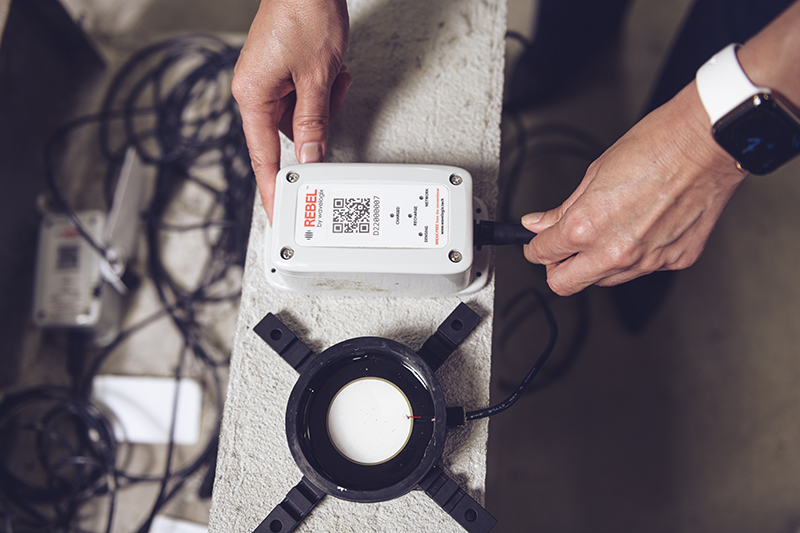
While it is generally accepted that concrete is the go-to for most building work, it is not without its drawbacks. As the recent Infrastructure Bill shows, vast sums of money need to be made available to repair and reconstruct failing structures. So, is this the answer? According to Basilisk Concrete, the benefits are manifold. They claim that by sealing cracks, self-healing concrete ensures the material is waterproof. In addition to this, it states that the product ensures reinforcement savings of over 40% and, by reducing the need for repairs, it has a 50% reduction in the CO2 footprint that regular concrete has. Those at Basilisk Concrete believe that, despite the product being in relative infancy, it holds huge advantages over regular concrete. “One of the properties of concrete is that it will always crack. With a good design and good application this cracking can be reduced, but even the little (hair) cracks can cause big problems. Cracked concrete has pore water resistance and the freeze-thaw resistance of the concrete will be limited. Also, the durability of cracked concrete will be greatly reduced. Through the cracks moisture and oxygen is able to reach the steel reinforcement which can cause the steel to corrode. This could cause serious damage to the concrete structure.”

Self-healing concrete has not yet taken over the industry. That much is true. There are still issues with initial pricing and, more pressingly, its benefits are not yet widely known. However, the potential to be a real game changer is undoubtedly there. Further work may be needed to prove to the industry that it can offer a genuine alternative to standard concrete. Only time will tell if this can happen. What is clear though, is that if self-healing concrete proves to be a workable solution, we could see a massive reduction in material costs, labor hours and, most importantly, carbon emissions.

Women in Construction

View in E-mag

As an industry, Construction has some work to do. Challenges are presenting themselves from multiple sources and those working within the sector are struggling to cope. Rising costs, supply-chain uncertainty and labor shortages are all indicative of the current difficulties facing businesses. Some of these are pandemic related while others are omnipresent. However, as ever there are many working tirelessly to remedy these issues and through a combination of hard work and innovative thinking, they will undoubtedly ease at some point. The real work within the industry goes significantly deeper and may not be remedied as quickly or as easily. A recent report conducted in the U.K. looked to examine the representation of females in the construction industry. At 14%, the results were encouraging but showed that, in terms of ensuring equality in the industry, the process is only beginning. In the United States, the outlook is even more worrying. Given that diversity is a proven indicator of innovation and success, surely the construction world would benefit from a more gender-balanced approach to its projects and organizations. In reality, rather disappointingly, female representation within construction is lacking. It is an unfortunate truth but, as with much of the world, things might just be changing on that front.

Statistics from December 2018 show that, at the time, approximately 1.1 million women were employed across the construction industries in the US. These workers contributed to a wide range of sectors such as sales, management and production. Suffice to say, women were, and still are, present in every sector their male counterparts are. However, while this figure may seem healthy, the reality is somewhat different. This figure equates to a mere 9.9 percent of all construction workers. Clearly, something needs to be done to identify why this figure is so low and most importantly, how it can be increased.

Fort Worth, Texas, was the location where sixteen women formed the very first female-led construction association. As a minority group within the industry, these women created the association in order to “create a support network for women working in a male-dominated field.” While this in itself is not a surprising or radical mission, you could be fooled into thinking the association is a relatively new endeavor. In fact, the group was first established in 1953. The organization was such a success that it gained its national charter only two years later and in 1955, the Women in Construction of Fort Worth became known as the National Association of Women in Construction. NAWIC remains a mainstay of the Texan climate, with its base still located in Fort Worth. Similarly, the mission has remained constant throughout the past seventy years; to advocate “for the value and impact of women builders, professionals and tradeswomen in all aspects of the construction industry.” The association works as a multi-disciplinary organization, providing its members with opportunities for professional development, education, networking, leadership training, public service and more while educating and advocating for women in the construction industry.

“The mission has remained constant throughout the past seventy years; to advocate for the value and impact of women builders, professionals and tradeswomen in all aspects of the construction industry.”

Diversity in Construction is a difficult topic and one that is fraught with anger and fear. While strides are being made to eradicate racism and hate on jobsites across the industry, problems still exist. When gender is also included in the conversation, the challenges may seem insurmountable. With exclusion, derision and the ever-present gender pay-gap, it can be difficult to find positives. It is heartening however, that since 1998, NAWIC have been running Women in Construction Week with this year’s being held on March 6-12. The event has grown massively over this time and seeks to raise awareness of opportunities for women in the construction industry. Many of the local chapters hold events to celebrate the week such as lectures, podcasts, luncheons and visits to construction sites. In addition to this, construction companies across the country show support for the females currently working within the organization. “The theme for this year’s WIC Week is “Envision Equality” which seeks to raise awareness of opportunities for women to enjoy a wide range of roles in the construction industry, from tradeswomen to project managers to administrative positions and even business ownership.”

According to Executive Director of NAWIC, Crissy Ingram, WIC Week is a massive opportunity to advocate for those within the industry that may not receive their dues otherwise. The benefit of this, according to Ingram, is the knock-on effect that this will have on encouraging more women to join the industry. “WIC Week gives chapters nationwide the opportunity to shine a bright light on the construction industry and women’s very important place in it. There has long been a culture of construction being only for men. If we can get the women who have worked past that barrier out of the shadows and into the spotlight, they can show other women – no matter the age or background – that there are countless opportunities for them in the industry.” This is a sentiment which is shared by Association President Doreen Bartoldus. ““[WIC Week is vital to] bringing awareness to the great success women are having in every aspect of the industry. It will also hopefully influence the next generation to join our ranks after seeing construction can be a great career for women.” With over 4,000 members working in all sectors of construction, the reach of this influence will hopefully be a wide one.

With the ever-growing advocacy and education work being done by NAWIC, statistics are showing slight improvements. Since 2018, the number of women working in the industry in the US has risen to 1.2 million, an addition of over 100,000. More encouragingly however, is a recent study on attitudes which showed that over 70% of respondents believe that opportunities for women in the industry are increasing. Furthermore, almost 70% believe that there are opportunities for them to advance their career at their current company; this represents an increase of 9% on the previous year.

The construction industry is not perfect. Like any other sector, it is constantly evolving and shifting to the new world we find ourselves in. Post COVID-19, as we adapt to different ways of providing for our customers, there is potential to make real changes that will benefit the industry long term. Revolution doesn’t happen overnight, however, and it is worth repeating that NAWIC has been working to advocate for women in the industry since 1953. Despite, or perhaps because of this, genuine shifts in attitude seems to be taking place. Studies have shown that 80% of women in construction are happy in the job with 76% believing that the industry is changing for the better. With the growing awareness and support of events such as WIC Week, the upward trajectory may yet continue to pick up speed.

Fifty Years of Pushing the Boulder Uphill

View in E-mag
View Brochure

Since the founding of the nation, the United States has held one thing above all others, it is a place which has been built on one very clear tenet, the unwavering belief that carries through every facet and corner of American society. That is; if you work hard, you will be rewarded appropriately. Generations of ongoing success and thousands of start-up enterprises can all attest to the validity of this. Without putting too clichéd a point on it, this is the American Dream and it is a highly respected and fiercely protected aspect of communities across the nation. It is also a cornerstone of the philosophy within Associated Builders and Contractors, a trade association with over seventy years of experience advocating and educating on behalf of its members. Set up by seven contractors in Baltimore, MD, the association – composed of 69 chapters and more than 21,000 members, nationwide – promotes a merit shop philosophy “which encourages open competition and a free enterprise approach that awards contracts based solely on merit, regardless of labor affiliation.” According to Brian Sampson, President of ABC’s Empire State Chapter, it can be broken down into even simpler terms. “We want to be an advocate for what we refer to as free enterprise. This is when a contractor is able to choose which projects they want to bid on and they will either win or lose those bids based solely on the information that is in that bid, not through any undue influence positively or negatively from the government.”

The Empire State Chapter, which covers the entirety of New York state with five regional offices spread throughout, advocates for more than 400 members and a better, safer construction industry for all. While the Chapter operates under the guiding principles of the national office, it is a largely independent organization that can adapt and work around the needs of the members in its state. While the idea of the merit shop philosophy may seem alien to those that only know of New York from a distance, Brian explains that the perception of the state, and ABC Empire State Chapter members, are not entirely accurate. “Last year our chapter celebrated its fiftieth anniversary. We have been in this state for fifty years now, and in a state like New York, I think there is often a misunderstanding. Everybody says that it’s a union state and there is this perception that the unions have the bulk of the workforce. Actually, within the construction workforce that is not the case. Depending on where you are in the state, 70% or more of the workforce is not signatory to a collective bargaining agreement.”

“We want to be an advocate for what we refer to as free enterprise. This is when a contractor is able to choose which projects they want to bid on and they will either win or lose those bids based solely on the information that is in that bid, not through any undue influence positively or negatively from the government.”

Brian feels that this misalignment of workers and the overall perception, can lead to disparity across the sector when it comes to access to bids, pitches and projects. “Conversely, many of the laws and regulations that we see emanating from Albany, the New York City Council or from other local governments, are put in place to tilt the playing field in favor of organized labor. So we spend an inordinate amount of our time educating elected officials about what the labor force really is, what it really looks like and what it does. We try to explain how the legislation that they are most likely supporting will really impact the people that they claim they want to help.”

One vital piece of work being done on behalf of its members currently is advocating for merit shop companies to get a fair chance at bidding on projects as part of the federal Infrastructure Bill. Brian believes that while this funding is much needed and long overdue, more is needed. “60% of the bridges in New York State are either deficient or structurally deficient. You look at our sewers, the city of Syracuse still has wooden pipes from the late 1800s and early 1900s. It is a welcome step, but it is a down payment on a long standing issue that has to have continual increases in funding if we’re going to get to that quality of life that we will want out of our infrastructure.”

It is not all positive, however. In fact, the matter of PLAs (Project Labor Agreement) is causing ABC and its members massive concern. While President Biden has recently signed an order mandating PLAs on federal construction projects over $35 million, those at ABC argue that this represents an enormous inequality in the system. “What we worry about in this state is something called a project labor agreement or a PLA. So, when you look at things like the new terminal at JFK, the new terminal at LaGuardia, the expansion of the Javits Centre, upstate airports, large school districts throughout the state, they put a PLA on all of it. It is a pre-hire collective agreement that says, in most instances, that three out of every four workers that are going to perform the work on this project have to come from the local union. So, 75% of the people that work on that job are going to be unionized workers. Our members look at projects that have a PLA on it, and ask why they would bid that project when they can only put 25% of their people to work? When they see a PLA, they largely don’t bid on it which means most of that work then goes to Union contractors. We have to be very protective here and make sure that as much of that $27 billion that comes here is PLA free.”

Overall, however, there are challenges that face all facets of the industry; the omnipresent challenge of finding skilled workers to capitalize on these opportunities. Brian identifies the startling figures surrounding open position across the New York industry as evidence of a deep malaise that requires urgent attention. It is one, he believes comes down to education. “All of our members will tell you that their single greatest challenge is getting people to work and getting people into the industry. I think there’s still a large number of people out there that believe construction is about shovels, picks, manual labor. While that is still a good portion of the work, the industry has gotten so technical and so precise, and we haven’t done a good job of changing the mindset of parents and kids about why construction is something they should consider.” Notwithstanding the huge investment that is coming into the industry imminently, Brian identifies education and a shift in mindset as the number one task facing his members, the association and the industry in general. “We have to do a better job of fixing the perception of the industry and working with the state to find ways to get kids into this industry. We can talk about the infrastructure bill all we like, at the end of the day, you can’t fix a road or a bridge, you can’t build new sewers or wastewater treatment plants if you don’t have the workforce to do it.” 

With over fifty years of experience and a highly passionate agenda to protect the rights and interests of its members, ABC can often feel like a lone voice in a crowded industry. For Brian, this is not a position that he is afraid to take. “So, we often think of ourselves as Sisyphus, right? You know, the Greek character who is always pushing the boulder uphill, and the boulder rolls right back down? And that’s okay. That’s our role. We are happy to do it and we win, we succeed, we make sure that our members have a voice in what happens in their government.”

Innovation with Safety in Mind

View in E-mag
View Brochure

With a track record that goes back almost one hundred years, Milwaukee Tool has rightly established itself as an industry leader when it comes to durable, innovative, and productive tools; all with the end user in mind. Through ongoing collaboration with stakeholders across the construction industry, the company is, once again, leading the way in terms of sustainability, innovation and safety. “We invest the time to work side-by-side with real users to understand the demands of a constantly changing workplace and how we can best deliver solutions for a safer, more productive jobsite.” Here, we take a look at some of the exciting developments that this understanding has led to.

General Contractors – NYC

As an industry leader since 1924 and with connections that date back many years working with the top General Contractors in New York City, it is no surprise that those at Milwaukee Tool are leading the way in terms of jobsite requirements. The company has consolidated its close ties to GCs in the state to ensure that they are supported and compliant when it comes to jobsite safety. With ever increasing safety standards comes a responsibility at every stage of the project to “ensure the worker can leave the jobsite in the same condition they entered it.” At a minimum, the company uses the National Institute of Occupational Safety and Health’s “Hierarchy of Controls” as the basis for every tool; Elimination, Substitution, Engineering Controls, Administrative Controls and PPE. In addition to massive cost and time savings, the resulting products ensure that workers and passersby are safer through less jobsite related accidents.

According to John Randazzo, Territory Manager at Milwaukee Tool, the end result is the “disruptive innovation” of the construction industry by developing safer and greener tools for the jobsite; always the driving force for any new product or project the company develops. “It’s disrupting the status quo because workers can complete tasks faster, more efficiently, and they are not putting as much stress and wear and tear on their own bodies. We are looking at how we can completely change the game and shake up the industry in ways that people had said just was not previously imaginable. We are also looking at how we do this, not just incrementally but in leaps and bounds in terms of innovation in our markets, creating new markets and adding more value. Our philosophy of disruptive innovation really starts with engagement with our end users at the jobsite level, then taking our findings and their direct feedback to our engineers to develop solutions. Battery solutions are also naturally a greener solution. So, as the industry changes and building techniques evolve, we are going to be there in lockstep with our end users.”
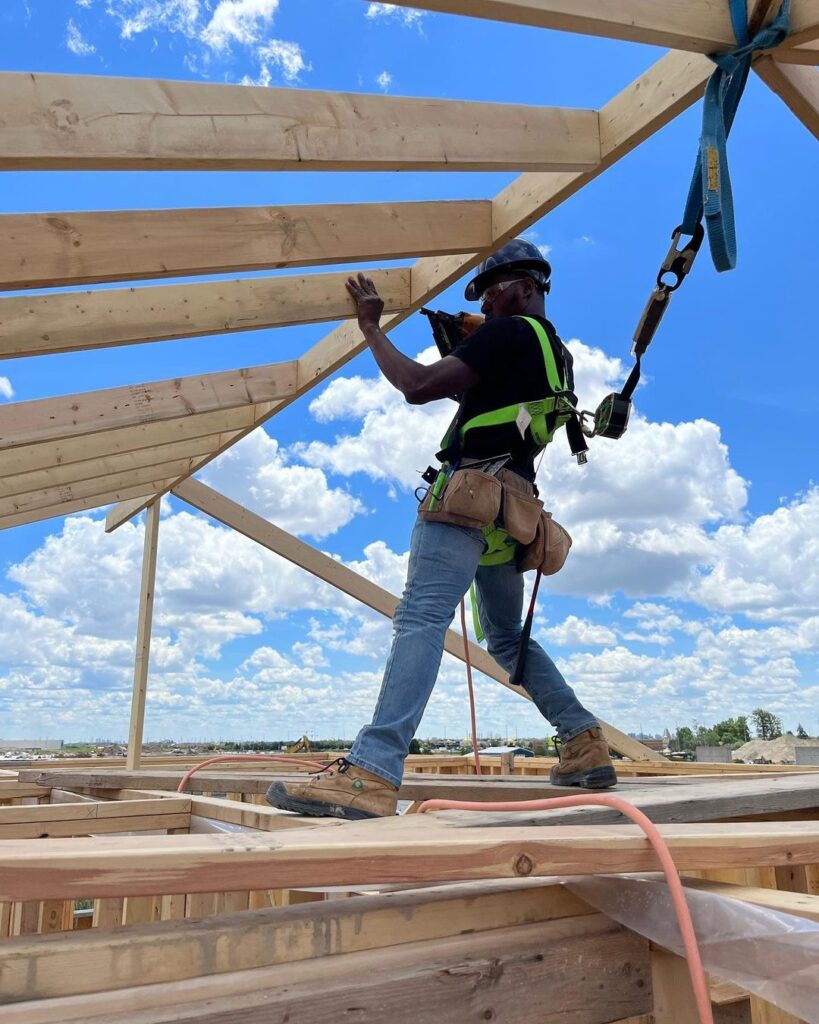
MX Fuel

It goes without saying that Milwaukee Tool has been an industry leader for generations, pushing the industry into innovative territory with each new development and its MX Fuel products are no different. With an approach that has moved from gas to a battery-operated solution, the company has developed a range that covers lighting, saws, vibrators, and chisels to name a few. Again, as is standard with this company, both safety and end use were at the forefront of all decisions when the products were being designed and rolled out. From a sustainability standpoint, the products speak for themselves. Using battery power, the carbon footprint from the jobsite is immediately removed. Of equal importance, however, is the minimizing of risk that the workers are now put under simply by using these pieces of equipment. To say that these products are industry leading would be an understatement. The MX Fuel Breaker Kit is lightest in class and can break two tons of concrete on a single charge. The 14” Cut-Off Saw has power to cut an impressive 5” depth in reinforced concrete. These, astonishingly, are only a handful of examples. The list goes on.

For Kevin Gee, Director of Product Management, the process can be simplified to one thing: the end user. “I think with anything we do at Milwaukee tool, it always starts with understanding the user and most importantly understanding the issues and frustrations they deal with on a on a job site. If you look at our history, and we’ve historically tried to flip things from corded to cordless. We’ve been on the forefront of driving this conversion of the job site from AC to DC and now more recently to air pneumatic products and hydraulics. MX fuel products does bring new challenges in terms of duty cycle, but it also means that we can drive safety and we can also drive productivity.”  
For Gee, meeting the end user is where the company does all its learning. “Ultimately, we need to be on the jobsite. We don’t learn anything sitting at our desk behind our computers. The way that we learn is by getting out in the field. It doesn’t matter the trade; working with them on the jobsite, understanding what they’re doing and if we can understand where they’re having issues or challenges or things that are frustrating them, we don’t just create a product, we can create a solution.”
milwaukee mx fuel lineup

Safety

This belief in putting the end user at the forefront is something of a core belief within Milwaukee Tool. Indeed, the safety and wellbeing of the individuals on each and every jobsite is a crucial element of all key decisions and feeds into every conversation. Product lines, training, and liaising with jobsite managers; every element of the design and production processes are viewed through the lens of safety and positive workplace outcomes. For Zach Richman, Director of Product Marketing, the relationship with the jobsite worker is communicative and very much two-sided. “First and foremost, we want to focus on our end users and make sure that we’re looking at their problems and frustrations as a solution provider.” For Richman, what they are hearing is all about safety. Milwaukee Tool has a wide range of products that exceed safety requirements in areas such as Helmets, Headlamps, Lanyards and PPE.

While it is commonly accepted that construction is an industry with an unacceptable safety record, those at Milwaukee Tool are doing their utmost to change this. Richman believes that it is by listening to those on the ground, and spending “thousands of hours in the field on jobsites,” that real changes can be made. “We’re hearing that issues like slips, trips and falls are some of the most common injuries on job sites. With that in mind, we are not taking the typical approach where people say, ‘Hey, we only need hardhats.’ We are looking at a whole shift in the market; for example, we are one of the first safety providers to have launched a ANSI Type 2 safety helmet. This is due to the fact that it’s not always the top impact that’s the issue but also the sides and the back of the head.” According to Richman, industry requirements are the bare minimum. “We look at how we can go above and beyond in terms of testing requirements, for better productivity, better safety, better comfort. We are looking at this holistically for our end users and making sure that we have the best products and solutions out there for them.”

Advanced Technology

While lasers may well be a common feature on jobsites, those at Milwaukee Tool are, as ever, unwilling to adhere to the status quo. The company recognizes that lasers are “a huge portion of what every tradesperson will use in their daily lives. Simply put, they are a tool to make sure that our users are producing accurate and quality work.” These are the words of Kevin Ream, Advanced Technology Specialist at Milwaukee Tool. Advancements being made within the company have led to highly innovative and ground-breaking developments in its laser product line. With over fifteen hours of runtime and innovative green beam which offers best visibility in its class, the M12 360 Laser is a huge leap forward for end users on the jobsite. In addition to this, the lasers include both horizontal and vertical lines which assist the user with fast and easy alignment, leveling, squaring and transfers which allows the user to easily layout large spaces. Truly an innovative and exciting piece of equipment.

One of the driving forces for developing this line of products is, as with all things Milwaukee Tool, a focus on the tangible benefits to the end user. According to Ream, by developing these products, Milwaukee Tool is leading from the front. “I mean, this is something that our users have been asking us for years to come out with. We are going 100% green lasers. We’re future proofing ourselves. Also, these are products that can work all day which means that you are going to be able to complete your work in a quicker manner, your work is going to be more accurate because, by using green lasers you can see it better and also, these products have positive impacts of efficiency because, with an all-day runtime, you don’t have to take down your laser to change a battery. It really does cut down on any downtime.”

However, one huge aspect of the laser that Milwaukee Tool is especially excited about is its ability to remain on a reference point. As Kevin puts it, accuracy is key and, with these products, the end user can feel secure that the work will be to the most exact standards. “If you move your laser off your reference point, maybe an eighth of an inch, that may lead to a drastic increase, and you might not hit your mark. With our lasers, we actually have a micro adjust. This allows our users to pivot on their reference point and hit their mark right away. So, there is no more wasted time each day while trying to hit their mark. The user can just put their laser where the reference point needs to be, and they can be at work.”

More Stories

From Invisible Construction, to Incredible Design Ele...

Fort Miller Precast — By Elizabeth Howell

The Fort Miller Group, Inc. has been steadily growing on the strength of its four companies, which together provide precast (Fort Miller Precast), security (…)

Keeping it Cool

Sharon's Heating & Air Conditioning — By Raquel Farrington

The HVAC industry can be hot and cold, and weathering ongoing challenges takes high-quality services, reliable employees, and strong leadership. With nearly 43 years (…)

An aerial photo of a construction site.

The First In And The Last Out

US Framing and US Interiors — By Emma Kilcawley Hemani

There is very little in this world as important as shelter. Our homes must be havens of safety and protection. In the face of (…)

Natural Cement

By David O'Neill

The construction industry contributes much to society. Infrastructure networks, road, rail bridges and housing; all these elements of our world are unrecognizable thanks to (…)

An Economic Powerhouse

By David O'Neill

According to the Canadian Construction Association, the industry contributes about $151 billion to the economy annually. This figure accounts for 7.4 percent of Canada’s (…)

Canada’s Infrastructure – Fit for Purpose?

By David O'Neill

While much has been spoken and written about the U.S. Infrastructure Bill in recent years, neighboring Canada does not receive the same level of (…)

Urban Jungles

By David O'Neill

Over the past hundred years or so, the landscapes that we inhabit have changed irrevocably. The scale and volume of structures have developed and (…)

Right to Work – A Crossroads for the Labor Market

By David O'Neill

Union membership is at an all time low. Despite wide-scale public support for recent labor disputes such as the Hollywood writers’ strike and the (…)

Navigating the North American Construction Landscape ...

By David O'Neill

In 2023, the construction industry emerged from a challenging period with the resilience and determination that has long been its hallmark. Coming off the (…)