





When a Greatario Tanks & Covers crew returned to Stratford, Prince Edward Island, two years ago, they were building beside a piece of the company’s own history. The company had erected the community’s existing potable-water standpipe in 2001. More than two decades later, rapid growth meant Stratford needed additional capacity—but the original tank still had to keep supplying drinking water while its replacement neighbor took shape. “The community was experiencing rapid growth, and they were also planning for the future, so they needed additional capacity, allowing them to meet current demands and continue to grow,” said Christopher Luney, President of Greatario. The project captures much of what has shaped the Ontario-based company over the past 40 years: long-standing customer relationships, infrastructure that cannot simply be switched off, and the need to apply familiar technology to changing conditions. Prior to 1986, Greatario’s predecessor company specialized in agricultural feed storage. When Greatario was founded in 1986, the company began testing potable water applications and gradually narrowed its focus toward the liquid storage work that now defines its expertise.
Today, the company serves customers across Canada as both a General Contractor and subcontractor. As a General Contractor its work spans wet-utility applications such as storm runoff, sanitary sewer, pump stations, box culverts, utility holes and water-meter vaults, alongside dry-utility infrastructure supporting power, electrical and communications systems. “We pride ourselves on being involved early in projects, helping customers choose the most suitable solution, seeing it through to completion, and working with them throughout the project’s lifespan,” Luney said.
Early involvement has become increasingly important as Greatario’s geographic reach has expanded. The company moved throughout Western Canada in 2019 and now serves the entire country, bringing its teams into regions with different climatic conditions, codes, standards and operating requirements. “It forced us to grow our resources, but we were able to do that in a way that allowed us to maintain the high standards that we have set for ourselves, and that our customers have for us,” Luney said.
National growth has also forced Greatario to distinguish between what can be replicated and what must be adapted. Many municipal clients face similar problems—aging infrastructure, capacity constraints and changing regulations—but the conditions surrounding an individual tank can vary dramatically from one coast to another.
“We’ve had a lot of success bringing our expertise and our teams out to serve customers dealing with many of the same challenges as people in the rest of the country,” Luney said. “Obviously, there are some unique things, but we have our expertise to rely on, and our customer service focus has helped us meet all of those customers’ needs.”
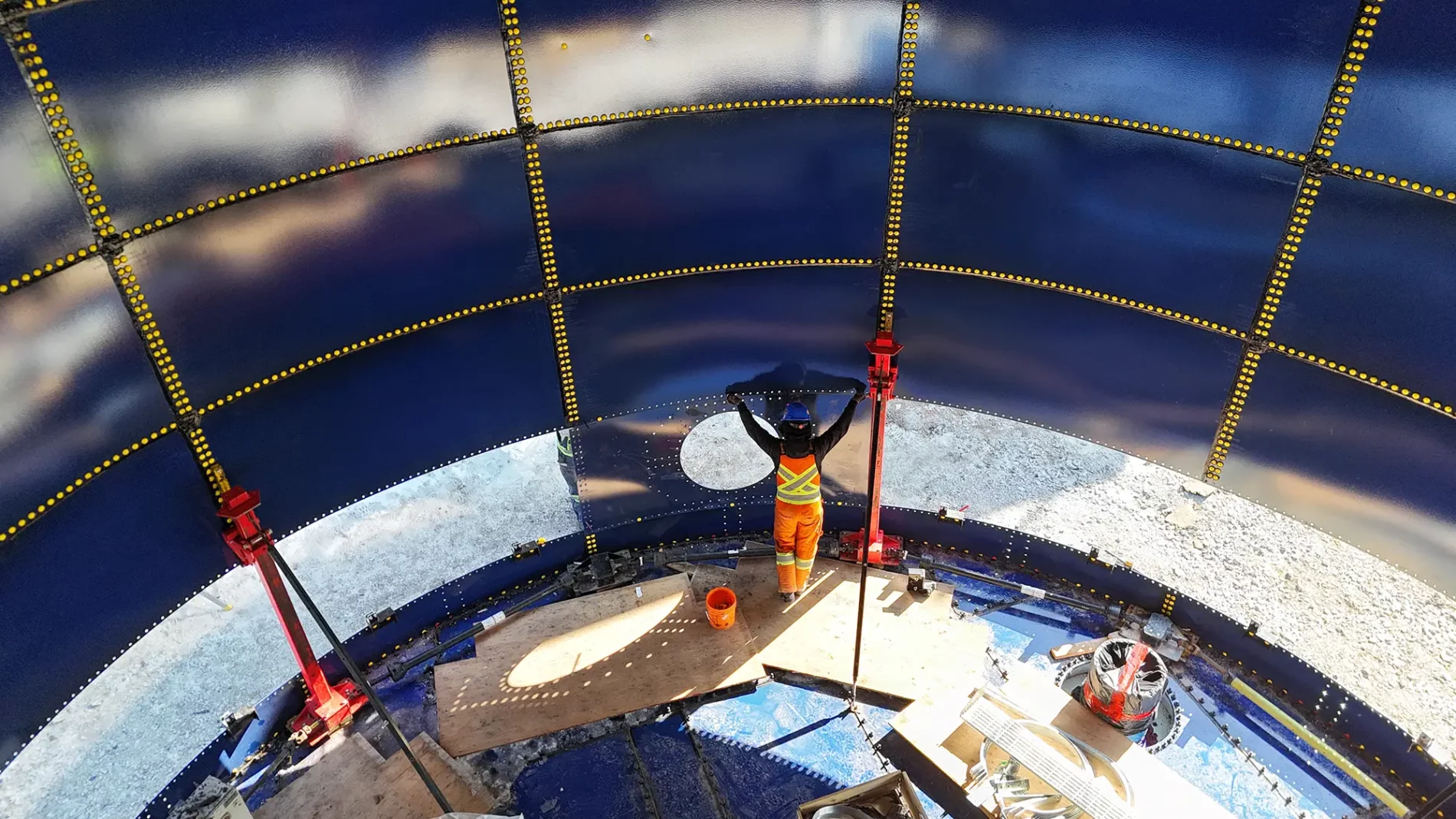
A partnership with Balmoral Tanks has broadened the technology available to address those challenges. Greatario combines Balmoral’s manufacturing expertise with its own application and construction capabilities around glass-fused-to-steel bolted tanks.
“It’s our role to take the technology that a company like Balmoral designs and manufactures and figure out how to apply that in our complex and unique situations,” Luney said. “The partnership has been a major turning point in our history.”
Rather than applying a conventional coating over steel, the process fuses a silica-based material to the steel at temperatures between 830 and 850 degrees Celsius. According to Greatario, the resulting surface is designed to remain with the tank throughout its service life and perform in environments ranging from prolonged freezing conditions to coastal areas where salt exposure can accelerate corrosion.
The technical value becomes clearer when placed against Greatario’s widening range of applications. Potable water was the company’s original entry point, but wastewater treatment and renewable energy have since added new demands. “Back in 1986, our first foray into the industry was storing potable drinking water,” Luney said. “Our tanks are well suited for applications throughout municipal wastewater treatment. We’re also involved in renewable energy projects, so the coating technology lends itself well to a wide range of applications. We’ve been able to take the product we got from Balmoral and thoughtfully apply it to new applications.”
Thoughtful adaptation is also how Luney describes the company’s broader approach to growth. Greatario does not view new technology as valuable simply because it is new. Customer needs, regulatory requirements and existing expertise come first.
“We’re always making sure that we’re listening to the customer and understanding what’s happening on their side, new regulations and challenges,” he said. “We take those needs and figure out if we have a product that already serves that, or a partner we already work with. Is there something in our area of expertise that we can adapt? It is driven first by the customer and second by our expertise.”
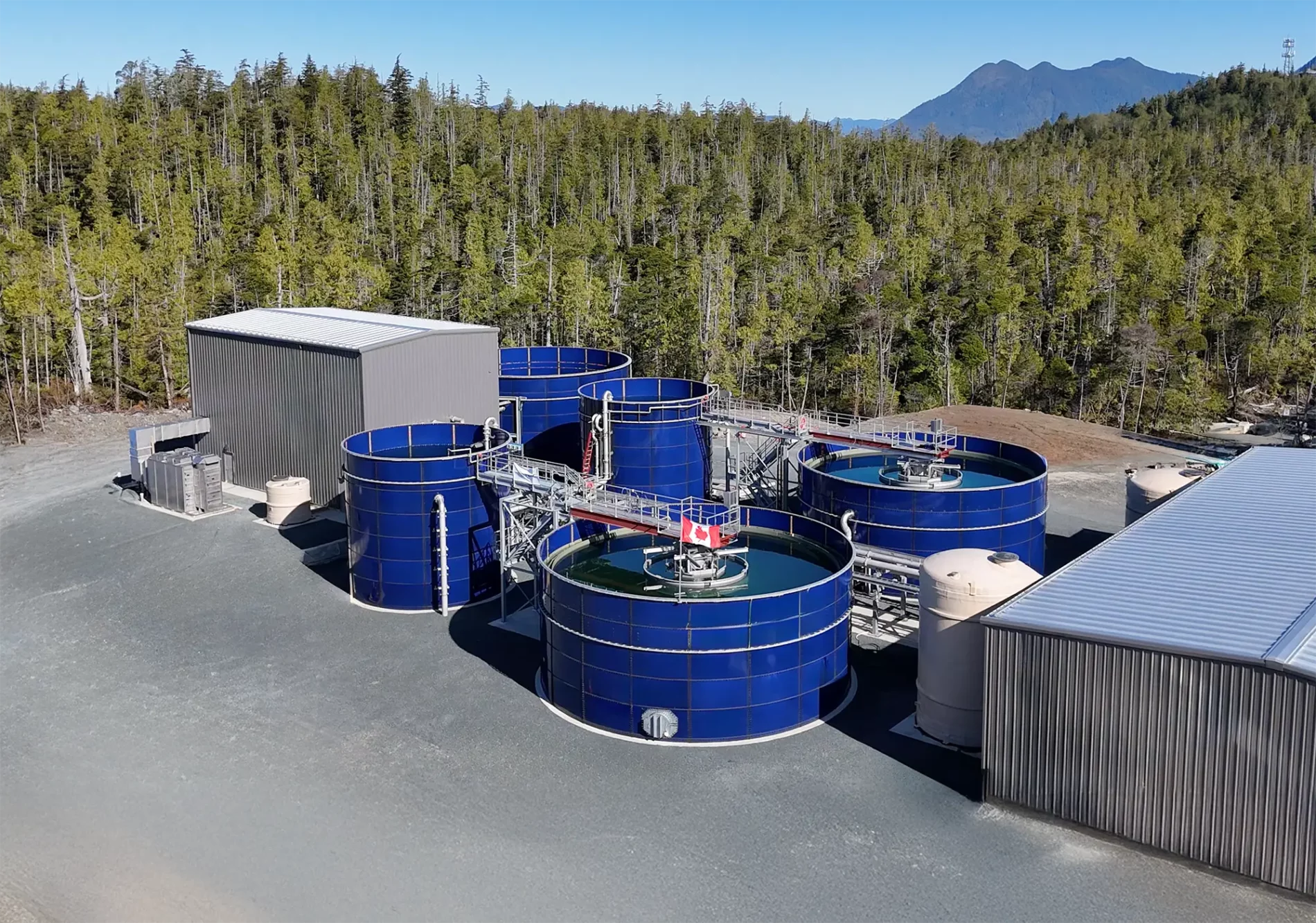
Few projects illustrate that philosophy better than Greatario’s work in Tofino, British Columbia. The community historically had little wastewater treatment, with sewage discharged directly into the ocean in an environmentally sensitive area. Greatario worked with designers to develop a configuration capable of handling the required flows while meeting modern environmental expectations. Five tanks were built for the project: an equalization tank, two IFAS treatment tanks and two secondary clarifiers. “These tanks help protect the environment, which is especially important because it is ecologically sensitive,” Luney said.
“These tanks help protect the environment, which is especially important because it is ecologically sensitive.”
The work in Tofino takes Greatario’s original expertise in liquid storage and places it in a much broader context. The tank is no longer simply a container; it becomes part of an infrastructure treatment system intended to protect both a community and the environment surrounding it.
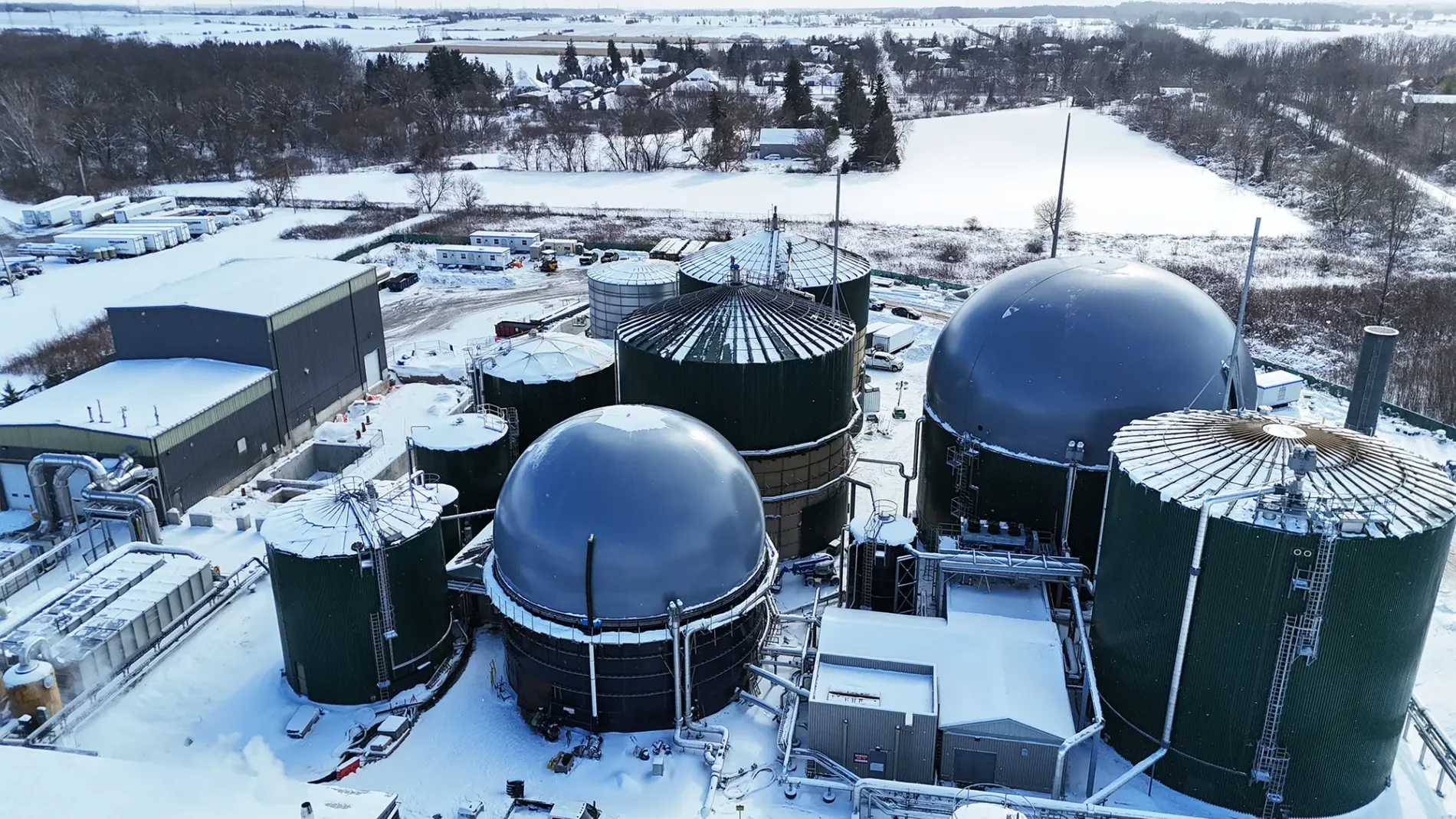
An anaerobic-digestion facility in London, Ontario, pushes the same expertise into renewable energy. Greatario has worked with Generate Upcycle since 2011, beginning with an original facility build-out that included nine tanks, for digestion, reception, reaction, biogas storage and wastewater treatment. The operation processes organic waste from industrial customers and municipalities, producing biogas that is conditioned and injected into the local natural-gas distribution system.
Later expansion work required new tanks to be integrated into an existing processing facility without negatively affecting the infrastructure already in operation. The project demonstrates how Greatario’s role can continue long after an initial installation as a customer adds capacity or changes how the facility operates.
Field execution brings another priority into focus. Greatario was recognized for its COR safety program in 2018, and Luney emphasizes that the value of such a program lies in daily practice rather than documentation. “It’s more than just creating paperwork and saying that you do things,” he said. “It’s about building a robust safety plan with policies and procedures, plus extensive training for our folks out in the fields who are sometimes conducting dangerous work.” Continuous auditing helps support that effort across project sites. “The safety of our people is important to us,” Luney said. “One of the most important things is that at the end of every job everyone goes home, and clients see us do things safely and responsibly on job sites.”
As Greatario enters its fifth decade, municipal water and wastewater remain at the center of its plans. Aging infrastructure, climate change and pressure to improve system resiliency are creating new questions for many of the same customers the company has served for years. “These customers are continuing to be presented with new challenges that Greatario can help with, like aging infrastructure, climate change, or improving the resiliency of their systems,” Luney said. “Those core businesses are going to continue to be a big part of our focus over the next five years.”
Forty years of growth have taken Greatario from an Ontario storage business to projects spanning all of Canada, from coast to coast to coast and applications ranging from drinking water to wastewater and renewable energy. Yet Stratford provides perhaps the clearest picture of how the company sees its role: one tank still working while another rises beside it, each responding to the needs of the same community at a different moment in its growth. “We’re not chasing new technologies because something new has come up; we’re looking at what our customers need and what our expertise allows us to bring to them,” Luney said. “We’re helping protect access to clean water, help customers build sustainable ways of managing the resources that they have, and be involved in renewing critical infrastructure, water and wastewater services throughout the country.”