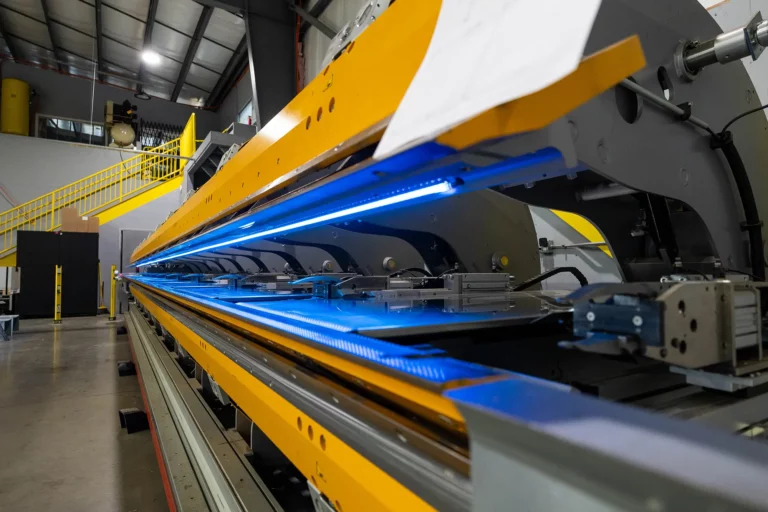



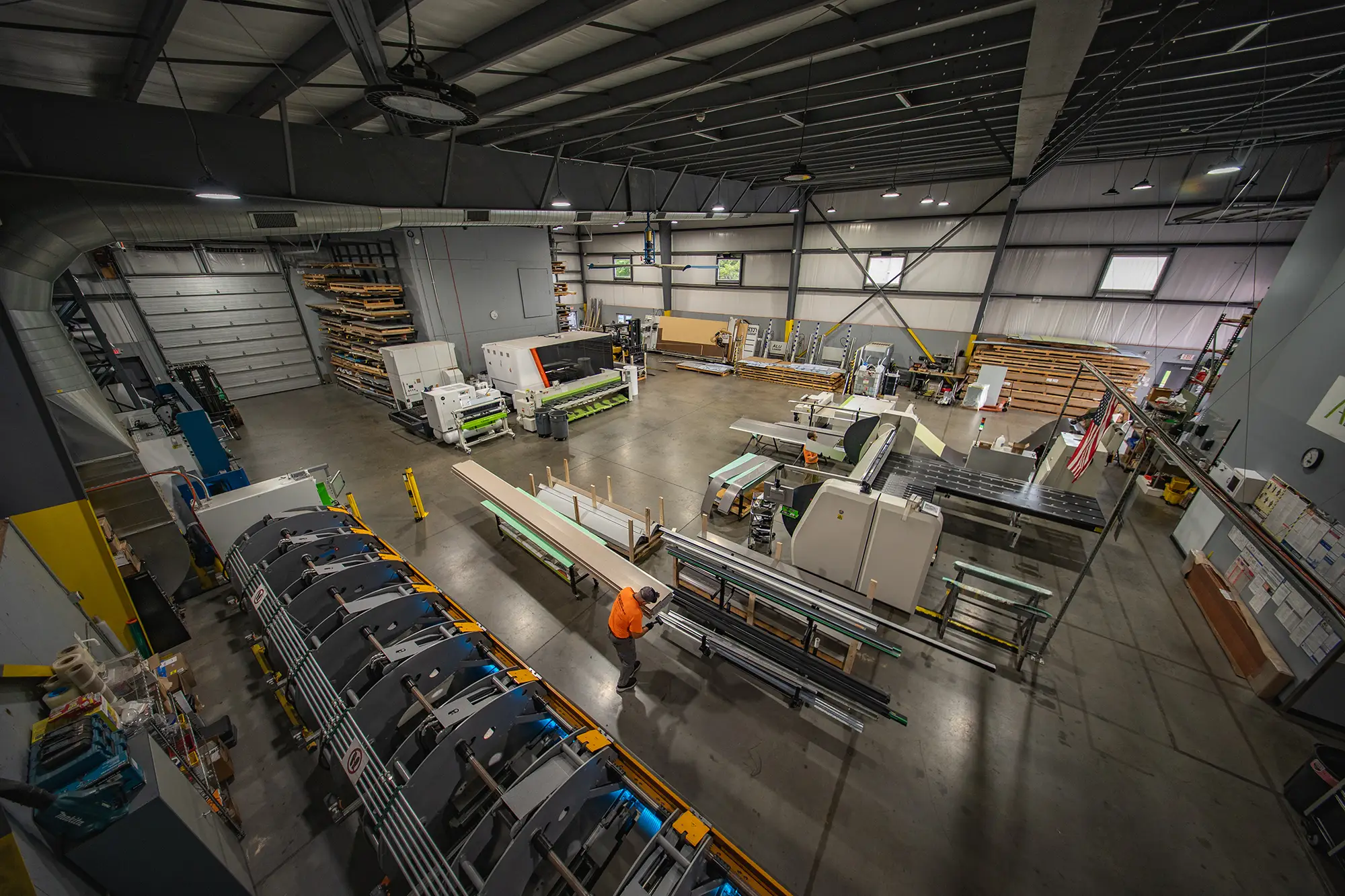
In 2019, Adam Tokarzewski made a decision that neatly captures the way Ultimate Construction has grown. He recalls a period when the Connecticut contractor was expanding, its commercial cladding work was becoming more demanding, and relying on an outside shop for fabricated parts was increasingly difficult. He says he bought a long-folding machine as part of the move into fabrication. “I thought, ‘if I want to grow, I need to be able to control my own fate,’” he said. Architectural System Fabricators was established that year, giving Ultimate greater control over fabrication and closer coordination of the shop drawings, engineering and procurement behind increasingly complex building envelopes. The move was a long way from Ultimate’s founding in 2006. Tokarzewski recalls being 20 years old and working seven days a week on small residential jobs. But the motivation was familiar. “I was very motivated,” he said.
Tokarzewski says he arrived in the United States in 2002 with construction already embedded in his background. He recalls growing up in a Polish family of construction workers and engineers, then choosing the trades after high school and working for his father’s scaffolding and siding companies rather than going to college. Four years after arriving in the United States, he struck out on his own, describing himself at the time as “hungry for success.” The early years required the persistence of a contractor trying to turn residential work into something larger. He recalls being on his third commercial project in 2009 and actively looking for ways into a broader market. “I was always trying to reach out to more people and put my name out there,” he said. “I couldn’t take no for an answer.”
Tokarzewski recalls a large siding job that introduced him to a general contractor who encouraged him to bid more commercial work. The opportunity helped shift Ultimate toward siding and exterior systems, he says, eventually moving the company away from roofing and toward the specialty that now defines it.
Growth soon pushed Tokarzewski away from the tools and into management. He recalls opening a 2,500-square-foot office in West Hartford and hiring an estimator as the office team took shape. Within a year, he says, the office was fully staffed.
“I had to decide not to spend as much time on the field,” he said. “I needed to start overseeing things because there was so much going on.”
Tokarzewski says Ultimate later acquired land in Southington for its current facility and began construction in 2016. He describes taking a hands-on role in planning the building and carrying out much of the work, with trades such as electrical and HVAC handled separately. After moving into the new headquarters, the company was still dependent on a local fabricator for key components, he recalls. The limits of that arrangement became harder to ignore as the work grew more technical. Commercial cladding systems leave little room for fabrication errors, particularly when expensive materials, precise panel layouts and demanding architectural details are involved. For Tokarzewski, bringing fabrication closer to the operation was a way to reduce one of those variables and improve coordination between the shop and the field.
Today, Ultimate specializes in exterior cladding across materials that include metal, ACM panels and wood. “We make buildings look beautiful,” Tokarzewski said. “It was always my dream to work on commercial jobs, and the specialty we chose is something we’ve done from the beginning.”
Tokarzewski also sees his European background as an influence on the company’s approach. He is Polish and says many members of the team share that heritage and previous construction experience. “When we all immigrated, most of my guys did construction for a living, and now they just do it in a different country,” he said. “We have the approach that nothing is impossible.”
“We have the approach that nothing is impossible.”
The phrase is particularly relevant to a business that has increasingly taken on envelope systems requiring considerable coordination and field precision. Through ASF, Ultimate has access to fabrication capabilities that support its cladding work. The company also owns a sizeable equipment fleet, including boom lifts, scissor lifts and forklifts. Ownership of those resources gives the contractor another form of control. At Norwalk High School, Tokarzewski says Ultimate’s scope included metal plate, subframing, insulation and metal-panel work across a large project that tested both its field capacity and equipment resources. He says having equipment available made the team comfortable taking on the work. “Other than fuel, regular maintenance, and accidental breaks, we can control our fate very well.”
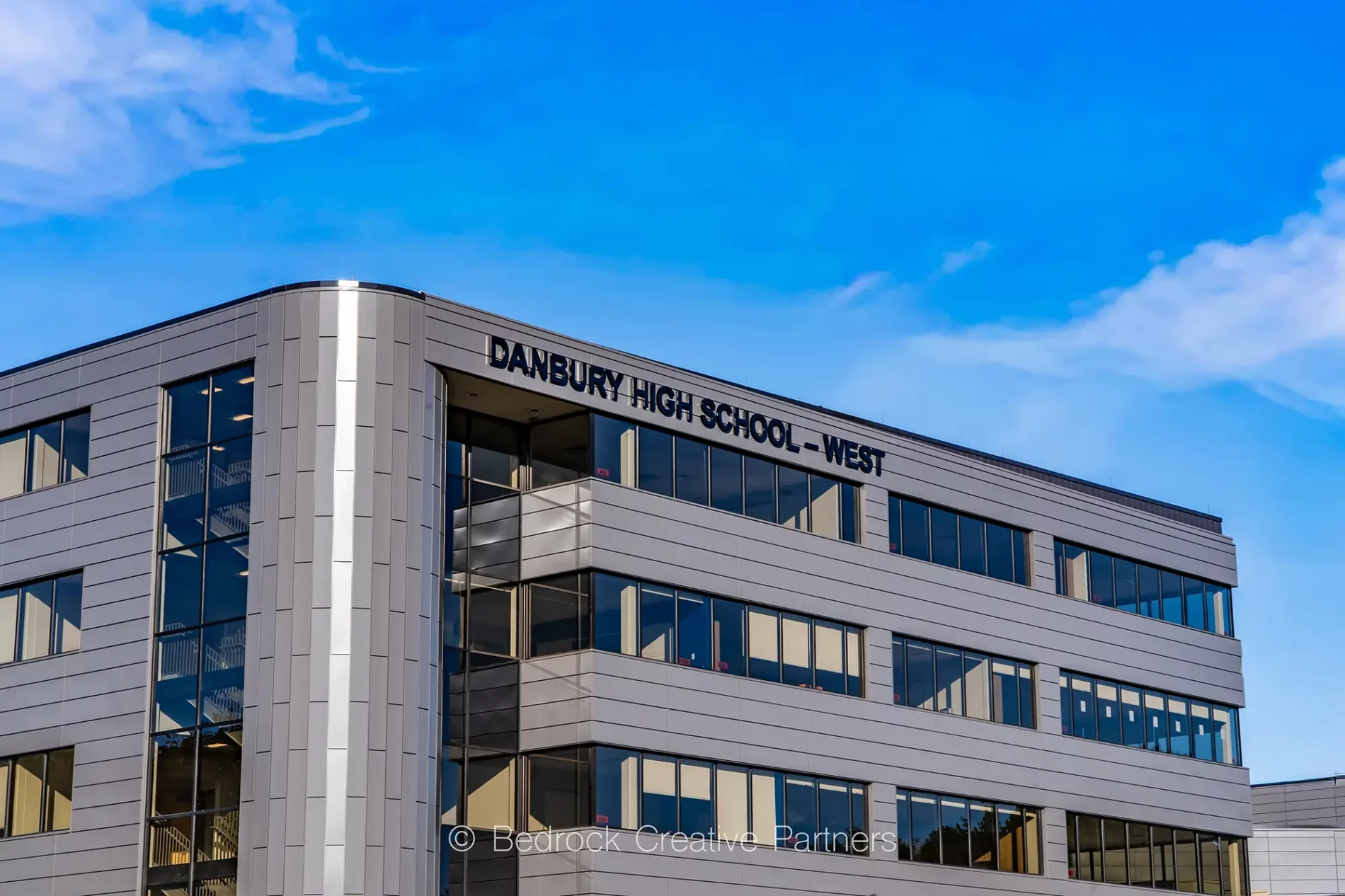
Tokarzewski describes measurement as a central challenge on the Danbury High School West Campus project.
According to Tokarzewski, the facade used rectangular panels across multiple elevations, requiring lines to continue around the building without stepping out of alignment. He says Ultimate employed laser measurement systems and drone takeoffs to capture millions of points across the structure before translating that information into the panel layout. “It took us about two weeks to measure the entire job and another two weeks to go through the data,” Tokarzewski said. He describes the measurement and layout effort as a success.
For Ultimate, the investment in digital measurement is part of a broader effort to improve coordination from the initial survey through fabrication and installation. Careful measurement and review can help identify potential problems before fabricated components reach the building.
Material behavior created another kind of challenge at the University of Hartford’s Hursey Center. Tokarzewski says Ultimate installed reinforced porcelain tile manufactured in Spain and worked with the manufacturer, Porcelanosa, on an attachment approach that could accommodate movement. “When you work with metal, you don’t have to worry about the tile breaking,” Tokarzewski said. “The biggest obstacle was working with the manufacturer, Porcelanosa, to develop an engineering and attachment system that could handle all the movement without shattering the tile.”
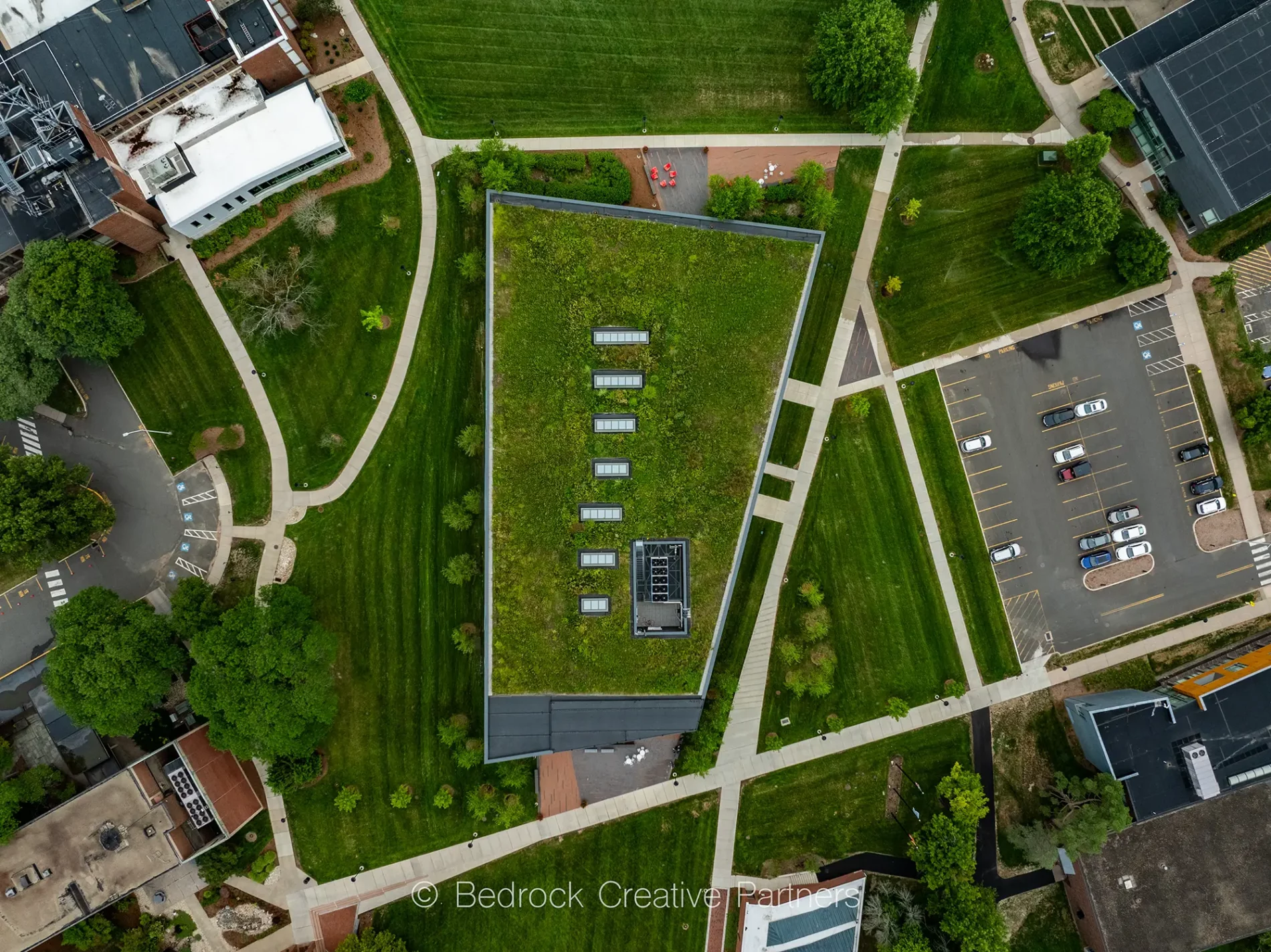
Tokarzewski describes the porcelain work as demanding particular care in handling the material.
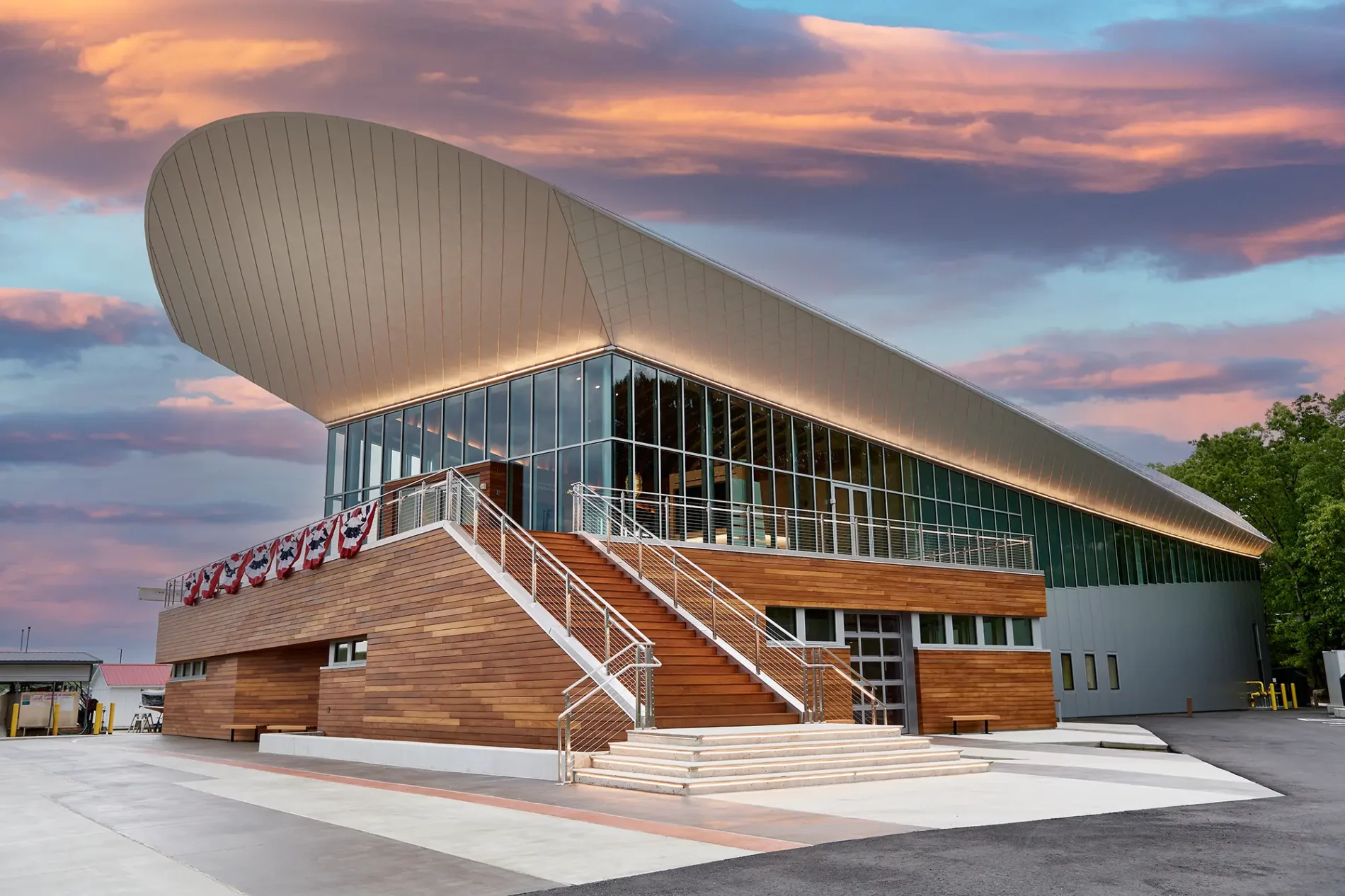
At the Coast Guard’s Maritime Center of Excellence, Tokarzewski says Ultimate installed wood siding over concrete using a specialized clip system. The work required close attention to the material’s movement and the site’s coastal exposure. “Wood has a lot of imperfections and things tend to shift, move, and bend,” Tokarzewski said. “Installing it on a concrete building with clips on wood siding that doesn’t have much forgiveness was the biggest obstacle, especially at the shore with the weather changes.”
The projects illustrate the coordination involved in complex exterior construction. As Tokarzewski describes it, Ultimate’s growth has involved taking greater responsibility for the work leading up to installation: measurement, coordination of drawings and engineering, procurement, fabrication through ASF and equipment planning.
Twenty years after its founding, Tokarzewski still describes the company’s progress in much simpler terms. “The biggest thing is hard work, a good work ethic, and never giving up, even though it’s not an easy journey,” he said. “You only have a limited amount of luck; make sure if you fall, you get up, shake it off, and try not to do it again.” The next stage will require the same resilience. Tokarzewski expects industry delays and unstable pricing to make the remainder of 2026 and 2027 demanding, while Ultimate continues preparing its staff to assume greater responsibility as the organization grows. “We’re going to have to roll up our sleeves and work pretty hard,” he said.
Tokarzewski says he wants his own role to evolve as well. His aim is to develop the team sufficiently to step back from the business by age 50, leaving a company less dependent on the founder who once worked seven days a week to establish it.
Ultimate Construction began with Tokarzewski trying to create opportunity wherever he could find it. Twenty years later, the company’s development is increasingly about controlling the conditions around that opportunity—owning equipment, coordinating fabrication, measuring buildings and developing the people who can eventually carry the operation forward. The scale has changed. The instinct to control its own fate has not.