




For contractors pricing work in 2026, one of the most consequential numbers may be the gap between two inflation rates. The cost of what goes into a project has been climbing far faster than the prices builders are able to put on their bids, creating a squeeze that reaches from procurement departments and subcontractors to owners deciding whether projects remain financially viable.

By June, the producer price index for inputs to new nonresidential construction stood 7.1% above its level a year earlier, according to an Associated General Contractors of America analysis of federal data. Contractors’ bid prices for new nonresidential buildings had increased just 3.5% over the same period. A month later, Associated Builders and Contractors reported that overall construction input prices remained 7.4% higher year over year, with nonresidential inputs up 7.2%.
The monthly figures can obscure the pressure. Construction input prices were nearly flat in July, rising 0.1%, after declining in June. But the longer view shows an industry still contending with substantially higher costs, particularly for materials exposed to tariffs and global commodity movements. “Contractors are being hit by a double whammy of rising materials prices and much lower increases in what they can charge for new projects,” said Ken Simonson, chief economist for AGC.
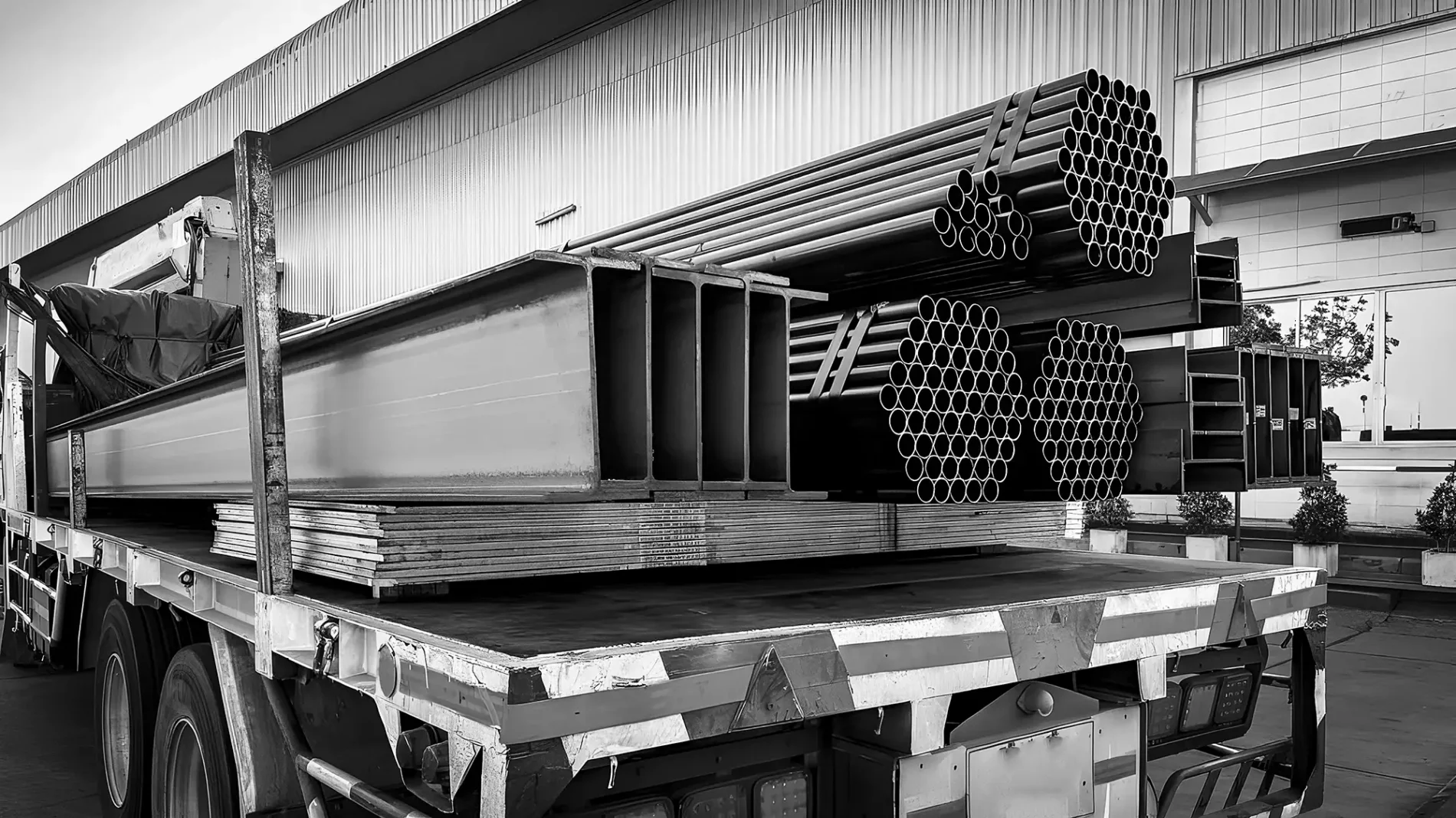
Metals have been at the center of the escalation. In June, AGC reported that aluminum mill shapes were 52.4% more expensive than a year earlier, copper and brass mill shapes were up 26%, and steel mill products had risen 16.9%. Tariffs of as much as 50% apply to steel, aluminum and copper products under the current trade regime, adding another variable to procurement decisions already affected by energy prices and geopolitical uncertainty.
Domestic sourcing does not necessarily isolate a project from those pressures. AGC noted that its producer price indexes measure the selling prices of domestic producers, yet U.S. sellers have in many cases moved prices toward levels being charged for tariff-affected imports. Contractors can therefore face higher pricing even when a particular material does not cross the border immediately before arriving at the jobsite.
Energy has added another layer of volatility. Fuel prices fell sharply in June and again influenced July’s relatively subdued overall materials figure, but ABC Chief Economist Anirban Basu cautioned against interpreting the temporary decline as a lasting change.
“Materials prices remained up more than 7% on a year-over-year basis in July,” Basu said.
For construction companies, the question is increasingly less about whether costs have risen than about where those increases ultimately land. Contractors can increase their bids, negotiate cost-sharing provisions, accelerate purchases or try to absorb a portion of an increase. None of those choices removes the cost. Each simply changes who carries the risk and when it becomes visible.
AGC’s 2026 Construction Hiring and Business Outlook illustrates how widely those strategies are already being used. Roughly 70% of surveyed firms said tariffs had affected them. Forty percent had raised bid prices in response to actual or proposed tariffs, while 35% said they passed most or all tariff-related costs to project owners. Nearly one-third accelerated purchases, and 20% introduced price-sharing adjustments or other contract provisions. Eleven percent reported absorbing most or all of the tariff costs themselves.
Margins become particularly exposed when material prices move after a contractor has committed to a number. The longer the period between estimating, procurement and installation, the greater the possibility that assumptions made during bidding no longer reflect what suppliers are charging when products are actually ordered.
Contractors are responding by bringing price risk further forward in the construction process. Eric Schmitz, senior vice president at California general contractor Turelk, told Construction Dive that his company was advising clients about the potential for tariff-driven volatility. “We as contractors are including stronger escalation language,” he said.
Escalation provisions can establish how specified price increases will be handled, but contractual protection is only part of the response. Earlier procurement, advance material packages, alternative sourcing and closer coordination between designers, contractors and owners can all help teams identify exposure before the project reaches the point where substitutions or redesign become more disruptive.
Preconstruction consequently takes on greater importance in an unstable pricing environment. An estimator who can identify steel, copper, electrical equipment or other exposed materials months before installation may give the owner choices that disappear once the design is complete and the construction schedule is underway. Buying earlier can reduce one form of risk while introducing others, including storage, financing and the possibility that project requirements will change.
Owners face their own difficult calculation. Passing higher input costs through the supply chain may protect a contractor’s margin, but it can also push a project past the owner’s budget or financing threshold. AGC’s national outlook found that 63% of contractors had experienced an owner postponing or canceling a project during the previous six months. Rising material or labor costs were cited by 23% of respondents as a factor, alongside funding uncertainty and expensive or unavailable financing.
Price escalation therefore has consequences beyond the balance sheet of an individual contractor. A project that no longer pencils out does not simply produce a smaller margin; it may be redesigned, delayed, rebid or abandoned. Trade contractors lose expected backlog, suppliers lose orders and owners wait longer for the asset they intended to build. “The frequent increases and announcements about prospective tariffs have pushed up the cost of construction and made owners hesitant to commit to projects,” AGC CEO Jeffrey D. Shoaf said earlier this year.
Trade policy is not the only factor behind material inflation. Energy markets, transportation costs, domestic production capacity and international supply chains all influence the final cost of construction inputs. Tariffs nevertheless matter because they can alter prices quickly and make future costs harder to estimate, particularly when duties, exemptions or product classifications change while projects remain in planning.
The resulting uncertainty cuts directly against one of construction’s fundamental requirements: assigning a price today to work that may not be purchased or installed for months or years.
Contractors cannot remove that uncertainty, but they can change how it is allocated. More frequent supplier pricing, shorter validity periods on bids, clearly defined escalation clauses and earlier conversations with owners give project teams a better chance of identifying risk before it becomes a dispute. Procurement decisions may also have to move earlier, particularly for materials with significant price exposure or long lead times.
Greater transparency does not guarantee that every project survives the calculation. In some cases, an accurate early estimate may be precisely what causes an owner to pause. But discovering that gap during preconstruction is considerably different from discovering it after contracts have been awarded and materials are due to be purchased.
By mid-2026, there was still an element of optimism beneath the cost pressure. ABC’s Construction Confidence Index showed contractors collectively expecting profit margins to improve over the following six months, even as Basu warned that material escalation was likely to continue. Strong demand in markets such as data centers and power construction also provides an opportunity for firms positioned to pursue it.
The tension is that opportunity does not automatically restore pricing power. Contractors compete for work, owners remain sensitive to project costs, and materials suppliers respond to forces far beyond the boundaries of a jobsite. A builder can manage purchasing, negotiate contract terms and work with a client on alternatives, but it cannot control commodity markets or national trade policy.
“Contractors compete for work, owners remain sensitive to project costs, and materials suppliers respond to forces far beyond the boundaries of a jobsite.”
Shoaf has argued that what the industry needs most is straightforward: “Price stability is important for contractors, project owners, investors and governments.”
Stability may remain difficult to find. The more immediate task is ensuring that volatility is recognized early enough for every party to make informed decisions about it. With input costs still rising substantially faster than recent bid prices, the central question for contractors is no longer whether somebody will pay. It is how much of the increase can be priced into the job before the job itself becomes too expensive to build.