




RS Foundation Systems has grown from a small Calgary-based deep foundations business into a large company serving markets across Western Canada and beyond. Since its incorporation in 2008, the company has expanded its reach, its team, and its technical capabilities, while maintaining a focus on quality control, client relationships, and field-tested leadership.
The company began with one or two crews and a permanent staff of around 10 people, focused primarily on deep foundations and infrastructure work in Alberta. Over time, its scope broadened to include a wider range of deep foundation & shoring services. That growth accelerated in the mid-2010s, as opportunities opened across British Columbia, Saskatchewan, Manitoba, and the Yukon. By then, RS Foundation had grown to roughly 30 employees, supported by a wider regional footprint.
President Wes Young has been part of that trajectory since 2013, when he joined the company as a laborer. Over time, he moved through the ranks into leadership, eventually buying out the original founders with business partner Patrick Gourlay, now Chief Operating Officer. The partners fully acquired the business in 2024, with Young focused on business development and growth opportunities, while Gourlay brings strong operational experience to the company’s day-to-day execution.
As the leadership changed, so did the company’s scale. RS Foundation began specializing in larger diameter work and bigger equipment, allowing it to move into more substantial infrastructure projects. From an early operation generating approximately $2 million a year, the company is now on track to clear $40 million in 2026, supported by a team of 70 employees. Over the past three years, it has doubled in size annually.
For Young, that growth has been driven by people as much as opportunity. “Everyone in this room,” he said, referring to the RS Foundation team on the call, “was hands-on in the field and went through the ranks, based on their work ethic and attention to detail. I really focus on people who started in the field, just like myself. That makes the company where it’s at today.”
“I really focus on people who started in the field, just like myself. That makes the company where it’s at today.”
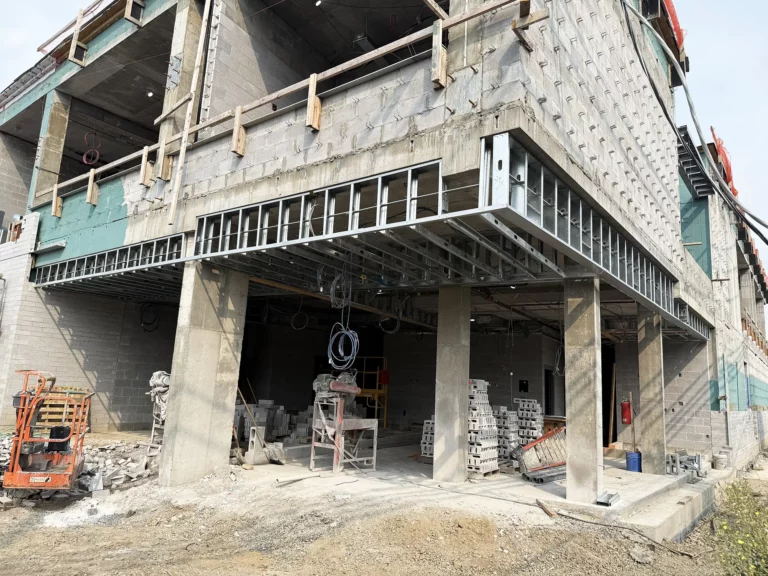
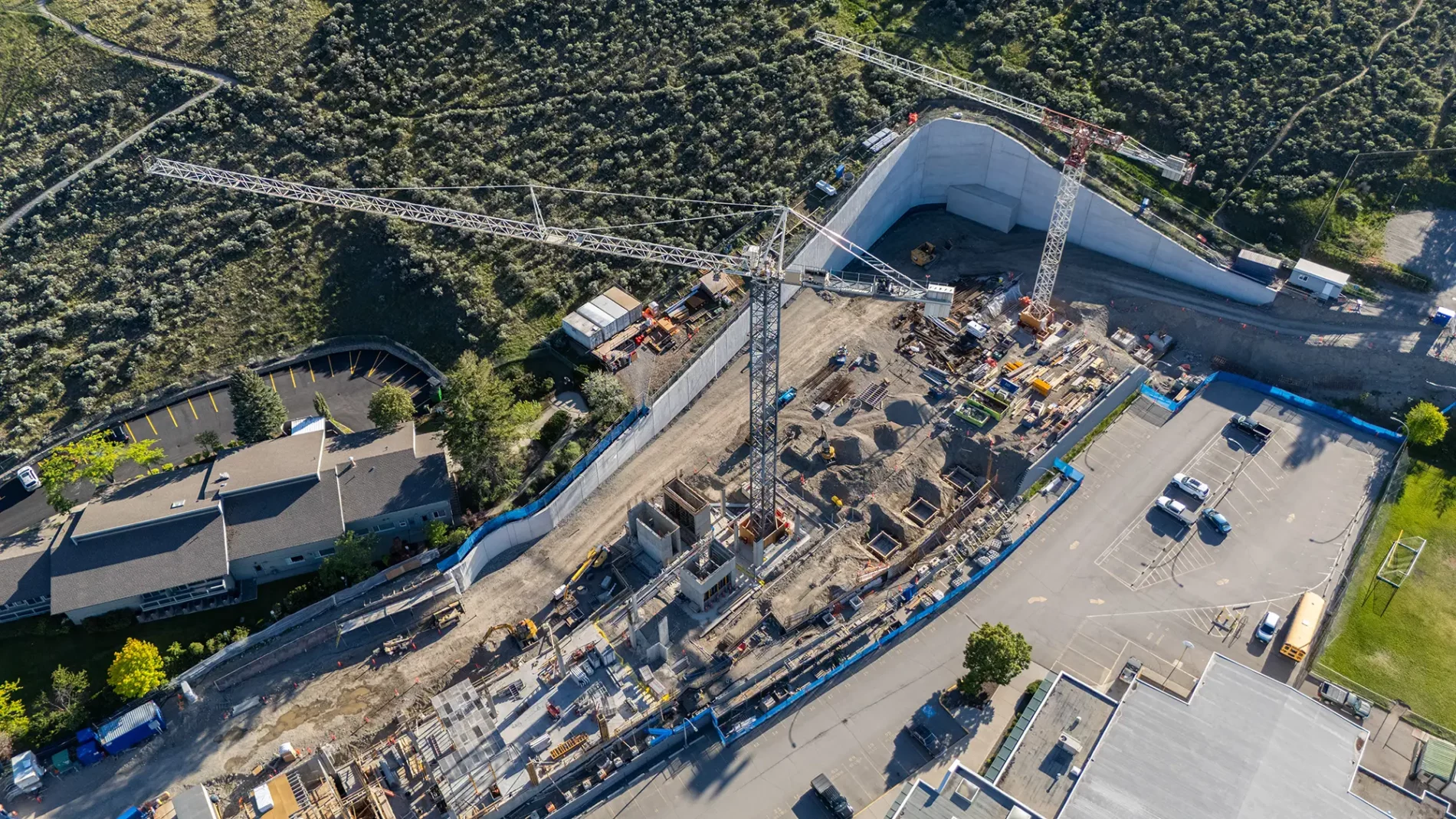
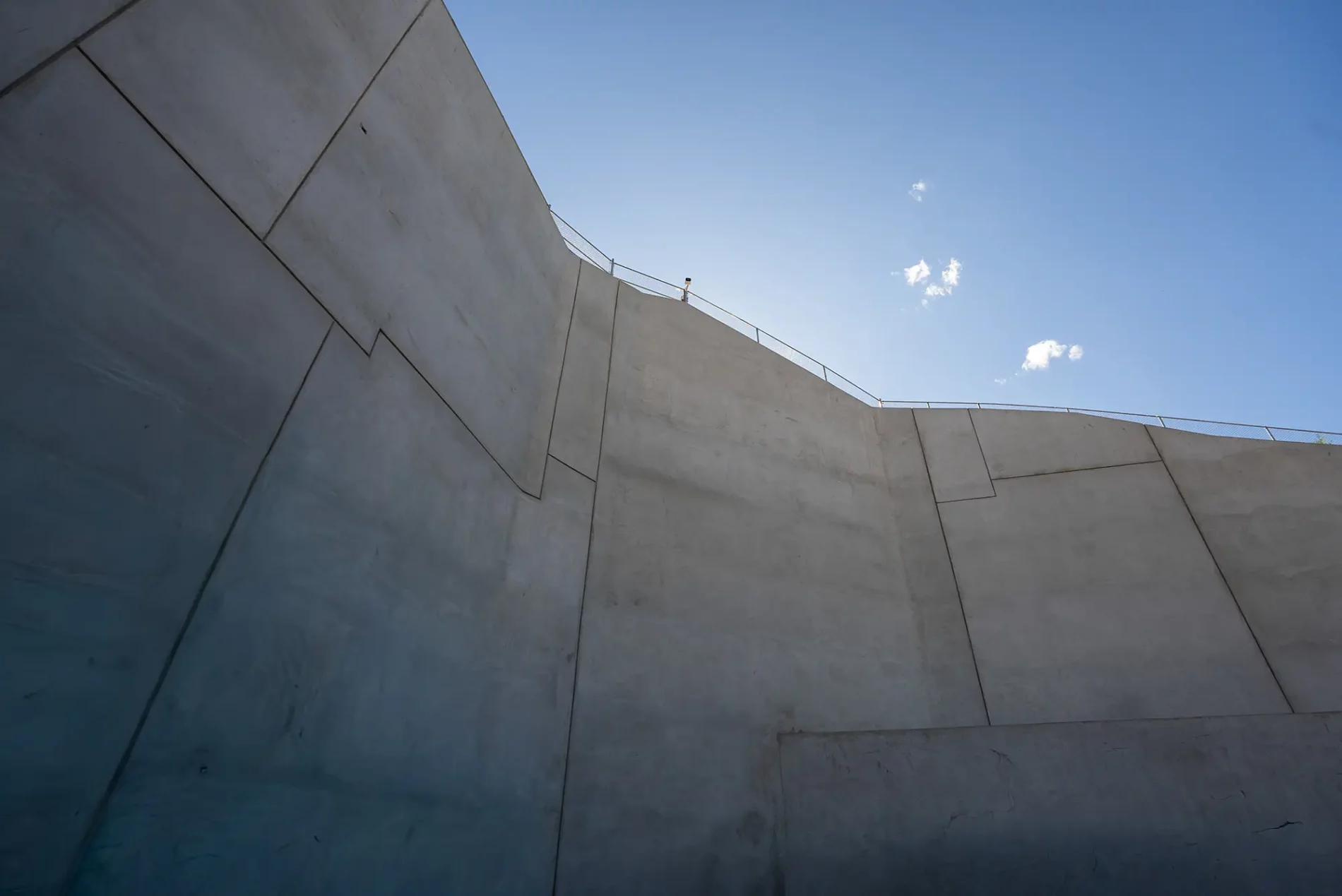
That field-first experience is reflected in the company’s project work. At the BC Cancer Centre in Kamloops, British Columbia, RS Foundation recently completed a $2.5 million project under general contractor EllisDon. For the community, the project carried significant importance. “This is very important project for us, because it is for the community of Okanagan and Kamloops,” said Mojtaba Eslampour, Division Manager, BC Branch. Previously, community members had to travel roughly four hours to Vancouver for treatments.
The scope included retrofitting an existing retaining wall, shotcrete and anchor shoring, and micropiling. The work required crews to drill anchors 50 feet in the air using crane baskets and excavators with drill attachments. Under those conditions, RS Foundation installed approximately 147 anchors, 14 solder piles, 23 micropiles and 18,987 square feet of shotcrete. Despite the unexpected need for an additional retaining wall due to access conditions, the company completed all milestones on time, using equipment that allowed mini-micropiles to be installed rather than larger diameter piles.
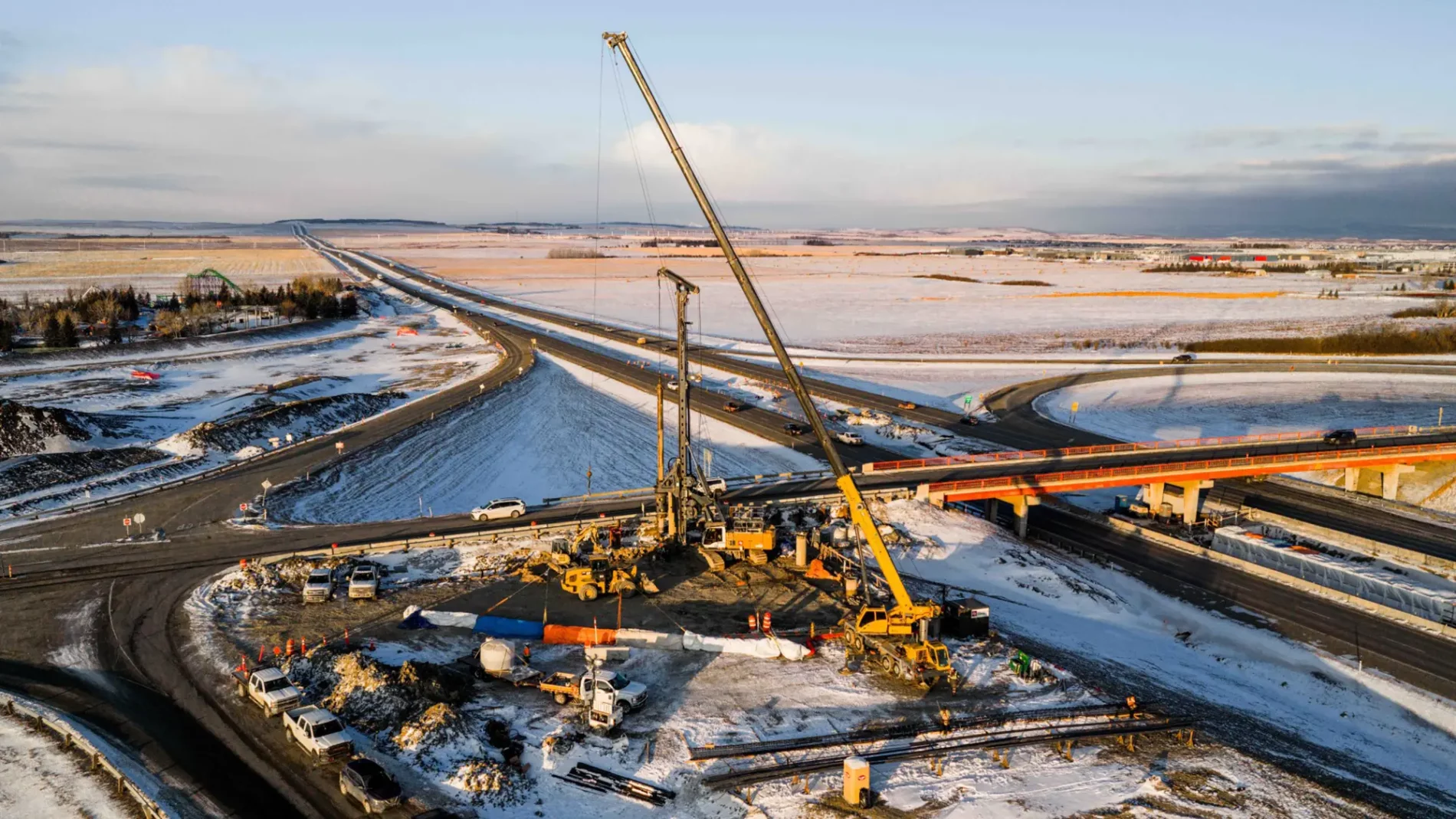
In Calgary, the Range Road 33 overpass replacement over Highway 1 required piling and shoring under strict Government of Alberta Ministry of Transportation specifications. Also delivered under EllisDon, the project involved 23 large-diameter piles drilled to depths ranging from 22 to 29 meters. “These piles were anywhere from 22 to 29 meters deep, so we got the biggest drilling rig in the fleet and shipped it out,” said Brandon Clay, Project Manager.
The project brought significant technical challenges, including high-pressure water in the bedrock that complicated concrete placement. Clay credited the subcontractors for coordinating effectively within a tight work area between highways and along the abutment. The outcome was a major milestone for the team. “When we tested all these piles, after they had been installed and cured, there was no issues at all with any of the piles,” he said. The client later noted that the results were among the cleanest they had ever received.
That result mattered. Any failure in testing could have required months of rework and placed the schedule at risk. Instead, the team’s execution stood out. Clay recalled one manager saying, “He’s been doing bridges for 20 years, and he’s only had two or three others come back with no issues at all from the piling side of things. We were one of those companies that knocked it out of the park.”
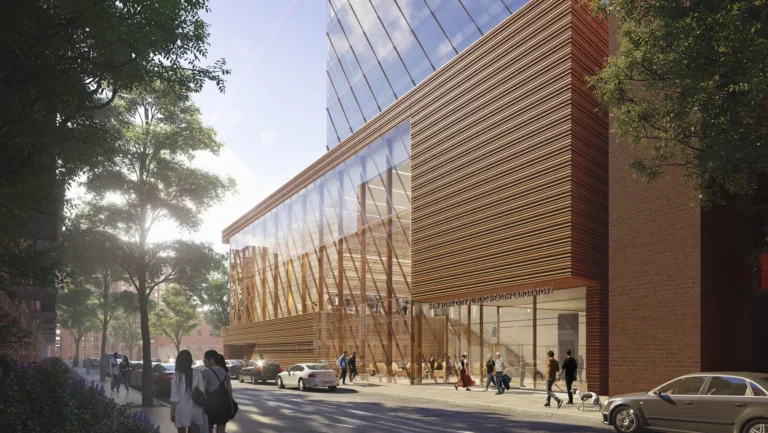
The Kings Project in downtown Calgary represented another step forward for the company. Located on the site of a future 45-story tower, the project required RS Foundation to deliver a secant pile shoring system for a five-level underground parkade. The scope included 226 secant piles, 186 ground anchors, and excavation to a depth of nearly 16 meters.
“This is our big, first project downtown working in this kind of deep excavation,” said Tavis Tonner, Pre-Construction Manager. The project required close coordination with the client from tender through decommissioning, particularly as high-pressure groundwater created challenges during excavation. “We worked hand-in-hand with the client to ensure smooth execution, from tender to decommissioning,” Tonner said. “It took about 14 weeks to complete, which was under budget and ahead of schedule.”
When groundwater continued to seep into the site, the team had to act quickly to seal every anchor and keep the bottom of the excavation clean. “The key thing with that was there was an intense timeline to come up with a solution, without getting nervous or moving the equipment out of the hole,” Tonner said. The experience helped the team develop future solutions for similar conditions, reinforcing a proactive approach rather than a reactive one.
Looking ahead, RS Foundation plans to continue expanding east, with the goal of establishing a presence in every major city in Canada. The company has already taken a significant step in that direction with a branch in Vancouver, one of the country’s largest urban centers.
For Young, the path forward remains rooted in the same factors that have shaped the company’s growth to date. “We’re focusing on the quality aspect, the team, and the relationships with our customers and safety overall,” he said. “I think everything is the reason why we’re taking a good portion of market share in the industry.”
As RS Foundation Systems continues to grow, its story remains grounded in practical experience, technical execution, and relationships built over time. From its early two-crew beginnings to its expanding national ambitions, the company’s development reflects a model built on field knowledge, disciplined leadership, and the ability to deliver complex foundation work across demanding environments.