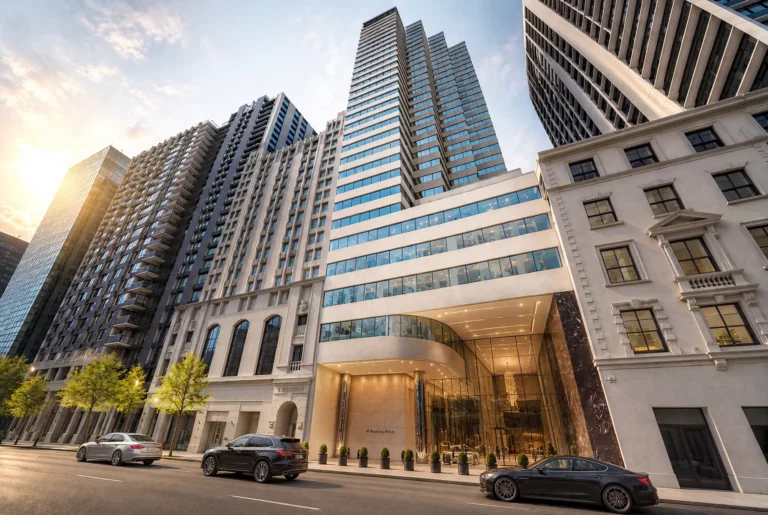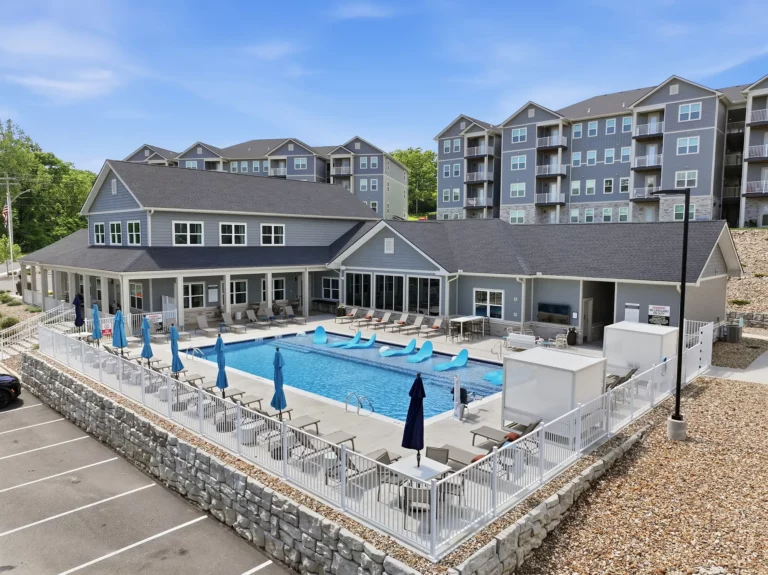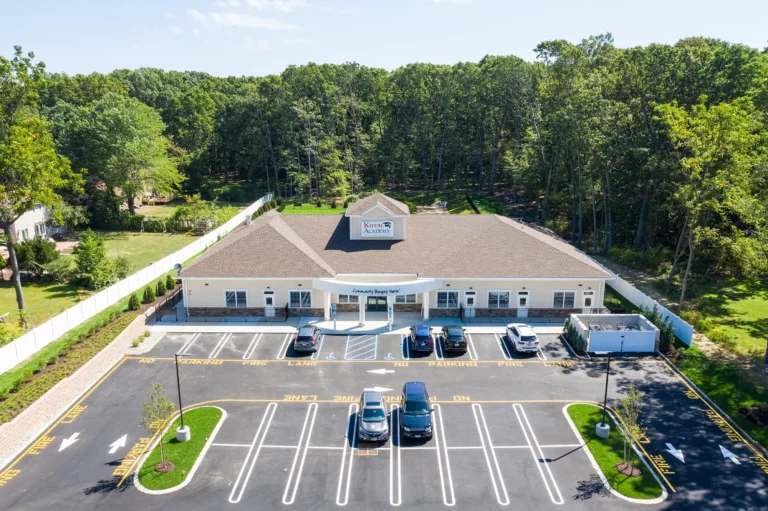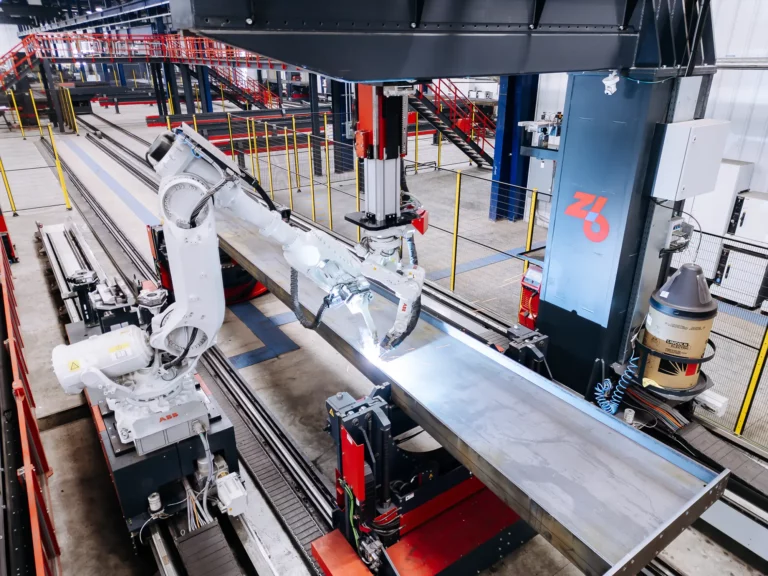




After more than eight decades in construction, Wolverine reached an unusual problem for a company with such a long history: the market did not necessarily understand what it had become. Founded in 1939, the Michigan business began with Peter Baumann and early work centered on tile and gas stations. Successive generations expanded far beyond those beginnings, eventually taking Wolverine into 13 core markets and numerous specialties, with warehouse, healthcare, higher education, fuel stations, and housing among its largest sectors. By 2025, however, research conducted as part of a broader look at the company’s identity revealed a disconnect. The breadth of the work was not always obvious from the name Wolverine Building Group. “The reality is we are a construction company, so the name is a simplification of who we are,” said Jaclyn Ramirez, Senior Director of Strategy and Marketing.
Wolverine Construction emerged from that realization. The change was deliberately straightforward, but the thinking behind it went considerably deeper than replacing a name and logo. For CEO Curt Mulder, the objective was to bring the company’s public identity closer to the contractor clients had already been working with. “Wolverine has grown and changed over the years, and our brand needed to reflect the company we’ve become,” Mulder said. “This is not a change in who we are. It’s a clearer way to show our clients, partners and communities what they can expect from us today and where we’re going next.”



“This is not a change in who we are. It’s a clearer way to show our clients, partners and communities what they can expect from us today and where we’re going next.”
Much of what Wolverine wanted to preserve is rooted in West Michigan. Headquartered in Grand Rapids, the company works throughout Michigan and follows clients nationally, providing services spanning preconstruction and design through construction management and general construction. Growth has widened its geographic reach and market exposure, but Mulder sees continuity beneath those changes. “Our identity is sharper, but our foundation is the same: West Michigan roots, long-standing relationships and a deep commitment to doing the work the right way,” he said. “Those things have carried Wolverine through every chapter of our history, and they’ll continue to guide us as we take on what’s next.”
For Ramirez and the marketing team, the work started with listening. What they heard revealed a gap: clients who knew Wolverine well in one market often had no idea what the company did in others. “A healthcare client might not know we build schools, or that we’re doing major industrial work,” Ramirez said. “People weren’t seeing the full breadth of what our team can do to solve complex problems.” Many also didn’t realize how much Wolverine’s capabilities had evolved to meet the growing complexity of the built environment.
The challenge was telling a bigger story without watering it down. A contractor that claims to do everything can sound like it specializes in nothing. So Wolverine leads with depth. Each market team stays “hyper-focused on our specialty within each market we serve,” Ramirez said, while the Wolverine Construction brand connects them. “Clients get a team that knows their world inside and out, backed by expertise across every market and specialty we serve.”
Industrial work has become an important part of that picture, alongside established sectors such as warehouse, healthcare, education, and housing. Repeat clients have also carried Wolverine well beyond Michigan.
The same thinking shaped the language developed around the new identity. Rather than relying only on a list of capabilities, Wolverine wanted to describe what happens when its team becomes involved in a project. Three ideas emerged from the process: see the big picture, tell the truth, and solve the right problem. For Ramirez, those ideas are most visible when Wolverine joins a project early. “Our clients often come to us with a high-level concept, and we jump in on the front end with them, from design all the way to completion,” she said. “We’re able to see the big picture of what they’re trying to accomplish—helping clarify their goals, asking the right questions to surface problems early, and having those conversations on the front end of a project, not in the middle of it when it’s hard to change course.”
The distinction moves the conversation away from simply delivering a finished building. Early questions can affect design decisions, budgets, constructability, and the problems that reach the field later. For a contractor operating across numerous markets, that ability to understand what the client is actually trying to achieve also becomes a way of carrying lessons between sectors without assuming every project requires the same answer.
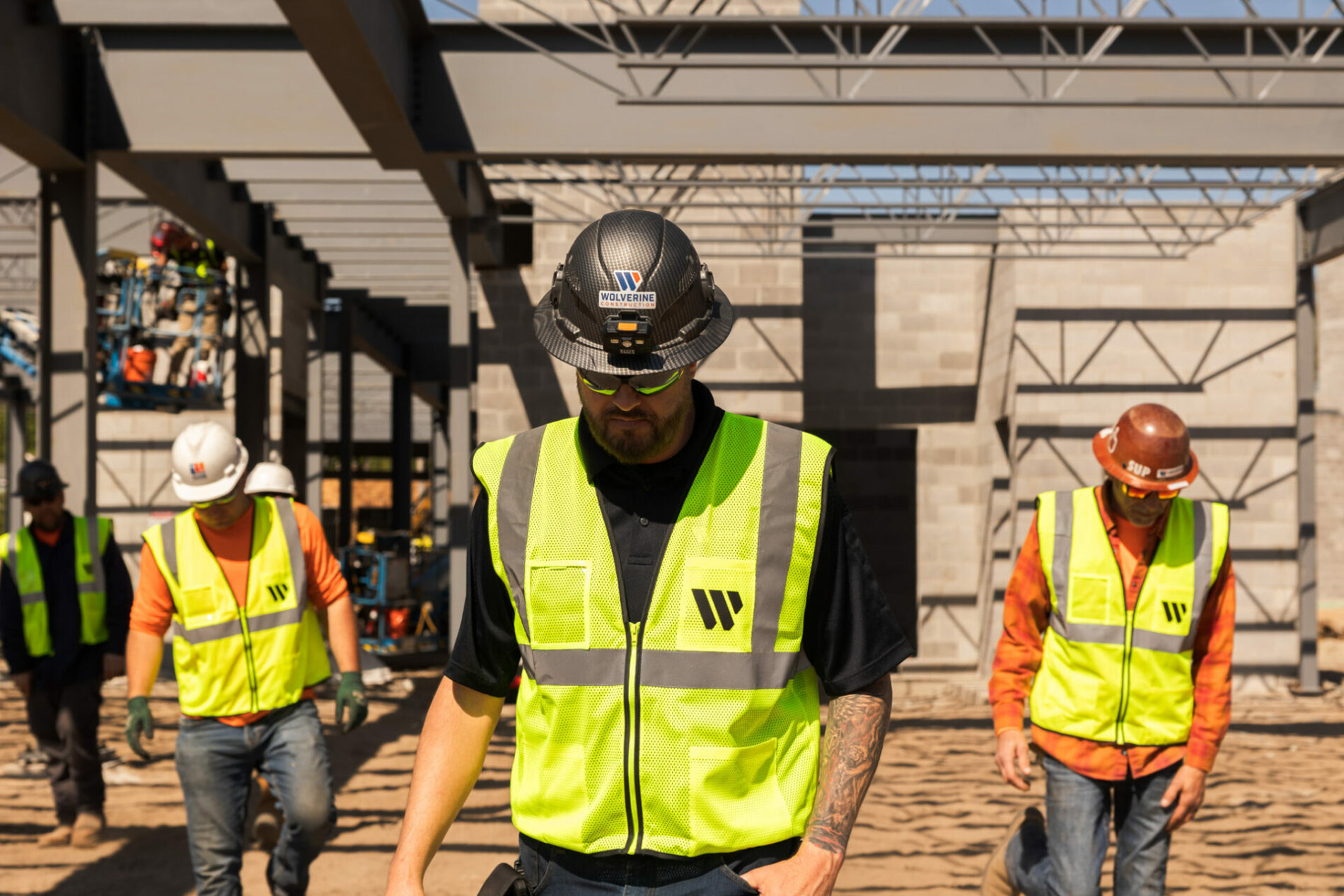
Wolverine wanted the rebrand to communicate something less tangible as well. Ramirez describes a company-wide culture that sees clients as people, not just project stakeholders. “Construction isn’t always known as an empathetic industry,” she said. “But our people genuinely care about what our clients are trying to achieve, and that shows up in how we work: asking the hard questions early, being honest when something isn’t right, and staying with them through the whole process.” That quality had often been invisible outside existing relationships. “Our team really does walk the walk,” she said. “It was just a best-kept secret.”
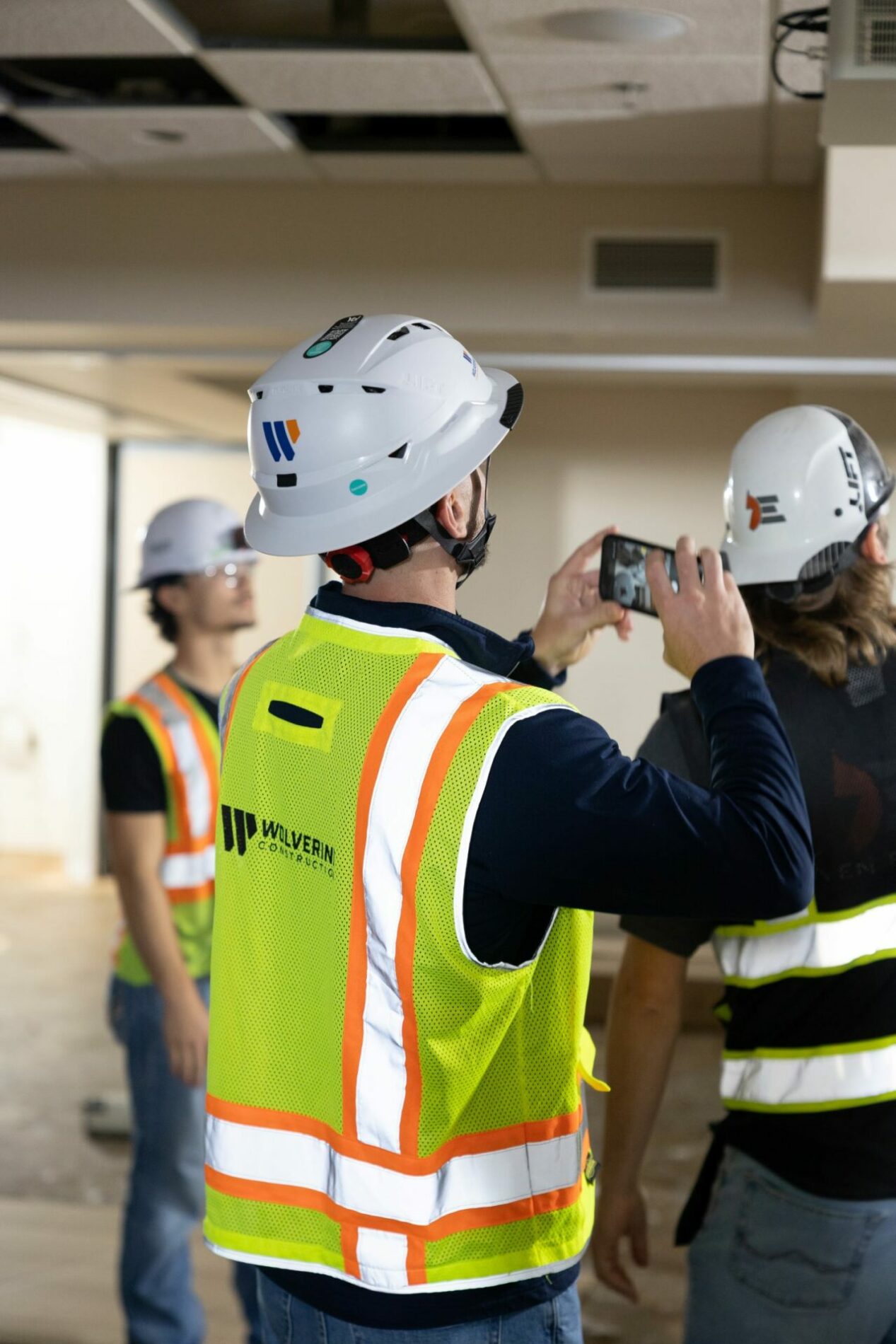
Making those qualities more visible required care precisely because Wolverine already had so much history behind it. An established contractor cannot easily redraw its identity without considering what existing clients, employees and trade partners already associate with the name. Director of Marketing Marjorie Hoeksema said the process ultimately produced a simple internal expression: “We now have clear brand language—we see it, we say it, we solve it.”
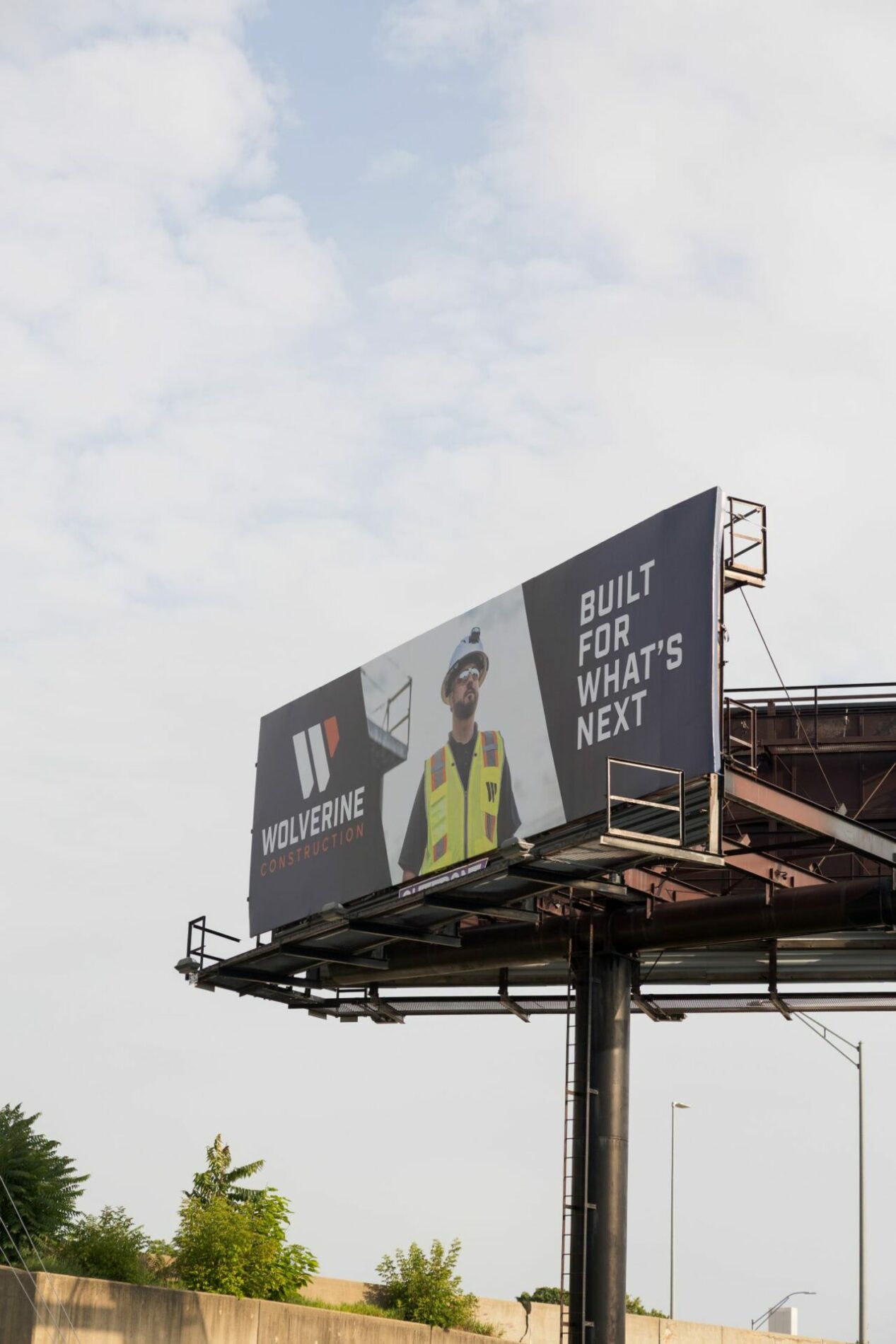
The company introduced the new identity through its “Built for What’s Next” campaign, using the launch to connect Wolverine’s past with the markets it intends to pursue. Hoeksema recalls particularly strong feedback from a trade partner who had worked with the company for more than 20 years and described the refresh as not only impressive but profound.
For Wolverine, however, the real measure of the change goes beyond the campaign itself. It is whether a clearer identity supports where the company is headed.
That growth is deliberate. In Michigan, Wolverine is expanding its industrial work in Southwest Michigan, its multi-unit business in Southeast Michigan, and its client base in Northern Michigan. Beyond the state, the company has completed work in more than 38 states, and those opportunities continue to grow as clients with national footprints bring Wolverine into new regions.
“Wolverine Construction is a more direct expression of who we are today, but it’s built on the same relationships and values that brought us here,” Mulder said. “We’re proud of our history, and we’re energized by the opportunity to keep building alongside our clients and communities for what comes next.”
Ramirez is equally clear that changing an established identity only makes sense when the business case supports it. “Rebranding for the sake of rebranding is never the answer,” she said. “We had to be honest with ourselves about whether the problem was our brand or something else. The research made it clear: the company had outgrown how people saw us.”
More than eight decades after beginning with tile and gas-station work, Wolverine had become a contractor operating across 13 core markets, serving repeat clients in Michigan and beyond, and taking a larger role in projects before construction begins. The new name did not create that company. It simply made it easier to see.