




Academic construction has its own pace. Buildings stay occupied, semesters impose hard deadlines, and a relatively contained renovation can involve everything from accessibility upgrades and AV integration to mechanical work, specialty finishes and the simple challenge of getting in and out without disrupting the institution around it. For Brosna Construction, those conditions have become increasingly familiar as academic work has taken on a more prominent role in the company’s New York portfolio.

Founded in New York in 1995 by James Kirby, Brosna has spent more than three decades growing into a general contractor and construction manager serving both public- and private-sector clients. Its work extends well beyond education, but recent projects at New York University and Fordham University offer a particularly clear view of how the company has developed and where much of that experience is now being applied.
When marking its 30th anniversary in 2025, Kirby reflected on the approach that has carried the company over three decades. “From the very beginning, I believed in building things the right way,” he said. “That mindset hasn’t changed in three decades.” The scale and complexity of the work may have changed considerably since the company’s early years, but the growth has been gradual rather than dramatic, shaped by a steady expansion into different kinds of renovation and construction assignments.
“From the very beginning, I believed in building things the right way. That mindset hasn’t changed in three decades.”
At NYU, this progression can be seen in spaces serving very different purposes. The recent renovation of the Steinhardt BFA Art Studios involved studio, gallery and shared areas designed around the needs of students and faculty, while the Academic Resource Center required a reconfigured entrance, multipurpose collaboration spaces, acoustic treatments, integrated AV systems, facade work and a new ADA-compliant restroom. Neither project is defined by scale alone, however; both involve fitting multiple functions into existing environments already shaped by the daily life of the university.
Recently, Brosna completed work at NYU Wagner and the Center for Robotics at 370 Jay Street, along with classroom and student-space renovations at 2 MetroTech Center. Its continued involvement across different parts of the university has given the company experience in a wide range of academic environments, from teaching and research spaces to student-facing facilities.
Fordham University, meanwhile, presents a similarly varied picture. At O’Hare Hall, Brosna renovated office space with new private offices, conference rooms, glass partitions and updated finishes. A separate football locker room renovation incorporated custom lockers with integrated lighting and power, new flooring, slatted wood ceilings, refreshed finishes and ventilation improvements, while a laboratory renovation required upgraded mechanical and electrical systems, new casework and specialized finishes. The company delivered a new Saxbys café at Fordham, handling the interior fit-out, custom millwork, counters, wall finishes and lighting coordination. Moving between food service, athletics, research space and administrative offices may look disparate on paper, but that variety is typical of university work, where the needs of a campus are rarely confined to one building type or construction discipline.
Universities tend to change piece by piece rather than through one sweeping intervention. A lab is modernized, a common area is reworked, a classroom floor is adjusted to support a new program, or an older space is given an entirely different purpose. For contractors working in that environment, familiarity with existing conditions matters as much as the ability to deliver new work, because no two buildings present exactly the same constraints once demolition begins.
The practical pressures can be just as significant as the technical ones. Academic projects operate around semester schedules, exams, research programs, student occupancy and the expectation that much of the surrounding campus will remain fully functional. A classroom may need to reopen for the start of term, a laboratory cannot simply lose functionality indefinitely, and housing, offices or student amenities may remain active only a few feet from construction. This puts a premium on planning, sequencing and coordination. Rather than managing one broad construction sequence, contractors often have to fit the work into the rhythm of the institution itself, balancing progress with access, noise, safety and schedule requirements that can shift depending on the time of year.
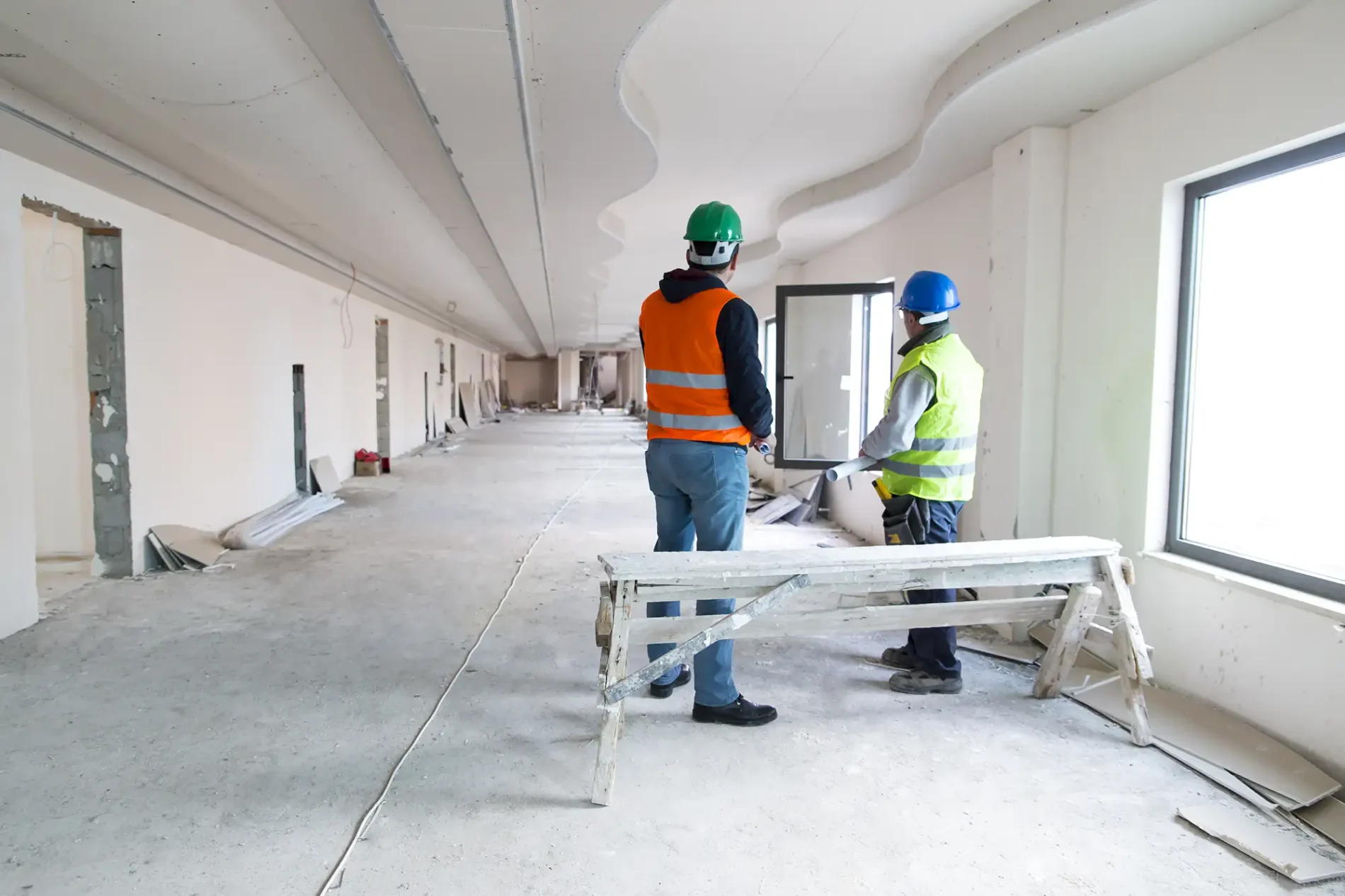
Brosna’s wider experience in renovation has made that environment a natural fit. The company has a substantial history of alteration work throughout New York City, with a portfolio ranging from smaller interiors to more substantial construction assignments. What stands out in the academic sector is not simply the number of projects, but the consistency of repeat work across different facilities and different types of space. This continuity can become valuable over time. Once a contractor understands how an institution operates, lessons from one project carry into the next: how approvals move, where access becomes difficult, when work can happen, which areas need to remain live and how much disruption a building can realistically absorb. The benefits are less visible than a finished lobby or laboratory, but they can shape how efficiently the next project is delivered. Smaller academic renovations, for example, can be deceptive in their complexity. A project may occupy only a limited floor area but still involve several trades, new technology, accessibility upgrades, existing mechanical systems and users working immediately nearby. There is often less physical room to maneuver, also, with fewer opportunities to isolate the work and tighter deadlines around when the space has to return to service.
Brosna is continuing to deepen its presence in the academic sector, with NYU and Fordham forming an increasingly important part of that work. Rather than representing a departure from the company’s broader general contracting business, the sector brings together many of the capabilities the company has developed over time: renovation experience, coordination within occupied buildings, and familiarity with the practical demands of institutional clients. The company’s development over the past three decades has not been defined by one signature project or a sudden change in direction, however. It has been more incremental: a wider range of capabilities, stronger client relationships and the accumulation of experience across projects that ask the company to do slightly more each time. Its academic work follows much the same pattern, with one renovation leading into another, often in a very different type of space but under many of the same practical constraints. For Brosna, that steady familiarity may prove more valuable than scale alone.