




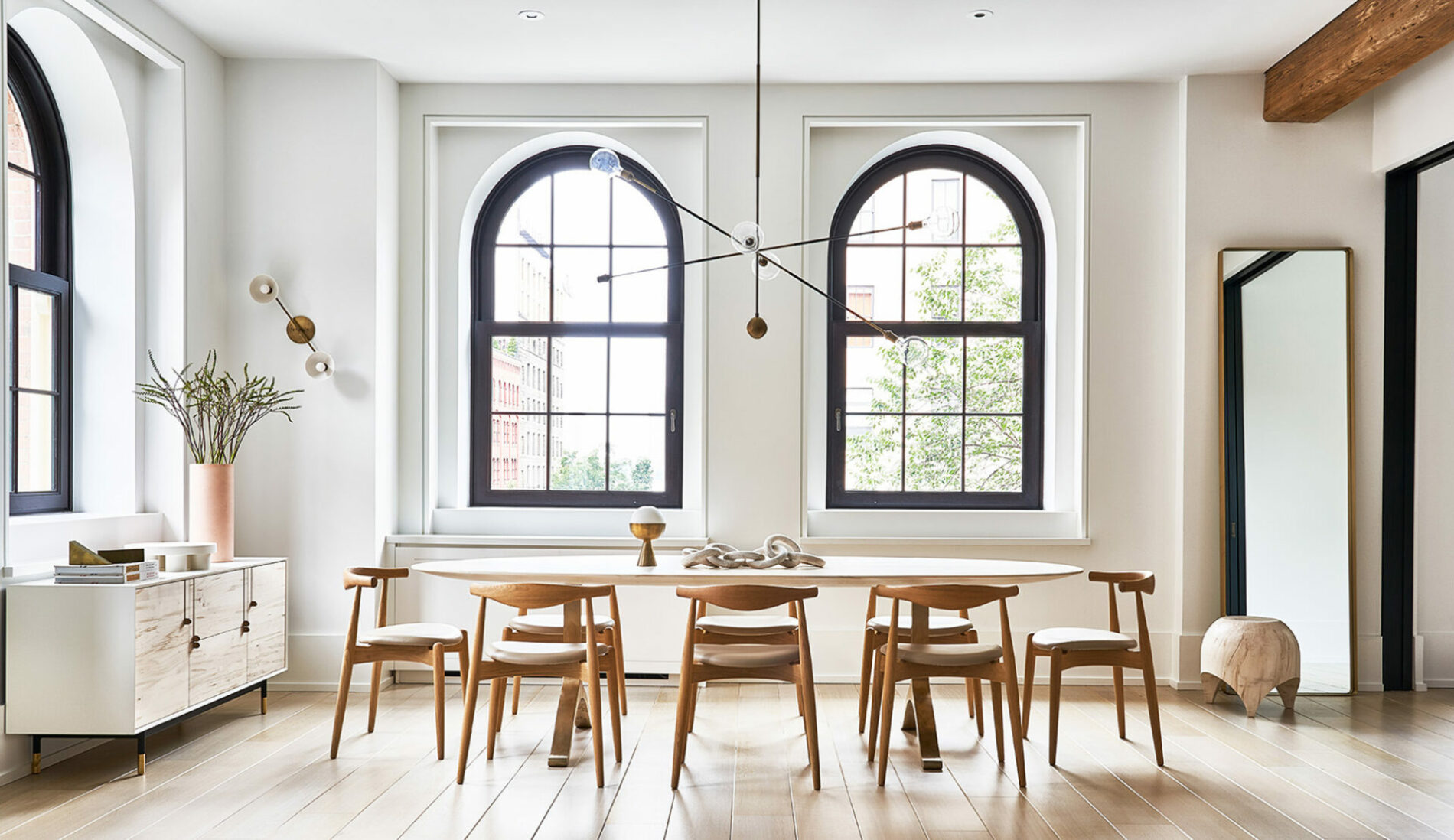

Blending expert craftsmanship, customization, and client focus to deliver high-end designs for the luxury client, Caoba provides architectural windows, doors, and millwork for high-end residential projects, delivering on its promise to produce sustainably sourced wood and give back to the local community in the process.
With over 41 years under its belt, Caoba has evolved to become the go-to company for top-quality, custom-made features. It wasn’t always this way, however.
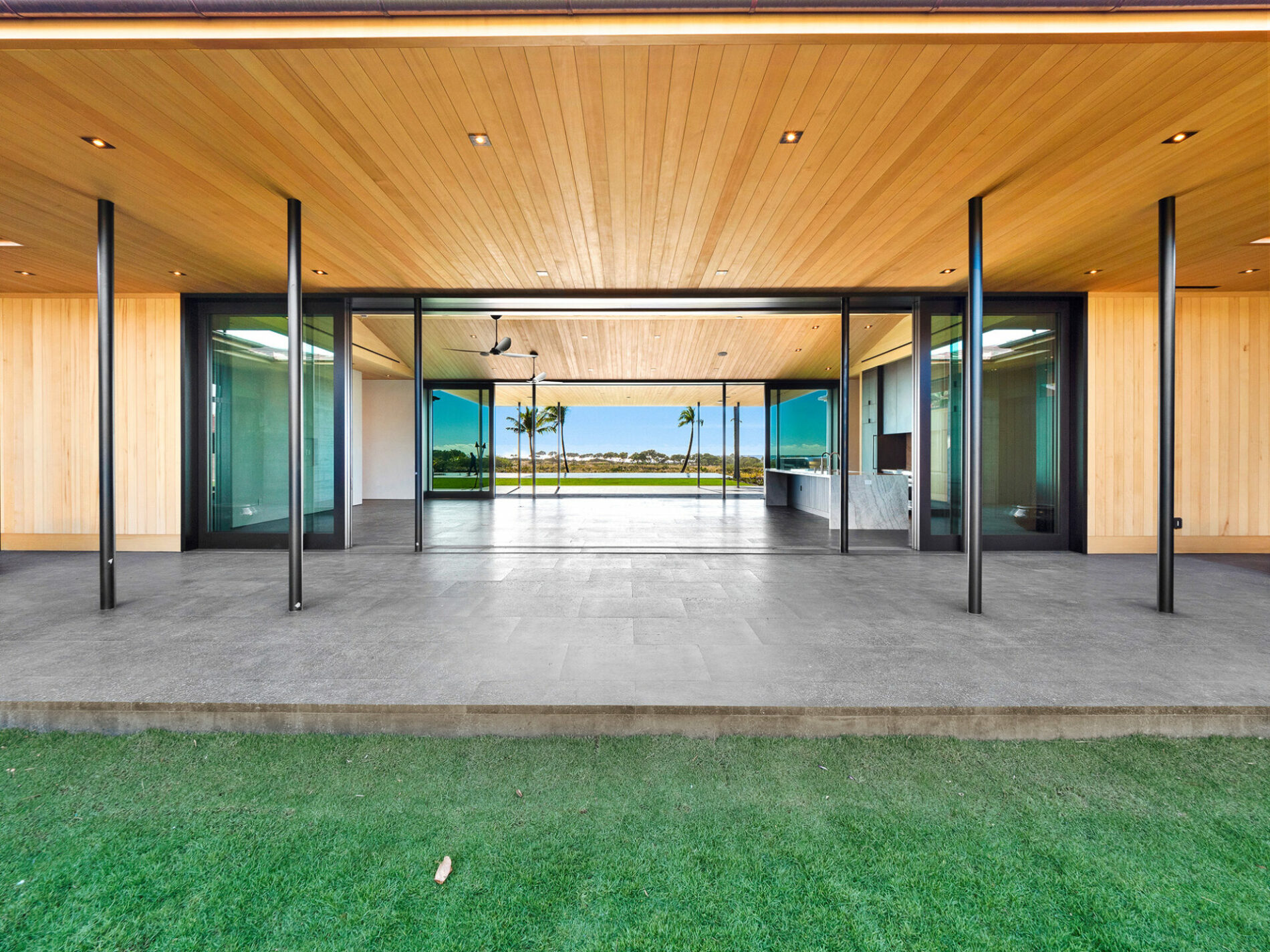
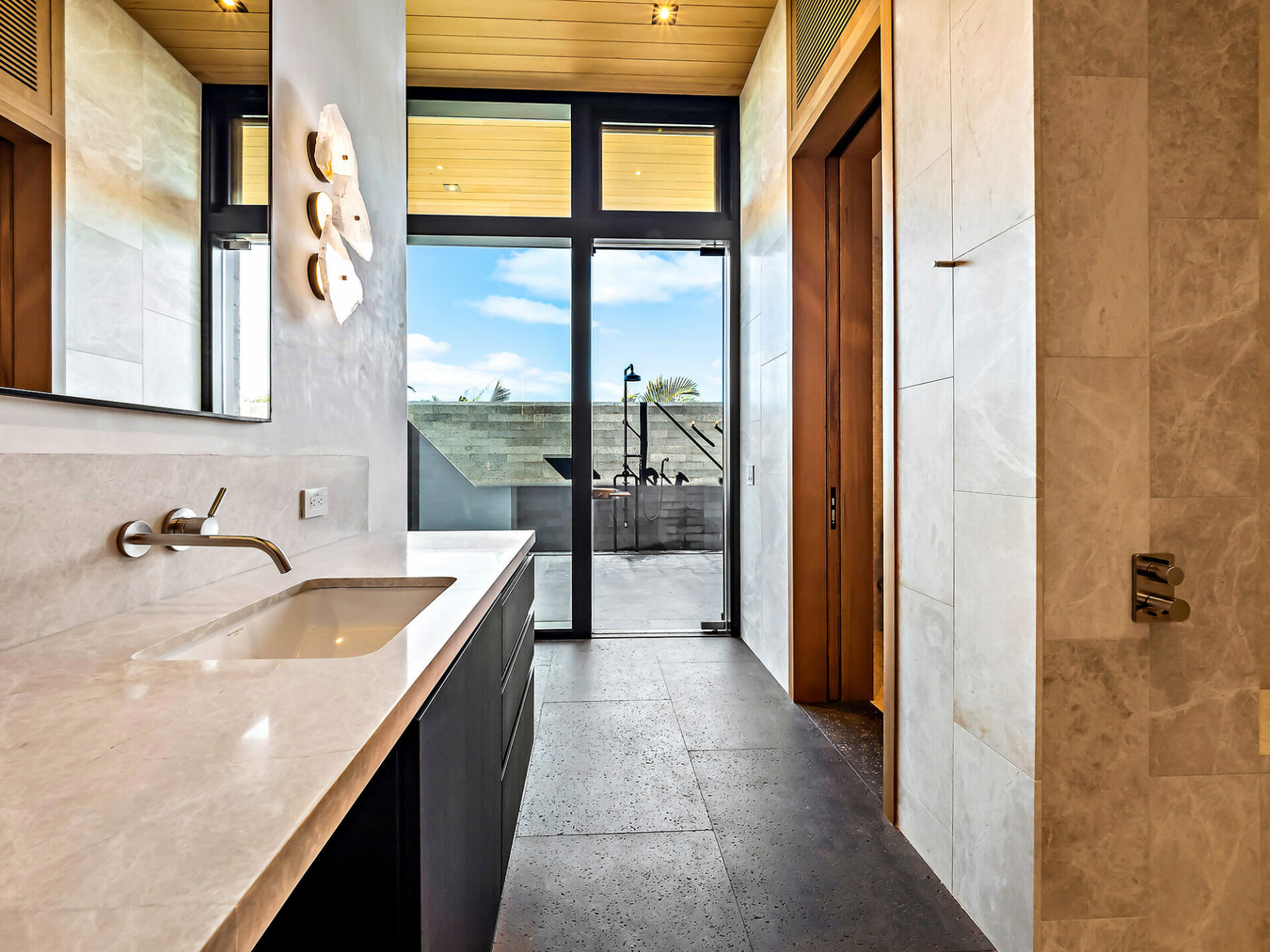
Launched in 1983 by Paul Kronick, Caoba got its start crafting prefabricated doors for companies like Lowe’s and Home Depot and millwork for novelty items like Brunswick pool tables and cigar boxes for the Chicago Bulls. During the late 90s and early 2000s, the company found its stride in high-end luxury, amassing a roster of clients looking for beautiful, elegant entryway doors and windows for their homes. “From there,” Caoba’s Principal Rebecca Kronick says, “we went from creating doors to creating art.”
Guatemala has a long history of woodworking, which was behind the inspiration to initially set up shop in the country. Caoba has remained there for the past four decades, servicing numerous clients across North America and the Caribbean – from award-winning spa properties in Napa Valley to walk-up apartments in New York City. When you choose to work with Caoba, you are investing in artistry, heritage, and lasting elegance, only made possible through the dedicated team of 300 people who work tirelessly to uphold these values and deliver on the mission to bring quality, durability, and performance to every project.
As self-proclaimed ‘stewards of the environment,’ Caoba remains committed to responsible sourcing and sustainable practices. Products are ethically sourced with a focus on preserving the environment for future generations. This includes responsible sourcing of wood and using Eco-friendly finishes and techniques to minimize carbon footprint without sacrificing the esthetic of a finished product. Caoba is proudly FSC certified and predominantly uses genuine mahogany from Guatemala and Honduras, through reputable communities that boast the proper documentation in line with international regulations.
This commitment to corporate social sustainability extends far beyond the environment, benefitting the employees and clients, too. Those employed by Caoba get access to a variety of social supports to ensure they can bring their best selves to work.
“We know we operate within a marginalized community,” says Rebecca, “which is why we prioritize education, professional development and ensuring our employees are as healthy as they can be. The company offers upskilling and professional development so staff can continue honing their woodworking and millwork skills and even offer on-site nutritional lunches at cost.”
Much of these social efforts happen through the Paula Weiskopf Foundation, established in 2001 to provide educational and health programs that support employees and their families, empowering them to enhance both their professional and personal lives. Then in 2016, the company founded the Caoba Foundation to focus on additional educational initiatives for the children of the Jocotenango community and the sons and daughters of Caoba employees. Employees pursuing university studies get access to partial scholarships, comprehensive medical and dental care packages, year-round, on-site daycare for employees with children aged 2 – 7 and more.
As for clients, non-profit organizations get preferential pricing on projects as Caoba’s way to further stand behind organizations working hard to make the world a better place.
For Caoba, the heart of the company is its people, so it invests a lot of money and effort into ensuring everyone feels safe, secure, and happy both inside and outside of work. As Rebecca explains, the company prioritizes the wellbeing of its staff. This can be seen in its responses to times of hardship such as the COVID-19 pandemic, which disrupted supply chains and has skyrocketed the cost of materials or when Hurricane Stan hit – the deadliest tropical cyclone of the 2005 Atlantic hurricane season. The latter, Rebecca says, caused flooding that destroyed Caoba’s production facility, materials, and countless homes in the surrounding area.
“For Caoba, the heart of the company is its people, so it invests a lot of money and effort into ensuring everyone feels safe, secure, and happy both inside and outside of work.”
“The company could have easily collected insurance and closed its doors,” says Rebecca of the disaster that forced her father to pay out of pocket for two months to keep the lights on, keep production running and continue to pay employees. “We knew we had 300 families relying on us.”
This undying commitment to its people is what in turn, allows highly complex projects to come to fruition. One such project was the restoration of a New York City-based building that featured windows from the 1800s. Protected by the city’s Landmarks Laws which aims to preserve historic landmarks and neighborhoods, the team, composed of engineers, architects, project managers and designers, manage to restore these windows to their original form, honoring the craftsmanship of this bygone era.
The key to delivering projects that clients love is customization, Rebecca says.
“At Caoba, we offer two lines,” she says. “We have what we call the Custom-Standard Line, which is still custom, and then the Custom-Custom Line.”
With the Standard Line, clients can customize things like finish, width, length, and height, with certain minimum and maximum size requirements attached. Of course, things like material (all wood or partially clad), operative hardware, decorative hardware, the glass, and the gasketing can all be tailored to your individual needs and vision to ensure the product looks the way you want it to.
The Custom Line, by contrast, is exactly as it sounds, entirely custom. This type of approach works best for clients that don’t have to abide by impact or other certification restrictions, like individuals based out of the Caribbean or Florida.
“When the client doesn’t have those restrictions, they come to us with big projects that are just very different,” says Rebecca, who points to a project where a Caribbean-based client wanted Caoba to create a door with driftwood incorporated.
As for the next 41 years, Rebecca hopes to see sustainable growth for the company and more architecturally advanced, highly tailored projects that wow clients all over the globe.
“In that time, I will be the same age my father, the founder, is now,” says Rebecca. She hopes to get the company back to its pre-COVID state and grow the businesses profits while ensuring it continues upholding its values to champion its most valuable assets, employees, and clients.
“At our core, we’re a small family business that leads with our heart.”
Have a custom project you think Caoba could deliver? Reach out via its website.